
Note: This article contains affiliate links. If you click on these links and make a purchase, we may earn a small commission at no extra cost to you. This helps support our research and content. Read our full affiliate disclosure here.
If you want juices that deliver the most vitamins, minerals, and enzymes, choosing the right juicer matters. A juicer that keeps all nutrients minimizes heat and oxidation during extraction so your drinks taste fresher and hold more nutritional value. This guide covers seven shortlisted juicers that excel at preserving nutrients. We evaluate extraction efficiency, oxidation control, and cleanup so you can pick a machine that fits your routine and health goals. Read on for the criteria we used and practical guidance to match a juicer to how you plan to use it.
Top Picks at a Glance
| Best Overall The best all-around choice for most situations | NAMA J2 Cold Press Juicer |  |
| Best Quality Built to a higher standard if you want something more solid | Hurom H330 Cold Press Juicer |  |
| Best Value The sweet spot between price and what you get | TUUMIIST Cold Press Juicer TM880SJ |  |
| Best Budget The cheapest option that still gets the job done reliably | GDOR Centrifugal Juicer GS378 |  |
| Top Rated A top-rated pick with lots of positive feedback | anybear Cold Press Juicer SJ054C |  |
| Most Popular A crowd favorite that many people choose with confidence | Breville Juice Fountain Plus JE98XL |  |
| Best Seller A high-volume bestseller chosen again and again | EanOruus 3-in-1 Cold Press Juicer E-18 |  |
NAMA J2 Cold Press Juicer

| Wattage | 200 watts |
|---|---|
| Power Source | Corded Electric |
| Voltage | 120 |
| Capacity | 30 fluid ounces |
| Number of Speeds | 1 |
The NAMA J2 is a slow, single-auger cold press juicer built for steady, nutrient-preserving extraction from fruits, vegetables, and leafy greens. Its self-feeding wide-mouth hopper lets you load a whole recipe and walk away while the 200 W motor turns the auger at about 50 RPM to minimize heat and oxidation. Included strainers and a juice container make it straightforward to separate juice from pulp, and the unit is engineered to maximize yield so you get more juice and less waste from the same produce. Parts are quick-release and mostly hand-wash only, and the package includes a cleaning brush to speed up maintenance. The J2 runs quietly and is intended for daily kitchen use where preserving vitamins and flavor matters. Limitations to note are the single speed control, so you cannot adjust torque for very hard produce, and hand-wash-only care rather than dishwasher-safe parts, which adds some cleaning effort for heavy users.
Best for: Buyers who want a reliable cold-press juicer that prioritizes nutrient retention and high juice yield for regular home use and like the convenience of hands-free batch loading.
Less Ideal for: If you need variable speed control for specialized ingredients or prefer dishwasher-safe components for minimal cleanup, look at other options.
- Self-feeding wide-mouth hopper for hands-free batch loading
- Low-speed masticating action (about 50 RPM) that preserves nutrients and reduces oxidation
- High juice yield with included strainers to separate pulp effectively
- Quiet operation suitable for morning routines
- Quick-release parts and included cleaning brush simplify cleanup
- Only one speed setting limits control for very hard or fibrous produce
- Parts require hand washing rather than dishwasher convenience
Verdict: Choose the NAMA J2 if you want a quiet, hands-free masticating juicer that maximizes juice yield while keeping nutrients intact.
Hurom H330 Cold Press Juicer

| Capacity | 2 liters |
|---|---|
| Power Source | Corded Electric |
| Special Features | Easy to Clean |
| Blade Material | Stainless Steel |
The Hurom H330 is a performance-focused cold-press juicer built to handle whole produce without much prep thanks to its large 2‑liter self-feeding hopper. It uses a low-speed 50 RPM auger and patented slow-squeeze technology to press rather than shred, which reduces heat and oxidation and helps retain vitamins and enzymes for longer fridge life. You can switch between fine and coarse strainers for low-pulp juice or fuller textures, and the unit also supports nut milk and smoothie-style blends with the included components. Practical touches include quiet operation, a safety shut-off if the lid opens, quick-disassembly removable parts, and a detachable power cord for neater storage. Made from BPA-free plastics and stainless steel components, it yields higher-quality juice than centrifugal models and can batch-juice family-sized recipes in one load. Trade-offs are its heavier, countertop footprint and hand-wash care requirement, so it is less portable and needs a little cleanup time compared with compact or dishwasher-safe machines.
Best for: Buyers who prioritize nutrient retention and high-yield extraction for family-sized batches and want a hands-off, self-feeding workflow in the kitchen.
Less Ideal for: People who need a compact, lightweight juicer for small spaces or who require dishwasher-safe cleanup for frequent travel or single-serve use.
- Large 2‑liter self-feeding hopper lets you juice whole fruits and batch recipes with minimal prep
- Slow 50 RPM auger and patented slow-squeeze extraction preserve nutrients and reduce oxidation
- Multiple strainers enable low-pulp or fuller-texture juices plus nut milk capability
- Quiet motor and safety shut-off make early-morning or family use practical
- Quick-disassembly removable parts speed up manual cleaning and maintenance
- Requires hand-washing of parts rather than dishwasher-safe cleaning
- Relatively heavy and larger footprint compared with compact juicers
Verdict: Choose the H330 if you want a self-feeding slow juicer that maximizes nutrient-preserving extraction for family-sized batches.
TUUMIIST Cold Press Juicer TM880SJ

| Capacity | 3 liters |
|---|---|
| Maximum Power | 350 watts |
| Wattage | 300 |
| Voltage | 120 volts_of_alternating_current |
| Number of Speeds | 60 |
The TUUMIIST TM880SJ is a cold-press, single-auger juicer built for extracting juice, nut milk, and sorbet with minimal heat and oxidation. Its 6.5-inch wide feed chute accepts whole fruits and many vegetables so you can skip tedious prep, and the slow auger design aims to preserve enzymes and increase yield. The unit includes a smart touch panel with one-tap mode selection and an auto-reverse function to clear jams, while an advertised quiet motor keeps operation under typical kitchen noise levels. Practical features include a large 100 oz pitcher for batch juicing, a metal-free filter mesh for easier cleaning, and dishwasher-safe components that break down into a simple three-part assembly for fast rinse cycles. Watch for the relatively high number of speeds listed and modest motor wattage: heavy-duty fibrous processing may require patience and occasional use of auto-reverse. For buyers prioritizing nutrient retention and batch capacity, this model balances gentle extraction and convenience, though it is larger and heavier than compact citrus or centrifugal machines and better suited to steady, regular use rather than quick single servings.
Best for: Buyers who want maximum nutrient retention and high juice yield for regular home juicing and batch prep, and who value hands-off features like a large hopper and easy cleaning.
Less Ideal for: People who need a compact, lightweight unit for occasional single servings or who prioritize fastest possible extraction over gentle, nutrient-preserving processing.
- Extra-large 6.5-inch feed chute lets you juice whole fruits with less prep
- Slow masticating auger designed to maximize juice yield and preserve nutrients
- 100 oz pitcher supports batch juicing for meal prep or family servings
- Auto-reverse and overheat protection reduce jams and protect the motor
- Dishwasher-safe parts and a simple 3-part assembly speed cleanup
- Unit is relatively heavy and takes more counter space than compact juicers
- Not optimized for very hard or fibrous produce without slower processing or pulsing
Verdict: Choose the TUUMIIST TM880SJ if you want a nutrient-preserving cold press juicer that handles whole fruits and large batches with easy cleanup.
GDOR Centrifugal Juicer GS378
| Maximum Power | 800 watts |
|---|---|
| Number of Speeds | 2 |
| Power Source | ac |
| Voltage | 120 volts |
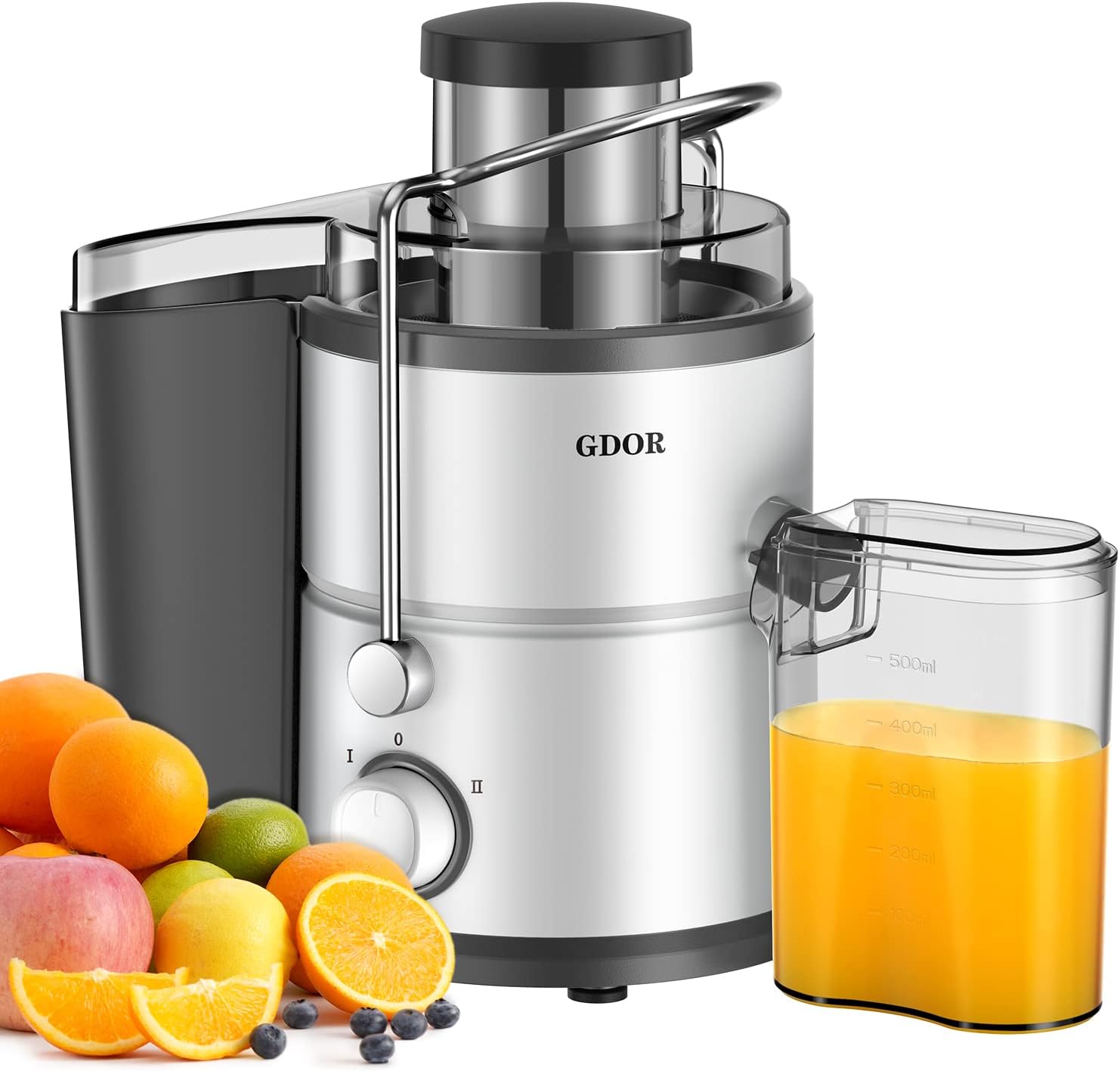
The GDOR Centrifugal Juicer GS378 is a fast, countertop juicer aimed at everyday home use. Its 800W motor and dual-speed knob let you switch between a lower RPM for soft fruits and a higher RPM for harder produce, while the 3" feed chute accepts many whole fruits to reduce prep time. The included 17 oz juice jug has a built-in foam separator to cut down on froth, and safety features such as a locking arm, micro-switch protection, non-slip feet, and overheat/overload shutoff help protect the motor and user. Cleanup is simplified by removable parts and a cleaning brush, and many parts are dishwasher safe. As a centrifugal model it delivers fast extraction and higher yields than older low-power units, but it uses high-speed spinning rather than cold-pressing, so it will produce more foam and introduce some heat and air that can reduce shelf life and marginally affect nutrient retention compared with masticating juicers. For someone prioritizing quick, convenient juice with a modest budget the GDOR is a practical choice, though cold-press fans should consider a slow juicer instead.
Best for: Buyers who want fast, low-effort fresh juice on a budget and value convenience features like a wide chute and easy cleaning.
Less Ideal for: People who need the highest nutrient retention or long refrigerated storage of juice should opt for a slow or cold-press juicer instead.
- Powerful 800W motor for quick extraction
- 3-inch wide feed chute reduces chopping and speeds prep
- Dual-speed control for soft and hard produce
- Built-in foam separator to reduce froth in the juice
- Multiple safety features including locking arm and overheat protection
- Centrifugal high-speed design can introduce heat and air that slightly reduces nutrient lifespan compared with cold-press juicers
- Capacity and juice container are modest for batch juicing
Verdict: If you want quick, affordable home juicing with minimal prep and solid safety features, this 800W centrifugal juicer delivers practical, everyday results.
anybear Cold Press Juicer SJ054C
| Maximum Power | 200 watts |
|---|---|
| Wattage | 200 watts |
| Voltage | 110 volts |
| Special Features | Easy to Clean |
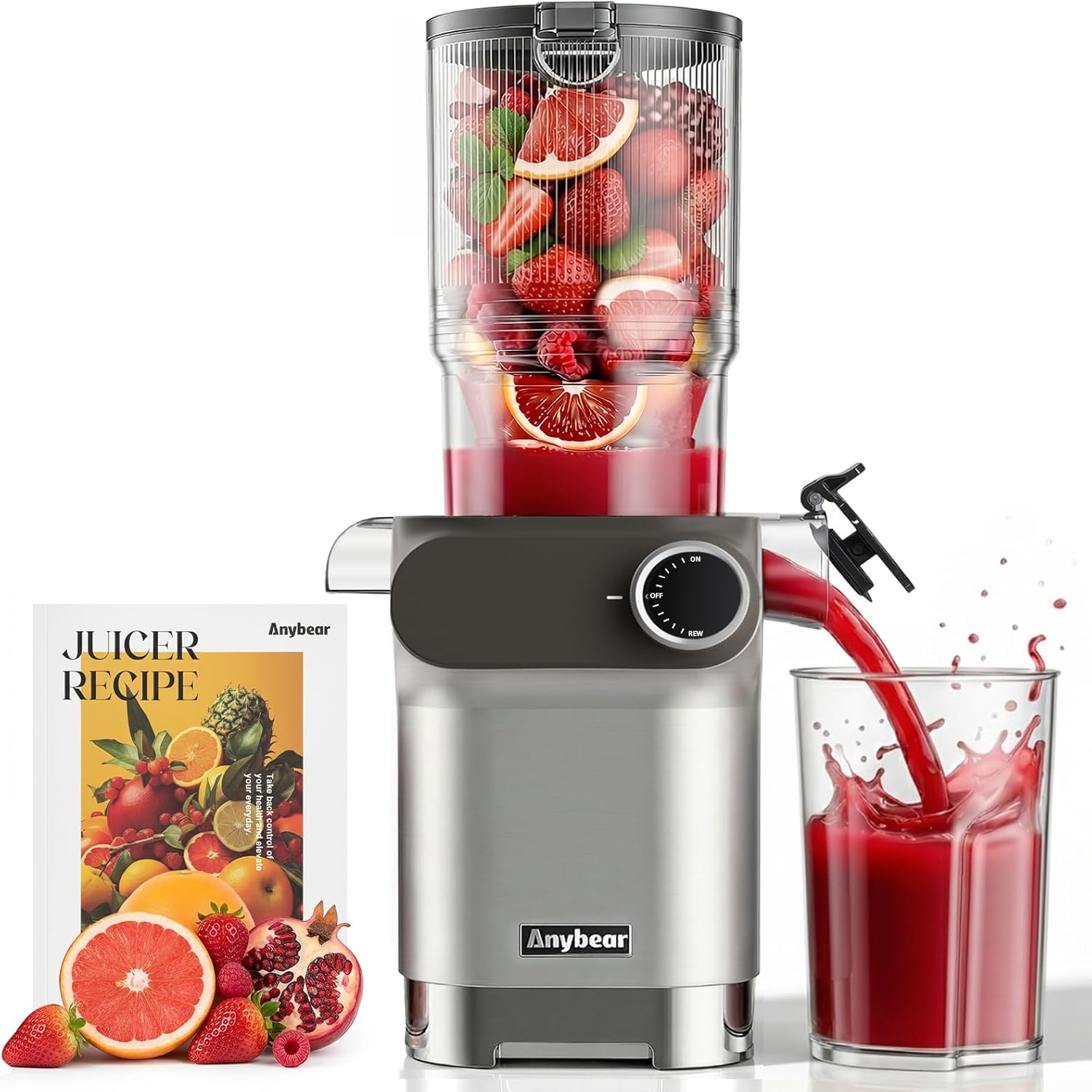
The anybear Cold Press Juicer is a slow masticating machine built to preserve nutrients by crushing produce at low speed with a high-torque 200W motor. It accepts larger items through a 4.3-inch feed chute so you can add many fruits and vegetables without extensive prep, and the low 65 RPM speed and single auger aim to minimize oxidation and heat during extraction. The unit uses Tritan and stainless steel parts on the feed and filter and features a simple one-piece stainless steel filter and few parts to disassemble, which makes rinsing and cleaning quick with the included brush. Practical benefits include higher juice yield and a quieter run compared with centrifugal models, plus a recipe guide to help vary juices. Important limitations are hand-wash-only care and a relatively modest motor compared with commercial units, so very fibrous or high-volume operation will be slower. The straightforward design favors home users who prioritize nutrient retention and ease of cleaning over industrial throughput.
Best for: Buyers who prioritize nutrient retention and gentle extraction for daily fresh juices and want a low-maintenance slow juicer that handles whole produce with minimal prep.
Less Ideal for: People who need industrial-speed throughput or plan to juice very large volumes multiple times per day should consider higher-capacity commercial machines instead.
- Low-speed 65 RPM operation preserves nutrients and reduces oxidation.
- 200W high-torque motor designed for steady extraction and higher juice yield.
- Wide 4.3-inch feed chute reduces prep time for whole fruits and vegetables.
- Simple one-piece stainless steel filter and limited parts make cleaning faster.
- Hand wash only; not suitable for dishwasher cleaning.
- 200W motor is consumer-grade and may be slower on very fibrous or large-volume tasks.
Verdict: Choose this slow cold-press juicer if your priority is gentle, nutrient-preserving extraction from whole produce with straightforward cleaning.
Breville Juice Fountain Plus JE98XL

| Power | 850 watts |
|---|---|
| Feed chute | 3 inch extra-wide |
| Speeds | 2 |
| Juice jug capacity | 35.2 fl oz |
| Pulp container capacity | 2.6 qt |
The Breville Juice Fountain Plus JE98XL is a fast centrifugal juicer built for everyday fruit and vegetable juicing. It uses an 850W motor and a titanium-reinforced disc plus stainless steel micro-mesh filter basket to extract juice quickly, while a 3-inch wide chute reduces prep by allowing many whole fruits to be fed without cutting. Two speed settings let you run softer produce on low and harder items on high, and the included 35.2 fl oz juice jug has a built-in froth separator for clearer pours. Cleanup is straightforward because the pulp container is detachable and many parts are dishwasher-safe, and the cord stores under the base to save counter space. As a centrifugal unit it delivers fast yields but tends to introduce more heat and foam than slow masticating models, so it may not preserve every heat-sensitive nutrient as well as cold-press juicers. For buyers who value speed, ease of use, and reliable extraction from a proven design, this model is a strong everyday choice; those prioritizing maximum nutrient retention should weigh that against the faster centrifugal method.
Best for: Buyers who want a reliable, fast juicer that minimizes prep time and is easy to use and clean, while relying on wide social proof and established performance.
Less Ideal for: People whose primary goal is to maximize retention of heat- or oxygen-sensitive nutrients should consider a slow masticating or cold-press juicer instead.
- Powerful 850W motor for fast extraction
- Extra-wide 3-inch feed chute reduces prep time
- Titanium-reinforced disc and stainless steel micro-mesh basket for efficient juice extraction
- Built-in froth separator in the juice jug for clearer pours
- Detachable pulp container and dishwasher-safe parts simplify cleanup
- Centrifugal design can generate more heat and foam than slow juicers, which may affect some nutrient-sensitive ingredients
- Not optimized for maximum nutrient retention compared with cold-press/masticating juicers
Verdict: Choose the JE98XL if you want a fast, easy-to-use centrifugal juicer that delivers reliable extraction with minimal prep and simple cleanup.
EanOruus 3-in-1 Cold Press Juicer E-18

| Capacity | 100 fluid ounces |
|---|---|
| Wattage | 250 watts |
| Power Source | ac |
| Voltage | 110 volts |
The EanOruus 3-in-1 cold press juicer is a masticating single-auger machine designed for nutrient-preserving extraction and versatile kitchen use. It accepts whole fruit and vegetables through a 6.5-inch wide chute into a 100 oz hopper so you can feed larger pieces and batch process without constant refilling. The unit uses a 250 W AC motor with a high-torque brushless design and an auto-reversing function to handle fibrous produce and reduce jams, while included juice and sorbet strainers plus a nut-milk workflow let you switch between clear juice, frozen fruit sorbet, and creamy plant milks. Detachable parts and a detachable pulp outlet make rinsing and brushing straightforward, though the manual hand-wash requirement means some parts need more careful cleaning than dishwasher-safe alternatives. Practical benefits include quiet operation for morning routines, the capacity for family-sized batches, and features aimed at preventing motor overload. Expect a relatively heavy, countertop appliance that favors nutrient retention and yield over speed, and plan for regular manual cleaning after use.
Best for: Buyers who prioritize maximum nutrient retention and steady, high-yield extraction for family or batch juicing and who prefer a quiet, versatile machine for juices, nut milks, and sorbets.
Less Ideal for: Users who need an ultra-compact or lightweight appliance for occasional single servings or who want fully dishwasher-safe components for minimal cleaning.
- Masticating single-auger design preserves nutrients and increases juice yield
- Extra-wide 6.5-inch chute and 100 oz hopper reduce prep time and allow batch juicing
- 250 W high-torque AC motor with auto-reverse handles fibrous produce and cuts jams
- Includes interchangeable strainers for juice, sorbet, and nut milk versatility
- Detachable pulp outlet and removable parts simplify rinsing and cleaning
- Removable parts require hand washing rather than dishwasher convenience
- Relatively heavy and sizable, so it occupies significant counter space
- Plastic components may not feel as durable as higher-end metal alternatives
Verdict: Choose this juicer if you want a quiet, high-yield masticating machine that preserves nutrients and handles whole produce for family-sized batches and multiple uses.
Choosing the Right Juicer That Keep All Nutrients: Key Factors to Consider
Extraction Method
The juicing mechanism directly affects heat and air introduced during processing. Masticating and triturating systems operate at low RPMs and apply less friction, which helps preserve heat-sensitive vitamins and enzymes. Twin-gear or auger designs typically yield drier pulp and higher nutrient capture from leafy greens than high-speed centrifugal models.
Choosing a method that minimizes shear and speed is critical if nutrient preservation is your priority. Consider how the machine handles both soft fruits and fibrous vegetables, since a method that excels with one produce type may underperform with another.
Oxidation and Exposure Time
How quickly juice is exposed to air during extraction influences how fast it oxidizes. Machines with sealed chambers, slow feeding rates, or gentle auger action reduce the surface area and time the juice spends in contact with oxygen. This lowers nutrient degradation and helps maintain color and flavor.
If you plan to store juice for later use, prioritize a juicer with features or workflows that limit oxygen pickup and produce a more stable juice that lasts longer in refrigeration.
Yield and Pulp Dryness
Higher extraction yield means more juice and less wasted produce, and drier pulp indicates the machine is effectively separating liquid from fiber. Better yield often correlates with higher concentrations of vitamins and minerals per fruit or vegetable used.
Look for models that consistently produce minimal wet pulp across a variety of ingredients. This not only improves nutritional extraction but also lowers the cost per glass and reduces prep effort when you buy produce with the goal of juicing.
Cleaning and Maintenance
A machine that preserves nutrients is only useful if you actually use it regularly. Complex assemblies, hard-to-reach fibers, and many small parts discourage daily cleaning and can trap residue that promotes bacterial growth. Fast, simple disassembly and dishwasher-safe components make it easier to maintain hygiene and performance.
Factor in the real-world cleaning time and frequency required. Some low-speed models require more manual scrubbing but offer tool-free reassembly, while others trade convenience for slightly faster extraction. Consider your tolerance for maintenance when choosing a model.
Produce Compatibility
Not all juicers handle the full range of fruits and vegetables equally. Leafy greens and wheatgrass demand different mechanical action than citrus or hard roots. If your juicing routine includes a broad mix, choose a machine rated for versatile use across soft, fibrous, and dense produce.
A device that handles all categories well will save time and reduce the need for pre-processing like chopping or blanching, which can affect nutrient profiles. Verify claimed compatibility and consider whether attachments or speed modes are necessary for certain ingredients.
Build Quality and Serviceability
Long-term nutrient preservation relies on consistent mechanical performance. Solid construction, corrosion-resistant materials, and replaceable wear parts keep extraction consistent over time. Check for durable augers, reinforced housings, and easy access to seals and blades for replacement.
Also consider warranty terms and the availability of replacement parts. Machines that are serviceable and supported help maintain extraction performance years after purchase, which is important for a daily-use kitchen appliance.
How Juicing Affects Nutrient Retention
Juicing concentrates vitamins, minerals, and phytonutrients into liquid form, but the process can also expose delicate compounds to heat and oxygen. Heat-sensitive vitamins like vitamin C and certain enzymes degrade faster when they experience friction or high rotational speeds.
Minimizing temperature rise and oxygen contact during extraction helps preserve these nutrients. Additionally, the time between juicing and consumption determines how much further degradation occurs, so workflow and storage practices matter as much as the machine itself.
- Low RPM extraction reduces frictional heating
- Sealed or short-path extraction limits oxygen exposure
- Immediate refrigeration slows nutrient loss after juicing
Best Practices for Maximizing Juice Longevity
Even with a machine that preserves nutrients, how you handle the juice after extraction affects its nutritional value. Fill airtight containers to minimize trapped air, chill quickly, and store upright in the coldest part of the refrigerator to slow oxidation.
Consume green and vitamin-C-rich juices within 24 to 48 hours when possible. If you must store longer, use smaller portions to limit repeated exposure to air when you open the container.
- Use vacuum-sealed bottles or upright mason jars
- Avoid leaving juice at room temperature for extended periods
- Label containers with juice type and time made
Kitchen Workflow Considerations
Think about how juicing fits into your daily routine. If you want fresh juice every morning, a quick-to-clean machine with straightforward prep will encourage consistent use. If you batch-prepare juice, choose a model that tolerates longer feed times and produces juice that stores well.
Noise level, counter footprint, and prep space also matter. Low-speed machines tend to be quieter but can be taller or heavier. Ensure you have storage for parts and a cleaning station to make the habit sustainable.
- Plan counter space for operation and drying
- Keep a dedicated brush and drying mat for parts
- Pre-chop produce to a size recommended by the manufacturer to reduce feed time
Common Mistakes That Reduce Nutrient Yield
Overfeeding the machine, using incorrect speed or attachments, and failing to process certain ingredients properly can increase air incorporation and reduce yield. For example, feeding leafy greens without a steady, slower feed can trap air and produce foam.
Another common error is delaying refrigeration. Even nutrient-friendly extraction cannot prevent rapid oxidation if juice sits warm. Lastly, inconsistent maintenance leading to clogged screens or worn parts will lower extraction performance over time.
- Avoid overpacking the feed chute
- Process leafy greens with firm produce to push them through efficiently
- Clean screens and seals promptly after each use
Storage Containers and Bottling Tips
Choosing the right container helps preserve nutrients after extraction. Use dark glass or opaque bottles to reduce light exposure and oxygen-impermeable lids to slow oxidation. Pre-chill bottles before filling to reduce the temperature jump when juice is transferred.
If you plan to transport juice, pack it upright and insulated. For the best flavor and nutrition, consume refrigerated juice within the recommended window and avoid repeated opening which introduces air and bacteria.
- Prefer airtight, narrow-neck bottles for minimal headspace
- Use BPA-free materials if selecting plastic
- Label with date and contents for quick rotation
How We Chose the Best Juicer That Keep All Nutrients
We focused on machines engineered to reduce heat buildup and oxygen exposure during extraction, because those factors strongly affect nutrient retention in juice. Our selection filters prioritized slow-speed, low-oxygen extraction methods and designs that limit mechanical friction. We also considered throughput for different produce types, because consistent performance across leafy greens, soft fruits, and hard roots matters for a well-rounded juicing habit. Ease of cleaning and maintenance were included as practical filters since residue and difficult disassembly discourage regular use, which undermines long-term nutritional benefits. Evaluation criteria included measured or documented extraction yield and pulp dryness, mechanisms that limit oxidation, operating speed and heat control, and cleaning time and complexity. Durability of key wear parts and warranty coverage were further tiebreakers. We excluded high-speed centrifugal-only machines that inherently introduce more heat and air, and we did not consider units with poor service support or unclear part specifications. The result is a set of models that balance nutrient preservation with everyday usability.
Our full evaluation process is outlined in our review methodology.
FAQ
Does juicing remove fiber and affect nutrient absorption?
Yes, juicing separates the liquid from most insoluble fiber. While this concentrates vitamins and minerals for faster absorption, it also reduces the fiber that slows sugar uptake. Depending on your dietary goals, you may alternate between juicing and blending to retain fiber.
How soon should I drink juice to get the most nutrients?
Consume fresh juice as soon as possible, ideally within a few hours. If that is not feasible, refrigerate immediately and drink within 24 to 48 hours for best nutrient retention. Some juices, particularly green mixes, lose potency faster than citrus-heavy blends.
Can I preserve nutrients by storing juice in the freezer?
Freezing slows nutrient degradation but can change texture and flavor. Use airtight, freezer-safe containers with minimal headspace. Thaw slowly in the refrigerator and consume promptly; some sensitive enzymes and volatile compounds may not fully recover after freezing.
Are low-speed juicers always better for nutrients?
Low-speed juicers typically reduce heat and oxidation, which benefits nutrient retention. However, performance varies by design and produce type. Versatility and yield should be considered alongside speed when choosing a machine for nutrient preservation.
How does pulp dryness relate to nutrient extraction?
Drier pulp generally indicates more efficient liquid extraction, meaning more of the produce's soluble nutrients ended up in the juice. However, some beneficial compounds remain bound to fiber, so extremely dry pulp is not the only indicator of a healthy juice choice.
Final Verdict
Prioritize machines that minimize heat and oxygen exposure while delivering consistent yields across the fruits and vegetables you use most. Balance extraction method with cleaning ease and build quality so the juicer remains practical for daily or batch use. Focus on workflow and storage practices as much as the device itself to keep juice fresh and nutrient-rich. Choose a juicer that matches your ingredient mix and lifestyle, and you will get the best combination of nutrient retention and convenience.