
Note: This article contains affiliate links. If you click on these links and make a purchase, we may earn a small commission at no extra cost to you. This helps support our research and content. Read our full affiliate disclosure here.
Picking the right juicer matters if you want consistent juice yield without a lot of fuss. Under $200 covers models that balance motor strength, extraction efficiency, and ease of upkeep, which is ideal for regular home use or testing juicing as a routine. This guide shortlists the top options under the budget cap and explains how each type handles common tasks like leafy greens, citrus, and harder roots. We evaluated machines for extraction performance, mess and cleanup, and day-to-day durability to surface the most practical picks. Read on for straightforward buying guidance and compact decision criteria before the product summaries.
Top Picks at a Glance
| Best Overall The best all-around choice for most situations | Breville Juice Fountain Plus JE98XL |  |
| Best Quality Built to a higher standard if you want something more solid | Omega Cold Press Juicer J8006HDBLK |  |
| Best Value The sweet spot between price and what you get | nutribullet Juicer NBJ50100 |  |
| Best Budget The cheapest option that still gets the job done reliably | GDOR Centrifugal Juicer GS378 |  |
| Top Rated A top-rated pick with lots of positive feedback | anybear Cold Press Juicer SJ054C |  |
| Most Popular A crowd favorite that many people choose with confidence | Hamilton Beach Big Mouth Juicer 67601A |  |
| Best Seller A high-volume bestseller chosen again and again | Juilist Centrifugal Juicer AMR526 |  |
Breville Juice Fountain Plus JE98XL

| Maximum Power | 850 watts |
|---|---|
| Number of Speeds | 2 |
| Power Source | Corded Electric |
| Blade Material | Stainless Steel |
| Capacity | 1 liters |
The Breville Juice Fountain Plus JE98XL is a compact centrifugal juicer built for fast, everyday juicing. It uses an 850W motor with a titanium-reinforced disc and stainless steel micro-mesh filter basket to extract juice quickly from whole fruits and vegetables, and the 3-inch feed chute reduces prep by fitting many items whole. Two speeds let you switch between softer produce and denser items, and the included 35.2 fl oz juice jug with integrated froth separator helps produce clearer pours. Cleanup is straightforward because the pulp container detaches and many parts are dishwasher safe, and the cord stores under the base for neater counter storage. Practical limitations are typical of centrifugal machines: it is faster than slow masticating juicers but can yield more foam and slightly less long-term nutrient retention, and it is best for everyday kitchen use rather than heavy commercial workloads. For buyers who want quick results and minimal prep, it delivers reliable performance and simple maintenance.
Best for: Home cooks who want a fast, no-fuss juicer that cuts prep time and handles a mix of fruits and vegetables for daily use.
Less Ideal for: Users seeking maximum juice yield with minimal foam or those who need a unit built for prolonged commercial or heavy-duty juicing.
- 3-inch wide feed chute accepts many fruits and vegetables without pre-cutting
- 850W motor with titanium-reinforced disc and stainless steel micro-mesh filter for efficient extraction
- Two-speed control for soft and hard ingredients
- Includes juice jug with integrated froth separator to reduce foam
- Detachable pulp container and dishwasher-safe parts for easier cleanup
- Centrifugal design can produce more foam and less nutrient retention than slow masticating juicers
- Not intended for heavy commercial use or continuous long sessions
Verdict: A fast, user-friendly centrifugal juicer that shortens prep time with a wide chute while delivering reliable daily performance under $200.
Omega Cold Press Juicer J8006HDBLK

| Wattage | 200 watts |
|---|---|
| Power Source | Corded Electric |
| Number of Speeds | 1 |
| Special Features | Manual |
The Omega Cold Press Juicer J8006HDBLK is a triple-stage slow masticating juicer intended for batch juicing and broader kitchen tasks like nut butters, baby food, pasta and sorbets. It runs at 80 RPM with a 200-watt motor to minimize heat and oxidation, which helps preserve nutrients and flavor when extracting juice from fruits, vegetables, leafy greens and wheatgrass. The adjustable end cap and triple-stage auger increase yield, so you get more juice from less produce, and the single low speed keeps noise down during operation. Parts are removable and top-rack dishwasher safe for simpler cleanup, and the included homogenizing cone and accessories expand use beyond just juice. Trade-offs are the single speed control, which limits fine control for different ingredients, and the machine is heavier and larger than compact centrifugal units, so it takes more counter space. For buyers who prioritize nutrient retention and versatility over speed, this model delivers strong extraction and useful extra functions, but those wanting quick, small servings or multiple speed settings will find it less convenient.
Best for: Buyers focused on extraction performance and nutrient retention who want a versatile appliance that doubles as a small-scale nutrition system for juices, nut butters and baby food.
Less Ideal for: Those who need very fast juicing, frequent single-serve jobs, or a lightweight, ultra-compact countertop unit should consider faster centrifugal models instead.
- Triple-stage 80 RPM auger maximizes juice yield and nutrient preservation
- Includes homogenizing cone and multiple accessories for nut butters, baby food, pasta and sorbets
- Top-rack dishwasher safe removable parts simplify cleaning
- Quiet operation compared with high-speed centrifugal juicers
- Single-speed design lacks variable speed control for delicate or hard ingredients
- Larger and heavier footprint than compact centrifugal models
Verdict: Choose this Omega when you want high juice yield and nutrient-preserving cold press performance plus multi-use kitchen functions rather than raw speed.
nutribullet Juicer NBJ50100

| Maximum Power | 800 watts |
|---|---|
| Number of Speeds | 2 |
| Capacity | 1.5 liters |
| Power Source | Corded Electric |
The NutriBullet Juicer is a countertop centrifugal juicer built around an 800W motor and a wide 3-inch feed chute that accepts whole fruits and many vegetables so you can juice with minimal prep. It offers two speed settings to handle softer produce or harder items like carrots and apples, and the large pulp basin lets you process multiple pieces before stopping to empty. Juice collects in a 27-ounce sealing pitcher with a froth separator and a no-drip spout for cleaner pours, and the pitcher, sieve and pulp basin are dishwasher safe for easy cleanup. The unit is self-contained so you lift the pulp basin off the motor base to empty it, which keeps a mess off the countertop. Limitations are those common to centrifugal juicers: higher-speed extraction produces more foam and slightly less yield than slow masticating juicers, and noise is noticeable during operation. For buyers looking for straightforward, fast juicing and easy cleanup under $200, this model hits the key practical points.
Best for: Buyers who prioritize speed, minimal prep and easy cleanup when making fresh juice at home and want a reliable everyday machine under $200.
Less Ideal for: Those seeking maximum juice yield, very quiet operation, or the best nutrient retention from leafy greens should consider a slow masticating juicer instead.
- 3-inch wide feed chute reduces prep by allowing whole fruits and many vegetables to be juiced
- 800W motor with two speeds handles both soft and hard produce
- Large 1.5L pulp basin lets you juice multiple items before emptying
- Sealing 27oz pitcher with froth separator and no-drip spout for cleaner pouring and short-term storage
- Key removable parts are dishwasher safe for easier cleanup
- Centrifugal design creates more foam and typically yields less juice than slow masticating juicers
- Operation can be relatively noisy compared with slower juicers
Verdict: A fast, no-fuss countertop juicer that minimizes prep with a wide feed chute and delivers quick, easy juicing and cleanup under $200.
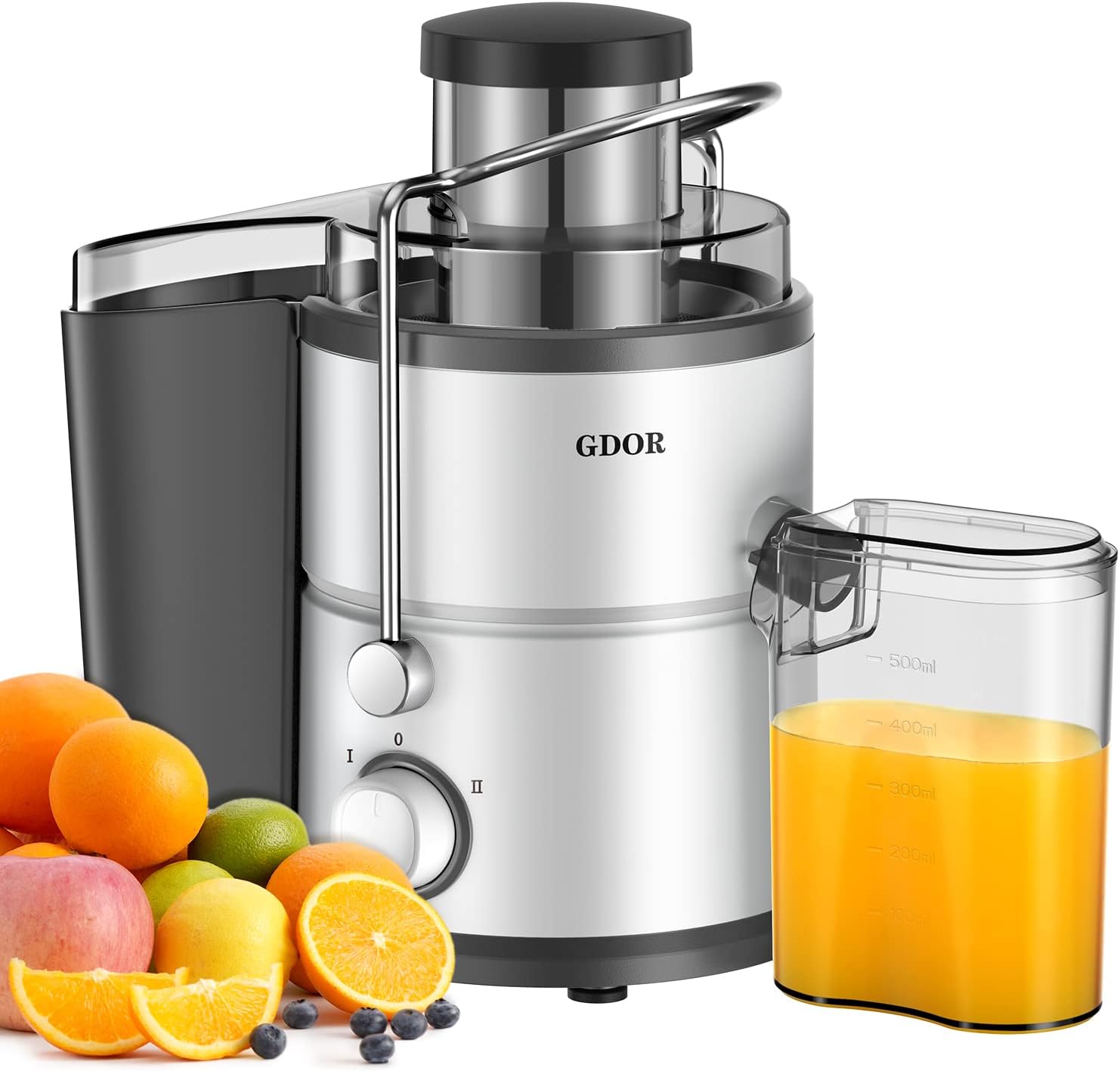
GDOR Centrifugal Juicer GS378
| Maximum Power | 800 watts |
|---|---|
| Number of Speeds | 2 |
| Power Source | ac |
| Voltage | 120 volts |
The GDOR Centrifugal Juicer GS378 is a straightforward countertop centrifugal juicer aimed at quick home juicing. It uses an 800W motor and a dual-speed knob so you can run soft fruits at the lower setting and harder produce at high speed, while the wide 3-inch chute reduces prep by accepting larger pieces or whole fruit. Juice passes into a 17 oz jug with a built-in foam separator to lower froth and help keep pours cleaner, and the unit includes a brush for cleaning and dishwasher-safe parts for easier maintenance. Safety features such as a locking arm, micro switch protection, and automatic overheat/overload shutdown make it safe for regular use, and non-slip feet reduce vibration. Expect centrifugal-style juice with less pulp than whole slow juicers but slightly more foam and shorter nutrient retention. For budget buyers wanting fast, everyday juice without complex assembly, this delivers solid performance, though it is not a masticating slow juicer and will produce coarser pulp and shorter shelf life for juice.
Best for: Buyers looking for an affordable, fast juicer that minimizes prep and offers simple controls for daily home use.
Less Ideal for: People who prioritize maximum juice yield, very quiet operation, or long-term nutrient preservation should consider a slow masticating juicer instead.
- 800W motor with dual speeds for soft and hard produce
- 3-inch wide feed chute reduces prep time for larger fruits
- Built-in foam separator and 17 oz jug for cleaner pours
- Multiple safety features including locking arm and overheat protection
- Parts include a cleaning brush and are dishwasher-safe
- Centrifugal design yields coarser pulp and shorter juice shelf life compared with slow juicers
- Capacity and jug size are modest for batch juicing
Verdict: A budget-friendly centrifugal juicer that speeds up prep with a wide chute and gives reliable, safe everyday juicing for families on a budget.
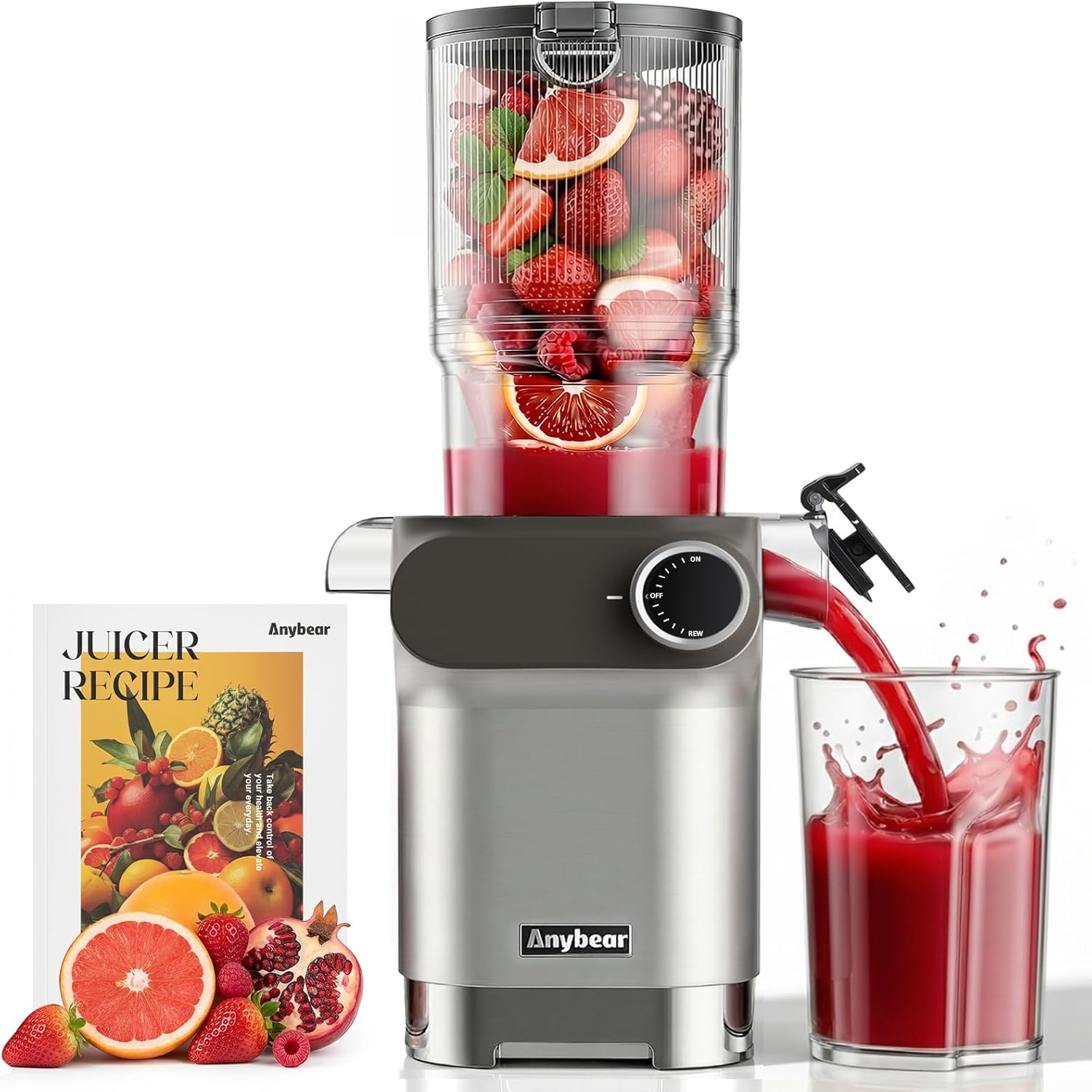
anybear Cold Press Juicer SJ054C
| Wattage | 200 watts |
|---|---|
| Voltage | 110 volts |
| Special Features | Easy to Clean |
| Blade Material | Stainless Steel |
The anybear Cold Press Juicer is a single-auger masticating machine that squeezes juice at low speed to preserve flavor and reduce oxidation. It pairs a 200W motor with a high-torque auger that runs at about 65 RPM, which helps extract juice from whole fruits and vegetables through the 4.3-inch feed chute so you often do not need to pre-cut produce. The unit uses Tritan feed components and a stainless-steel filter for food-safe contact and a one-piece filter design that simplifies cleaning; disassembly is described as three steps and the package includes a brush. Practical benefits include higher yield and fresher taste from slow extraction, fewer prep steps for larger produce, and straightforward maintenance. Limitations to note are the hand-wash care instructions and the relatively modest power compared with commercial machines, which means it is best for regular home juicing rather than heavy continuous batches.
Best for: Buyers who prioritize a dependable, low-oxidation home juicer that reliably produces flavorful juice with minimal prep and straightforward cleaning routines.
Less Ideal for: People who need a dishwasher-safe unit or expect to process very large daily volumes for commercial use should consider a different model.
- Low-speed masticating extraction preserves flavor and reduces oxidation
- Large 4.3-inch feed chute accepts bigger produce so less chopping is needed
- One-piece stainless steel filter and simple disassembly make cleaning quicker
- Tritan and stainless-steel food-contact parts for safer juice quality
- Requires hand washing rather than dishwasher-safe parts
- 200W motor is suitable for home use but not heavy commercial workloads
Verdict: A dependable slow masticating juicer that maximizes juice yield and freshness while keeping prep and cleaning simple, making it a strong home choice under $200.
Hamilton Beach Big Mouth Juicer 67601A

| Maximum Power | 800 watts |
|---|---|
| Power Source | Corded Electric |
| Number of Speeds | 1 |
| Included Components | Cleaning Brush, Dishwasher Safe Parts |
The Hamilton Beach Big Mouth Juicer is a centrifugal extractor built for speed and easy cleanup. Its 800W motor and stainless steel strainer basket spin hard and soft produce quickly to separate juice from pulp, while the 3-inch feed chute lets you juice many whole fruits and long items with little pre-cutting. Typical use is straightforward: feed apples, carrots, celery, or leafy greens through the chute, collect juice under the spout, and empty the large pulp bin when finished. Removable components are dishwasher safe and a cleaning brush is included, which keeps post-juicing cleanup simple. The machine has a single speed and a knob controller, so it is uncomplicated to operate but lacks variable speeds for delicate leafy greens. It also does not include a juice cup or foam separator accessory. With motor overload protection and a three-year limited warranty, this model balances fast performance and practicality for everyday home juicing under $200.
Best for: Buyers who want a fast, no-fuss centrifugal juicer that minimizes prep and cleanup and prefer established models with strong user feedback and warranty coverage.
Less Ideal for: If you plan to cold-press leafy greens and want slow, low-oxidation extraction or need multiple speed settings for delicate produce, consider a masticating juicer instead.
- Large 3-inch feed chute reduces prepping time by fitting whole fruits and long produce
- 800-watt motor extracts juice efficiently from hard and soft produce
- Dishwasher-safe removable parts and included cleaning brush simplify cleanup
- Generous pulp bin reduces how often you need to stop and empty during a session
- Three-year limited warranty provides added ownership reassurance
- Single speed control limits finesse when juicing delicate leafy greens or herbs
- No included juice cup or foam separator accessory
Verdict: Choose this model if you want a reliable, fast centrifugal juicer that handles whole fruits with minimal prep and is easy to clean.
Juilist Centrifugal Juicer AMR526

| Maximum Power | 800 watts |
|---|---|
| Wattage | 400 watts |
| Number of Speeds | 3 |
| Capacity | 400 ml |
| Power Source | Corded Electric |
The Juilist Centrifugal Juicer AMR526 is a compact, corded electric juicer designed for fast everyday juicing. It accepts large pieces through a 3" wide feed chute so you can drop in many fruits and vegetables with minimal prep, then choose from three speeds for soft, medium, or hard produce. The unit uses a stainless steel cutting disc and a micro-mesh filter to separate juice from pulp and includes a visible window to watch the process. Practical touches include dishwasher-safe accessories, a cleaning brush, a safety lock arm, non-slip feet, and automatic overheat protection. Because it is a centrifugal model it extracts juice quickly and is best for higher-juice fruits and many common vegetables, but it is not ideal for fibrous low-juice greens or frozen items. Its compact footprint fits small counters and the one-button controls make it approachable for new users, though noise and slightly lower yields on some produce are inherent to this juicer type.
Best for: Buyers who want a straightforward, low-fuss juicer that speeds morning routines and requires minimal prep and cleaning effort.
Less Ideal for: If you primarily juice leafy greens, wheatgrass, or frozen blends, a slow masticating juicer would deliver better yield and texture.
- Large 3" feed chute reduces chopping and speeds prep
- Three speed settings let you match power to soft or hard produce
- Stainless steel cutting disc and micro-mesh filter for effective separation of juice and pulp
- Dishwasher-safe parts plus a cleaning brush simplify cleanup
- Compact design with safety lock and overheat protection for everyday home use
- Centrifugal design performs poorly with very fibrous greens and frozen produce
- Can be louder than slow masticating juicers due to high-speed operation
Verdict: A fast, easy-to-use centrifugal juicer that saves prep time with a wide feed chute and simple cleanup, making it a practical choice for everyday home juicing under $200.
Choosing the Right Juicer: Key Factors to Consider
Extraction Method
Different juicers use centrifugal, masticating, or citrus-specific mechanisms, and the method you choose impacts yield and nutrient retention. Centrifugal machines spin produce at high speeds to separate juice quickly but often leave wetter pulp and generate more heat. Masticating units crush and press slowly, usually extracting more juice from leafy greens and delivering drier pulp, though they can be slower.
Think about the kinds of produce you juice most. If you rely heavily on leafy greens or wheatgrass, a slow-press style will usually give better results. For quick morning orange or apple juices, a centrifugal or dedicated citrus press can be faster and convenient.
Yield and Pulp Dryness
High juice yield and dry pulp indicate efficient extraction and mean you get more juice from the same amount of produce. Yield varies by method and by how well the machine handles different textures; for example, carrots and beets require robust gearing or higher speed, while spinach needs strong compressive action.
If you want to maximize output and reduce produce waste, prioritize machines noted for consistently dry pulp after juicing. This reduces the amount you need to buy and keeps operating costs down over time.
Cleanup Time and Dishwasher Compatibility
Ease of cleaning strongly affects how often you will use a juicer. Devices with many small parts, fine screens, or hard-to-reach nooks become a chore to clean and discourage daily use. Models that allow quick disassembly and have large, simple parts are faster to rinse and scrub.
Dishwasher-safe components can save time, but check the manual: some plastics degrade over repeated machine washes. Also consider whether included brushes, pulp catchers, and spouts are easy to access and wipe down, since these small details determine real-world cleanup time.
Motor Power and Durability
Motor strength affects how well a juicer handles hard produce and prolonged use. A more powerful motor reduces the chance of clogging when processing dense items like beets or carrots and handles continuous batches without overheating. Durability also depends on cooling design and component gearing quality.
Look for machines with thermal protection or rated duty cycles that match your intended use. If you plan to make multiple servings in one session, favor units with reputations for sustained operation under load.
Size, Counter Footprint, and Storage
Kitchen space is a practical constraint. Larger centrifugal juicers often have a smaller vertical profile but wider footprints, while some masticating units are tall and narrow. Consider where you will operate and store the device and whether permanent countertop placement is realistic.
Also check hopper size and feed-chute diameter: wider chutes reduce prep time because you need less chopping. If storage space is limited, measure cabinet openings or shelf heights before buying.
Noise Level and User Comfort
Noise varies widely between high-speed centrifugal models and low-speed masticating units. Louder machines can make early-morning use disruptive in shared living situations. Vibration and rattling are related concerns that affect perceived build quality and longevity.
If quiet operation matters, prioritize units with sound-dampening design or lower rpm ratings. Also assess how stable the machine feels during operation; suction feet and solid bases reduce movement and improve comfort.
Juicer Types and When To Choose Them
Understanding the main juicer types helps match a machine to your habits. Centrifugal juicers are fast and convenient for harder fruits and frequent quick juices. Masticating or slow-press juicers excel with leafy greens and often yield more juice per pound of produce. Dedicated citrus juicers or presses are the simplest option when you only need oranges, lemons, or limes.
Your decision should consider how much prep you want to do, how often you will juice, and whether you value speed over maximum yield.
- Centrifugal: Fast, good for apples, pears, and carrots; generally easier to find under budget limits.
- Masticating: Slower, higher yield, better for greens and soft produce.
- Citrus presses: Simple, efficient for citrus only and typically very easy to clean.
How to Maximize Juice Yield
A few simple techniques increase yield regardless of machine type. Alternate hard and soft produce when feeding the juicer to help clear pulp and maintain flow. Chop larger items into pieces that fit the feed chute but avoid overloading the hopper to prevent blockages.
Cold produce yields more juice and less foam, so refrigerate fruits and vegetables before juicing when possible. For leafy greens, roll them into loose bundles before feeding to improve throughput on centrifugal machines.
- Feed in alternating textures to avoid clogs.
- Use cold produce to reduce foam and improve extraction.
- Pre-cut very large items to match the chute size for smoother operation.
Cleanup Strategies to Keep Juicing Simple
Designate a rinsing station near your sink and rinse components immediately after use to prevent pulp from drying onto fine screens. Use a soft brush to clean mesh filters and a small bottle brush for spouts and narrow parts.
If you rely on dishwasher-safe parts, place them on the top rack and avoid high-heat cycles if the manual warns against them. Periodically soak stubborn residue in warm, soapy water to loosen buildup before scrubbing.
- Rinse immediately to prevent dried pulp.
- Use included brushes for mesh parts and spouts.
- Soak difficult residues rather than aggressive scrubbing to protect finishes.
Common Troubleshooting Tips
If the machine clogs, stop and clear the feed chute rather than forcing more produce through. Many jams occur from overloading or feeding large fibrous batches too quickly. Turn the unit off and disassemble the relevant parts for safe cleaning.
For overheating or repeated shutdowns, allow the motor to cool and review the duty cycle guidance. Persistent issues with performance often stem from worn cutters, dull blades, or clogged screens, which are maintenance items to monitor rather than immediate faults.
- Stop and clear clogs immediately to avoid strain on the motor.
- Let the unit cool if thermal protection trips during repeated use.
- Inspect and clean screens and blades regularly to maintain efficiency.
Ingredients That Need Special Handling
Soft berries, tomatoes, and cucumbers juice well but can create foamy or pulpy results depending on the machine. Strain the juice afterward if a clearer texture is desired. Starchy vegetables like potatoes are not suitable for juicing and should be avoided.
Very fibrous items such as wheatgrass or certain leafy stems may require a dedicated slow-press style or additional processing. Always consult the manual for recommended produce lists to avoid damaging the machine.
- Strain berry juices for clarity if desired.
- Avoid starchy vegetables that damage filters.
- Use slow-press machines for fibrous greens for best results.
How We Chose the Best Juicer
We tested a broad cross-section of countertop juicers priced under $200 and shortlisted machines that deliver the best mix of extraction efficiency, ease of cleaning, build durability, and everyday usability. Evaluation emphasized measurable performance such as juice yield and pulp dryness, plus user-facing factors like how quickly parts disassemble and whether common components are dishwasher-safe. Noise levels during operation and motor longevity under typical home loads were also considered, since these affect long-term satisfaction. We excluded specialty single-purpose devices that cannot handle both hard roots and softer produce, and we did not include machines with replaceable parts that are difficult to source. Our selection favored models with transparent components and straightforward warranties. The result is a curated set of juicers that perform well across the situations most home buyers will encounter, from quick morning citrus to more demanding carrot and beet juicing.
Our full evaluation process is outlined in our review methodology.
FAQ
How often should I clean my juicer?
You should rinse parts immediately after each use and do a thorough cleaning after every session. Regular cleaning prevents buildup that impairs extraction and increases wear on filters and blades.
Can I juice leafy greens in a budget juicer?
You can juice some leafy greens in many machines, but yield and pulp dryness will be better with a slow-press design. If greens are a primary ingredient, prioritize models known for handling fibrous produce.
Is refrigeration necessary for fresh juice?
Fresh juice is best refrigerated and consumed within 24 to 48 hours for flavor and safety. Some nutrient loss occurs over time, so storing cold and minimizing air exposure preserves quality.
Will a juicer handle citrus and hard root vegetables equally well?
Not always. Dedicated citrus presses are optimized for oranges and lemons, while centrifugal and masticating units handle hard roots like carrots and beets better. Choose based on the mix of produce you plan to juice most often.
How loud are juicers typically?
Noise varies widely: high-speed centrifugal models are generally louder, while slow-press juicers run quieter. If noise is a concern, look for lower rpm designs and solid-base construction to reduce vibration.
Final Verdict
For most buyers seeking a juicer under $200, prioritize extraction efficiency, ease of cleaning, and motor durability. Consider the types of produce you will juice most often and balance speed against yield. Expect tradeoffs: faster machines are convenient but may sacrifice some yield and quiet operation, while slower presses typically give better juice results and lower noise. Make your final choice by matching the machine type to your routine and kitchen constraints. Focus on practical features like feed-chute size, dishwasher-safe parts, and the duty cycle to ensure the juicer will suit your daily needs.