
Note: This article contains affiliate links. If you click on these links and make a purchase, we may earn a small commission at no extra cost to you. This helps support our research and content. Read our full affiliate disclosure here.
When you need safe drinking water without extra bulk, picking the right lightweight water filter makes a real difference on the trail, at camp, or during travel. A compact filter can reduce pack weight while still delivering adequate flow and reliable contaminant reduction, so you do not waste time or energy fetching water. This guide spotlights seven top lightweight water filters chosen for their balance of portability, filtration performance, and ease of use. We evaluated each option against practical, real-world needs including flow rate, filter life, and cleaning requirements. Read on to find the best-fit filter for your typical outings and how each factor will affect your choice.
Top Picks at a Glance
| Best Overall The best all-around choice for most situations | Waterdrop Gravity Water Filter Straw | 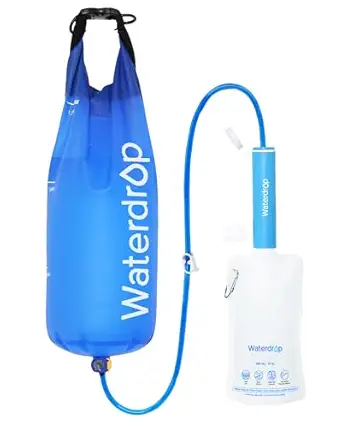 |
| Best Quality Built to a higher standard if you want something more solid | GRAYL GeoPress 24 oz | 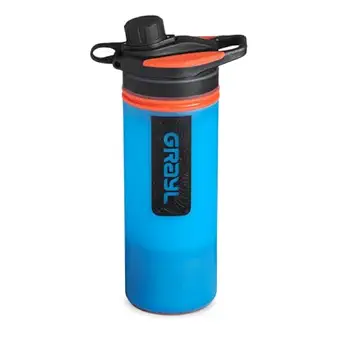 |
| Best Value The sweet spot between price and what you get | Sawyer Squeeze SP129 |  |
| Best Budget The cheapest option that still gets the job done reliably | LifeStraw Peak Personal Water Filter |  |
| Top Rated A top-rated pick with lots of positive feedback | LifeStraw Personal Water Filter |  |
| Most Popular A crowd favorite that many people choose with confidence | Sawyer MINI Water Filter SP103 |  |
| Best Seller A high-volume bestseller chosen again and again | Camco TastePURE RV Water Filter 40043 |  |
Waterdrop Gravity Water Filter Straw

| Purification Method | Hollow Fiber Ultrafiltration Membrane |
|---|---|
| Maximum Flow Rate | 700 milliliters_per_minute |
| Power Source | Non Electric |
| Supported Water TDS Level Maximum (PPM) | 300 |
| Capacity | 1400 gallons |
The Waterdrop Gravity Water Filter Straw is a simple, non-electric filtration kit built for outdoor use and emergency preparedness. It uses a 0.1 micron hollow fiber ultrafiltration membrane in a straw-style filter that connects to a 1.5 gallon gravity bag or standard bottles to deliver filtered drinking water without pumping. In practice it is convenient for campsite hydration or a rudimentary basecamp setup: fill the bag, hang it, and let gravity feed up to 700 ml per minute of filtered water into cups or bottles. The filter claims a long 1,400 gallon lifespan and includes a backwashable mouthpiece to help restore flow after heavy particulate exposure. The kit is compact and lightweight, comes with a 16 oz pouch for single-person use, and needs no power or complex maintenance. It is not designed for desalination or very high TDS water above 300 ppm, and very cloudy sources will require pre-sedimentation to avoid clogging. For hikers and emergency kits this offers reliable, easy filtration with practical limitations on extremely turbid or saline water.
Best for: Buyers who want a lightweight, no-power water filter for camping, backpacking, or emergency preparedness and who prefer a fuss-free gravity setup over pumps or chemical treatment.
Less Ideal for: People needing a system for seawater, heavy mineral or high-TDS sources, or those who routinely filter extremely muddy water without the option to pre-filter or settle.
- 0.1 micron hollow fiber membrane removes particulates, chlorine taste, and many contaminants
- Includes 1.5 gallon gravity bag and 16 oz pouch for group or solo use
- Non-electric gravity operation delivers up to 700 ml/min without pumping
- Backwashable mouthpiece helps restore flow and extend usable life
- Lightweight and compact for backpacking and emergency kits
- Not rated for desalination and not suitable for water with TDS above 300 ppm
- Very turbid water may clog the filter quickly and requires pre-filtering or settling
Verdict: Choose this lightweight gravity kit if you want a compact, non-electric filter that reliably produces drinkable water for camping and emergencies.
GRAYL GeoPress 24 oz

| Capacity | 24 fluid ounces |
|---|---|
| Purification Method | Electroadsorption, Activated Carbon |
| Maximum Flow Rate | 5 liters per minute |
| Supported Water TDS Level Maximum (PPM) | 1000 |
| Product Shelf Life | 10 years |
The GRAYL GeoPress is a handheld purifier bottle that turns suspect freshwater into potable water with a single press. To use, fill the outer cup from a river, tap, or lake, insert the purifier cartridge and inner press, then push the cartridge through the water into the drinking cup — the process takes about 8 seconds and delivers a fast 5 L/min flow for chugging or filling other containers. Its purifier media combines electroadsorption and powdered activated carbon, which the manufacturer says removes viruses, bacteria, protozoa and also adsorbs chemicals, PFAS, heavy metals, flavors and odors. The bottle's RiverFlow spout and SimpleVent cap make drinking and refilling easy, and the One‑Way Drink Mix Valve lets you add electrolytes or flavored mixes without fouling the media. The cartridge is replaceable and rated for roughly 300 cycles (about three years with normal use). Tradeoffs are typical of a cartridge system: you must carry replacements and apply firm, repeated presses when filtering large volumes, but for fast single‑serving purification on the trail this is one of the quickest, simplest options available.
Best for: Buyers who prioritize speed and proven pathogen removal for single‑serving purification on hikes, travel, or emergency kits and want a simple, no‑setup solution they can use anywhere.
Less Ideal for: People who need to treat large daily household volumes or want a hands‑free pump system should consider gravity or pump filters instead.
- Purifies and filters a broad range of contaminants including viruses, bacteria and protozoa
- Very fast flow rate and cycle time — purifies 24 oz in about 8 seconds (5 L/min)
- One‑way valve supports adding electrolyte or flavored mixes without contaminating the cartridge
- Ergonomic features (SoftPress pads, TPE TopoGrip, RiverFlow spout) make pressing and drinking comfortable and quick
- Replacement cartridges have a finite life so ongoing cost and packing spares is required
- Manual pressing is required for each fill which can be tiring if you need many liters
Verdict: If you need the fastest, packable purifier that reliably removes viruses and bacteria for day hikes, travel, or bug‑out kits, the GeoPress is a top lightweight choice.
Sawyer Squeeze SP129

| Purification Method | Hollow Fiber Membrane |
|---|---|
| Other Special Features of the Product | Removes bacteria, protozoa, and microplastics |
| Maximum Flow Rate | 1.7 liters per minute |
| Upper Temperature Rating | 40 °C |
| Included Components | 32‑oz collapsible pouches, inline adapters, pop-up drinki |
The Sawyer Squeeze SP129 is a compact, ultralight water filter designed for hiking, backpacking, travel, and emergency kits. It filters water through a 0.1 micron hollow fiber membrane, protecting against bacteria and protozoa while removing 100% of microplastics, and ships with two 32-ounce collapsible pouches and adapters for standard bottles and hydration bladders. You use it by filling a pouch or attaching it directly to a bottle, then squeezing or using gravity to push water through the filter at up to about 1.7 liters per minute; the included pop-up drinking straw and inline adapters make it versatile for different setups. Its practical benefits are low weight, long claimed service life, and simple field maintenance, plus broad compatibility with common bottles and bladders. Limitations are the manual squeezing or gravity requirement for flow, occasional need to backflush to restore performance, and an upper temperature rating that limits use with hot sources.
Best for: Buyers who want the lightest, most practical field filter for multi-day trips, emergency kits, or minimalist hikers and who prefer simple, repairable gear.
Less Ideal for: People who need an electric or pump-driven purifier for frequent high-volume group use or anyone who wants immediate hot-water treatment in the field.
- Very lightweight and pocketable for backpacking or emergency kits
- 0.1 micron hollow fiber membrane removes bacteria, protozoa, and microplastics
- Includes reusable 32‑oz pouches plus adapters for bottles and hydration bladders
- Relatively high maximum flow rate for a manual squeeze filter (about 1.7 L/min)
- Requires squeezing or gravity to push water through, so it is not hands‑free unless used in a gravity setup
- Needs periodic backflushing to maintain flow and performance
- Not designed for treating very hot water (upper temp rating 40°C)
Verdict: If you want the lightest, field‑proven manual filter for solo or lightweight trips, the Sawyer Squeeze SP129 delivers high filtration performance in a tiny, practical package.
LifeStraw Peak Personal Water Filter

| Purification Method | Microfiltration Membrane |
|---|---|
| Maximum Flow Rate | 1.7 liters per minute |
| Capacity | 4000 liters |
| Power Source | Non Electric |
The LifeStraw Peak is a minimalist, ultralight personal straw filter made for drinking directly from streams, lakes, or a filled container without pumps or batteries. It uses a microfiltration membrane to block bacteria, parasites, and microplastics and is rated to provide up to 4,000 liters of treated water, so it can serve as a long-term backup in an emergency kit or a regular companion on day hikes. The Peak Series improves flow and grip over older models and is durable and leak resistant for rough field use. It attaches to bottles or standard gravity hoses with the removable threaded cap for added versatility, and its non-electric design means no charging or consumable power. Limitations are inherent to straw filters: it only filters while you suck or squeeze water through it and does not remove dissolved chemicals or salts, so it is not a complete replacement for multi-stage purifiers when water chemistry is a concern.
Best for: Buyers seeking an inexpensive, ultralight backup or day-hike water filter who prioritize low weight, durability, and long service life over multi-stage chemical removal.
Less Ideal for: Users who need to treat chemically contaminated water, remove heavy metals, or quickly process large volumes of water should choose a multi-stage purifier or pump system instead.
- Very lightweight and compact for pack or emergency kits
- Microfiltration membrane removes bacteria, parasites, and microplastics
- Long service life rated to 4,000 liters of treated water
- Can attach to bottles or gravity hoses via removable threaded cap
- Only filters when you sip or squeeze so it is slower and less convenient for filling many containers
- Does not remove dissolved chemicals, heavy metals, or salts
Verdict: A lightweight, durable straw filter that delivers long-lasting, reliable bacterial and protozoan protection for budget-minded hikers and emergency kits.
LifeStraw Personal Water Filter

| Material Type | Plastic |
|---|---|
| External Testing Certification | NSF |
| Model Number | LSPHF038 |
| Unit Count | 1 Count |
| Item Weight | 0.04 kg |
The LifeStraw Personal Water Filter is an ultralight straw-style purifier designed for hiking, travel, and emergency use. You drink directly through the straw or use it to draw water from a container, while an internal hollow fiber microfilter blocks bacteria, parasites, microplastics, silt, and cloudiness. Its NSF-tested membrane is rated to remove 99.999999% of bacteria and 99.999% of parasites, and the filter is rated to provide up to 4,000 liters (about 1,000 gallons) of use with proper care. The unit is compact and nearly weightless, so it slips into a pack or survival kit easily and requires no batteries or chemicals. Practical limitations are that it only filters to a potable level for biological and particulate contaminants and does not treat chemicals, heavy metals, or viral pathogens in most scenarios, and you must avoid backflow and freezing to protect the membrane. For anyone who wants a dependable, no-frills way to get safe drinking water on the trail or in a bug-out bag, it delivers durable, proven filtration in the smallest package.
Best for: Buyers who prioritize a highly reliable, ultra-portable biological filter for hiking, travel, or emergency kits and want a low-maintenance solution they can trust in the field.
Less Ideal for: People who need to filter water with chemical pollutants or who must quickly treat large quantities of water for groups should choose a different system.
- Extremely lightweight and compact for easy carry in backpacks and emergency kits
- NSF-tested hollow fiber membrane that removes bacteria, parasites, and microplastics
- Long rated lifetime of up to 4,000 liters (1,000 gallons) with proper use
- Requires no power, chemicals, or replacement parts to use in the field
- Does not remove chemical contaminants, heavy metals, or reliably remove viruses
- Single-user straw design is not suited to filtering large volumes quickly
Verdict: If you need a proven, featherweight biological water filter for solo outdoor use or an emergency kit, the LifeStraw is the dependable choice.
Sawyer MINI Water Filter SP103

| Purification Method | Hollow Fiber Membrane |
|---|---|
| Maximum Flow Rate | 37 liters per hour |
| Capacity | 2 liters |
| Supported Water TDS Level Maximum (PPM) | 1000 |
The Sawyer MINI is a tiny, lightweight personal water filter designed for hiking, travel, and emergency kits. It uses a 0.1 micron hollow fiber membrane to remove bacteria, protozoa, and microplastics, and it can be used several ways: attached to the included 16‑oz squeeze pouch, screwed onto standard 28mm disposable bottles, hooked to hydration pack tubing, or used as a straw at the source. The filter is manually operated and delivers a moderate flow rate suitable for personal use rather than filling large containers quickly, and Sawyer rates the element for up to 100,000 gallons which makes it extremely long‑lasting. Notable practical benefits are the very low field weight and multiple connection options, plus an included cleaning plunger to restore flow in the field. The main limitations are the small included pouch and modest flow rate, so it is best for one or two people rather than groups or continuous high‑volume needs, and it does not remove viruses or chemicals, so source selection and pre‑treatment may still be necessary in some regions.
Best for: Buyers who prioritize a proven, ultra‑lightweight filter with strong third‑party performance claims and long service life for solo hiking, travel, or emergency kits.
Less Ideal for: Not a good fit for groups or situations needing high daily volumes, virus removal, or chemical contaminant treatment.
- Very small and lightweight for easy packing
- 0.1 micron hollow fiber membrane removes bacteria, protozoa, and microplastics
- Multiple use modes: squeeze pouch, straw, bottle or inline hydration pack connection
- Filter element rated up to 100,000 gallons for long service life
- Includes cleaning plunger to restore flow in the field
- Modest flow rate intended for single‑person use rather than group water provision
- Does not remove viruses or dissolved chemicals
Verdict: Choose the Sawyer MINI when you want a proven, featherweight personal filter that reliably removes bacteria, protozoa, and microplastics for solo outdoor trips and emergency use.
Camco TastePURE RV Water Filter 40043

| Material Type | Polypropylene (PP) |
|---|---|
| Included Components | Adapter |
| Certifications | NSF/ANSI 42, NSF/ANSI 53, NSF/ANSI 372 |
| Model Number | 40043 |
The Camco TastePURE RV Water Filter is an inline hose filter designed to give campers and boaters cleaner, better-tasting water at the spigot. It attaches to a standard garden or drinking-water hose and uses a six-step Hex-Flow system with GAC and KDF media plus a 20-micron sediment layer to cut chlorine, bad tastes, odors and larger particles while helping control bacterial and mold growth when idle. The wide-body design is meant to preserve flow so you do not notice a big drop in pressure, and the included flexible hose protector prevents kinks and strain at the connection. It is NSF/ANSI 42 and 53 listed and CSA lead-free certified, which suits buyers who want independently tested performance. The unit is made in the USA from polypropylene and includes an adapter for easy hookup, but it is an inline disposable-style filter so expect periodic replacement rather than a permanent cartridge you can clean. For typical campground or shore hookups it provides simple, reliable on-demand filtration with minimal fuss.
Best for: Buyers who prioritize proven, independently certified filtration and want a low-effort inline solution for campgrounds, marinas, or temporary hose hookups.
Less Ideal for: Those seeking a permanent, serviceable filter system or very fine micron/viral-level purification should consider a dedicated cartridge system or higher-rated purifier.
- Multi-stage GAC and KDF filtration reduces chlorine, taste, odor and sediment
- NSF/ANSI 42 and 53 certified plus NSF/ANSI 372 lead-free compliance
- Wide-body, high-flow design maintains water pressure during use
- Includes flexible hose protector and adapter for easy hookup
- Made in the USA from polypropylene
- Disposable inline design requires periodic replacement rather than cleaning
- 20-micron sediment rating will not remove very fine particles or all microbes
Verdict: A certified, easy-to-install inline RV filter that delivers better-tasting water with minimal setup, ideal for risk-averse campers who want proven performance.
Choosing the Right Lightweight Water Filter: Key Factors to Consider
Filtration Efficiency
How thoroughly a filter removes pathogens and particulates determines where you can safely use it. Look for devices with lab-backed removal specs for bacteria, protozoa, and particulate reduction. If you expect to encounter viruses or chemical contaminants, verify whether the technology used offers those capabilities or if additional treatment is required.
Higher efficiency often means finer pore size or additional treatment stages, which can affect flow and maintenance. Match the filter's contaminant reduction to the water sources you expect to encounter, such as clear mountain streams versus stagnant ponds or urban-sourced water.
Flow Rate
Flow rate impacts how quickly you can get drinking water and how practical the filter is for groups. Lightweight filters often trade speed for compactness, so consider measured or advertised liters per minute under realistic conditions.
A faster flow saves time when filling bottles or bladders and reduces user fatigue. However, very high flow in a tiny filter may compromise longevity or require more frequent backflushing. Decide whether speed or minimal weight is the higher priority for your typical outings.
Weight and Packability
Pack weight is the main reason to choose a lightweight filter, so evaluate both absolute weight and packed volume. Small, low-mass filters free up capacity for other essentials but can be harder to handle or attach when wearing gloves.
Consider how the filter stows in your pack, whether it nests inside a bottle or pouch, and if it adds awkward bulk. Also think about accessory needs such as hoses, caps, or storage cases that add weight in practice even if the core filter is light.
Filter Longevity and Cost of Consumables
A filter's rated lifespan affects both convenience and long-term cost. Many ultralight filters have shorter service lives than larger systems, so check the expected liters treated before replacement is required and how easy replacement elements are to obtain.
Consider whether the filter can be cleaned to restore performance and whether replacement parts are standardized. Longevity matters for extended trips or frequent use, when a slightly heavier option with a longer life can be more practical overall.
Ease of Maintenance and Cleaning
Maintenance affects how reliably a filter performs over time. Filters that allow simple backflushing or quick rinses are easier to keep working in the field. Complex disassembly or special cleaning fluids increase the burden during multi-day outings.
Also check whether the filter requires drying between uses to prevent biological growth and whether routine maintenance needs tools or replacement parts. Simpler maintenance routines reduce the chance of failure while traveling.
Compatibility With Hydration Systems
How the filter connects to bottles, bladders, or tubing determines real-world usefulness. Adapters or thread compatibility can make a lightweight filter far more versatile without adding much weight.
Evaluate whether the filter can be used inline, directly attached to standard bottle openings, or requires proprietary fittings. Versatile connection options reduce the need to carry extra hardware and make the filter more useful across different trip scenarios.
How Lightweight Filters Work
Lightweight water filters use a few common approaches to remove contaminants. Mechanical micro- or ultrafiltration captures bacteria and protozoa with fine pores, while some compact systems add activated carbon or chemical stages to reduce taste, odor, and certain chemicals.
Because they must be small and light, these filters balance pore size, media volume, and flow paths to achieve acceptable performance. Understanding the underlying method helps set expectations for what the unit will and will not remove in the field.
- Hollow-fiber or membrane filtration removes particulates and microbes down to a specified micron rating
- Carbon elements target organic compounds and improve flavor but do not reliably remove microbes alone
- Some lightweight systems combine filtration with chemical treatment for broader contaminant coverage
Field Maintenance Tips
Maintain consistent performance by following simple field-care steps. Backflush or rinse the filter after heavy use to clear sediment, and store it dry when possible to reduce biological growth. Carry a small brush or use clear water for flushing when available.
Have a basic maintenance plan for multi-day trips, including how many times you will backflush and whether you will carry spare parts. Regular cleaning preserves flow rate and extends the filter's usable life.
- Backflush after filtering silty or algae-rich water
- Avoid dropping the filter onto sharp rocks or compressing the membrane
- Dry the filter between trips if storage time exceeds a few days
Choosing for Trip Type and Group Size
Select the filter based on typical trip length, group size, and water source quality. Solo hikers often prioritize absolute weight and compactness, while groups may favor faster flow or larger-capacity options to fill several bottles quickly.
If you will rely on low-quality water sources, give greater weight to filtration efficiency and maintenance ease so you can treat questionable water without a lot of extra effort.
- Day hikes: prioritize smallest size and easiest filling method
- Multi-day trips: balance weight with longevity and ease of maintenance
- Groups: favor higher flow or systems that can be shared with simple attachments
Integration With Existing Gear
Think about how the filter will work with the bottles, bladders, or cookware you already own. Filters that thread directly onto common bottle mouths or that can be used inline with hydration bladders add practical value without adding much gear.
Test fittings at home before you head out so you are not surprised by incompatible threads or missing adapters in the field.
- Look for adapters or universal connectors to fit multiple container types
- Check how easy it is to sip directly from the filter versus pumping or squeezing
- Consider whether the filter requires an extra hose or cap that increases pack weight
When to Use Additional Treatment
Lightweight filters handle many biological contaminants but may not remove viruses or dissolved chemicals. In areas with known viral contamination or industrial pollutants, pair a filter with a chemical disinfectant or UV purifier if broader protection is required.
For extended international travel or emergency preparedness, plan a layered approach where the lightweight filter handles particulates and microbes while a secondary treatment addresses any gaps in contaminant coverage.
- Pair with chemical tablets or drops if virus protection is needed
- Use carbon stages or separate purifiers to reduce taste and certain chemicals
- Always match treatment choices to the specific hazards you expect
How We Chose the Best Lightweight Water Filter
We focused on criteria that matter to people who need dependable, low-weight water treatment in the outdoors or on the move. Primary filters had to be compact and weigh significantly less than standard pump systems, while still offering measurable contaminant reduction. We prioritized verified particle and microbe removal ratings, flow rate under real-use conditions, and estimated service life so users know how long a unit will perform between replacements. Usability checks included setup time, maintenance needs, and the ease of integrating the filter into common hydration systems such as bottles or reservoirs. Durability under repeated packing and exposure to outdoor conditions was another filter. We excluded bulky pump and gravity-sediment systems that do not meet the lightweight scope and any devices lacking clear filtration specifications. Final selections balanced filtration effectiveness, speed, weight, and practical maintenance requirements for typical backcountry and travel use.
Our full evaluation process is outlined in our review methodology.
FAQ
How often should I clean a lightweight water filter in the field?
Clean the filter whenever flow noticeably slows or after filtering very murky water. A simple backflush or rinse after heavy use is usually sufficient, and more thorough cleaning should be done at the end of a trip.
Can lightweight filters remove viruses?
Most lightweight mechanical filters do not reliably remove viruses because of pore-size limits. If you expect viral risk, combine filtration with a chemical or UV treatment that targets viruses.
Will a tiny filter work for a group of hikers?
It depends on group size and water needs. Very compact filters are best for solo or small parties. For larger groups, prioritize higher flow or bring multiple units to avoid long wait times.
How long do filter elements usually last?
Lifespan varies widely, from hundreds to thousands of liters depending on the technology and water quality. Expect shorter life when filtering silty or sediment-heavy sources and plan for replacements or carry a backup if you will be out long.
Can I use a lightweight filter with my hydration bladder?
Many lightweight filters work inline with hydration tubing or attach directly to bladder outlets. Check connector compatibility and carry any small adapters needed to secure a proper fit.
Final Verdict
Choosing the right lightweight water filter means balancing portability, filtration performance, and upkeep. Prioritize filtration efficiency if you will be treating uncertain sources, and favor higher flow or longer filter life when speed and fewer replacements matter more. Decide which tradeoffs fit your typical trips and match the filter to your hydration system. With the right balance of weight, durability, and cleaning simplicity, a lightweight filter can provide safe, fast drinking water without a lot of extra bulk.