
Note: This article contains affiliate links. If you click on these links and make a purchase, we may earn a small commission at no extra cost to you. This helps support our research and content. Read our full affiliate disclosure here.
When bacterial contamination is a concern, the right water filter can protect your household by removing microbes and reducing health risk from drinking water. You want reliable, tested removal of bacteria without sacrificing usable flow or frequent filter replacements. This guide covers seven shortlisted water filters for bacteria that represent strong options for homes and point-of-use installations. We focus on measurable removal effectiveness, certification where applicable, maintenance demands, and real-world flow and taste performance. Read on to understand the factors that matter and how each shortlisted option stands up to common household needs.
Top Picks at a Glance
| Best Overall The best all-around choice for most situations | Survivor Filter PRO Pump |  |
| Best Quality Built to a higher standard if you want something more solid | Aquasana Rhino WH-1000-CS-UVS-B |  |
| Best Value The sweet spot between price and what you get | ZeroWater 22-Cup Ready-Read Dispenser |  |
| Best Budget The cheapest option that still gets the job done reliably | Waterdrop PT-05B-L Pitcher | 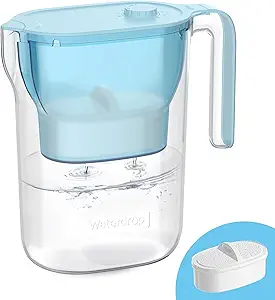 |
| Top Rated A top-rated pick with lots of positive feedback | LifeStraw Personal Water Filter |  |
| Most Popular A crowd favorite that many people choose with confidence | BRITA Large Water Filter Pitcher |  |
| Best Seller A high-volume bestseller chosen again and again | Aquatabs 397mg Water Purification Tablets |  |
Survivor Filter PRO Pump

| Purification Method | Hollow Fiber Membrane, Ultra Filtration |
|---|---|
| Maximum Flow Rate | 500 milliliters_per_minute |
| Supported Water TDS Level Maximum (PPM) | 1000 |
| Capacity | 100000 liters |
| Power Source | Non Electric |
The Survivor Filter PRO Pump is a portable, hand-pumped water purifier designed for camping, hiking, survival and emergency use. It draws water from fresh sources through a three-stage system: a 0.1 micron pre-filter, activated carbon for chemicals and heavy metals, and a 0.01 micron ultra-filter that targets viruses, bacteria and protozoa. In practice it is used by attaching the included hoses, pumping by hand and dispensing filtered water into a cup or container; no power is required so it works off-grid. Its rated flow of about 500 ml per minute is brisk for a pump filter when the pre-filter is kept clean, and the kit includes tools for backwashing and maintenance to sustain that flow. The unit is compact and lightweight for backpacking and comes with spare tubing, a syringe for backwash and a carrying case. Important limitations: it is for fresh water only, requires occasional disassembly and backwashing to maintain flow, and while long-rated (100,000 liters) the lifespan depends on proper maintenance and filter replacement availability.
Best for: Buyers who want a reliable, all-purpose off-grid purifier that removes microbes and improves taste while remaining lightweight and easy to carry for multi-day trips or emergency preparedness.
Less Ideal for: People who need a set-and-forget household system, plan to treat saltwater, or who cannot perform routine maintenance in the field should look at other solutions.
- Three-stage filtration including 0.01 micron ultra-filter that removes viruses, bacteria and protozoa
- Fast manual flow rate around 500 ml/min when maintained
- Comes with backwash syringe, hoses and carrying case for field maintenance
- Lightweight and compact for backpacking and emergency kits
- Requires regular backwashing and occasional disassembly to sustain performance
- Not suitable for saltwater or highly turbid sources without pre-treatment
Verdict: If you need a lightweight, pump-powered purifier that reliably removes bacteria and viruses for camping or emergencies, this survivor-grade filter is a top practical choice.
Aquasana Rhino WH-1000-CS-UVS-B

| Maximum Flow Rate | 14.6 gpm |
|---|---|
| Operating Pressure Range | 20-100 psi |
| Supported Water TDS Level Maximum (PPM) | 500 |
| Filter Life Cycle | 10 years |
| Power Source | Corded Electric |
The Aquasana Rhino WH-1000-CS-UVS-B is a complete whole-home water filter designed to be installed at the main water line to deliver treated water to every tap. Its multi-stage configuration uses a 20" pre-filter, activated carbon, copper-zinc KDF media, a salt-free scale conditioner, post-filter, and an NSF-tested UV unit to reduce chlorine, sediment, organic contaminants, scale, and to sterilize bacteria and viruses. Typical use is continuous household service for drinking, cooking, bathing, and laundry; the long-life tank is sized for up to 1,000,000 gallons or about 10 years under rated conditions, which cuts replacement frequency and service interruptions. The UV sterilizer and NSF/ANSI certifications make this system a strong choice when bacterial reduction is a priority, and the salt-free conditioner prevents scale without salt or backwashing. Trade-offs include the system footprint and the need for pro-grade installation and periodic media and UV bulb replacements, but for homeowners prioritizing performance and comprehensive biological protection, it brings laboratory-grade steps into a single whole-house package.
Best for: Homeowners who want a high-performance whole-house system that prioritizes bacterial and viral reduction and long service life with minimal filter change frequency.
Less Ideal for: Renters or those seeking a compact, DIY plug-and-play pitcher or under-sink solution should consider smaller point-of-use filters instead.
- Multi-stage filtration including carbon and copper-zinc KDF for broad contaminant reduction
- Included UV purifier tested to NSF/ANSI Standard 55 Class B for bacteria and virus sterilization
- Long rated life of 1,000,000 gallons or up to 10 years reduces replacement frequency
- Salt-free scale control prevents buildup without salt, backwashing, or drain lines
- Requires professional-style installation and periodic replacement of filters and UV bulb
- Large physical footprint that may need dedicated space near the main water line
Verdict: Choose this system when you need whole-home, long-life filtration with certified UV sterilization for strong protection against bacteria and viruses.
ZeroWater 22-Cup Ready-Read Dispenser

| Capacity | 5.2 liters |
|---|---|
| Purification Method | Ion Exchange |
| Power Source | Corded Electric |
| Supported Water TDS Level Maximum (PPM) | 1 |
| Included Components | 22-Cup Dispenser, 5-Stage Filter, TDS Meter |
The ZeroWater 22-Cup Ready-Read dispenser is a countertop pitcher-style system that uses a 5-stage ion exchange filter to remove total dissolved solids and improve taste. It is supplied with a single 5-stage replacement filter and an integrated TDS meter that lets you check water quality and know when the filter needs changing. Typical use is simple: fill the top reservoir, allow water to pass through the multi-stage filter into the large 22-cup tank, then dispense; its ergonomic handle and compact profile fit on most counters. The 5-stage design and IAPMO certifications mean it reduces heavy metals such as lead, chromium, mercury and PFOA/PFOS, and the TDS readout supports practical maintenance. Trade-offs are that this is a pour-through/dispensing system rather than an under-sink or whole-house solution, filter life and replacement cost depend on incoming water quality, and it does not claim active UV or bacteriostatic stages specifically for bacteria elimination. For buyers who want measurable reductions in dissolved solids and certified removal of several contaminants in a convenient counter unit, it is a solid choice.
Best for: Buyers who prioritize measurable reduction of dissolved solids and certified removal of heavy metals in a convenient, easy-to-use countertop dispenser and who prefer monitoring water quality with a built-in meter.
Less Ideal for: People seeking a guaranteed bacteria-killing system or a whole-house/under-sink solution should consider units with dedicated disinfection technologies instead.
- Certified to reduce lead, PFOA/PFOS, chromium and mercury
- Includes a TDS meter for instant, on-device water quality checks
- Large 22-cup capacity reduces refill frequency for families
- Ergonomic handle and compact countertop design for everyday use
- Not designed as a dedicated bacteria-removal system since it lacks UV or heat-based disinfection stages
- Filter life and operating cost vary with tap water TDS and may require frequent replacements in hard or contaminated water
Verdict: Choose this dispenser if you want a countertop system that visibly measures and lowers total dissolved solids and certified contaminants with a large refillable tank.
Waterdrop PT-05B-L Pitcher

| Capacity | 7-Cup |
|---|---|
| Filter life | Up to 200 gallons / ~3 months |
| Certifications | NSF/ANSI 42, 372 |
| Material Type | BPA-free, lead-free |
The Waterdrop PT-05B-L is a countertop water filter pitcher designed for daily drinking water improvement. It uses an activated carbon fiber filter certified to NSF/ANSI 42 and 372 to cut chlorine taste and odor and to reduce contaminants such as PFOA and PFOS, and the filter is rated for up to 200 gallons or roughly three months of typical use. Setup and routine use are simple: soak the cartridge briefly, press it into the reservoir, and track filter life with the mechanical dial on the lid. The slim shape fits refrigerator doors and the BPA-free plastic body makes it lightweight for pouring. As a budget-friendly option it balances filtration performance with low operating cost and includes one replacement filter in the box. Important limits: the system does not lower total dissolved solids so it will not soften water or remove dissolved minerals, and like most pitchers it is best for improving taste and reducing specific contaminants rather than eliminating all bacteria or producing lab-grade purity.
Best for: Buyers looking for an affordable, easy-to-use pitcher that improves taste and removes common chemical contaminants for everyday drinking water.
Less Ideal for: Users who need bacterial sterilization, full TDS reduction, or whole-house/point-of-entry treatment should choose a certified disinfection or advanced filtration system instead.
- NSF/ANSI 42 and 372 certified for chlorine and certain contaminant reduction
- Long-life filter rated up to 200 gallons or about three months
- Slim, refrigerator-friendly pitcher shape for easy storage
- Includes a mechanical filter-life recorder on the lid for simple tracking
- Made from BPA-free, lead-free materials
- Does not reduce total dissolved solids so it will not soften or desalinate water
- Pitcher-style filtration is not designed to reliably remove or sterilize bacteria
Verdict: A budget-friendly pitcher that reliably improves taste and reduces chlorine and certain contaminants for everyday drinking water.
LifeStraw Personal Water Filter

| Model Number | LSPHF038 |
|---|---|
| Included Components | Lifestraw Personal Water Filter |
| Material Type | Plastic |
| External Testing Certification | NSF |
The LifeStraw Personal Water Filter is a simple, ultralight straw you can use to drink directly from lakes, rivers, and streams or from a container in the field. It uses a microfiltration membrane that is tested to block bacteria and parasites and to remove microplastics and visible cloudiness, making it a practical tool for hiking, camping, travel, and emergency kits. Its narrow, straw form factor and plastic housing make it extremely portable and easy to stash in a pack or survival kit, and the claimed 4,000-liter lifetime means long-term use before replacement is needed. The filter requires no batteries or moving parts and is straightforward to use: sip through the mouthpiece and discard any initial debris. Limitations are its single-user straw design, which is not convenient for filtering large volumes into many containers quickly, and it does not treat chemical contaminants or viruses in most conditions, so water source selection still matters. Overall it is a reliable, low-maintenance microbial filter for personal drinking needs in the outdoors and emergencies.
Best for: Buyers who prioritize a proven, grab-and-go microbial filter for reliable personal drinking from natural sources during outdoor trips or emergency preparedness.
Less Ideal for: People who need to filter large amounts of water for groups or who require chemical or viral decontamination should consider alternative systems.
- High microbial removal performance certified by testing protocols
- Ultralight, compact straw design easy to carry in packs or kits
- Long rated service life up to 4,000 liters for extended use
- No batteries or moving parts, very low maintenance
- Single-user straw design not suited for quickly filtering large volumes
- Does not remove chemical contaminants or reliably remove viruses
Verdict: Choose the LifeStraw when you need a lightweight, proven personal filter that reliably removes bacteria and parasites for drinking in the outdoors or emergencies.
BRITA Large Water Filter Pitcher

| Capacity | 10 cups |
|---|---|
| Purification Method | Granular Activated Carbon |
| Filter Life Cycle | 2 months / 40 gallons |
| Power Source | Manual |
The BRITA Large Water Filter Pitcher is a simple, fridge-friendly pitcher that filters tap water through a Brita Plus cartridge to improve taste and reduce chlorine, copper, cadmium and mercury. It is typically used on a kitchen counter or in the refrigerator: fill the flip-top lid reservoir, let water pass through the cartridge into the lower chamber, and dispense cold filtered water for drinking or filling bottles. Notable features include a 10-cup capacity that fits most fridge shelves, a replaceable filter rated for about 40 gallons or two months, and manual operation with no power required. In practice the pitcher makes tap water taste noticeably cleaner and is easy to refill and pour, while the included filter and indicator make maintenance straightforward. Important limitations for the article goal: this pitcher and its filter are designed to reduce select chemical contaminants and improve flavor but are not intended to disinfect water or reliably remove or kill bacteria, so it should not be used as the sole treatment for microbiologically unsafe or unknown-quality water. If bacterial contamination is a concern, combine this with an appropriate disinfection method or choose a system rated for microbial reduction.
Best for: Buyers who want a proven, easy-to-use pitcher to improve tap water taste and reduce common chemical impurities for everyday drinking use, and who prioritize products with wide consumer adoption and clear maintenance routines.
Less Ideal for: People who need reliable microbial disinfection or treatment for unsafe water sources should avoid this product and choose a system specifically certified for bacterial or viral reduction.
- Improves taste by reducing chlorine and related taste/odor compounds
- Certified to reduce select heavy metals such as copper, cadmium and mercury
- Compact 10-cup design fits refrigerator shelves and fills multiple reusable bottles
- Includes one Brita Plus filter with an easy-to-follow replacement interval and indicator
- Not designed to remove or disinfect bacteria or viruses
- Filter life is limited to about 40 gallons (roughly two months) requiring regular replacements
Verdict: A convenient, widely used pitcher that reliably improves taste and cuts certain chemical contaminants but is not a substitute for microbial disinfection.
Aquatabs 397mg Water Purification Tablets

| Tablet strength | 397mg |
|---|---|
| Unit count | 100 Count |
| Treatment time | 30 Minutes |
| Treated volume per tablet | 1.5gal – 4gal |
Aquatabs 397mg tablets are chlorine-based water disinfectant tablets intended to make biologically unsafe water drinkable within about 30 minutes. Each tablet treats up to roughly 1.5 to 4 gallons depending on the listing, and the 100-count pack is aimed at extended use for camping, boating, RVing, or emergency kits. The tablets claim high microbial reduction—99.9999% of bacteria, 99.99% of viruses, and 99.9% of cysts—so they work as a lightweight, shelf-stable backup when a pump or filter is not available. They are simple to use: drop in the appropriate number for your volume, wait the contact time, and decant or pour off any sediment. Practical benefits include compact bulk supply, long shelf life for preparedness, and minimal taste compared with iodine alternatives. Limitations are that they do not remove sediment or chemical contaminants, require correct dosing and wait time, and treated water may still need straining if turbid, so pairing with a cloth or sediment filter improves results.
Best for: Buyers who prioritize a dependable, low-maintenance microbial disinfectant for emergencies or backcountry trips and want a large, shelf-stable supply that does not rely on pumps or electricity.
Less Ideal for: People needing immediate clarification of very turbid water or removal of chemical contaminants should choose a mechanical filter or multi-stage purifier instead.
- High claimed microbial reduction effective against bacteria, viruses, and cysts
- Compact, lightweight 100-pack suitable for long-term emergency kits and group outings
- Works without power or mechanical filters, useful for remote or disaster scenarios
- Less noticeable taste compared with iodine-based disinfectants
- Does not remove sediment, chemicals, or heavy metals so water may need pre-filtering
- Requires correct dosing and a 30-minute contact time before drinking
Verdict: A compact, high-capacity chemical disinfectant that reliably kills bacteria and viruses when you need a simple, long-lasting backup for safe drinking water.
Choosing the Right Water Filter for Bacteria: Key Factors to Consider
Bacterial Removal Performance
How well a filter removes or inactivates bacteria is the most important factor when targeting microbial contamination. Look for filters that provide specific log-reduction claims for bacteria or that meet recognized standards from independent test labs. Filters that combine mechanical barriers, such as ultrafiltration membranes, with additional bactericidal stages tend to offer the most reliable protection.
Assess whether the manufacturer supplies test data under realistic flow and pressure conditions. Lab claims made at very low flow rates or with nonstandard procedures may not reflect everyday use. Consider also whether a product is designed for intermittent use or continuous flow, since stagnant water and repeated start/stop cycles can affect bacterial control.
Filter Technology and Mechanism
Different technologies tackle bacteria in distinct ways. Absolute pore-size filters and ultrafiltration physically block microbes based on size. Adsorptive media and activated carbon primarily remove chemicals and taste issues but do not reliably remove bacteria unless combined with a bactericidal element. Some filters add antimicrobial coatings or secondary disinfection stages to reduce biological growth inside the cartridge.
Understanding the actual mechanism helps set expectations for maintenance and performance. Mechanical membranes can clog over time and require backwashing or cartridge changes, while chemical stages have limited capacity and can be ineffective against live bacteria when used alone.
Flow Rate and Usable Output
A filter that removes bacteria but severely restricts flow may be impractical for kitchen or whole-house use. Check typical flow rates at household water pressures to ensure the filter can supply drinking, cooking, and appliance needs without long waits. Some point-of-use filters offer higher removal efficiency at the cost of lower flow; these are suitable for dedicated drinking-water taps but not for general faucet use.
Keep in mind that flow declines as a cartridge loads with particles. A product with a higher initial flow and a predictable decline curve will usually deliver a better user experience than one that performs well only when new.
Service Life and Replacement Frequency
Filter longevity affects both convenience and ongoing cost. Bacterial-targeting filters often rely on tight-pore membranes or multiple stages that can clog faster than coarse sediment filters. Check the rated capacity in gallons or months of service, and whether capacity estimates assume certain water quality conditions.
Also look at how easy it is to obtain and install replacement cartridges. Filters that require frequent or technically complex replacements may increase the risk of improper installation, which can compromise bacterial protection.
Installation Compatibility and Flexibility
Consider whether the filter fits the installation point you plan to use. Many bacterial-targeting filters are designed for dedicated cold-water faucets, under-sink housings, or countertop adapter setups. Ensure the product matches your faucet type, available space, and plumbing constraints.
If you need portability or nonpermanent solutions, look for simple cartridge-change or quick-connect designs. For permanent under-sink installs, check access for future cartridge changes and whether mounting hardware and fittings are included.
Maintenance, Sanitation, and Storage
Even a high-performing filter needs proper maintenance to stay effective against bacteria. Periodic sanitizing of housings, following recommended change intervals, and protecting cartridges from prolonged stagnation all help limit microbial regrowth. Some filters include antimicrobial features to reduce internal colonization, but these are not substitutes for regular maintenance.
Consider how the product handles winterization or long periods of disuse. Cartridges left wet in place can foster bacterial growth, so the ability to flush, dry, or replace cartridges easily matters for many households.
How Bacterial Filtration Works
Bacterial filtration typically relies on two broad approaches: physical removal and microbial inactivation. Physical removal uses pore-size control in membranes to prevent bacteria from passing, while inactivation uses chemical agents or advanced media to neutralize microbes. Many effective systems combine these approaches to provide both immediate removal and longer-term control of microbial growth within the cartridge.
Understanding the underlying mechanism clarifies limitations and maintenance needs. For example, membrane-based filters can deliver consistent size exclusion but may trap particles and require more frequent servicing. Systems that depend on chemical action need sufficient contact time and may lose potency as the media is exhausted.
- Pore-size exclusion: effective for physical removal of bacteria.
- Ultrafiltration membranes: produce reliable microbial barriers when maintained.
- Bactericidal media: can reduce colonization but need monitoring.
Common Filter Types That Target Bacteria
Ultrafiltration and nanofiltration membranes are the most common technology for directly removing bacteria at the point of use. These membranes have defined pore sizes smaller than most bacterial cells and provide a physical barrier. Some cartridges add secondary antimicrobial stages to limit biological growth inside the filter.
Another approach is to use multi-stage cartridges that pair a particulate prefilter with a final membrane. The prefilter captures larger debris and prolongs the life and effectiveness of the bacterial barrier.
- Single-stage membranes: compact but may clog faster.
- Multi-stage cartridges: longer life with staged protection.
- Combination systems: pair membranes with antimicrobial additives.
Installation Options and Where to Place Filters
Choose an installation type that matches how you use treated water. Point-of-use faucet or countertop filters work well for dedicated drinking-water taps. Under-sink installations can serve a single sink with a concealed system and higher capacity cartridges. For portability, countertop quick-connect systems are the easiest to move between locations.
Placement affects maintenance and accessibility. Under-sink and wall-mounted systems require space for cartridge replacement and occasional sanitizing. Countertop units are simpler to access but may be more visible and occupy counter space.
- Countertop: easy to install and move.
- Under-sink: hidden, higher capacity options.
- Dedicated faucet: convenient for drinking water only.
Maintenance Best Practices
Follow replacement intervals and flush new cartridges before use. Periodic cleaning of housings and O-rings prevents bypass and microbial buildup. If your system includes a shutoff or bypass, use it carefully to avoid leaving cartridges in stagnant water for long periods.
Keep spare cartridges on hand and set calendar reminders for replacements. If you suspect source-water contamination, replace cartridges sooner and consider flushing the system thoroughly after a known event.
- Sanitize housings during cartridge changes.
- Replace cartridges per rated capacity or sooner if flow drops.
- Flush new cartridges according to instructions.
What Certification and Test Data Mean
Independent testing and certification provide the clearest evidence of bacterial removal performance. Look for tests that report log reductions for bacteria or mention specific test organisms. Certification by a recognized lab indicates that the product was evaluated under controlled conditions, which helps validate manufacturer claims.
Be cautious with ambiguous marketing terms. Specific numeric removal rates are more useful than generic statements about "improved" or "enhanced" microbial control. Also check whether test conditions match likely household use, such as similar flow rates and pressure.
- Look for log-reduction numbers or test organism names.
- Verify test conditions resemble household use.
- Prefer third-party lab validation when available.
How We Chose the Best Water Filter for Bacteria
We selected products that prioritize validated bacterial removal, durable filtration media, and practical use for typical household faucets and dispensers. Primary evaluation criteria included verified bacteria removal rates, either via third-party certification or manufacturer testing data; flow rate under realistic household pressure to ensure the filter does not impede daily use; filter lifespan and replacement interval to reflect ongoing maintenance costs and convenience; and construction quality including seals and housings to prevent bypass. We also examined installation flexibility and whether the filter fits common point-of-use setups. We excluded devices that only target chemical taste or sediment without any testable claim about bacteria, and we did not include general pitchers or unverified countertop gadgets lacking documented microbial performance. Filters that require specialized plumbing beyond typical point-of-use installations were deprioritized unless they offered clear benefits for bacterial control. The shortlist favors products that balance proven microbial reduction with everyday practicality.
Our full evaluation process is outlined in our review methodology.
FAQ
Can a regular activated carbon filter remove bacteria?
Activated carbon primarily removes chemicals and tastes and does not reliably remove live bacteria. Some carbon cartridges include an antimicrobial stage, but carbon alone should not be relied on for bacterial removal.
How often should I replace a bacteria-targeting cartridge?
Replacement intervals depend on water quality and rated capacity, but many bacterial filters require changes every few months under normal household use. Monitor flow decline and follow the manufacturer's capacity guidelines for safe replacement timing.
Is installation hard for under-sink bacterial filters?
Many under-sink systems are designed for standard plumbing and are straightforward for a competent DIYer. Quick-connect fittings and included mounting hardware simplify the process. If you are unsure, a short professional install ensures proper sealing and alignment.
Will a bacterial filter affect water pressure throughout the house?
Point-of-use bacterial filters only affect the faucet or outlet they are connected to and should not change whole-house pressure. Whole-house installations need to be sized and specified to avoid noticeable pressure loss across multiple fixtures.
Can I sanitize a filter housing without replacing the cartridge?
You can sanitize housings between cartridge changes, but leaving an older cartridge in place after sanitizing may not eliminate colonized bacteria within the media. Follow guidance on whether to sanitize in place or replace the cartridge when contamination is suspected.
Final Verdict
When selecting a water filter for bacteria, prioritize verified removal performance, appropriate installation type, and a realistic maintenance plan. Expect tradeoffs between maximum microbial control and flow rate or cartridge life. Decide which factor matters most for your household—higher barrier performance for drinking water taps or larger capacity systems for frequent use—and choose a solution that matches that priority. With the right fit and regular upkeep, a bacterial-targeting filter can deliver safer, dependable drinking water.