
Note: This article contains affiliate links. If you click on these links and make a purchase, we may earn a small commission at no extra cost to you. This helps support our research and content. Read our full affiliate disclosure here.
Choosing the right masticating cold press juicer changes how much juice you get, how much prep and cleanup takes, and how long nutrients last in the pitcher. If you want quieter operation, better extraction from leafy greens, and longer shelf life for homemade juices, a slow masticating juicer can make those benefits practical in daily use. This guide covers our shortlisted top picks across common home needs, focusing on extraction efficiency, build quality, and user friendliness. Below you will find clear evaluation criteria and concise buying guidance to help you pick the best juicer for your kitchen routine.
Top Picks at a Glance
| Best Overall The best all-around choice for most situations | NAMA J2 Cold Press Juicer |  |
| Best Quality Built to a higher standard if you want something more solid | Tribest Greenstar Pro GS-P502 |  |
| Best Value The sweet spot between price and what you get | AMZCHEF Cold Press Juicer 1902B |  |
| Best Budget The cheapest option that still gets the job done reliably | NEWBULIG Cold Press Juicer |  |
| Top Rated A top-rated pick with lots of positive feedback | Whuto Cold Press Juicer ZM1913M |  |
| Most Popular A crowd favorite that many people choose with confidence | Elite Gourmet EJX600 Masticating Juicer |  |
| Best Seller A high-volume bestseller chosen again and again | EanOruus 3‑in‑1 Masticating Juicer E-18 |  |
NAMA J2 Cold Press Juicer

| Wattage | 200 watts |
|---|---|
| Power Source | Corded Electric |
| Voltage | 120 |
| Number of Speeds | 1 |
| Capacity | 30 fluid ounces |
The NAMA J2 is a compact masticating juicer that uses a single auger and a self-feeding hopper to process whole recipes hands-free. It runs on a 200 W motor at a slow 50 RPM for quiet, low-heat extraction that preserves nutrients and yields more juice with less pulp, making it suitable for leafy greens and mixed produce. Everyday use is simple: load the hopper, walk away while it feeds and extracts, then rinse or hand-wash the removable Tritan and stainless steel parts and use the included brush to clean the strainer. Notable features include a wide mouth hopper that accepts larger pieces, included coarse and fine strainers, and a set of juice and pulp containers that keep the countertop tidy. Trade-offs are typical for this class: the single-speed motor limits adjustable extraction settings and the unit is hand-wash only, so full cleanup requires a bit more effort than dishwasher-safe models. The J2's compact footprint and quiet operation make it easy to incorporate into a daily routine if you value nutrient-rich, slow-pressed juice without a large appliance footprint.
Best for: Buyers who want a compact, quiet cold-press juicer that reliably extracts high-yield, nutrient-rich juice with minimal monitoring and a modest countertop footprint.
Less Ideal for: People who need adjustable speed settings, want dishwasher-safe parts, or frequently juice very large commercial batches should consider different models.
- Self-feeding wide-mouth hopper for hands-free loading and continuous juicing
- Slow 50 RPM masticating action preserves nutrients and increases juice yield
- Compact footprint and quiet 200 W motor suitable for daily use in small kitchens
- Includes multiple strainers and containers for versatile juicing and tidy operation
- Single-speed motor offers no variable speed control for different produce textures
- Parts require hand washing rather than dishwasher-safe cleaning
Verdict: Choose the NAMA J2 if you want a compact, hands-free cold-press juicer that quietly delivers higher-yield, nutrient-preserving juice for everyday home use.
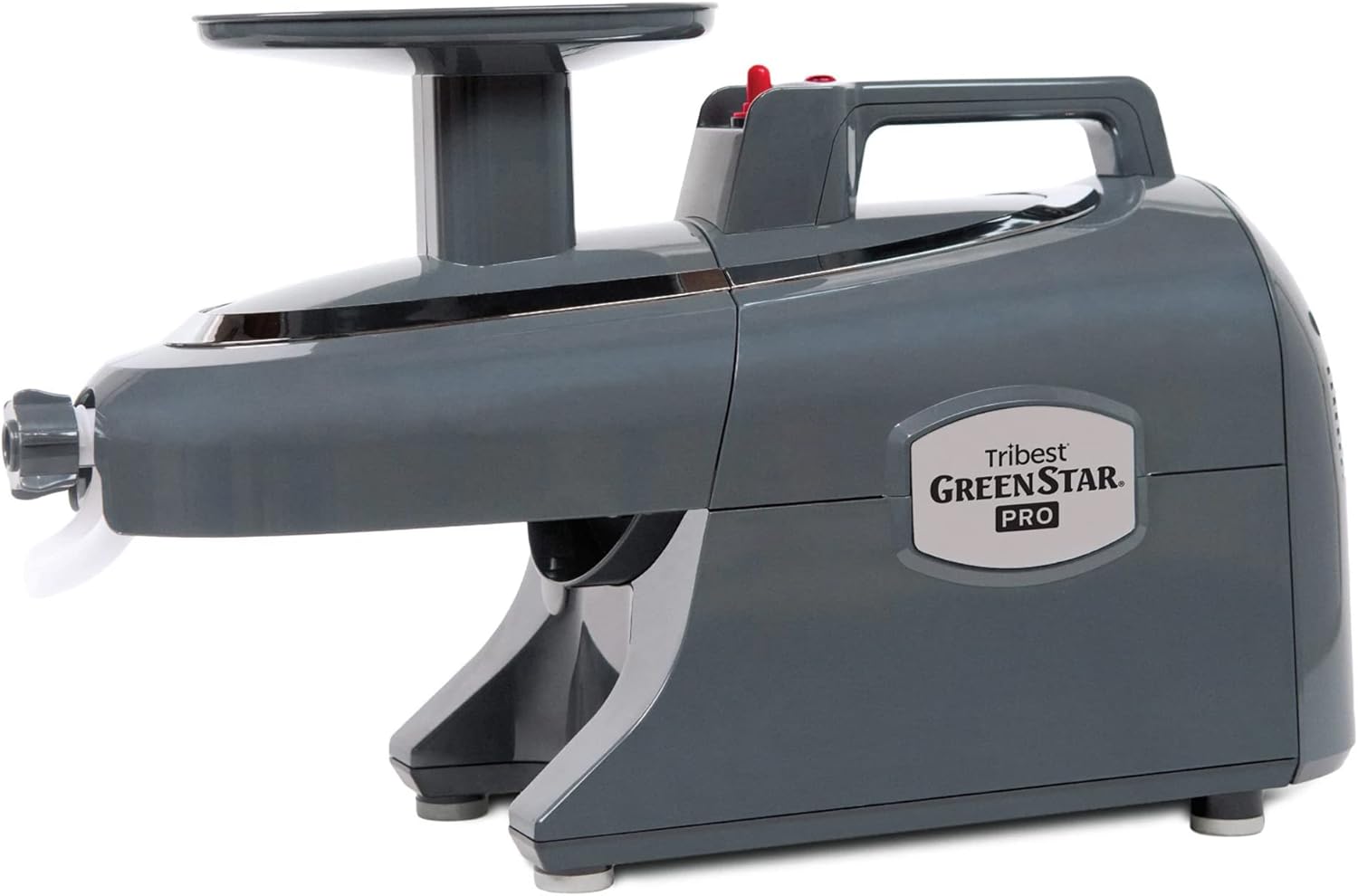
Tribest Greenstar Pro GS-P502
| Wattage | 165 watts |
|---|---|
| Maximum Power | 200 watts |
| Power Source | Corded Electric |
| Voltage | 120 |
| Capacity | 750 ml |
The Greenstar Pro GS-P502 is a commercial-grade masticating juicer built around all-stainless-steel jumbo twin gears that run at a low 110 RPM to gently crush, mix, and press produce. It is used like a standard slow juicer: feed fruits, vegetables, or leafy greens into the hopper, use the plungers, and the twin-gear system extracts juice into the included glass pitcher while a coarse and fine screen let you choose texture. Notable features include magnetic and bioceramic-enhanced gears intended to reduce oxidation and extend juice shelf life, a reverse function to clear jams, and multiple blanks and screens for making nut butters, sorbets, and sauces in addition to juice. Practical benefits are higher yields and cooler extraction that preserves enzymes and minerals, plus NSF commercial certification for heavy use. Expect a substantial, hand-wash-only unit that requires counter space and some cleaning time compared with centrifugal machines, and it operates at a single low speed which limits quick pulsing but improves nutrient retention.
Best for: Buyers focused on maximum nutrient retention and extraction efficiency who plan to juice frequently or in a commercial/home-pro hybrid setting and value durable, high-performance construction.
Less Ideal for: Anyone wanting a compact, lightweight, low-maintenance juicer or a quick, high-speed countertop appliance for occasional use should consider other types of juicers.
- Stainless steel jumbo twin gears for high yield and durable operation
- Low 110 RPM cold-press action preserves enzymes and reduces oxidation
- Includes fine and coarse screens plus blanks for versatile use beyond juicing
- Reverse function helps clear jams and keeps extraction moving
- NSF commercial certification suitable for heavy-duty or commercial kitchens
- Large and heavy unit that needs significant counter space and is hand-wash only
- Single-speed operation lacks quick-speed or pulse options some users expect
- Cleaning and disassembly are more time-consuming than most centrifugal juicers
Verdict: Choose the Greenstar Pro if you want a heavy-duty, performance-first cold press juicer that maximizes yield and preserves nutrients for frequent or commercial-style juicing.
AMZCHEF Cold Press Juicer 1902B

| Wattage | 300 watts |
|---|---|
| Maximum Power | 350 watts |
| Power Source | Electric |
| Voltage | 120 volts |
| Capacity | 5 pounds |
The AMZCHEF 1902B is a single-auger masticating juicer built for everyday home juicing and light food prep like baby purees and nut milk. Its 5.4-inch wide feed chute accepts whole apples, carrots and similar produce with minimal chopping, while the enlarged spiral auger and upgraded stainless steel blade push high juice yield and produce relatively dry pulp. The machine runs quietly on a copper motor and includes auto-reverse and overheat protection to reduce jams and extend motor life. Detachable parts and a straightforward one-button operation make it simple to assemble and rinse after use, and the stainless steel exterior feels durable for regular kitchen use. Limitations to note are the hand-wash care requirement and the modest 300–350 watt power range, which means it is optimized for home batches rather than heavy commercial throughput or continuous large-volume juicing.
Best for: Buyers who want a practical, reliable cold-press juicer that minimizes prep time and delivers high yield for daily household juicing and occasional purees.
Less Ideal for: People who need industrial or high-volume continuous juicing for commercial use or who prefer fully dishwasher-safe components.
- Oversized 5.4" feed chute reduces prep by fitting whole fruits and many vegetables
- Upgraded spiral auger and stainless steel blade for higher juice yield and drier pulp
- Quiet copper motor with auto-reverse and overheat protection to prevent jams
- Simple one-button operation and detachable parts for fast cleanup
- Requires hand washing of removable parts rather than dishwasher-safe cleaning
- 300–350 watt power is suitable for home use but not heavy continuous commercial juicing
Verdict: A practical, stainless-steel masticating juicer that speeds prep with a wide feed chute while focusing on high juice yield for everyday home use.
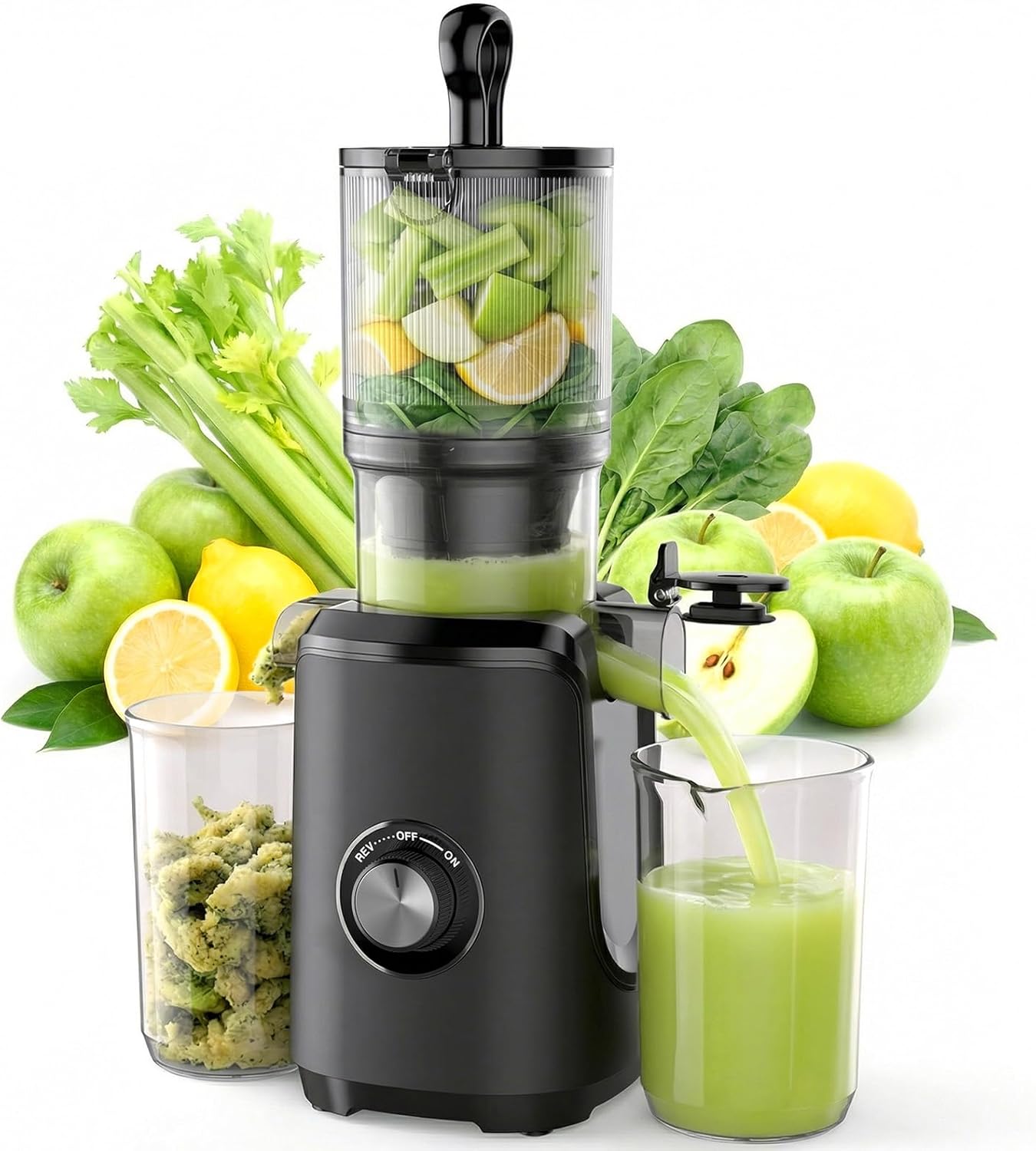
NEWBULIG Cold Press Juicer
| Feed chute | 4.25 inches |
|---|---|
| Wattage | 200 watts |
| Voltage | 120 volts |
| Included components | Fruit residue cup, Juice cup, Power supply base |
The NEWBULIG cold press juicer is a single-auger masticating machine designed to extract juice gently from fruits and vegetables while minimizing heat and oxidation. It accepts large pieces through a 4.25-inch feed chute so you can juice whole carrots and many fruits with less prep, and the slow 200-watt motor runs quietly for everyday use. A built-in reverse function clears clogs quickly without full disassembly, and the unit includes a juice cup, pulp container, and a cleaning brush to make cleanup straightforward — parts detach for hand washing. The safety lock and blade-free masticating design add a layer of protection in busy kitchens. Expect higher nutrient retention and a smoother juice texture compared with centrifugal models, but plan to hand-wash parts and allow a little more processing time per batch because of the slow-speed extraction.
Best for: Buyers seeking an affordable cold-press juicer that prioritizes nutrient-rich, quieter extraction and minimal prep time for everyday fruit and vegetable juices.
Less Ideal for: Those who need the fastest possible throughput or prefer dishwasher-cleanable parts should consider other models or higher-end options.
- Wide 4.25" feed chute reduces prep by fitting larger pieces
- Slow masticating motor preserves nutrients and yields smoother juice
- Reverse function clears clogs without disassembly
- Detachable parts and included cleaning brush make cleaning easier
- Quiet 200-watt motor suitable for home kitchens
- Requires hand washing of components rather than dishwasher-safe cleaning
- Slower processing speed than centrifugal juicers for large batches
Verdict: A budget-friendly masticating juicer that delivers nutrient-rich, quiet extraction with a wide feed chute and clog-clearing reverse function.
Whuto Cold Press Juicer ZM1913M

| Maximum Power | 200 watts |
|---|---|
| Power Source | Corded Electric |
| Voltage | 120 volts |
| Number of Speeds | 2 |
| Material | Stainless Steel |
The Whuto Cold Press Juicer ZM1913M is a slow, single-auger juicer built for steady home use and straightforward cleanup. It processes whole fruits and vegetables through an extra-wide feed chute and an upgraded spiral auger that the manufacturer says increases juice yield, and the two-speed motor handles both soft and harder produce. The stainless steel exterior, safety-lock lid, and non-slip suction feet give it a stable, durable feel on the countertop, while the included brush and dishwasher-safe parts simplify maintenance. The unit also supports alternative preparations like nut milk and ice cream, expanding its practical uses beyond juice. Expect a relatively quiet, low-speed extraction that preserves nutrients but works more slowly than centrifugal models. The juicer is rated for 120V use and comes with a one-year manufacturer guarantee, and assembly must follow the safety-lock alignment rules to avoid starting issues. For buyers who prioritize consistent performance and easy cleaning, this unit offers a sensible balance of reliability and everyday convenience.
Best for: Home cooks who want a dependable cold-press juicer that emphasizes steady performance, easy cleaning, and safe everyday use rather than maximum speed or portability.
Less Ideal for: People who need very fast juicing for large volumes or who want a travel-friendly compact model should look elsewhere.
- Wide feed chute accepts whole fruits and larger pieces to reduce prep time
- Upgraded spiral auger designed to increase juice yield compared with basic augers
- Stainless steel body and non-slip suction feet for a stable, durable countertop presence
- Dishwasher-safe components and included cleaning brush make maintenance easy
- Slower extraction speed than centrifugal juicers, so juicing large batches takes more time
- Requires correct assembly and safety-lock alignment to operate, which can confuse first-time users
Verdict: Choose this juicer if you want a reliable, easy-to-clean masticating machine that focuses on steady, nutrient-preserving extraction for everyday home use.
Elite Gourmet EJX600 Masticating Juicer

| Capacity | 16 ounces |
|---|---|
| Wattage | 100 watts |
| Power Source | Corded Electric |
| Number of Speeds | 1 |
The Elite Gourmet EJX600 is a mini masticating cold-press juicer built for one to two servings at a time. Its single auger runs at about 70 RPM to minimize foam and oxidation, so you get smoother juice that holds color and nutrients longer than typical high‑speed centrifugal machines. The 3/4" feed chute requires chopping harder produce into smaller pieces, but that keeps the unit compact and reduces prep waste. With a 100 W motor, one speed and built-in overload/overheat protection, the EJX600 is simple to operate and reasonably safe for light daily use. It includes a durable Tritan 16 oz juice cup and just three removable parts for faster cleanup; the motor base is not dishwasher-safe. Practical limitations are its small capacity and narrow chute, which make it a poor choice for batching or frequent heavy juicing of fibrous vegetables. For users who want a space‑saving cold press juicer that emphasizes nutrient retention and easy disassembly, this model delivers predictable single‑serve performance at modest power.
Best for: Buyers who prioritize nutrient‑preserving cold‑press juice in a compact, easy‑to‑store unit and who value straightforward operation and quick cleanup.
Less Ideal for: People who need high‑volume, fast throughput juicing for multiple servings, or who want a wide feed chute to skip chopping.
- Low‑speed masticating extraction (approx. 70 RPM) reduces foam and oxidation for smoother juice
- Compact single‑serve design with 16 oz Tritan juice cup ideal for small kitchens or countertops
- Only three removable parts plus cleaning brush make disassembly and cleaning straightforward
- Built‑in overload and overheat protection improves safety during operation
- Small 3/4" feed chute requires more chopping and slows prep for larger produce
- Limited 16 oz capacity is not suited for batch juicing or multiple servings
Verdict: Choose the EJX600 if you want a small, low‑speed cold‑press juicer that delivers single‑serve nutrient-rich juice with minimal cleanup.
EanOruus 3‑in‑1 Masticating Juicer E-18

| Capacity | 100 fluid ounces |
|---|---|
| Feed chute | 6.5 inch |
| Maximum Power | 250 watts |
| Power Source | ac |
| Voltage | 110 volts |
The EanOruus E-18 is a single‑auger masticating juicer built for high‑volume home use and meal prep. It accepts whole fruit through a 6.5‑inch feed chute into a 100‑ounce hopper, so you can process large batches with minimal cutting and fewer refills. The low‑speed auger and AC motor emphasize nutrient retention and steady extraction, and interchangeable strainers let you switch between juice, nut milk and sorbet. Practical touches include auto‑reversing and overheat protection to keep the machine running during tougher loads, and most removable parts are hand washable for easier cleanup. Expect solid yields and quiet operation compared with centrifugal machines, but note the unit is hand wash only and uses plastic blade components rather than metal. It is sizable and intended for frequent or family use rather than occasional countertop storage, but for buyers who prioritize gentle extraction, large capacity and multi‑function versatility it performs as advertised.
Best for: Buyers who want a dependable, low‑speed juicer for frequent batch juicing and multi‑use kitchen prep and who prefer features that reduce jams and maintenance risk.
Less Ideal for: If you need a compact, rarely used countertop appliance or prefer all‑metal internals and dishwasher‑safe parts, this high‑capacity masticating unit is not the best fit.
- Extra‑large 100 oz hopper reduces refills for batch juicing
- 6.5‑inch wide chute accepts whole fruit to cut prep time
- Three functions (juice, nut milk, sorbet) with interchangeable strainers
- Auto‑reversing and overheat protection help prevent jams and motor stress
- Whisper‑quiet AC motor suitable for frequent use
- Hand wash only — not dishwasher safe
- Major components and blades are plastic rather than metal
Verdict: Choose the EanOruus E‑18 if you want a quiet, high‑capacity masticating juicer that handles whole fruit and doubles as a nut milk and sorbet maker.
Choosing the Right Masticating Cold Press Juicer: Key Factors to Consider
Juice Yield and Pulp Dryness
How much liquid the juicer extracts relative to the input produce is one of the most consequential factors for long-term value. A masticating cold press juicer that leaves very dry pulp means you are getting more usable juice per apple, carrot, or bunch of kale. Higher yield reduces food waste, lowers the per-glass cost of homemade juice, and makes heavy juicing sessions faster to justify.
Pulp dryness also affects downstream tasks. Wetter pulp can clog screens or require additional passes, so machines that consistently produce drier pulp are easier to use and more efficient for frequent juicing.
Ease of Cleaning and Maintenance
Regular cleaning determines whether a juicer becomes a daily habit or an occasional appliance. Look for designs with fewer small parts, easily removable strainers, and components that rinse clean quickly. Dishwasher-safe parts can help, but simple hand-clean designs with effective cleaning brushes often speed up the process more than fragile dishwasher-only pieces.
Maintenance also includes how easy it is to clear jams, replace seals, and access the auger. If regular maintenance is straightforward, the juicer will stay hygienic and functional for longer without professional servicing.
Build Materials and Long-Term Durability
Materials and construction quality determine how well a juicer withstands repeated use. Metal or reinforced polymer augers resist wear and retain extraction efficiency, while sturdy housings reduce vibration and movement during operation. Durable seals and well-fitted parts reduce leaks and messes.
Consider also warranty coverage and ease of finding replacement parts. A robust build often means less long-term cost and fewer interruptions due to repairs or degraded performance.
Noise Level and Vibration
Noise and vibration are practical concerns for home kitchens, especially if you juice early in the morning or in an apartment. Masticating juicers are generally quieter than high-speed centrifugal models, but noise varies by motor mounting, housing design, and load handling. Low vibration also keeps counters cleaner and reduces the chance of the appliance walking during use.
If quiet operation is important, prioritize models with sound-dampening housings and slower, steadier auger action rather than raw motor power alone.
Versatility for Different Produce
A useful masticating juicer should handle a range of fruits and vegetables without frequent adjustments. Some machines excel with leafy greens and wheatgrass, while others are better for hard roots or soft fruits. Consider how often you will juice various ingredients and whether a single-speed machine will meet those needs.
Versatility also includes accessory options and feed-chute size. A wider chute reduces prep time, while dedicated screens or attachments can improve results for specific ingredients or make nut milks and sorbets possible.
Throughput and Speed
While masticating juicers prioritize extraction over speed, throughput matters for households that make multiple servings at once. A juicer with steady, reliable throughput completes larger batches in reasonable time without overheating or clogging. Continuous feed capability and a motor designed for extended cycles reduce interruptions during long sessions.
Assess whether you will typically make single glasses or liters at a time and choose a machine whose cycle capacity aligns with your habits to avoid overheating or repeated pauses.
Preparing Produce for Best Results
Proper prep improves extraction and reduces clogging. Hard produce should be cut into manageable pieces that fit the feed chute or pusher to keep a steady feed into the auger. Remove thick seeds, large pits, and tough stems that can damage or jam the screw.
Leafy greens and herbs benefit from compacting or rolling before feeding so the auger can grip and compress them more effectively. For soft fruits, minimal preparation preserves texture while still allowing continuous extraction.
- Trim thick stems and remove large pits before juicing.
- Cut apples and pears into quarters for consistent feed.
- Bundle leafy greens to reduce slip and improve grip.
Cleaning Techniques That Save Time
Rinse parts promptly after use to prevent residue from drying. Cold water loosens most pulp and slows staining from beets or carrots. Use the included brush to clear the strainer holes before a full wash.
Soak stubborn bits briefly in warm water to loosen fibers, then use a soft brush rather than abrasive pads to protect strainers and polymer surfaces. Periodically check seals and crevices for trapped pulp and wipe them dry to prevent mold and odors.
- Rinse immediately and use a small brush for the strainer.
- Soak clogged screens in warm water for 10 to 15 minutes.
- Air-dry components fully before reassembly to prevent mildew.
Extending Juice Freshness at Home
Cold-pressed juice lasts longer than juice from high-speed machines, but exposure to air and light still degrades nutrients. Store juice in airtight glass bottles and refrigerate immediately. Fill bottles to the top to minimize headspace and slow oxidation.
If you plan to keep juice for more than a day, choose recipes with lower respiration produce and consume leafy-green blends sooner. Acidic fruits like lemon can help stabilize color and flavor while not significantly altering nutrient content.
- Use airtight glass bottles and fill to the brim.
- Refrigerate immediately and consume leafy blends within 24 to 48 hours.
- Add a splash of lemon to extend color and flavor stability.
Common Maintenance Tips
Inspect seals and gaskets periodically for wear and replace them if they start to leak. Tight fits prevent messy counters and keep internal components from being exposed to moisture. Lubricate parts only if the manufacturer instructs; most modern units require no homeowner lubrication.
Store the unit in a dry environment and avoid stacking heavy items on top of detachable parts. If you notice recurring jams, check for blunt auger edges or excessive buildup around the feed throat and clean thoroughly before further use.
- Check and replace worn gaskets and seals as needed.
- Avoid using metal scrapers on plastic components.
- Address recurring jams by inspecting and cleaning the feed throat.
Recipes That Take Advantage of Masticating Juicers
Masticating juicers excel with leafy and fibrous blends. Try a green juice that pairs kale or spinach with cucumber and a firmer fruit like apple to balance flavor and improve mouthfeel. Root blends are also efficient when you alternate hard and soft ingredients to keep the auger moving smoothly.
Nut milks and sorbets are possible with the right attachments and a fine-mesh strainer. Process soaked nuts with water and strain to make a creamy nut milk, or use cold pulp in frozen desserts to reduce waste and add texture.
- Green juice: kale, cucumber, apple, lemon.
- Root blend: carrot, beet, ginger, apple.
- Nut milk: soaked almonds plus water, strained.
How We Chose the Best Masticating Cold Press Juicer
We selected juicers for this list using criteria that reflect real-world kitchen use and long-term satisfaction. Primary considerations included juice yield and extraction efficiency, since a better-performing auger or screw directly reduces waste and gets more liquid from produce. Ease of cleaning was another decisive filter because time spent disassembling and scrubbing affects whether homeowners actually use the juicer regularly. Noise and vibration mattered for kitchen comfort and early-morning use. Build quality and durability were assessed via materials and design features that reduce wear and clogging over time. Finally, throughput and versatility — the machine's ability to handle leafy greens, wheatgrass, soft fruits, and harder root vegetables — determined suitability for varied juicing routines. We excluded centrifugal or twin-gear designs and any appliances not fitting the slow masticating extraction method. Models with unclear maintenance steps, poor parts availability, or documented durability concerns were filtered out. The final selections balance extraction performance, practical upkeep, and construction that supports long-term home use.
Our full evaluation process is outlined in our review methodology.
FAQ
How often should I clean a masticating juicer?
You should rinse and brush parts after every use and perform a more thorough wash once daily if you juice multiple times. Prompt cleaning prevents pulp from drying and makes maintenance faster.
Can a masticating juicer handle wheatgrass and leafy greens?
Yes, most masticating cold press juicers handle leafy greens and wheatgrass well because the slow auger compresses fibers to extract juice. Performance varies, so pick a model noted for good leafy-green extraction if that is a priority.
Is it better to refrigerate juice immediately after juicing?
Yes. Refrigerating cold-pressed juice immediately in an airtight container slows oxidation and preserves nutrients and flavor. Fill containers to reduce air exposure for best results.
How much prep is required for whole fruits and vegetables?
Prep depends on the feed chute size. Expect to quarter apples, core firm produce, and remove large pits. Wider chutes reduce prep time, but cutting to consistent pieces helps maintain steady extraction.
Will a masticating juicer work for nut milks?
Many slow juicers can produce nut milks when used with soaked nuts and the appropriate screen or strainer. You may need to run the pulp through an additional fine strainer to achieve very smooth milk.
Final Verdict
When choosing a masticating cold press juicer, prioritize extraction efficiency and how easy the machine is to clean. Those two tradeoffs most influence whether you will use the machine routinely and how much juice you get from each batch. Consider build materials and vibration control if you need quiet, long-lasting operation, and pick a model with the throughput and accessories that match the types of produce you will juice most often. Balance these factors according to your daily routine: invest in higher extraction if you juice frequently for multiple people, or choose a simpler, easier-to-clean model if speed and convenience matter most. Either way, focusing on yield, maintenance, and versatility will help you choose confidently.