
Note: This article contains affiliate links. If you click on these links and make a purchase, we may earn a small commission at no extra cost to you. This helps support our research and content. Read our full affiliate disclosure here.
If you want fresher, more nutritious glasses of juice at home, choosing the right juicer for fruits and vegetables matters. Differences in extraction method, yield, and cleanup determine how often you will use the appliance and how much actual juice you get from the same produce. This guide shortlists the top picks for juicing fruits and vegetables and explains the practical tradeoffs between speed, nutrient retention, and ease of maintenance. Below you will find concise product summaries and clear evaluation criteria so you can pick a juicer that fits your daily prep habits and kitchen workflow.
Top Picks at a Glance
| Best Overall The best all-around choice for most situations | Breville Juice Fountain Plus JE98XL |  |
| Best Quality Built to a higher standard if you want something more solid | NAMA J2 Cold Press Juicer |  |
| Best Value The sweet spot between price and what you get | NutriBullet Juicer NBJ50100 |  |
| Best Budget The cheapest option that still gets the job done reliably | HOUSNAT Centrifugal Juicer AMR516 |  |
| Top Rated A top-rated pick with lots of positive feedback | anybear Cold Press Juicer |  |
| Most Popular A crowd favorite that many people choose with confidence | Hamilton Beach Big Mouth Juicer 67601A |  |
| Best Seller A high-volume bestseller chosen again and again | EanOruus 3-in-1 Masticating Juicer E-18 |  |
Breville Juice Fountain Plus JE98XL

| Wattage | 850 watts |
|---|---|
| Number of Speeds | 2 |
| Power Source | Corded Electric |
| Blade Material | Stainless Steel |
| Capacity | 1 liters |
The Breville Juice Fountain Plus JE98XL is a straightforward centrifugal juicer aimed at everyday home use. It uses an 850 watt motor and a titanium-reinforced disc with a stainless steel micro-mesh filter to extract juice quickly, and the 3-inch feed chute reduces prep by accommodating many whole fruits and vegetables. Two speed settings let you use a lower speed for soft or leafy produce and a higher speed for dense roots and apples, while the included 35.2 fl oz jug has an integrated froth separator so you pour clearer juice. Cleanup is reasonably easy because the pulp container detaches and many parts are dishwasher safe, and the cord wraps under the base for compact storage. Expect fast yields and efficient extraction, but as a centrifugal model it produces more foam and slightly less shelf-stable juice than slow masticating machines and can be a bit louder. For anyone wanting quick, frequent juicing of a mix of fruits and veg without extensive prep, this is a capable, user-friendly choice.
Best for: Home cooks who want fast, frequent juicing of a variety of fruits and vegetables with minimal prep and straightforward cleaning.
Less Ideal for: Buyers seeking the quietest machine or maximum long-term nutrient preservation should consider slow masticating juicers instead.
- Extra-wide 3-inch chute reduces chopping and speeds prep
- 850W motor and reinforced disc with micro-mesh filter for efficient extraction
- Two-speed control adapts to soft leafy produce and harder fruits/vegetables
- Integrated froth separator produces clearer juice and simpler pouring
- Many removable parts are dishwasher safe and the cord stores under the base
- Centrifugal design creates more foam and may yield slightly less nutrient retention than slow juicers
- Can be louder in operation compared with masticating juicers
Verdict: A fast, easy-to-use centrifugal juicer that minimizes prep with a wide chute and delivers good extraction for everyday fruit and vegetable juices.
NAMA J2 Cold Press Juicer

| Wattage | 200 watts |
|---|---|
| Power Source | Corded Electric |
| Voltage | 120 |
| Number of Speeds | 1 |
| Capacity | 30 fluid ounces |
The NAMA J2 is a hands-free masticating juicer built for consistent cold-press extraction of fruits, vegetables, and leafy greens. It uses a single auger running at about 50 RPM powered by a 200 W motor to gently press produce and maximize juice yield while minimizing pulp. The wide self-feeding hopper lets you load a full recipe and walk away, which speeds up batch juices and keeps the process tidy; included strainers and juice/pulp containers make collection straightforward. Assembly and cleanup are simplified by quick-release parts and a spinning brush for scrubbing, and most wetted components are Tritan or stainless steel for durability. Expect quieter operation compared with centrifugal models and better nutrient retention due to the low-speed cold-press design. Limitations are a single fixed speed—so very hard or frozen ingredients may need pre-cutting or thawing—and the unit requires hand washing of parts rather than dishwasher cleaning. For performance-focused home juicing, it balances yield and quiet operation well but needs a bit more prep and maintenance than some simpler juicers.
Best for: Buyers who prioritize juice yield, nutrient retention, and quiet hands-free operation for regular fruit and vegetable juicing. Ideal for people who make batch juices and want consistent extraction without noisy centrifugal motors.
Less Ideal for: Casual users who want a no-prep, dishwasher-cleanable appliance or those who need variable speed control for tough or frozen items should consider other juicer styles.
- Self-feeding wide hopper for hands-free batch juicing
- Low-speed single-augur design maximizes juice yield and reduces pulp
- 200 W motor delivers steady, quiet operation at 50 RPM
- Durable materials (stainless steel, Tritan) and included strainers/containers
- Quick-release parts and cleaning brush simplify maintenance
- Only one operating speed limits flexibility for very hard or frozen ingredients
- Parts must be hand washed rather than dishwasher-safe
Verdict: Choose the NAMA J2 when you want a quiet, hands-free cold-press juicer that maximizes yield and preserves nutrients for regular fruit and vegetable juicing.
NutriBullet Juicer NBJ50100

| Maximum Power | 800 watts |
|---|---|
| Number of Speeds | 2 |
| Capacity | 1.5 liters |
| Power Source | Corded Electric |
The NutriBullet Juicer is a straightforward centrifugal juicer built for quick daily use. Its 800W motor and two-speed control let you handle soft fruits at the low speed and harder produce at the high speed, while the 3-inch feed chute accepts whole apples and many large fruits to cut prep time. Juice collects in a 27oz sealing pitcher with a froth separator so you can pour or store up to 48 hours, and the self-contained 1.5L pulp basin holds multiple pieces of produce before emptying. The stainless steel sieve and most removable parts are dishwasher-safe, and a no-drip spout reduces countertop mess when transferring the pitcher. Because it is a centrifugal design, it juices quickly but produces more foam and slightly less yield than slow masticating juicers, and it may be louder during operation. For buyers who want fast, convenient juice with minimal preparation and easy cleanup, this model delivers reliable daily performance without extra complexity.
Best for: Buyers who prioritize fast, low-effort juicing and easy cleanup for everyday fruit and vegetable juices.
Less Ideal for: Those looking for maximum juice yield, the quietest operation, or enzymes-preserving cold-press results should consider a slow masticating juicer instead.
- Large 3-inch feed chute reduces chopping and speeds prep
- 800W motor with two speeds handles both soft and hard produce
- Sealing 27oz pitcher with froth separator allows make-ahead storage
- Self-contained pulp basin and dishwasher-safe parts simplify cleanup
- No-drip spout reduces countertop mess when pouring
- Centrifugal design typically yields more foam and slightly less juice than slow juicers
- Can be louder in operation compared with masticating juicers
Verdict: A fast, no-fuss centrifugal juicer that cuts prep time with a wide feed chute and delivers convenient, easy-to-store fresh juice for everyday use.
HOUSNAT Centrifugal Juicer AMR516

| Maximum Power | 400 watts |
|---|---|
| Power Source | Corded Electric |
| Voltage | 120 |
| Number of Speeds | 3 |
| Capacity | 450 ml |
The HOUSNAT AMR516 is a centrifugal juicer built for fast, everyday use. It uses a 400W motor (advertised max 800W) and a 65mm wide feed chute so you can juice whole fruits with minimal chopping, and three speed settings plus a pulse mode let you match power to soft or hard produce. The stainless steel micro‑mesh filter and anti‑corrosion blades are designed to yield drier pulp and higher juice extraction while the 1.6 liter pulp collector reduces trips to the bin. Detachable BPA‑free parts are top‑rack dishwasher safe and the included 360° cleaning brush helps keep the filter clear. Practical limits are that centrifugal juicers generally produce frothier juice and slightly less nutrient retention than slow masticating models, and the unit is intended for light to moderate use rather than heavy commercial cycles. For budget buyers it offers a strong feature set—wide chute, useful speed control, and easy cleanup—that makes quick morning juices attainable without a large investment.
Best for: Buyers wanting an affordable, user‑friendly machine that makes quick fresh juice most mornings with minimal prep and easy cleanup.
Less Ideal for: Those who prioritize maximum nutrient retention, very low foam, or continuous heavy commercial use should consider a slow masticating or commercial juicer instead.
- 65 mm wide feed chute reduces prep and fits larger fruit pieces
- Three speed settings plus pulse let you tailor power to soft and hard produce
- Stainless steel micro‑mesh filter and blades aim for higher extraction and drier pulp
- Large 1.6 L pulp collector cuts down on interruptions during juicing
- Detachable BPA‑free parts are top‑rack dishwasher safe and include a cleaning brush
- Centrifugal design produces more foam and may retain fewer nutrients than slow juicers
- Recommended for light to moderate use rather than continuous heavy operation
Verdict: A budget-friendly centrifugal juicer that delivers fast, low‑prep fruit and vegetable juice with convenient cleanup for daily home use.
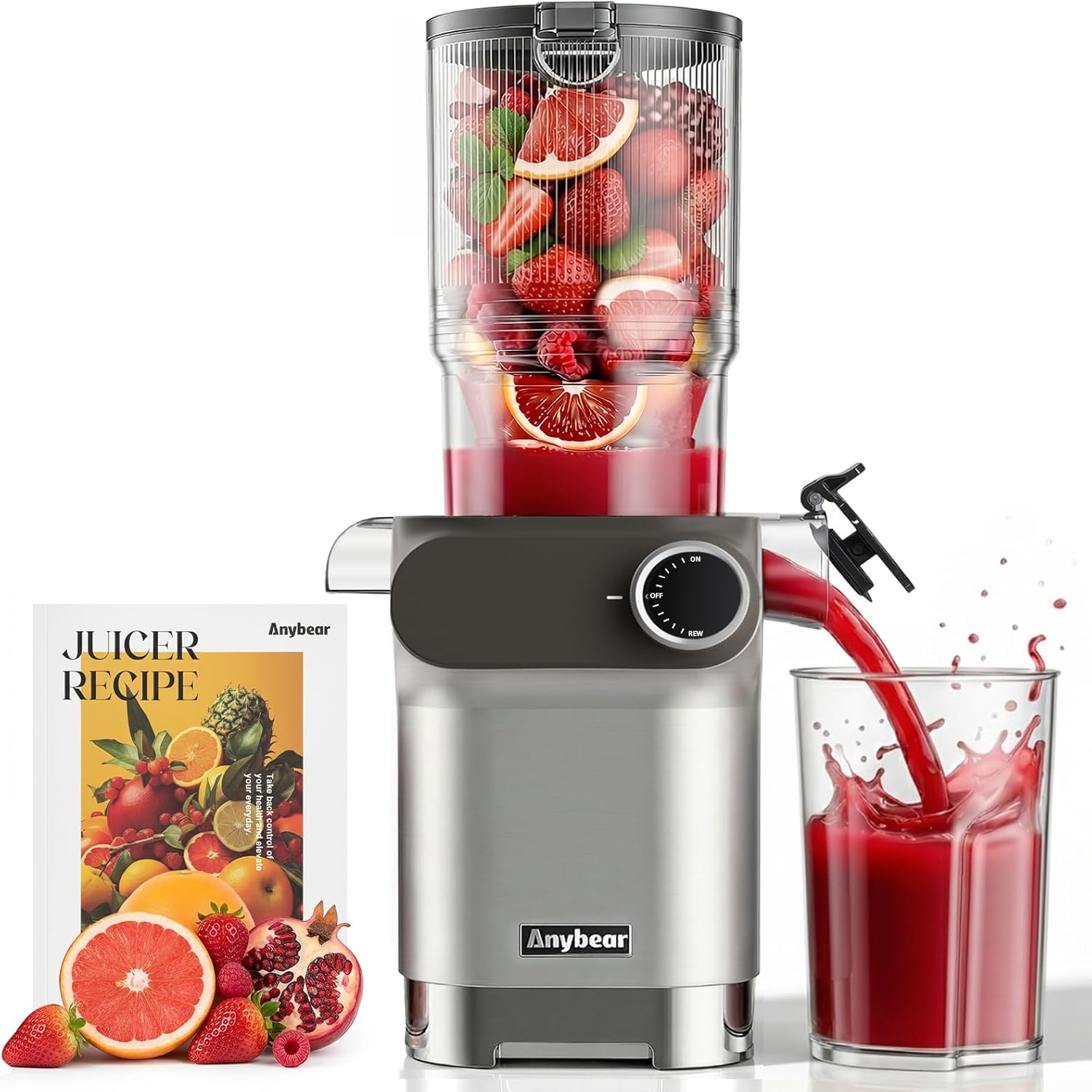
anybear Cold Press Juicer
| Maximum Power | 200 watts |
|---|---|
| Wattage | 200 watts |
| Voltage | 110 volts |
| Special Features | Easy to Clean |
The anybear Cold Press Juicer is a single-auger masticating machine built for slow, high-yield extraction of fruit and vegetable juices. It uses a 200W motor with high torque to run at about 65 RPM, which reduces oxidation and helps preserve flavor and nutrients while producing thick, pulpy juice. The 4.3-inch feed chute accepts larger produce so you can add whole items or fewer pre-cuts, speeding prep. Key user-facing touches include a Tritan feed chute component rated as baby food grade, a one-piece stainless steel filter intended to simplify cleaning, and a small brush included for rinsing. Practical benefits are higher juice yield and fresher-tasting results compared with fast centrifugal models, plus quieter operation during extraction. Limitations are the need to hand-wash parts and perform basic disassembly after use, and the slower processing speed compared with high-speed juicers, which means longer run times for large batches. The design focuses on steady, reliable cold-press performance for routine home juicing.
Best for: Buyers who prioritize consistent, factory-quality cold-press extraction and want a dependable home juicer that maximizes juice yield and flavor rather than speed.
Less Ideal for: If you need very fast, high-volume juicing or prefer fully dishwasher-safe parts, this slow masticating model is not the best fit.
- 200W high-torque motor optimized for low-speed, high-yield extraction
- Large 4.3-inch feed chute reduces chopping and speeds prep
- Tritan feed chute and stainless-steel filter for food-grade contact and durability
- One-piece filter design and included brush make rinsing and cleaning simpler
- Quiet operation due to slow RPMs, suitable for morning use
- Parts require hand washing rather than dishwasher-safe convenience
- Slower processing time compared with centrifugal juicers for large volumes
Verdict: Choose this slow masticating juicer if you want a reliable, high-yield cold-press machine that preserves flavor and minimizes oxidation for everyday fruit and vegetable juicing.
Hamilton Beach Big Mouth Juicer 67601A

| Maximum Power | 800 watts |
|---|---|
| Power Source | Corded Electric |
| Number of Speeds | 1 |
| Material | Plastic, Stainless Steel |
The Hamilton Beach Big Mouth Juicer is a centrifugal machine built for fast home juicing of whole fruits and vegetables. Its 3" feed chute accepts apples, celery, and similarly sized produce so you can skip most pre-cutting, and the 800W motor spins a stainless steel strainer basket to separate juice from pulp quickly. The unit is straightforward to use with a single speed knob and a large pulp bin that reduces trips to the trash while juicing several servings. Cleanup is practical: the removable components are dishwasher safe and a cleaning brush is included for the strainer. Important limits are inherent to the centrifugal design — it extracts quickly but can produce foam and slightly less yield from leafy greens compared with slow masticating machines, and it operates at higher RPMs which can be louder. The juicer includes motor overload protection to prevent damage if it overheats. For buyers who value speed, a roomy chute, and easy cleanup, this is a dependable daily juicer option; users focused on maximum green-juice yield or lowest noise may prefer a different style.
Best for: Buyers who want fast, no-fuss juicing of whole fruits and common vegetables and prioritize ease of use and straightforward cleanup backed by strong user feedback.
Less Ideal for: People whose primary goal is top yield from leafy greens or the quietest possible operation should consider a slow masticating juicer instead.
- Extra-large 3 inch feed chute reduces or eliminates pre-cutting of many fruits and vegetables
- 800W motor provides strong extraction for hard and soft produce
- Removable parts are dishwasher safe for easier cleanup
- Large pulp bin lets you juice multiple items without frequent emptying
- Includes cleaning brush and has motor overload protection
- Centrifugal extraction can be foamy and less efficient on leafy greens compared with masticating juicers
- Single speed limits control over extraction for delicate produce
Verdict: Choose this Hamilton Beach juicer if you want fast, everyday juicing with a big feed chute and simple cleanup.
EanOruus 3-in-1 Masticating Juicer E-18

| Wattage | 250 watts |
|---|---|
| Power Source | ac |
| Voltage | 110 volts |
| Capacity | 100 fluid ounces |
The EanOruus E-18 is a single-auger masticating juicer built for multi-use kitchen tasks: cold-press juicing, nut milk and frozen fruit sorbets. It accepts large pieces through a 6.5-inch feed chute and holds up to 100 ounces in the hopper so you can process multiple fruits or a family batch without constant refilling. The unit runs on a 250 W AC motor designed for higher torque and includes auto-reverse and overheat protection to reduce jams and protect the motor when processing fibrous produce. Removable strainers and a detachable pulp outlet simplify cleanup, though parts are hand-wash only. In everyday use it quietly extracts juice with emphasis on yield and nutrient retention typical of masticating machines, and the included sorbet and nut-milk strainers expand its functionality beyond just juice. Expect a substantial countertop footprint and a plastic/polycarbonate construction rather than metal, so while it is versatile and capable for regular home use, those wanting dishwasher-safe parts or a lightweight unit should take note.
Best for: Buyers who prioritize reliable, no-fuss juice extraction for families or meal preppers and want a quiet, high-yield masticating machine with multi-function capability.
Less Ideal for: Those who need stainless steel construction or dishwasher-safe components, or shoppers seeking the lightest possible unit for occasional use should consider other models.
- Extra-wide 6.5-inch chute minimizes prep by fitting large fruits and vegetables whole or in big pieces.
- 100 oz hopper lets you batch-process multiple servings without frequent refilling.
- Auto-reverse and overheat protection reduce jams and help protect the motor during heavy use.
- Includes interchangeable strainers for juice, nut milk and sorbet for multi-purpose use.
- Removable parts require hand washing rather than being dishwasher-safe.
- Primarily plastic/polycarbonate construction and plastic blade may feel less durable than metal alternatives.
Verdict: Choose the EanOruus E-18 if you want a quiet, high-yield masticating juicer that handles whole fruits and doubles as a nut-milk and sorbet maker for family-sized batches.
Choosing the Right Juicer for Fruits and Vegetables: Key Factors to Consider
Extraction Method
The juicing mechanism—centrifugal or masticating—directly affects yield, texture, and oxidation. Masticating models crush and press produce at low speed, which usually yields more juice from leafy greens and minimizes heat-related nutrient loss. Centrifugal units spin at high speed and extract quickly, making them better for quick single servings but often producing more foam and slightly lower nutrient retention.
Think about the kinds of produce you use most. If you primarily juice carrots, beets, and leafy greens, a slow press style often returns more juice per pound and a thicker, less frothy result. For mostly soft fruits and quick morning routines, a fast centrifugal model may be more convenient.
Yield and Waste
Yield determines the cost-effectiveness of juicing. Higher extraction efficiency reduces leftover pulp and stretches your produce budget. Some machines include adjustable settings or screens to fine-tune dryness of the spent pulp, which can be useful when alternating between soft fruits and fibrous vegetables.
Also consider how compact the pulp output is and whether the unit allows reuse of pulp for cooking or composting. A drier pulp means more of the produce ended up in your glass instead of the bin.
Nutrient Retention and Oxidation
Exposure to air and heat during juicing accelerates oxidation and can reduce vitamin content and flavor. Cold-press or low-speed extraction typically produces juice with lower temperature rise and less aeration, which helps preserve sensitive nutrients like vitamin C and certain phytonutrients.
If you plan to store juice for several hours to drink later, choose a design and extraction method that minimizes oxidation. For immediate consumption, the difference is smaller, but lower-oxidation machines still tend to deliver fresher taste and better color.
Cleaning and Maintenance
How easy a juicer is to disassemble, rinse, and reassemble affects daily usability. Models with fewer parts and wide chutes reduce prep time and are less likely to be skipped on busy mornings. Dishwasher-safe components can speed cleanup, but check which parts are safe to avoid premature wear.
Regular maintenance also includes inspecting seals and screens for wear and descaling any parts affected by mineral buildup. Consider whether replacement parts are straightforward to source and whether the unit's design minimizes small crevices where pulp gets trapped.
Motor Power and Noise
Motor specifications influence how well a juicer handles tough vegetables and how long it lasts under repeated use. Higher-torque motors are valuable for fibrous items like beets and celery because they maintain consistent performance without bogging down. Noise level is a practical concern for early-morning juicers; slower masticating motors often run quieter than high-speed centrifugal units.
Also factor in duty cycle and thermal protection features for heavy users. A motor designed for intermittent home use may overheat if you try to batch-juice large volumes frequently.
Size, Hopper Design, and Capacity
Physical footprint and feed-chute size affect where the juicer will live in your kitchen and how much prep you must do. Wider chutes accept whole or lightly trimmed produce, cutting prep time. Smaller units may require more chopping but can be easier to store.
Container capacity for juice and pulp matters if you prefer batch juicing. Larger pulp bins let you process several fruits or vegetables before stopping to empty, while smaller bins require more frequent pauses but keep the appliance compact.
Cold-Press Versus Centrifugal: Which Fits Your Routine
Cold-press (masticating) and centrifugal juicers serve different user habits. Cold-press machines prioritize yield and nutrient retention by slowly crushing and pressing produce, while centrifugal units prioritize speed and simplicity by rapidly spinning produce against a mesh screen.
Choose cold-press if you juice frequently and want the most juice from leafy greens and firm vegetables. Choose centrifugal if you value speed and prepare single servings quickly. Consider how much time you realistically will spend cleaning when deciding between these two styles.
- Cold-press: better for leafy greens, less foam, higher yield
- Centrifugal: faster, usually less expensive, more foam
Preparing Produce for Best Results
Proper prep increases yield and reduces wear. Trim tough skins when needed and cut dense roots into pieces that fit the chute to avoid stressing the motor. For leafy greens, roll or bunch leaves together before feeding; this helps some machines form a compact mass that extracts better.
Wash produce thoroughly and remove large pits that could damage blades or screens. If you plan to mix soft fruits and hard vegetables, alternate feedings to prevent clogs and ensure smoother extraction.
- Trim thick skins and hard stems
- Alternate soft and hard produce when feeding
- Remove pits and large seeds before juicing
Storage and Serving Tips
Freshly made juice is best consumed quickly, but if you need to store it, use airtight containers and keep juice refrigerated to slow oxidation. Fill containers to the top to limit air contact and opt for darker glass bottles if you will store for more than a few hours.
Shake stored juice briefly before drinking to remix any settled solids. For longer storage, freezing in small portions is an option, though texture and some nutrients will change after thawing.
- Use airtight, full-fill bottles to minimize air exposure
- Refrigerate promptly and consume within 24 to 48 hours for best flavor
- Freeze in small portions for multi-day prep
Common Maintenance Tasks to Extend Lifespan
Regular cleaning after each use prevents pulp buildup that can degrade seals and screens. Inspect and rinse filters, and use a soft brush to remove trapped fibers. Periodically check gaskets and replace parts that show cracking or wear.
If your juicer has removable metal screens, avoid abrasive cleaners that can damage mesh. For plastic components, follow manufacturer temperature guidance to prevent warping. Keeping spare brushes or replacement screens on hand reduces downtime if a part fails.
- Rinse and brush screens after every use
- Inspect gaskets and seals monthly
- Avoid abrasive cleaners on mesh components
Juicing for Different Diet Goals
Your dietary goals influence the best juicer choice. For higher-fiber smoothies, a blender retains more pulp, but for concentrated nutrient shots, a juicer that preserves vitamins and minimizes oxidation is preferable. For green juices aimed at micronutrient density, a slow press extractor typically delivers more of the beneficial compounds.
If you plan to include juicing as part of a weight-loss or detox regimen, pay attention to portion sizes and sugar content from fruits. Balance sweeter fruits with fibrous vegetables to moderate sugar load while keeping nutrient density high.
- Green-focused diets benefit from cold-press extraction
- Watch fruit-to-vegetable ratios to manage sugar intake
- Use pulp in cooking to retain fiber when possible
How We Chose the Best Juicer for Fruits and Vegetables
We focused on attributes that directly affect routine juicing outcomes. First, extraction efficiency and yield were prioritized because better extraction reduces waste and lowers ongoing grocery costs. Second, nutrient retention and oxidation control were considered to gauge how well a juicer preserves vitamins and flavor over short storage periods. Third, ease of cleaning and disassembly was a major filter since time-consuming cleanup discourages daily use. Fourth, motor durability and noise profile were evaluated because long-term reliability and acceptable noise levels matter in home kitchens. Fifth, hopper size and feeding convenience were checked to match different user habits, from single-serve to batch juicing. We excluded units that were primarily designed for citrus-only juicing or that lacked documentation on extraction method and parts materials. We also omitted specialty smoothie blenders and devices that do not expressly support both soft fruits and firmer vegetables. Our selections focus on practical, kitchen-ready juicers that balance yield, maintainability, and build quality.
Our full evaluation process is outlined in our review methodology.
FAQ
Can I juice both soft fruits and hard vegetables with one juicer?
Often you can, but performance varies. Slow-press juicers handle a wider range including leafy greens and fibrous roots with higher yield, while some high-speed centrifugal units perform well for soft fruits and firmer vegetables but may produce more foam and less juice from leafy items.
How much prep does fruit and vegetable juicing require?
Prep depends on chute size and produce type. Wider chutes reduce chopping needs. Hard roots usually need trimming to fit, and pits or large seeds should be removed. Washing and trimming are the most consistent prep steps.
Is there a big difference in nutrients between juice made now and juice stored for a day?
Yes. Nutrient levels, especially vitamin C, decline with air exposure and time. Low-speed extraction and airtight, chilled storage slow the loss, but freshly made juice will typically be the most nutrient-rich and best tasting.
How often should I clean my juicer parts?
Clean major parts after every use to prevent pulp buildup and bacterial growth. Deep cleaning, including inspecting seals and screens, should be done weekly or as recommended by the manufacturer to maintain performance.
Will juicing generate a lot of pulp waste?
You will get pulp, but the amount depends on extraction efficiency and the produce used. Cold-press juicers usually produce drier pulp, meaning more of the produce became juice. Pulp can often be repurposed for cooking, baking, or composting.
Final Verdict
Choosing a juicer for fruits and vegetables comes down to balancing yield, convenience, and cleanup. If you prioritize maximum extraction from greens and roots, favor a low-speed cold-press design. If speed and minimal counter time are critical, a centrifugal unit may suit your routine better. Weigh the tradeoffs in nutrient retention, cleaning effort, and motor durability against how often you will use the machine. Pick the style that matches your typical produce mix and daily schedule to ensure you actually use and enjoy fresh juice.