
Note: This article contains affiliate links. If you click on these links and make a purchase, we may earn a small commission at no extra cost to you. This helps support our research and content. Read our full affiliate disclosure here.
If you sew quilts by hand or machine, the right mechanical sewing machine can make the difference between frustrating seams and consistent blocks. A mechanical sewing machine for quilting focuses on stitch consistency, sturdy feeding, and straightforward controls so you can spend more time piecing and quilting and less time troubleshooting. This guide lists our top shortlisted machines specifically for quilting use and explains the practical criteria that matter for accurate piecing, smooth quilting, and durable stitches. Read on for what we evaluated and how to match a machine to your quilting workflow.
Top Picks at a Glance
| Best Overall The best all-around choice for most situations | bernette B35 Sewing Machine |  |
| Best Quality Built to a higher standard if you want something more solid | Janome HD3000 Heavy-Duty |  |
| Best Value The sweet spot between price and what you get | Janome Purple Majesty 311 |  |
| Best Budget The cheapest option that still gets the job done reliably | SINGER M3500 Sewing Machine |  |
| Top Rated A top-rated pick with lots of positive feedback | Brother XR3774 Sewing & Quilting Machine |  |
| Most Popular A crowd favorite that many people choose with confidence | Brother XM2701 Sewing Machine |  |
| Best Seller A high-volume bestseller chosen again and again | SINGER Heavy Duty 4423 |  |
bernette B35 Sewing Machine

| Stitches built-in | 23 |
|---|---|
| Presser feet included | 7 |
| Power source | Manual |
| Color | silver |
The bernette B35 is a straightforward mechanical sewing machine built for everyday sewing and quilting tasks. It offers 23 stitches including decorative and utility options, adjustable stitch length and width, and a 1-step automatic buttonhole for consistent results. The machine uses a drop-in bobbin, manual thread tension, built-in needle threader, and LED work light to simplify setup and improve visibility during detailed work. Included accessories such as seven presser feet, bobbins, a spool winder, and an extension table expand its capability for larger quilting projects and different fabric types. Its metal construction and strong feed system make it capable of handling medium-weight and some heavier materials, while the portable size keeps it manageable for moving between workspaces. Limitations are that it is fully mechanical so there is no computerized stitch memory or touchscreen, and advanced quilting features like automatic speed control or specialized quilting modules are absent, which may matter for users wanting extensive automation.
Best for: Quilters who want a durable, no-frills mechanical machine that handles everyday quilting and home sewing with reliable stitch quality and useful included accessories.
Less Ideal for: Users seeking a computerized sewing machine with advanced automation, built-in quilting modules, or programmable stitch libraries should look elsewhere.
- 23 built-in stitches for decorative and utility uses
- 1-step automatic buttonhole and built-in needle threader for faster setup
- Metal heavy-duty build and reliable feed system suitable for quilting tasks
- Includes useful accessories: 7 presser feet, bobbins, spool winder, and extension table
- LED light improves visibility for detailed sewing and quilting
- Mechanical controls lack computerized features like stitch memory or presets
- No specialized automated quilting functions such as stitch regulators or programmable patterns
Verdict: Choose the bernette B35 if you want a sturdy, feature-focused mechanical machine that covers quilting and general sewing reliably without digital complexity.
Janome HD3000 Heavy-Duty
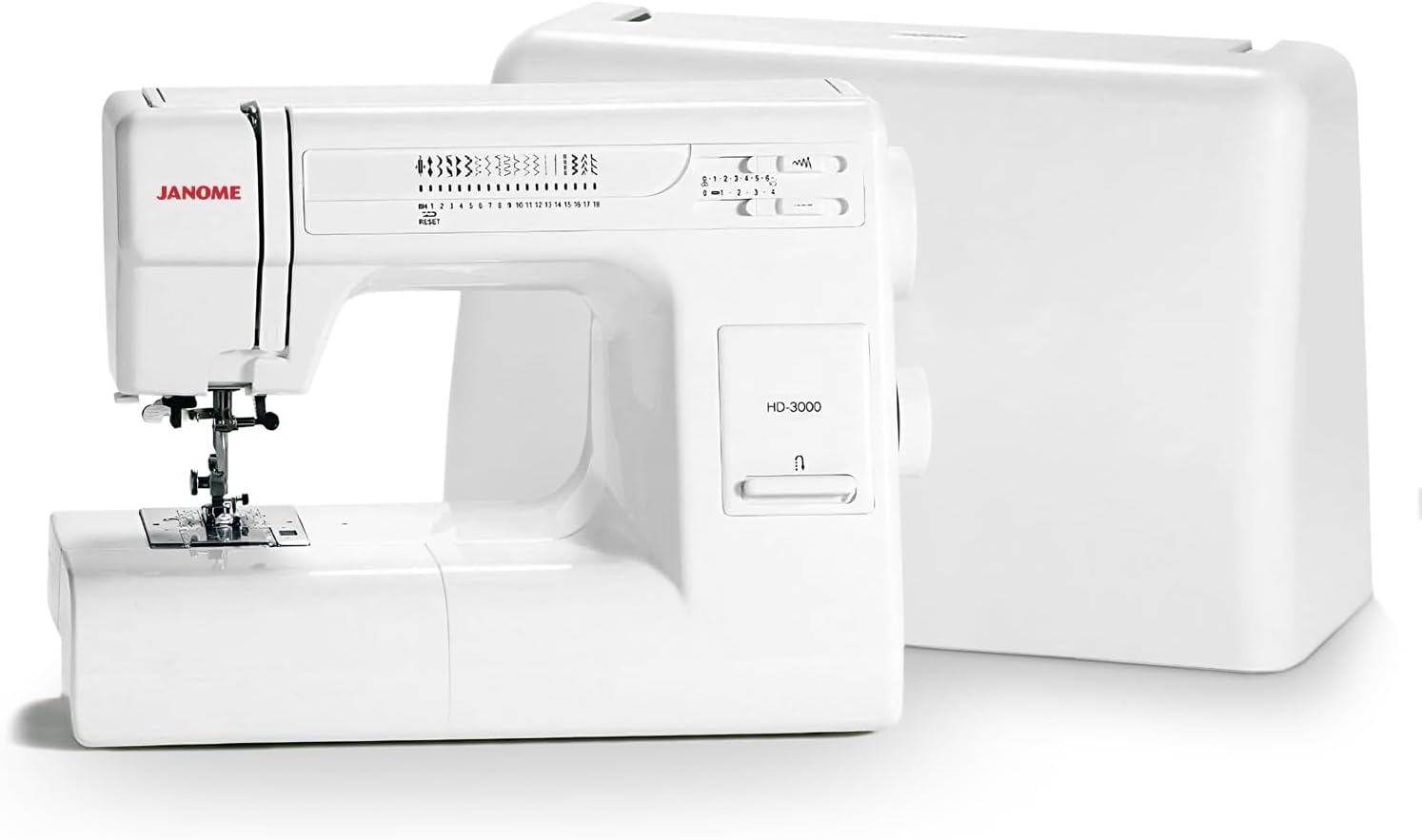
| Model Number | HD3000 |
|---|---|
| Included Components | Foot Control, Power Cord, Standard Accessories |
| Power Source | Corded Electric |
| Material | Aluminum, Plastic |
The Janome HD3000 is a straightforward mechanical machine built for reliably handling a range of fabrics from quilting cotton to heavier layers. It offers 18 built-in stitches including a one-step buttonhole, a push-pull bobbin winder, snap-on presser feet, manual thread tension and foot pressure adjustment, and an extra-high presser foot lever that make it easy to feed multiple layers common in quilt piecing. The built-in needle threader and free arm speed small tasks and sleeve work, while the metal parts in the chassis and included hard case give the unit a stable, durable feel under higher-tension stitching. Because it is mechanical, stitch selection and adjustments are manual rather than digital, which some users prefer for direct control but it lacks programmable stitch sequences and automatic tension features found on computerized models. For quilters who value solid construction and tactile control for piecing and piecing through batting and multiple layers, the HD3000 is a practical, no-frills performer.
Best for: Quilters who prioritize a robust, manually controlled machine that handles multiple layers and wants reliable, straightforward performance over digital features.
Less Ideal for: People seeking touchscreen controls, automated tension or stitch memory features should consider a computerized machine instead.
- Durable heavy-duty build with metal components for stable stitching
- Extra-high presser foot and adjustable foot pressure for managing multiple quilt layers
- 18 built-in stitches plus one-step buttonhole cover common quilting needs
- Built-in needle threader and snap-on presser feet speed setup and accessory changes
- Mechanical controls lack the convenience of computerized stitch programming
Verdict: Choose the Janome HD3000 if you want a heavy-duty, mechanically controlled sewing machine that reliably handles quilt piecing and multiple fabric layers.
Janome Purple Majesty 311

| Built-in stitches | 15 |
|---|---|
| Buttonhole | 4-step |
| Power Source | ac_dc |
| Material | Metal, Plastic |
The Janome Purple Majesty 311 is a straightforward mechanical sewing machine aimed at beginners who want a reliable, portable machine for garments, home decor, and light quilting. It includes 15 built-in stitches, adjustable stitch width and length, and a 4-step buttonhole that make basic sewing tasks quick to set up. The three-piece feed dog and free-arm design help fabrics feed evenly, which is useful when working with cottons, layered pieces, and small quilted items. It ships with four presser feet plus standard accessories like bobbins and needles, and the interior metal frame gives the little machine solid stability during use. At about 13 pounds it is easy to move or store between projects, and the simple controls and tutorial videos lower the learning curve. Limitations include only a 4-step rather than fully automatic buttonhole and a basic feature set compared with heavier-duty quilting machines, so it is best for small quilts, patchwork, and everyday sewing rather than large, thick quilting projects or high-volume production.
Best for: Quilters who prioritize an easy-to-learn, portable machine for small quilts, patchwork, and practice projects and who want reliable fabric feeding without a steep learning curve.
Less Ideal for: Those planning large, thick quilts, frequent heavy-duty quilting, or who need advanced automation and high-speed production features should consider a heavier-duty quilting machine instead.
- Beginner-friendly setup with simple controls and tutorial videos
- 3-piece feed dog and free-arm design for smoother fabric handling
- Interior metal frame for improved stability while sewing
- Includes multiple presser feet and standard accessories for varied projects
- Not intended for heavy-duty or high-volume quilting projects
- Buttonhole is a 4-step manual style rather than an automatic one
Verdict: A lightweight, beginner-focused mechanical machine that delivers stable, fuss-free stitching for small quilts and patchwork projects.
SINGER M3500 Sewing Machine

| Built-in stitches | 32 |
|---|---|
| Stitch applications | 110 |
| Power source | Ac/Dc |
| Included components | Presser feet, needles, bobbins, seam ripper, dust cover |
The SINGER M3500 is a lightweight, mechanically driven sewing machine aimed at hobbyists and budget-minded quilters who want more stitch variety without a complicated interface. It supplies 110 stitch applications and adjustable stitch width and length so you can handle decorative, stretch, and basic stitches used in quilting, piecing, and finishing. Practical extras like a one-step buttonhole, built-in needle threader, LED work light, and a free arm for cuffs and hems make setup and small repairs simple, while the included accessory kit stores neatly in the front compartment. The M3500 has a durable metal frame for stability and a reasonably large flatbed space (needle-to-tower) that helps when maneuvering quilt blocks, though it is still a compact machine compared with full-size quilting models. Expect straightforward mechanical controls rather than computerized menus, which keeps costs down but limits automation and advanced stitch programming. For quilters on a tight budget who want a dependable, versatile machine for piecing and smaller quilting projects, the M3500 covers the essentials without extras that raise complexity or price.
Best for: Quilters shopping on a budget who want a reliable, no-frills machine that offers many stitch options and basic conveniences for piecing, small quilts, and regular mending.
Less Ideal for: Advanced or long-arm quilters working on large, multi-layered quilts who need a full-size, high-throat-depth machine or computerized quilting features.
- Wide stitch selection with 110 stitch applications for decorative and functional quilting tasks
- One-step buttonhole and automatic needle threader speed common garment and patchwork tasks
- Durable metal frame improves stability for consistent stitching
- Front compartment accessory storage keeps included presser feet and tools organized
- Compact footprint limits handling of very large quilts or bulky quilt sandwiches
- Mechanical controls lack computerized automation and advanced stitch programming
Verdict: A budget-friendly mechanical machine that gives quilters broad stitch variety and useful conveniences for piecing and small quilts without the complexity of computerized models.
Brother XR3774 Sewing & Quilting Machine

| Built-in stitches | 37 |
|---|---|
| Buttonhole | 1 one-step auto-size |
| Power source | Corded Electric |
| Input voltage | 120 volts |
The Brother XR3774 is a straightforward mechanical sewing and quilting machine aimed at hobbyists who value dependable performance. It offers 37 built-in stitches including utility, decorative, and quilting stitches plus a one-step buttonhole, making it useful for garment construction, home decor, and quilt piecing. Practical features include an automatic needle threader that saves time when changing threads, a jam-resistant drop-in top bobbin for smoother sewing, and a free arm plus an oversized wide table that helps when maneuvering sleeves or layered quilt blocks. The package includes eight presser feet and an instructional DVD to get beginners started while still supporting more advanced projects with a walking foot and spring-action quilting foot. As a mechanical machine it is simple to repair and maintain compared with computerized models, but it lacks an LCD interface and the expanded stitch libraries or automation found on higher-end computerized machines. For quilters who want a reliable, no-frills workhorse that handles multiple layers and routine sewing tasks well, the XR3774 is a solid choice.
Best for: Buyers who prioritize a dependable, easy-to-service machine for regular quilting and sewing projects and prefer straightforward controls over advanced automation.
Less Ideal for: Users who want extensive computerized stitch customization, touchscreen controls, or large built-in embroidery libraries should consider a computerized model instead.
- 37 built-in stitches covering utility, decorative, and quilting needs
- Automatic needle threader reduces setup time and frustration
- Drop-in top bobbin with jam-resistant design for consistent stitching
- Wide extension table and free arm support larger quilting projects
- Includes eight presser feet and useful accessories to start sewing immediately
- Mechanical controls limit ease of selecting and storing custom stitch settings
- Not equipped with a digital display or extensive computerized stitch library
Verdict: A reliable, mechanically simple sewing and quilting machine that delivers practical features quilters need without the complexity of computerized models.
Brother XM2701 Sewing Machine

| Built-in stitches | 27 |
|---|---|
| Power source | Corded Electric |
| Input voltage | 120 volts |
| Included presser feet | 6 |
The Brother XM2701 is a compact mechanical sewing machine designed for everyday mending, garment construction, and basic quilting tasks. It offers 27 built-in stitches including utility, decorative, and quilting stitches plus a one-step auto-size buttonhole, and it uses dial controls for stitch selection and adjustments. Practical features like an automatic needle threader, jam-resistant drop-in top bobbin, automatic bobbin winder, built-in LED light, free arm and six quick-change presser feet make setup and common jobs fast and approachable. The machine handles lightweight to midweight fabrics and with the right needle and settings can work on denim and stretch fabrics for simple quilting layers and piecing. Trade-offs are that it is a mechanical, non-computerized model so you will not get stitch memory, advanced stitch editing, or the higher stitch speeds and precision of more expensive computerized quilting machines. For routine home sewing and entry-level quilting projects it balances capability and ease of use without unnecessary complexity.
Best for: Buyers who prioritize a proven, easy-to-use mechanical machine for learning, repairs, and basic quilting projects and who value clear user feedback and widespread ownership as reassurance.
Less Ideal for: Quilters who need advanced stitch programming, high-speed production, or heavy-duty multi-layer quilting should consider more capable computerized or heavy-duty machines.
- 27 built-in stitches including quilting and decorative options
- One-step auto-size buttonholer and six included presser feet for common tasks
- Automatic needle threader and jam-resistant top drop-in bobbin simplify setup
- Built-in LED work light and free arm for sewing cuffs, sleeves, and narrow tubes
- Lightweight and portable for moving between sewing/quilting stations
- Mechanical controls lack stitch memory and advanced customization found on computerized machines
- Not intended for heavy industrial use or very thick multi-layer quilting without specialized needles
Verdict: A simple, dependable mechanical sewing machine that gives beginners and home quilters the essential stitches and user-friendly features needed to start quilting confidently.
SINGER Heavy Duty 4423

| Built-in stitches | 23 |
|---|---|
| Stitch applications | 97 |
| Max stitches per minute | 1,100 stitches/min |
| Power Source | ac_dc |
The SINGER Heavy Duty 4423 is a mechanically focused sewing machine built around a heavy-duty metal frame and a powerful motor that reaches 1,100 stitches per minute, which helps when quilting through multiple layers or heavy fabrics. It offers 23 built-in stitches with 97 stitch applications and a one-step buttonhole for common quilting tasks plus adjustable presser foot pressure and an extra-high presser foot lift to handle batting and stacked seams. Practical conveniences include a top drop-in bobbin with a clear cover, an automatic needle threader, LED work light, and a stainless-steel bed plate for smooth fabric feeding. The machine ships with several presser feet and basic accessories to get started. Limitations to note are that it is a mechanical, not computerized, machine so there is no digital stitch memory or customizable stitch editing, and the stitch selection requires manual dials which may be slower for pattern-heavy decorative work. For quilt piecing and general heavy-duty home sewing it is durable and straightforward, but quilters wanting advanced stitch programming should look elsewhere.
Best for: Quilters who prioritize a durable, no-frills machine that reliably sews through multiple layers and heavy fabrics and who prefer straightforward mechanical controls.
Less Ideal for: Users seeking computerized stitch customization, touchscreen controls, or advanced decorative stitch programming for intricate quilting designs.
- Heavy-duty metal frame and stainless-steel bed plate for stable, skip-free sewing
- Powerful motor (1,100 stitches/min) that handles thick fabrics and multiple quilt layers
- Adjustable presser foot pressure and extra-high presser foot lift for bulky seams
- Top drop-in bobbin with clear cover and automatic needle threader for easier setup
- Mechanical dial-based controls lack computerized stitch editing or memory
- Limited built-in stitch set compared with high-end computerized machines
Verdict: Choose the SINGER 4423 if you want a tough, fast mechanical machine that reliably handles quilt piecing and heavy layers without unnecessary digital features.
Choosing the Right Mechanical Sewing Machine for Quilting: Key Factors to Consider
Stitch Consistency and Length Control
Quilting requires accurate seam allowances and uniform quilting stitches. A machine with reliable, incremental stitch-length settings lets you reproduce the same seam repeatedly, which is critical when matching block edges and maintaining straight seams.
Mechanical machines often use a physical dial or lever for stitch length. Look for positive detents or clear numeric markings so you can set and return to exact lengths. Inconsistent stitch length causes uneven seam allowances, puckering, and misaligned points, which are difficult to correct later in a quilt.
Feeding System and Layer Management
How the machine feeds fabric affects both piecing and quilting. A strong, even feed prevents skipped stitches and fabric drift when you work with multiple layers or bulky batting. For quilting, consider whether the machine offers a drop feed, adjustable feed dogs, or compatibility with a walking foot to better handle layered quilts.
A feeding system that holds fabric flat and advances evenly reduces the need for constant manual adjustments and helps keep seams consistent across the quilt. Machines with flimsy or short feed-by sections struggle with thick seams and can pull fabric, leading to stretched blocks.
Throat Space and Workspace
Throat space is the distance from the needle to the machine body and determines how much quilting you can maneuver without constant repositioning. Larger throat space, whether full bed or extended free arm adapters, makes squaring blocks and quilting larger pieces easier.
If you plan to quilt beyond small lap-size projects, choose a machine with comfortable clearance so you can rotate and feed the quilt without contorting it. Limited throat space increases handling time and may force you to baste or hoop more frequently.
Presser Foot Options and Pressure Adjustment
Quilting uses varied feet: a walking foot for even feeding, a quarter-inch piecing foot for accurate seam allowance, and darning or free-motion feet for quilting. Mechanical machines with quick-change foot systems and adjustable presser pressure let you adapt to piecing, sandwiching, and quilting without extra fuss.
Being able to change presser pressure is important when moving from thin cottons to heavy battings. Too much pressure can compress batting and distort stitches, while too little causes slipping. Machines without pressure adjustment force compromises or constant manual stabilizing.
Needle Access and Maintenance
Easy access to the bobbin area and straightforward maintenance are practical considerations for quilters who use machines regularly. Mechanical machines that allow quick bobbin changes, tension checks, and routine oiling keep downtime low and reduce the chance of skipped stitches during long quilting sessions.
Simple mechanical designs often let owners clear lint, re-tension the bobbin, and replace needles without specialized tools. Poor access or complicated service procedures increase the likelihood of service visits and interruptions to your quilting workflow.
Build Robustness and Motor Strength
Quilting can demand extended operation and more torque when feeding multiple layers. A mechanically robust chassis and a motor with enough low-end torque make long sewing sessions and thick seams manageable. For domestic mechanical machines, a well-built gearbox and steady drive mechanism reduce vibration and maintain even stitching under load.
Consider machines known for sturdy metal components in critical areas, such as the needle bar and shuttle assembly. A flimsy plastic drive or light, underpowered motor will struggle with batting and multiple fabric layers, resulting in inconsistent stitch formation and frustration.
Why Choose a Mechanical Machine for Quilting
Mechanical sewing machines appeal to many quilters because they offer direct, tactile control over stitch settings and fewer electronic failure points. Their simple, knob- and lever-based interfaces make it easy to dial in stitch length, adjust tension, and change presser pressure on the fly.
For quilters who value straightforward reliability and want a machine they can maintain themselves, mechanical models are often more serviceable and predictable than overly computerized options.
- Immediate feedback from dials and levers
- Easier to repair and service at home
- Consistent stitch settings without menu navigation
Essential Accessories for Quilting Success
Beyond the machine itself, certain accessories greatly improve quilting workflow. A sturdy walking foot helps feed layered quilts evenly, while a dedicated quarter-inch foot supports accurate piecing. A darning or free-motion foot and an embroidery plate expand quilting technique options.
Other useful items include extra needles in quilting sizes, high-quality polyester thread for durability, and a magnetic or metal seam guide to maintain consistent seam allowance.
- Walking foot for layered feeding
- Quarter-inch piecing foot for accurate seams
- Darning/free-motion foot for quilting
- Spare needles and thread suited to quilting
Setting Up for Accurate Piecing
Start by confirming correct needle size and tension for your fabric and thread. Use an accurate quarter-inch foot and a seam guide to establish repeatable seam allowances. Test on scrap layered with batting to confirm stitch length and tension before sewing actual blocks.
Take time to adjust presser foot pressure if your machine allows it. Minor pressure tweaks can eliminate fabric shifting and improve seam accuracy, especially when sewing through several layers or seams with bulky intersections.
- Test settings on a layered scrap
- Use seam guides and accurate piecing feet
- Adjust presser pressure to avoid shifting
Tips for Free-Motion Quilting on Mechanical Machines
Mechanical machines can excel at free-motion quilting when fitted with the right foot and a low stitch-length setting. Lower the feed dogs or use a darning plate, mount a free-motion foot, and practice controlling fabric movement with both hands.
Control comes from consistent hand speed and even micro-movements. Because mechanical machines lack speed governors common in some computerized machines, maintain steady foot speed and avoid sudden acceleration to prevent long stitch formation.
- Lower feed dogs for free-motion work
- Use a darning plate and free-motion foot
- Practice even hand movement and pedal control
Maintenance Routine for Long-Term Reliability
Regularly remove lint from the bobbin area, oil moving parts per the machine manual, and check timing and tension periodically. Mechanical machines respond well to routine owner maintenance, which preserves feeding consistency and stitch quality.
Replace needles frequently when quilting, and keep spare drive belts or parts identified so minor repairs do not halt a project. A steady maintenance routine extends the machine life and keeps quilting results consistent.
- Clean bobbin area after large projects
- Oil moving parts as recommended
- Replace needles often during quilting
How We Chose the Best Mechanical Sewing Machine for Quilting
We prioritized features that directly affect quilting accuracy, durability, and daily usability. First, stitch consistency and stitch length control were required, since precise seam allowance and even quilting stitches determine how well blocks line up and layers stay flat. Second, feed system and throat space were key filters because quilts need stable fabric movement and room for bulky projects. Third, presser foot options and pressure adjustment mattered for handling multiple layers and walking-foot compatibility. Fourth, build quality and drive reliability were assessed to ensure a machine can handle heavy quilting loads over time. Fifth, user controls and serviceability were considered so owners can maintain tension, timing, and routine mechanical adjustments without professional repair often. We excluded machines lacking manual control over stitch length or with demonstrably weak feeding for thick fabric. Final selections balanced stitch control, throat space, feeding performance, presser-foot versatility, and long-term mechanical robustness.
Our full evaluation process is outlined in our review methodology.
FAQ
Can a mechanical sewing machine handle multiple quilt layers?
Often, yes. Many mechanical machines have sufficient feed and torque for standard quilting layers when paired with the right presser foot and needle. Confirm the machine has a robust feeding system and consider using a walking foot for heavier stacks.
Is a walking foot necessary for quilting on mechanical machines?
It depends on the projects. A walking foot is highly beneficial for feeding multiple layers evenly and reducing shifting. For light or single-layer quilting you may manage without one, but it is a valuable accessory for most quilted projects.
How important is throat space for quilting?
Throat space matters because it affects how easily you manipulate larger sections of your quilt. More clearance reduces the need to constantly reposition the quilt and helps maintain control when quilting bigger pieces.
Do mechanical machines require professional servicing often?
Usually they require less frequent electronic servicing, but they do need routine mechanical maintenance like cleaning, oiling, and occasional tension adjustment. Well-maintained mechanical machines can run reliably for years without major service.
What needle type is best for quilting on mechanical machines?
A universal or quilting needle in sizes appropriate for your fabric and batting thickness typically works well. Use a sturdier needle for multiple layers and change needles often to avoid skipped stitches and fabric damage.
Final Verdict
When choosing a mechanical sewing machine for quilting, prioritize stitch-length control, a stable feeding system, adequate throat space, and presser-foot versatility. Those attributes directly influence seam accuracy, fabric handling, and your ability to finish layered quilts reliably. Balance the need for durability and maintainability with the specific projects you plan to sew, and you will end up with a machine that supports precision piecing and comfortable quilting for years.