
Note: This article contains affiliate links. If you click on these links and make a purchase, we may earn a small commission at no extra cost to you. This helps support our research and content. Read our full affiliate disclosure here.
If you rely on fresh citrus for morning drinks, cooking, or garnishes but have limited counter space, the right mini hand juicer makes a big difference. These compact presses are built to squeeze lemons, limes, and small oranges with minimal fuss and fast cleanup. In this guide we spotlight the top shortlisted options across the category and explain the features that matter most for everyday home use. You will see how we evaluated extraction efficiency, build and cleaning practicality, and suitability for tight kitchens. Read on to find a small, reliable press that fits your routine and space.
Top Picks at a Glance
| Best Overall The best all-around choice for most situations | Etinslant Manual Citrus Juicer DT-LM3 |  |
| Best Value The sweet spot between price and what you get | ChefVille 4-in-1 Manual Juicer |  |
| Best Budget The cheapest option that still gets the job done reliably | Joie Lemon and Lime Hand Juicer |  |
| Top Rated A top-rated pick with lots of positive feedback | Chef'n Juicester Mini Citrus Juicer |  |
| Most Popular A crowd favorite that many people choose with confidence | OXO Good Grips Small Citrus Juicer |  |
| Best Seller A high-volume bestseller chosen again and again | Zulay Metal 2-In-1 Lemon Squeezer | 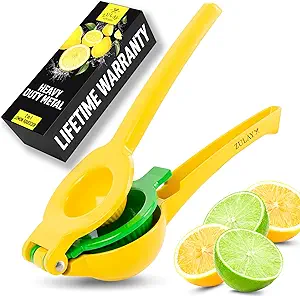 |
Etinslant Manual Citrus Juicer DT-LM3

| Material | Stainless Steel (18/8) |
|---|---|
| Capacity | 300 ml |
| Power Source | Manual Winding |
| Wattage | 5 watts |
This compact hand juicer uses a pointed stainless steel reamer and a slotted sieve to extract juice quickly without electricity. You cut the fruit, press and rotate it on the cone, and juice drains through the slots into the 300 ml bowl where seeds are caught and two pour spouts make dispensing easy. The 18/8 stainless construction feels sturdier than plastic and is corrosion resistant for frequent kitchen use or travel. It is dishwasher-safe and simple to rinse by hand, so cleanup is fast. Because it is manual and small, it is best for single-serve glasses or small batches rather than juicing large volumes or whole grapefruits. The reamer design pulls good yield from lemons, limes, mandarins and small oranges, but hard pressing may be needed for thicker-skinned fruit. Overall this is a durable, no-frills mini juicer that fits countertops or picnic kits and reliably produces fresh citrus juice with minimal fuss.
Best for: Buyers who want a sturdy, portable hand juicer for daily single glasses or occasional outdoor use and prefer a metal, low-maintenance tool over plastic or electric models.
Less Ideal for: People who need to juice large quantities, make frequent batches for a family, or prefer hands-free electric juicing should choose a larger or powered juicer instead.
- Durable 18/8 stainless steel construction resists rust and acid
- Pointed reamer with multiple teeth for efficient juice extraction
- Slotted sieve effectively catches seeds while allowing fast drain
- Two pour spouts and handles make pouring convenient without disassembly
- Dishwasher-safe for easy cleanup
- Small 300 ml capacity limits batch size for multiple servings
- Manual operation requires more effort than electric juicers
Verdict: A compact, heavy-duty stainless steel mini juicer that reliably delivers fresh citrus juice for single servings and travel-friendly use.
ChefVille 4-in-1 Manual Juicer

| Capacity | 591 ml |
|---|---|
| Material | Polypropylene (PP) |
| Power Source | Manual |
| Special Features | Portable |
This compact ChefVille manual juicer is a handheld 4-in-1 tool that squeezes citrus, filters seeds, measures juice and swaps reamer heads for different fruit sizes. You use it by holding the ergonomic side grips and pressing or twisting fruit on one of the two included reamers; the wide V-shaped spout and clear ml markings let you pour and measure directly into recipes or drinks. Practical extras include a detachable handle for carrying and pouring, a built-in seed filter and a non-slip silicone base that keeps the cup steady during use. Because it is made from food-grade polypropylene and is BPA-free, it is lightweight and easy to store in a drawer, and the flip-top design reduces countertop clutter. Expect the usual limits of a plastic manual juicer: it requires manual effort for larger fruits and should be hand-washed to maintain the material and markings. For everyday kitchen tasks and occasional cocktail or marinade prep it offers a simple, space-saving solution.
Best for: Buyers who want a versatile, space-saving handheld juicer for occasional kitchen tasks, measured recipes, and small batches without relying on electricity.
Less Ideal for: People who need a heavy-duty or high-volume juicer for frequent large-batch juicing or prefer dishwasher-safe metal models.
- Dual reamers for small and large citrus to maximize juice extraction
- 16.9 oz cup with clear ml markings lets you measure and pour directly
- Ergonomic side-grip plus non-slip silicone base for steadier, lower-effort squeezing
- Detachable handle and flip-top design for easy carrying and compact storage
- Made of polypropylene so it can stain or wear faster than metal alternatives
- Requires manual effort on larger fruits and is not suited for high-volume juicing
Verdict: A compact, measurement-friendly manual juicer that saves space and handles everyday citrus tasks without electricity.
Joie Lemon and Lime Hand Juicer

| Capacity | 30 ml |
|---|---|
| Material | Plastic |
| Product Care Instructions | Dishwasher Safe |
| Power Source | Manual |
This compact hand juicer combines a reamer top with a clear measuring reservoir so you can press, strain, and pour measured amounts of lemon or lime juice without extra tools. To use, halve a citrus, press and twist on the reamer while juice collects in the reservoir shown with incremental marks from teaspoons to tablespoons, then pour through the built-in strainer or store up to about 1 ounce. Made of BPA-free plastic, it is dishwasher safe for quick cleanup and small enough to tuck into a drawer. Because it is fully manual there is no noise or electricity and no complex parts to fail, but the small 30 ml capacity means you will refill it often for larger recipes and the plastic construction is less durable than metal alternatives. Overall it is a simple, inexpensive tool that speeds small juicing tasks and reduces bowl and measuring-cup clutter in the kitchen.
Best for: Buyers looking for a low-cost, space-saving tool to juice small citrus for cooking, cocktails, or dressings who prioritize convenience and easy cleanup.
Less Ideal for: Anyone who regularly needs larger volumes of juice or wants a heavy-duty, long-lasting metal juicer should choose a larger or sturdier model instead.
- Built-in clear reservoir with measurement markings for easy portioning
- Compact size fits in small kitchens or drawers
- Dishwasher-safe BPA-free plastic for easy cleaning and safe storage of leftover juice
- Very small 30 ml capacity requires frequent refills for larger tasks
- Plastic construction is less sturdy than metal juicers
Verdict: A cheap, compact manual juicer that measures and strains small amounts of lemon or lime juice quickly, ideal for budget-minded cooks with limited counter space.
Chef'n Juicester Mini Citrus Juicer

| Capacity | 0.5 liters |
|---|---|
| Power Source | Manual |
| Material | Plastic |
| Blade Material | Stainless Steel |
The Chef'n Juicester Mini Citrus Juicer is a straightforward hand juicer designed for quick small-citrus tasks like juicing lemons and limes. It combines a reamer and a fitted cone strainer that keeps seeds and heavy pulp out of the carafe while measurements printed on the container let you juice directly into recipes. Use it by halving a citrus fruit and pressing and twisting on the reamer; the juice collects in the carafe and the pour spout makes transfer easy. The set includes an extra, larger reamer to handle slightly bigger fruit and the plastic carafe is light and easy to store. Materials are basic plastic with stainless steel blade elements for the strainer, and care instructions call for hand washing though the listing notes top-rack dishwasher safe for convenience. Because it is manual and compact, it is fast for small batches but not intended for high-volume juicing. Its simple construction favors reliability and minimal maintenance but offers no electric assistance or heavy-duty components for frequent commercial use.
Best for: Buyers who want a reliable, low-maintenance tool for occasional fresh lemon and lime juicing and value simplicity over power.
Less Ideal for: If you need to juice large quantities regularly or want an electric juicer that minimizes effort, choose a larger or powered model instead.
- Built-in strainer separates seeds and most pulp while juicing
- Carafe has measurement markings and a pour spout for accurate transfer
- Includes two reamers to handle small and slightly larger citrus
- Simple manual design means few parts to fail and easy storage
- Made primarily of plastic so it is not as heavy-duty as metal juicers
- Small capacity makes it unsuitable for juicing large volumes at once
Verdict: A compact, dependable manual juicer that reliably produces measured seed-free lemon and lime juice for everyday home use.
OXO Good Grips Small Citrus Juicer

| Capacity | 75 ml |
|---|---|
| Power Source | Manual |
| Material | Plastic |
| Product Care Instructions | Dishwasher Safe |
The OXO Good Grips Small Citrus Juicer is a handheld, manual tool designed for quickly extracting and measuring small amounts of citrus juice for cooking, baking, and cocktails. You press or twist halved citrus on the reamer, which nests securely onto the 2.5-ounce cup so juice drains into the container while seeds are caught by the built-in strainer. Measurement markings on the cup remove the need for a separate measuring vessel and the drip-free pour spout helps transfer juice cleanly. Made of BPA-free plastic and dishwasher-safe parts, it is easy to clean and lightweight to store. Its compact capacity is ideal for single servings or recipes that call for a tablespoon or two of juice, but it is not intended for large batches or continuous commercial use. The plastic construction keeps cost and weight down but is less sturdy than metal press-style juicers for heavy-duty use. For anyone who wants an accurate tiny-quantity juicer that cleans up fast, this is a practical, low-effort choice.
Best for: Buyers who prioritize a compact, fuss-free tool for measuring and juicing small amounts of citrus for recipes and single drinks and who value easy cleanup and consistent results.
Less Ideal for: People who need to juice large quantities or want a heavy-duty, long-lasting press-style juicer for frequent, high-volume use should look elsewhere.
- Compact integrated 2.5 oz cup with measurement markings for direct measuring
- Reamer locks onto cup for stable juicing and effective extraction
- Built-in strainer catches seeds and pulp for smoother juice
- Drip-free spout makes pouring small amounts easy and tidy
- Dishwasher-safe BPA-free plastic is low maintenance and lightweight
- Small 75 ml capacity requires frequent emptying for multiple servings
- All-plastic construction is less durable than metal alternatives
Verdict: A tiny, dependable manual juicer that measures and pours small amounts of citrus juice cleanly, ideal for cooking and single-serve drinks.
Zulay Metal 2-In-1 Lemon Squeezer

| Material | Aluminum |
|---|---|
| Blade Material | Stainless Steel |
| Power Source | Manual |
| Capacity | 0.5 liters |
The Zulay Metal 2-in-1 Lemon Squeezer is a compact hand press for quickly juicing halves of lemons, limes, and small oranges without electricity. You place a halved fruit in the bowl and press the ergonomic handle to force juice through a perforated basin that keeps seeds and most pulp out of the stream. Constructed from aluminum with stainless steel blades and a food-grade finish, it feels sturdy and gives good leverage so even softer hands can extract a lot of juice with minimal effort. It is small enough to store in a drawer and cleans easily by rinsing or hand washing. The design is focused and simple, so there are no extra parts to assemble or batteries to replace. Limitations are its size and bowl capacity, which make it best for single servings or cocktail use rather than large batches, and hand-wash care is recommended despite product claims about dishwasher safety in some descriptions.
Best for: Buyers who prioritize a reliable, low-risk tool for occasional fresh juice—especially those who want a simple, durable press for single servings and cocktails.
Less Ideal for: Not a good fit for users who need to juice large quantities at once or want a fully dishwasher-safe, hands-off electric juicer.
- Sturdy aluminum construction with stainless steel components for durability
- Ergonomic handle provides good leverage for easy pressing
- Built-in perforated bowl filters seeds and reduces pulp in juice
- Compact, single-piece design stores easily and has no batteries or moving parts
- Easy to rinse clean after use
- Small bowl capacity limits use to single servings or cocktails
- Manufacturer recommends hand washing which may be less convenient for some users
Verdict: A compact, heavy-duty manual squeezer that reliably extracts juice for single servings and cocktails without any fuss.
Choosing the Right Mini Hand Juicer: Key Factors to Consider
Extraction Efficiency
How much juice a mini hand juicer can extract from small citrus fruits directly affects how many fruits you need and how long you spend juicing. Efficient reamer designs and thoughtful pressing geometry reduce wasted pulp and maximize yield, which is especially important when recipes call for several lemons or multiple servings.
An efficient device also reduces manual effort. Look for shapes and cone patterns that favor pulp compression without requiring excessive twisting or hard pressing. For consistent results, consider how well the reamer handles both halved fruit and wedges.
Ergonomics and Handling
Because mini hand juicers are used manually, comfortable handling is a major practical concern. Ergonomic contours, non-slip grips, and reasonable weight distribution cut down on wrist fatigue and make repeated juicing more pleasant. Handles or press surfaces that are too small can dig into your hand, while oversized forms defeat the purpose of a compact tool.
Also consider how the juicer stabilizes the fruit during pressing. Some small presses rely on a two-handed squeeze while others use a single-hand technique; pick the approach that matches your strength and habitual use in the kitchen.
Ease of Cleaning
Frequent cleanup is a deterrent to daily juicing, so the simpler the cleaning routine, the more likely you are to use the tool regularly. Look for designs with few crevices, simple detachable parts, and surfaces that rinse clean quickly. Dishwasher-safe construction is convenient for busy households, but plain stainless or food-grade plastic that rinses easily works well too.
Consider whether the reamer traps seeds or pulp, and whether any small parts are hard to reach. A juicer that disassembles for a quick scrub will save time compared with one that requires a brush or prolonged soaking.
Material and Build Quality
Materials influence both durability and interaction with acidic citrus juice. Food-grade stainless steel and BPA-free plastics resist corrosion and staining and stand up to repeated use. Metal reamers deliver longevity and firmer pressing, while softer plastics reduce risk of chipping but may wear faster under heavy use.
Evaluate seam finishes, rivets, and glued joints since cheap assembly can lead to wobble or breakage. Solid construction also affects how long the juicer maintains consistent performance and whether it can tolerate occasional drops.
Size and Storage Footprint
Mini hand juicers are chosen primarily for small kitchens or minimal storage space, so footprint matters. Consider whether the tool stores easily in a drawer, hangs on a hook, or occupies counter real estate. Collapsible or nested designs save space, while standalone presses that need a resting area may be less practical for tiny kitchens.
Also factor in ergonomics relative to size. A very small juicer that fits a drawer may sacrifice grip comfort or extraction power, so balance storage needs with functional dimensions.
Versatility for Fruit Sizes
Although mini presses are optimized for lemons and limes, versatility matters if you occasionally juice small oranges or mandarins. The geometry of the cone or reamer determines how well different fruit sizes seat and release juice. A design with a medium-angle reamer or multiple cone sizes will handle a wider range of citrus without losing efficiency.
Consider whether the juicer accepts halved fruit comfortably and how it manages seeds and pith across sizes. Versatility can reduce the need for multiple tools.
Hand Techniques That Improve Yield
Small changes in how you juice can noticeably increase the amount of liquid you extract. Rolling the fruit on the countertop before halving breaks down membranes and loosens juice, making manual extraction easier. Press the fruit firmly against the reamer while rotating to engage more pulp and squeeze more liquid out with each motion.
Try alternating short, forceful presses with steady twisting to release juice trapped in the segments. If your juicer is two-handed, stabilize the base with one hand while applying even pressure with the other to reduce slippage and avoid wasted effort.
- Roll fruit for 10 to 15 seconds before cutting.
- Use a twisting motion in addition to downward pressure.
- Stabilize the juicer to prevent loss of leverage.
Cleaning and Maintenance Tips
Rinse parts immediately after use to prevent pulp and acid from drying on surfaces. For stubborn pulp, a quick soak in warm soapy water loosens debris and makes brushing easier. If the juicer disassembles, wash each component separately and allow parts to air dry fully before reassembly to prevent trapped moisture.
Avoid abrasive cleaners that can dull finishes. For stainless components, a mild vinegar rinse can remove sticky residue and mineral spots without damaging metal. Inspect seals or joins periodically; if you notice discoloration or loosening, address it early to extend the tool's life.
- Rinse immediately after juicing to prevent sticky buildup.
- Soak briefly to loosen pulp before scrubbing.
- Air dry parts completely to avoid trapped moisture.
Storing a Mini Juicer in Small Kitchens
Plan storage around how often you use the juicer. If daily, keep it on a small counter tray or near the prep area for quick access. For less frequent use, a top kitchen drawer or a cabinet shelf works well. Choose models that nest or stack with other utensils if drawer storage is limited.
Use simple organizers to prevent the juicer from rattling or shifting. A small silicone mat or divider keeps the juicer protected and makes it easier to grab when needed without digging through clutter.
- Keep daily-use juicers within easy reach on a counter or shelf.
- Store infrequently used models in a drawer with dividers.
- Prefer nesting or compact shapes for tight storage spaces.
When to Choose Metal Versus Plastic
Metal reamers typically offer firmer pressure, longer life, and better resistance to staining from citrus acid. They are a good choice if you juice frequently and want a tool that tolerates heavier use. Stainless components also tend to feel more solid under hand pressure and are less likely to warp over time.
Plastic or silicone models are lighter, often less expensive, and can be gentler on delicate hands. They may be preferable if you prioritize a lightweight tool for occasional use or need a juicer that will not dent delicate surfaces. Evaluate the plastic's grade and whether it is certified food-safe to ensure it will not leach or deteriorate.
- Metal for frequent heavy use and longevity.
- Plastic or silicone for light, occasional use and lightweight handling.
Maximizing Seed and Pulp Control
Some mini hand juicers include integrated filters or reamer patterns that block seeds and large pulp pieces. If you prefer a cleaner juice with minimal straining, prioritize designs with shallow pit traps or fine perforations that capture solids without blocking flow. For garnish use, a small strainer placed under the juicer can catch remaining seeds.
If you routinely need seed-free juice for cocktails or dressings, test how the juicer performs with seeded fruit. Efficient seed control speeds prep and reduces the need for additional filtration steps.
- Look for integrated seed traps or fine reamer surfaces.
- Use a small strainer if you need ultra-clear juice.
- Avoid patterns that clog easily with pulp.
How We Chose the Best Mini Hand Juicer
We focused on devices designed specifically for manual, handheld citrus pressing and shortlisted models that combine practical extraction with compact, easy-care design. Key evaluation criteria included extraction efficiency, because a good mini hand juicer should deliver the most juice with the least effort; ergonomics and grip, since comfortable handling reduces wrist strain during repeated use; ease of cleaning, because many buyers will choose a compact tool only if it is dishwasher-safe or quick to rinse; build quality and materials, which determine durability and whether the tool reacts with acidic juice; and countertop or drawer footprint, since the target buyer often needs small storage and minimal clutter. We excluded full-size lever or electric juicers, multi-fruit centrifugal units, and presses that require bulky stands or heavy bases. From the remaining pool we prioritized models with clear user-oriented design choices that matched our criteria, including straightforward disassembly, corrosion-resistant materials, and simple reamers or cones sized for small citrus. The final list favors consistent performance across real-world kitchen tasks over novelty features.
Our full evaluation process is outlined in our review methodology.
FAQ
Can a mini hand juicer handle small oranges as well as lemons?
Often it depends on the reamer shape and size. Many mini hand juicers work well with lemons and limes and will manage small oranges or mandarins, but very large citrus may not seat properly. Choose a design with a medium-sized cone or multiple cone options for better versatility.
Is it safe to put a mini hand juicer in the dishwasher?
Usually components labeled dishwasher-safe can go in the top rack, but check material guidance first. Stainless parts tolerate dishwashers well, while some plastics may warp over time. When in doubt, hand washing preserves finish and fit.
How do I prevent bitter pith from getting into the juice?
Cut the fruit cleanly and avoid pressing so hard that you crush the white pith. Use a reamer with shallow, well-shaped ridges to extract juice from the flesh without tearing deep into the pith. Stopping a little earlier often yields a sweeter, less bitter result.
Will using a mini hand juicer take more time than an electric juicer?
Manual extraction is usually slower for larger volumes, but for small quantities a mini hand juicer can be faster to set up and clean. It often comes down to how many fruits you need and whether you are willing to trade a bit of time for simpler cleanup and storage.
How can I get more juice from rock-hard lemons?
Soften firm lemons by microwaving them for 10 to 15 seconds or soaking them briefly in warm water to loosen internal membranes. Rolling them firmly on the counter before cutting also helps release juices and reduces the effort needed during manual pressing.
Final Verdict
For small kitchens and light daily use, prioritize extraction efficiency, ease of cleaning, and a compact storage footprint when choosing a mini hand juicer. Expect tradeoffs between comfort and absolute compactness: the smallest models save space but may require firmer grip or more effort. Durable materials and simple disassembly increase the likelihood you will use the tool regularly. Focus on the criteria most important to your routine. If you juice frequently, favor sturdier metal components and ergonomic shapes. If you need something to tuck away, prioritize nesting or drawer-friendly designs. With those priorities in mind, you can confidently pick a compact press that fits both your countertop and your habits.