
Note: This article contains affiliate links. If you click on these links and make a purchase, we may earn a small commission at no extra cost to you. This helps support our research and content. Read our full affiliate disclosure here.
Picking the right mixer for baking matters because the machine you choose affects dough development, batter texture, and how much hands-on time you need. Whether you make weekly bread, frequent cakes, or batch cookies, the right mixer reduces manual effort, improves consistency, and makes cleanup less of a chore. This guide looks at six shortlisted mixers for baking that performed well across practical home-bakery tasks. We evaluated machines for mixing power, attachment flexibility, build durability, and how simple they are to maintain. Read on to see which features matter most for common baking tasks and what to prioritize based on how you bake.
Top Picks at a Glance
| Best Overall The best all-around choice for most situations | Cuisinart Stand Mixer SM-50BC |  |
| Best Quality Built to a higher standard if you want something more solid | KitchenAid Artisan 5-Qt Stand Mixer |  |
| Best Value The sweet spot between price and what you get | Hamilton Beach Classic Stand and Hand Mixer |  |
| Best Budget The cheapest option that still gets the job done reliably | OVENTE Hand Mixer HM151 |  |
| Top Rated A top-rated pick with lots of positive feedback | KitchenAid Classic Series K45SS |  |
| Most Popular A crowd favorite that many people choose with confidence | Hamilton Beach 6-Speed Hand Mixer |  |
Cuisinart Stand Mixer SM-50BC
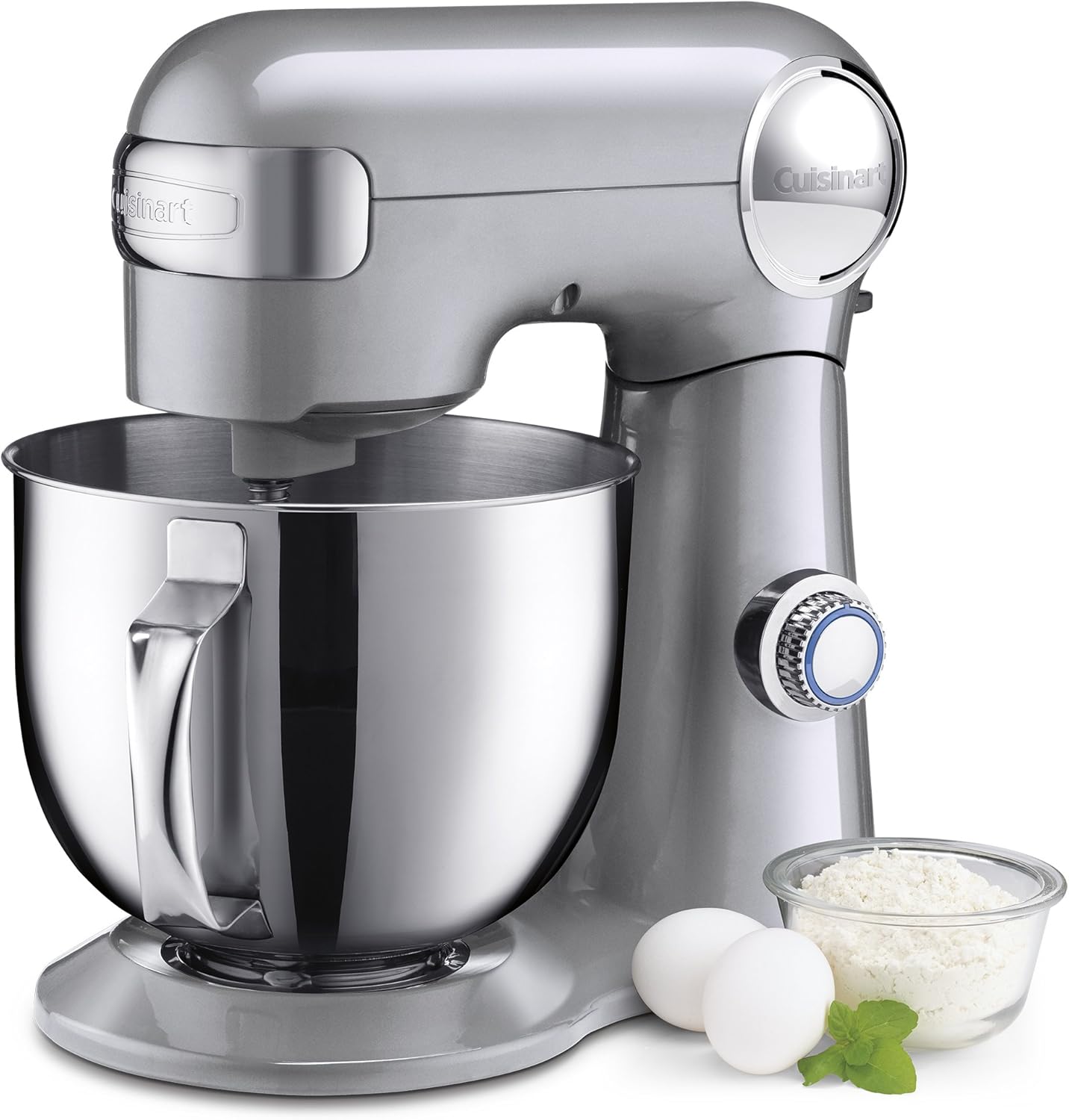
| Motor wattage | 500 watts |
|---|---|
| Number of speeds | 12 |
| Capacity | 5.5 quarts |
| Voltage | 110 volts |
The Cuisinart SM-50BC is a straightforward, metal-bodied stand mixer aimed at home bakers who need reliable everyday performance. Its 500-watt motor and 12-speed knob control handle tasks from whipping egg whites to kneading dough, while the 5.5-quart stainless steel bowl accepts medium to large batches. The tilt-back head makes swapping attachments and the dishwasher-safe accessories easy, and the included splash guard with pour spout keeps wet mixes from splattering. Practical extras include a chef's whisk, flat paddle, and dough hook, and the mixer supports optional attachments for pasta, grinding, and frozen desserts if you want to expand functionality. Expect stable operation for common baking jobs, though heavier commercial workloads will push its limits and the manual controls lack the finesse of digital timers or soft starts. For home baking, it balances power, capacity, and durability in a compact footprint.
Best for: Home bakers who want a durable, no-frills mixer that handles everyday cakes, cookies, breads, and occasional larger batches while supporting optional attachments for extra versatility.
Less Ideal for: Professional bakers or users who need high-capacity, continuous heavy-duty kneading or advanced digital controls should consider commercial-grade models instead.
- 500-watt motor suitable for mixing, whipping, and moderate dough kneading
- 5.5-quart stainless steel bowl fits medium to large home baking batches
- Die-cast metal construction offers durable, stable performance
- Includes whisk, flat paddle, dough hook, and splash guard with pour spout
- Tilt-back head and dishwasher-safe accessories simplify use and cleanup
- Not designed for heavy commercial or very large-volume kneading
- Controls are manual knob style with no digital timing or soft-start feature
Verdict: A sturdy, mid-capacity stand mixer that delivers reliable power and useful included tools for regular home baking needs.
KitchenAid Artisan 5-Qt Stand Mixer

| Capacity | 5 quarts |
|---|---|
| Wattage | 325 watts |
| Number of Speeds | 10 |
| Voltage | 120 |
The KitchenAid Artisan 5-Quart Tilt-Head Stand Mixer is a heavy-duty home mixer built for regular baking tasks from cookie dough to whipped cream. Its metal construction and 325-watt motor drive a planetary mixing action with 10 speed settings, so you can gently fold, mix, knead, or whip without frequent intervention. The tilt-head design makes it easy to add ingredients or swap the included flat beater, dough hook, and wire whip, and the 5-quart stainless steel bowl handles batches large enough for parties or multiple loaves. Because it uses a hub for optional attachments, the mixer expands into tasks like grinding or pasta making with factory-quality accessories. In practice it shines for bakers who need consistent mixing power and durable build quality, though it takes up counter space and is heavier than compact models. Controls are straightforward with a knob and the bowl and attachments are dishwasher-safe, which keeps cleanup simple for frequent use.
Best for: Home bakers who prioritize consistent performance and durability for frequent or large-batch baking and who want a mixer that accepts a wide range of attachments to expand functionality.
Less Ideal for: If you need a compact, lightweight mixer for occasional small batches or very limited counter space, this full-size tilt-head mixer is not the best fit.
- Durable metal construction built for frequent use
- 5-quart stainless steel bowl fits large batches (up to 9 dozen cookies per manufacturer)
- 10-speed control for precise mixing, kneading, and whipping
- Tilt-head design for easy access when adding ingredients or changing attachments
- Hub-powered compatibility with many optional attachments for expanded functionality
- Relatively heavy and takes significant counter space
- No built-in pouring shield included on this model
Verdict: Buy this if you want a durable, high-performance stand mixer made for frequent home baking and flexible accessory-driven tasks.
Hamilton Beach Classic Stand and Hand Mixer

| Capacity | 4 quarts |
|---|---|
| Wattage | 290 watts |
| Number of Speeds | 6 |
| Included Attachments | Beaters, dough hooks, whisk |
This Hamilton Beach Classic combines a stand mixer and removable hand mixer in one compact unit so you can tackle both heavy doughs and quick mixing jobs without extra appliances. The stand mode uses a side-to-side shifting bowl action to blend ingredients thoroughly while the hand unit unlocks for small tasks like dressings or light whipping. It comes with two beaters, two dough hooks and a whisk plus a dishwasher-safe 4-quart stainless steel bowl, and the six-speed knob with QuickBurst gives useful speed control and an occasional power boost. The 290-watt peak motor handles cookie and bread dough for typical home batches, though it is not as heavy-duty as commercial or high-capacity mixers. The bowl-rest and stabilizer make switching between modes easier and the smaller footprint keeps it friendly to modest kitchens. If you bake regularly for family-sized recipes and want the flexibility of a hand mixer without buying two machines, this is a practical, space-saving choice.
Best for: Home bakers who prioritize space efficiency and want a single, versatile machine that handles everyday mixing, whipping, and moderate dough-kneading tasks reliably.
Less Ideal for: Bakers who regularly make very large batches, frequently knead very stiff doughs, or need a professional-grade, high-capacity mixer should consider a more powerful standalone stand mixer.
- 2-in-1 design combines stand and hand mixer to save counter space
- Includes beaters, dough hooks, and whisk for common baking tasks
- 4-quart stainless steel bowl is dishwasher-safe and fits family recipes
- Six speed settings plus QuickBurst let you control mixing for different textures
- Bowl-shift action helps ensure more even mixing without manual intervention
- 290-watt peak motor is adequate for home use but may struggle with very large or dense doughs
- Not intended for heavy commercial use or very high-volume batches
Verdict: A practical 2-in-1 mixer that saves space while covering the everyday mixing and moderate dough needs of most home bakers.
OVENTE Hand Mixer HM151

| Wattage | 150 watts |
|---|---|
| Number of Speeds | 5 |
| Voltage | 120 |
| Included Components | 2 Whisk Beater, Snap-On Case Storage, User Manual |
The OVENTE HM151 is a straightforward, budget-friendly hand mixer aimed at routine baking and cooking tasks. Its 150W motor and five adjustable speeds handle common jobs like whipping cream, beating egg whites, mixing batter, and mashing potatoes, while the included stainless steel whisk beaters are dishwasher-safe for easy cleanup. The mixer is lightweight and ergonomically shaped for comfortable one-handed use, and the beater-eject button simplifies attachment removal. A useful snap-on storage case keeps the beaters and cord together so the set is easy to tuck away in a drawer. Because the motor is modestly powered, it performs best on small to medium batches and lighter doughs rather than very dense bread or heavy cookie dough. Controls are simple push-button switches without advanced features, but that simplicity keeps operation intuitive for occasional bakers. Overall, it delivers reliable basic performance at a low price point for home bakers who need a no-frills everyday mixer.
Best for: Home bakers seeking an inexpensive, easy-to-use hand mixer for everyday tasks like whipping, light batters, and small-batch baking.
Less Ideal for: People who regularly mix heavy bread or large-volume doughs or who need a high-powered, feature-rich stand mixer alternative.
- Five adjustable speeds for greater control over mixing consistency
- Includes two stainless steel whisk beaters that are dishwasher-safe
- Lightweight ergonomic body that is comfortable for extended use
- Snap-on storage case keeps attachments and cord organized
- 150W motor is underpowered for very dense doughs or large batches
- Basic push-button controls lack advanced features like soft-start
Verdict: A practical, low-cost hand mixer that gives reliable basic performance for everyday baking and light mixing tasks.
KitchenAid Classic Series K45SS

| Capacity | 4.5 quarts |
|---|---|
| Wattage | 275 watts |
| Number of Speeds | 10 |
| Included Components | Flat beater, dough hook, 6-wire whip, stainless steel bowl |
| Voltage | 120 volts |
The KitchenAid Classic Series K45SS is a straightforward, built-to-last stand mixer aimed at home bakers who need reliable, repeatable performance. Its 275W direct-drive motor and 10-speed control handle tasks from gentle stirring to whipping cream, while the 4.5-quart stainless steel bowl is large enough for batches like cookie dough or shredded chicken for gatherings. The tilt-head design makes adding ingredients and changing attachments easy, and the package includes a coated flat beater, coated dough hook, and 6-wire whip for common mixing jobs. The all-metal construction, removable bowl, and robust planetary mixing action mean you get consistent incorporation across recipes and confident day-to-day durability. Limitations to note are the absence of included specialty attachments and a mid-range motor compared with heavy-duty models, so very large or highly dense doughs may take longer to mix. For most home baking needs this mixer delivers dependable results without unnecessary extras.
Best for: Bakers who prioritize a dependable, no-frills mixer that will endure regular home use and reliably handle everyday doughs, batters, and whipping tasks.
Less Ideal for: Users who need a high-capacity or commercial-strength mixer for very heavy doughs or who expect a suite of specialty attachments out of the box.
- Sturdy all-metal construction built for long-term use
- 10-speed control covers a wide range of mixing tasks
- 4.5-quart stainless steel bowl fits family-sized batches
- Includes flat beater, dough hook, and wire whip for core baking jobs
- 275W motor is adequate for typical home use but not as powerful as commercial or heavy-duty models
- No specialty attachments are included with the mixer
Verdict: Choose this mixer if you want a durable, reliable stand mixer that consistently handles everyday baking tasks without fuss.
Hamilton Beach 6-Speed Hand Mixer

| Wattage | 250 watts |
|---|---|
| Number of Speeds | 6 |
| Special Features | QuickBurst, Bowl Rest, Snap-On Storage Case |
| Voltage | 120 volts |
The Hamilton Beach 6-Speed Hand Mixer is a straightforward tool for everyday baking tasks like cookie dough, cake batter, and whipped cream. It offers six speeds plus a QuickBurst button so you can ramp power for thicker mixtures, and the 250 watt peak motor provides enough torque for typical home recipes. The built-in bowl rest stabilizes the mixer when you pause to add ingredients, and the included traditional beaters and whisk are dishwasher safe for easy cleanup. A snap-on storage case keeps the two beaters, whisk, and cord together so you are less likely to misplace attachments. The mixer is lightweight and easy to maneuver for folding, whipping, and mixing small to medium batches, though very heavy doughs or very large batches may push the motor. Controls are simple plastic dials rather than digital settings, which keeps the unit basic but reliable. For bakers who want a dependable, no-frills hand mixer for most home baking jobs, this model covers the essentials without complexity.
Best for: Home bakers who value a reliable, easy-to-use hand mixer for everyday baking and want attachments kept together and easy to store.
Less Ideal for: People who frequently mix heavy doughs or need professional-grade power and features should consider a stand mixer or higher-wattage model instead.
- Six speeds plus QuickBurst for control across light and thicker mixes
- 250 watt peak motor handles typical home baking tasks
- Built-in bowl rest stabilizes the unit when pausing to add ingredients
- Snap-on storage case keeps beaters, whisk, and cord together
- Dishwasher-safe beaters and whisk for easy cleanup
- Plastic control dial and basic construction lack premium feel
- Not designed for heavy kneading or very large batches
Verdict: A practical, no-frills hand mixer that gives home bakers dependable mixing, easy cleanup, and tidy attachment storage.
Choosing the Right Mixer for Baking: Key Factors to Consider
Motor Power and Torque
Motor power determines a mixer's ability to handle heavy doughs and large batches. Higher torque and a robust motor keep the beater or hook turning steadily through stiff bread dough without straining the motor or causing slowdowns. For bakers who make yeast breads, bagels, or multiple-loaf batches, prioritize machines with clear torque or wattage specs and gear-driven transmissions.
Lower-power mixers can be fine for light batters and occasional cookie dough, but they may overheat or slow during prolonged kneading. Consider the frequency and size of your batches when weighing motor power against cost and counter space.
Attachment Options and Compatibility
Attachments expand what a mixer can do, from whipping egg whites to kneading dense dough. Look for machines that include a wire whip, flat beater, and dough hook, and check whether the mixer accepts useful optional attachments like pasta rollers or food grinders if you plan to use them. Attachment connection stability matters because loose fittings lead to wobble and uneven mixing.
If you already own accessories or plan to add specialty tools, verify attachment compatibility and how easy it is to swap tools during a session. Machines with a secure, easy-to-use hub make multi-step recipes smoother.
Bowl Capacity and Material
Bowl size affects how much you can mix in a single batch and how ingredients incorporate. Larger metal bowls let you mix doughs for multiple loaves or big cookie batches, while smaller bowls are fine for occasional home baking. Stainless steel bowls are durable and usually dishwasher-safe, while glass bowls allow visual monitoring but can be heavier and more fragile.
Consider bowl shape as well. Deeper bowls reduce splatter during high-speed whipping, while wider bowls give better room for folding and manual scraping. Match bowl capacity to your typical recipe sizes to avoid repeated batches.
Ease of Cleaning and Maintenance
Frequent baking means attachments and bowls will need regular washing, so machines with dishwasher-safe parts and simple crevice-free designs save time. Detachable heads, smooth surfaces, and accessible seals reduce trapped dough and sticky residue. Avoid mixers with complicated disassembly that require tools to clean.
Also consider maintenance needs like gear lubrication or replaceable belts. Models with user-serviceable parts and clear maintenance guidance will have longer practical lifespans in a busy kitchen.
Speed Range and Control
Precise speed control helps you start slow when combining dry ingredients and ramp up for whipping air into egg whites or cream. Mixers with many incremental speeds and a slow-start feature reduce splatter and improve texture control. Electronic speed management is often steadier than simple mechanical switches.
If you plan to use the mixer for a variety of tasks, choose one with a reliable low-end for kneading and a strong high-end for rapid whipping.
Stability and Noise
A stable mixer stays put while handling heavy loads. Non-slip feet, a low center of gravity, and secure attachment locks reduce walking and vibration. Excessive movement or noise can be a sign of imbalance or weak construction, which affects both comfort during use and the machine's longevity.
Noise matters if you bake early in the morning or in open-plan homes. Look for designs that dampen motor noise and isolate vibration to avoid disturbing others while operating the mixer.
Stand Mixer Vs Hand Mixer Use Cases
Stand mixers excel at hands-off tasks like kneading and whipping because they apply steady power and leave your hands free. They are better suited to frequent bakers, those making large batches, or anyone who needs consistent dough development without manual effort.
Hand mixers are more compact and typically less expensive, making them useful for small batches, occasional whipping, or recipes that require folding by hand. If countertop space is limited or you do minimal baking, a hand mixer might be adequate.
- Stand mixers: best for heavy doughs, large batches, and accessory expansion
- Hand mixers: best for light tasks, small kitchens, and quick cleanup
Tips for Kneading Dough with a Mixer
When kneading with a mixer, start on low to combine ingredients and prevent flour clouds. Use the dough hook and pause periodically to check consistency and scrape the bowl to ensure even hydration.
Avoid over-kneading by following recipe cues and checking for windowpane development. If the dough sticks excessively to the bowl, add small amounts of flour sparingly rather than increasing speed, which can strain the motor.
- Use slow start settings to avoid splatter
- Monitor dough temperature and texture during long kneads
- Allow the motor to rest during extended kneading sessions
Maintaining and Troubleshooting Your Mixer
Regular maintenance extends a mixer's life. Wipe spills promptly, wash removable parts after each use, and check the attachment hub and seals for trapped residue. Follow manufacturer guidance for lubrication or belt replacement if applicable.
If you notice unusual noises, reduced power, or excessive wobble, stop using the machine and inspect for loose attachments, damaged gears, or worn bearings. Many common issues are resolved by cleaning connection points and ensuring attachments are seated correctly.
- Clean splatter zones and attachment hubs after every use
- Inspect for wear on dough hooks and beaters
- Service or pause use if the motor smells hot or performance drops
Recipes That Benefit Most From a Mixer
Bread and enriched doughs benefit from steady kneading to develop gluten structure, making stand mixers particularly valuable for home bakers who produce frequent loaves. High-volume cookie doughs and large batch cake batters also save time and deliver consistent mixing results.
Whipped creams, meringues, and frostings require stable high-speed whipping to incorporate air evenly. A mixer with a reliable high-speed setting and wire whip attachment helps achieve stable peaks without excessive effort.
- Yeast breads, bagels, and brioche
- Large cookie or cake batches
- Meringues, whipped cream, and buttercream
Countertop Space and Storage Considerations
Mixers vary in footprint and weight. If you bake regularly, plan for a permanent spot on the counter that accommodates bowl clearance and attachment removal. For occasional users, consider models that store compactly or have detachable heads to reduce storage volume.
Also think about accessibility when storing attachments and bowls. Having a designated drawer or container for beaters and hooks saves time during prep and keeps small parts from getting lost.
- Measure clearance above the mixer for bowl tilting
- Store frequently used attachments nearby for convenience
- Choose a model with a manageable weight if you move it often
How We Chose the Best Mixer for Baking
We shortlisted mixers that deliver consistent results for common home baking tasks and that are built for regular use. Our selection process prioritized machines with sufficient torque and motor power to handle stiff doughs and large batches, plus beaters and dough hooks that mix thoroughly without excessive vibration. We also looked for models with durable construction, focusing on metal gear systems or reinforced housings that stand up to regular kneading. Ease of cleaning and maintenance was a major filter. Mixers with removable, dishwasher-safe attachments and accessible bowls ranked higher. Attachment versatility and available mounts were considered to ensure the mixer adapts to tasks like whipping, mixing, and kneading. Noise levels, speed control precision, and stability during heavy mixing were additional performance criteria. We excluded units that lacked clear torque ratings, had flimsy attachment connections, or offered limited serviceability. We did not include handheld-only mixers or appliances intended primarily for non-baking tasks. The final picks reflect a balance of power, durability, usability, and upkeep requirements that matter to regular home bakers.
Our full evaluation process is outlined in our review methodology.
FAQ
What mixer features are essential for kneading bread dough?
Look for strong motor torque, a dedicated dough hook, and a sturdy drive system. A low-speed setting for kneading and a sufficiently large bowl for the batch you intend to make are also important.
Are metal bowls better than glass or plastic?
Metal bowls are typically more durable and lighter than glass, and they handle temperature changes well. Glass lets you see ingredient incorporation but can be heavier and is more fragile. Choose based on durability and handling preference.
How often should I clean mixer attachments?
Wash removable attachments after every use to prevent buildup and sticky residue. Wipe the mixer body after each session and perform deeper cleaning of connection points weekly if you bake frequently.
Can I use a stand mixer for small, single-serve recipes?
Yes, but very small portions may not mix efficiently in a large bowl and can stick to the beater. For tiny batches, a hand mixer or smaller-bowl stand mixer may provide better results.
What indicates a mixer needs servicing or replacement parts?
Signs include unusual grinding noises, slipping gears, burning smells, or a noticeable drop in torque. Frequent vibration or loose attachments also suggest mechanical wear that should be inspected.
Final Verdict
Prioritize motor torque, attachment versatility, and ease of cleaning when choosing a mixer for baking. Match bowl capacity and speed control to the types of recipes you make most often, and weigh durability against how often you will use the machine. By focusing on the tradeoffs between power, convenience, and maintenance, you can select a mixer that reliably supports your baking workload and lasts through regular use.