
Note: This article contains affiliate links. If you click on these links and make a purchase, we may earn a small commission at no extra cost to you. This helps support our research and content. Read our full affiliate disclosure here.
Picking the right orange juicer for home use makes daily fresh juice practical instead of messy and time-consuming. You want a model that extracts plenty of juice from each fruit, handles pith and seeds without fuss, and fits easily into your morning routine. This guide covers seven carefully shortlisted orange juicers for home use, each chosen for reliability in extracting juice, simple operation, and straightforward cleanup. Below you will find a concise evaluation of the features that matter most for everyday use and how each option performs against those criteria.
Top Picks at a Glance
| Best Overall The best all-around choice for most situations | Vinci Electric Citrus Juicer |  |
| Best Quality Built to a higher standard if you want something more solid | Eurolux Electric Citrus Juicer ELCJ-1600SN |  |
| Best Value The sweet spot between price and what you get | Cuisinart Pulp Control Citrus Juicer CCJ-500P1 | 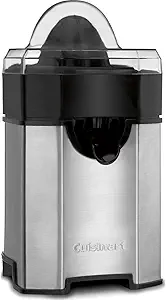 |
| Best Budget The cheapest option that still gets the job done reliably | Elite Gourmet ETS623 Citrus Juicer |  |
| Top Rated A top-rated pick with lots of positive feedback | OXO Good Grips 2‑in‑1 Citrus Juicer |  |
| Most Popular A crowd favorite that many people choose with confidence | BLACK+DECKER Citrus Juicer CJ625 |  |
| Best Seller A high-volume bestseller chosen again and again | Zulay Metal 2-In-1 Lemon Squeezer | 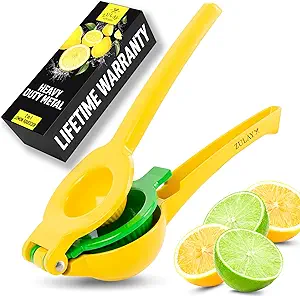 |
Vinci Electric Citrus Juicer

| Capacity | 12 fluid ounces |
|---|---|
| Wattage | 50 watts |
| Power Source | Corded Electric |
| Voltage | 120 volts |
| Number of Speeds | 1 |
The Vinci Electric Citrus Juicer is a one-button, hands-free machine designed to quickly extract juice from everything from key limes to 4.5-inch grapefruits. You slice the fruit, place it on the reamer and press the button; a high-torque 50 W motor plus patented smart auto juicing and pressure-sensitive sensors do the rest to maximize yield without scraping bitter rind. Two pulp filters (fine and coarse) let you choose texture, and a 12 oz BPA-free Tritan bowl with locking spout makes transfer and storage straightforward. Most removable parts are top-rack dishwasher safe, which keeps cleanup simple after daily use. Practical limits are the single speed control and modest 12 oz capacity, so the unit is best for small batches rather than frequent large-volume juicing. The juicer also relies on plastic reamers and components in the bowl area, so long-term durability will depend on care and how often it is used.
Best for: Buyers who want a simple, low-effort citrus juicer for daily fresh juice, occasional cocktails, or recipe use and value ease of use and easy cleanup.
Less Ideal for: People who need to juice large volumes at once or want adjustable speed settings and heavy-duty commercial construction.
- Hands-free one-button operation speeds juicing and reduces mess.
- Pressure-sensitive sensors help avoid bitter rind scraping for better-tasting juice.
- Includes fine and coarse pulp filters to adjust texture and yield.
- Removable parts are top-rack dishwasher safe for easy cleanup.
- 12 oz reservoir is small for batch juicing or entertaining.
- Only one speed setting limits control over extraction intensity.
Verdict: A fast, hands-free countertop citrus juicer that delivers easy, low-mess fresh juice for everyday home use.
Eurolux Electric Citrus Juicer ELCJ-1600SN

| Maximum Power | 120 watts |
|---|---|
| Wattage | 120 watts |
| Power Source | Corded Electric |
| Material | Stainless Steel |
The Eurolux ELCJ-1600SN is a countertop electric citrus juicer designed to make quick work of oranges, lemons, and similar fruit. It uses a one-touch soft-grip handle that automatically starts and stops the motor when pressed, and an integrated stainless steel filter that keeps seeds and pits out of the juice. The unit is built with dishwasher-safe removable parts and a stainless steel exterior that cleans easily and looks at home on most counters. With a 120-watt motor and features listed as auto-reversing and overheat protection, it aims to deliver steady extraction while protecting the motor during heavier use. The single, all-in-one cone accommodates different fruit sizes so you do not need to swap attachments, which speeds routine juicing. Expect strong performance for daily home use, though this model is a dedicated citrus squeezer so it is not suitable for whole food juicing or soft fruits that require different extraction methods.
Best for: Buyers who want a reliable, no-fuss citrus juicer that emphasizes efficient extraction and easy cleanup for regular home use.
Less Ideal for: People who need a multi-purpose or heavy-duty juicer for non-citrus produce or high-volume commercial-style juicing.
- Integrated stainless steel filter yields seedless, cleaner juice
- One-touch automatic operation with soft-grip handle for easy use
- Dishwasher-safe removable parts simplify cleaning
- Stainless steel construction for durability and a polished counter appearance
- 120-watt motor limits use to citrus and is not for full-size or heavy commercial juicing
- Single cone design removes customization for different citrus sizes or extraction styles
Verdict: A solid stainless steel citrus squeezer built for everyday home use that delivers easy, seed-free orange and lemon juice with one-touch convenience.
Cuisinart Pulp Control Citrus Juicer CCJ-500P1

| Capacity | 12 ounces |
|---|---|
| Wattage | 800 watts |
| Power Source | Corded Electric |
| Number of Speeds | 3 |
The Cuisinart Pulp Control Citrus Juicer is a corded electric citrus press built to handle everything from limes to grapefruits. It uses an auto-reversing universal juicer cone and a final-spin feature to extract more juice, while three pulp-control settings let you dial in texture from low to high. Juice flows through an extra-long snap-up spout into the included 12-ounce carafe and removable parts are dishwasher-safe, which keeps cleanup quick. At the countertop it is straightforward to use: press fruit onto the reamer, choose a pulp setting, and the motor reverses to maximize yield. The unit is compact and made with stainless-steel components that give it a solid, durable feel. Limitations include a relatively small carafe capacity that means more frequent emptying for larger batches, and the motorized cone design is narrower in function than a full-size centrifugal juicer for non-citrus produce. For someone who wants a reliable, simple citrus-only juicer that saves time and reduces mess, this model performs well.
Best for: Buyers who want a compact, efficient citrus-only juicer that maximizes juice yield and minimizes cleanup for daily home use.
Less Ideal for: If you need to juice large volumes at once or want to process non-citrus fruits and vegetables, choose a larger centrifugal or masticating juicer instead.
- Auto-reversing cone and final-spin increase juice yield from each fruit
- Three pulp-control settings let you customize texture
- Dishwasher-safe removable parts simplify cleanup
- Stainless-steel construction feels durable and cleans easily
- 12-ounce carafe requires frequent emptying for larger batches
- Designed only for citrus, not suitable for hard or leafy produce
Verdict: A compact, user-friendly citrus juicer that extracts more juice with adjustable pulp control and easy cleanup, ideal for everyday home orange and lemon juicing.
Elite Gourmet ETS623 Citrus Juicer

| Maximum Power | 40 watts |
|---|---|
| Power Source | Corded Electric |
| Voltage | 120 |
| Capacity | 24 oz |
The Elite Gourmet ETS623 is a small, straightforward electric citrus juicer designed for quick home batches of orange, lemon, lime, and grapefruit juice. Its 40-watt motor and auto-reversing reamer rotate in both directions to increase extraction while you press the halved fruit down, and a 24-ounce container holds roughly three cups so you can make multiple servings without stopping. The integrated pulp and seed filter produces smoother juice and the easy-pour spout and handle let you serve directly from the container. Detachable parts are top-rack dishwasher safe for faster cleanup, though hand washing is recommended for longer life. The unit is BPA-free, ETL listed for safety, and has a compact footprint that fits small kitchens, dorms, or RVs. Expect simple, reliable squeezing performance for everyday use, but avoid heavy commercial workloads since the motor and plastic components are sized for home batches rather than continuous, high-volume juicing.
Best for: Buyers wanting an inexpensive, no-frills electric juicer to make fresh orange and citrus batches at home with minimal counter space and fuss.
Less Ideal for: People who need a heavy-duty or commercial juicer for frequent large-volume juicing should choose a more robust model instead.
- 40-watt motor with auto-reversing reamer for better juice extraction
- 24 oz container with easy-pour spout and handle for serving
- Built-in pulp and seed filter for smoother juice
- Compact, BPA-free design fits small counters and is ETL listed
- Detachable parts are top-rack dishwasher safe for easier cleanup
- Not intended for heavy commercial or continuous high-volume use
- Some parts are recommended to be hand washed to preserve longevity
Verdict: A compact, budget-friendly electric juicer that delivers better extraction than basic models and is ideal for making small batches of fresh citrus juice at home.
OXO Good Grips 2‑in‑1 Citrus Juicer

| Capacity | 350 ml |
|---|---|
| Power Source | Manual |
| Material | Plastic |
| Special Features | Pulp Control |
| Product Care Instructions | Dishwasher Safe |
The OXO Good Grips 2‑in‑1 Citrus Juicer is a simple, reliable hand juicer designed for everyday kitchen use. It includes two removable reamers so you can switch quickly between small fruits like limes and larger fruits like oranges or grapefruits, and the reamers nest for tidy storage. A contoured, BPA‑free body and easy‑to‑read measurement markings up to 350 ml make portioning straightforward, while the drip‑free pour spout reduces mess when transferring juice to a glass or bowl. Everything that contacts juice is plastic and dishwasher safe, so cleanup is quick and maintenance is low effort. Because it is manual, you control extraction and pulp with the reamer size and pressure, but it will take more effort than an electric juicer for larger batches. The compact footprint and durable, user‑friendly design make it a dependable choice for routine home juicing where convenience and straightforward performance matter most.
Best for: Someone who values a dependable, low‑maintenance juicer for daily home use and prefers a simple manual tool that is quick to clean and store.
Less Ideal for: Buyers who need to juice large volumes frequently or want maximum extraction efficiency with minimal effort should consider an electric juicer instead.
- Two reamers for small and large citrus sizes provide flexible extraction.
- Drip‑free pour spout and measurement markings up to 350 ml simplify portioning and pouring.
- Removable reamers and dishwasher‑safe parts make cleaning easy.
- Contoured, BPA‑free body offers a comfortable grip during use.
- Manual operation requires more effort for large quantities compared with electric juicers.
- All‑plastic construction may feel less sturdy than metal alternatives.
Verdict: A straightforward, dependable manual juicer that delivers easy cleaning and versatile citrus sizing for routine home juicing.
BLACK+DECKER Citrus Juicer CJ625

| Wattage | 150 watts |
|---|---|
| Power Source | Corded Electric |
| Voltage | 120 volts |
| Special Features | Auto-Reversing |
The BLACK+DECKER CJ625 is a simple countertop citrus juicer designed for regular home use. It uses auto-reversing reamer cones and two cone sizes to extract juice from small and large citrus, while a removable pulp basket and adjustable pulp control let you dial how much pulp ends up in the pitcher. Juice is collected in a clear plastic container with measurement markings and a drip-free pour spout so you can juice directly into a glass or recipe bowl. The unit is corded and intended for plug-in use, and most removable parts are dishwasher safe which makes cleanup straightforward. Practical limits are its modest motor specification—useful for routine batches but not built for heavy commercial throughput—and the mostly plastic construction that favors affordability over premium durability. For everyday orange and lemon juicing the CJ625 delivers solid extraction and easy handling, though buyers wanting very rapid, high-volume juicing or a metal-bodied appliance may want to consider sturdier alternatives.
Best for: Home cooks who want a reliable, easy-to-use juicer for morning citrus and recipe prep and who value clear measurement, simple cleanup, and consistent extraction.
Less Ideal for: Large families or small businesses that need continuous high-volume juicing or buyers seeking a commercial-grade metal-bodied machine.
- Auto-reversing cones and two cone sizes for more complete juice extraction
- Adjustable pulp control with removable pulp basket for user preference
- Clear pitcher with measurement markings and drip-free spout for easy pouring and recipe use
- Dishwasher-safe removable parts simplify cleaning
- Plastic construction is less heavy-duty than metal-bodied juicers
- Not intended for continuous high-volume commercial use
Verdict: A straightforward, user-friendly citrus juicer that delivers dependable juice extraction and easy cleanup for everyday home use.
Zulay Metal 2-In-1 Lemon Squeezer

| Material | Aluminum |
|---|---|
| Blade Material | Stainless Steel |
| Power Source | Manual |
| Capacity | 0.5 liters |
This Zulay metal 2-in-1 lemon squeezer is a simple handheld citrus press designed to extract juice from lemons, limes, and small oranges without electricity. You use it by placing a halved fruit in the bowl and squeezing the ergonomic handles together to force juice through the perforated bowl, which filters seeds and most pulp. The cast aluminum construction and stainless steel reamer give it a sturdy, heavy-duty feel that resists bending during use, and the ergonomic handle reduces hand strain for repeated squeezing. It is compact and stores easily in a drawer, and cleaning is straightforward since the main parts rinse clean or can be hand-washed. Important limitations are that it is a manual tool so it requires physical effort for larger batches, and its bowl size suits smaller citrus rather than full-size oranges intended for high-volume juicing. For home use where occasional fresh juice, cooking, or cocktail prep is needed, it performs reliably and feels built to last.
Best for: Buyers who want a dependable, low-risk way to get fresh citrus juice at home without electricity or complicated tools and who value durability and simple operation.
Less Ideal for: People who need to juice large quantities frequently or who want an automatic or electric juicer for high-volume orange juicing.
- Sturdy aluminum construction resists bending during use
- Ergonomic handle reduces hand fatigue for repeated squeezes
- Perforated bowl filters seeds and most pulp for smoother juice
- Compact, no-power design stores easily and works anywhere
- Manual operation requires effort and is slow for large volumes
- Bowl size is better suited to lemons and limes than full-size oranges
Verdict: A durable, no-fuss manual citrus press that reliably produces seed-filtered juice for home cooks who prefer a simple, long-lasting tool.
Choosing the Right Orange Juicer for Home Use: Key Factors to Consider
Juice Yield and Extraction Method
How much juice a juicer extracts per orange directly impacts running cost and convenience. Higher extraction yield means fewer oranges needed for the same glass, and less prep time overall.
Extraction method matters because reamers, centrifugal cutters, and masticating mechanisms extract juice differently. For home orange juicing, look for machines or reamers optimized for citrus that pressure or ream efficiently rather than shredding, since citrus has softer pulp and a high liquid content. A good extraction system also limits wasted pulp and captures juice cleanly without needing repeated reprocessing.
Ease of Cleaning
Daily usability depends heavily on how much work cleanup requires. Units with removable, dishwasher-safe parts dramatically reduce the friction of daily juicing, while complex assemblies with many small crevices increase time spent washing.
Consider whether filters, strainers, and reamers are easy to access and rinse. Models that allow quick disassembly and have straightforward component shapes are usually the fastest to clean. Also check for anti-drip spouts or simple catchment designs that prevent sticky drips on counters.
Ergonomics and User Operation
Ergonomics affect how comfortable and fast it is to make juice. Features to weigh include how you hold or place the orange, whether the machine handles halved fruit directly, the size and placement of the pulp container, and how intuitive the controls are.
If you juice frequently, choose a design that minimizes wrist strain and reduces the need to press hard or hold awkward angles. Lever-assisted or motorized reamers that require minimal manual force are easier on hands, while stable bases and non-slip feet prevent movement during use.
Build Quality and Durability
Durable materials and solid construction ensure the juicer survives frequent use and resists corrosion from citrus acids. Stainless steel parts, reinforced plastics in wear points, and tight tolerances in moving parts extend service life.
Evaluate how well the motor housing and mechanical assemblies are sealed against moisture, and whether replaceable parts are easily obtainable. A sturdier build often costs more upfront but saves time and frustration over years of regular juicing.
Noise, Vibration, and Motor Performance
Noise and vibration affect whether juicing fits into your daily routine, especially in shared living spaces or early mornings. Lower-noise motors are more pleasant, while excessive vibration can make the unit feel unstable and scatter juice or peelings.
Motor performance should be matched to the intended use. For pure citrus juicing, high-revving centrifugal systems are unnecessary and can be louder. Optimized citrus motors provide steady torque at the right speed to press juice efficiently without excessive sound.
Size, Storage, and Counter Impact
Home kitchens vary in countertop space and storage; a compact footprint matters if you need to store the juicer between uses. Consider the unit's height for cabinet storage, overall depth for counter placement, and whether parts nest or detach compactly.
Also think about how easy it is to move or lift the unit when you need to clean underneath or rearrange appliances. A heavier base can improve stability but may be cumbersome to handle.
Manual Vs. Motorized Citrus Reamers
Manual reamers are simple, quiet, and inexpensive to operate, and they let you control extraction pressure directly. They are a good fit if you juice occasionally and prefer a low-maintenance tool that cleans quickly.
Motorized reamers accelerate the process and reduce hand fatigue for frequent juicers. They vary in how they transfer torque and in built-in features such as automatic reamer rotation or adjustable pressure settings. For daily use, prioritize models that balance steady rotation with low vibration.
- Manual: minimal parts, low noise, best for occasional juicing
- Motorized: faster, less manual effort, suited to routine use
Citrus-Specific Features That Matter
Look for reamers sized to handle common orange varieties without needing to trim fruit. A selection of cone sizes or a self-centering reamer improves efficiency across small and large oranges.
Integrated strainers and adjustable pulp settings let you control mouthfeel. Anti-drip spouts, measured pour features, and splash guards keep counters cleaner and reduce the need for extra towels.
- Multiple cone sizes or universal self-centering cone
- Removable strainer for pulp control
- Anti-drip spouts and splash guards
Maintenance Tips to Extend Lifespan
Rinse components immediately after use to prevent sticky residue from drying and bonding to surfaces. For dishwasher-safe parts, position them where water jets can reach strainer holes and undercuts.
Inspect seals and motor housings periodically for moisture ingress. Tighten fasteners and replace worn gaskets to maintain performance. Store removable parts dry and nested to prevent warping or mildew.
- Rinse or soak strainers right away
- Dry parts before storage to prevent odor
- Check seals for wear annually
How to Maximize Juice Yield at Home
Room-temperature fruit usually yields more juice than cold fruit. Roll the orange on the counter, applying light pressure to loosen fibers before cutting and reaming.
Cut oranges in half across the equator, not end-to-end, to expose more juice sacs. Using the correct cone size for the fruit prevents over-pressing and reduces bitter oil transfer from the peel.
- Roll fruit before cutting to break internal membranes
- Cut across the equator for maximum pulp exposure
- Match cone size to fruit size to avoid excess peel oil
Safety and Kitchen Hygiene
Ensure electrical models have grounded plugs and that cords are routed away from sink areas. Unplug the unit before disassembling for cleaning to avoid accidental motor engagement.
Citrus acids can accelerate corrosion on low-grade metals and dull finishes. Rinse exposed surfaces after use and avoid leaving acidic residue on components for long periods.
- Unplug before cleaning motorized units
- Rinse acid-exposed parts promptly
- Store with airflow to prevent mildew
How We Chose the Best Orange Juicer for Home Use
We focused on features that directly affect how useful an orange juicer is for everyday home use. Key evaluation criteria included extraction efficiency, which measures how much usable juice the unit extracts from fruit; ease of cleaning, covering how many parts require scrubbing and whether components are dishwasher-safe; ergonomics and operation, including how easy it is to load fruit and operate the juicer with minimal strain; build quality and durability, to judge whether the unit will hold up to frequent use; and noise and vibration, since quieter operation is important during morning routines. We excluded novelty or single-use devices that lack durability or have poor extraction mechanics. We also filtered out machines that require complicated assembly or long maintenance cycles. For each remaining candidate we checked spec details and user-focused features that map to the evaluation criteria above. That led to a shortlist of seven orange juicers that deliver consistent juice yield, straightforward upkeep, and reliable day-to-day operation.
Our full evaluation process is outlined in our review methodology.
FAQ
Do electric citrus juicers extract more juice than manual reamers?
Electric citrus juicers often extract juice more quickly and with less manual effort, but yield differences depend on cone design and extraction pressure. Well-designed manual reamers can approach the same yield for occasional use.
How often should I clean the strainer to prevent clogging?
Clean the strainer after each use to prevent pulp from drying into small holes. For heavy pulp loads, rinse mid-session and perform a deeper clean at the end of the day.
Is pulp control adjustable on most orange juicers?
Many citrus juicers include removable strainers or adjustable pulp screens that allow you to increase or reduce pulp in the glass. The level of control varies by design but is common on countertop models.
Can citrus acids damage juicer parts over time?
Acidic juice can wear down low-grade metals and degrade some plastics if residue is left in place. Regular rinsing and drying of components helps prevent long-term damage.
What is the best way to prepare oranges for juicing?
Roll oranges firmly on the counter to break internal membranes, then cut across the equator. Room-temperature fruit generally releases more juice than chilled fruit.
Final Verdict
For home orange juicing, prioritize extraction efficiency and ease of cleaning above all else. Those two factors determine how often you will actually use the device and how much time it adds to your routine. Balance ergonomics and durability with noise and footprint to match your kitchen habits and storage options. If you juice daily, favor motorized or lever-assisted options with dishwasher-safe parts; if you juice occasionally, a simple manual reamer may deliver the best mix of convenience and low upkeep.