
Note: This article contains affiliate links. If you click on these links and make a purchase, we may earn a small commission at no extra cost to you. This helps support our research and content. Read our full affiliate disclosure here.
When you stay in varied sleeping spaces while traveling, a compact carbon monoxide detector can be the simplest way to spot invisible danger. You need a device that is reliable, easy to carry, and quick to alert you if CO levels rise in a hotel room, rental, or temporary lodging. This guide covers the top shortlisted portable travel carbon monoxide detectors chosen for real-world travel scenarios. We evaluated each option on practical safety factors like detection accuracy, response time, power and battery life, and convenience features such as portability and mounting. Read on to see which detectors best match different travel needs and situations.
Top Picks at a Glance
| Best Overall The best all-around choice for most situations | TOPTES CT-580 CO Detector |  |
| Best Quality Built to a higher standard if you want something more solid | Forensics Detectors FD-101-CO |  |
| Best Value The sweet spot between price and what you get | HEIMAN C1-S CO Detector |  |
| Best Budget The cheapest option that still gets the job done reliably | Kidde Battery CO Detector KN-COB-LP2 | 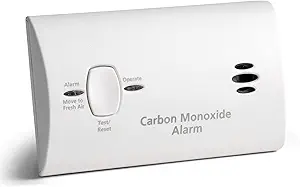 |
| Top Rated A top-rated pick with lots of positive feedback | Kidde Carbon Monoxide Detector KN-COB-LP2 | |
| Most Popular A crowd favorite that many people choose with confidence | First Alert CO400 Carbon Monoxide Alarm 2-Pack |  |
TOPTES CT-580 CO Detector

| Power Source | Battery Powered |
|---|---|
| Alarm | Audible |
| Sensor Type | Electrochemical |
The TOPTES CT-580 is a compact, rechargeable CO meter built for quick spot checks and portable monitoring. It uses an electrochemical DDS sensor that claims fast response (about 0.3 seconds) and measures from 0 to 1000 ppm, with two configurable alarm thresholds and a graphical TFT color display for clear readouts. The unit offers three simultaneous alarm outputs—audible, visual indicator, and vibration—so it can alert you in noisy or outdoor settings, and the menu includes history logging plus calibration options suited to business or advanced users. Practical conveniences include adjustable screen brightness, auto screen-off, a built-in flashlight, and USB-C charging, and the package includes a protective case and charging cable. Limitations are typical of portable meters: it's designed for spot measurements rather than continuous whole-house monitoring, and users who need networked alerts or integration with home-safety systems should look elsewhere.
Best for: Buyers who want a reliable, portable CO detector for travel, camping, and occasional professional spot checks that prioritizes fast response and clear on-device readouts.
Less Ideal for: People seeking a permanently installed, continuously monitored home CO alarm or a unit that sends remote alerts to phones or home systems should consider other products.
- Electrochemical DDS sensor with fast response for accurate CO readings
- Rechargeable via USB-C with included cable and protective case for travel
- Three simultaneous alarm modes: audible, visual, and vibration for versatile alerts
- TFT color display with adjustable brightness and history logging for easy interpretation
- Designed for manual spot checks rather than continuous, always-on home monitoring
- No built-in network or smart-home integration for remote notifications
Verdict: A fast-responding, rechargeable handheld CO detector that is ideal for travelers and professionals who need accurate spot checks and clear on-device alerts.
Forensics Detectors FD-101-CO

| Range | 0 – 1000 ppm |
|---|---|
| Resolution | 1 ppm |
| Sensor Type | Electrochemical |
| Protection Category | IP67 |
| Alarm Indicators | Buzzer, red LED, vibration |
The FD-101-CO is a compact portable CO detector built for demanding environments and rapid spot checks. It uses an electrochemical sensor with 1 ppm resolution across a 0–1000 ppm range and arrives factory-calibrated with a NIST-traceable certificate, which makes readings dependable out of the box. The unit is engineered for durability with an IP67 waterproof rating, rubberized housing, and a 10-foot drop rating, so it holds up on job sites or travel. Alerts include a loud buzzer, red LED, and vibration and the detector supports OSHA TWA and STEL alarm setpoints that are adjustable via PC software for tailored monitoring. The sealed 2-year disposable battery and 24-month sensor life minimize maintenance, but the device is not rechargeable and must be replaced when battery or sensor life ends. For performance-focused users who need accurate, portable CO checks, this detector delivers reliable measurements and rugged construction, though it is a single-use style unit rather than a rechargeable, serviceable instrument.
Best for: Buyers who prioritize accurate, field-ready CO readings and need a rugged, low-maintenance detector for travel, job sites, or quick occupational checks.
Less Ideal for: Users who want a rechargeable, serviceable instrument with advanced onboard data logging and extended on-device history should consider other models.
- Factory-calibrated with USA NIST-traceable calibration certificate for trustworthy readings
- Electrochemical sensor with 1 ppm resolution across 0–1000 ppm for precise spot checks
- Rugged build: IP67 waterproof rating and 10-foot drop resistance for field use
- Triple-alert system (buzzer, LED, vibration) and OSHA TWA/STEL alarm setpoints
- Long sealed battery life and 24-month sensor life reduce servicing needs
- Disposable sealed battery design is not rechargeable or user-replaceable
- No built-in logging or display details beyond alerts without PC connection
Verdict: A tough, NIST-calibrated portable CO detector made for professionals who need accurate, maintenance-light spot checks in the field.
HEIMAN C1-S CO Detector

| Power Source | Battery Powered |
|---|---|
| Sensor Type | Electrochemical |
| Battery Average Life | 10 years |
| Alarm | 85 dB Audible/Visual |
| Certifications | UL 2034 5th Edition, CSFM Approved |
The HEIMAN C1-S is a compact, battery-operated carbon monoxide detector designed for simple DIY placement in bedrooms, kitchens, garages, and small rental units. It uses a Japan-made FIGARO electrochemical sensor that focuses on accurate CO detection while minimizing false alarms, and the unit alerts with an 85 dB tone plus an LED for visual confirmation. Setup is straightforward: mount on a wall or ceiling with the included hardware or place on a flat surface, then use the one-touch Test/Silence button for routine checks. The sealed long-life lithium battery is rated for 10 years, removing the need for frequent battery swaps and reducing maintenance for busy households or landlords. The housing is flame-retardant ABS+PC and the detector meets UL 2034 5th Edition and CSFM approvals, which supports compliance needs. It is not a smart or interconnected unit, so it will not send notifications to phones or link with other alarms, and it is intended for single-room monitoring rather than whole-home integration.
Best for: Buyers who want a low-maintenance, regulation-compliant CO detector that they can install quickly in a room or rental unit and then largely forget about.
Less Ideal for: Users who need smart notifications, multi-device interconnectivity, or a whole-home hardwired alarm network should look for a different solution.
- Electrochemical FIGARO sensor for accurate CO detection and fewer false alarms
- Sealed long-life battery rated up to 10 years reduces maintenance
- Meets UL 2034 5th Edition and CSFM approvals for regulatory compliance
- Loud 85 dB alarm plus LED provides clear audible and visual warnings
- Compact, easy DIY wall or ceiling mounting with included hardware
- Not Wi‑Fi or app enabled and cannot interconnect with other alarms
- Intended for single-room use and not a substitute for whole-home hardwired systems
Verdict: A compact, regulation‑compliant CO detector with a 10‑year sealed battery that minimizes upkeep for practical, no‑fuss room monitoring.
Kidde Battery CO Detector KN-COB-LP2
| Power Source | Battery Powered |
|---|---|
| Sensor Type | Electrochemical |
| Alarm | 85-decibel alarm with LED indicator |
| Operating Humidity | 10%-95% relative humidity non-condensing |
| Upper Temperature Rating | 100 °F |
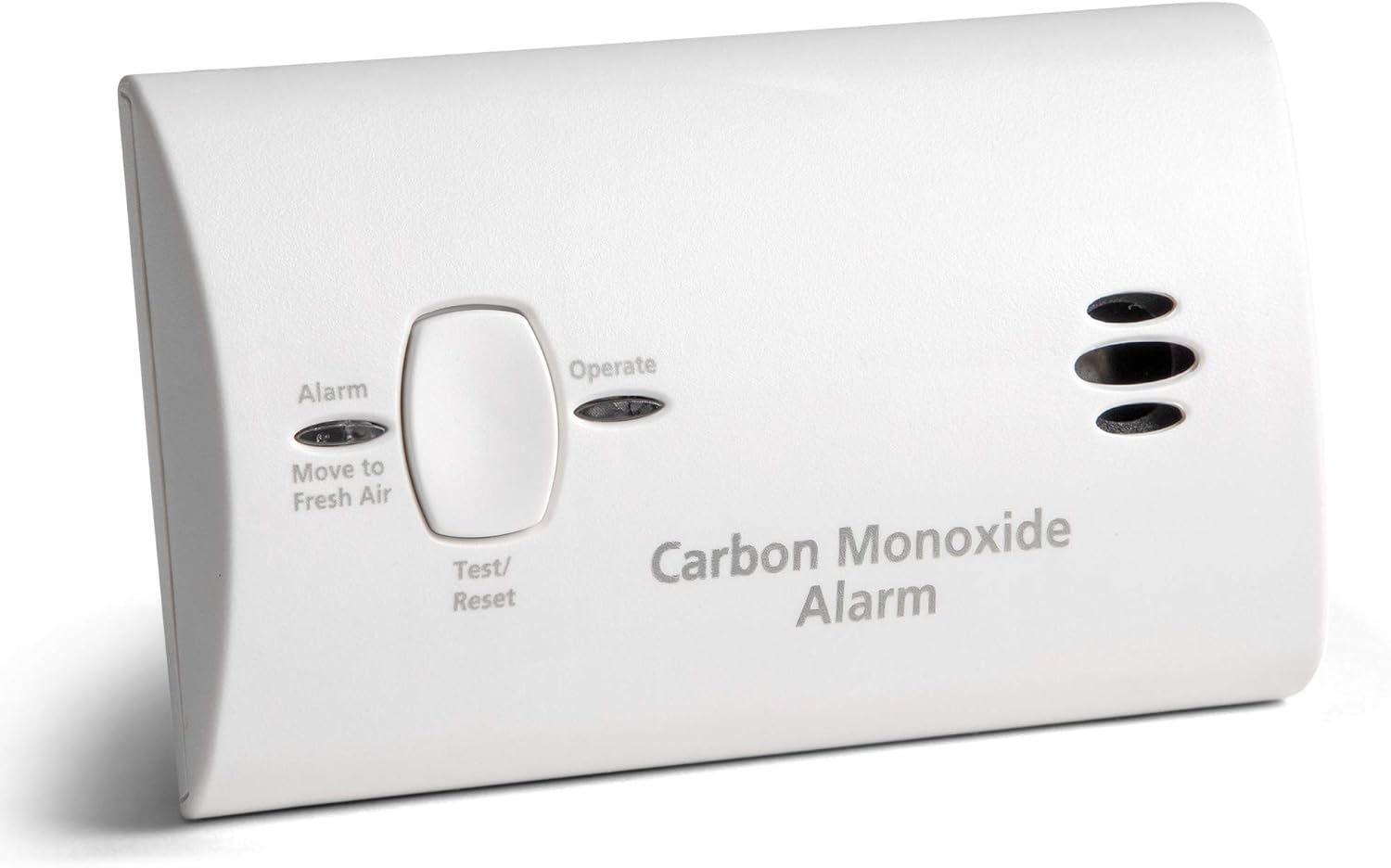
This Kidde battery CO detector is a simple, no-frills alarm designed for portable or home use where wiring is not available. It runs on 2 AA batteries (included), uses an electrochemical sensor to detect carbon monoxide, and signals danger with an 85 dB alarm plus a flashing red LED while a green LED indicates normal power. The slide-out battery door and test/reset button make battery changes and functional checks straightforward, and event memory records the last CO event or test. Typical uses are wall mounting near bedrooms or setting the unit on a tabletop for travel and temporary monitoring. Practical benefits include easy installation, continuous monitoring during power outages, and a compact, lightweight design that fits luggage. Important limitations are the basic feature set compared with more advanced units: no digital CO readout, no long-life sealed battery, and no interconnect capability for linking multiple alarms. The unit also reaches end-of-life after its service period, requiring replacement to maintain protection.
Best for: Buyers wanting an affordable, easy-to-use detector for travel, temporary setups, or budget home coverage who prioritize straightforward protection and portability.
Less Ideal for: People who want a multi-unit connected system, a digital CO readout, or a long sealed-life battery should consider higher-end or hardwired models instead.
- Portable, battery-powered design works without wiring or mains power
- Electrochemical sensor for reliable CO detection
- Simple test/reset button and visible LED power and alarm indicators
- Includes batteries and mounting hardware for quick setup
- No digital concentration display to show CO level
- Uses replaceable AA batteries rather than a sealed long-life battery
- Cannot interconnect with other alarms for whole-home notification
Verdict: A compact, budget-friendly portable CO alarm that delivers reliable basic protection for travel and temporary use.
Kidde Carbon Monoxide Detector KN-COB-LP2
| Power Source | Battery Powered (2 AA) |
|---|---|
| Alarm | 85 dB audible |
| Operating Humidity | 10 to 95% RH, non-condensing |
| Product Style | 3rd Edition |
The Kidde KN-COB-LP2 is a compact, battery-powered carbon monoxide (CO) alarm designed for wall or tabletop use and for travel. It uses an electrochemical sensor to detect CO and alerts you with an 85 dB audible alarm and a flashing red LED while a green LED shows normal power. The unit runs on two AA batteries so it keeps functioning during power outages and needs no wiring, which makes it simple to move between rooms or pack for trips. A test-reset button checks operation and a hush feature temporarily silences nuisance chirps, while event memory records the last detection or test. Practical benefits include straightforward installation, low maintenance battery operation, and a design sized for portability. Limitations are the basic feature set — there is no digital concentration readout, no smart connectivity, and it relies on user replacement of AA batteries rather than a sealed long-life cell.
Best for: Buyers who prioritize dependable, easy-to-use CO protection they can take on trips or move between rooms, and who prefer a simple battery-powered alarm over feature-rich smart units.
Less Ideal for: Users who want real-time CO concentration readouts, networked alerts, or integrated smart-home monitoring should consider digital or connected models instead.
- Electrochemical sensor for reliable CO detection
- Runs on two AA batteries so it works during power outages and is easy to install
- Compact, portable design suitable for travel or tabletop use
- 85 dB alarm and LED indicators provide clear audible and visual alerts
- Test/reset and hush functions plus event memory for basic diagnostics
- Does not display CO concentration levels
- No wireless connectivity or app integration for remote alerts
Verdict: A compact, battery-powered CO alarm built for portable, reliable protection when you need a simple, no-wiring detector for home or travel.
First Alert CO400 Carbon Monoxide Alarm 2-Pack

| Power Source | Battery Powered |
|---|---|
| Alarm | Audible, Visual |
| Sensor Type | Electrochemical |
| Unit Count | 2 Count |
| Operating Humidity | 10-95% RH |
The First Alert CO400 2-pack provides simple, portable CO protection you can put wherever you need it. Each unit runs on a 9V battery so they keep monitoring during power outages and require no hardwiring or electrician to install. The electrochemical sensor is designed for accurate CO detection, the single test/silence button makes checks and nuisance-silencing straightforward, and an end-of-life signal reminds you when to replace the alarm. Practical touches include an optional wall mount and visual/audible low-battery alerts. The 85-decibel horn is loud enough for bedrooms and small living spaces, but the units are basic: there is no digital readout of CO concentration, no wireless interconnect, and the sensor is rated for about five years before replacement. For travel or temporary placements these battery-operated detectors are convenient and ready out of the box, but buyers who want networked monitoring or detailed CO level information will need a different model.
Best for: Buyers who prioritize straightforward, proven CO protection for travel or temporary placement and value easy setup and reliable audible alerts.
Less Ideal for: People wanting interconnected smart detectors, numerical CO readings, or long-term built-in monitoring for whole-home systems should consider other models.
- Battery powered so units work during power outages and require no wiring
- Electrochemical sensor technology for accurate CO detection
- Single-button test/silence makes operation simple
- Includes optional wall mount and visual low-battery indicator
- No digital CO concentration display or numerical readout
- Not networked or interconnectable with other alarms
Verdict: If you need a simple, portable, battery-operated CO alarm for travel or temporary use, the First Alert CO400 2-pack delivers reliable detection and loud audible alerts.
Choosing the Right Portable Travel Carbon Monoxide Detector: Key Factors to Consider
Sensor Type and Accuracy
Carbon monoxide detectors use electrochemical sensors that vary in sensitivity and lifespan. For travel use, choose devices with certified CO sensors and clear specifications for detection thresholds. A more accurate sensor reduces false alarms and increases the chance of detecting hazardous CO levels early.
Accuracy matters because travel environments are unpredictable. Rooms may have transient CO sources like heating units or nearby vehicle exhaust, so a detector that reports correct concentrations and triggers at accepted safety thresholds provides reliable protection without unnecessary alarm fatigue.
Response Time and Alarm Clarity
How quickly a detector registers rising CO and sounds an alarm is a critical safety attribute. Look for devices that list response times or compliance with recognized testing standards. Faster response helps you evacuate or ventilate before levels become dangerous.
Alarm clarity is also essential in unfamiliar settings. A loud, distinct alarm tone, plus visual indicators like flashing LEDs, ensures you notice the alert even while sleeping or in noisy environments. Some models include vibration or voice alerts, which can aid in locating the device and understanding the threat.
Power Source and Battery Life
Portable detectors commonly run on replaceable batteries, rechargeable batteries, or a mix of both. Battery life expectations influence how often you need replacements or recharging during travel. Devices with long shelf life or low-power standby modes reduce maintenance while you are away.
Consider whether the unit uses common battery types that are easy to replace abroad or offers USB charging for convenience. Battery indicators and low-battery warning timing are important so the device does not lose protection unexpectedly during a trip.
Size, Weight, and Mounting Options
For travel, the detector should be compact and lightweight so it fits into luggage without adding bulk. Slim profiles make packing easier, while lightweight designs are simpler to position on bedside tables or hang from hooks. Some models include clips, lanyards, or magnetic mounts for versatile placement.
Mounting options matter because hotel rooms and rentals may lack suitable flat surfaces. A flexible mounting system ensures you can place the detector at breathing height near sleeping areas for accurate monitoring.
User Interface and Indicators
Controls and indicators should be intuitive so you can set up and check the device quickly in an unfamiliar space. Simple test buttons, clear LED status lights, and audible self-test tones let you confirm the detector is functioning on arrival. Units with straightforward reset and mute functions help manage nuisance alerts without disabling protection permanently.
Well-designed indicators communicate battery state, sensor health, and alarm conditions without requiring consultation of a manual, which is useful when you are in a hurry or operating under stress.
Durability and Environmental Tolerance
Travel exposes gear to bumps, temperature swings, and variable humidity. A robust enclosure and reliable internal mounting reduce the chance of sensor damage during transit. Look for detectors that list operating temperature and humidity ranges so you know they will function in the climates you expect to encounter.
Durability also affects long-term reliability. A well-built travel detector resists drop damage and maintains sensor calibration over time, preserving safety performance through multiple trips.
Where to Place a Travel Detector in Temporary Lodging
Position the detector near the sleeping area and at roughly breathing height if possible. Avoid placing it directly on thick bedding or tucked under pillows where airflow is restricted. If mounting is not possible, place the unit on a nightstand or secured shelf next to the bed.
Keep the detector away from obvious combustion sources such as stoves, heaters, or vehicle exhaust that could create short-lived spikes. Instead, aim for a location that represents the air the occupants will breathe for the longest period.
- Place at least a few feet away from windows or doors that open to the outside.
- Avoid enclosed cabinets or behind curtains which can delay detection.
- If using a clip or lanyard, secure it to the headboard or a stable fixture near the bed.
Maintaining and Testing While Traveling
Test your detector as soon as you unpack to confirm it works. Many units include a self-test button for a quick functional check. Confirm the battery level and the status LED to ensure the unit is ready to protect you overnight.
Pack spare batteries or a charging cable if the device uses USB power. If you expect long trips where replacement batteries are hard to source, choose models compatible with common battery sizes or with rechargeable cells.
- Perform a quick test each time you move lodging.
- Monitor low-battery warnings and replace power promptly.
- Keep the user manual or a quick reference card with basic alarm meanings.
Understanding Alarm Levels and What to Do
Alarm patterns and threshold levels vary by design but generally reflect concentration and duration. Treat any CO alarm as a potential emergency. Immediately move to fresh air, ventilate the room if safe to do so, and seek medical attention if symptoms like headache, dizziness, or nausea occur.
Do not ignore intermittent or repeated alarms. Persistent alerts indicate a continuing CO source. When in doubt, leave the space and notify property management or the relevant authority.
- A short, single alarm may indicate a transient spike; still investigate and ventilate.
- Continuous or repeating alarms indicate sustained CO and require evacuation.
- If others are present, wake and evacuate everyone to fresh air.
Travel-Friendly Features That Make a Difference
Look for features that reduce hassle while maximizing protection. USB recharging and long-life batteries reduce the need to source replacements on the road. Compact shapes, protective covers, and included carrying pouches make packing easier and protect the sensor from damage.
Additional conveniences like a built-in flashlight, simple reset functions, and clear status LEDs can expedite setup in low-light hotel rooms. Some detectors include multi-function alarms that combine CO detection with other safety alerts, which may be useful if you prefer a single device for multiple risks.
- USB charging for easy top-ups from power banks or hotel outlets.
- Protective cases or covers to prevent accidental button presses.
- Simple, audible test and reset controls for quick verification.
Regulatory Standards and Certifications to Watch For
Certified testing and compliance statements indicate that a detector has met baseline performance standards. While travel models are compact, check for references to recognized safety testing or standards applicable to carbon monoxide sensors. Such information suggests the device has been validated for detection sensitivity and alarm reliability.
Documentation of environmental operating ranges and expected sensor life provides insight into long-term reliability. These specifications help you judge whether a detector is appropriate for the climates and trip durations you anticipate.
- Look for cited testing standards or certification bodies relevant to CO detection.
- Check the stated sensor life and recommended replacement intervals.
- Verify operating temperature and humidity ranges for your travel plans.
How We Chose the Best Portable Travel Carbon Monoxide Detector
We selected devices that are purpose-built for travel and short-term stays, prioritizing features that matter when you are away from home. Core evaluation criteria included sensor accuracy and alarm response time, because prompt, reliable detection is the primary safety function. Battery type and run time were assessed to ensure devices remain powered through typical trip lengths without frequent intervention. Size, weight, and mounting options determined portability and convenience for packing, wall placement, or bedside use. User interface and alarm clarity were considered so travelers can understand alerts quickly in unfamiliar settings. Build quality and environmental tolerance were reviewed to ensure consistent performance across temperature and humidity ranges encountered while traveling. We excluded large plug-in or hardwired detectors that are intended for permanent home installation, as well as units that lack CO-specific sensors. Models that do not provide clear battery or responsiveness specifications were also filtered out. The final list reflects devices that balance sensor performance, dependable power, and travel-friendly form factors.
Our full evaluation process is outlined in our review methodology.
FAQ
How long will batteries usually last in a portable travel CO detector?
Battery life varies by unit and usage pattern. Many travel detectors offer dozens to hundreds of hours of standby time on common batteries, while rechargeable models depend on capacity and charging frequency. Always check the stated run time and carry spare batteries or a charging cable for longer trips.
Can a portable travel detector be trusted compared with a home hardwired unit?
Portable travel detectors are designed for short-term monitoring and can provide effective early warning when placed correctly. They typically use the same basic CO sensor technology, but may have different power and certification details than permanent home units. For always-on household protection, a permanent installation is recommended, while travel detectors are suitable for temporary lodging.
Where should I keep a travel CO detector when flying or passing through security?
Most portable detectors are small enough to fit in carry-on luggage and are allowed by general airline rules, but policies can vary. Keep the device in your carry-on to prevent damage and to ensure it is accessible during transit. Remove or secure batteries if required by airline regulations.
Will humidity or temperature changes affect detection?
Extreme temperatures and high humidity can affect sensor performance, especially if they fall outside the device's specified operating range. Reliable units list their environmental tolerances. If you expect extreme conditions, choose a detector rated for those environments or verify performance before extended use.
How often do portable travel CO detectors need replacement?
CO sensors have limited service lives, often several years, depending on the sensor type and exposure. Manufacturers usually state a replacement interval. For travel units, check the recommended sensor life and replace the detector when the sensor reaches its end-of-life indication or after the specified period.
Final Verdict
When picking a portable travel carbon monoxide detector, prioritize sensor accuracy and fast response time first, because timely, reliable alerts are the essential safety function. Next, balance battery life and power convenience against size and mounting flexibility so the device stays powered and positioned correctly during your trip. Be realistic about tradeoffs: the smallest models are easiest to pack but may offer fewer features, while slightly larger units can provide longer runtimes and clearer alarms. Choose a detector that fits your typical travel patterns and climate exposures, verify its operation on arrival, and keep spare power on hand. With the right combination of accuracy, battery performance, and portability you can significantly reduce CO risk in temporary lodging and travel situations.