
Note: This article contains affiliate links. If you click on these links and make a purchase, we may earn a small commission at no extra cost to you. This helps support our research and content. Read our full affiliate disclosure here.
If you want thicker, nutrient-dense juice with higher yield from leafy greens and hard root vegetables, picking the right powerful masticating juicer matters. These machines work slowly to crush and press produce, which preserves enzymes and extracts more liquid compared with faster centrifugal designs. For home use that includes regular green juices, nut milks, and citrus, a powerful masticating juicer can cut waste, improve flavor, and make daily juicing easier. This guide shortlists the seven top-rated powerful masticating juicers we vetted for home kitchens. We focused on extraction efficiency, motor durability, ease of cleaning, and versatility across fruits, vegetables, and nuts. Read on for the evaluation criteria and practical advice to match a juicer to your routine.
Top Picks at a Glance
| Best Overall The best all-around choice for most situations | Omega Nutrition System NC900HRD19 |  |
| Best Quality Built to a higher standard if you want something more solid | Kuvings AUTO10 Cold Press Juicer |  |
| Best Value The sweet spot between price and what you get | TUUMIIST TM880SJ Cold Press Juicer |  |
| Best Budget The cheapest option that still gets the job done reliably | Floisdace Cold Press Juicer PT-033A |  |
| Top Rated A top-rated pick with lots of positive feedback | ECOSELF 3-in-1 Masticating Juicer |  |
| Most Popular A crowd favorite that many people choose with confidence | AMZCHEF Cold Press Juicer 1902B |  |
| Best Seller A high-volume bestseller chosen again and again | EanOruus 3-in-1 Masticating Juicer |  |
Omega Nutrition System NC900HRD19
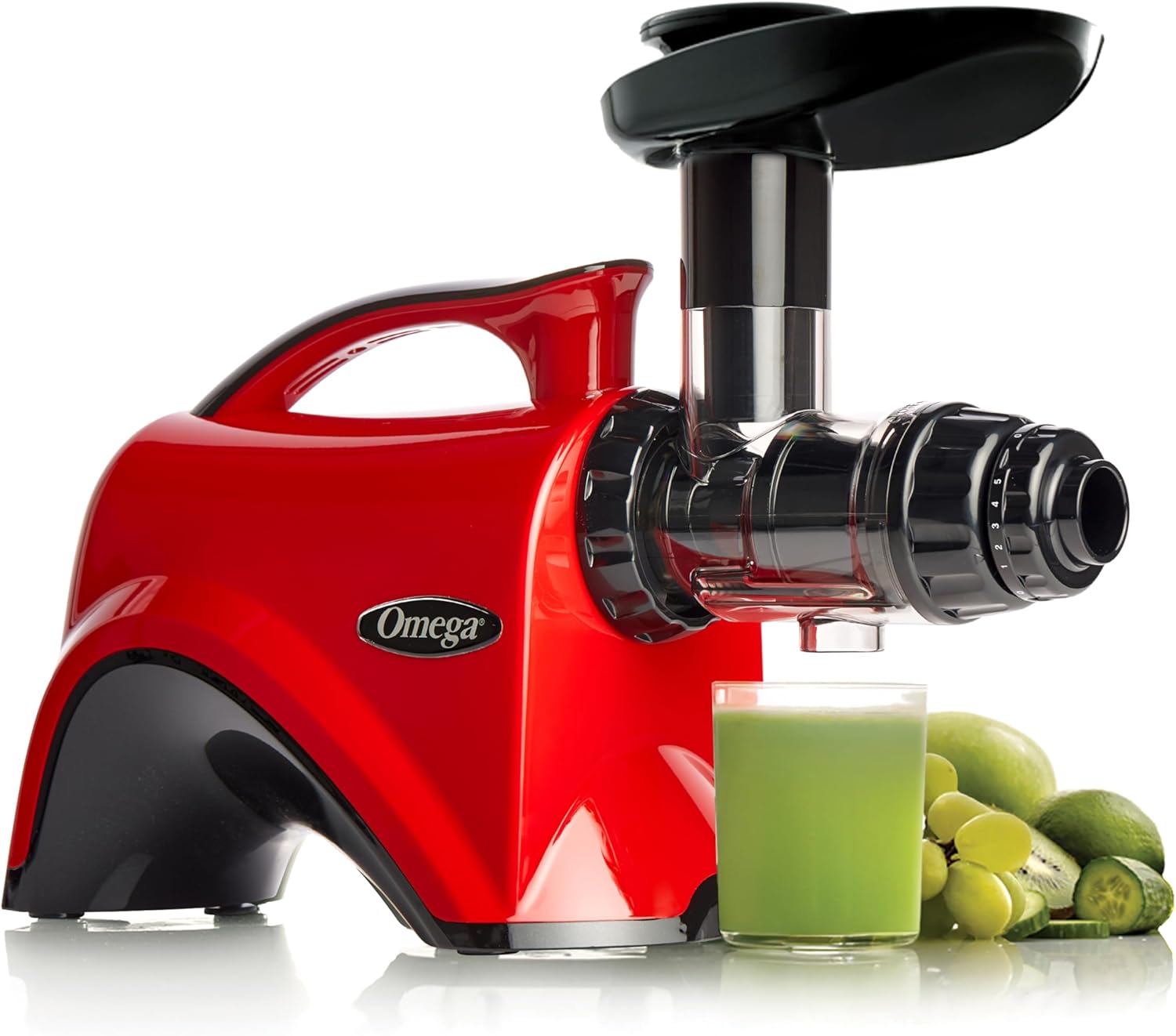
| Wattage | 150 watts |
|---|---|
| RPM | 80 RPM |
| Power Source | Corded Electric |
| Capacity | 0.9 liters |
| Number of Speeds | 1 |
The Omega Nutrition System NC900HRD19 is a single-auger, slow masticating juicer built to extract juice and process whole foods into nut milks, baby food, sorbets and more. It runs at about 80 RPM with a 150-watt motor and uses a dual-stage auger to press produce gently, which reduces heat and oxidation so juices stay fresher longer. The unit includes multiple nozzles and juicing screens, an enlarged feed chute to cut prep time, and automatic pulp ejection for continuous batch juicing. Beyond juice, the nutrition attachments let you make nut butters, pasta and other foods, adding versatility not found on basic juicers. Practical downsides are its plastic construction and hand-wash-only parts, and the machine is relatively heavy which affects portability and storage. For buyers seeking a powerful masticating model that emphasizes nutrient retention and multi-function kitchen use, this Omega delivers strong juice yield and broad capability, though it requires a bit more cleaning and counter space than compact centrifugal machines.
Best for: Buyers who want a nutrient-focused masticating juicer that also functions as a versatile kitchen nutrition system for making nut milks, baby food and other recipes and who value juice yield and enzyme preservation.
Less Ideal for: If you need a lightweight, countertop-friendly appliance for occasional quick juices or want fully dishwasher-safe parts, this unit is not the best fit.
- Low 80 RPM masticating design preserves enzymes and reduces oxidation
- Dual-stage auger and adjustable settings increase juice extraction and yield
- Includes multiple nozzles and screens for nut milks, baby food, pasta and other uses
- Larger feed chute reduces produce prep time
- Automatic pulp ejection enables continuous batch juicing
- Parts are hand-wash only which increases post-use cleaning time
- Heavier, bulkier construction makes storage and moving the unit less convenient
Verdict: Choose the Omega NC900HRD19 when you want a powerful, nutrient-preserving masticating juicer that doubles as a versatile nutrition system for juices, nut milks and food prep.
Kuvings AUTO10 Cold Press Juicer

| Capacity | 3 liters |
|---|---|
| Maximum Power | 240 watts |
| Wattage | 240 watts |
| Power Source | Corded Electric |
| Special Features | Portable |
The Kuvings AUTO10 is built for performance-focused home juicers who want high yield and hands-off operation. It uses a 50 RPM slow-press auger with a double-crushing blade to process whole fruits and vegetables into silky juice with reduced pulp, and its self-feeding Auto-Cut system lets you load larger pieces or whole produce for continuous, hands-free runs. The 240W motor is rated for up to 30 minutes of continuous use, which combined with the 100 oz (3 L) capacity makes the AUTO10 suited to batch juicing for families or meal-prep. Cleanup is simplified with fewer parts and included cleaning tools, and the quieter motor helps if you juice early in the morning. Expect a relatively heavy, countertop appliance because it is engineered for durability and steady performance rather than portability. For buyers chasing maximum extraction, easy bulk runs, and a steady motor under load, the AUTO10 delivers clear benefits, while those wanting a compact or lightweight travel-friendly unit should look elsewhere.
Best for: Buyers focused on high extraction performance and efficient bulk juicing who want a hands-free, reliable machine for regular home use and batch preparation.
Less Ideal for: Those who need a compact, lightweight, or travel-friendly juicer or who only make single servings occasionally should consider smaller models.
- Hands-free Auto-Cut and self-feeding design for continuous batch juicing
- Slow 50 RPM auger and double-crushing blade for higher juice yield and low pulp
- 240W motor rated for 30 minutes continuous operation handles hard produce reliably
- Large 100 oz (3 L) juice capacity suitable for family-sized or multi-day batches
- Simplified parts and included cleaning tools make cleanup quicker than many masticating models
- Heavy and substantial countertop footprint, not ideal for frequent repositioning
- Acrylic and plastic components may feel less premium than metal-heavy commercial models
Verdict: If you want a powerful, hands-free masticating juicer built for high-yield batch juicing, the Kuvings AUTO10 is a top performance choice.
TUUMIIST TM880SJ Cold Press Juicer

| Capacity | 3 liters |
|---|---|
| Maximum Power | 350 watts |
| Wattage | 300 |
| Voltage | 120 volts_of_alternating_current |
| Number of Speeds | 60 |
The TUUMIIST TM880SJ is a slow-press masticating juicer built to handle whole fruits and vegetables with minimal prep thanks to its 6.5-inch wide chute and large 100 oz hopper. It operates at low speed to reduce heat and oxidation, producing high juice yield and relatively dry pulp useful for nutrient retention. The motor offers auto-reverse to clear jams, overheat protection for safety, and a smart touch panel with modes for juice, nut milk, and sorbet that broaden what you can make beyond straight juice. Stainless steel construction and dishwasher-safe components make cleanup and durability straightforward, and the design emphasizes quick assembly and a three-minute rinse for convenience. Expect quieter operation under 60 dB for morning use. Limitations include a relatively high unit weight and footprint for countertop space, and while marketed with many speeds the practical benefit beyond basic slow extraction is modest for most users.
Best for: Buyers who want a high-yield, low-oxidation juicer for daily healthy juices and occasional nut milks or sorbets and prefer minimal chopping and batch prep.
Less Ideal for: People with very limited counter space or those who only want a lightweight, travelable juicer should look at smaller centrifugal or compact models.
- Extra-wide 6.5-inch chute reduces prep by allowing whole fruit feeding
- High juice yield with slow cold-press auger that leaves drier pulp
- Large 100 oz hopper supports batch juicing for meal prep or families
- Auto-reverse and overheat protection reduce jamming and protect the motor
- Dishwasher-safe parts and simple three-part assembly speed cleaning
- Relatively heavy and takes notable countertop space compared with compact juicers
- Multiple speed settings are unlikely to change extraction quality for most users
Verdict: Choose this TUUMIIST if you want a powerful, whole-fruit masticating juicer that maximizes yield and handles batch cooking with minimal prep.
Floisdace Cold Press Juicer PT-033A

| Wattage | 200 |
|---|---|
| Power Source | AC Electric |
| Capacity | 2 liters |
| Special Features | Reversible Wide Chute, Brushless Motor, Quiet Operation, Dishwasher Safe |
This Floisdace masticating juicer is built around a slow single-auger system and a 5.3-inch reversible wide chute that accepts whole fruits and vegetables, cutting prep time for busy mornings. The 200W brushless AC motor runs quietly and is marketed for long life, while the dual-force spiral and toothed press work with a fine filter to produce smooth, high-yield juice with minimal pulp. It has one-touch self-feeding and a safety interlock that stops the unit if the lid is opened, and the design emphasizes simple assembly and cleaning with a specialty brush and dishwasher-safe parts. Practical benefits include faster prep thanks to the wide chute, quieter operation for early use, and a 2L hopper that holds larger batches. Limitations are the mostly plastic construction and plastic blade material, which may not feel as durable as metal alternatives, and the unit's claims of near-total nutrient extraction are based on internal data rather than independent testing.
Best for: Buyers who want a budget-friendly masticating juicer that minimizes prep time and runs quietly for daily juice batches.
Less Ideal for: Those seeking a heavy-duty, all-metal commercial machine or who require independently certified nutrient-extraction performance should consider higher-end alternatives.
- Extra-wide 5.3-inch reversible chute reduces chopping and speeds prep
- Brushless 200W AC motor for quiet operation and longer service life
- Large 2‑liter hopper allows bigger batches and less frequent refilling
- One-touch self-feeding and safety interlock simplify use and reduce accidents
- Mostly dishwasher-safe parts and included brush make cleanup easier
- Plastic construction and plastic blade may feel less durable than metal components
- Claims about 99% juice yield are from internal testing and not independently verified
Verdict: A quiet, wide-chute masticating juicer that delivers high-yield home juicing on a budget.
ECOSELF 3-in-1 Masticating Juicer

| Wattage | 350 watts |
|---|---|
| Voltage | 120 volts |
| Capacity | 6.3 pounds |
| Special Features | 3-in-1 juice, nut milk, sorbet; 6.0" feed chute; 3 filters |
The ECOSELF 3-in-1 masticating juicer is a slow cold-press machine designed for everyday home use and larger family batches. It uses a low-speed, high-torque motor with an all-metal gearbox and a multi-stage spiral compression auger to extract juice, make nut milk, or create fruit sorbets using three interchangeable filters. The 6.0-inch feed chute and large feeding chamber reduce prep work and let you load whole or larger pieces, while the included pusher and oversized pulp and juice containers help when processing multiple servings. Noise and vibration are minimized compared with faster centrifugal models, and the unit is engineered for straightforward assembly and rinsing under running water. Expect high juice yield from leafy greens and hard roots thanks to the slow extraction, but note this type of masticating machine will process more slowly than high-speed juicers and requires a little more time for nut-milk soaking and occasional cleaning of parts. For buyers prioritizing consistent extraction and build durability, this model delivers reliable daily performance without complex upkeep.
Best for: Buyers who want a durable, consistent cold-press juicer that prioritizes reliable extraction and quieter operation for family-sized batches.
Less Ideal for: If you need very fast single-serve juicing or minimal hands-on prep time, a high-speed centrifugal model will be a better match.
- Cold-press masticating extraction yields higher juice from greens and hard vegetables
- 350W motor with all-metal gearbox for stable, low-noise operation
- Extra-large 6.0-inch feed chute and roomy feeding chamber reduce prep time
- Three interchangeable filters for smooth juice, pulp juice, and sorbet versatility
- Fewer parts and simple locking design make assembly and rinsing quick
- Slower processing speed than high-speed centrifugal juicers
- Requires pre-soaking for some nut-milk recipes and occasional manual cleaning of filters
Verdict: Choose this ECOSELF masticating juicer if you want reliable, quiet cold-press extraction and family-friendly capacity for consistent, high-yield results.
AMZCHEF Cold Press Juicer 1902B

| Special Features | Auto-Reversing, Easy to Clean, Overheat Protection, Whole Fruit Processing |
|---|---|
| Wattage | 300 watts |
| Maximum Power | 350 watts |
| Power Source | Electric |
| Capacity | 5 pounds |
The AMZCHEF 1902B is a slow masticating juicer built to process whole fruits and vegetables with minimal prep thanks to its 5.4-inch wide feed chute and enlarged spiral auger. It uses a quiet heavy-duty motor and a full stainless steel body with an upgraded stainless blade to push produce through the auger for high juice yield and dry pulp separation, and it includes auto-reverse and overheat protection to reduce clogging. Typical use is straightforward: feed washed produce, use the included pusher when needed, then collect juice and discard dry pulp; the unit also makes lump-free purees for babies and can make nut milks with pre-soaked nuts. Detachable parts simplify rinsing and assembly, though the product care guidance notes hand washing and suggests running the motor briefly after juicing to clear residue. Practical limitations include modest listed wattage versus some heavy commercial models and the need to follow cleaning steps to avoid buildup, but for household juicing the machine balances yield, quiet operation, and easy feeding effectively.
Best for: Buyers who want a reliable home masticating juicer that minimizes prep and delivers high juice yield with quiet operation and straightforward use backed by many user reviews.
Less Ideal for: People who need a heavy-duty commercial machine for continuous high-volume juicing or who prefer dishwasher-safe components for faster cleanup.
- Extra-wide 5.4-inch feed chute accepts whole fruits and vegetables to reduce prep time
- Enlarged spiral auger and upgraded stainless steel blade for higher juice yield and drier pulp
- Quiet heavy-duty motor with auto-reverse and overheat protection to reduce clogging
- Detachable parts and simple one-button operation for faster assembly and rinsing
- Cleaning requires hand washing and some disassembly to prevent residue buildup
- Rated wattage (300–350W) is lower than some higher-capacity or commercial juicers
Verdict: Choose the AMZCHEF 1902B when you want a quiet, whole-fruit masticating juicer that maximizes yield and reduces prep for everyday home use.
EanOruus 3-in-1 Masticating Juicer

| Capacity | 100 fluid ounces |
|---|---|
| Maximum Power | 250 watts |
| Power Source | ac |
| Voltage | 110 volts |
The EanOruus 3-in-1 masticating juicer is built for heavy home use, combining slow single-auger extraction with interchangeable strainers for juice, nut milk, and sorbet. It accepts whole fruits and vegetables through a 6.5-inch wide chute and a 100 oz hopper so you can load large batches with minimal prep, which is handy for meal preppers or families. The 250 W AC motor is designed for steady, high-torque operation and includes auto-reverse and overheat protection to handle fibrous produce while reducing jams. Detachable parts and a removable pulp outlet simplify cleaning, though the unit's plastic components require careful hand washing. Practical benefits include high yield extraction, quiet operation compared with centrifugal juicers, and versatile use beyond juice such as nut milk and frozen fruit sorbets. Trade-offs are the need to hand-wash parts, the relatively large footprint, and plastic blade and components rather than metal, which may affect long-term durability under very heavy daily use.
Best for: Buyers who want a reliable, versatile masticating juicer for regular family or batch juicing and prefer a steady, quieter extraction with built-in protections that reduce jams.
Less Ideal for: People seeking a compact, lightweight unit for occasional single-serving use or those who require fully metal commercial-grade construction should look elsewhere.
- Large 6.5-inch feed chute and 100 oz hopper let you process whole fruits and big batches with less prep
- 250 W AC high-torque motor with auto-reverse and overheat protection for steady, jam-resistant extraction
- 3-in-1 functionality with interchangeable strainers for juice, nut milk, and sorbet increases versatility
- Detachable pulp outlet and removable parts make rinsing and basic cleaning faster than fixed designs
- Quieter operation than high-speed centrifugal juicers, suitable for early-morning use
- Requires hand washing for removable parts rather than dishwasher-safe convenience
- Plastic blade and many plastic components may feel less robust than metal alternatives
- Relatively large and heavier footprint takes more counter or storage space
Verdict: Choose this model if you want a powerful, quiet masticating juicer that handles whole fruits and batch extraction while also making nut milk and sorbets.
Choosing the Right Powerful Masticating Juicer: Key Factors to Consider
Extraction Efficiency
A top priority for masticating juicers is how completely they extract liquid from produce. Better extraction means higher yield from the same quantity of fruits and vegetables and less wet pulp to discard. Machines that crush and press slowly at low RPMs tend to produce drier pulp and more concentrated juice. For buyers who juice frequently, improved extraction reduces food waste and lowers the per-serving cost of homemade juices.
Extraction efficiency also affects flavor and texture. More thorough pressing usually results in clearer juice with less froth and reduced oxidation, so the juice retains its fresh taste longer when refrigerated. When comparing models, look for specifications or tests that report pulp dryness or measured yield for leafy greens and carrots, as these are the most demanding ingredients for a masticating juicer.
Motor Strength & Heat Management
Masticating juicers operate at low speeds but rely on torque to crush tough produce. Motor strength and how the unit manages heat under load determine whether it can run repeatedly without stalling or automatic shutoffs. A more powerful motor or well-designed gearing will handle carrots, beets, and fibrous greens with fewer jams and less strain.
Heat buildup can degrade enzymes and flavor in the juice. Choose models with specified continuous run times or thermal protection that allow multiple batches without overheating. For regular home users who make several servings in one session, a motor built to sustain longer operation will be more reliable and have a longer useful life.
Ease Of Cleaning
Even the best juicer becomes a burden if cleanup is lengthy or fiddly. Components that disassemble easily and have accessible crevices speed up routine maintenance and reduce the temptation to skip cleaning. Look for parts that are dishwasher-safe or designed with smooth, rinse-friendly surfaces to remove fibrous residue.
Consider the number of small parts and whether specialized brushes are required. Simpler assemblies with a single auger and minimal screens are often faster to clean. Since masticating juicers are typically used for leafy and fibrous produce that leaves stubborn bits, prioritize designs that let you reach and remove pulp with minimal effort.
Build Quality & Materials
Materials that contact food should be durable and safe for frequent use. BPA-free plastics, stainless steel components in high-wear areas, and solid seals reduce the risk of wear and unwanted odors. Heavier, better-built housings also absorb vibration and feel more stable on countertops during operation.
Inspect how parts fit together and whether the manufacturer describes food-safe finishes. Reinforced augers and well-supported shafts resist bending under torque, which extends the life of the juicer. For buyers who expect daily use, higher build quality typically correlates with longer-term reliability.
Versatility
Masticating juicers vary in what they can handle beyond basic fruit and vegetable juice. Some accept nuts for milk, make sorbets, or process wheatgrass and leafy greens effectively. Consider the range of tasks you want the machine to perform and whether the design supports those uses without extra attachments.
Greater versatility can mean more value if you plan to experiment with nut milks, baby food, or frozen desserts. However, added functions should not compromise the core job of liquid extraction. Evaluate whether auxiliary modes or accessories are well-documented and easy to switch between.
Juicing Hard Roots and Leafy Greens
Hard roots like carrots and beets and leafy greens such as kale or spinach require different stresses from a juicer. Masticating machines use slow, high-torque action to break down cell walls and extract moisture from these fibrous ingredients without adding heat. If your routine includes both categories, prioritize models that demonstrate strong torque and low pulp moisture when tested on both types of produce.
When juicing leafy greens, pack the feed chute judiciously rather than forcing large bunches in at once. For roots, chop into pieces that match the feed opening to keep load consistent and avoid jams. Some users also alternate soft and hard items to help move pulp through the auger.
- Cut hard roots into manageable lengths before feeding
- Feed leafy greens in small amounts to prevent clumping
- Alternate produce types to maintain steady throughput
Daily Use and Kitchen Practicalities
Think about how the juicer will fit your daily routine. Units with compact footprints and quieter motors are easier to keep on the counter and use early in the morning without waking the household. If storage is a concern, consider whether parts nest together or if the unit disassembles into compact pieces.
Routine maintenance also affects whether a juicer stays in circulation. Models with fewer detachable parts and straightforward cleanup steps will be used more frequently. Check whether replacement parts such as seals or auger components are commonly available to avoid long downtime.
- Measure counter and storage space before choosing
- Check documented continuous run times for batch juicing
- Look for easy-access or dishwasher-safe parts
Noise, Vibration, and Counter Stability
Masticating juicers are generally quieter than high-speed alternatives, but there is still variation between models. Noise and vibration come from motor mounting, housing stiffness, and how well parts fit together. If you plan to juice frequently, a quieter, well-damped machine will be less intrusive.
A stable base reduces movement and makes feeding produce easier. Non-slip feet, a wider footprint, and a heavier housing help keep the juicer in place when processing tougher items. Consider placement on a sturdy countertop to minimize vibration transfer.
- Prefer units with rubber feet or wide bases for stability
- Look for user reports or specs on decibel level if available
- Tighter tolerances in part fit reduce rattling and noise
Accessories and Attachment Use
Some masticating juicers include accessories such as screens for different extraction styles, nappe attachments for nut milks, or specialized nozzles for pasta or sorbet. Accessories can expand functionality but add complexity and cleaning. Decide whether you need multiuse capability or prefer a simpler setup optimized purely for juice extraction.
When accessories are important, ensure they are easy to swap and store. Well-designed kits include storage solutions or color-coded parts to reduce assembly errors. Avoid plans that require frequently replacing fragile attachments.
- Verify accessory compatibility with the main unit
- Prefer accessories that serve multiple functions
- Store attachments together to avoid losing small parts
Maintenance Tips to Extend Lifespan
Regular cleaning and prompt removal of residual pulp prevent staining and off-odors. Rinse parts immediately after use, and perform a deeper clean weekly if you juice daily. Inspect seals and gaskets periodically for signs of wear and replace them when they become brittle.
Avoid forcing oversized pieces into the feed chute, which increases stress on the auger and motor. If a unit begins to stall, allow it to cool and clear any blockage before resuming. Proper use and preventive maintenance are the most reliable ways to protect your investment.
- Rinse components right after juicing to prevent residue hardening
- Check and replace seals before leaks occur
- Run cold water through the auger while brushing to dislodge fibers
How We Chose the Best Powerful Masticating Juicer
We prioritized extraction efficiency and durability when selecting the seven powerful masticating juicers on this list. First, we focused on cold-press performance, specifically how well a machine extracts liquid from leafy greens and fibrous root vegetables while producing minimal foam and dry pulp. Motor strength and gearing were next: a robust, low-RPM drive system is essential for continuous home use without overheating or bogging down on hard produce. Ease of cleaning and disassembly played a major role because daily-use appliances must be convenient to maintain. We also evaluated build quality and material choices for parts that contact food, favoring BPA-free plastics and easy-to-inspect components. Noise level and footprint were considered for kitchen practicality. Finally, versatility across fruit, vegetable, and small-nut processing was required—models that could also make nut milk or sorbets scored higher. We excluded machines that rely on high-speed centrifugal extraction or those clearly designed only for occasional, light use. Units with unclear warranty coverage or insufficient information about continuous run times were also left out. The final picks balance extraction yield, longevity, cleaning, and functional breadth.
Our full evaluation process is outlined in our review methodology.
FAQ
How long can I run a masticating juicer continuously?
Continuous run time varies by model but many home masticating juicers handle 15 to 30 minutes before needing a cool-down. Check the unit's specified continuous runtime and give the motor periodic rests during large batches to avoid overheating.
Will a masticating juicer handle nuts for milk and butters?
Some masticating juicers can process soaked nuts for milk or make nut butter with the correct attachments and slower feeds. Performance depends on the model's torque and included accessories, so verify that the unit supports these tasks if you plan to use them often.
Is juice from a masticating juicer better for storage?
Slow cold-press extraction reduces oxidation compared with high-speed machines, so juice from a masticating juicer typically keeps better for refrigerated storage. Expect fresher flavor and retained nutrients for up to 48 to 72 hours when stored cold in an airtight container, depending on ingredients.
How dry should the pulp be after juicing?
Drier pulp indicates more complete extraction. While exact dryness varies with produce, good masticating juicers leave pulp noticeably drier than centrifugal machines. Very wet pulp can signal feeding technique issues or that the unit is struggling with a particular ingredient.
What routine maintenance keeps a juicer running longer?
Rinse parts immediately after use, perform a thorough clean regularly, and inspect seals and auger surfaces for wear. Avoid forcing oversized produce into the feed chute and follow recommended cool-down cycles for extended sessions to reduce motor strain.
Final Verdict
A powerful masticating juicer is a long-term kitchen tool that rewards thoughtful selection. Prioritize extraction efficiency, sustained torque, and straightforward cleaning when your routine includes leafy greens and hard roots. Balance build quality and versatility against the size and noise that fit your kitchen. Focus on the dimensions that matter most to your habits: a robust motor and heat management for frequent batch juicing, and easy disassembly if you value quick cleanup. With those tradeoffs in mind, you can choose a model that delivers consistent, nutrient-rich juice and reliable everyday performance.