
Note: This article contains affiliate links. If you click on these links and make a purchase, we may earn a small commission at no extra cost to you. This helps support our research and content. Read our full affiliate disclosure here.
If you make art prints and need to keep costs down, choosing the right printer changes how your work looks and how much it costs to reproduce. A budget-focused printer still needs accurate color, consistent detail, and economical ink or toner use so your prints stay faithful to the originals without eating your margins. This guide shortlists the top options for producing small-run art prints affordably, and explains the practical tradeoffs between print quality, media handling, and operating cost. Read on for a clear evaluation framework and the key features to prioritize when choosing a printer.
Top Picks at a Glance
| Best Overall The best all-around choice for most situations | Canon PIXMA TS6520 |  |
| Best Quality Built to a higher standard if you want something more solid | Epson EcoTank ET-2800 | 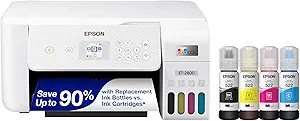 |
| Best Value The sweet spot between price and what you get | Epson EcoTank ET-2400 |  |
| Best Budget The cheapest option that still gets the job done reliably | HP DeskJet 2955 All-in-One |  |
| Top Rated A top-rated pick with lots of positive feedback | Liene Amber M110 Photo Printer |  |
| Most Popular A crowd favorite that many people choose with confidence | Canon PIXMA TR4720 |  |
| Best Seller A high-volume bestseller chosen again and again | Liene 4×6 Photo Printer DHP513 |  |
Canon PIXMA TS6520

| Printer Type | Inkjet |
|---|---|
| Duplex | Automatic |
| Printer Connectivity Type | USB, Wi-Fi |
| Color Pages per Minute | 9 pages_per_minute |
| Maximum print Resolution Color | Up to 1200 x 1200 dpi dots_per_inch |
The Canon PIXMA TS6520 is a compact all-in-one inkjet aimed at everyday home and student use with occasional photo printing. It uses a two-cartridge hybrid ink system (pigment black and dye color) to produce sharp text and reasonably vivid color prints, and it supports borderless prints up to letter size. Setup is straightforward with Wi-Fi and mobile printing support via Canon PRINT, AirPrint, and Mopria, and the 1.42 inch OLED display and simple control panel make navigation easy. Automatic two-sided printing helps save paper and the flatbed scanner covers basic scanning and copying tasks. Print speeds are modest — roughly 9 ppm color and 14 ppm black — and the single paper tray and small sheet capacity limit heavy-duty workflows. For budget art prints the color quality is good for posters and small photo projects, though dedicated photo printers with more color cartridges will deliver richer color depth and smoother gradients. Its compact footprint and reliable connectivity make it convenient for mixed home use, but it is best for moderate print volumes rather than high-volume or professional photo labs.
Best for: Buyers who want a budget-friendly, space-saving all-in-one that handles everyday documents and occasional art or photo projects with easy mobile printing and simple controls.
Less Ideal for: Photographers or artists seeking gallery-quality fine art prints, high page throughput, or advanced color management should consider a dedicated multi-cartridge photo printer or production device instead.
- Two-cartridge hybrid ink system for sharp text and good color prints
- Automatic duplexing to save paper and speed double-sided jobs
- Compact design with intuitive 1.42" OLED display for easy setup and placement
- Reliable wireless and mobile printing support (dual-band Wi‑Fi, AirPrint, Mopria)
- Single paper tray with very small sheet capacity not suited to high-volume runs
- Only two ink tanks means less color gamut and gradation control than multi-cartridge photo printers
Verdict: A compact, affordable all-in-one that delivers good everyday color and photo-capable prints for budget-minded buyers who prioritize convenience over professional photo-grade color accuracy.
Epson EcoTank ET-2800

| Printer Type | Inkjet |
|---|---|
| Printer Connectivity Type | wired, wireless |
| B&W Pages per Minute | 10 |
| Color Pages per Minute | 5 |
| Maximum print Resolution Color | 5760 x 1440 dots_per_inch |
The Epson EcoTank ET-2800 is a cartridge-free all‑in‑one inkjet that replaces disposable cartridges with refillable high-capacity ink tanks, so you can print large runs without frequent changes. It handles color and black text, offers wireless and USB connectivity, and includes a flatbed scanner and an LCD control for basic copying and scanning tasks. Print quality benefits from Epson's Micro Piezo heat-free technology and high maximum resolutions, which deliver sharper text and respectable photo output for casual art prints on standard photo papers. Speed is modest at about 10 ppm black and 5 ppm color, making it better for batch home projects than tight-deadline production. The manual duplexing and single paper tray limit advanced workflow, and it lacks an automatic document feeder, so multi-page scanning or two-sided jobs take more time. The big advantage is running cost: supplied ink bottles and high-yield replacements dramatically lower per-page cost compared with cartridges, which is useful for frequent color practice prints or proofs. If you prioritize low long-term ink cost and decent color output for budget art prints, this model is a practical pick.
Best for: Buyers who want low ongoing ink costs and solid color output for home studio proofing or budget art prints where print quality matters more than speed or automation.
Less Ideal for: People who need fast, high-volume two-sided production, automatic document feeding, or professional gallery-quality archival prints should consider higher-end photo-focused printers instead.
- Cartridge-free high-capacity EcoTank system cuts running costs and reduces cartridge waste.
- Good maximum print resolutions for detailed color prints and sharp text.
- Includes flatbed scanner and color LCD for easy copying and scanning.
- Wireless and USB connectivity with app control and voice-activated printing for convenient mobile workflows.
- No automatic duplex; two-sided printing is manual which slows production of double-sided items.
- Single paper tray and modest sheet capacity limit large uninterrupted print jobs.
Verdict: Choose the ET-2800 if you want significantly lower ink costs and capable color output for budget-friendly art prints and frequent proofing.
Epson EcoTank ET-2400

| Printer Type | Inkjet |
|---|---|
| Print Resolution | 5760 x 1440 dpi |
| B&W Pages per Minute | 10 pages_per_minute |
| Color Pages per Minute | 5 pages_per_minute |
| Printer Connectivity Type | USB, Wi-Fi |
The Epson EcoTank ET-2400 replaces cartridges with large refillable ink tanks that drastically reduce how often you need to buy replacements, making it a practical pick for steady home or small-office use. It prints, scans, and copies over Wi-Fi or USB and accepts a range of paper sizes up to legal and 8.5 x 14 inch, with a rear-feed tray that holds up to 100 sheets for longer uninterrupted jobs. Print quality is strong for an entry-level tank printer thanks to Epson Micro Piezo technology and a high maximum resolution, so it can produce decent color photos and graphics on plain and photo papers. Speed is modest — about 10 ppm black and 5 ppm color — and duplexing is manual, so it is not optimized for heavy duplex workflows. The included ink set covers thousands of pages, lowering running costs and waste compared with cartridge models, but you should stick with genuine Epson ink to maintain print quality and warranty coverage. For budget-minded buyers who want lower operating cost and good color output without expensive cartridges, this is a sensible choice.
Best for: Buyers who prioritize low ongoing ink costs and reliable color output on a budget and need a simple cartridge-free all-in-one for home or small projects.
Less Ideal for: Users who need fast color throughput, built-in automatic duplexing, or advanced office features like an ADF and ethernet connection should consider other models.
- Cartridge-free EcoTank system with high-capacity refillable ink tanks reduces frequency of replacements
- High maximum print resolution (5760 x 1440 dpi) for sharper color photos and graphics
- Wireless and USB connectivity plus app control for easy mobile and desktop printing
- Rear-feed 100-sheet input tray and 30-sheet output capacity for longer print runs
- No automatic duplexing; double-sided printing requires manual page flipping
- Slower color print speed (about 5 ppm) compared with faster office models
Verdict: Choose the EcoTank ET-2400 if you want budget-friendly, cartridge-free color prints with strong resolution and much lower running costs for casual art print projects.
HP DeskJet 2955 All-in-One

| Printer Type | HP Thermal Inkjet |
|---|---|
| Scanner Type | Flatbed |
| Maximum print Resolution Color | Up to 4800 x 1200 optimized dpi |
| Maximum Print Resolution Black and White | Up to 1200 x 1200 rendered dpi |
| Printer Connectivity Type | AirPrint; USB; Wireless; Wireless direct printing; Mopria |
The HP DeskJet 2955 is a basic home all-in-one designed for everyday color documents, light photo or art-print experiments, scanning and copying. It connects via dual-band Wi-Fi, AirPrint, Mopria or USB and is controlled from the HP app or the small icon LCD, so printing from a phone or laptop is straightforward. Notable features include an AI-driven formatting tool to trim unwanted webpage content, a 60-sheet input tray, and a three-month Instant Ink trial that simplifies ink replenishment. Print quality can reach high optimized dpi on select photo papers, but color photo output is still limited by the entry-level ink system and modest color speed. Manual duplex is available via driver support, and the flatbed scanner handles basic scanning tasks. For buyers focused on occasional art prints on budget-friendly photo papers, it offers a compact footprint and low power draw, but serious color-critical or gallery-quality art printing will be constrained by this model's consumer ink cartridges and modest color rendering.
Best for: Buyers seeking a very affordable, compact all-in-one for home use who want wireless convenience and occasional color or art-print experiments without investing in higher-end photo printers.
Less Ideal for: Artists or photographers who need consistent, gallery-quality color reproduction, large-format printing, or professional-grade pigment inks should consider a dedicated photo printer instead.
- Compact all-in-one design with print, scan, and copy functions suitable for small workspaces
- Wireless printing support including AirPrint, Mopria, and HP app for easy mobile workflows
- 60-sheet input tray lets you queue small print runs without frequent refills
- Includes 3-month Instant Ink trial to simplify ink replacement and reduce upfront cartridge cost
- Made with recycled plastics and ENERGY STAR/EPEAT certifications for lower environmental impact
- Entry-level ink system and cartridges limit color accuracy and long-run cost efficiency for fine art prints
- No automatic duplex; two-sided printing requires manual handling via driver
Verdict: A budget-friendly compact all-in-one that makes occasional color and small art prints easy with simple wireless workflow and low upfront cost.
Liene Amber M110 Photo Printer

| Printer Type | Thermal Dye Sublimation |
|---|---|
| Maximum print Resolution Color | 300×300 dpi |
| Printer Connectivity Type | Bluetooth, USB |
| Maximum Media Size | 4×6 inch, 3×3 inch |
| Maximum Sheet Capacity | 20 |
The Liene Amber M110 is a portable thermal dye-sublimation photo printer designed for quick, on-demand 4×6 photos and 3×3 sticker prints from phones, tablets, and computers. It uses a dual paper tray so you can load 4×6 photo paper and 3×3 sticker paper at the same time and switch between sizes without swapping media. Connectivity is straightforward with Bluetooth pairing via the Liene Photo app for mobile devices and a USB option for Mac and Windows, and the app includes editing tools, borders, and print previews. Prints come out laminated by the dye-sublimation process for water and scratch resistance, and the 300×300 dpi resolution yields sharp, vibrant casual prints. Expect modest throughput: initial print time is about a minute and rated speed is roughly 1 page per minute, so it is better for batches of keepsakes than high-volume production. The printer accepts only Liene 4×6 and 3×3 cartridges which simplifies consumables but limits third-party options. Its compact footprint and app-driven workflow make it convenient for home artists or crafters who want durable small-format prints without bulky equipment.
Best for: Artists and hobbyist photographers who prioritize reliable, durable small-format prints and a simple mobile-driven workflow for occasional art prints and stickers.
Less Ideal for: Users who need fast, high-volume printing for large batches or who require broad third-party cartridge compatibility should look elsewhere.
- Dual paper trays for simultaneous 4×6 and 3×3 media
- Thermal dye-sublimation prints with laminated finish for water and scratch resistance
- Bluetooth mobile printing plus USB connection for computers
- Compact and portable design suitable for home or craft spaces
- App offers filters, borders, and print customization
- Print speed is slow at about one page per minute, not suited for high-volume runs
- Uses proprietary Liene cartridges only, limiting third-party media choices
Verdict: Choose the Amber M110 if you want a compact, app-driven dye-sublimation printer that reliably produces durable 4×6 photos and 3×3 stickers for low-volume art projects.
Canon PIXMA TR4720

| Printer Type | Inkjet |
|---|---|
| Resolution | 4800 x 1200 |
| B&W Pages per Minute | 8.8 |
| Color Pages per Minute | 4.4 |
| Printer Connectivity Type | USB, Wi-Fi |
The Canon PIXMA TR4720 is an affordable, compact 4-in-1 inkjet aimed at home and small-office tasks where space and simplicity matter. It handles everyday documents, borderless photos up to 8.5 x 11 inches, and multi-page scanning via the auto document feeder, while automatic duplex printing reduces paper use. Setup and mobile printing are straightforward using Canon's app and built-in Wi-Fi, and the 100-sheet front tray keeps the footprint tidy. Print quality uses Canon's hybrid ink system to deliver sharp black text and usable color photos for casual prints and proofs, though color photo speed is modest and it is not designed for high-volume photo production. The TR4720 also includes an LCD, fax capability and basic app-driven controls, making it a versatile budget device. Expect modest photo color depth and slower color speeds compared with dedicated photo printers, and budgeting for replacement CL‑276/PG‑275 cartridges will affect long-term running costs.
Best for: Buyers who want a budget-friendly, compact all-in-one that can handle occasional borderless art prints and everyday office tasks while prioritizing ease of setup and proven brand reliability.
Less Ideal for: Photographers or artists who need high-volume, gallery-quality color prints or the lowest cost per photo should choose a dedicated photo printer or higher-end inkjet instead.
- Auto duplex printing saves paper and works without manual flipping
- Auto document feeder for multi-page scanning and copying
- Compact footprint with a 100-sheet front paper tray suitable for small spaces
- Wireless mobile printing via Canon Print app and Wi‑Fi connectivity
- Produces borderless prints up to 8.5 x 11 inches for casual photo work
- Color print speed and photo throughput are relatively slow for larger print runs
- Ink cartridge costs (CL-276/PG-275) can add up for frequent photo printing
Verdict: A compact, easy-to-use all-in-one that delivers usable borderless prints and reliable everyday performance for budget-conscious buyers wanting simple art print capability.
Liene 4×6 Photo Printer DHP513

| Printer Type | Dye Sublimation |
|---|---|
| Maximum Media Size | 4 x 6 inch |
| Maximum Sheet Capacity | 20 |
| Printer Connectivity Type | USB, Wi-Fi |
| Maximum print Resolution Color | 300 x 300 dpi |
The Liene DHP513 is a compact dye-sublimation 4×6 photo printer aimed at quick, easy prints from phones or computers. It connects via built‑in Wi‑Fi hotspot or USB‑C and prints borderless 4×6 photos using thermal dye sublimation for vibrant, laminated results that resist water and fingerprints. Setup is straightforward: install the supplied cartridge and paper, connect with the Liene app or directly from your device, then print — the first page prints in about a minute and the cassette holds up to 20 sheets. The app provides simple editing tools and templates for basic adjustments and ID photos. On the downside, resolution is limited to 300 x 300 dpi and print speed is slow compared with larger photo printers, so this is best for one-off prints and small batches rather than heavy studio workloads. Replacement cartridges and proprietary paper are required, which raises ongoing costs. For casual artists or makers who want reliable 4×6 prints from a phone or laptop on a budget, this model delivers user-friendly, durable photos with minimal fuss.
Best for: Buyers who prioritize reliable, easy-to-use 4×6 photo prints from phones or laptops and want a budget-friendly, low‑hassle device for small batches and personal art prints.
Less Ideal for: Professional photographers or artists who need high-resolution archival-quality prints or high daily print volumes should consider higher-end photo printers or inkjet alternatives.
- Dye-sublimation printing produces laminated, water- and fingerprint-resistant 4×6 photos
- Built-in Wi‑Fi hotspot plus USB‑C allows printing from phones, Macs, Windows PCs without a router
- Includes starter kit with ink cartridge and 20 sheets and supports up to 5 simultaneous device connections
- Compact, minimalist design that is easy to store and carry
- Maximum resolution is 300 x 300 dpi which limits fine detail for high-end art reproductions
- Proprietary cartridges and paper increase ongoing supply costs
Verdict: A budget-friendly, user-oriented 4×6 dye-sublimation printer that makes durable, easy phone-to-print photos ideal for casual art prints and project samples.
Choosing the Right Printer for Art Prints on a Budget: Key Factors to Consider
Color Accuracy And Gamut
Accurate color is essential for art reproduction because small shifts can change mood, skin tones, and the perceived intent of a piece. Look for printers that support extended color sets, have reliable color profiles, or can work with ICC profiles from your workflow. When a device offers good color gamut and stable rendering across multiple prints, it reduces the time you spend reworking files to compensate for predictable shifts.
For budget buyers, color accuracy often means a compromise between the number of ink channels and overall cost. Machines with more inks give better gamut and smoother gradients, but they may raise consumable expenses. Consider whether you need museum-grade color fidelity or acceptable consumer-level accuracy that still represents your art faithfully for selling prints.
Print Resolution And Detail
Fine lines, subtle texture, and gradients in artwork demand printers capable of high resolution and precise dot placement. Check the maximum optical resolution and the printer's advertised droplets-per-inch or equivalent metric, but also note that driver processing and media choice affect final detail.
On a budget, prioritize printers with good native resolution and reviews indicating crisp texturing on matte and textured fine-art paper rather than relying solely on marketed high-DPI numbers. The right paper and correct print settings often deliver more noticeable improvements than marginal resolution increases.
Media Handling And Paper Support
Art prints are often produced on heavyweight and textured stocks that standard office printers cannot feed reliably. Confirm the maximum media weight the printer supports and whether it offers straight-through or manual-feed paths for single-sheet fine-art papers. Availability of roll-feed is useful for larger prints but may not be necessary for small runs.
Also consider sheet size limits and borderless printing options if you plan to produce edge-to-edge prints. Reliable media handling reduces jams, misfeeds, and wasted expensive paper, which is especially important when buying premium art stock on a budget.
Ink Or Toner Efficiency
Consumable cost is one of the biggest long-term expenses for printing art. Calculate estimated ink or toner cost per typical print size you produce and compare yield numbers using the printer's published data. Some budget models offer high-yield cartridges or refillable tank systems that substantially lower per-print cost.
Bear in mind that achieving richer blacks or denser colors often uses more ink, so efficiency must be balanced against the quality you need. For limited edition or gallery-quality runs, factor in the cost of archival inks if permanence is a priority.
Color Management And Workflow Integration
Being able to control color via ICC profiles and color-management workflows matters for predictable results. Printers that integrate cleanly with common design and photo-editing software let you soft-proof and make adjustments before printing, reducing waste.
Budget printers vary widely in driver features and color controls. Choose a model that supports external profiling or has robust driver options so you can match prints to your screen and standard viewing conditions. This saves time and paper when creating proofs or limited runs.
Reliability And Maintenance
Frequent maintenance or unreliable printheads undermines any savings from a low initial price. Look for printers with user-replaceable printheads or easy maintenance routines, and check whether common upkeep like alignment and cleaning cycles are straightforward.
A reliable machine reduces downtime and costly reprints. When buying on a budget, prioritize devices with a track record of consistent output and accessible consumables rather than feature-rich models that require specialized servicing.
Which Print Technologies Work Best For Art
Inkjet technology is the most common choice for art prints because it produces smooth gradients and can use pigment-based inks that offer better permanence than many dye systems. For budget-focused artists, look for pigment ink models or dye hybrids that include pigment black for deeper blacks and longer-lasting prints.
Laser or LED printers are typically more economical for high-volume color documents, but they rarely match inkjets for subtle tonal transitions or compatibility with textured fine-art papers. For most art print workflows, inkjet machines deliver the look most artists want even when working on a tight budget.
- Inkjet: Best for color depth, gradients, and textured media compatibility
- Pigment inks: Better longevity and resistance to fading
- Laser: Efficient for text and reproduction but limited for fine art textures
Optimizing Files For Accurate Printed Output
Preparing your digital files correctly reduces wasted prints. Work in a color-managed workflow with a calibrated monitor and save files in a wide color-space format when possible. Convert to the printer profile only at the last stage so you can soft-proof and tweak colors before final output.
Set resolution based on intended print size and viewing distance. For typical art prints viewed up close, aim for 240 to 300 PPI at the final print dimensions. Use appropriate sharpening for output and avoid excessive upsizing, which can introduce artifacts.
- Calibrate your monitor and use ICC profiles
- Export at the correct dimensions and 240–300 PPI
- Soft-proof before printing to adjust colors and contrast
Paper Choices And How They Affect Results
Paper selection changes texture, contrast, and perceived color saturation. Matte and textured fine-art papers diffuse light and can make colors appear softer, while satin or glossy papers boost perceived saturation and depth. Choose the paper finish that suits the artistic intent and the printer's recommended media list.
Thickness and surface sizing influence how ink sits on the paper. Heavier, sized papers prevent ink from soaking in too much and keep details crisp. When working on a budget, test a few less expensive art papers to find one that works well with your chosen printer before buying premium stocks in bulk.
- Matte/textured: softer look, good for prints that mimic traditional media
- Satin/gloss: deeper saturation and contrast
- Heavier weights: better detail retention and less cockling
Managing Running Costs Without Sacrificing Quality
You can reduce per-print costs by using high-yield cartridges, refillable tanks, or compatible third-party supplies where practical. Track actual ink usage for typical pieces and price prints by including consumable costs in your bookkeeping. For limited-edition prints, factor in the extra ink needed for deeper blacks or varnish passes.
Batch printing and proofing economically helps. Print a small number of proofs on cheaper paper to confirm color and layout, then run the final batch on your chosen fine-art stock. This process reduces waste and helps you balance quality with affordability.
- Use high-yield cartridges or refill systems to lower cost per print
- Proof on cheaper paper before committing to expensive stocks
- Include consumables in your pricing for prints sold
Sizing And Scaling For Different Print Runs
Decide whether you will mostly produce small 5×7 to 13×19 prints or larger 24×36 pieces. Smaller formats can be handled by many budget printers, while larger sizes require roll feeds or wide-format-capable devices. Match your expected print sizes to a printer that supports the largest format you plan to sell or exhibit.
Consider how scaling affects perceived detail. Upsampling can work for slight increases, but for large format pieces, capture or scan at a native resolution suited to the final dimensions to avoid softness.
- Small runs: consumer and small studio printers suffice
- Large prints: require roll-feed or wide-format support
- Match capture resolution to final print size for best detail
How We Chose the Best Printer for Art Prints on a Budget
We selected printers that deliver the best combination of color fidelity, reproducible detail, and low ongoing costs for artists working with constrained budgets. Our filters prioritized machines that support fine-art or heavyweight media, provide accurate color reproduction through multi-ink configurations or color management support, and maintain consistent print density across multiple copies. We also evaluated cost-per-page or cost-per-print estimates using manufacturer ink yield data and common art-paper sizes to rate long-term operating expense. Excluded from consideration were devices clearly intended only for casual photo printing on lightweight paper, and multifunction office machines that lack media handling for thick or textured art stock. We favored models with reliable driver and color-management compatibility, straightforward paper-feed options for sheet and roll media, and serviceability for replacing consumables without specialized tech work. Final selections balanced initial purchase economy with realistic running costs and real-world print quality that artists can use for selling prints or showing proofs.
Our full evaluation process is outlined in our review methodology.
FAQ
Can a budget printer produce gallery-quality art prints?
Often yes for small sizes and limited runs. Budget printers that support pigment inks, good color management, and heavyweight media can produce gallery-acceptable results, though museum-grade permanence may require specialized inks and papers.
How do I know which paper finish to choose for my prints?
Match the paper finish to the artwork's aesthetic. Textured matte stocks suit watercolor or pastel styles, while satin or gloss enhances color depth for photographic or high-contrast pieces. Test small proofs to confirm the look before a full run.
Are refillable ink tanks a good option for artists on a budget?
Refillable tanks can greatly reduce per-print costs and are a solid choice if you print frequently. However, they may require more careful handling to avoid spills and may not always offer the extended color sets of some cartridge-based pigment systems.
How important is printer maintenance for consistent results?
Maintenance is important. Regular head cleaning, alignment, and using the printer often enough to prevent nozzle clogging keep prints consistent. Budget models with accessible maintenance routines are easier to keep reliable.
Should I prioritize initial purchase price or ongoing running costs?
Balance both. A low upfront cost is attractive, but high consumable expenses can outweigh savings over time. Estimate cost per typical print and consider expected print volume when deciding which factor to prioritize.
Final Verdict
For artists printing on a budget, prioritize color accuracy, reliable media handling, and manageable consumable costs. Decide which tradeoffs you can accept: more ink channels and pigment inks improve fidelity but may increase running costs, while refillable systems lower per-print expense at the cost of extra handling. Choose a printer that matches your usual print sizes and media types, and adopt a profiling and proofing workflow to reduce waste. With careful selection and testing, you can produce professional-looking art prints without overspending.