
Note: This article contains affiliate links. If you click on these links and make a purchase, we may earn a small commission at no extra cost to you. This helps support our research and content. Read our full affiliate disclosure here.
If you craft or sell greeting cards, the printer you choose makes a major difference in print quality, paper handling, and finished presentation. The right printer for greeting cards will handle heavier cardstock, reproduce skin tones and spot colors accurately, and deliver consistent, edge-to-edge prints without jams or misfeeds. This guide shortlists seven top printer options built for cardmaking and small-run greeting card production. We evaluate each pick on color accuracy, paper-feed reliability, and workflow convenience so you can pick the machine that matches your materials and production volume. Read on for the features that matter and what to expect in real-world use.
Top Picks at a Glance
| Best Overall The best all-around choice for most situations | KODAK Dock Plus PD460 |  |
| Best Quality Built to a higher standard if you want something more solid | Epson EcoTank Photo ET-8550 |  |
| Best Value The sweet spot between price and what you get | Brother Work Smart MFC-J1360DW | 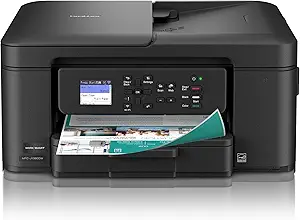 |
| Best Budget The cheapest option that still gets the job done reliably | HP DeskJet 2955 All-in-One |  |
| Top Rated A top-rated pick with lots of positive feedback | Canon PIXMA PRO-200S |  |
| Most Popular A crowd favorite that many people choose with confidence | Canon PIXMA TR4720 |  |
| Best Seller A high-volume bestseller chosen again and again | Epson EcoTank ET-3830 |  |
KODAK Dock Plus PD460

| Printer Type | 4PASS Dye Sublimation |
|---|---|
| Maximum Media Size | 4 x 6 inches |
| Printer Connectivity Type | Bluetooth, Docking |
| Hardware Interface | USB Type C |
The KODAK Dock Plus is a small desktop photo printer aimed at easy, repeatable 4×6 prints from smartphones. It uses 4PASS dye‑sublimation with a protective laminate so prints are resistant to water, fingerprints, and fading, and a typical print takes about 55 seconds. Setup is simple: place a compatible iPhone or Android on the integrated dock or connect via Bluetooth and use the KODAK Photo Printer app to edit and send images. The dock also charges your phone while printing, which keeps a workstation tidy during events or crafting sessions. Paper and cartridge install in an all‑in‑one cartridge, and the unit offers USB‑C connectivity for wired use. Limitations to consider are the single media size (4×6) and modest sheet capacity, so hobbyists who need larger formats or high daily throughput will want a different solution. For greeting cards sized to 4×6 or for prints you'll mount or place inside folded cards, the Dock Plus delivers durable, color‑rich results with minimal fuss.
Best for: Buyers who want a straightforward, reliable way to print durable 4×6 photos from a smartphone for cards, albums, and small craft projects without complex setup.
Less Ideal for: People who need larger print sizes, high-volume card printing, or more flexible paper handling should consider a different printer type.
- 4PASS dye‑sublimation plus laminate for durable, fade‑resistant 4×6 prints
- Integrated smartphone dock that charges while printing for a tidy workflow
- Simple Bluetooth app control with built‑in editing before print
- USB‑C hardware interface for wired connectivity
- Prints are limited to 4×6 inches so not suitable for larger card formats
- Maximum sheet capacity and output are modest for heavy printing sessions
Verdict: Choose the Kodak Dock Plus if you want simple, durable 4×6 photo prints from a smartphone for greeting cards and small craft projects.
Epson EcoTank Photo ET-8550

| Printer Type | Inkjet |
|---|---|
| Print Resolution (Color) | 1440 dpi / up to 5760 x 1440 dpi |
| Color System | 6-color Claria ET Premium |
| Maximum Media Size | 13 x 19 inch |
| Duplex | Auto |
The Epson EcoTank Photo ET-8550 is a wide-format inkjet all‑in‑one that targets photo enthusiasts and small studios who need low running costs and broad media support. It uses a six-color Claria ET Premium refillable ink system and a high-accuracy printhead to deliver lab-style photos, smooth gradients, and sharp text with maximum color resolution up to 5760 x 1440 dpi. The printer handles media up to 13 x 19 inches, accepts heavier stock up to about 1.3 mm, and offers borderless printing useful for greeting cards and custom stationery. Connectivity includes USB and mobile control via iOS/Android apps, and the unit supports auto duplexing for two-sided prints. The EcoTank bottles pack enough ink for long runs, dramatically lowering per-photo cost and reducing interruptions for cartridge changes. Downsides are the printer's large footprint and weight, and setup takes more time than a simple cartridge machine because of the refill process and initial ink priming. Color-critical users should also plan time for profiling and paper tests to get exact matches on specialty cardstocks.
Best for: Buyers who prioritize print quality and low operating costs for frequent photo and craft printing, especially those making gifts, large greeting cards, or studio proofs.
Less Ideal for: Casual users who print infrequently or need a compact, lightweight printer for tight workspaces should consider smaller photo printers or cartridge models instead.
- Cartridge-free EcoTank system greatly reduces ink cost per photo
- Six-color Claria ET Ink and high resolution produce detailed, color-rich photo prints
- Supports wide-format and borderless printing up to 13 x 19 inches for large cards and layouts
- Accepts thicker media up to about 1.3 mm for cardstock and specialty papers
- Includes scanner and copier functions for versatile studio workflows
- Large and heavy unit that requires substantial desktop or shelf space
- Initial ink fill and priming take longer than cartridge-based printers
- Color matching on specialty papers may require manual profiling and tests
Verdict: If you need lab-quality, low-cost photo and card printing with wide-format and thick-media support, the EcoTank Photo ET-8550 delivers the performance and ink savings to justify its size.
Brother Work Smart MFC-J1360DW

| Printer Type | Inkjet |
|---|---|
| Duplex | Automatic |
| Maximum Media Size | 8.5 x 14 inch |
| Maximum Sheet Capacity | 150 |
| Printer Connectivity Type | USB, Wi-Fi |
The Brother Work Smart MFC-J1360DW is a compact all-in-one inkjet designed for home and small home-office use, offering wireless and USB connectivity, automatic two-sided printing, and a 20-sheet single-sided automatic document feeder. In practice it handles everyday color projects—like greeting cards, flyers, and reports—without taking up much desk space, and the Brother Mobile Connect app makes setup and mobile printing straightforward. Print speeds are brisk for its class (up to 16 ppm black, 9 ppm color) and Page Gauge helps you monitor ink so you are less likely to run out mid-job. The 150-sheet tray and automatic duplex save time when producing multiple cards, but the starter inks are standard yield so cost-conscious buyers will want to plan for replacement LC501 cartridges or high-yield options. Image quality is good for vibrant color prints on standard photo or glossy paper, though for gallery-level photo prints a dedicated photo printer with higher-capacity cartridges will perform better. If you want a space-saving, easy-to-use AIO that reliably produces colorful greeting cards and everyday prints, this unit is a practical choice.
Best for: Buyers who prioritize a compact, easy-to-use all-in-one that can reliably produce colorful greeting cards and everyday prints while minimizing setup friction and desk space.
Less Ideal for: Photographers or card makers who need professional lab-quality photos or very low cost-per-page color printing should consider a higher-capacity photo or ink-tank model instead.
- Automatic duplex printing makes two-sided greeting cards easy and fast
- Wireless connectivity and Brother Mobile Connect app enable printing from phones and cloud services
- Compact footprint with 150-sheet tray fits small workspaces
- 20-sheet automatic document feeder speeds multi-page scanning and copying
- Starter cartridges are standard yield, so frequent color printing will require buying replacement ink
- Not optimized for professional photo-lab quality prints compared with dedicated photo printers
Verdict: A small, practical all-in-one that makes producing colorful, two-sided greeting cards simple and convenient for home and home-office users.
HP DeskJet 2955 All-in-One

| Printer Type | HP Thermal Inkjet |
|---|---|
| Scanner Type | Flatbed |
| Maximum Sheet Capacity | 60 |
| Color Pages per Minute | 5.5 pages_per_minute |
| Printer Connectivity Type | Apple AirPrint; USB; Wireless (Wi-Fi); Wireless direct printing; Mopria |
The HP DeskJet 2955 is an entry-level all-in-one inkjet aimed at simple home printing, scanning, and copying tasks. It connects via Wi‑Fi, AirPrint, Mopria, or USB and includes a flatbed scanner for digitizing photos or card artwork; HP AI formatting and the HP app make printing from phones and web pages straightforward. Print speeds are modest, roughly 7.5 ppm black and 5.5 ppm color, and the 60-sheet tray keeps it compact on a desk. It accepts HP 68 cartridges and comes with a 3-month trial of Instant Ink, which can lower running costs for occasional color jobs. Expect good photo-quality prints only on select photo papers and at shorter runs since the printer is optimized for basic home use rather than heavy or professional card production. Manual duplexing and limited paper handling mean multi-page or heavier cardstock workflows require extra attention. For casual greeting card makers who want an affordable, low-footprint device, it delivers core functions; power users seeking faster speeds, larger paper handling, or heavier card stock support should consider a higher-tier photo printer.
Best for: Buyers looking for an inexpensive, compact multifunction printer for occasional color prints and simple home-made greeting cards who prioritize low upfront cost and easy mobile printing.
Less Ideal for: People who regularly produce high-volume greeting cards, use heavy cardstock, or need professional photo-quality prints should look at higher-end photo or photo-capable inkjet models.
- Compact all-in-one design with print, scan, and copy in one unit
- Wireless printing including AirPrint and Mopria for easy mobile workflows
- Includes 3-month Instant Ink trial to reduce short-term ink costs
- 60-sheet input tray keeps the footprint small for home desks
- Limited paper handling and manual duplexing make printing heavier cardstock and multi-page cards less convenient
- Modest print speeds and basic photo printing quality compared with dedicated photo printers
Verdict: A budget-friendly, compact all-in-one that is a practical choice for casual greeting-card makers who want simple color printing and mobile convenience.
Canon PIXMA PRO-200S

| Printer Type | Inkjet |
|---|---|
| Maximum print Resolution Color | 4800 x 2400dpi |
| Printer Connectivity Type | Wi-Fi |
| Maximum Media Size | 13" x 19" (A3+) |
The PIXMA PRO-200S is a dedicated photo inkjet aimed at photographers and creatives who need vivid, large-format color prints. It uses an 8-color dye-based ink set to produce saturated, smooth color and supports borderless printing from small photo sizes up to 13" x 19", which makes it well suited for greeting cards, fine art prints, and proofs. It connects over Wi-Fi and also offers Ethernet and USB for wired workflows, while the 3.0" color LCD simplifies status checks and basic setup. Print speeds are modest for a photo printer, producing bordered A3+ in about 90 seconds, and the unit handles a variety of media sizes with a 100-sheet maximum sheet capacity and dual trays for different stock. Limitations to consider are its simplex-only printing and relatively slow page-per-minute rates for text or bulk printing, and dye inks can be less long-lived than pigment alternatives for archival permanence. For card-making and short-run photo-quality prints the PIXMA PRO-200S delivers striking color with predictable media feeding and straightforward connectivity.
Best for: Creative hobbyists and small studios who prioritize dependable, high-quality color output for greeting cards and photo prints and want simple wireless or wired connectivity in a compact pro-style printer.
Less Ideal for: Users who need fast duplex document printing, heavy office throughput, or the longest-term archival permanence from pigment inks should consider other options.
- 8-color dye-based ink system for rich, vibrant color and smooth tonal transitions
- Borderless printing up to 13" x 19" for full-bleed greeting cards and large photos
- Wi-Fi plus Ethernet and USB give flexible connectivity for studio and home workflows
- 3.0" color LCD makes status checks and basic operations easy
- Simplex-only printing so you must manually flip media for double-sided cards
- Dye-based inks may not match pigment-based longevity for archival prints
- Relatively slow page-per-minute speed for non-photo, bulk printing
Verdict: Choose the PIXMA PRO-200S if you want reliable, studio-quality color and borderless printing for greeting cards and short-run photo projects.
Canon PIXMA TR4720

| Printer Type | Inkjet |
|---|---|
| Print Resolution | 4800 x 1200 |
| Print Speed B&W | 8.8 pages_per_minute |
| Print Speed Color | 4.4 pages_per_minute |
| Connectivity | USB, Wi‑Fi |
The Canon PIXMA TR4720 is an entry-level all‑in‑one inkjet aimed at home users who need everyday documents and occasional photos. It uses a hybrid ink system for sharp black text and decent color prints, supports borderless photos up to letter size, and offers mobile printing through the Canon Print app or native Wi‑Fi connectivity. Practical features include a 100‑sheet front tray, an auto document feeder for multi‑page scans and copies, and automatic two‑sided printing to save paper. Print speeds are modest—about 8.8 ipm black and 4.4 ipm color—so it is fine for light batches but not heavy office workloads. Setup and cartridge changes are straightforward and the two‑line LCD keeps basic controls simple, but advanced color management and photo quality will not match higher‑end photo printers. For greeting cards you can print borderless designs on the supported sizes, but heavier card stock may require testing for feed reliability.
Best for: Buyers who want a compact, easy‑to‑use all‑in‑one for home printing and occasional greeting cards, and who prioritize straightforward setup and solid text and color output over pro photo quality.
Less Ideal for: People who need professional photo‑grade color or high‑volume, fast card production should consider a dedicated photo printer or a higher‑end inkjet designed for heavy card stock handling.
- All‑in‑one functionality: print, copy, scan and fax in one compact unit.
- Borderless printing up to 8.5 x 11 inch for edge‑to‑edge greeting card designs.
- Auto document feeder and auto duplex help with multi‑page jobs and double‑sided printing.
- Wireless and mobile printing via Canon Print app plus USB connectivity for convenience.
- Modest color print speed and photo output compared with dedicated photo printers.
- May require testing with thicker card stock since feed and borderless results depend on media type.
Verdict: A compact, user‑friendly all‑in‑one that can handle borderless greeting card prints for casual home use without the complexity of a dedicated photo printer.
Epson EcoTank ET-3830

| Printer Type | Inkjet |
|---|---|
| Print Resolution | 4800 x 1200 dpi |
| B&W Pages per Minute | 15 pages_per_minute |
| Color Pages per Minute | 8 pages_per_minute |
| Printer Connectivity Type | Ethernet, Wi-Fi |
The ET-3830 is a cartridge-free all-in-one aimed at low-cost, moderate-volume home and small office use. It prints, copies, and scans with a high 4800 x 1200 dpi resolution for sharp text and detailed photos, and its PrecisionCore heat-free printhead helps deliver consistent output on a range of papers. Setup centers on filling the front-facing EcoFit ink tanks (bottles included) so you can print many pages before buying replacement ink, which cuts ongoing costs. The printer supports Ethernet and Wi-Fi plus mobile printing via Epson apps and AirPrint, and it offers auto two-sided printing and a 250-sheet tray for longer jobs. For greeting card creators the high resolution and borderless photo capability are useful, but heavier cardstock or very thick cards may require careful paper handling. The 2.4-inch color display and app control make everyday use straightforward, and the included ink bottles reduce frequent cartridge changes, though initial bottle setup consumes some ink supply.
Best for: Buyers who want dependable, low-running-cost printing for high-quality greeting cards and prefer a straightforward, well-supported all-in-one with mobile printing and automatic duplexing.
Less Ideal for: Users who need guaranteed feed reliability for very thick or textured cardstock or those who require professional photo-lab quality prints on specialty papers.
- Cartridge-free high-capacity refillable ink tanks reduce ongoing ink costs
- High maximum print resolution (4800 x 1200 dpi) for detailed photos and text
- Auto two-sided printing and 250-sheet tray support longer print jobs
- Wi‑Fi, Ethernet and mobile printing options including AirPrint and Epson apps
- Not designed for very thick cardstock; heavy greeting cards may need manual feeding or testing
- Initial setup uses some of the included ink bottles, so first yields are lower than replacement bottles
Verdict: A reliable, low-cost-per-page all-in-one that produces high-resolution prints ideal for making quality greeting cards at home.
Choosing the Right Printer for Greeting Cards: Key Factors to Consider
Supported Cardstock Weight
Cardstock weight determines whether a printer can handle the media used for folded greeting cards. Heavier stock needs stronger feed mechanisms, straight-through paths, or dedicated rear trays to pass without bending or jamming. Choosing a printer rated for the specific GSM or pound weight you plan to use avoids ruined prints and wasted supplies.
Also consider duplexing on heavy stock. Some printers will print one side fine but struggle to flip and print the reverse without creasing. If you plan to print two-sided folded cards, prioritize models that explicitly support duplexing at your chosen weight.
Color Accuracy and Ink System
Greeting cards often include photos, skin tones, and vivid colors, so accurate color reproduction is important. Printers with larger color gamuts, additional color cartridges beyond CMYK, or pigment inks for stable color tend to render images more faithfully. The ink delivery system also influences long-term cost and color consistency across batches.
Consider whether the printer supports ICC profiles or custom color management workflows. For designers who match spot colors or need consistent brand tones across multiple card runs, the ability to calibrate and apply profiles is valuable.
Borderless and Margins
Borderless printing lets you create full-bleed card designs that extend to the edge of the paper without white borders. Not all printers offer true borderless output on heavy cardstock, and some limit borderless to lighter media or particular sizes. If your card designs require full-bleed images, verify the maximum cardstock weight and sizes supported for borderless printing.
If you do not need full-bleed output, pay attention to minimum margin capabilities. Small margin tolerances allow for tighter framing of designs and reduce the amount of trim required after printing.
Paper Path and Feed Design
A printer's physical paper path affects its ability to handle thick or textured cardstocks. Printers with a straight-through or manual-feed slot reduce stress on heavy media and lower the risk of bending during transport through rollers. Top-loading rear trays and dedicated front manual-feed options typically work better for thicker stock than trays that force the paper to curve tightly.
Also consider feed guides and rollers quality. Properly guided paper prevents skew, which matters when printing registration-sensitive artwork or when precise alignment is needed for folded cards and multi-panel designs.
Resolution and Fine-Detail Reproduction
Print resolution influences how sharply text, fine lines, and high-frequency image detail reproduce on card stock. Higher DPI and finer droplet sizes help with photo realism and crisp typography. If your cards use small script fonts, intricate vector art, or halftone gradients, a printer with higher effective resolution will produce cleaner results.
Keep in mind that actual perceived sharpness also depends on the paper surface and ink absorption. Coated cardstocks can enhance detail while uncoated, textured papers may soften fine lines.
Workflow, Connectivity, and Media Handling
How you transfer files and queue print jobs affects day-to-day productivity. Built-in Wi-Fi, wired networking, USB direct print, and SD-card slots offer different conveniences depending on whether you print from a computer, tablet, or camera. Mobile printing support and robust driver features can streamline batch jobs.
Also consider tray capacities and whether the printer supports multiple input sources. If you switch frequently between standard paper and heavy cardstock, dual trays or easy manual-feed toggles reduce setup time and handling errors.
Preparing Files for Card Printing
Set up your document at the final trim size with bleed if you plan to print borderless. Add at least 0.125 inches of bleed to each edge to account for slight paper movement during printing and trimming. Use vector text at high resolution and convert colors to the printer color space to avoid unexpected shifts.
If printing photos, sharpen images slightly for the target print size and use the correct resolution—typically 240 to 300 DPI for photographic elements on card stock. For small text or detailed line art, higher-resolution bitmaps or vector formats maintain crispness.
- Include crop marks and a safety margin for essential text and elements
- Embed ICC profiles or use the printer driver color matching to control output
- Export PDFs with high-quality print settings to preserve detail
Choosing the Right Paper and Finish
Paper choice affects appearance, ink absorption, and the tactile quality of a greeting card. Coated cardstocks produce sharper images and richer color, while uncoated or textured papers lend a handcrafted look but can soften fine detail. Consider weight, opacity, and finish for the intended feel.
Test a few samples with the printer before committing to large runs. Some media need different drying times or handling to prevent smudging and set off ink correctly.
- Matte coated for fine detail and low glare
- Gloss coated for vibrant photo-like colors
- Textured or linen for premium tactile appeal
Finishing Options: Cutting, Folding, and Coating
After printing, consistent cutting and folding are essential to professional results. Use a guillotine or rotary cutter for straight, clean edges. For small batches, a scoring tool before folding reduces cracking and keeps folds neat on thicker stock.
Consider protective coatings if cards are handled frequently. A spray fixative or laminating film can increase durability and resistance to moisture, but test coatings first to ensure they do not alter color or cause wrinkling.
- Score heavy stocks before folding to prevent cracking
- Use a paper cutter for straight edges and consistent trimming
- Test protective sprays or UV coating on spare sheets
Managing Color Consistency Across Batches
Achieving consistent color across multiple print runs requires controlled workflows. Use the same paper batch, maintain stable ambient temperature and humidity when possible, and avoid switching ink types mid-run. Calibrate the printer periodically and save driver or RIP settings for repeat jobs.
If exact color matches matter, produce a proof sheet and compare under neutral lighting before a full run. Small tweaks to color curves or profiles can correct for slight shifts between sessions.
- Keep spare cartridges from the same lot if possible
- Document driver settings and paper profiles for repeatability
- Run a test page after maintenance to confirm output
Small-Batch Production Tips
For short runs of custom cards, streamline the process by batching identical jobs to reduce setup changes. Group prints by paper type and size to minimize reloading and reduce the risk of errors. Use print presets and saved profiles to speed up repeat jobs.
If you regularly print dozens of cards, consider creating templates for common layouts and automating variable data like recipient names with mail-merge or RIP software.
- Batch by media and orientation to minimize handling
- Use presets to preserve color and margin settings
- Automate variable elements to save time on personalization
How We Chose the Best Printer for Greeting Cards
We prioritized real-world printing needs for greeting cards and applied filters focused on reproducible quality and dependable paper handling. Key evaluation criteria included color accuracy and gamut, because cards often contain skin tones, photos, and saturated graphics. Paper-feed reliability and supported cardstock weight were essential for preventing jams and ensuring even duplex or borderless output on heavy media. We also assessed print resolution and ink system design, which affect fine detail, gradients, and longevity. Workflow and connectivity options such as direct USB, Wi-Fi, and memory-card support were considered for frequent file transfers and ease of use. Finally, we looked at print speed and duty cycle to reflect small-batch production needs. We excluded machines designed solely for high-volume office text printing or specialty industrial printers outside home and small-studio use. Products that could not accommodate common greeting-card stock weights or lacked reliable duplexing and borderless modes were filtered out. The result is a set of printers chosen for their balance of photographic output, reliable cardstock handling, and user-focused workflow features.
Our full evaluation process is outlined in our review methodology.
FAQ
What paper weight should I use for folded greeting cards?
Most folded greeting cards use cardstock in the 80 to 110 lb range (around 216 to 300 GSM), though premium cards may be heavier. Ensure your chosen printer explicitly supports the weight you plan to use and test a sample sheet to confirm proper feeding and folding.
Can I print borderless full-bleed cards on cardstock?
Some printers support borderless printing on heavier papers, but many limit borderless modes to lighter media. Check the printer's specifications for borderless support at your intended cardstock weight and run a test print to verify full-bleed capability.
Is pigment or dye ink better for greeting cards?
Pigment inks offer better lightfastness and water resistance, which helps cards remain vibrant over time. Dye inks often produce more saturated colors and smoother gradients but can be less durable. The best choice depends on whether longevity or vibrancy is your priority.
How do I prevent cracking when folding heavy cardstock?
Use a scoring tool to create a shallow crease before folding. Scoring compresses the fiber and allows the sheet to fold cleanly without cracking or breaking the ink on the fold line. Also fold slowly and use a bone folder or similar tool for a crisp crease.
Do I need special drivers or software for color management?
For precise color control, use drivers that support ICC profiles or RIP software that allows custom color correction. Many printers include basic color management in their drivers, but design and print studios often use external profiling tools for consistent batch output.
Final Verdict
Choose a printer for greeting cards by prioritizing the paper weights you plan to use and how important color accuracy is to your designs. If folded two-sided cards or full-bleed prints are central to your work, make feed path, duplexing, and borderless support primary decision points. Balance resolution and ink type against durability needs and the tactile finish you want on the final card. Ultimately, pick a printer that fits your typical run sizes and media choices, and invest time in configuring color management and paper handling. That approach delivers reliable, repeatable results and professional-looking greeting cards.