
Note: This article contains affiliate links. If you click on these links and make a purchase, we may earn a small commission at no extra cost to you. This helps support our research and content. Read our full affiliate disclosure here.
Picking the right wireless color printer matters whether you print photos, school projects, or office documents. A good model saves time, reduces hassle, and produces consistent color without requiring complex setup. This guide covers seven shortlisted wireless color printers that represent the strongest options for home and small-office use. We evaluated each machine on the factors that matter most to everyday users, including color accuracy, connectivity, and running costs. Read on to see which features make a printer a good fit for your workflow, and which tradeoffs to expect between speed, image quality, and convenience.
Top Picks at a Glance
| Best Overall The best all-around choice for most situations | Brother Work Smart 1360 | 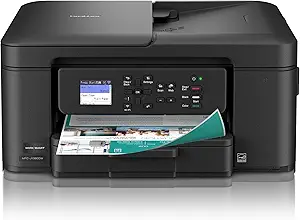 |
| Best Quality Built to a higher standard if you want something more solid | Brother HL-L3220CDW Color Laser Printer |  |
| Best Value The sweet spot between price and what you get | HP DeskJet 2855e All-in-One Printer |  |
| Best Budget The cheapest option that still gets the job done reliably | Canon PIXMA TS4320 |  |
| Top Rated A top-rated pick with lots of positive feedback | KODAK Step Instant Photo Printer |  |
| Most Popular A crowd favorite that many people choose with confidence | Canon PIXMA TR4720 |  |
| Best Seller A high-volume bestseller chosen again and again | Epson EcoTank ET-2800 |  |
Brother Work Smart 1360

| Printer Type | Inkjet |
|---|---|
| Functions | Print / Copy / Scan |
| Duplex | Automatic |
| Maximum Sheet Capacity | 150 |
| Connectivity | USB, Wi-Fi |
The Brother Work Smart 1360 is a compact wireless color inkjet all-in-one designed for home and small home-office use. It handles printing, copying, and scanning with a 20-sheet single-sided automatic document feeder and a flatbed scanner, and offers automatic duplex (two-sided) printing to save paper. Connectivity options include Wi‑Fi, Wi‑Fi Direct, AirPrint and Mopria compatibility plus USB, and the Brother Mobile Connect app simplifies setup, mobile printing and ink monitoring. In real-world use it delivers reasonably fast black text at up to 16 ppm and color output up to 9 ppm, with crisp resolution settings listed up to 1,200 x 6,000 dpi on Windows for detailed color work. The 150-sheet tray keeps refills infrequent for typical home workloads, and Page Gauge plus compatibility with Brother genuine LC501 cartridges and Refresh subscription gives straightforward ink management. Trade-offs are standard yield starter cartridges and a small 1.8" display that limits on-device controls compared with larger touchscreens, so heavy color-photo shops or high-volume offices may want higher-capacity or faster laser options.
Best for: Buyers who want a capable, space-conscious all-in-one for mixed home and small home-office tasks and value easy wireless setup and ink management.
Less Ideal for: Users who need very high monthly page volumes, enterprise-grade speeds, or a larger on-device touchscreen experience.
- Automatic duplex printing reduces paper use and manual flipping
- Wireless, Wi‑Fi Direct, AirPrint and Mopria support for easy mobile printing
- 20-sheet ADF plus flatbed scanner for mixed document scanning and copying
- 150-sheet paper tray suits typical home and small office workloads
- Compatible with Brother Mobile Connect app and Page Gauge for ink monitoring
- Comes with standard-yield starter cartridges so replacement frequency can be higher
- Small 1.8" color display limits on-device navigation compared with larger touchscreens
Verdict: A compact, wireless all-in-one that balances speed, duplexing and mobile-friendly features for everyday home and small-office printing needs.
Brother HL-L3220CDW Color Laser Printer

| Printer Type | Laser |
|---|---|
| Print Speed | 19 pages_per_minute |
| Maximum print Resolution Color | 2400 x 600 dpi |
| Maximum Sheet Capacity | 250 |
| Printer Connectivity Type | USB, Wi-Fi |
The Brother HL-L3220CDW is a small-office focused color laser printer that delivers consistent, professional-looking documents without a large footprint. It prints at up to 19 ppm in color and black and white, with an initial page out in under 15 seconds, making it a solid choice for users who need steady throughput for reports and business output. Built-in Wi-Fi and mobile printing support let you send jobs from laptops, phones, or tablets, while a 250-sheet main tray plus a manual feed slot handles envelopes and specialty media. Automatic duplexing reduces paper use and speeds two-sided jobs. Print quality is sharp for text and good for graphics at the printer's 2400 x 600 dpi resolution, and Brother's ecosystem of TN229 toner options includes higher-yield cartridges for lower running costs. Limitations include that this model is print-only with no scanner or ADF, and color photo output will not match a dedicated photo printer. Also some users may find the single USB port and basic LCD less flexible than larger office machines.
Best for: Buyers who prioritize reliable, relatively fast color document printing for a home office or small business and want wireless/mobile convenience without an all-in-one's bulk.
Less Ideal for: People who need multifunction features like scanning or who require top-tier photo print quality should consider a different model.
- Reliable 19 ppm print speed for both color and black-and-white jobs
- Automatic duplex printing saves time and reduces paper use
- 250-sheet input tray with manual feed for envelopes and specialty media
- Wireless and mobile printing support for printing from smartphones and laptops
- High nominal print resolution (2400 x 600 dpi) for crisp text and graphics
- Print-only design with no scanning or copying capability
- Single USB port and basic LCD limit connectivity and on-device control options
- Not optimized for high-quality photo printing compared with inkjet photo printers
Verdict: Choose the HL-L3220CDW if you need dependable, fast wireless color printing for professional documents in a compact home or small office setup.
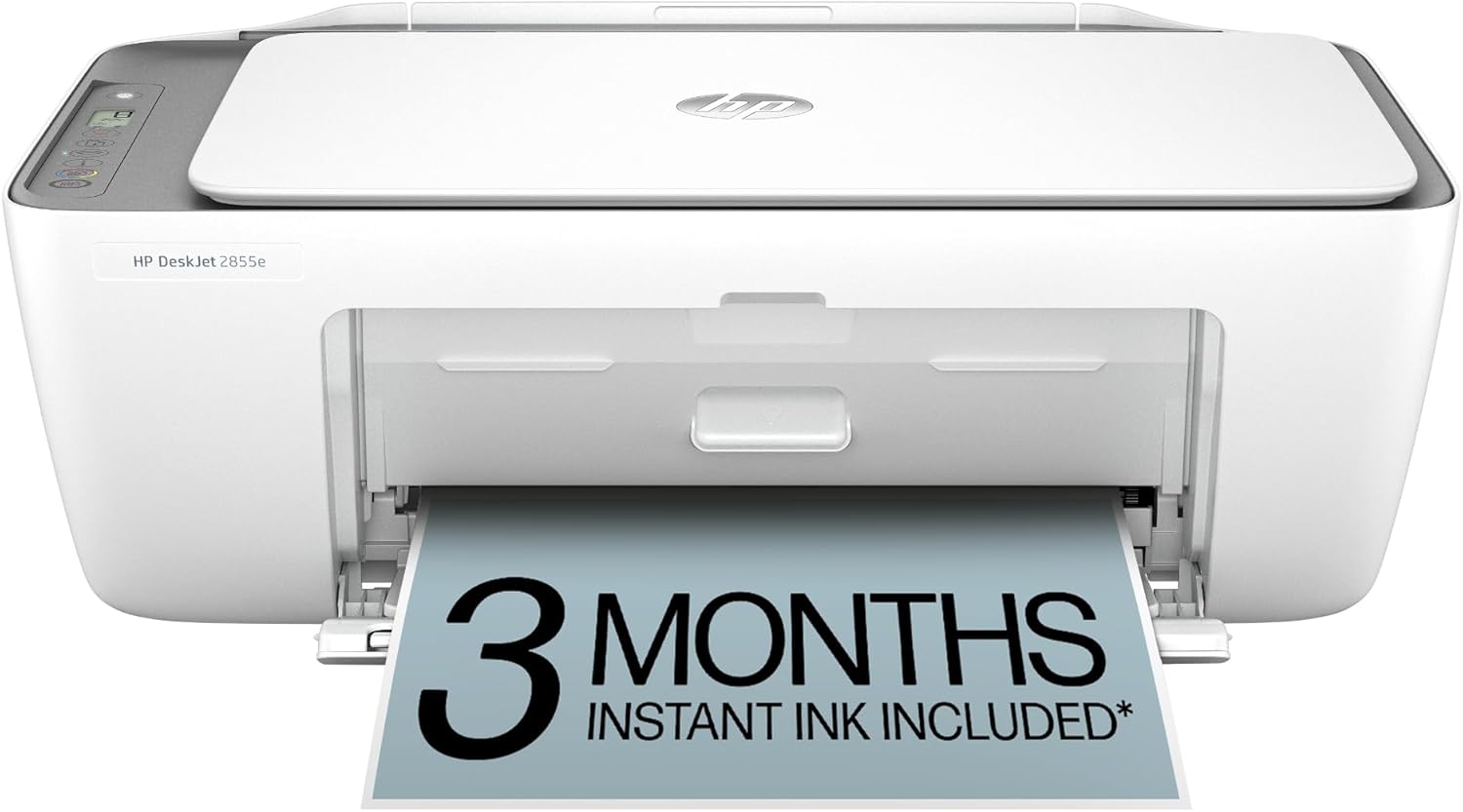
HP DeskJet 2855e All-in-One Printer
| Printer Type | Inkjet |
|---|---|
| Compatible Cartridge | HP 67 |
| Maximum print Resolution Color | 4800 x 1200 dpi |
| B&W Pages per Minute | 7.5 pages_per_minute |
| Printer Connectivity Type | single band wi-fi (2.4ghz only) |
The HP DeskJet 2855e is a compact home-focused inkjet that prints, scans and copies while connecting over single-band 2.4 GHz Wi‑Fi or USB 2.0. It is designed for everyday home tasks like letters, recipes and schoolwork and uses HP 67 cartridges with three months of Instant Ink included after HP+ activation. Setup and routine use are driven through the HP app, which also lets you print and scan from a smartphone and benefits from HP AI page formatting to trim unwanted web content. Print speeds are modest — about 7.5 ppm for black and 5.5 ppm for color — and duplexing is manual, so it is not ideal for high-volume duplex jobs. The 60-sheet tray keeps a small household running without constant refills, and the flatbed scanner handles documents and photos. Expect typical inkjet photo-quality color and basic office-capable sharpness, but be prepared for ongoing ink subscription or cartridge costs if you print regularly.
Best for: Buyers who want a small, app-driven all-in-one for routine home printing, scanning, and copying and who prioritize simple setup, compact size, and occasional color output.
Less Ideal for: Users who need fast, high-volume printing, automatic duplexing, or advanced networking features should consider more capable office-class models.
- All-in-one functionality: print, copy, and flatbed scan in a compact footprint
- Wireless printing via 2.4 GHz Wi‑Fi plus USB 2.0 for flexible connectivity
- Includes 3 months of Instant Ink with HP+ activation to reduce ink-refill interruptions initially
- 60-sheet input tray suitable for everyday home or small-office print runs
- HP app control and AI formatting simplify mobile printing and remove unwanted webpage content
- Print speeds are relatively slow compared with higher-end home printers
- Only single-band 2.4 GHz Wi‑Fi supported and manual duplexing limit advanced networking and duplex convenience
Verdict: A compact, app-first all-in-one that is a practical, low-footprint choice for everyday home printing and light color jobs.
Canon PIXMA TS4320

| Printer Type | Inkjet |
|---|---|
| Duplex | Automatic |
| Connectivity | USB, Wi-Fi |
| Print Resolution (Color) | 1200 x 1200 dots_per_inch |
| Paper Capacity | Maximum Sheet Capacity 100 |
The Canon PIXMA TS4320 is a small, budget-focused all-in-one inkjet designed for home users who need occasional document and photo printing plus basic scanning and copying. It connects via USB or dual-band Wi‑Fi and supports mobile printing through the Canon app, AirPrint, and Mopria, making it easy to print from phones or laptops. The two-cartridge hybrid ink system produces sharp text and vibrant color photos at up to 1200 x 1200 dpi, and automatic duplexing saves paper on multipage jobs. Its compact footprint and straightforward setup make it convenient for kitchens, dorm rooms, or home offices, and the 100-sheet tray handles light weekly workloads. Limitations include modest print speeds (around 9 ppm color, 14 ppm black) and a lack of advanced features like an ADF or touchscreen, so it is not suited for heavy office use or large batch scanning. For casual users who prioritize simplicity and photo-capable color prints on a budget, it delivers solid value.
Best for: Buyers wanting an affordable, easy-to-use wireless color all-in-one for occasional home printing and photo projects who value compactness and simple mobile setup.
Less Ideal for: Users who need high-volume printing, frequent multi-page scanning, or advanced office features should choose a more capable MFP with faster speeds and an ADF.
- Dual-band Wi‑Fi and mobile printing support for easy wireless setup
- Automatic two-sided (duplex) printing to save paper
- Good print resolution up to 1200 x 1200 dpi for sharp text and vibrant photos
- Compact design with a 100-sheet tray suitable for light home use
- No automatic document feeder or touchscreen interface for batch scanning
- Relatively modest print speeds compared with higher-end models
Verdict: A compact, budget-friendly wireless color all-in-one that gives reliable photo-capable prints and easy mobile setup for light home use.
KODAK Step Instant Photo Printer

| Print media | Thermal Paper (ZINK) |
|---|---|
| Maximum Media Size | 2×3 |
| Maximum Sheet Capacity | 10 |
| Connectivity | Bluetooth, NFC |
| Maximum print Resolution Color | 300 dpi |
The KODAK Step Instant Photo Printer is a compact Bluetooth and NFC printer that uses ZINK zero-ink technology to produce 2×3 sticky-backed color prints directly from your smartphone. You pair the printer with the KODAK Step Prints app to edit, add stickers, or create collages before sending a photo; prints emerge in about a minute and the included starter pack and rechargeable battery let you begin right away. Because it uses ZINK paper there are no cartridges to change and the prints are coated to resist smudges, water, and tears, which makes them convenient for scrapbooks, labels, or quick keepsakes. Practical limits are the small 2×3 output size, a 10-sheet tray capacity, and a modest battery life of about 25 prints per charge, so it is not suited for bulk photo jobs. Print resolution is 300 dpi, which yields decent detail for small photos but will not match larger lab prints. For reliable, portable instant prints without ink fuss, the Step is an easy-to-use option with predictable performance.
Best for: Buyers who want a dependable, grab-and-go printer for quick, fuss-free photo prints and value predictable, ink-free operation and simple phone-based editing.
Less Ideal for: Anyone who needs larger prints, high-volume photo production, or professional-grade color fidelity should consider a different printer.
- Zero-ink ZINK printing eliminates cartridges and mess
- Bluetooth and NFC pairing for quick phone-to-print workflow
- Sticky-backed, protected 2×3 prints that resist smudges and water
- Compact, rechargeable and portable—about 25 prints per full charge
- App-based editing tools including filters, stickers and collage mode
- Small 2×3 print size and 10-sheet tray limit bulk use
- Battery supports only modest print runs before recharging
- Print speed is about 60 seconds per photo, so throughput is low
Verdict: Choose the Kodak Step when you want a reliable, portable zero-ink printer for quick 2×3 sticky-backed photos straight from your phone.
Canon PIXMA TR4720

| Printer Type | Inkjet |
|---|---|
| Printer Output Type | Color |
| Maximum print Resolution Color | 4800 x 1200 dpi |
| B&W Pages per Minute | 8.8 |
| Printer Connectivity Type | USB, Wi-Fi |
The Canon PIXMA TR4720 is a space‑saving 4‑in‑1 inkjet intended for home and small‑office use that handles everyday documents and occasional photos. It connects via Wi‑Fi or USB and supports mobile printing through Canon apps, making it straightforward to print from smartphones or cloud services. Notable features include a 100‑sheet front paper tray, automatic two‑sided printing, a small auto document feeder for multi‑page scanning and faxing, and a hybrid ink system designed to keep black text sharp while producing decent color prints and borderless photos up to letter size. Print speeds are modest — about 8.8 ipm for black and 4.4 ipm for color — so it is better suited to moderate workloads rather than heavy daily volume. The 2‑line LCD and simple controls make basic copying and faxing easy, but advanced users may miss a larger touchscreen or faster color output. Overall it is a practical, compact wireless all‑in‑one for routine home and light office tasks where ease of setup and multifunction capability matter more than high throughput.
Best for: Buyers who want an easy‑to‑use, space‑saving wireless all‑in‑one for everyday home or small‑office printing and occasional photos, with straightforward mobile printing and basic fax/scan capability.
Less Ideal for: Users who need fast color throughput, heavy daily printing, or advanced touchscreen controls should consider more robust models designed for higher volume.
- Compact 4‑in‑1 design with print, copy, scan and fax in a small footprint
- Automatic duplex printing and 100‑sheet front tray reduce paper handling
- Auto document feeder simplifies multi‑page scanning and faxing
- Wireless and mobile printing support via Canon Print app for easy setup
- Color print speed and photo output are relatively slow compared with higher‑end models
Verdict: A compact, straightforward wireless 4‑in‑1 that delivers reliable home and light office printing with easy mobile setup.
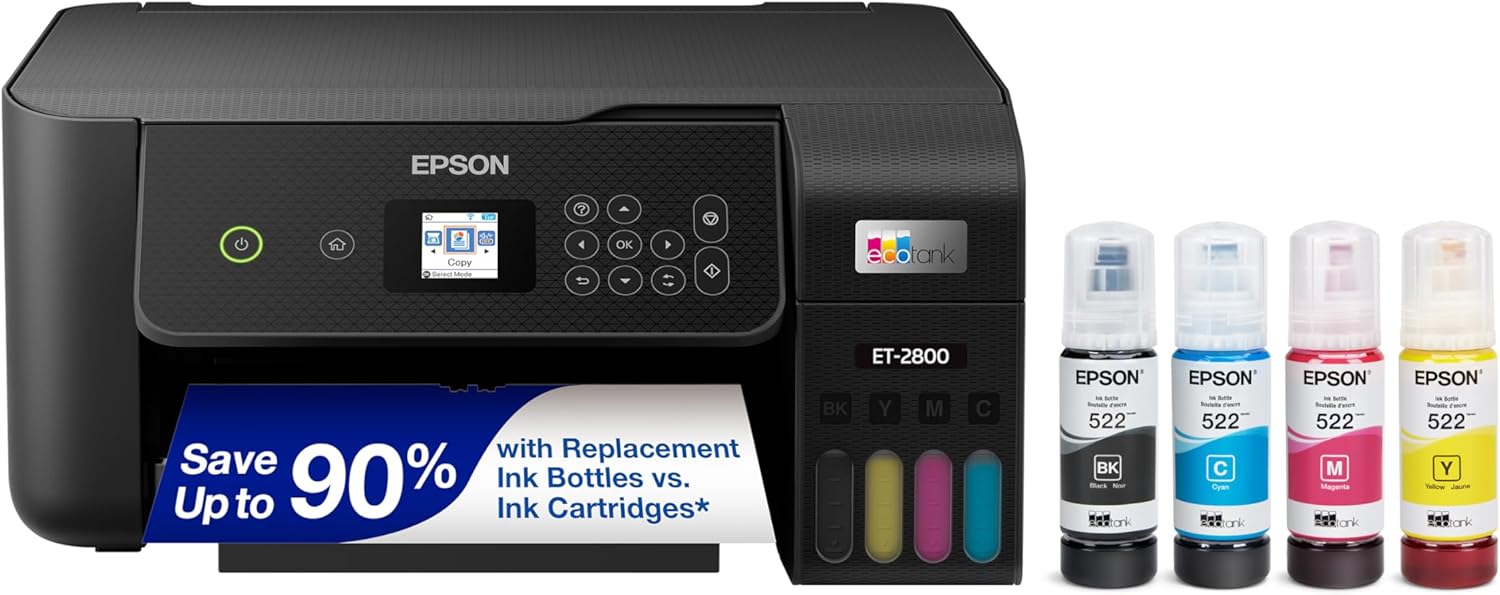
Epson EcoTank ET-2800
| Printer Type | Inkjet |
|---|---|
| Printer Connectivity Type | USB, Wi-Fi |
| Color Pages per Minute | 5 pages_per_minute |
| B&W Pages per Minute | 10 |
| Maximum print Resolution Color | 5760 x 1440 dpi |
The EcoTank ET-2800 replaces cartridges with large refillable ink tanks so you can print long runs without frequent cartridge swaps, and Epson ships an ink supply that covers many months of home printing. It prints color photos and documents at up to 10 ISO pages per minute (10 ppm B&W, 5 ppm color) and uses PrecisionCore heat-free technology for sharp text and detailed images. Setup and everyday use are simplified by Wi-Fi, mobile and voice printing plus a basic color LCD for local control. The integrated flatbed scanner and copy functions make it useful for typical household tasks like schoolwork, forms and occasional photo prints. Expect strong running cost savings compared with cartridge models and far less plastic waste, but note the ET-2800 is a simplex-only printer and lacks an automatic document feeder or automatic duplexing. It also works best with genuine Epson ink to maintain performance and warranty coverage. For buyers who want low ongoing ink costs and reliable wireless printing for home tasks, the ET-2800 is a practical choice.
Best for: Home users who prioritize low ongoing ink costs and reliable wireless printing for everyday documents, photos and schoolwork and who prefer a straightforward, low-maintenance setup.
Less Ideal for: Small offices or power users who need built-in duplexing, an automatic document feeder, or faster commercial-level throughput for high-volume multi-page jobs.
- Cartridge-free EcoTank system greatly reduces frequency of ink replacements
- Includes a large starter ink supply that can cover months of typical home use
- Wireless, mobile and voice printing makes everyday use convenient
- PrecisionCore print technology delivers sharp text and detailed color prints
- Flatbed scanner and copy functions add basic all-in-one capability
- No automatic duplex printing which requires manual page flipping for two-sided jobs
- Lacks an automatic document feeder for multi-page scanning or copying
- Best performance tied to using genuine Epson ink
Verdict: Choose the ET-2800 if you want a simple wireless all-in-one that dramatically lowers ink costs with refillable tanks while covering typical home printing needs.
Choosing the Right Wireless Color Printer: Key Factors to Consider
Print Quality & Color Accuracy
Print quality determines whether documents and photos look professional or merely passable. For color output, look at manufacturer-stated DPI and color management features, but also consider how the device handles gradients and skin tones in real prints.
Good color accuracy reduces the need to reprint photos and marketing materials. If you plan to print photos or graphics regularly, prioritize printers with multi-cartridge color systems and proven color calibration tools. For occasional photo printing, a balanced pigment/dye system can provide acceptable results with less expense.
Wireless Connectivity and Mobile Printing
Wireless features determine how easily you can print from phones, tablets, and laptops. Essential options include reliable 2.4/5 GHz Wi-Fi, Wi-Fi Direct for device-to-printer printing, and support for mobile protocols such as AirPrint or Mopria. Bluetooth printing can help in quick scenarios but is not a substitute for full Wi-Fi functionality.
Also consider network security features and how the printer integrates with your home or office network. A printer with a stable wireless implementation reduces dropped jobs and repeated reconfigurations, which matters for shared environments.
Print Speed and Daily Throughput
Print speed affects productivity, especially for multi-page documents. Look for realistic speed ratings that reflect typical document workloads rather than only headline burst numbers. Consider both black-and-white and color pages per minute ratings.
If you expect to print high volumes, check the duty cycle and whether the device is rated for sustained workloads. Slower high-quality photo modes are normal, but a printer that handles routine document jobs quickly will save time over weeks and months.
Operating Cost and Ink Management
Long-term cost is a major part of ownership. Compare cartridge yield, the availability of high-capacity or refillable ink options, and whether the printer uses individual color cartridges or combined color packs. Individual cartridges let you replace only the depleted color, lowering waste and cost.
Also evaluate ink pricing trends and whether the manufacturer offers subscription or replacement programs. Consider how easy it is to access cartridges and whether the machine supports third-party or bulk refill options if you plan to minimize running costs.
Paper Handling and Media Versatility
Paper handling affects what printing jobs you can do without manual juggling. Important details include input tray capacity, rear or manual feed for thicker paper, and support for various sizes and finishes such as glossy photo paper and envelopes.
If you print advertising flyers, greeting cards, or small batches of photos, a printer with a dedicated photo tray or a rear feed for heavy stock will reduce jams and improve print quality. For shared office use, a larger input capacity reduces refilling frequency.
Maintenance, Reliability, and Support
Maintenance requirements influence downtime and hassle. Look for printers with clear head-cleaning procedures, user-replaceable parts, and straightforward firmware update paths. Machines that allow easy access to paper jams and consumables reduce frustration during daily operation.
Reliability also ties to build quality and software support. A model with regular firmware updates and clear online support resources will likely have fewer unresolved issues over its service life.
Choosing the Right Color System
Printer manufacturers use different color approaches such as dye-based, pigment-based, or hybrid systems. Dye inks often produce more vivid photos but may fade faster, while pigment inks resist smudging and handle text sharply. Consider which tradeoffs matter most for your primary use case.
For photo-intensive users, a printer with additional photo-specific cartridges can expand the color gamut and improve skin tone rendering. For mostly document printing with occasional color graphics, a standard four-color CMYK setup usually offers the best balance of cost and capability.
- Dye inks: vivid color, less archival longevity
- Pigment inks: sharper text, better durability
- Multi-cartridge photo sets: better gamut and gradation
Setting Up a Stable Wireless Workflow
Reliable wireless printing often comes down to placement and network configuration. Position the printer where it gets a strong signal from your router and avoid congested Wi-Fi channels when possible. Use the 5 GHz band for faster transfers if both the printer and your devices support it.
Enable manufacturer-supported mobile protocols if you print from phones or tablets. Configure a fixed IP or reserved DHCP lease for shared networks to avoid reconnecting devices when the router reboots.
- Place the printer within good Wi-Fi coverage
- Use 5 GHz for higher throughput when available
- Reserve an IP address to reduce reconnection issues
Managing Color Profiles and Paper Choices
To get predictable colors across devices, consider using ICC profiles for the paper and ink combination. Many printers and paper vendors provide downloadable profiles that help match on-screen colors to prints. When exact color is essential, run test prints before committing to large jobs.
Paper selection also changes perceived quality. Heavier, coated photo papers increase color saturation and perceived sharpness, while matte papers soften colors and reduce glare. Match paper type to the intended use to avoid disappointing results.
- Use ICC profiles for color-critical work
- Test prints help avoid wasting paper and ink
- Choose paper weight and finish based on the final use
Optimizing for Speed Vs Quality
Most printers offer selectable modes that trade speed for quality. Use draft mode for quick internal documents, standard mode for everyday color pages, and photo mode for the highest-quality images. Understanding these modes helps you control runtime and cost.
For mixed-use environments, pick a printer that provides clear, distinct modes and reasonable speed in its standard setting. That way you avoid long waits for routine prints while still having access to high-quality photo output when needed.
- Draft mode saves time and ink for nonfinal prints
- Standard mode balances speed and acceptable color
- Photo mode is best for images but is slower and uses more ink
Securing Your Networked Printer
Networked printers are potential entry points on home and office networks. Enable built-in security features such as password protection, WPA2/WPA3 Wi-Fi, and disable unused services like FTP or Telnet. Keep firmware current to patch known vulnerabilities.
For shared environments, consider restricting admin access and using guest Wi-Fi for visitor printing. These steps reduce the risk of unauthorized access and ensure only intended users can change settings or access stored print data.
- Use strong Wi-Fi encryption and passwords
- Limit admin access and use guest networks for visitors
- Install firmware updates promptly
How We Chose the Best Wireless Color Printer
We focused on attributes that directly affect everyday printing performance and total ownership experience. Key evaluation criteria included print quality and color accuracy for both text and photos, wireless connectivity and mobile printing options, print speed in typical document and photo modes, and operating costs such as yield and ease of ink replacement. We also weighed reliability and ease of setup, including software and driver support, and the physical footprint for users with limited desk space. To assemble the shortlist we excluded specialty large-format or commercial production machines that are overbuilt for typical home and small-office needs. We also excluded models lacking modern wireless features such as Wi-Fi Direct or mobile printing support. Our process prioritized printers that deliver a balanced mix of color output, consistent connectivity, reasonable running costs, and straightforward maintenance procedures. The scoring emphasized measurable, buyer-relevant specs rather than marketing claims.
Our full evaluation process is outlined in our review methodology.
FAQ
How do I connect a wireless color printer to multiple devices?
Most wireless color printers support connection via your Wi-Fi network, allowing multiple devices to discover the printer. You can also enable features like Wi-Fi Direct or add the printer through mobile printing protocols such as AirPrint or Mopria. Reserving an IP address for the printer on your router can improve reliability for all connected devices.
Are some wireless color printers better for photos than others?
Yes. Printers with additional photo-specific cartridges, higher color gamut, and finer print resolutions typically produce better photo prints. Dye-based inks can offer more vivid results, while pigment-based systems prioritize longevity and sharp text. Your choice should match whether you prioritize vivid photos or durable, smear-resistant output.
What affects the long-term cost of owning a color printer?
Long-term cost depends on cartridge yield, whether the printer uses individual color cartridges, availability of high-capacity or refill options, and how often you print. Using high-quality paper and correct print modes reduces waste, and subscription or bulk-ink programs, when available, can lower per-page costs for frequent users.
How can I improve color accuracy between my screen and prints?
Use ICC profiles that match your printer, ink, and paper combination, and calibrate your monitor if color matching is critical. Print test files and adjust settings before running large jobs. Choosing paper recommended by the printer manufacturer also helps produce more predictable results.
Will a wireless color printer slow my Wi-Fi network?
Printing jobs use network bandwidth briefly and typically do not significantly impact overall network performance for web browsing or streaming. Large photo transfers can be noticeable on congested networks, so using 5 GHz Wi-Fi or scheduling big print jobs during off-peak times helps minimize interference.
Final Verdict
Balancing print quality, connectivity, and operating cost will guide the best wireless color printer choice for your needs. Prioritize reliable wireless support and the color system that fits your primary use, whether photos or mixed documents. Consider long-term expenses such as cartridge yield and maintenance when choosing between models. Focus on the tradeoffs that matter most to your workflow. If you need frequent high-quality photos, lean toward printers with broader color capability and photo features. If speed and low running cost matter more, pick a model with efficient ink use and fast document throughput.