
Note: This article contains affiliate links. If you click on these links and make a purchase, we may earn a small commission at no extra cost to you. This helps support our research and content. Read our full affiliate disclosure here.
Choosing a reliable electric dryer matters because it affects how quickly your laundry is done, how garments age, and how often you need repairs. A durable dryer reduces surprise breakdowns and keeps energy use predictable, which matters whether you run frequent large loads or occasional small ones. This guide shortlists the top reliable electric dryers across common household needs and explains the features that most influence longevity, drying consistency, and operating cost. Below you will find the top picks we vetted for dependability and performance, plus clear criteria and purchase guidance to help you select the right reliable electric dryer for your home.
Top Picks at a Glance
| Best Overall The best all-around choice for most situations | GE GFD55ESSNWW Electric Dryer |  |
| Best Quality Built to a higher standard if you want something more solid | Speed Queen DC5003WE Electric Dryer |  |
| Best Value The sweet spot between price and what you get | Euhomy Portable Clothes Dryer 1.5 Cu. Ft. |  |
| Best Budget The cheapest option that still gets the job done reliably | Nekithia Portable Dryer GR992 |  |
| Top Rated A top-rated pick with lots of positive feedback | Panda Compact Dryer PAN760SF |  |
| Most Popular A crowd favorite that many people choose with confidence | BLACK+DECKER Front Load Dryer BLD67ME |  |
| Best Seller A high-volume bestseller chosen again and again | ROVSUN Portable Clothes Dryer |  |
GE GFD55ESSNWW Electric Dryer
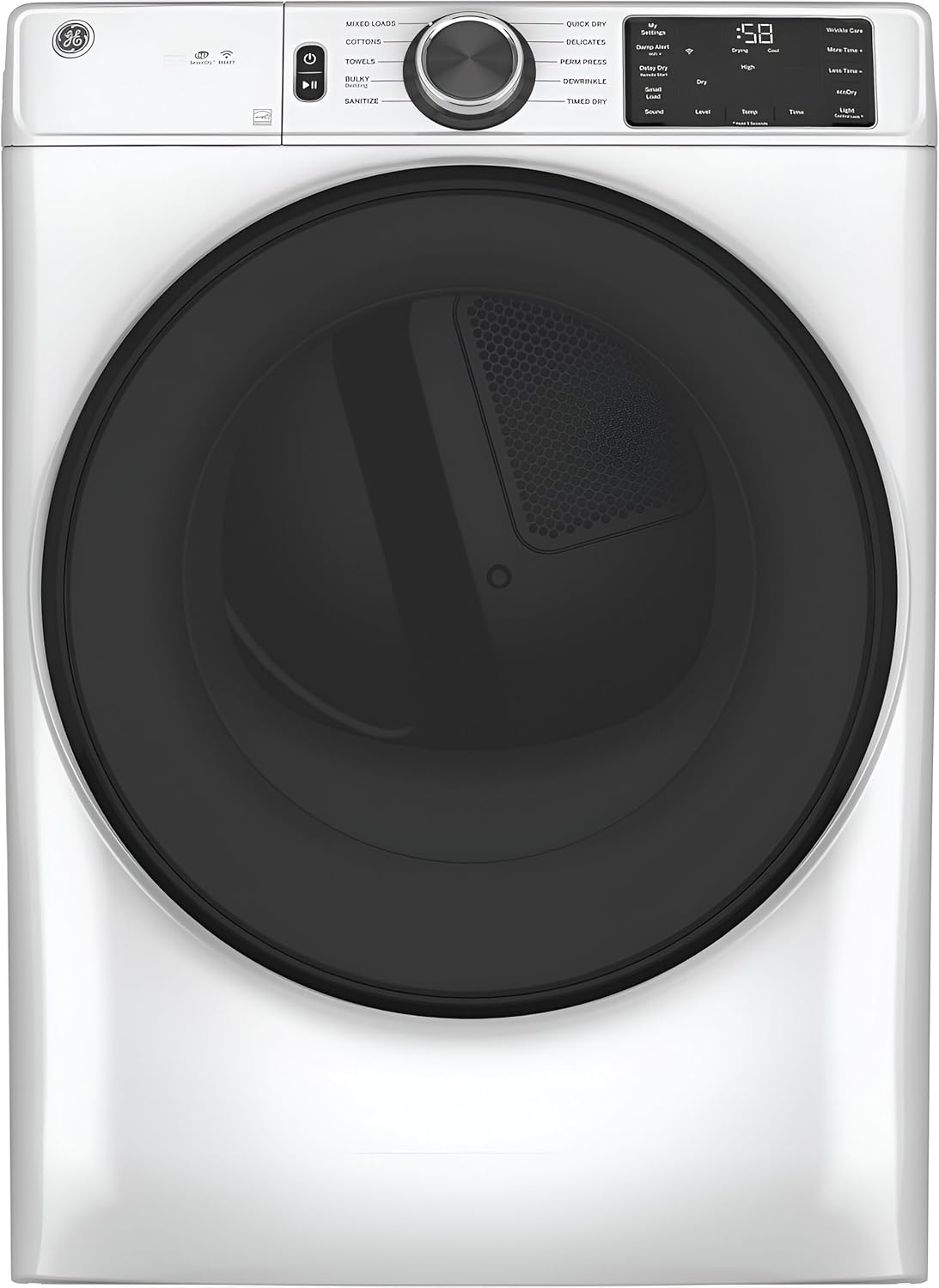
| Capacity | 7.8 cubic feet |
|---|---|
| Form Factor | Front Load |
| Door Orientation | Reversible |
| Specification Met | Energy Star |
| Included Components | Built-in WiFi HE Sensor Dry and Sanitize Cycle |
The GE GFD55ESSNWW is a large-capacity front-load electric dryer designed for families and busy households. It handles bulky loads and bedding in its 7.8 cu. ft. stainless steel drum and offers a selection of cycles including Quick Dry, Sanitize, and Wrinkle Care, plus a damp alert for timed finishes. Built-in Wi‑Fi works with the SmartHQ app so you can monitor cycles and receive status alerts from a phone, and the intuitive control panel keeps operation simple. Energy Star qualification and vent sensor monitoring help keep running costs and maintenance manageable. Practical limitations are its substantial physical footprint and 132 lb shipping weight which require appropriate space and floor support, and while the feature set is broad, advanced users seeking highly specialized or commercial-grade drying may find this aimed at typical household use. For everyday family laundering it provides dependable capacity, useful smart features, and energy-conscious performance.
Best for: Buyers who want a reliable, family-capacity electric dryer with useful smart controls and energy-conscious operation for everyday home laundry.
Less Ideal for: Those needing a compact dryer for small spaces or users seeking commercial-grade drying performance should look elsewhere.
- Large 7.8 cu. ft. stainless steel drum accommodates bulky loads and family-sized laundry.
- Built-in Wi‑Fi for remote monitoring and cycle alerts via the SmartHQ app.
- Multiple practical cycles including Sanitize, Quick Dry, and Wrinkle Care for varied fabric needs.
- ENERGY STAR certified for improved energy efficiency compared with non-certified models.
- Large footprint and heavy unit require planning for installation and sufficient laundry space.
- Feature set focuses on household convenience rather than professional or heavy-duty dryer functions.
Verdict: A roomy, Energy Star certified electric dryer with smart controls that fits family laundry needs while keeping operation straightforward and efficient.
Speed Queen DC5003WE Electric Dryer

| Capacity | 7 cubic feet |
|---|---|
| Form Factor | Front Load |
| Door Orientation | Reversible |
The Speed Queen DC5003WE is a straightforward, heavy-duty electric dryer built around a 7 cubic foot front-load drum and a galvanized cylinder that resists wear from frequent use. It is used like a standard household dryer: load wet laundry, select a cycle, and let the powerful drum and 220 CFM exhaust move moisture out efficiently. Notable features from the listing include a reversible door for flexible placement and a simple, appliance-focused design that favors durability over bells and whistles. In practice this dryer suits busy households or light commercial settings where consistent drying performance and a robust build matter more than smart features. Trade-offs include a lack of modern connectivity or advanced specialty cycles and a relatively large, heavy cabinet that requires proper space and electrical setup. Expect reliable, no-frills operation and a machine designed to keep running under frequent loads rather than one focused on styling or high-tech conveniences.
Best for: A buyer who prioritizes steady, long-lasting drying performance and simple, serviceable design for frequent household or light commercial use.
Less Ideal for: If you want smart features, specialty cycles, or a compact unit for a small laundry nook, this model is not the best choice.
- Large 7 cu ft capacity suits family-sized laundry loads
- Galvanized cylinder built for durability under frequent use
- Reversible door allows more flexible installation layout
- Front-load design and high exhaust airflow support efficient drying
- No advanced smart features or Wi‑Fi connectivity
- Heavy, bulky unit requires adequate space and proper electrical hookup
Verdict: Buy this dryer if you want a rugged, no-frills machine that delivers consistent, heavy-duty drying performance.
Euhomy Portable Clothes Dryer 1.5 Cu. Ft.

| Capacity | 1.5 cu. ft. |
|---|---|
| Power | 850W |
| Max temperature | 140°F |
| Load | Up to 10 lbs wet laundry |
This Euhomy portable clothes dryer is built for small-space laundry needs, handling up to about 10 pounds of wet clothes with an 850W heater that reaches roughly 140°F. It offers multiple timed modes — cold, warm, hot, anti-wrinkle, and air refresh — so you can tailor drying to fabric and load size, and a wide 105° door makes loading and unloading simple. The unit is relatively quiet in use and includes safety features like an auto-stop if the door opens and a triple-layer lint filter to contain fibers. Its compact footprint and optional wall-mount make it easy to fit in apartments, dorms, or RVs, and ETL and DOE certification cover basic safety and energy expectations. Expect longer cycle times and lower throughput than full-size dryers, and it requires manual timing rather than automatic moisture sensing, so heavier loads may need additional runs to finish fully dry.
Best for: Buyers who need a space-saving, energy-conscious dryer for small loads and living situations where a full-size machine is impractical and who prioritize flexible timed programs over fast throughput.
Less Ideal for: Households that regularly dry large or heavy loads, need rapid turnaround, or expect automatic moisture-sensing convenience should choose a full-size or higher-capacity dryer instead.
- Compact design fits apartments, dorms, and RVs and can be wall-mounted
- Multiple drying modes (cold, warm, hot, anti-wrinkle, air refresh) for fabric-specific care
- Relatively quiet operation suitable for shared living spaces
- Triple-layer lint filter reduces lint spread and catches pet hair
- No automatic moisture sensor so cycles require manual timing and monitoring
- Lower power and smaller drum mean longer cycles and limited capacity compared with full-size dryers
Verdict: A compact, safety-certified electric dryer that reliably handles small loads in tight spaces while offering multiple timed modes for fabric care.
Nekithia Portable Dryer GR992

| Rated power | 900W |
|---|---|
| Timer interval | 10-180 minutes |
| Access location | Top Load |
| Door orientation | Front |
The Nekithia Portable Dryer GR992 is a compact, foldable dryer intended for apartments, RVs, dorms, and travel where space is limited. It uses a 900W PTC heating element to deliver steady warm air and includes a timer that runs from 10 to 180 minutes, plus an overheat protection system for safety. The unit's folding design and lightweight construction make it easy to install and store while its larger-than-expected drum accepts coats, shoes, and small loads that many mini dryers struggle with. In practice it offers faster drying than passive racks and most travel-sized machines, and the quieter operation helps when used in small living spaces. Limitations are the modest power compared with full-size dryers and the small absolute load capacity compared with household machines, so multiple batches may be required for larger households. For buyers who need a space-saving, portable solution that actually dries wet items quickly, this model is a practical choice.
Best for: Buyers prioritizing an affordable, space-saving dryer for apartments, RVs, dorms, or occasional use who want faster, machine-based drying without the footprint of a full-size unit.
Less Ideal for: Households that need to dry large weekly loads or replace a full-size dryer should look at standard vented or condenser models instead.
- Compact, foldable design saves storage space and suits small homes and travel
- PTC heating provides steady, even heat for gentler drying
- 900W power and timer up to 180 minutes enable relatively fast, controllable drying
- Lightweight construction makes setup and moving the unit easy
- 900W motor is weaker than full-size dryers so large loads require multiple cycles
- Not suitable as a primary dryer for families with heavy laundry volumes
Verdict: A budget-friendly, space-saving portable dryer that actually delivers usable drying power for small loads and travel situations.
Panda Compact Dryer PAN760SF

| Capacity | 3.52 cubic feet |
|---|---|
| Rated Input | 1500W |
| Voltage | 120V/60Hz |
| Tumble Material | Stainless Steel |
| Included Components | Plastic Venting Hose, mounting kits |
The Panda Compact Dryer PAN760SF is a space-saving vented clothes dryer built for apartments, dorms, and other small laundry areas. It dries up to roughly 13.2 pounds per load in a 3.5 cu ft stainless steel drum using a 1500W motor and offers multiple timed modes including Cold, Hot, Air Dry, ECO, and Sensor Dry for flexible cycles. Practical features include a three-layer lint filter system, a see-through door that opens to 105 degrees, automatic shut-off when the door is opened, and multiple installation options: freestanding, stacked, or wall-mounted with included mounting hardware. Because it plugs into a standard 120V outlet there is no special wiring required, making setup straightforward, and the vented design expels moisture outside or into an indoor condensate kit if desired. Expect solid basic performance and reliable construction for routine laundry; drying large or very heavy loads may take longer than full-size models and venting is required to avoid indoor humidity buildup.
Best for: Buyers who prioritize a dependable, straightforward dryer for limited spaces and want a machine that installs easily on a standard outlet and runs with proven mechanical controls.
Less Ideal for: Those who need the fastest drying for very large households or users who require advanced digital controls and connectivity features.
- Compact 3.5 cu ft capacity fits small living spaces while handling up to about 13.2 lb per load.
- Runs on standard 120V/1500W household outlet so no special electrical work is needed.
- Stainless steel drum and three-layer lint filter improve durability and reduce lint issues.
- Multiple cycle options including Sensor Dry and ECO allow energy-conscious and tailored drying.
- Flexible installation: freestanding, stackable, or wall-mount with included hardware.
- Vented design requires an exhaust route or indoor venting kit to manage moisture.
- Smaller, lower-powered unit may take longer to dry very heavy or bulky loads compared with full-size dryers.
- Mechanical controls may offer fewer precise settings than fully digital competitors.
Verdict: A reliable, no-frills compact vented dryer that delivers practical, durable drying performance for small homes without special electrical requirements.
BLACK+DECKER Front Load Dryer BLD67ME

| Capacity | 6.7 cubic feet |
|---|---|
| Form Factor | Front Load |
| Power | 240V |
The BLACK+DECKER BLD67ME is a full-size 240V electric front-load dryer built for straightforward home use. It handles large loads with a 6.7 cubic-foot drum and offers five sensor dry and five manual dry selections, plus four temperature and four dryness settings, so you can tailor cycles from no heat to high and from damp to more dry. Controls combine a dial for selection with a digital LED display for status and time readouts, and features like a reversible front door, control lock, and wrinkle care add convenience. The unit requires professional installation and a UL-listed power cord kit or direct wiring, which adds installation steps compared with plug-and-play models. Venting is rear by default but can be adapted to bottom or left with an adapter sold separately. For buyers who care about reliable, familiar controls and clear cycle feedback, this dryer delivers predictable results, though the need for separate installation hardware and lack of included venting adapters are practical considerations.
Best for: Buyers who prioritize a dependable, full-size electric dryer with clear controls and flexible drying options and who prefer models with many user-tested settings.
Less Ideal for: People seeking a plug-and-play, 120V or gas dryer or those who want included installation hardware and venting accessories out of the box.
- Large 6.7 cu ft capacity suitable for bulky items and full loads
- Multiple sensor and manual dry selections for tailored drying
- Digital LED display combined with a dial for clear, simple controls
- Reversible front door and wrinkle care add installation and garment convenience
- Requires professional 240V installation and a separate UL-listed power cord kit
- Vent adapter for bottom or left venting is not included
Verdict: Choose this dryer if you want a reliable, full-size 240V electric machine with straightforward controls and multiple sensor/manual drying options.
ROVSUN Portable Clothes Dryer

| Capacity | 5.5 pounds |
|---|---|
| Rated Input | 850W |
| Form Factor | Front Load |
| Material Type | Stainless Steel |
The ROVSUN Portable Clothes Dryer is a small front-load tumble dryer intended for apartments, dorms, and other tight spaces. It uses an 850W heater that can reach about 140°F to dry up to the recommended 5.5 pound load, and its stainless steel drum plus a see-through door make it feel sturdily built for a compact unit. Controls are simple: a single knob provides clearly labeled drying modes so anyone can start a cycle without fuss. Practical benefits include wall-mount or countertop placement options, a lint filtration system to protect airflow, and safety auto-stop if the door opens. Expect reasonably quick drying for lightweight items and delicates, but it is not sized for large loads or heavy bedding and will take longer than full-size dryers for bigger items. The machine is fairly heavy for a portable at 37 pounds, so plan placement in advance. For buyers who want a no-frills, factory-style portable dryer that handles daily small-load needs reliably, this is a sensible choice.
Best for: Buyers who prioritize a dependable, easy-to-use dryer for small, frequent loads in tight spaces and who prefer simple, familiar controls over advanced features.
Less Ideal for: Households that need to dry large items, frequent full loads, or want the fastest drying times available should choose a larger capacity or higher-power dryer instead.
- Stainless steel drum for durability and longer service life
- Simple knob control makes operation straightforward
- Compact form factor suitable for apartments, dorms, and RVs
- Built-in lint filtration and door auto-stop improve safety and maintenance
- Small 5.5 lb recommended capacity is not suitable for large loads or bedding
- Relatively low 850W power compared with full-size dryers, so longer dry times on heavier items
Verdict: A straightforward, durable portable dryer built for small-space living and reliable daily small-load drying.
Choosing the Right Reliable Electric Dryer: Key Factors to Consider
Drum and Motor Construction
The drum and motor are the mechanical heart of any electric dryer. Heavier-gauge drum shells, reinforced bearings, and sealed or brushless motor designs tend to resist wear and vibration over years of use. A sturdier drum reduces wobble and rubbing that can lead to fabric damage and early component failure.
When evaluating construction, consider how the drum is supported and whether the motor has proven longevity features. These elements affect how the dryer performs under heavy, repeated loads and directly influence repair frequency and service costs.
Heating System and Temperature Control
A reliable heating system maintains consistent temperatures across cycles without overheating, which protects fabrics and internal parts. Durable heating assemblies use stable element mounts, reliable relays or solid-state controls, and well-placed thermal cutoffs to prevent damage from runaway heat.
Accurate temperature control reduces the chance of repeated high-heat cycles that stress components. Look for systems with redundant safety features and sensors that minimize thermal cycling while delivering steady drying power.
Moisture Sensors and Cycle Logic
Sensors that detect residual moisture help end cycles at the right time and prevent over-drying. Good sensors reduce energy waste and limit unnecessary mechanical wear from excess tumbling. In contrast, inconsistent sensor readings can leave damp spots or force repeated runs, increasing load on the machine.
Cycle logic matters too. Simpler, well-engineered program workflows often outlast overly complex software that may fail or drift over time. Reliable models balance useful cycles with straightforward control logic that is less prone to faults.
Airflow and Venting Design
Proper airflow moves moist air out efficiently and prevents lint buildup that can stress the motor and heater. Dryers with accessible, logical vent routes and larger internal ducts tend to clear lint more effectively and maintain consistent drying times. Restricted airflow increases cycle length and heat exposure, accelerating component wear.
When choosing, consider typical vent lengths in your home and whether the dryer's airflow design matches that installation. Easy-to-clean lint traps and accessible ducting reduce maintenance time and prolong reliable operation.
Maintenance Accessibility
A dryer that is easy to service will usually stay reliable longer because small problems can be fixed before they grow. Accessible filters, removable panels, and clear component layouts reduce labor and cost for routine tasks like replacing belts, bearings, or heating elements.
Consider how straightforward routine maintenance tasks are, and whether consumables are easy to reach. Models that minimize specialty fasteners and obscure assemblies save time and usually reduce the chance of a small issue becoming a major repair.
Warranty and Service Support
Warranty length and the scope of coverage signal manufacturer confidence and affect long-term ownership cost. Comprehensive coverage for major components such as the motor and heating system can reduce unexpected expenses. Equally important is the availability of replacement parts and clear service documentation.
Longer, well-defined warranties paired with easy part access and common repair practices help keep a dryer reliable in practical household use. Verify that support options match the expected life of the appliance in your usage scenario.
Matching Dryer Capacity to Household Needs
Selecting the right drum capacity is a tradeoff between handling large loads and using energy efficiently. Larger households benefit from bigger drums that handle bulky items and reduce the number of cycles, but an oversized drum can be less efficient for smaller, frequent loads.
Measure typical weekly laundry volume and consider peak loads like bedding or heavy winter clothing. Choosing a capacity that matches real usage patterns reduces cycle frequency and wear.
- Small households: lighter loads, faster cycles, prioritize efficiency.
- Medium households: mid-sized drums balance load size and energy use.
- Large households: larger drums reduce cycle count but may use more energy per run.
Installation and Venting Considerations
Proper installation affects both performance and longevity. Electric dryers need correct electrical supply and a vent path that minimizes bends and length to preserve airflow. Poor venting increases cycle time and puts extra strain on the fan and motor.
Check the required amps and outlet type before purchase, and plan the vent route to avoid tight bends and long runs. If venting through an exterior wall is impractical, consider dryer placement and airflow solutions compatible with your space.
- Keep vent runs as short and straight as possible.
- Use smooth-walled ducting for better airflow and easier cleaning.
- Ensure electrical circuit matches the dryer's requirements.
Simple Controls Versus Feature-Rich Interfaces
Controls influence reliability in two ways: ease of use and long-term robustness. Mechanical dials and straightforward push-button controls often have lower failure rates than complex touchscreens because they present fewer electronic failure points.
Feature-rich interfaces add convenience but may introduce software-related faults. If uptime and low service needs are your priority, favor models with intuitive, durable controls and essential advanced features like moisture sensing rather than an overload of menu options.
- Prioritize durable physical controls if you want long-term simplicity.
- Look for clear, well-labeled cycles and easy-to-change settings.
- Evaluate which advanced features you will actually use regularly.
Lint Management and Safety
Effective lint collection and easy access to clean filters are central to reliable operation and safe use. Lint buildup increases fire risk and reduces drying efficiency, which can accelerate wear on heating and motor components.
Choose designs with large, easy-to-clean lint traps and clear access to ducting for periodic cleaning. Consider models that make internal lint pathways straightforward to inspect if you have pets or shed-prone fabrics that increase lint production.
- Clean lint filter after every load for best performance.
- Inspect ducting periodically to prevent buildup.
- Consider dryers with supplemental lint-catching features for heavy-shedding households.
Energy Use and Operating Cost
Energy efficiency affects long-term operating cost and how hard internal components must work to dry loads. Efficient models use better insulation, improved airflow, and accurate sensors to minimize time and heat required per cycle.
Compare estimated energy usage for common cycles if you run many loads each week. Saving a small amount of energy per load adds up over the dryer's lifetime and reduces thermal stress on parts.
- Look for accurate moisture sensors to avoid over-drying.
- Shorter cycle times generally mean less heat exposure for components.
- Consider typical household load patterns when weighing efficiency.
How We Chose the Best Reliable Electric Dryer
We prioritized features and specifications that directly affect long-term reliability and everyday drying performance. Key evaluation criteria included drum and motor construction, heating system design, control and sensor accuracy, airflow efficiency, and ease of maintenance. We also considered warranty length and typical repairability based on accessible service parts and user-serviceable components. Our selection excluded models that emphasize transient features over core durability, such as short-lived cosmetic options or limited-production variants without service support. We focused on dryers with documented component designs that reduce wear, such as robust drum bearings, sealed motors, and reliable thermostat arrangements. Practical performance checks emphasized consistent moisture sensing across mixed loads, stable temperature control through multiple cycles, and effective lint and condensate management. Energy use and cycle times were included as comparison dimensions because inefficient operation can accelerate wear. Final inclusion required a balance of build quality, predictable controls, and accessible maintenance paths.
Our full evaluation process is outlined in our review methodology.
FAQ
How often should I clean the lint trap and venting?
Clean the lint trap after every load to maintain airflow and safety. Inspect the external vent and ducting at least twice a year, and more often if you notice longer drying times or heavy lint build-up.
Can I install a reliable electric dryer on an existing circuit?
That depends on your circuit capacity and outlet type. Many electric dryers require a dedicated high-amp circuit. Verify the dryer's electrical requirements and have a qualified electrician confirm your setup to avoid overloads and performance issues.
Do moisture sensors make a big difference for reliability?
Moisture sensors improve cycle accuracy and reduce over-drying, which can lower wear on textiles and mechanical components. Reliable sensors mean fewer unnecessary cycles and reduced thermal stress, though sensor cleanliness and placement affect accuracy.
What maintenance tasks will extend my dryer's life?
Regular lint trap cleaning, periodic duct and vent inspections, and keeping the drum seals and bearings free of debris help extend life. Address small issues like unusual noises or longer cycles promptly to avoid more significant failures.
Is a simpler control panel better for long-term use?
Often yes. Simpler mechanical controls tend to have fewer electronic failure modes, making them more predictable over time. However, well-designed electronic controls with good build quality can also be durable if they avoid unnecessary complexity.
Final Verdict
When choosing a reliable electric dryer, prioritize core mechanical quality, consistent temperature and moisture control, and airflow that minimizes lint buildup. Think in terms of which tradeoffs matter most: larger capacity reduces cycles but may be less efficient for small loads, while simpler controls often mean fewer failure points. Focus on models with accessible maintenance, solid warranties, and clear airflow design. That approach helps you pick a dryer that delivers consistent drying performance and fewer unexpected repairs over many years.