
Note: This article contains affiliate links. If you click on these links and make a purchase, we may earn a small commission at no extra cost to you. This helps support our research and content. Read our full affiliate disclosure here.
If you regularly wash bulky bedding, lots of family laundry, or large comforters, a large-capacity dryer can save time and reduce wear on fabrics. Choosing the right Large-Capacity Dryer matters because capacity affects how many loads you run, while drying performance and efficiency determine energy use and fabric care. This guide presents our top shortlisted options across common household needs, focusing on machines that handle oversized loads without long cycle times or excessive heat exposure. Below we explain the evaluation criteria and what to expect from each pick, helping you quickly find a dryer that balances capacity, reliability, and operating cost.
Top Picks at a Glance
| Best Overall The best all-around choice for most situations | Midea MLE45N1AWW 8.0 Cu Ft Dryer |  |
| Best Quality Built to a higher standard if you want something more solid | LG 9.0 cu ft Gas Dryer DLGX8901B |  |
| Best Value The sweet spot between price and what you get | GE GFD55ESSNWW 7.8 Cu Ft Dryer |  |
| Top Rated A top-rated pick with lots of positive feedback | GE Profile 7.2 cu ft Electric Dryer |  |
| Best Seller A high-volume bestseller chosen again and again | BLACK+DECKER 8.0 Cu. Ft. Electric Dryer BFLD80ME |  |
Midea MLE45N1AWW 8.0 Cu Ft Dryer

| Capacity | 8 cubic feet |
|---|---|
| Form Factor | Front Load |
| Cycles | 10 total cycles |
| Temperature Settings | 5 settings |
The Midea MLE45N1AWW is a large-capacity front-load electric dryer designed to handle bigger loads in a standard-width cabinet. It offers 8.0 cubic feet of drum space, ten preset cycles including sanitize and bulky, five temperature settings, and an electronic sensor-dry that stops the cycle when clothes reach the target dryness to save energy. Controls are touch-style for straightforward cycle selection and the reversible door gives placement flexibility in tight laundry rooms. Practical benefits include being able to dry larger batches or bulky items in fewer cycles and built-in sensor technology that reduces overdrying. You will need a 240V supply and the power cord is sold separately, so installation planning is required. The machine leans toward straightforward, no-frills drying rather than high-end smart features or advanced noise reduction, but it delivers on capacity and standard cycle variety for family-sized laundry needs.
Best for: Buyers who prioritize large drum capacity and straightforward, efficient drying for family-sized laundry that fits a standard-width space.
Less Ideal for: Shoppers seeking smart-connected dryers, ultra-quiet premium models, or those who need a 120V plug-and-play unit should look elsewhere.
- Generous 8.0 cu ft capacity accommodates large loads and bulky items
- Sensor dry automatically stops when clothes are dry to save energy and prevent overdrying
- Ten cycles including sanitize and bulky provide useful options for varied fabrics
- Reversible door allows installation flexibility in different laundry layouts
- Electronic touch controls make cycle selection quick and intuitive
- Requires 240V power and the power cord is not included, adding installation steps
- No smart/Wi-Fi features or advanced connectivity options
- Build and feature set are straightforward rather than premium—limited noise or luxury refinements
Verdict: Choose this dryer if you need a roomy, no-nonsense electric dryer that dries large loads efficiently and fits a standard-width laundry space.
LG 9.0 cu ft Gas Dryer DLGX8901B

| Capacity | 9 cubic feet |
|---|---|
| Form Factor | Front Load |
| Door Orientation | Reversible |
| Specification Met | Energy Star |
This LG 9.0 cu ft vented gas dryer is built for big households and bulky items, with a very large drum that handles comforters and full family loads in a single cycle. It offers 14 drying programs including Steam Fresh and Steam Sanitary to reduce wrinkles and odors, and Sensor Dry continuously adjusts time and heat for more consistent results and energy savings. Steam cycles are useful for refreshing garments and reducing ironing, while the reversible door and stainless-steel drum add convenience and durability. As a gas unit with ENERGY STAR qualification, it delivers strong drying performance and better operating efficiency than many electric models. Expect a substantial machine in both footprint and weight, and professional installation may be needed for gas and vent hookups. If you need specialized fabric-care settings beyond the provided cycles or ultra-quiet operation, there are quieter or more feature-dense premium models available, but for handling large loads quickly with steam and sensor-assisted control, this dryer performs well.
Best for: Buyers who prioritize raw drying performance and capacity for family-sized loads and bulky bedding and who want steam and sensor features to speed cycles and reduce ironing.
Less Ideal for: Small-space dwellers, apartment renters without gas hookups, or buyers who prioritize the quietest possible operation over capacity.
- Very large 9.0 cu ft capacity handles comforters and full family loads in one cycle
- Steam cycles reduce wrinkles and odors and can refresh garments without washing
- Sensor Dry automatically adjusts time and heat for consistent drying and energy efficiency
- ENERGY STAR qualified gas operation offers strong drying performance with improved efficiency
- Durable stainless-steel drum and reversible door increase longevity and installation flexibility
- Large physical size and weight require ample space and may need professional gas and vent installation
- May not be as quiet as premium or specialty models
Verdict: If you need a high-capacity gas dryer that dries large family loads quickly while using steam and sensors to improve results, this LG is a strong choice.
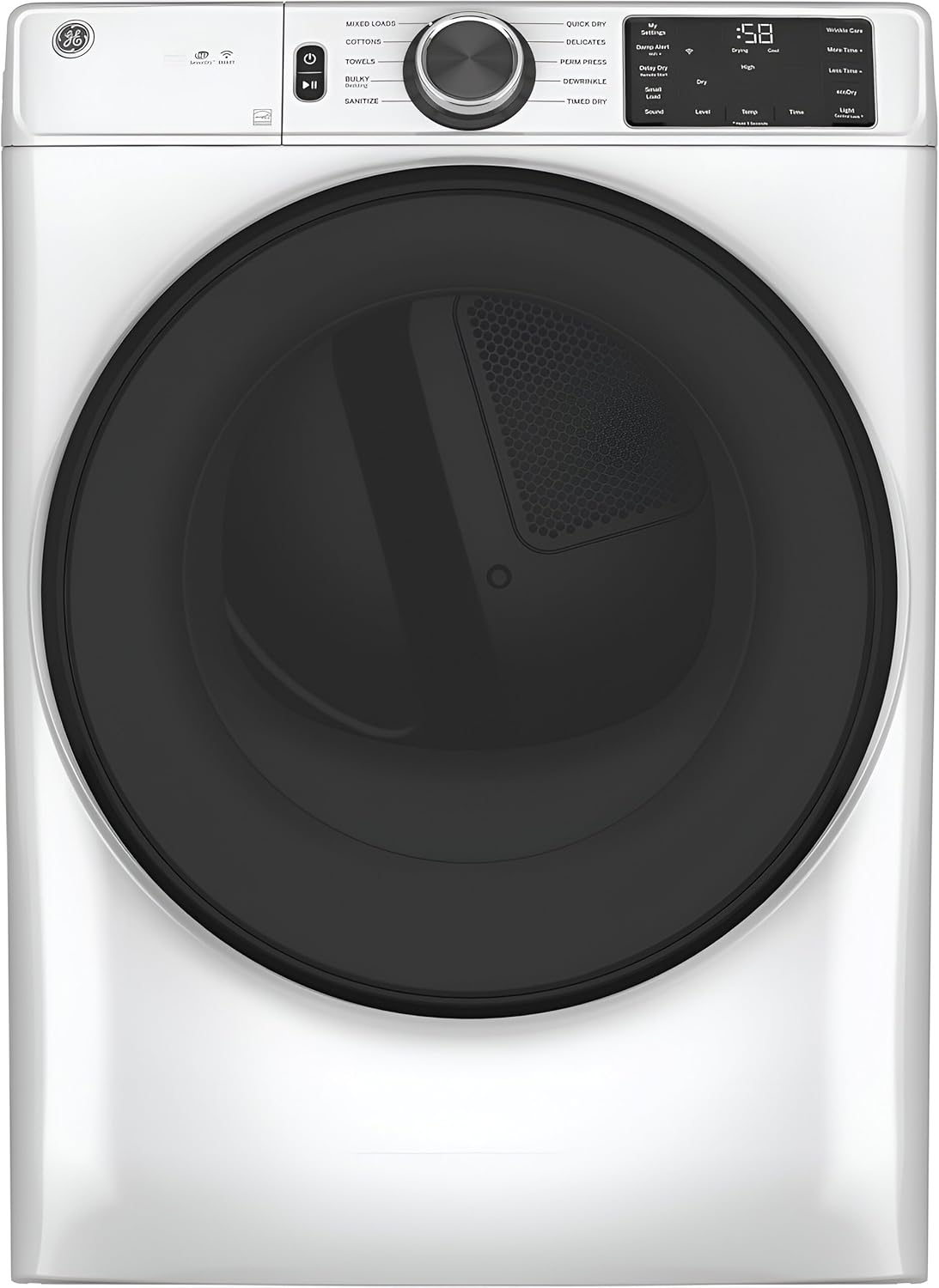
GE GFD55ESSNWW 7.8 Cu Ft Dryer
| Form Factor | Front Load |
|---|---|
| Capacity | 7.8 cubic feet |
| Door Orientation | Reversible |
| Specification Met | Energy Star |
This GE front-load electric dryer is built around a very large 7.8 cubic foot stainless steel drum that handles bulky bedding and big family loads without frequent trips. Controls are straightforward and the built-in WiFi with SmartHQ lets you start, stop, and monitor cycles remotely, which is handy when juggling laundry throughout the day. The dryer includes practical cycles such as quick dry, sanitize, wrinkle care, and damp alert, plus a vent sensor for safer operation. ENERGY STAR qualification and an efficient drum design help reduce energy use on heavy-duty cycles. The reversible door and ADA compliance make placement flexible in many laundry rooms. Expect typical electric dryer noise and standard installation needs; while the feature set is broad, advanced specialty finishes or ultra-quiet insulation are not emphasized. For buyers who prioritize capacity and usable smart features, this model delivers solid everyday performance without unnecessary complexity.
Best for: Buyers who want a large-capacity, practical dryer that minimizes loads and adds convenient remote monitoring to streamline a busy household laundry routine.
Less Ideal for: Shoppers looking specifically for the quietest possible dryer or luxury aesthetic finishes should consider higher-end models targeted at those priorities.
- Very large 7.8 cu ft stainless steel drum handles bulky items and big loads
- Built-in WiFi enables remote start/stop and status alerts via SmartHQ
- ENERGY STAR qualified for improved energy efficiency on regular use
- Multiple useful cycles including sanitize, quick dry, wrinkle care, and damp alert
- Reversible door and ADA compliance increase installation flexibility
- Standard noise level and insulation compared with premium ultra-quiet models
- No emphasis on specialized quiet or premium finish options
Verdict: Choose this GE dryer if you need a large, energy-efficient drum with practical smart controls to cut down on cycles and simplify family laundry.
GE Profile 7.2 cu ft Electric Dryer

| Form Factor | Front Load |
|---|---|
| Access Location | Front Load |
| Capacity | 7.2 cubic feet |
This GE Profile electric dryer is built around a large 7.2 cu ft drum that handles bulky loads like comforters and large laundry batches without feeling crowded. It uses Auto Dry sensing to monitor temperature and prevent overdrying, and an Extended Tumble option that helps reduce wrinkles and dislodge pet hair after the cycle ends. The control layout is simple with straightforward knobs, and interior drum lighting improves visibility when loading and unloading. Installation is flexible thanks to venting support up to 120 feet, and the steel drum construction suggests durability for frequent use. On the downside there are no advanced smart features listed and the model information does not show specialty cycles beyond the basics, so shoppers seeking Wi-Fi control or many specialty programs may need a different model. For families who prioritize consistent, no-nonsense drying performance and a roomy drum, this dryer is a solid, dependable choice.
Best for: Buyers who want a durable, no-nonsense large-capacity dryer that reliably handles big loads and reduces overdrying without extra tech complexity.
Less Ideal for: Shoppers looking for Wi-Fi features, extensive specialty cycles, or the latest smart home integrations should consider other options.
- Large 7.2 cu ft drum accommodates bulky loads and large households
- Auto Dry sensing helps prevent overdrying and protects fabrics
- Extended Tumble option reduces wrinkles and helps remove pet hair
- Supports up to 120 ft venting for flexible installation locations
- Interior drum light improves loading and unloading visibility
- No smart connectivity or advanced app controls listed
- Limited detail on specialty cycles compared with premium models
Verdict: A roomy, dependable electric dryer that focuses on straightforward, fabric-friendly drying for households with large or frequent loads.
BLACK+DECKER 8.0 Cu. Ft. Electric Dryer BFLD80ME

| Capacity | 8 cubic feet |
|---|---|
| Form Factor | Front Load |
| Voltage | 240V |
| Cycles | 12 cycle selections |
| Energy certification | Energy Star |
This BLACK+DECKER front-load electric dryer is built for large household loads, offering an 8.0 cubic foot aluminized alloy steel drum and a mix of 12 cycle selections including eight sensor-dry modes and four manual options. Typical use covers family laundry days, bulky items, and items you want refreshed with the steam setting to reduce wrinkles and static. The LED display and dial control make cycle selection and monitoring straightforward, and features like reversible door, control lock, wrinkle care, and multiple temperature and dryness settings add practical convenience. Installation requires a 240V connection and a professional or UL-listed cord kit, so plan for a service hookup rather than a DIY swap. The dryer vents to the rear by default but can be configured for other vent positions with additional adapters. It is ENERGY STAR rated, which helps with efficiency for frequent use. Expect a heavy appliance that needs appropriate floor space and professional installation, but it delivers the capacity and cycle flexibility most families need for reliable, high-volume drying.
Best for: Buyers who prioritize a large-capacity, feature-rich dryer for regular family laundry and want straightforward controls and reliable drying performance.
Less Ideal for: Renters without access to a 240V hookup or users seeking a plug-and-play 120V unit or stackable compact solution.
- Large 8.0 cu ft drum handles bulky and family-sized loads
- Multiple sensor and manual cycles for tailored drying results
- Steam option reduces wrinkles and static without a separate step
- Digital LED display and simple dial controls make operation clear
- ENERGY STAR qualification for better energy efficiency during heavy use
- Requires professional installation and a 240V connection or UL cord kit
- Vent adapter kit sold separately to change vent location
Verdict: If you need a high-capacity, ENERGY STAR rated dryer with versatile sensor cycles and steam for wrinkle reduction, this BLACK+DECKER model is a dependable family-focused choice.
Choosing the Right Large-Capacity Dryer: Key Factors to Consider
Drum Volume and Shape
Drum volume determines how many items you can tumble per cycle. Look for published usable capacity rather than relying on marketing terms like "large" alone. A deeper drum or better drum geometry helps bulky items like comforters circulate and dry more evenly.
Shape matters because baffles and drum contours influence airflow and tumbling. Poor drum design can trap damp spots even in a machine with a high nominal capacity. Consider how often you expect to dry oversized items and whether a slightly larger drum will meaningfully reduce the number of cycles you run.
Heat System and Drying Modes
Different heat systems and cycle selections affect how quickly and gently clothes dry. Higher heat shortens dry time for heavy cottons but can stress delicate fabrics. Moisture-sensing cycles and adjustable heat settings let you balance speed and fabric care.
Specialized cycles for bulky items, bedding, or steam refreshes are useful if you plan to dry comforters or pillows frequently. These modes change drum tumbling patterns and airflow timing to prevent overpacking and ensure even drying across the load.
Moisture Sensing and Cycle Termination
Accurate moisture sensing prevents running extra minutes after items are dry, saving energy and protecting fabrics. Sensors located in multiple positions or algorithms that track drying curves tend to be more reliable across load types.
For large loads, sensors must be able to detect varying moisture across textiles. Machines that allow manual adjustment or offer multi-stage sensing give you finer control when drying mixed-fabric loads or dense bedding.
Energy Use and Operating Cost
A larger drum often requires more energy per cycle, but advanced sensors and efficient airflow can lower overall energy use by reducing run time. Look for machines with economy cycles and options to lower heat for delicate loads.
Consider how often you run full large loads versus partial loads. If you regularly do half loads, features that downscale cycle duration or use sensor-based adaptive dry can reduce wasted energy. Over time, energy-efficient operation reduces lifecycle cost even if the machine itself is slightly more expensive.
Noise, Vibration, and Installation
Large-capacity dryers can be heavier and create more vibration, especially during high-speed tumbling. Check mounting stability and whether the model offers vibration-reduction features. Noise level is important if the dryer is near living spaces or upstairs bedrooms.
Proper installation on a level floor with vibration-damping feet and secure venting reduces noise and improves drying performance. If space is constrained, consider whether the dryer's footprint and door swing fit your laundry area comfortably.
Maintenance and Accessibility
Easy access to lint filters, condensers, and vent paths simplifies routine upkeep and prevents efficiency loss. For large loads that shed more fibers, a filter design that is quick to clean is especially valuable.
Consider how serviceable the unit is for common repairs and whether control panels and doors are robust enough for frequent use. Features like removable drum lights or accessible moisture sensors reduce long-term annoyance and maintenance cost.
Benefits of Upsizing Your Dryer
Upping to a large-capacity dryer reduces the number of loads you run each week and lowers wear on fabrics by allowing bulky items to tumble freely instead of being crammed. Bigger drums also make it easier to dry heavy blankets, sleeping bags, and large bath towels without damp spots.
Beyond convenience, a properly matched large-capacity dryer with accurate sensing and efficient airflow can shorten cycle times for full loads. That means less energy used per garment on a weekly basis compared with running multiple smaller cycles to handle the same laundry volume.
- Fewer overall cycles for large households
- Better handling of bulky bedding and comforters
- Potential for lower energy per item when used full
Vent Types and Placement Considerations
How you vent the dryer affects installation flexibility and drying efficiency. Conventional ducted venting typically yields the fastest dry times, but dryer placement and long duct runs can reduce performance. Short, straight ducts with minimal bends maintain airflow for the largest loads.
If ducting is constrained, ventless or condenser designs are an option, but they may have different cycle lengths and installation needs. Think through the space and routing early to avoid surprise modifications during installation.
- Keep duct runs short and minimize elbows
- Verify exhaust port orientation and clearance
- Allow service space for access panels and filters
Stacking and Laundry Room Layout
A large-capacity dryer often has a bigger footprint and taller cabinet. If you plan to stack with a washer, confirm stacking kit compatibility and ensure the combined height works in your laundry alcove. Door swing and control placement are also important if you frequently load bulky items.
Think about storage for bulky detergents and accessories. A layout with at least a foot of clearance in front of the door makes loading comforters and large baskets much easier.
- Measure doorway and alcove heights before purchase
- Plan for door swing space for bulky items
- Consider front-loading vs top-access ergonomics
Fabric Care Strategies for Large Loads
To protect textiles when running large loads, avoid overpacking and sort by fabric weight. Heavy items dry at different rates than lightweight garments, so grouping similar materials helps the moisture sensors work effectively and prevents overdrying.
Use lower heat settings for items with trims, foam inserts, or delicate shells. Periodically interrupting an extra-large cycle to redistribute the load can also help prevent damp pockets when drying very bulky bedding.
- Sort by weight and fabric type for even drying
- Use low-heat or moisture-sensing cycles for mixed loads
- Redistribute very large items mid-cycle when needed
Energy-Saving Habits with Large Dryers
Even with a large drum, adopting simple habits can cut energy use. Clean lint traps before every load, and make sure dryer vents are clear to maintain airflow. Running full loads rather than many small ones increases efficiency per item.
Consider using timed or sensor-based cycles depending on load type. Air-dry or low-heat options are useful for items that require less thermal stress, while sensor cycles reduce wasted minutes once the load reaches the desired dryness.
- Run full loads when practical
- Maintain clean vents and filters
- Prefer sensor cycles to fixed-time drying
How We Chose the Best Large-Capacity Dryer
We shortlisted dryers that deliver consistently high capacity while preserving fabric care and energy efficiency. Our editorial filters prioritized drum volume and usable load space rather than just drum diameter, because usable capacity determines whether bulky items tumble freely. We also evaluated drying performance using cycle variety and moisture-sensing accuracy to avoid over-drying and reduce run times. Durability and serviceability were factored in by considering build quality cues, control layout, and ease of accessing common maintenance points. Energy efficiency and operating cost were included by comparing heat-system types and available economy cycles. Noise level and vibration during large-load operation were measured as a usability factor for multi-story homes. We excluded compact and standard-capacity models, machines that lack moisture sensors, and units without options for bulky/bedding cycles. The final picks reflect balance across capacity, drying speed, gentleness on fabrics, energy use, and long-term ownership practicality.
Our full evaluation process is outlined in our review methodology.
FAQ
How do I know what drum capacity I need?
Estimate your typical weekly laundry volume and whether you frequently dry bulky items like comforters. Larger households or those washing bedding weekly benefit from bigger drums. Also consider the usable interior shape, not just the nominal gallon or cubic foot number.
Are large-capacity dryers more expensive to run?
They can use more energy per cycle, but if you run fewer cycles because each holds more laundry, the energy per garment can be lower. Efficient sensors and proper venting help reduce overall operating cost.
Can I dry a king-size comforter in a large-capacity dryer?
Often yes, provided the drum is deep enough and you avoid overpacking. Use a bedding or bulky cycle with lower heat and check partway through to redistribute if needed to prevent damp spots.
What maintenance is most important for a large dryer?
Regularly clean the lint filter and inspect venting for obstructions. For vented dryers, keep the duct clear and the exterior vent flap unobstructed. Periodic checks of drum seals and access panels help maintain performance over time.
Is a condenser or ventless dryer a good choice for large loads?
Ventless designs are convenient where ducting is impossible, but they may have longer cycles and different moisture handling. If drying large, heavy items is your priority, ensure the unit's specified capacity and cycle types suit bulky bedding before choosing ventless.
Final Verdict
Choosing a large-capacity dryer hinges on balancing drum volume with drying performance and long-term operating efficiency. Prioritize usable drum capacity and reliable moisture sensing so bulky items tumble freely and dry evenly without repeated cycles. Also weigh installation constraints, venting, and noise when fitting a larger machine into your home. If you frequently handle oversized bedding or large weekly loads, opt for a model that emphasizes even airflow, multi-point sensing, and serviceable maintenance points. That combination will minimize run time, protect fabrics, and make laundry day noticeably easier.