
Note: This article contains affiliate links. If you click on these links and make a purchase, we may earn a small commission at no extra cost to you. This helps support our research and content. Read our full affiliate disclosure here.
When you are camping in remote locations, water safety is a top priority. A reverse osmosis water filter for camping can remove dissolved salts, heavy metals, and many chemical contaminants that basic filters miss, giving you a higher level of purification for drinking, cooking, and rehydrating. Choosing the right unit affects how much water you can reliably treat each day, how much weight you carry, and how easily you can set up at a campsite or basecamp. This guide shortlists the top picks for camping use, focusing on compactness, filtration effectiveness, and field usability. Below you will find our selected options and the evaluation criteria we used to vet them, so you can match a unit to your trip length, group size, and the water sources you expect to encounter.
Top Picks at a Glance
| Best Overall The best all-around choice for most situations | Bluevua ROPOT Countertop RO |  |
| Best Quality Built to a higher standard if you want something more solid | AquaTru Carafe Alkaline |  |
| Best Value The sweet spot between price and what you get | Bluevua ROPOT-Lite Countertop RO |  |
| Best Budget The cheapest option that still gets the job done reliably | Geekpure 3 Stage RO System |  |
| Top Rated A top-rated pick with lots of positive feedback | APEC Water ROES-50 Reverse Osmosis |  |
| Most Popular A crowd favorite that many people choose with confidence | DREO RO Countertop Water Filter WF112 | 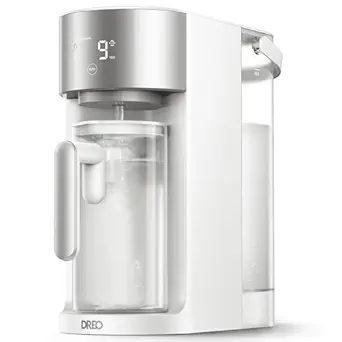 |
| Best Seller A high-volume bestseller chosen again and again | Express Water RO5DX Reverse Osmosis |  |
Bluevua ROPOT Countertop RO
| Purification Method | Reverse Osmosis |
|---|---|
| Installation Type | Countertop |
| Capacity | 1700 ml |
| Maximum Flow Rate | 0.26 liters per minute |
| Filter Life Cycle | 24 months |
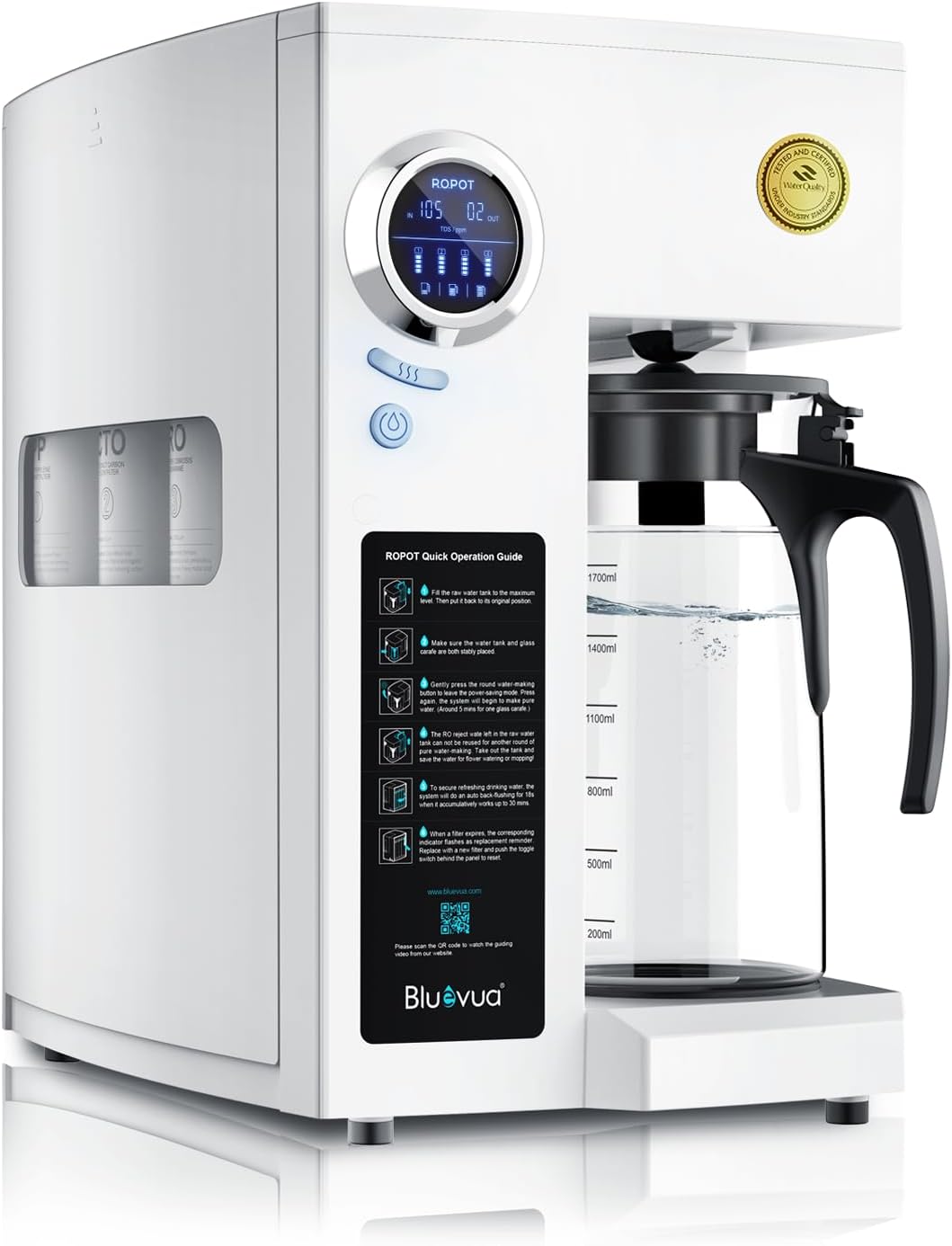
The Bluevua ROPOT is a portable countertop reverse osmosis unit that plugs into power and produces low‑TDS water into a borosilicate glass carafe using a five‑stage filtration stack that includes remineralization. It is meant to sit on a counter or table and is used by filling the tank, starting a purification cycle, and pouring from the included glass carafe once the cycle finishes. Notable features include a smart display that reports TDS and filter life, a claimed 2:1 pure-to-drain water ratio to reduce wastewater, and a power‑saving standby mode. The glass carafe avoids plastic taste and feels sturdy for serving, while the included filters and mineral stage aim to balance taste and health. Limitations for camping use are clear: the unit requires corded power and is relatively bulky compared with lightweight portable filters, and its 1.7 L carafe and flow rate of about 0.26 L/min mean it is slow for filling multiple bottles. Filter replacements run on a 12–24 month cycle depending on use, so ongoing cost and carrying spare filters should be considered for extended trips.
Best for: Buyers who want bottled‑quality, low‑TDS water at campsites with access to electricity and prioritize water taste and glass storage over ultralight portability.
Less Ideal for: Overland or backcountry campers who need compact, manual, or gravity-fed filters for off‑grid use should choose a lightweight portable purifier instead.
- No plumbing or installation required so it can be used on counters or tables
- Borosilicate glass carafe reduces plastic contact and improves serving quality
- Five‑stage RO filtration with remineralization for low TDS and balanced taste
- Smart display shows TDS and filter life to simplify maintenance
- Built‑in power saving mode and a claimed 2:1 pure-to-drain ratio to reduce wastewater
- Requires mains power so not suitable for off-grid use without an inverter or generator
- Slow maximum flow (0.26 L/min) and small carafe limit output for larger groups
- Unit size and weight make it less convenient to transport on typical camping trips
Verdict: If you camp with reliable shore power and want glass‑stored, low‑TDS drinking water, this countertop RO delivers bottled-quality results without plumbing.
AquaTru Carafe Alkaline

| Purification Method | Reverse Osmosis |
|---|---|
| Power Source | Corded Electric |
| Maximum Flow Rate | 0.5 gpm |
| Supported Water TDS Level Maximum (PPM) | 600 |
| Filter Life Cycle | 1 years |
The AquaTru Carafe Alkaline is a compact countertop reverse osmosis purifier designed to deliver high-purity drinking water without any plumbing or installation. You fill the top tank, plug the unit into a standard outlet, and the system pushes water through a four-stage filter pack — pre/carbon, RO membrane, and an alkaline VOC filter that adds calcium and magnesium — before dispensing into the included borosilicate glass carafe. Its strengths are contaminant reduction (certified to remove many PFAS, lead, microplastics, and other common tap contaminants), long filter life ratings, and a convenient control panel for straightforward operation. The glass carafe and relatively small footprint make it easy to use on a kitchen counter or in an RV with shore power. Limitations for camping use are clear: it requires mains power, has modest flow rate, and is sized for home/short-trip use rather than heavy-duty outdoor filtering, so it is best when you can access electricity and need purified, mineralized drinking water rather than on-the-go portability.
Best for: Buyers who prioritize high contaminant removal and water quality and who camp or travel with reliable access to electricity and want ready-to-drink, mineralized water at their campsite.
Less Ideal for: Those who need a lightweight, battery- or gravity-powered purifier for remote backpacking or multi-day off-grid trips should look for portable pump or gravity RO/filter systems instead.
- Certified reverse osmosis filtration that reduces a wide range of contaminants including PFOA/PFOS and microplastics.
- Adds alkaline minerals for improved taste via a dedicated VOC/mineral boost filter.
- No plumbing or drilling required; plugs into a standard outlet for easy countertop use.
- Long filter lifespans (pre-filter up to 6 months, RO up to 2 years) reduce running costs and maintenance frequency.
- Requires a 120V AC power source so it is not suitable for off-grid use without power.
- Maximum flow rate is modest, so filling multiple containers takes time.
- Designed for countertop use and not optimized for rugged outdoor or mobile conditions.
Verdict: If you camp with access to shore power and want lab-grade RO water with an alkaline mineral boost, this countertop unit delivers the best mix of contaminant removal and drinkability.
Bluevua ROPOT-Lite Countertop RO

| Purification Method | Reverse Osmosis |
|---|---|
| Capacity | 1200 ml |
| Maximum Flow Rate | 0.26 liters per minute |
| Upper Temperature Rating | 100 °F |
| Other Special Features of the Product | Portable, Reduce TDS |
The Bluevua ROPOT-Lite is a countertop RO system that delivers laboratory-grade filtration without installation, using a five-stage filter and a 0.0001 μm RO membrane to cut TDS and contaminants. You fill the unit, plug it into power, select a volume on the smart LED panel, and the system pumps filtered water into a high-borosilicate glass carafe in roughly three minutes per jar. Its portable design and lack of plumbing make it easy to move between a cabin, RV hookup area, or campsite with power, and the smart display reports filter life and water quality in real time. The 3:1 pure-to-drain ratio is notably efficient compared with many small RO units, and the included remineralization option restores some minerals after filtration. Expect annual filter changes for steady performance, and plan for modest power consumption and the need for potable source water since it is not a gravity-only device; it requires a power outlet and produces limited volume suited to one or two people. For lightweight, no-plumbing RO at a campsite with electricity, it strikes a practical balance of purity and convenience.
Best for: Campers who prioritize making the cleanest possible drinking water at sites with electricity and want a no-plumbing, easy-to-monitor RO system that fits a small household.
Less Ideal for: Backpackers, car campers, or remote sites that lack reliable power or need high-volume water production should look for manual or higher-capacity solutions instead.
- No plumbing required so it can be set up quickly at a campsite with power
- High-borosilicate glass carafe avoids storing water in plastic
- Smart LED display shows filter life and real-time water quality
- Efficient 3:1 pure-to-drain ratio reduces waste compared with typical small RO units
- Requires an electrical outlet so not suitable for off-grid camps without power
- Limited daily output geared toward 1–2 people rather than large groups
Verdict: Choose the ROPOT-Lite when you need a plug-and-play countertop RO that delivers near-OEM filtration performance and low wastewater for one to two campers at powered sites.
Geekpure 3 Stage RO System

| Capacity | 100 GPD |
|---|---|
| Stages | 3-stage |
| Certification | NSF/ANSI 58 (membrane) |
| Included components | 3 filters, diverter valve, wrench, fittings, tubing |
This Geekpure 3-stage reverse osmosis system reduces TDS and a wide range of contaminants with a thin-film composite RO membrane and sediment and carbon prefilters, producing up to 100 gallons of purified water per day. It is a tankless, compact unit with quick-push tubing fittings and the parts needed for DIY installation, which makes it convenient for small spaces like apartments, RVs, boats, or short-term camping setups where you can access pressurized feed water. The filters are said to last 6 to 12 months depending on water quality and usage, and the system meets NSF/ANSI 58 membrane standards for performance. Important limitations for camping use are the requirement for a feed pressure of at least 40 psi and a continuous ratio of about 1:2 pure-to-waste water, so you will need a suitable pump or a pressurized water source and a plan for wastewater. The unit does not include an automatic shutoff or a storage tank without purchasing an add-on, which reduces convenience but keeps the footprint small.
Best for: Buyers needing an inexpensive, compact RO system for RVs, boats, or campsite setups who can provide a pressurized water source or portable pump and prioritize low upfront cost and DIY installation.
Less Ideal for: People who lack a reliable pressurized water supply, want an integrated storage tank or automatic operation, or who cannot manage wastewater disposal during off-grid use.
- Tankless, compact design suitable for tight spaces and portable setups
- Produces up to 100 gallons per day with a thin-film composite RO membrane meeting NSF/ANSI 58
- Includes quick-push fittings and components for DIY installation
- Three-stage filtration (sediment, carbon block, RO membrane) reduces TDS, chlorine, heavy metals and other contaminants
- Requires a minimum feed pressure of 40 psi so it needs a pressurized source or pump
- Produces wastewater at about a 2:1 ratio which must be managed during off-grid use
- No built-in storage tank or automatic shutoff without purchasing an add-on kit
Verdict: A budget-friendly, tankless RO system that delivers high-purity water for RVs, boats, and campsite setups if you have a pressurized source or pump.
APEC Water ROES-50 Reverse Osmosis

| Purification Method | Reverse Osmosis |
|---|---|
| Filtration Stages | 5-Stage |
| Daily Output (GPD) | 50 gallons |
| Operating Pressure Range | 40-85 psi |
| Filter Life Cycle | 6 months |
The APEC ROES-50 is a five-stage under-sink reverse osmosis system designed to deliver very high-purity drinking water for a household. It uses prefilters, an RO membrane, and post-filters to reduce chlorine, lead, fluoride, arsenic, PFAs, microplastics and other common contaminants, and includes a storage tank and dedicated faucet for steady flow. Installation is DIY-friendly with quick-connect fittings and colored tubing, and routine maintenance is straightforward with filter replacements recommended every 6 to 24 months depending on source water. The unit is rated at 50 gallons per day, which is ample for most home needs but makes it bulky compared with portable camping solutions, and it requires AC and a pressurized water supply in the 40-85 psi range to operate. For users seeking reliable, certified contaminant removal and a durable factory-quality system at the sink, this model performs well; for outdoor or off-grid camping use you would need a separate portable or tankless system because this unit is intended for fixed under-sink installation.
Best for: Buyers who prioritize a dependable, high-capacity home RO system that consistently removes a wide range of contaminants and want a factory-quality, serviceable under-sink installation.
Less Ideal for: People needing a compact, portable filtration solution for camping, backpacking, or off-grid use should choose a purpose-built portable RO or gravity filter instead.
- Five-stage filtration that removes a broad range of contaminants including heavy metals and PFAs.
- Certified construction and WQA-level performance for consistent contaminant rejection.
- DIY-friendly quick-connect fittings and colored tubing make installation and service accessible to competent homeowners.
- Includes storage tank and dedicated faucet for steady, on-demand filtered water.
- Long filter life ranges with prefilters lasting 6-12 months and membrane/post-filters up to 12-24 months depending on water quality.
- Not designed for portable or off-grid use since it requires under-sink installation, a pressurized water line, and AC power.
- Physically larger and requires under-sink space and a storage tank, limiting use in small or mobile setups.
Verdict: Choose the ROES-50 when you need a reliable, certified under-sink RO system that delivers high-capacity, factory-quality contaminant removal for home use.
DREO RO Countertop Water Filter WF112

| Purification Method | Reverse Osmosis |
|---|---|
| Capacity | 3 liters |
| Other Special Features | Built In TDS Meter, Change Filter Indicator, Touch Control |
| Pure to Drain Rate | 3:1 |
The DREO WF112 is a countertop reverse osmosis purifier that uses a 7-stage RO filter to cut common contaminants and reports real-time TDS for confidence in water quality. It is set up without plumbing: the unit holds a 3 L tank and includes a 1.1 L autofill pitcher so you can filter and dispense water without a permanent install, and a touch control panel shows TDS and filter life. The system auto-flushes internal tubes for basic maintenance and the replaceable RO cartridge is a twist-in design rated for about 265 gallons (1,000 L), which keeps ongoing upkeep simple. The advertised 3:1 pure-to-drain ratio reduces waste compared with many RO units, but it still uses more source water than non-RO purifiers. At roughly 9.5 pounds and with a narrow footprint, it is easy to move between locations but it is not specifically built for rugged outdoor use or off-grid power, so you will need a stable surface and a power source when using it while camping. For campers who prioritize laboratory-style contaminant reduction and want measurable TDS feedback in a portable, no-plumb package, this unit delivers clear water and straightforward maintenance.
Best for: Campers who want near–lab quality drinking water and real-time TDS feedback in a portable, no-plumb system and who plan to use it from campsites with stable surfaces and access to power.
Less Ideal for: Lightweight backpackers or off-grid users who need ultralight, manual, or pump-free filters that work without electricity and in rough outdoor conditions.
- 7-stage RO filtration removes a wide range of impurities and reports certified contaminant reduction
- Built-in TDS meter and filter life indicator provide real-time water quality feedback
- Installation-free countertop design with included autofill pitcher for hands-free refills
- Twist-to-install filter cartridge simplifies replacements and routine maintenance
- Compact footprint and moderate weight make it portable between sites
- Requires mains power and is not designed for rough outdoor conditions
- Uses RO purification so it consumes more source water than non-RO filters
Verdict: If you camp where you can access power and want demonstrably cleaner water with real-time TDS monitoring, this compact countertop RO system is a practical, easy-to-maintain choice.
Express Water RO5DX Reverse Osmosis

| Purification Method | Reverse Osmosis |
|---|---|
| Maximum Flow Rate | 0.8 gpm |
| Capacity | 4 gallons |
| Gallons Per Day | 50 GPD |
| Installation Type | Under Sink |
The Express Water RO5DX is a compact five-stage under-sink reverse osmosis system designed to deliver very clean drinking water at home. It uses sediment, granular activated carbon, activated carbon block, an RO membrane, and a post-carbon stage to remove a wide range of contaminants and is independently tested to NSF/ANSI standards for reductions including heavy metals, fluoride, and many VOCs. Installation is aimed at DIYers with quick-connect fittings, a brass feed adapter for common under-sink lines, and a labeled, color-matched housing that simplifies filter changes. The system stores water in a pressurized tank and supplies it through a dedicated deluxe chrome faucet at about 0.8 gallons per minute, producing up to 50 GPD. Useful built-in items include a leak stop valve and included extra filter set for initial maintenance. Limitations are its dependence on household water pressure (40-80 psi recommended) and the wastewater ratio typical of RO units, which can be one to three gallons discharged per gallon produced, making it less suited to off-grid or very low-pressure situations common in some camping or remote setups.
Best for: Buyers who prioritize thoroughly tested, high-purity drinking water and want a straightforward under-sink RO they can install and maintain themselves with confidence.
Less Ideal for: People needing a portable, off-grid, or very low-pressure filtration solution for camping or remote travel should consider purpose-built portable filters or pump RO systems instead.
- Five-stage filtration with RO membrane and post-carbon polishing for broad contaminant reduction
- Independently tested to NSF/ANSI standards for multiple contaminant reductions
- Quick-connect fittings and included adapters simplify DIY under-sink installation
- Includes storage tank, deluxe brass-lined chrome faucet, and extra filter set for first-year use
- Requires adequate household water pressure and may need a booster pump in low-pressure situations
- Produces wastewater at a typical RO discard ratio, which can be inefficient where water is scarce
Verdict: Choose this system if you want a factory-quality, NSF-tested under-sink RO that reliably delivers very high-purity drinking water for everyday household use.
Choosing the Right Reverse Osmosis Water Filter for Camping: Key Factors to Consider
Filtration Level and Contaminant Removal
Know what contaminants you need removed and pick a system with membrane and prefilter specifications to match. Reverse osmosis membranes reduce dissolved solids and many chemical contaminants that smaller-pore mechanical filters cannot. Look for stated rejection rates for total dissolved solids and specific reductions for heavy metals or agricultural chemicals when those are plausible hazards on your route.
Prefiltration matters too. A good prefilter will protect the RO membrane from sediment and biological fouling, extending service life in the field. If you expect turbid water, choose a system with a robust multi-stage prefilter or plan to pre-sediment the source before running water through the RO unit.
Portability and Pack Weight
On a backpacking or car-camping trip, weight and packed volume are decisive. Consider the total system weight including necessary hoses, fittings, and any manual pump or pressure source. Systems designed for camping minimize metal fittings and heavy housings while retaining functional strength.
Also evaluate how the system packs. Does it collapse, fit into a dry bag, or require a rigid carrying case? Smaller, lighter designs are better for long approaches, while heavier but faster units can work for car camping or basecamps where you can leave the filter set up.
Daily Output and Flow Rate
Campers need to estimate how much potable water they will require per day and pick a unit that delivers that volume without excessive time or effort. Reverse osmosis systems vary widely in output depending on whether they use manual pumping, gravity feed, or are driven by a pressurized source.
Consider both the maximum flow rate and how long it takes to collect a usable volume. A slow but lightweight system may be fine for solo hikers who top off a liter or two, while a group or long-stay camper should favor higher daily yields.
Durability and Field Maintainability
Camping environments can be harsh, so choose systems built from durable materials that resist drops, UV, and abrasion. Check whether housings and connectors are rated for outdoor use and whether replacement parts and membranes are readily available.
Field maintainability is also key. Systems that allow easy access to prefilters, quick-change cartridges, and hand-friendly fittings reduce downtime on the trail. If membrane replacement requires special tools or lab conditions, that system is less appropriate for remote trips.
Power Source and Operation Mode
Reverse osmosis requires pressure to force water through the membrane, so evaluate how that pressure is generated. Camping RO options include hand pumps, manual squeeze or foot-actuated systems, portable electric pumps run from a battery, or gravity-assisted setups that use elevated pressure differentials.
Choose a mode that fits your trip. For extended backcountry use without power, manual or gravity-based systems are preferable. For basecamp or car camping with access to batteries or vehicle power, powered pumps can greatly increase throughput and reduce effort.
Compatibility With Field Water Sources
Consider the kinds of sources you will use: streams, lakes, or questionable surface water near human activity. Some RO systems are sensitive to high turbidity or biological load and require careful pre-treatment. Verify what intake fittings the system uses and whether adapters or improvised connectors are necessary for common outdoor containers.
Also review whether the system handles cold water conditions. Very low temperatures can affect membrane performance and pump operation, so plan for winter or alpine use accordingly.
How Reverse Osmosis Works in the Field
Reverse osmosis forces water through a semi-permeable membrane that blocks dissolved ions, many organic molecules, and a range of contaminants. In the field, RO functions similarly to household units but requires a pressure source and attention to prefiltration to prevent membrane fouling.
For camping use, expect tradeoffs: RO provides a higher degree of purification than ceramic or activated-carbon-only filters, but it is typically slower and more demanding in terms of setup and maintenance. Understanding these tradeoffs helps you decide whether RO is the right level of treatment for your route and water sources.
- RO removes dissolved solids and many chemicals that standard backpacking filters do not
- Prefiltration protects the membrane from sediment and biological material
- RO systems need pressure, which affects portability and throughput
Types of RO Systems Suitable for Camping
There are a few form factors that work well outdoors. Manual pump-driven RO units give you the ability to treat water without electricity but require physical effort. Gravity-assisted RO systems rely on elevation or a pressurized source to supply feed pressure while keeping hands free.
Battery-powered or plug-in portable RO units can offer higher flow rates and ease of use, but they add weight and require a power plan. Consider which form factor matches your trip profile and how much energy you are willing to expend for each liter of treated water.
- Manual pump RO: best for off-grid, power-free use
- Gravity or pressure-bag RO: lower effort, moderate throughput
- Battery/vehicle-powered RO: high throughput, higher weight
Field Maintenance and Troubleshooting Tips
Protect the membrane by prefiltering turbid water. Simple cloth or bandana strainers and settling containers reduce particulate load before water reaches the prefilter. Carry spare sediment prefilters and know how to replace them quickly in the field.
Monitor flow decline as an indicator of clogging. If flow drops significantly, switch to cleaner sources or replace the prefilter. For pump-driven units, check seals and quick-connects before each use and keep spare O-rings and basic tools in your repair kit.
- Always prefilter visibly dirty water
- Carry spare prefilters and common sealing parts
- Flush membranes with clean water after heavy use to reduce biofouling
Packing and Transport Considerations
Plan where the RO system will live in your pack. Sensitive components should be protected from crushing and impacts. Use a dedicated dry bag or padded pouch for housings and membranes.
Think about accessory storage for hoses, fittings, and spare parts. Small parts are easy to lose, so keep them together in a labeled pouch. Also plan for water containers that pair well with the system, such as collapsible bladders or rigid jugs compatible with intake fittings.
- Protect membranes from physical damage and UV exposure
- Store small fittings and parts in a single, organized pouch
- Match system size to the length of your trip and resupply opportunities
When RO Is Overkill and When It Is Necessary
RO is most useful when dissolved contaminants or chemical exposures are a credible risk. For purely biological contamination such as bacteria and protozoa in clear water, lighter-weight filters and chemical disinfectants may suffice and save weight and complexity.
Choose RO when source water has known industrial runoff, heavy-metal risks, or when you need very low dissolved solids for medical or equipment reasons. For short hikes in remote clear-water areas, the added bulk and effort of RO may not be justified.
- Use simpler filters for clear, low-risk surface sources
- Prioritize RO for chemical or dissolved contaminant concerns
- Balance water quality needs against effort and pack weight
How We Chose the Best Reverse Osmosis Water Filter for Camping
We selected units that meet real-world camping needs by applying practical, measurable filters. First, we prioritized filtration performance by checking membrane quality and contaminant-reduction specifications that indicate effective removal of dissolved solids, heavy metals, and common chemical pollutants. Second, portability and packability were evaluated through weight, packed dimensions, and the presence of design features that make the unit easy to carry and set up at a campsite. Third, water output and flow rate were considered because campers need predictable daily yields for drinking and cooking. Fourth, system durability and field maintainability were assessed, including materials, replaceable parts, and whether basic maintenance can be performed without specialist tools. Fifth, ease of use covered setup complexity, required fittings, and whether the system works with common water sources found in the outdoors. We excluded units that are strictly household point-of-entry systems or require permanent plumbing, as they are unsuitable for portable camping use. We also excluded systems with no clear specification for membrane rejection rates or those lacking basic durability details. The resulting list balances purification capability with camping practicality and aligns with the scoring metrics shown below.
Our full evaluation process is outlined in our review methodology.
FAQ
Can reverse osmosis units be used without electricity when camping?
Yes. Some camping RO systems use manual hand pumps or gravity-assisted setups that do not require electricity. These options trade convenience for portability and require more time or physical effort to produce the same volume of water as powered units.
How often should I change prefilters and membranes on a camping RO system?
Prefilters should be replaced whenever they show significant clogging or after heavy use in turbid water, which may mean multiple changes on extended trips. Membranes last longer but should be inspected for flow decline or damage and replaced according to manufacturer guidance or when performance degrades noticeably.
Will RO remove viruses and bacteria from camping water sources?
Reverse osmosis membranes block many microbes due to their fine pore structure, but RO systems used in the field often rely on prefiltration and may not guarantee virus removal unless specifically rated. For small viral particles or compromised units, an additional disinfection step such as chemical treatment or UV is sometimes recommended.
How much water can a camping RO system produce in a day?
Daily output varies widely by design and power source. Manual systems might produce a few liters per hour with steady effort, while powered systems can generate much higher volumes. Estimate based on system flow rates and plan for peak daily needs plus a safety margin.
Are RO systems compatible with cold weather camping?
Cold temperatures can impair pump performance and risk freezing damage to membranes and housings. If you plan winter use, choose systems rated for low temperatures, protect components from freezing, and store membranes and liquids in insulated containers when not in use.
Final Verdict
For camping, prioritize the balance between purification level and portability. If dissolved contaminants or chemical risks are a concern on your route, a reverse osmosis system delivers superior removal but requires more effort, a pressure source, and attention to prefiltration. For short hikes where biological contamination is the main risk, lighter filters may be preferable. Decide based on how much water you need daily, whether you can spare weight and setup time, and how easily you can maintain the system in the field. Choose the simplest RO configuration that meets your quality and throughput needs so you get safe drinking water without unnecessary complexity.