
Note: This article contains affiliate links. If you click on these links and make a purchase, we may earn a small commission at no extra cost to you. This helps support our research and content. Read our full affiliate disclosure here.
Choosing the right reverse osmosis water filter for your faucet affects water quality at every sink you treat. A faucet-mounted RO system can reduce common contaminants, improve taste, and supply safe drinking water without rewiring your plumbing or dedicating under-sink space. In this guide we narrowed the field to the top shortlisted faucet RO systems that balance filtration performance, flow rate, and straightforward installation. Below you will find concise evaluations and practical buying guidance focused on the everyday benefits that matter most: contaminant reduction, maintenance frequency, and how easily a unit integrates with typical faucet setups. Use this guide to match system features to your kitchen layout and water-quality priorities.
Top Picks at a Glance
| Best Overall The best all-around choice for most situations | FRIZZLIFE PD600 Tankless RO |  |
| Best Quality Built to a higher standard if you want something more solid | Waterdrop G3P600 Tankless RO |  |
| Best Value The sweet spot between price and what you get | APEC Water ROES-50 Reverse Osmosis |  |
| Best Budget The cheapest option that still gets the job done reliably | FS-TFC 5-Stage RO System |  |
| Top Rated A top-rated pick with lots of positive feedback | iSpring RCC7-BN 5-Stage RO |  |
| Most Popular A crowd favorite that many people choose with confidence | iSpring RCC7AK-BN 75 GPD RO System |  |
| Best Seller A high-volume bestseller chosen again and again | DREO RO Water Filter WF112 | 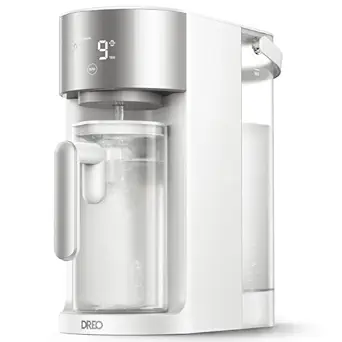 |
FRIZZLIFE PD600 Tankless RO

| Flow rate | 600 GPD |
|---|---|
| Purification method | Reverse Osmosis, Alkaline/Remineralize |
| Installation type | Under Sink |
| Power source | Corded Electric |
| Pure to Drain Rate | 2:1 |
The FRIZZLIFE PD600 is a compact, tankless reverse osmosis system designed for under-sink installation that delivers fast, remineralized drinking water with a built-in TDS readout. It uses a multi-stage filtration train including a pleated carbon prefilter, a 600G RO membrane and an alkaline TAM3 remineralization stage to restore minerals and raise pH above 7.5. The tankless layout saves cabinet space and avoids tank-related tastes or bacterial concerns, while the 600 GPD capacity and quick flow mean a cup of water fills in seconds for families with steady demand. A color LED panel reports real-time TDS and remaining filter life so you can see water quality and know when to swap cartridges. Installation is intended for DIY homeowners and the package includes a dedicated brushed-nickel faucet. Expect to need electricity for the pump and to replace the prefilter and remineralization cartridges on their listed schedules; the system favors water savings with a 2:1 pure-to-drain ratio but that still produces some wastewater. Overall this is a solid choice when you want high flow, space-saving under-sink RO water with mineralized output and visible TDS monitoring.
Best for: Buyers who want a compact under-sink RO that delivers high flow, visible water-quality monitoring, and mineralized drinking water for everyday household use.
Less Ideal for: People who need a completely passive, electricity-free filter or those who prefer systems with an included large storage tank for long uninterrupted dispensing.
- Tankless design saves under-sink space and eliminates a storage tank
- High production rate rated at 600 GPD for fast dispensing
- Alkaline remineralization stage restores minerals and raises pH
- Smart LED shows real-time TDS and filter life for easy monitoring
- Low 2:1 drain ratio improves water efficiency compared with many RO systems
- Requires electrical power for operation
- Still produces wastewater despite improved drain ratio
- Filter cartridges have periodic replacement intervals to maintain performance
Verdict: Choose the PD600 if you want tankless, high-flow RO water with built-in TDS monitoring and remineralization for daily household use.
Waterdrop G3P600 Tankless RO
| Filtration stages | 8-stage |
|---|---|
| Capacity | 600 GPD |
| Pure to drain ratio | 2:1 |
| Power source | Corded Electric |
| Maximum flow rate | 0.42 gpm |
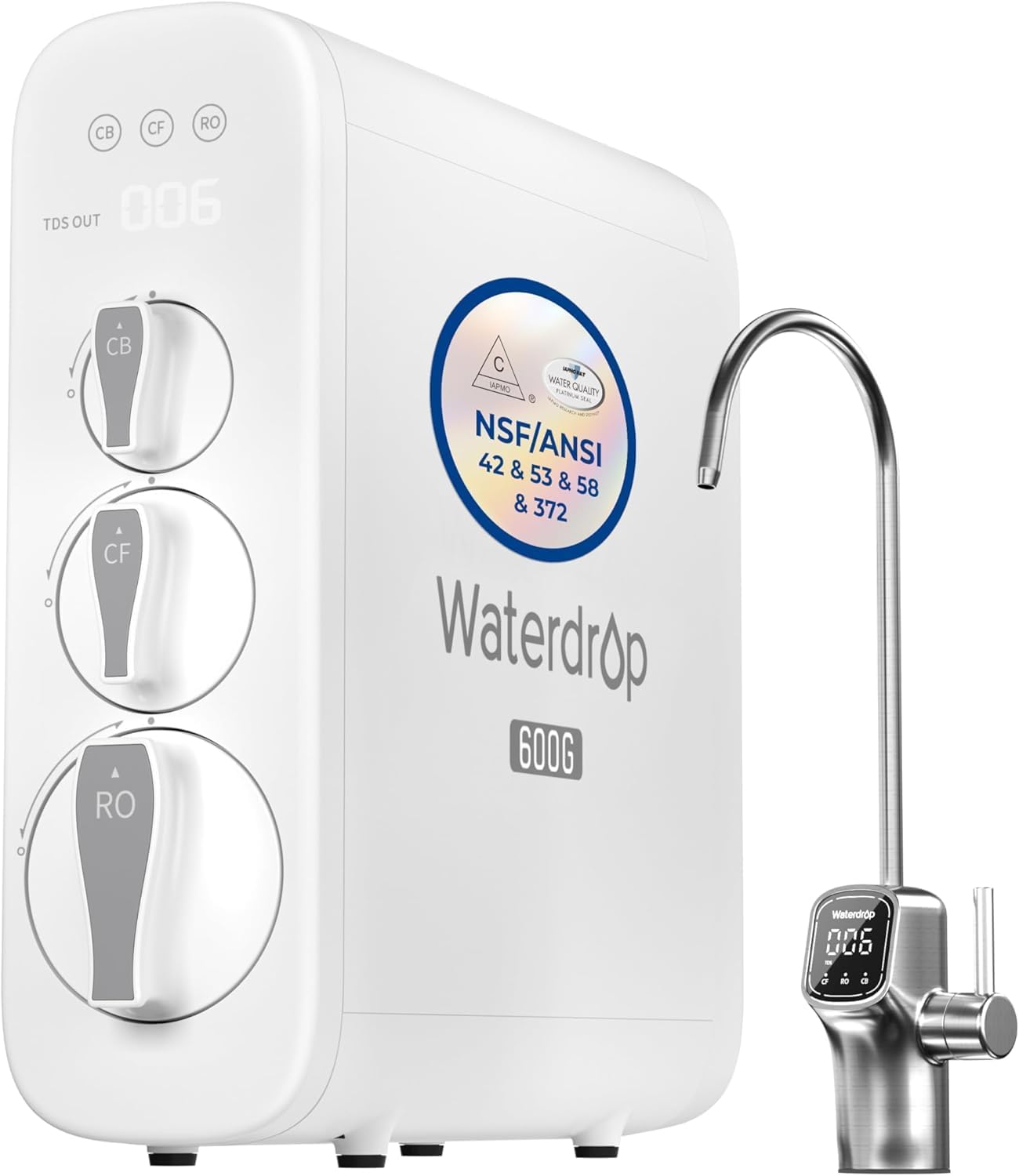
The Waterdrop G3P600 is a tankless under-sink reverse osmosis system engineered for high-output household use. It uses an 8-stage filtration train including a reverse osmosis membrane and carbon blocks to reduce TDS, heavy metals, PFAS, chlorine, and other contaminants, and it produces up to 600 gallons per day while maintaining a 2:1 pure-to-drain ratio. The unit installs under the sink and requires a plug-in power source for its smart faucet, which displays TDS and filter life so you can monitor water quality and maintenance needs. Tankless construction frees up storage space and makes filter changes quick with a simple twist-and-replace mechanism. Performance-oriented buyers will appreciate the fast flow that fills an 8 oz cup in about 8 seconds and the automatic flushing feature that helps keep the membrane clean. Limitations include the need for under-sink electricity, the requirement to drill faucet and drain holes, and the system footprint that still requires checking cabinet clearance before purchase.
Best for: Buyers who prioritize high-capacity, fast-flow RO performance and want continuous monitored drinking water from a compact under-sink system.
Less Ideal for: People without an available under-sink power outlet, renters who cannot drill sink holes, or those who need a completely portable countertop solution.
- High production capacity up to 600 GPD for fast, large-volume dispensing.
- 8-stage filtration targeting TDS, heavy metals, PFAS, chlorine, and other contaminants.
- Smart display faucet shows TDS and filter life for easy monitoring.
- Tankless design saves under-sink space and enables quick filter replacement.
- Low 2:1 pure-to-drain ratio reduces wastewater compared with many RO systems.
- Requires under-sink electrical outlet to power the smart faucet and functions.
- Installation needs drilling for faucet and drain connections and may need cabinet space verification.
- Faucet flow rate and overall performance depend on household water pressure and TDS levels.
Verdict: Choose the G3P600 if you need a high-capacity, tankless RO that delivers fast, monitored filtered water and minimizes waste.
APEC Water ROES-50 Reverse Osmosis

| Filtration Method | Reverse Osmosis |
|---|---|
| Filtration Stages | 5-Stage |
| Daily Output (GPD) | 50 GPD |
| Operating Pressure Range | 40-85 psi |
| Filter Life Cycle | 6 months |
The APEC ROES-50 is a five-stage under-sink reverse osmosis system designed to deliver very low-TDS drinking water at home. It mounts beneath the sink and uses prefilters, an RO membrane, and a post-filter to remove chlorine, lead, arsenic, fluoride, heavy metals, PFAS, microplastics, and other common contaminants, then stores treated water in the included tank for steady faucet delivery. Installation is DIY-friendly with quick-connect fittings, colored tubing, and an included brushed-nickel faucet and hardware, so a competent homeowner can set it up without a plumber. Filters are high-capacity and are staged to protect the membrane, with prefilters expected to last roughly 6 to 12 months and the membrane and post-filters up to 12 to 24 months depending on feed water quality. The system is NSF/WQA certified and produces up to 50 GPD, which is sufficient for typical household drinking and cooking needs, but it has a low maximum flow rate at the membrane and requires the under-sink tank for usable flow. Regular filter replacements and occasional space under the sink for the unit and tank are the main ongoing considerations.
Best for: Buyers who prioritize clean, very low-TDS drinking water and want a reliable, certified under-sink RO system they can install and maintain themselves to reduce bottled water use.
Less Ideal for: Those who need instant high-volume filtered water at the tap without a storage tank or who cannot dedicate under-sink space for the system and tank should consider other options.
- Comprehensive 5-stage filtration that removes a broad range of contaminants
- NSF/WQA certified construction and tested material safety
- Includes faucet, tank, installation kit, and a replacement filter set for initial setup
- DIY-friendly quick-connect fittings and color-coded tubing simplify installation and service
- Produces up to 50 gallons per day, adequate for typical household drinking and cooking use
- Membrane has a low maximum flow rate so water delivery depends on the storage tank
- Requires periodic filter and membrane replacements on a schedule tied to feed-water quality
- Takes under-sink space for both the filter assembly and storage tank
Verdict: Choose the ROES-50 when you want a certified, DIY-friendly under-sink RO that reliably delivers very low-TDS drinking water for typical household use.
FS-TFC 5-Stage RO System

| Purification Method | Reverse Osmosis |
|---|---|
| Capacity | 100 gallons |
| Maximum Flow Rate | 18 liters per hour |
| Operating Pressure Range | 30-85 psi |
| Supported Water TDS Level Maximum (PPM) | 500 |
The FS-TFC 5-stage RO system is an under-sink reverse osmosis purifier designed to deliver high-purity drinking water without electricity. It reduces a wide range of contaminants and claims up to 99.999% removal, routing treated water to a dedicated faucet and storing it in the included tank for ready access. The unit is compact and meant for confined spaces such as beneath a kitchen sink, with a tested output of about 18 liters per hour so filling a cup is quick for everyday cooking, coffee, and baby formula. Installation is aimed at DIYers: the package includes a feedwater adapter, faucet, tank, and extra fittings plus illustrated instructions for a tool-free 10-minute setup. Practical benefits include a low 1:1 drain ratio that limits wastewater compared with many RO units and four extra replacement filters to reduce first-year upkeep costs. Important limitations are the 100 GPD capacity and a recommended filter life of about one year, so expect routine filter changes and modest maintenance to keep performance high.
Best for: Buyers looking for an affordable, space-saving under-sink RO that is easy to install themselves and keeps ongoing costs low through included replacement filters.
Less Ideal for: Homes that need very high throughput for many simultaneous users or who prefer a whole-house filtration solution should consider larger-capacity systems instead.
- High contaminant reduction claimed, covering chlorine, VOCs, heavy metals, fluoride, and more
- Compact under-sink footprint with a 18 L/hour flow rate for quick access to purified water
- Tool-free DIY installation with included faucet, tank, and fittings
- Low 1:1 drain ratio reduces wastewater compared with many RO systems
- Includes four extra replacement filters to lower first-year maintenance cost
- Filter life listed as about one year requires regular replacement
- Rated capacity of 100 gallons per day may be limited for large households or heavy use
Verdict: A compact, budget-minded under-sink RO that delivers high contaminant removal with easy DIY installation and low first-year maintenance costs.
iSpring RCC7-BN 5-Stage RO

| Purification Method | Reverse Osmosis, Activated Carbon, Carbon block |
|---|---|
| Power Source | No Power Needed |
| Maximum Flow Rate | 3.4 liters per minute |
| Supported Water TDS Level Maximum (PPM) | 750 |
| Capacity | 75 gallons |
The iSpring RCC7-BN is a 5-stage under-sink reverse osmosis system designed to deliver near-bottled-quality drinking water without electricity. It uses three pre-filters (sediment, GAC, carbon block), a high-rejection RO membrane and a final GAC polishing filter to reduce over 1,000 contaminants, lower TDS by roughly 80 to 90 percent, and cut common pollutants such as chlorine, lead and PFAS. The system stores purified water in a tank and supplies it through the included brushed nickel faucet, while a transparent first-stage housing makes visual checks and maintenance easier. Push-to-connect fittings and factory-quality O-rings simplify installation and help prevent leaks, and the unit is certified to NSF/ANSI 58. Important practical limits are that it is intended for municipal tap water rather than untreated well water and it requires periodic filter and membrane replacement to maintain performance; its under-sink footprint and tank add weight and take cabinet space. For buyers prioritizing consistent, certified contaminant reduction and dependable build quality, this is a solid choice.
Best for: Buyers who want a reliable, tested under-sink RO to consistently produce low-TDS, great-tasting drinking water and who value a system built for straightforward DIY installation and maintenance.
Less Ideal for: People relying on untreated well water without additional whole-house prefiltration or those who need a space-minimal, tankless solution under a very small sink.
- Certified to NSF/ANSI 58 for RO performance
- Five-stage filtration including high-rejection RO membrane for broad contaminant removal
- Transparent first-stage housing for easy visual inspection
- Push-to-connect fittings and O-rings designed to reduce leaks and simplify installation
- Not intended for untreated well water without pre-treatment
- Requires regular filter and membrane replacements to sustain claimed performance
Verdict: Choose the iSpring RCC7-BN when you want a certified, high-capacity under-sink RO that reliably delivers low-TDS, great-tasting drinking water.
iSpring RCC7AK-BN 75 GPD RO System

| Purification Method | Reverse Osmosis, Alkaline, Activated Carbon, Carbon block |
|---|---|
| Power Source | No Power Needed |
| Maximum Flow Rate | 284 liters_per_day |
| Supported Water TDS Level Maximum (PPM) | 750 |
| Filter Life Cycle | 6 months |
The iSpring RCC7AK-BN is an under-sink reverse osmosis system that delivers laboratory-grade filtration without electricity, using a six-stage process that includes sediment, carbon, RO membrane, and an alkaline remineralization stage to restore minerals and raise pH. It is typically installed under a kitchen sink and paired with the included brushed nickel faucet to provide clean drinking water and an option to feed a refrigerator. Notable features are the NSF/ANSI 58 system certification, a transparent first-stage housing for visual monitoring, push-to-connect fittings and color-coded tubing for relatively straightforward DIY installation, and a top-mounted faucet fastener that eases countertop mounting. The system is rated for about 75 gallons per day and supports water up to 750 ppm TDS while operating without electrical power. Important limitations are the routine filter replacements (primary stages at six months and membrane life considerations) and the need for under-sink space and a storage tank, so it does not supply instant high-volume flow for whole-home use.
Best for: Buyers who prioritize proven performance and social proof, want NSF-certified under-sink filtration with mineralized drinking water, and prefer a system with accessible support and clear installation guidance.
Less Ideal for: People who need whole-home filtration, very high continuous flow, or a countertop/portable solution should consider alternative systems.
- NSF/ANSI 58 certified for the complete RO system
- Six-stage filtration including an alkaline remineralization stage for improved taste and pH
- Operates without electricity, suitable for kitchens without a power source
- Transparent first-stage housing lets you visually check sediment buildup
- Includes brushed nickel faucet, storage tank, and installation tool set
- Requires regular filter and membrane replacements which add ongoing cost
- Needs under-sink space and a storage tank, so not suitable for tight or no-cabinet installations
Verdict: Choose this system if you want a factory-certified under-sink RO that adds minerals back to water and is backed by a well-documented, DIY-friendly installation and strong user reputation.
DREO RO Water Filter WF112

| Purification Method | Reverse Osmosis |
|---|---|
| Capacity | 3 liters |
| Pure to Drain Rate | 3:1 |
| Included Components | Body, RO filter, Autofill pitcher |
The DREO WF112 is a compact countertop reverse osmosis purifier designed for small households that need bottled-water quality without installation. It runs a 7-stage RO process and reports real-time TDS for both feed and purified water, so you can verify performance and know when to change the cartridge. The unit includes an autofill 1.1 L pitcher and a self-cleaning flush that helps keep internal tubing clear, while touch controls and a filter-life indicator simplify routine use. With a 3:1 pure-to-drain ratio the system wastes less water than many RO units and the replaceable RO cartridge is a twist-in design for quick swaps. Expect enough daily output for one to two people from the 3 L reservoir, and note the product is countertop-only so it does not connect to a faucet or under-sink plumbing. For buyers who value visible TDS monitoring, low setup risk, and straightforward maintenance, this unit delivers clear benefits; larger households or those wanting a faucet-mounted or plumbed system will need a higher-capacity alternative.
Best for: Buyers who prioritize demonstrable water quality and low installation risk, wanting near–bottled-water purity without altering plumbing and with easy monitoring and maintenance.
Less Ideal for: People who need high daily volume, a faucet-plumbed or under-sink installation, or whole-house filtration should choose a different system.
- 7-stage RO filtration with SGS-tested impurity removal for high-quality purified water
- Built-in TDS meter and filter-life indicator for easy performance monitoring
- Auto-fill pitcher and self-cleaning flush reduce manual maintenance
- Compact countertop form fits without plumbing changes and has touch controls
- 3 liter reservoir limits daily output for larger households
- Countertop design cannot be plumbed to a faucet for continuous on-demand dispensing
Verdict: A compact, installation-free countertop RO that gives risk-averse buyers visible TDS monitoring and high-quality filtration without plumbing changes.
Choosing the Right Reverse Osmosis Water Filter for Faucet: Key Factors to Consider
Filtration Stages and Contaminant Coverage
The number and type of filtration stages determine what the system removes. A basic faucet RO should include a sediment prefilter to catch particles, an activated carbon stage to reduce chlorine and organic taste compounds, and the RO membrane to remove dissolved solids and heavy metals.
Knowing which contaminants are common in your water source helps you prioritize stages. For example, if your water has noticeable chlorine taste, a robust carbon stage is essential. If hardness is the chief concern, RO membranes reduce dissolved minerals but may be supplemented by other treatments. Clear documentation of contaminant removal percentages or third-party test results is a strong indicator of real-world performance.
Compatibility With Your Faucet
Faucet-mounted RO systems vary in their connection methods and the range of faucet spouts they support. Some models thread directly onto standard aerator fittings, while others require special adapters or a diverter valve. Verify the diameter and threading of your faucet spout and check if adapters for nonstandard designs are included.
Also consider faucet clearance and swivel spouts. A system that sits too close to the spout or adds significant weight can limit motion or cause leaks over time. If you have a pull-down or spray-style spout, confirm compatibility because not all diverter valves work with those designs.
Flow Rate and Water Waste
Reverse osmosis inherently produces wastewater during filtration, and faucet-mounted units show this as a lower delivered flow and a waste-to-product ratio. Higher flow rates make the system more convenient for frequent use; low recovery ratios mean more water is sent to drain per glass produced.
Consider typical household water pressure because low pressure further reduces production rate. Look for systems designed to optimize recovery without sacrificing contaminant reduction. If you plan to use filtered water for cooking or filling pitchers frequently, prioritize models with better flow and higher recovery to avoid long waits.
Maintenance, Filter Life, and Replacement
Routine maintenance is mainly filter replacement and occasional sanitizing. Check the rated life of prefilters and RO membranes in gallons or months. Longer service intervals reduce cost and hassle but may come with larger or more complex cartridges.
Also review how easy it is to access and replace elements. Snap-in cartridges or twist-lock housings are faster and less error-prone. Clear labeling and included spare o-rings help prevent leaks after maintenance. Consider the long-term availability of replacement filters to avoid being locked into obscure parts.
Materials, Construction, and Leak Resistance
Durable plastics and corrosion-resistant fittings extend system life, especially in the moist environment around sinks. High-quality tubing, secure push-fit or threaded connections, and reliable valves reduce the risk of leaks. Transparent housings help you inspect prefilters visually for clogging.
Pay attention to warranty coverage and support options as an indicator of build confidence. Units with reinforced connectors and serviceable components are easier to repair if a seal or valve fails, and replacements for common wear items are more likely to be available.
Taste, Mineral Balance, and Optional Remineralization
RO systems remove minerals along with contaminants, which improves taste for many people but can also produce very flat water. Some faucet RO setups include a post-filter or remineralization stage to restore a small amount of calcium or magnesium and improve flavor.
Decide whether you prefer neutral, mineral-free water or a balanced taste with added minerals. Remineralization options add complexity and parts to maintain, so weigh the benefit of improved mouthfeel against extra maintenance steps.
How Faucet-Mounted RO Differs From Under-Sink Systems
Faucet-mounted reverse osmosis units are designed for low-footprint convenience and minimal plumbing changes. They typically attach directly to the faucet or use a small diverter valve, eliminating the need for an under-sink tank and separate dedicated faucet.
Because they are compact, faucet RO systems often have fewer stages or smaller membranes than full under-sink systems. This affects flow rate and recovery but makes installation and maintenance quicker for renters or owners who cannot modify plumbing.
- Simpler installation without cutting pipes
- Smaller membrane capacity, which can reduce production rate
- Easier access for filter changes
Preparing Your Faucet and Sink for Installation
Before choosing a faucet RO, inspect your faucet type and measure spout diameter and thread pitch if visible. Remove the aerator to determine threading and note whether the spout is fixed, swivel, or pull-down.
Ensure there is enough clearance for the diverter valve or mounting hardware and check under the sink for accessible space if any adapter tubing must pass through. Keep a small towel and basin handy during installation to catch drips.
- Confirm aerator thread size or collect adapter kit
- Avoid mounting on pull-down spray hoses that need frequent detachment
- Test faucet motion with the system temporarily attached before finalizing placement
Maintaining Performance Over Time
Regular filter replacement and occasional membrane checks maintain contaminant removal and flow. Mark replacement intervals on your calendar based on the manufacturer-rated life and your household usage. A simple schedule helps prevent taste or flow degradation.
Rinse fittings and check for leaks after each filter change. If your system includes clear housings, inspect the prefilter for discoloration to know when to replace it earlier than the scheduled interval.
- Log filter change dates and gallons processed if metering is available
- Flush new membranes per instructions to avoid initial cloudiness
- Keep spare o-rings and a small wrench available for quick servicing
Measuring Water Quality Improvements
A TDS meter is an inexpensive way to quantify dissolved solids before and after the RO stage. Look for a substantial drop in TDS as a basic indicator the membrane is functioning. For specific contaminants like lead or chlorine byproducts, certified lab testing or third-party reports are the reliable sources.
Taste and odor improvements are useful subjective checks, but combine sensory assessment with objective readings for a full picture. Track changes after filter swaps because clogged prefilters can reduce effectiveness even when the membrane is sound.
- Use a TDS meter to check system performance
- Consider periodic lab testing for heavy metals if concerned
- Note that TDS does not indicate microbial safety
Environmental and Water-Waste Considerations
RO systems generate wastewater during filtration. While faucet-mounted units aim to minimize this, some loss is unavoidable. If you live in an area with water restrictions or want to limit waste, choose systems with higher recovery ratios or consider methods to reuse drain water for nonpotable tasks such as plant watering.
Factor in daily household usage when estimating the overall water cost. Even small inefficiencies multiply with frequent use, so balancing convenience and conservation is an important tradeoff.
- Compare waste-to-product ratios when possible
- Plan for reuse of drain water if recovery is low
- Monitor household water use patterns to gauge impact
How We Chose the Best Reverse Osmosis Water Filter for Faucet
We started by screening faucet-compatible reverse osmosis systems for reliable contaminant reduction and verified multi-stage filtration that includes at minimum sediment, carbon, and RO membrane stages. We prioritized systems with third-party test data or clear manufacturer performance specifications for common concerns such as lead, chlorine, and total dissolved solids. Installation and compatibility were key filters. We favored units that attach to standard faucets or require minimal adapter hardware and that include clear instructions. Flow rate and waste ratio under typical home pressure were evaluated because excessive wastewater or very slow output makes daily use impractical. Maintenance burden and filter life also influenced selection; systems with longer-life prefilters and accessible replacement cartridges rank higher. We excluded specialty commercial units and any system that required extensive plumbing modifications or professional-only installation. Final considerations included parts availability, simple filter-change design, and whether replacement elements are commonly rated for typical household contaminant loads. These criteria informed the scoring metrics used across each shortlisted product.
Our full evaluation process is outlined in our review methodology.
FAQ
Will a faucet-mounted RO system fit my kitchen faucet?
Many faucet RO systems attach to standard aerator threads or include adapter kits for common sizes. However, some pull-down or spray-style faucets are incompatible. Measure your aerator threads and check included adapter details before buying.
How often do I need to change filters and membranes?
Prefilters typically need replacement every 3 to 12 months depending on usage and water quality. RO membranes last longer, often 2 to 3 years under normal household use. High sediment or heavy contaminant loads will shorten service life.
Does reverse osmosis remove all contaminants?
RO membranes remove a wide range of dissolved solids, heavy metals, and many chemical contaminants. They are less effective against some volatile organic compounds and do not provide ongoing disinfection. A carbon stage and proper maintenance help address gaps in coverage.
Will RO-treated water taste flat or mineral-free?
RO water can taste neutral because minerals are reduced. Some systems add a post-filter or remineralization stage to restore a small amount of minerals for improved flavor. Whether to use remineralization is a personal preference.
Can I install a faucet RO system myself?
Many faucet-mounted RO systems are designed for DIY installation with basic hand tools and included adapters. If your faucet is nonstandard or requires drilling or complex modifications, professional help may be necessary.
How can I check if the system is still working well?
Use a TDS meter to compare incoming and treated water, inspect prefilters visually, and monitor flow rate. Significant drops in performance or changes in taste indicate it is time for maintenance or filter replacement.
Final Verdict
For faucet-mounted reverse osmosis systems, prioritize filtration effectiveness, installation compatibility with your faucet, and a balance between flow rate and water waste. Expect more frequent maintenance than larger under-sink systems but benefit from simpler installation and quicker access to filtered water. Match the system features to how much filtered water you use and whether you prefer remineralized taste or mineral-free output. With the right tradeoffs, a faucet RO can be a compact, effective solution for consistent drinking water.