
Note: This article contains affiliate links. If you click on these links and make a purchase, we may earn a small commission at no extra cost to you. This helps support our research and content. Read our full affiliate disclosure here.
If your home has hard water, a reverse osmosis system can dramatically reduce scale, improve taste, and make routine cleaning easier. Choosing the right Reverse Osmosis Water Filter for Hard Water matters because system design affects how well minerals are removed, how often you must descale or replace parts, and how usable the filtered water is for drinking and cooking. This guide covers seven shortlisted reverse osmosis systems that suit hard-water conditions. We evaluated each option against performance and upkeep factors to highlight systems that balance mineral rejection, flow rate, and long-term reliability. Read on to understand the tradeoffs and which features deserve the most emphasis for hard-water homes.
Top Picks at a Glance
| Best Overall The best all-around choice for most situations | APEC Water RO-90 | 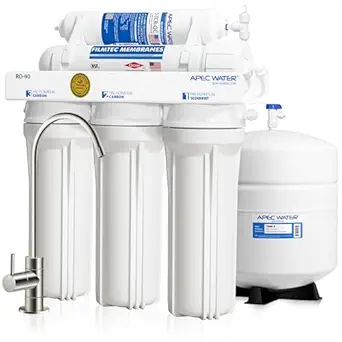 |
| Best Quality Built to a higher standard if you want something more solid | Waterdrop G3P600 Tankless RO |  |
| Best Value The sweet spot between price and what you get | APEC Water ROES-50 |  |
| Best Budget The cheapest option that still gets the job done reliably | CO-Z Countertop Reverse Osmosis WFS-R040-00 |  |
| Top Rated A top-rated pick with lots of positive feedback | iSpring RCC7-BN RO System |  |
| Most Popular A crowd favorite that many people choose with confidence | iSpring RCC7AK-BN 75 GPD RO System |  |
| Best Seller A high-volume bestseller chosen again and again | DREO RO Countertop Water Filter 5L |  |
APEC Water RO-90

| Purification Method | Activated Carbon, Reverse Osmosis |
|---|---|
| Installation Type | Under Sink |
| Capacity | 90 gallons_per_day |
| Operating Pressure Range | 40-85 psi |
The APEC Water RO-90 is a traditional under-sink reverse osmosis system built for steady, high-capacity drinking water production. It uses a five-stage filtration train—sediment, dual carbon blocks, a FILMTEC RO membrane, and a post-carbon polishing stage—to strip chlorine, tastes and odors, heavy metals, fluoride, and many dissolved solids. Typical use is a dedicated cold-water faucet for drinking, cooking, and beverages; the included tank and faucet let you dispense filtered water without altering household plumbing. The system is manual pressure driven and rated for up to 90 gallons per day, so it handles larger households or hard-water situations where high rejection is needed. Installation is DIY-friendly with quick-connect fittings and long-life polypropylene filters, but it requires under-sink space for the tank and supply lines and needs 40 to 85 psi feed pressure to meet performance. Filter changes and the tank refill cycle are ongoing maintenance considerations, and like all RO systems it produces waste water during purification. For buyers seeking a high-capacity, proven RO layout for hard water, this is a practical, heavy-duty choice.
Best for: Home buyers who want a robust under-sink RO system that delivers high daily output and strong contaminant rejection for cleaner drinking water in cooking and beverages.
Less Ideal for: People with very low household water pressure, extremely limited under-sink space, or those unwilling to perform periodic filter and membrane maintenance should consider other options.
- Five-stage filtration including a high-rejection FILMTEC RO membrane for broad contaminant removal
- Rated 90 gallons per day for higher output compared with typical home RO units
- Includes tank, faucet, tubing and fittings for a complete under-sink install
- Premium extruded carbon blocks and post-carbon stage improve taste and remove chlorine and VOCs
- Produces waste or drain water as part of the RO process
- Requires adequate under-sink space and minimum feed pressure to perform at rated capacity
Verdict: Choose the RO-90 when you need a high-capacity, five-stage reverse osmosis system that reliably removes a wide range of contaminants for cleaner drinking water.
Waterdrop G3P600 Tankless RO
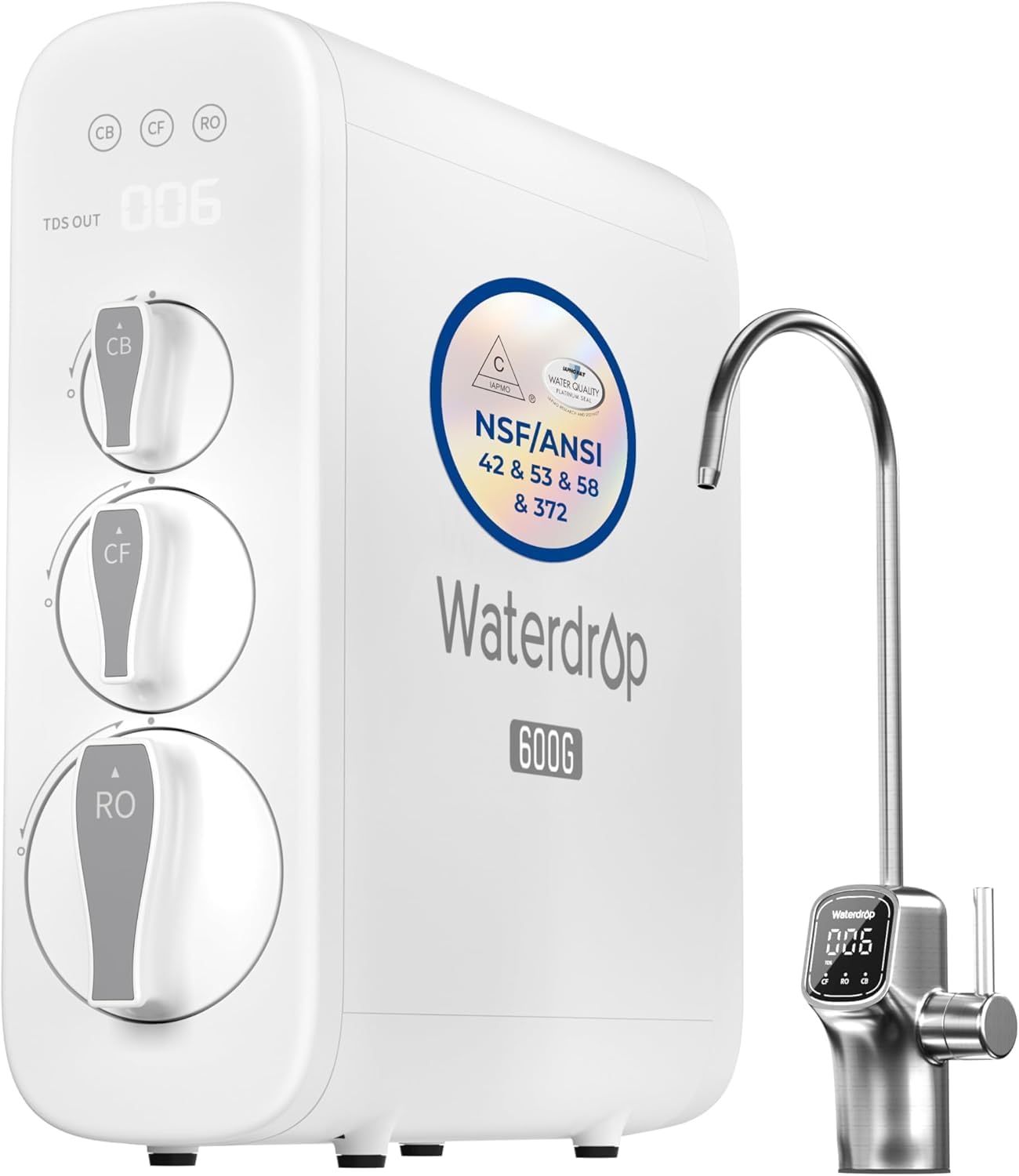
| Filtration stages | 8-stage |
|---|---|
| Flow rate | 600 GPD |
| Pure to drain ratio | 2:1 |
| Maximum flow rate (faucet) | 0.42 gpm |
| Power source | Corded Electric |
The Waterdrop G3P600 is a tankless reverse osmosis system designed for under-sink installation that prioritizes high throughput and low wastewater. It uses eight filtration stages including a reverse osmosis membrane and carbon blocks to cut TDS, chlorine, heavy metals and PFAS, and it produces a cup of purified water in about 8 seconds. The system is electrically powered and includes a smart display faucet that reports TDS and filter life, making it easy to monitor performance without guesswork. Tankless construction saves under-sink space and quick twist-and-replace cartridges simplify maintenance. Notable practical benefits are the 600 GPD capacity and a 2:1 pure-to-drain ratio, which reduce water waste versus many RO units and suit high-demand kitchens or hard-water households that need steady flow. Important limits are the need for an under-sink electrical outlet and cabinet clearance for installation, and the system requires periodic filter replacements on its published schedule to maintain performance.
Best for: Buyers who prioritize fast, high-capacity RO performance and measurable water-quality feedback for heavy household use or hard water situations will appreciate this system.
Less Ideal for: If you need a nonpowered, passive system or lack an accessible under-sink outlet and installation space, choose a different style of filter.
- High 600 GPD production for fast fills and steady drinking-water supply
- 8-stage filtration including RO membrane and carbon blocks for broad contaminant reduction
- 2:1 pure-to-drain ratio reduces wastewater compared with many RO systems
- Smart display faucet shows TDS and filter life so you can monitor water quality easily
- Tankless design saves under-sink space and allows tool-free filter changes
- Requires under-sink electricity and an available outlet for the pump and electronics
- Cabinet space must fit the unit and two installation holes are needed for faucet and drain
Verdict: Choose the G3P600 when you need a tankless RO that delivers high daily output, efficient 2:1 recovery, and a smart faucet for real-time water-quality monitoring.
APEC Water ROES-50

| Purification Method | Reverse Osmosis |
|---|---|
| Filtration Stages | 5-Stage |
| Daily Output (GPD) | 50 GPD |
| Operating Pressure Range | 40-85 psi |
| Filter Life Cycle | 6 months |
The APEC ROES-50 is a 5-stage under-sink reverse osmosis system designed to deliver very pure drinking water at up to 50 gallons per day. It installs beneath a sink and includes the RO unit, storage tank, brushed nickel faucet, and quick-connect fittings for a straightforward DIY setup. The five filtration stages and WQA/NSF-aligned construction target chlorine, heavy metals, fluoride, arsenic, PFAs, microplastics and other common tap-water impurities, so it noticeably improves taste and safety compared with untreated hard water. Filter life is staged so prefilters are replaced more often (roughly 6 to 12 months) while the RO membrane and post-filters last up to 12 to 24 months depending on feed water quality. Practical features include color-coded tubing and compact under-sink footprint, though the system requires a storage tank and will produce wastewater during RO operation. For households seeking reliable contaminant reduction and easy maintenance, this system balances performance and serviceability well for typical hard-water conditions.
Best for: Buyers who want a dependable under-sink RO system that substantially reduces hard-water contaminants and prefer an easy DIY install with clear maintenance intervals.
Less Ideal for: People with very limited under-sink space or those unwilling to accept the water waste and periodic filter replacements associated with RO systems.
- Five-stage filtration removes a broad range of contaminants including heavy metals, fluoride, and PFAs
- Rated 50 gallons per day to support typical household drinking and cooking needs
- Includes faucet, storage tank, and quick-connect fittings for DIY-friendly installation
- Staged filter lifespans let prefilters be replaced more often to protect the RO membrane
- Produces wastewater as part of the RO process, which raises water use compared with non-RO options
- Requires under-sink space for the unit plus a separate storage tank
Verdict: Choose the ROES-50 if you want a no-nonsense under-sink RO that reliably removes a wide range of hard-water contaminants and is simple to install and maintain.
CO-Z Countertop Reverse Osmosis WFS-R040-00

| Purification Method | Reverse Osmosis |
|---|---|
| Other Special Features of the Product | Built In TDS Meter, Change Filter Indicator, Self Cleaning |
| Power Source | Corded Electric |
| Supported Water TDS Level Maximum (PPM) | 500 |
| Filter Life Cycle | 1 years |
The CO-Z countertop RO system brings five-stage reverse osmosis filtration into a plug-and-play package for homes and small offices. It sits on the counter, you fill the tank, plug it in and the unit uses an internal pump and RO membranes to reduce TDS and remove contaminants commonly associated with hard water such as heavy metals and chlorine. The front panel offers three preset dispense volumes and continuous pour, plus a real-time TDS readout and filter life indicator so you can monitor performance. Practical touches include a 1.3-gallon reservoir and a removable 0.4-gallon pitcher for easy serving. The unit claims a 4:1 pure-to-drain ratio and a 75-gallon daily capacity, which helps limit wastewater compared with many RO units, and filters are advertised to last up to a year of typical use. Limitations to expect are the countertop footprint and weight compared with under-sink systems and the need to replace filters on schedule; some buyers may also find the daily throughput and long-term waste rate different from hard-water systems sized for whole-house use.
Best for: Buyers looking for a low-effort, budget-friendly RO solution that removes common hard-water contaminants without plumbing changes and who want visible performance indicators.
Less Ideal for: Homes needing whole-house hard water treatment or very high continuous throughput should consider larger under-sink or whole-house systems instead.
- Five-stage RO filtration certified to NSF/ANSI 58 and 61 for broad contaminant reduction
- No-install countertop design that only requires filling the tank and plugging in
- Built-in TDS meter and filter life indicator for easy performance monitoring
- Three preset dispense volumes plus continuous pour and a removable pitcher for serving
- Countertop footprint and weight make it less discreet than under-sink systems
- RO systems still produce wastewater and long-term efficiency depends on local water hardness and usage
Verdict: If you want an affordable, installation-free RO unit that visibly shows TDS and filter status for treating drinking water from hard water supplies, this CO-Z countertop system is a practical pick.
iSpring RCC7-BN RO System

| Purification Method | Reverse Osmosis, Activated Carbon, Carbon block |
|---|---|
| Power Source | No Power Needed |
| Maximum Flow Rate | 3.4 liters per minute |
| Supported Water TDS Level Maximum (PPM) | 750 |
| Capacity | 75 gallons |
The iSpring RCC7-BN is a five-stage under-sink reverse osmosis system built to deliver bottled-quality drinking water at home without electricity. It uses three pre-filters (sediment, GAC, carbon block), a high-precision RO membrane that filters to 0.0001 microns, and a final GAC polishing filter to reduce over 1,000 contaminants and cut TDS by roughly 80 to 90 percent. The system includes push-to-connect fittings, a check valve to prevent backflow, clear first-stage housing for quick visual inspection, and a storage tank plus a designer brushed-nickel faucet. Typical use is continuous household drinking-water production for cooking, beverages, and ice makers; maintenance is periodic filter and membrane replacement on the published intervals and occasional visual checks. Practical benefits are strong contaminant reduction, a leak-minimizing installation design, and a compact footprint for most kitchen cabinets. Limits are that it is intended for municipal tap water rather than untreated well water, it requires scheduled filter changes to maintain performance, and installation is a DIY plumbing task or requires a plumber for those uncomfortable with under-sink work.
Best for: Buyers who prioritize a reliable, thoroughly certified RO system to consistently improve tap water quality for drinking and cooking and who value a low-leak installation design and clear filter monitoring.
Less Ideal for: People using untreated well water without adding pre-filtration or buyers who need a plug-and-play countertop unit that requires no installation work.
- Comprehensive 5-stage filtration including RO membrane and post-carbon polishing
- NSF/ANSI 58 certification for meeting established RO standards
- Transparent first-stage housing for easy visual filter inspections
- Push-to-connect fittings and included components simplify leak-resistant installation
- Produces high daily capacity suitable for family use (75 GPD capacity listed)
- Not designed for untreated well water without pre-filtration
- Requires regular filter and membrane replacements to maintain contaminant reduction
- Under-sink installation requires basic plumbing skills or professional help for some users
Verdict: Choose the RCC7-BN when you want a proven, certified under-sink RO system that reliably delivers high-capacity, low-TDS drinking water for household use.
iSpring RCC7AK-BN 75 GPD RO System

| Purification Method | Reverse Osmosis, Alkaline, Activated Carbon, Carbon block |
|---|---|
| Power Source | No Power Needed |
| Maximum Flow Rate | 284 liters_per_day |
| Operating Pressure Range | 70 psi |
| Filter Life Cycle | 6 months |
The iSpring RCC7AK-BN is an under-sink reverse osmosis system that delivers up to 75 gallons per day of heavily filtered, remineralized drinking water without using electricity. It uses true six-stage filtration including sediment, carbon, RO membrane, and an alkaline mineral stage to restore healthy pH and minerals after purification, and the system is NSF/ANSI 58 certified for whole-system performance. Installation is designed to be DIY-friendly with push-to-connect fittings, color-coded tubing, and a patented top-mounted faucet fastener that lets you tighten the faucet from above the countertop. Practical benefits include clear first-stage housing for visual sediment checks, compatibility with common fridge lines for ice makers, and a storage tank plus a brushed nickel faucet included. Expect routine filter changes on the 6-month and longer schedules and some space taken under the sink by the tank and housings; the system also requires sufficient feed pressure for rated performance. For buyers who want proven contaminant reduction and a mineral-boosted finish to the water, this system balances lab-grade filtration with user-friendly features and solid support resources.
Best for: Buyers who prioritize verified performance and peer-proven reliability and want an under-sink system that restores minerals and pH for better-tasting water while remaining electricity-free.
Less Ideal for: People with very limited under-sink space or those who need wall-mounted or countertop filtration solutions should consider other formats.
- NSF/ANSI 58 full-system certification for verified contaminant reduction
- Six-stage filtration including an alkaline remineralization stage for balanced pH
- Electricity-free operation so it works in any kitchen without a power source
- Clear first-stage housing for easy visual monitoring of sediment buildup
- Includes storage tank and brushed nickel faucet with top-mounted fastener for easier faucet installation
- Requires adequate water pressure to reach rated flow and performance
- Takes under-sink space for tank and housings which may be tight in small cabinets
- Filter replacements on multi-stage systems add ongoing maintenance tasks
Verdict: Choose the iSpring RCC7AK-BN when you want a proven, NSF-certified RO system that removes contaminants and returns balanced, mineralized water without needing electricity.
DREO RO Countertop Water Filter 5L

| Purification Method | Reverse Osmosis |
|---|---|
| Capacity | 5 liters |
| Other Special Features of the Product | Built In TDS Meter, Change Filter Indicator, Touch Control |
| Pure to Drain Rate | 3:1 |
| Included Components | Body, RO Filter, 2 Autofill Water Pitchers |
The DREO countertop RO system brings 7-stage reverse osmosis filtration into a plug-and-play countertop unit designed for everyday use without plumbing. It reduces TDS and removes a wide range of contaminants while displaying real-time raw and pure water TDS and offering filter-life reminders, which makes maintenance straightforward. The unit includes two auto-fill pitchers so one can be used while the other refills, and a self-cleaning auto-flush routine helps keep internal tubing from stagnating. The compact 5L reservoir and 3:1 pure-to-drain ratio keep water waste lower than many portable RO units, and filters twist in for quick replacement. Practical limits are the countertop form factor and 5L capacity, so it is best for small households or kitchens with limited under-sink access rather than large families needing continuous high-volume supply. The system is designed for simple setup and visible monitoring, making it a low-hassle option for buyers who want RO-quality water without a plumber or complicated installation.
Best for: Buyers who want full RO-level filtration without plumbing or complex setup and who prefer visible monitoring and low-hassle maintenance for a small household.
Less Ideal for: Large households or users who need a continuous, high-volume supply from an under-sink hard-plumbing solution should consider larger under-sink systems instead.
- 7-stage reverse osmosis filtration with claimed broad contaminant removal
- Built-in TDS meter and filter-life indicator for easy, real-time monitoring
- Auto-fill dual-pitcher system for hands-free refills and continuous access to filtered water
- Self-cleaning auto-flush feature reduces stagnation in internal tubes
- Twist-to-install filters simplify replacements and routine maintenance
- 5L tank capacity limits how much filtered water is immediately available between refills
- Still produces wastewater at a 3:1 pure-to-drain ratio, so not zero-waste
Verdict: If you want factory-quality RO filtration on a countertop with easy setup and visible TDS monitoring, this DREO unit delivers a low-hassle solution for small households.
Choosing the Right Reverse Osmosis Water Filter for Hard Water: Key Factors to Consider
Mineral Rejection and TDS Reduction
A core purpose of a reverse osmosis system in a hard-water setting is to reduce dissolved minerals. Look for systems with high membrane rejection rates and multiple stages that target different contaminant classes. Higher TDS reduction means fewer minerals reaching your drinking water, which improves taste and reduces mineral spotting on glassware.
Consider how rejection is affected by feed water pressure and temperature. In hard-water applications, membranes can experience fouling from calcium and magnesium, so systems that include robust prefiltration and membrane protectors will maintain rejection rates longer.
Prefiltration and Scale Management
Prefilters remove sediment, chlorine, and larger particulates that would otherwise foul the RO membrane. For hard water, a quality sediment filter and an activated carbon stage are essential to protect membrane performance and extend service life.
Some systems offer additional scale-inhibiting stages or cartridges designed to sequester hardness minerals before they contact the membrane. These features reduce the frequency of membrane cleaning or replacement and help preserve flow over time.
Delivery Flow Rate and Usability
RO systems traditionally produce water more slowly than direct-tap options. For everyday kitchen use, pay attention to the system's gallons-per-day rating and the actual flow you will experience at your household water pressure. Systems that include permeate pumps or pressurized storage tanks improve delivery speed and reduce wait times at the tap.
Think about where you will install the unit and how often you will use it. A system that delivers enough filtered water without frequent delays will be more convenient for cooking, filling pitchers, and making beverages.
Filter and Membrane Lifespan
Maintenance frequency directly affects ongoing cost and convenience. Prefilters often need replacement every 6 to 12 months, while membranes can last 2 to 5 years depending on feed-water quality and maintenance. In hard-water conditions, membranes may need earlier attention unless the system includes effective prefiltration or scale-control stages.
Check for clear replacement intervals and whether filters are standard, easy-to-source sizes. Systems that use proprietary cartridges may be easier to change but could limit third-party options for replacements.
Installation and Maintenance Practicality
Consider how the system installs under the sink and whether routine tasks can be performed without special tools. Quick-change filter housings and color-coded fittings simplify filter swaps and reduce the risk of leaks during maintenance. Hard-water systems benefit from designs that allow easy access to components for occasional descaling.
Also evaluate whether the system requires periodic sanitization, and if so, how straightforward that process is. Systems with clear instructions and labeled parts reduce the chance of installation errors and simplify long-term upkeep.
Waste Water Ratio and Efficiency
RO systems produce a concentrate stream during filtration. In hard-water environments where membranes may be under greater stress, the waste-to-product ratio is an important efficiency consideration. Some systems use pumps or design optimizations to lower waste volume and improve water use efficiency.
Think about household water availability and sustainability goals. A more efficient system reduces the quantity of water sent to drain while still delivering high-rejection performance.
How Hard Water Affects RO Performance
Hard water increases the risk of scale buildup on membranes and internal fittings. Scale reduces membrane permeability and can lower overall rejection rates while increasing the pressure needed to push water through the membrane.
Addressing scale starts with proper prefiltration and, when appropriate, adding scale-inhibiting cartridges or softening pretreatment. Understanding these interactions helps you select a system that maintains performance over months and years.
- Scale forms faster when feed water has high calcium and magnesium concentrations.
- Prefiltration removes particulates that accelerate membrane fouling.
- Scale inhibitors do not remove hardness minerals but prevent them from precipitating on surfaces.
Installation Tips for Hard-Water Homes
Location and accessibility matter. Install the system where you can easily remove filters and inspect the tank. If water pressure at the sink is low, consider a model that supports a permeate pump or has a pressurized tank to maintain usable flow.
Before installing, test your feed water hardness and total dissolved solids. That data informs filter selection and replacement frequency and helps determine whether an upstream softener or a scale-inhibitor cartridge is necessary.
- Mount filters vertically for easiest access and to prevent trapped air.
- Use quality shutoff valves and follow torque guidance to avoid leaks.
- Label replacement dates on housings to keep maintenance on schedule.
Maintaining Performance Over Time
Regular maintenance keeps rejection rates high and prevents premature failures. Replace sediment and carbon prefilters on the recommended schedule, and monitor TDS at the faucet to detect membrane wear. If you notice rising TDS, address prefiltration first before replacing the membrane.
Occasional sanitizing of the system and periodic inspection of fittings for scale deposits help prolong component life. In very hard water, plan more frequent checkups and keep spare filters on hand to avoid downtime.
- Check TDS with a handheld meter every 6 months as a basic health check.
- Flush new membranes per manufacturer guidance to remove preservatives.
- Keep a small supply of O-rings and common fittings for quick repairs.
Deciding If You Need Additional Pretreatment
In homes with extremely hard water, an upstream water softener or targeted cartridge designed to reduce scaling may be necessary. A softener reduces hardness by exchanging ions and can significantly extend membrane life, though it adds complexity to the system setup.
Alternatively, scale-inhibitor cartridges reduce the tendency of minerals to precipitate without removing hardness. These options are situational. Base the decision on measured hardness levels, household water use patterns, and willingness to manage extra maintenance steps.
- Ion-exchange softeners protect membranes but change water chemistry.
- Scale inhibitors are lower maintenance but do not reduce mineral concentrations.
- Balance pretreatment choice with installation space and budget for upkeep.
Measuring Success: What To Test
Track total dissolved solids and flow rate to quantify system health. A stable low TDS reading indicates effective mineral removal, while declining flow can be an early sign of fouling or a saturated prefilter.
Keep records of filter change dates and any maintenance tasks. Consistent measurements help isolate trends and guide whether adjustments such as adding pretreatment or shortening replacement intervals are necessary.
- TDS meters are inexpensive and provide immediate feedback.
- Record inlet pressure to identify supply issues affecting performance.
- Note any taste or odor changes as part of regular checks.
How We Chose the Best Reverse Osmosis Water Filter for Hard Water
We focused on attributes that directly affect performance and ownership experience in hard-water applications. First, we prioritized systems with proven mineral and scale-handling features such as multi-stage filtration that includes sediment and carbon prefilters, and membrane technologies known for high total dissolved solids rejection. Second, we evaluated flow performance under realistic household pressures and whether systems offer permeate pumps or tank designs that mitigate slow delivery. Third, maintenance demands were a key filter: ease of access to replaceable filters, expected filter and membrane lifespans, and availability of clear service intervals. Fourth, we considered build quality and materials that resist scale buildup in valve seats and fittings. We excluded single-stage or countertop filters that do not include an RO membrane or adequate prefiltration because they cannot reliably protect the membrane from scale in hard-water conditions. We also excluded systems lacking clear maintenance guidance. Our final selection favors systems that score well across mineral rejection, ongoing maintenance, flow usability, and durable construction.
Our full evaluation process is outlined in our review methodology.
FAQ
Will a reverse osmosis system remove all hardness from my water?
Reverse osmosis reduces dissolved minerals significantly but may not remove every hardness ion in every condition. Effectiveness depends on membrane quality, feed pressure, and prefiltration. For extremely hard water, additional pretreatment is sometimes recommended.
How often will I need to change filters and the RO membrane with hard water?
Prefilters generally require replacement every 6 to 12 months, while membranes can last 2 to 5 years. In hard-water situations, expect more frequent prefilter changes and potentially shorter membrane life unless the system has effective scale protection.
Does an RO system waste a lot of water in hard-water areas?
All RO systems produce a concentrate stream, and hard-water feeds can reduce efficiency over time. Systems with permeate pumps or optimized flow designs reduce waste. Monitoring efficiency and maintaining prefilters helps minimize waste.
Can I install a reverse osmosis system under any kitchen sink?
Most under-sink RO systems fit standard cabinets, but space for the tank and access for maintenance are important. Measure cabinet interior and plumbing layout first, and consider units with compact tanks or tankless designs if space is tight.
Should I use a water softener before an RO system for hard water?
A water softener can extend membrane life by reducing the hardness load, but it adds complexity and changes water chemistry. For very hard water, softening upstream is a valid option. For moderate hardness, dedicated scale-inhibitor cartridges may suffice.
Final Verdict
For hard-water households, prioritize mineral rejection, robust prefiltration, and practical maintenance when choosing a reverse osmosis system. Balance the need for low TDS and scale protection against delivery speed and service intervals. Systems that offer clear maintenance access, effective scale mitigation, and adequate flow performance provide the best long-term experience. Decide based on measured hardness, how much filtered water you need daily, and whether you prefer a simpler setup or will add pretreatment. Focus on the criteria outlined here to select a system that gives reliable soft, great-tasting water with manageable upkeep.