
Note: This article contains affiliate links. If you click on these links and make a purchase, we may earn a small commission at no extra cost to you. This helps support our research and content. Read our full affiliate disclosure here.
If you live with pets and wall-to-wall carpeting, a robot vacuum that actually handles pet hair and embedded dirt can save hours of work each month. Choosing the right model matters because carpet fibers hold hair and dander differently than hard floors, and some vacuums struggle with long fur or carpet edges. This guide shortlists seven top robot vacuums built for carpet and pet hair, focusing on reliable suction, brush systems that resist tangles, and practical maintenance needs. Below you will find the primary trade-offs to weigh and the evaluation criteria used to pick these options, followed by deeper buying guidance.
Top Picks at a Glance
| Best Overall The best all-around choice for most situations | roborock Q7 M5+ |  |
| Best Quality Built to a higher standard if you want something more solid | ECOVACS DEEBOT T90 PRO OMNI |  |
| Best Value The sweet spot between price and what you get | ILIFE A30s Robot Vacuum |  |
| Best Budget The cheapest option that still gets the job done reliably | Lefant M210 Robot Vacuum |  |
| Top Rated A top-rated pick with lots of positive feedback | WSUANE D15S Max Robot Vacuum |  |
| Most Popular A crowd favorite that many people choose with confidence | ROPVACNIC S1 Robot Vacuum |  |
| Best Seller A high-volume bestseller chosen again and again | eufy C28 Robot Vacuum & Mop |  |
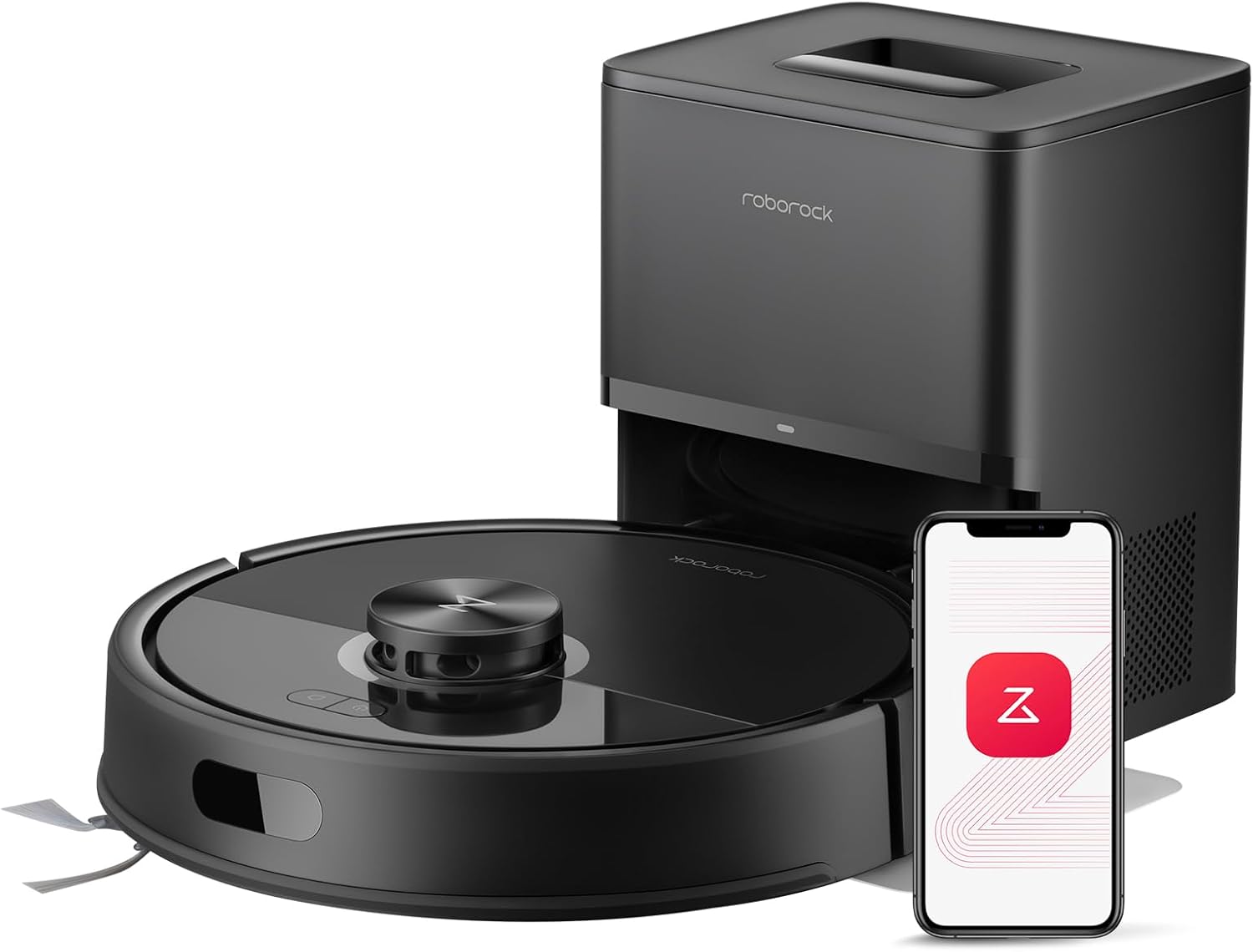
roborock Q7 M5+
| Suction | 10000 Pa |
|---|---|
| Dust bag capacity | 2.7 liters |
| Battery life | 150 minutes |
| Navigation | PreciSense LiDAR |
| Special features | Dual Anti-Tangle, VibraRise 2.0, App/Voice Control |
The roborock Q7 M5+ is a robot vacuum and mop designed for hands-off cleaning in homes with pets and mixed floor types. It uses PreciSense LiDAR mapping and multi-level maps to plan efficient routes and supports app and voice control for scheduling, no-go zones, and spot cleans. The unit pairs a 10000 Pa HyperForce suction system with a dual anti-tangle main brush and side brush to handle pet hair and deep-clean carpets, while an electronic mop with adjustable water flow helps capture fine dust on hard floors. The included RockDock Plus auto-empty dock holds a sealed 2.7 L bag that can go several weeks between changes, cutting down routine maintenance. Runtime and navigation are reliable for multi-room jobs, and the app gives useful controls though it requires 2.4 GHz Wi-Fi. Expect typical robot-vacuum noise and occasional snagging on very tall thresholds, but for everyday pet hair and carpet maintenance the Q7 M5+ delivers powerful, largely uninterrupted cleaning with significantly less hands-on work.
Best for: Buyers who want a strong, low-maintenance robot that reliably handles pet hair and routine carpet cleaning with smart mapping and automated emptying.
Less Ideal for: People who need ultra-quiet operation or who lack a compatible 2.4 GHz Wi-Fi network should consider other options.
- Powerful 10000 Pa suction effective on carpets and pet hair
- Large 2.7 L sealed auto-empty dock reduces emptying to several weeks
- Dual anti-tangle brush system minimizes hair wrap and brush maintenance
- PreciSense LiDAR navigation with multi-level mapping and app control
- App requires 2.4 GHz Wi-Fi and may limit connectivity options
- Noise level around 65 dB during operation can be noticeable in quiet homes
Verdict: If you want a powerful, smart robot that minimizes hands-on maintenance while tackling pet hair and carpets, the Q7 M5+ is a strong all-around choice.
ECOVACS DEEBOT T90 PRO OMNI

| Suction | 30,000Pa |
|---|---|
| Mop system | OZMO Roller 3.0 with self-washing |
| Battery life | 200 minutes |
| Dust/Water capacity | 4 liters |
| Noise level | 60 db |
The DEEBOT T90 PRO OMNI is built for heavy-duty floor care, combining a 30,000Pa BLAST suction system with a pressurized OZMO Roller 3.0 for real scrubbing rather than simple wiping. It vacuums and mops in a single automated workflow: the OMNI station self-cleans and hot-air dries the roller, self-empties and manages dirty water, and even adds cleaning solution when needed, which reduces maintenance and prevents re-soiling. Navigation features include obstacle avoidance, TruEdge 3.0 for edge cleaning, and a carpet lift that keeps carpets dry during mopping. ZeroTangle and airflow-directed pickup make it better at handling pet hair, and PowerBoost charging helps it finish larger homes without repeated manual intervention. Practical drawbacks are its size and noise level around 60 dB, and reliance on the OMNI station for many of the premium conveniences adds complexity and footprint compared with simpler robot vacuums. For carpet and pet messes it delivers strong suction and active scrubbing, but expect a larger dock and more space taken by the full station.
Best for: Buyers who prioritize deep cleaning performance on carpet and heavy pet hair and want a mostly hands-off solution that combines powerful vacuuming with real scrubbing and automated station maintenance.
Less Ideal for: People with very small homes, limited storage for a large dock, or who prefer a compact, no-frills robot without an external cleaning station.
- Very high 30,000Pa BLAST suction that lifts deep dirt and pet hair from carpets and hard floors
- OZMO Roller 3.0 delivers pressurized scrubbing and self-washing to remove sticky spills and prevent streaking
- OMNI station automates mop washing, hot-air drying, self-emptying and dirty-water management for low manual maintenance
- ZeroTangle system and airflow-guided pickup reduce hair wrap and make pet-hair maintenance easier
- TruEdge 3.0 and obstacle avoidance improve edge and corner cleaning coverage
- Large station and robot footprint adds complexity and requires more floor space
- Operating noise around 60 dB may be noticeable during runs
Verdict: If you need top-tier suction and automated real-scrub mopping to tackle carpets and pet hair with minimal hands-on maintenance, the DEEBOT T90 PRO OMNI is a strong performance-focused choice.
ILIFE A30s Robot Vacuum

| Max suction | 10,000 Pa |
|---|---|
| Navigation | LiDAR (SLAM) |
| Bin capacity | 450 ml |
| Battery life | 150 minutes |
| Noise level | 72 db |
The ILIFE A30s is a vacuum-only robot designed for homes with carpets and pet hair, pairing LiDAR mapping with strong suction to pick up debris across rooms. It uses LDS LiDAR and SLAM to build maps and plan efficient routes, supports multi-floor mapping, and lets you set no-go zones, schedules, and area cleaning from the ILIFE Clean app or via voice assistants; a simple remote is also included. In practice the 10,000Pa max suction and a dual anti-tangle brush help lift embedded dirt and pet hair from carpets while the 450 ml dustbin reduces how often you empty between runs. A 150-minute runtime covers larger cleaning sessions and automatic recharge means it resumes cleaning reliably. Trade-offs are that it is vacuum-only with no mopping option, it runs around 72 dB at peak which can be noticeable, and some advanced obstacle avoidance features are limited compared with higher-end models. For buyers prioritizing mapping accuracy and suction for pet hair on carpet, the A30s delivers sensible performance for the price.
Best for: Buyers who want a practical, map‑aware robot that prioritizes strong suction and tangle‑resistant brushes for regular carpet and pet-hair maintenance.
Less Ideal for: People who need a robot that also mops, or buyers seeking near-silent operation and the most advanced obstacle-avoidance technologies.
- LiDAR navigation with SLAM provides accurate mapping and efficient cleaning paths
- High suction (up to 10,000Pa) effective at lifting dirt and pet hair from carpets
- Dual anti-tangle brush reduces hair wrap and maintenance for pet owners
- App, voice, and remote control allow flexible scheduling, no-go zones, and spot cleaning
- Long 150-minute runtime covers extended cleaning cycles and supports auto recharge
- Vacuum-only design — no mopping capability
- Reported noise level around 72 dB can be loud during high-suction modes
- Some higher-end obstacle avoidance and advanced sensors are absent
Verdict: Choose the A30s if you want accurate LiDAR mapping and high suction focused on keeping carpets and pet hair under control without adding a mopping function.
Lefant M210 Robot Vacuum

| Battery Life | 120 minutes |
|---|---|
| Capacity | 500 cubic centimeters |
| Filter Type | Cartridge |
| Compatible Devices | Amazon Echo, Google Home, Smartphones |
| Other Special Features of the Product | Anti-Fall, Auto-Docking, Obstacle Avoidance, Pet Hair Pick Up, Scheduling |
The Lefant M210 is a small, app-controlled robot vacuum aimed at regular upkeep on hardwood and other hard floors. Its low 3-inch profile slips under furniture, and a brushless suction port helps pick up pet hair without brush tangles. You can run scheduled cleans, pick from six modes including edge and spot, and control the unit via the Lefant app or Alexa/Google voice commands. The listed 120-minute runtime (quiet mode) covers mid-size rooms on a single charge, and the 500ml dustbin reduces how often you empty it. Navigation relies on infrared anti-collision and anti-drop sensors rather than LIDAR, so it follows zigzag or randomized patterns rather than tightly mapped routes; that makes coverage fine for open hardwood areas but less precise in cluttered rooms. Noise is moderate at about 52 dB and suction is tuned for surface dirt rather than deep carpet extraction. For buyers wanting a straightforward, affordable hardwood-focused cleaner, the M210 delivers solid basic performance, but expect simpler navigation and fewer advanced mapping features than higher-end models.
Best for: Buyers on a tight budget who need a dependable, easy-to-use robot for regular hardwood and low-pile cleaning and value app/voice scheduling over advanced mapping.
Less Ideal for: Homes that require precise room mapping, systematic multi-room navigation, or deep-cleaning on high-pile carpets should consider more advanced models.
- Slim profile fits under low furniture for hidden-dirt pickup
- Brushless suction port reduces hair tangles for pet owners
- App scheduling plus Alexa and Google voice control for hands-free operation
- 500ml dustbin and up to 120 minutes runtime support longer cleaning cycles
- Navigation uses infrared sensors and randomized or zigzag patterns rather than LIDAR mapping, so room coverage can be less efficient in cluttered spaces
- Suction and cleaning are optimized for hard floors and low-pile carpet, not deep-cleaning thick carpet
Verdict: If you want an affordable, compact robot that handles daily hardwood and pet hair cleaning with app and voice scheduling, the Lefant M210 is a practical pick.
WSUANE D15S Max Robot Vacuum

| Suction | 10000Pa (max) |
|---|---|
| Dustbin capacity | 3.5 liters |
| Navigation | dToF LIDAR |
| Filter type | Three-layer high-efficiency (washable) + filter cotton (not washable) |
| Runtime | Up to 160 minutes |
The WSUANE D15S Max is a self-emptying robot vacuum and mop designed for hands-off floor care in homes with pets and mixed surfaces. It uses dToF LIDAR navigation and multi-sensor detection to build accurate maps, let you set no-go zones, and follow targeted cleaning routes while the app provides remote control. The 3.5 liter dustbin in the charging station means you can skip frequent emptying for many weeks, and the machine offers four suction levels up to a claimed 10,000Pa with auto-boost on carpets. A blade-equipped anti-tangle roller and high-speed side brushes reduce hair wrap, while a combination water tank adds mopping capability. Battery life supports extended runs (up to 160 minutes on quiet mode) for larger spaces, and the triple-layer washable filtration helps trap fine dust. Expect some noise at higher power settings and that the hair-cutting feature activates after a cleaning pass, so occasional maintenance of the roller and filters is still required. For reliability-focused buyers the D15S Max balances strong suction and dependable navigation with a low-maintenance emptying base.
Best for: Buyers who prioritize a low-maintenance, reliable cleaning setup for homes with pets and carpets and want accurate mapping and a self-emptying base to minimize daily upkeep.
Less Ideal for: People who need a very quiet vacuum for noise-sensitive environments or who prefer a simpler non-app-controlled device without mapping features.
- Large 3.5L self-emptying dustbin reduces how often you handle dirt
- dToF LIDAR navigation with multi-sensor detection for accurate mapping and no-go zones
- High maximum suction with auto-boost for deeper carpet cleaning
- Anti-tangle blade-equipped roller specifically designed to cut hair and reduce wrap
- Long runtime options with multiple suction levels for flexible cleaning sessions
- Noise level can reach about 70 dB on higher power settings
- Some consumables like filters and dust bags still require periodic replacement
Verdict: Choose the D15S Max if you want dependable LIDAR navigation and a large self-emptying bin that keeps pet hair and carpet messes contained with minimal hands-on maintenance.
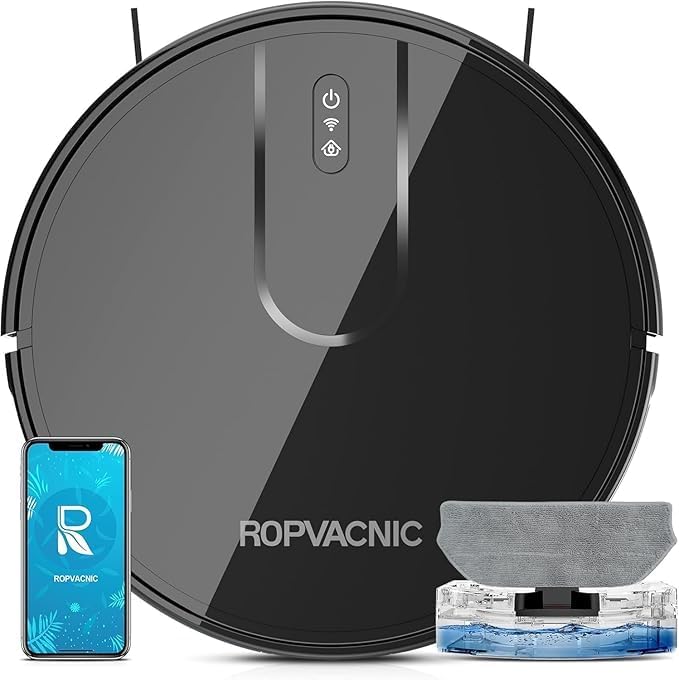
ROPVACNIC S1 Robot Vacuum
| Suction power | 5200Pa |
|---|---|
| Battery life | 120 minutes |
| Form factor | round |
| Filter type | Multi-layer Optimized High-Efficiency Filtration |
| Surface recommendation | Hardwood Floors, Low Pile Carpets |
The ROPVACNIC S1 is a compact robot vacuum and mopping combo built for everyday floor care in homes with pets. It vacuums with up to 5200Pa suction and uses side brushes plus a three-point cleaning system to pull hair and debris into a sizable onboard dustbin, while an electrically controlled water tank offers four-stage mopping intensity for light damp cleaning. The unit connects to an app, remote, and voice assistants for scheduled runs and custom cleaning modes, and it returns to its charging base automatically when battery runs low. Practical benefits include a low 2.99-inch profile that reaches under furniture, a HEPA-style multi-layer filter that helps trap fine dust, and a 120-minute battery life for larger areas. Important limitations are typical for this class: the mopping is for light maintenance rather than scrubbing stuck stains, and performance on high-pile carpet will be limited compared with upright vacuums. Navigation relies on sensors and algorithms rather than advanced LIDAR mapping, so room-by-room mapping and ultra-precise zone control are not emphasized.
Best for: Buyers who prioritize proven performance on hard floors and low-pile carpets and want a pet-hair focused, connected robot that simplifies routine cleaning with app and voice control.
Less Ideal for: People who need deep scrubbing mopping or precise mapped cleaning zones for multi-room layouts should consider alternatives with stronger wet-cleaning or LIDAR mapping.
- Strong suction rating advertised (5200Pa) for pulling pet hair and crumbs from hard floors and low-pile carpets
- Adjustable electronically controlled mopping with four intensity settings for tailored light cleaning
- App, remote, and voice control for scheduled runs and hands-free operation
- 120-minute lithium-ion battery supports longer single-session cleaning for larger homes
- Low 2.99" height fits under low furniture and a multi-layer HEPA-style filter reduces airborne dust
- Mopping system is for surface maintenance and not designed to remove deeply set stains
- Navigation appears sensor-based without advanced mapping, limiting room-by-room precision
Verdict: If you want a connected, pet-focused robot that reliably vacuums hard floors and low-pile carpets while offering adjustable light mopping, the ROPVACNIC S1 is a practical choice.
eufy C28 Robot Vacuum & Mop

| Suction | 15,000 Pa |
|---|---|
| Battery Life | 140 minutes |
| Dust Capacity (station) | 3 liters |
| Filter Type | Washable |
| Control Method | App, Push Button, Voice |
The eufy C28 is a robot vacuum and mop designed for hands-off floor care in homes with pets and mixed surfaces. It uses 15,000 Pa turbo suction and a DuoSpiral anti-tangle roller to pull pet hair from hard floors and short carpets while minimizing brush wrap, and LiDAR navigation maps rooms without using cameras. The included Omni station auto-empties dust into a 3 L container, auto-refills and hot-washes the mop, and uses hot-air drying to reduce odor and mold, which the brand says extends maintenance intervals up to roughly 75 days. App and voice control let you schedule targeted cleaning, and the unit can lift the mop on carpets to avoid wetting them. Practical limits to expect are the large footprint and weight of the base and robot, and the system is optimized for short-pile carpets rather than deep-pile rugs. Battery runtime and real-world debris pickup will vary by suction mode and floor layout, so very large homes or heavy shedding breeds may need more frequent runs or spot cleaning. For buyers who want automated pet-hair pickup with minimal daily upkeep, the C28 focuses on convenience and mop hygiene.
Best for: Homeowners who prioritize low-maintenance, automated cleaning for pet hair across hard floors and short carpets and want a privacy-friendly navigation system.
Less Ideal for: People with extensive high-pile carpeting, very large multi-level homes, or those who prefer a compact standalone robot without a large docking station.
- Strong 15,000 Pa suction for lifting pet hair and fine debris
- Zero-tangle DuoSpiral roller reduces manual brush cleaning
- All-in-one Omni station auto-empties, auto-washes mop, and hot-dries to cut maintenance
- LiDAR navigation maps rooms and avoids obstacles without using cameras
- App and voice control plus automatic mop lift for mixed-floor use
- Large system footprint and heavier weight compared with simpler robot vacuums
- Performance is geared to hard floors and short-pile carpets, not deep or high-pile rugs
Verdict: Buy the eufy C28 if you want strong pet-hair pickup with a self-emptying, auto-washing station that minimizes hands-on maintenance.
Choosing the Right Robot Vacuum for Carpet and Pet Hair: Key Factors to Consider
Suction Power and Airflow
Stronger suction and steady airflow determine how deeply a robot vacuum lifts hair and trapped debris from carpet fibers. Carpet cleaning requires more continuous suction than hard floors because fibers hold on to pet hair, dander, and ground-in dirt. Look for specifications that emphasize airflow or suction metrics and real-world descriptions of deep-cleaning capability.
Keep in mind that on thicker carpet, motors must sustain airflow without overheating. Higher suction often means more battery draw, so balance raw power against runtime and recharge behavior to ensure the vacuum can finish typical cleaning cycles in your home.
Brush-Roll Design and Tangle Resistance
A brush roll that resists hair wrap reduces maintenance time and keeps performance steady. For homes with shedding pets, choose systems that use rubberized flaps, comb-like elements, or separate agitation plus intake designs that divert hair into the suction path rather than wrapping it around the axle.
Also consider the ease of accessing and cleaning the brush. Removable, tool-free brush assemblies and clear pathways make routine hair removal faster. Some designs use dual-stage cleaning where a soft brush lifts debris and a separate intake handles hair, lowering the frequency of manual intervention.
Filtration and Allergen Control
Trapping pet dander and fine particles matters for indoor air quality, especially for allergy sufferers. High-efficiency particulate filters capture smaller particles and prevent them from being recirculated during cleaning. Check whether filters are washable or replaceable and the availability of replacement filters over time.
A sealed airflow path between the intake and the exhaust reduces bypass leaks. Models with multi-stage filtration that include pre-filters and HEPA-grade elements perform better at keeping microscopic allergens contained during and after runs.
Navigation, Carpet Detection, and Edge Cleaning
Effective navigation helps the vacuum spend its runtime where it matters most and prevents repeated passes over the same area. Carpet detection or automatic suction-boost features let the robot increase cleaning power when it senses thicker pile or heavier soiling, improving clean results without constant manual input.
Good edge and corner performance is also important for baseboards and under-furniture zones where pet hair accumulates. Consider mapping features, obstacle negotiation, and whether the robot can adapt its pathing for concentrated cleaning in high-traffic pet zones.
Dust Bin Capacity and Maintenance Burden
Larger dust bins or automatic emptying options reduce the frequency you need to intervene, which is valuable in homes with pets. Smaller bins can fill quickly with hair and dander, forcing multiple emptying cycles during a single cleaning program. Also evaluate how easy it is to empty and clean the bin and whether the components are washable.
Maintenance burden extends beyond the bin. Look at filter replacement intervals, brush-wear parts, and how accessible snag-prone areas are. A design that minimizes regular tool use and offers straightforward consumable replacement will save time and keep performance consistent.
How Carpet Type Affects Performance
Pile height and fiber density change how a robot vacuum interacts with carpet. Low-pile and looped carpets allow airflow to reach more debris, while medium to high-pile rugs can trap pet hair closer to the backing where deeper suction is required. Dense fibers also increase brush resistance, which can slow the robot and reduce runtime.
If your home mixes carpet types, favor units with adjustable suction modes or automatic boost on carpets so the vacuum adapts without frequent mode switching. For thick rugs, check clearance specifications to ensure the robot can maintain contact with the surface rather than riding on top of fibers.
- Low-pile: typically easier to clean, longer runtime.
- Medium-pile: needs stronger suction or active brushes.
- High-pile: may require multiple passes or higher clearance.
Managing Hair Wrap and Routine Upkeep
Even the best brush designs will encounter some hair buildup. Establish a routine for inspecting the brush, bearings, and intake path every few cleaning cycles. Quick visual checks let you catch tangles before they reduce performance or strain the motor.
Keep spare filters and brush components on hand if you have multiple shedding pets. Swapping in a fresh filter or brush can restore peak performance much faster than attempting to deep-clean a heavily soiled component.
- Inspect brush and intake every 3 to 5 runs.
- Clean filters according to manufacturer intervals; replace when throughput drops.
- Store spare wear parts for homes with heavy shedding.
Scheduling and Zone Cleaning for Pet Areas
Use scheduled runs in off-hours or when pets are less active to catch loose hair before it embeds in fibers. Many robot vacuums let you define no-go zones and high-priority zones; dedicate these features to pet beds, feeding areas, and furniture perimeters where hair collects most.
Running more frequent, shorter cycles in high-traffic pet areas can be more effective than infrequent deep cleans because it prevents hair accumulation and reduces tangling on brushes.
- Set daily cleaning for pet zones.
- Use virtual barriers to protect delicate furniture or plants.
- Prefer short, targeted passes for high-hair areas.
Battery Life Vs Cleaning Power Trade-Offs
Higher suction typically reduces runtime, so think about the layout of your home when choosing a unit. A powerful vacuum that cannot finish a full-floor pass may need more frequent recharges and allow hair to remain in uncleaned areas. Conversely, a long-running unit with weak suction might miss embedded hair on carpet.
If you have a larger home, consider models with recharge-and-resume capability so the robot can finish a job across multiple charge cycles without losing its place. For small apartments, shorter runtime with stronger suction may be the better choice.
- Small homes: prioritize suction over runtime.
- Large homes: prioritize battery and recharge-resume features.
- Multi-level homes: plan for manual relocation between floors.
Filter Care and Indoor Air Quality
Regular filter maintenance matters for allergy control and overall air quality. Clean pre-filters frequently to maintain airflow and replace HEPA-type elements as recommended. Even sealed systems need periodic attention to prevent dust buildup that undermines filtration.
If household members have allergies, choose a vacuum with higher-rated filtration and plan for a predictable replacement schedule to avoid lapses in performance.
- Washable pre-filters extend service life but still require replacement eventually.
- Keep a replacement filter schedule to maintain efficiency.
- Inspect seals and gaskets when cleaning the bin to preserve suction integrity.
How We Chose the Best Robot Vacuum for Carpet and Pet Hair
We prioritized characteristics that directly affect how well a robot vacuum performs on carpet and with pet hair. Key evaluation criteria included suction power and airflow, brush-roll design and tangle resistance, filtration efficiency for dander and allergens, navigation and carpet-detection capabilities, and bin capacity plus maintenance requirements. Each candidate needed consistent suction on medium to high-pile surfaces and a brush system designed to clear long hair without frequent manual cutting. Filtration was weighted to favor models that trap fine particles rather than recirculating them. We excluded units primarily optimized for bare floors, models without active carpet-sensing features, and devices with undersized dust bins that require daily emptying in households with pets. We also filtered out vacuums with no reported method for handling hair wrap or with poor filter access for routine cleaning. The resulting selections balance real-world cleaning performance with ease of upkeep and reliability for homes with pets and carpeted rooms.
Our full evaluation process is outlined in our review methodology.
FAQ
Will a robot vacuum pick up long pet hair from deep carpet?
Often, but it depends on the model. Robots with stronger suction and brush systems specifically designed to reduce hair wrap perform best on long hair and deeper pile. For very dense or shag carpets, occasional manual cleaning may still be necessary.
How often should I empty the bin with multiple shedding pets?
Usually every one to three cleaning cycles, depending on the bin size and shedding level. Larger bins or automatic emptying stations reduce the frequency, while small bins can require daily attention in high-shed households.
Do robot vacuums help with pet allergies?
They can reduce surface dander and hair if the model has high-efficiency filtration. However, their effectiveness depends on filter quality and maintenance. Regular filter replacement and frequent runs improve indoor air outcomes.
Are rubber brush rolls better than bristle brushes for pet hair?
Rubber or comb-style brush rolls tend to resist hair wrapping better than traditional bristle rolls. Each design has trade-offs for agitation and suction synergy, so consider the ease of cleaning and how the roll performs on your carpet type.
How should I prepare rooms for robot cleaning with pets?
Pick up loose toys, cords, and clothing that easily tangle. Move pet bowls and any low-lying obstacles out of the robot's path. If your pet is nervous around the device, run the vacuum while they are in another room to reduce stress.
Final Verdict
Prioritize sustained suction and a brush system designed to minimize hair wrap when choosing a robot vacuum for carpet and pet hair. Balance filtration quality and dust-bin capacity with battery life so the vacuum both captures allergens and completes cleaning cycles without constant intervention. Weigh trade-offs between raw power and runtime based on your home size and carpet types. With the right combination of suction, tangle-resistant brushes, and predictable maintenance needs, you can significantly reduce manual cleaning while keeping carpets and indoor air cleaner.