
Note: This article contains affiliate links. If you click on these links and make a purchase, we may earn a small commission at no extra cost to you. This helps support our research and content. Read our full affiliate disclosure here.
If you share your home with one or more cats, a robot vacuum built for pet hair can cut daily maintenance and keep floors livable between deep cleans. Cat fur, dander, and tracked litter create continuous debris that most standard vacuums struggle to manage on autopilot. A purpose-focused robot vacuum reduces visible hair, lowers airborne allergens, and handles litter or tracked dirt without constant intervention. This guide shortlists seven top robot vacuums for cats and explains the practical tradeoffs you should expect. We evaluated suction, brush design, filtration, noise, navigation, and pet-safe features to highlight options that fit different homes and cat behaviors. Read on to find the approach that matches your floor types, shedding level, and tolerance for noise and upkeep.
Top Picks at a Glance
| Best Overall The best all-around choice for most situations | roborock Q7 M5+ |  |
| Best Quality Built to a higher standard if you want something more solid | roborock Qrevo S5V |  |
| Best Value The sweet spot between price and what you get | Tikom G8000 Max Robot Vacuum |  |
| Best Budget The cheapest option that still gets the job done reliably | ILIFE V2 Robot Vacuum |  |
| Top Rated A top-rated pick with lots of positive feedback | Bagotte G6 Robot Vacuum |  |
| Most Popular A crowd favorite that many people choose with confidence | iRobot Roomba 105 Combo |  |
| Best Seller A high-volume bestseller chosen again and again | eufy C28 Robot Vacuum |  |
roborock Q7 M5+
| Suction | 10000 Pa |
|---|---|
| Battery Life | 150 minutes |
| Capacity | 2.7 liters |
| Filter Type | Cartridge |
| Noise Level | 65 db |
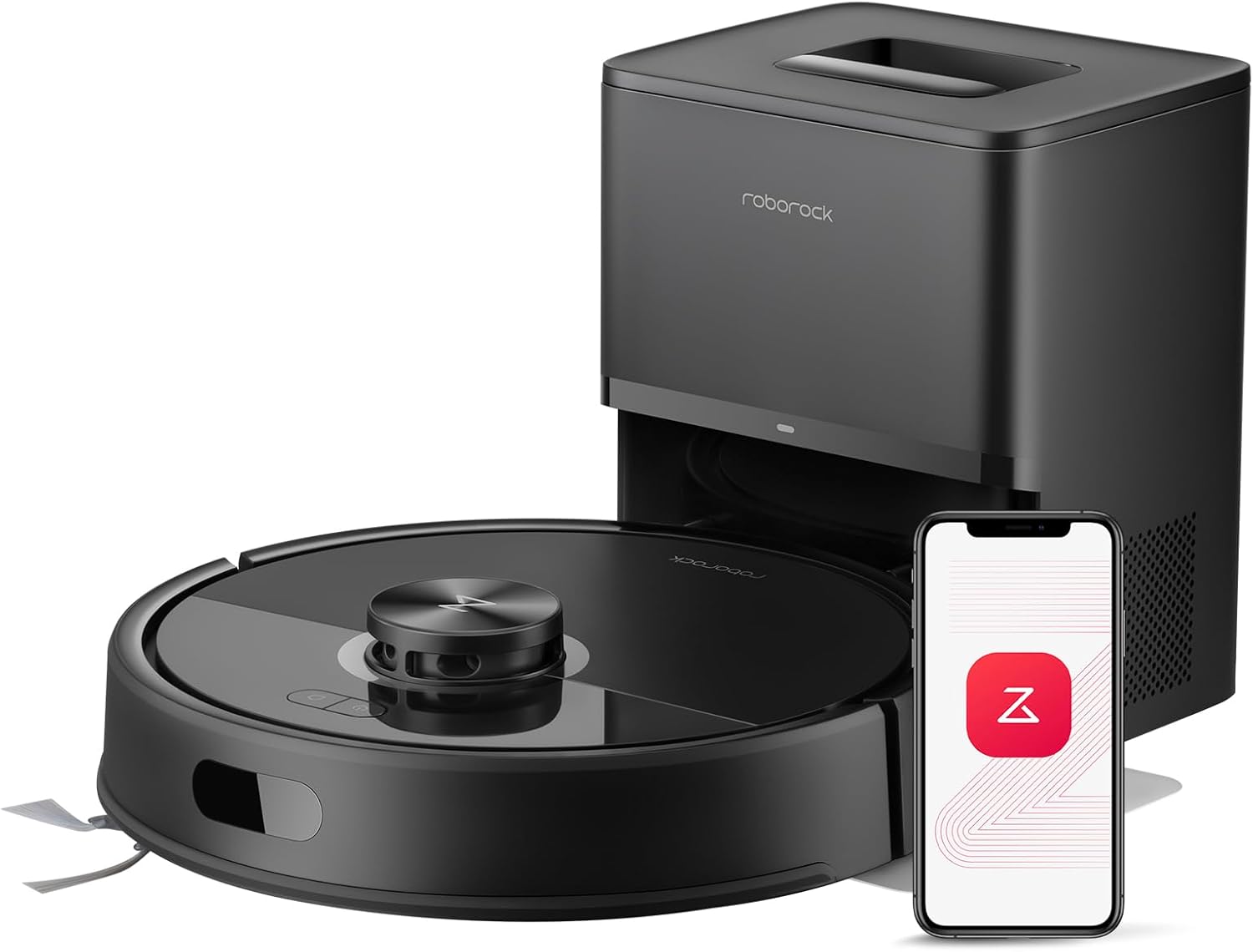
The roborock Q7 M5+ combines powerful 10000 Pa suction, PreciSense LiDAR navigation, and an auto-empty RockDock Plus to handle daily vacuuming and occasional mopping with minimal oversight. It maps rooms precisely, follows efficient cleaning paths, and the app provides scheduling, no-go zones, and on-demand spot cleans; voice control is supported through Alexa and Google Home. The included 2.7 L sealed dust bag promises up to 7–9 weeks of hands-free operation in many homes, which is particularly useful for pet owners who generate frequent hair and debris. Dual anti-tangle brush design and a 0% hair-tangling side brush reduce brush maintenance with long-haired cats, and three water-flow settings let you adjust mopping intensity. Expect typical robot limits: it is not a deep-clean replacement for a full-size vacuum on heavy messes and its noise level is noticeable during operation. The mop is useful for light damp cleaning but will not replace manual scrubbing for stubborn stains. For everyday pet-hair control and automated routines, this model delivers strong cleaning with lower upkeep than many competitors.
Best for: A pet-owning household that wants an automated, low-maintenance vacuum to control cat hair and daily debris while minimizing how often you empty the bin or clean brushes.
Less Ideal for: Homes that need intensive, infrequent deep-cleaning sessions or users who expect a silent robot for nighttime cleaning.
- Very high 10000 Pa suction for strong pickup on carpets and hard floors
- Large 2.7 L sealed dust bag in the auto-empty dock for long hands-free intervals
- PreciSense LiDAR navigation with multi-level mapping for efficient, reliable coverage
- Dual anti-tangle brush system and zero-tangle side brush reduce hair wrap and maintenance
- App control with scheduling, no-go zones, and voice assistant integration for easy automation
- Mopping function is for light maintenance and not a substitute for deep scrubbing
- Operation noise can be noticeable compared with ultra-quiet models
Verdict: Choose the Q7 M5+ if you want powerful suction and a large self-empty dock to keep cat hair and daily messes under control with minimal hands-on maintenance.
roborock Qrevo S5V

| Suction | 12,000Pa |
|---|---|
| Battery Life | 180 minutes |
| Dustbin Capacity | 2.7 liters |
| Noise Level | 64 db |
| Control | App / Voice |
The roborock Qrevo S5V is a high-performance robot vacuum and mop designed for homes with pets and mixed floor types. It pairs a 12,000Pa brushless suction system and a zero-tangle rubberized main brush to pull pet hair from carpets and hard floors while avoiding hair wrap. PreciSense LiDAR mapping and reactive obstacle avoidance let the robot build detailed maps, cross small thresholds, and steer around cables and furniture legs, while multi-floor mapping supports up to four layouts. The FlexiArm dual spinning mops and 30-level water control let you tune mopping intensity, and the dock auto-washes and warm-air dries pads plus self-empties dust and refills water for longer hands-free runs. App scheduling, no-go zones, and room-specific settings make it simple to target litter or high-traffic areas. Expect typical trade-offs for a feature-rich unit: the docked system requires floor space and occasional maintenance of the dock and brushes, and noise around 64 dB is noticeable in quiet rooms. For pet households, its hair-management and long 180-minute runtime make it a strong contender.
Best for: A buyer who prioritizes strong suction, reliable pet-hair handling, and automated maintenance for a mostly hands-off cleaning routine in a multi-floor or larger home.
Less Ideal for: People with very small homes or minimal storage who cannot accommodate a large dock or those who need an ultra-quiet machine for frequent daytime use in quiet spaces.
- Powerful 12,000Pa suction lifts embedded dirt and pet hair
- Zero-tangle rubberized main brush reduces hair wrap on long-fur pets
- All-in-one dock self-empties, auto-washes and warm-air dries mops for extended hands-free operation
- PreciSense LiDAR and reactive sensors create accurate maps and avoid obstacles
- Long 180-minute battery life and multi-floor mapping for larger homes
- All-in-one dock and maintenance routines require dedicated floor space and occasional servicing
- Noise level around 64 dB can be noticeable during high-power cleaning
Verdict: If you want a powerful, pet-focused robot that minimizes manual hair removal and keeps mops clean with a hands-off dock, the Qrevo S5V delivers.
Tikom G8000 Max Robot Vacuum

| Suction | 5000Pa |
|---|---|
| Battery Life | 150 minutes |
| Dustbin Capacity | 450 ml |
| Water Tank | 300 ml |
| Noise Level | 45 db |
The Tikom G8000 Max is a low-profile robot vacuum that combines strong suction with mopping to keep hard floors and low-pile carpets tidy with minimal user effort. In use it maps and navigates with anti-collision and anti-fall sensors, and supports app, remote, voice, and onboard button control so you can schedule cleanings and start runs from a phone or the included remote. Notable features include a 5000Pa suction motor for lifting pet hair and debris, a combined 450 ml dustbin plus 300 ml water tank for simultaneous vacuuming and mopping, and a runtime up to 150 minutes with automatic recharge. Its 3-inch height lets it access under furniture and the Zig-zag cleaning mode improves coverage on open floor areas. Limitations to keep in mind are that higher-pile carpets may not get deep cleaning compared with upright vacuums and mopping is best for maintenance rather than heavy wet cleaning; occasional emptying of the dustbin and refilling the water tank are still required. For routine hardwood maintenance the G8000 Max offers a practical balance of suction, run time, and smart controls.
Best for: Buyers who want a practical, time-saving floor care solution for hardwood and low-pile carpets and prioritize long runtime, reliable navigation, and flexible control options.
Less Ideal for: Households that need deep carpet extraction, heavy wet mopping, or commercial-grade cleaning should consider a dedicated upright or standalone mop system instead.
- Strong 5000Pa suction effective on hard floors and short-pile carpets
- Simultaneous vacuuming and mopping with combined dustbin and water tank saves time
- Long run time up to 150 minutes with auto-recharge for larger homes
- Slim 3-inch profile reaches under low furniture
- Multiple control options including app, remote, voice, and onboard button
- Mopping function is for light maintenance and not heavy wet cleaning
- May be less effective on high-pile carpets compared with full-size vacuums
Verdict: A slim, long-running robot that combines powerful suction and light mopping to keep hardwood floors clean with minimal hands-on work.
ILIFE V2 Robot Vacuum

| Battery Life | 120 minutes |
|---|---|
| Capacity | 300 ml |
| Filter Type | Sponge |
| Control Method | Remote |
| Noise Level | 69 db |
The ILIFE V2 is an entry-level robot vacuum built to keep hardwood and other hard floors tidy without a lot of fuss. Its 2.99-inch slim body fits under low furniture while a tangle-free suction port and sponge filter make it practical for homes with pet hair. You can run scheduled cleanings, switch between auto, spot and edge modes, or start jobs with the included remote control or the single-button on the unit. A 300 ml dustbin and up to 120 minutes of runtime let it cover medium rooms on one charge, and it will automatically return to the dock when the battery is low. Noise is noticeable at 69 dB and there is only one power level, so it lacks adjustable suction or app-based controls, but for straightforward floor maintenance on hardwood and low-pile carpet the V2 delivers solid value at an affordable price.
Best for: Buyers who want an affordable, no-frills robot to maintain hardwood and low-pile carpet cleanliness with simple controls and scheduled runs.
Less Ideal for: Those who need strong adjustable suction, smart app control, or advanced mapping for large or complex homes should consider higher-end models.
- Slim 2.99-inch profile cleans under low furniture
- Tangle-free suction port suited for pet hair
- 120 minutes runtime with automatic return-to-dock
- Multiple cleaning modes (auto, spot, edge) and simple remote control
- Single power level limits suction control for heavier debris
- No smartphone app or advanced navigation features
Verdict: A low-cost, slim robot vacuum that reliably maintains hardwood floors and handles pet hair for budget-focused buyers.
Bagotte G6 Robot Vacuum

| Maximum Suction | 6000Pa |
|---|---|
| Battery Life | 120 minutes |
| Filter Type | H13 |
| Capacity | 300 ml |
| Control Method | App, Remote, Voice |
The Bagotte G6 combines LiDAR navigation with strong suction and an integrated mop to handle daily floor care in mixed homes. It scans and maps rooms with 360° LiDAR to build accurate maps, set no-go zones, and plan efficient routes, which reduces repeated passes and saves runtime. The unit offers up to 6000Pa suction for lifting pet hair and embedded dirt and includes an H13 filter and a 2-in-1 dust and water tank for vacuuming and mopping in one pass. Controls are flexible: use the app, voice assistants, or the included remote to schedule cleanings and manage maps. Practical benefits for pet owners include targeted mapping to avoid bowls and low noise operation that is less likely to disturb cats. Trade-offs are the relatively small 300 ml tank that requires more frequent emptying when homes have heavy shedding and the unit's round form may miss deep-cleaning edges compared with dedicated edge tools. For households that prioritize automated, map-driven cleaning with strong suction and mopping capability, the G6 is a dependable choice.
Best for: Owners who want a reliable, map-driven robot that efficiently cleans pet hair and avoids sensitive areas with minimal supervision.
Less Ideal for: Households that need very large debris capacity or frequent deep edge cleaning without supplemental tools.
- 360° LiDAR mapping with virtual no-go zones for precise navigation
- High suction power rated up to 6000Pa for lifting pet hair and debris
- H13 filter helps capture fine dust and allergens
- Multiple control options including app, Alexa/Google voice, and remote
- 300 ml dust/water tank is small and may need frequent emptying in homes with heavy pet hair
- Round form factor can leave narrow edges and corners less thoroughly cleaned
Verdict: Choose the Bagotte G6 if you want a dependable, LiDAR-mapped robot that combines strong suction and mop capability to keep cat hair and daily dirt under control with minimal oversight.
iRobot Roomba 105 Combo
| Surface Recommendation | Carpet & Hard Floor |
|---|---|
| Battery Life | 100 minutes |
| Other Special Features of the Product | Self-Emptying, LiDAR Navigation, Obstacle Avoidance, Simultaneous Vacuuming & Mopping |
| Controller Type | App Control, Button Control, Voice Control |
| Filter Type | Cartridge |
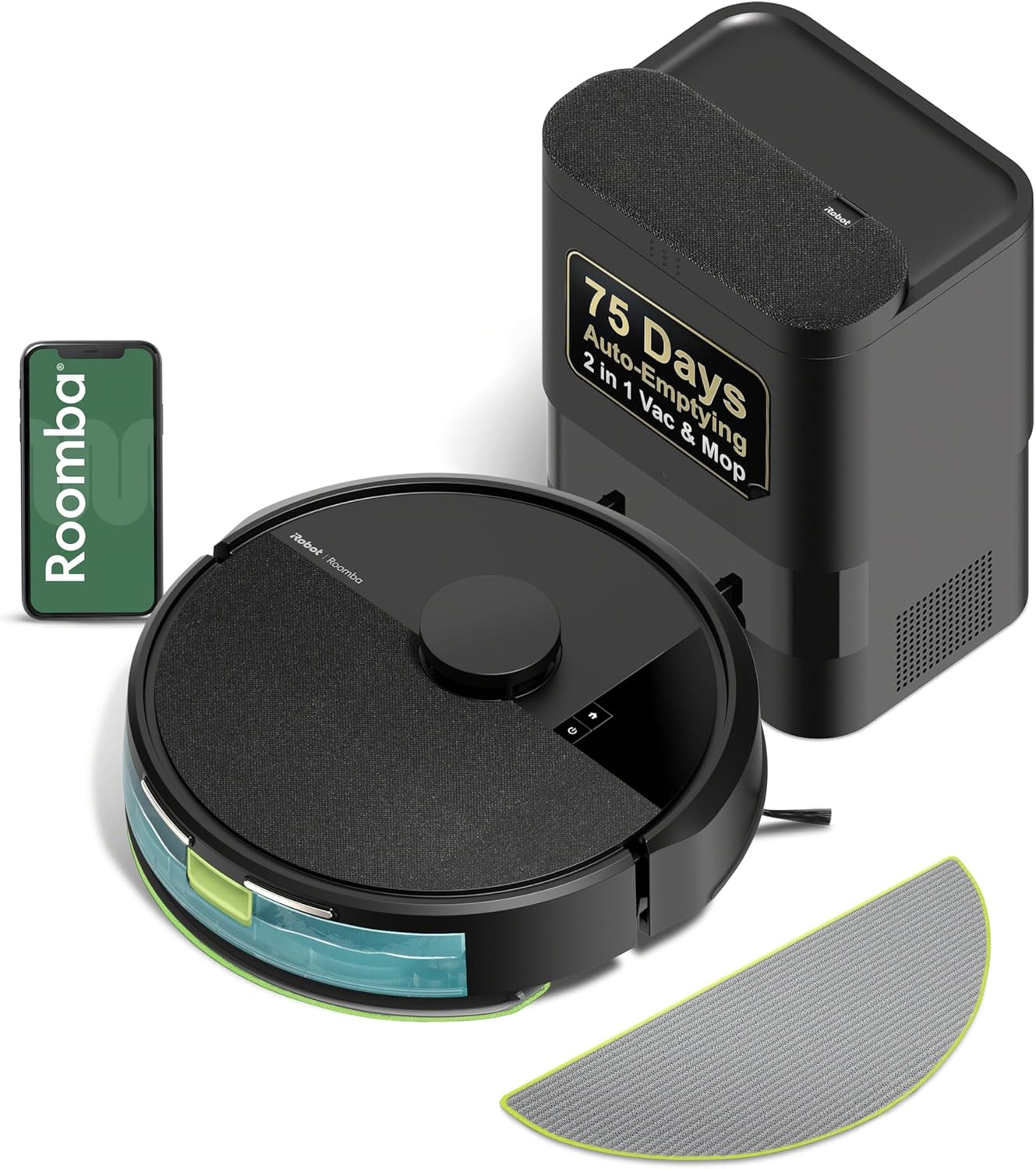
The Roomba 105 Combo pairs a disc-shaped vacuum-mop robot with an AutoEmpty dock to reduce hands-on maintenance for weeks at a time. It uses ClearView LiDAR mapping and obstacle-avoidance to build home maps and navigate around furniture while offering three cleaning modes: vacuum, mop, or vacuum-and-mop. The 4-stage cleaning system combines strong suction, an edge-sweeping brush, a multi-surface brush, and a reusable microfiber mop pad with a micro-pump to control mopping solution and enable SmartScrub for extra scrubbing on high-traffic spots. The included AutoEmpty dock collects debris in a bag that the brand says can hold up to 75 days of dirt, which cuts down on frequent emptying. Setup and control are straightforward through the iRobot Home app or voice assistants, and the unit detects carpets and avoids them while mopping. Expect routine maintenance like filter and brush cleaning and replacing consumables periodically, and note that mop performance is best on sealed hard floors rather than textured surfaces.
Best for: Cat owners who value low-contact maintenance and reliable navigation and want a machine that vacuums pet hair regularly while also offering occasional mopping on hard floors.
Less Ideal for: Homes that need aggressive wet-cleaning of stubborn stains or textured floors where a hand mop or upright machine is preferable.
- AutoEmpty dock holds up to 75 days of debris to reduce how often you need to empty the robot
- ClearView LiDAR mapping provides accurate navigation and obstacle avoidance for consistent coverage
- Combined vacuum-and-mop modes with micro-pump controlled water delivery and SmartScrub for deeper scrubbing
- 70x stronger power-lifting suction and an edge-sweeping brush for better pickup around edges and on carpets
- Multiple control options via app, onboard buttons, or voice assistants for convenient on-demand cleaning
- Mopping relies on a microfiber pad and is best suited to sealed hard floors, not textured or heavily soiled surfaces
- Battery runtime of about 100 minutes may require recharging for larger homes
- Replacement bags, pads, and filters are periodic consumable costs
Verdict: If you want a low-maintenance robot that reliably picks up cat hair and reduces emptying chores, the Roomba 105 Combo with AutoEmpty dock is a practical choice.
eufy C28 Robot Vacuum

| Suction | 15,000 Pa |
|---|---|
| All-in-One Station Capacity | 3 liters |
| Battery Life | 140 minutes |
| Filter Type | Washable |
| Surface Recommendation | Hard floor, wooden floor, short wool carpet |
The eufy C28 is a robot vacuum-mop combo designed to reduce hands-on upkeep for busy homes with pets. It navigates with LiDAR to map rooms and avoid small obstacles while using a 28cm HydroJet roller mop that self-washes and a DuoSpiral brush that resists hair tangles. The included Omni station auto-empties dust into a 3L container, refills and washes the mop, and uses hot-air drying to limit odor and mold, which eufy says can handle about 75 days of maintenance between interventions. Suction is rated at 15,000 Pa and runtime is long enough for multi-room cleans, and the unit lifts the mop automatically when crossing short carpets to protect rugs. Practical benefits for cat owners include strong suction for fine fur and dander, a tangle-resistant brush that reduces brush-clogging, and the convenience of an auto-emptying station that cuts down on daily maintenance. Expect trade-offs in size and weight from the all-in-one station and the usual need to empty or replace the station bag eventually, but for households prioritizing low-touch cleaning and reliable pet-hair pickup the C28 is a compelling option.
Best for: Buyers who want a low-maintenance vacuuming solution that reliably handles pet hair and minimizes daily chores, especially those who prioritize privacy-safe navigation and automated mop care.
Less Ideal for: People with very tight spaces or who need an ultra-compact dock footprint, and those who prefer entirely bagless self-emptying systems.
- Auto-emptying 3L station reduces frequency of manual emptying
- HydroJet roller mop with self-wash and hot-air drying limits mold and keeps mop cleaner
- Zero-tangle DuoSpiral brush handles long pet hair without frequent hair wrapping
- LiDAR navigation maps rooms and avoids small obstacles without cameras
- Omni station adds bulk and increases footprint compared with standalone docks
- Station uses disposable or replaceable collection bags that will need occasional replacement
Verdict: If you want a mostly hands-off robot that excels at picking up cat hair and keeps the mop clean with minimal intervention, the eufy C28 is a strong choice.
Choosing the Right Robot Vacuum for Cats: Key Factors to Consider
Suction and Cleaning Performance
Strong suction is essential for lifting cat hair from carpets and upholstery as well as pulling litter from hard floors. Suction power determines how easily a robot removes embedded fur from carpet fibers and how effectively it collects clumped litter and dry debris.
Look for models with adjustable suction modes so you can boost power for concentrated hair zones and lower it to conserve battery on hard floors. Understand that high suction often shortens runtime, so balance cleaning power with coverage needs for your home.
Brush and Roller Design
Brushes that resist tangles reduce maintenance because cat hair wraps around small axles and bristles quickly. Combination roller systems with rubberized fins or tangle-free extractors perform better with long and short fur and are easier to keep clear without scissors.
Avoid single-brush designs that trap hair against the intake. Removable, easy-to-clean rollers and quick-release brush cages save time and reduce the chance you'll put off routine maintenance, which otherwise degrades cleaning performance.
Filtration and Allergen Control
Cats shed dander that contributes to indoor allergens, so a vacuum with efficient filtration helps trap fine particles rather than redistributing them. HEPA or high-efficiency multi-stage filters capture small dander and dust, improving air quality between deep cleans.
Consider filter replacement cadence and cost when assessing long-term upkeep. Sealed systems that route all intake through a true HEPA cartridge are preferable for allergy-sensitive households.
Noise and Pet Comfort
Many cats react negatively to loud or high-pitched noises, so quieter robots reduce stress for both pets and owners. Noise level matters during daytime cleaning and for overnight or scheduled runs while people are home.
Check for models with lower-decibel modes or special quiet settings for light maintenance. Note that quieter operation can mean lower suction, so verify performance tradeoffs for homes with heavy shedders.
Navigation, Mapping, and Obstacles
Cats leave small obstacles like toys and clumps of litter that can confuse a robot. Good navigation helps the vacuum avoid getting stuck and ensures consistent coverage around furniture, scratching posts, and feeding stations.
Mapping features and virtual no-go zones let you protect fragile areas and litter boxes. Obstacle detection prevents frequent stalls and reduces the need for supervision during runs.
Bin Capacity and Maintenance Frequency
Homes with multiple cats fill dustbins faster, so larger capacity or models with self-emptying docks reduce how often you manually empty debris. A bigger bin or auto-emptying base is especially useful for long runtimes or large open-plan spaces.
Also evaluate how easy it is to empty and clean the bin, replace filters, and access brush components. Lower maintenance friction means the robot actually gets maintained, keeping performance consistent over time.
Managing Litter and Tracked Debris
Litter presents a unique challenge because particles can scatter across hard floors and collect in crevices. Robots that perform well with litter combine strong low-profile suction with edge cleaning and agitation from side brushes to sweep particles away from baseboards and chair legs.
- Run the robot after peak litter activity, such as after scooping the box, to capture tracked particles before they spread.
- Use virtual barriers or schedule no-go zones around the litter box during scooping to avoid the robot knocking over a full box.
- Consider a model with good edge and corner performance since litter often accumulates along walls.
Quiet Modes and Scheduling Around Cat Routines
If your cat is easily startled, schedule cleaning for times when the cat is out of the room or during typical nap periods. Many robots offer quiet or eco modes that cut noise for lighter cleanups while staying effective on hard floors.
- Test a quiet mode on a low-shed day to confirm it still picks up fur adequately.
- Create recurring schedules to keep hair from accumulating rather than relying on intensive, infrequent cleanings.
Placement and Management of the Charging Base
A stable, unobstructed charging base prevents the robot from getting stranded and missing scheduled runs. Place the dock against a wall with several feet of clear space so the unit can find and align to recharge after a job. For multi-cat homes, position the dock in a low-traffic area to avoid the robot being blocked by a pet lying nearby.
- Avoid placing the base inside a corner with poor approach angles.
- Keep food and litter boxes several feet away from the docking area to prevent contamination of the charging contacts.
Maintenance Routine to Prevent Hair Matting
Set a short, regular maintenance routine: clear the bin after high-hair sessions, inspect and remove hair from rollers weekly, and replace filters on the manufacturer-recommended cadence. Regular checks reduce the chance of the robot losing suction from clogged filters or wrapped hair.
- Keep a small toolkit or cleaning brush handy near the dock for quick post-run touch-ups.
- Trim long hair that consistently wraps around roller axles or switch to a tangle-resistant roller design if available.
How We Chose the Best Robot Vacuum for Cats
We selected products that address the unique challenges of homes with cats by prioritizing measurable performance and durability. Our evaluation emphasized pet-hair pickup efficiency on multiple floor types, filtration effectiveness for dander, brush and roller designs that resist matting, and runtime suitable for typical house sizes. Navigation and obstacle-handling were considered for litter, toys, and feeding areas, along with user controls that support scheduled cleaning and no-go zones. We also rated noise levels because anxious or skittish cats can be stressed by loud vacuums, and we looked for models with reliable dirt-detection or mapping so cleaning is consistent. Devices that required frequent brush replacement due to hair tangles or lacked HEPA-grade filtration were deprioritized. We excluded vacuums designed only for light dusting or single-room use, and we did not include specialized commercial units. The end result is a list of practical, pet-focused robot vacuums suited to homes with cats.
Our full evaluation process is outlined in our review methodology.
FAQ
How often should I run a robot vacuum if I have one or more cats?
Often depends on shedding level and home layout, but daily or every-other-day runs are common in multi-cat homes. Frequent light cleans prevent hair buildup and reduce the workload for deeper, less frequent cleanings.
Will a robot vacuum pick up litter reliably?
Many robots handle loose litter on hard floors well, especially those with side brushes and strong suction. Very fine or wet litter can be problematic, so do a quick sweep of any damp clumps before running the robot.
Do robot vacuums bother cats?
Some cats are indifferent while others react to the movement and noise. Quieter models or scheduling runs when the cat is out of the room reduces stress. Allowing the cat to observe the robot from a distance can also help with acclimation.
How important is HEPA filtration for pet owners?
HEPA or equivalent filtration helps capture small dander and reduces airborne allergens, which is important for allergy-prone households. Look for sealed airflow designs to ensure captured particles are not released back into the room.
Can a robot vacuum get tangled in long cat hair?
Yes, long hair can wrap around brushes and axles. Models with tangle-resistant rollers or easy-access brush assemblies require less time to clear. Plan for weekly inspections in heavy-shedding homes.
Should I keep the litter box in the same room as the robot's dock?
No, placing the dock away from litter boxes prevents tracked litter from contaminating the charging area and reduces the chance the robot will scatter litter when leaving or returning to the base.
Final Verdict
For homes with cats, prioritize a robot vacuum that balances strong pet-hair pickup with effective filtration and quiet operation. Consider brush design and maintenance ease to reduce hair tangles, and choose navigation features that handle litter and small obstacles without frequent intervention. Decide which tradeoffs matter most: higher suction for heavy shedders, larger bins or auto-emptying for multi-cat homes, or quieter modes for sensitive pets. Use the factors discussed here to match a model to your floor types, shedding level, and tolerance for upkeep so you can confidently keep floors cleaner with less effort.