
Note: This article contains affiliate links. If you click on these links and make a purchase, we may earn a small commission at no extra cost to you. This helps support our research and content. Read our full affiliate disclosure here.
If you want a hands-off approach to daily floor care, a robot vacuum with auto empty can cut the time you spend emptying dustbins and maintaining routine cleanups. These systems automatically transfer collected debris to a larger base so you only need to empty the base every few weeks. That convenience matters most in homes with pets, high foot traffic, or multiple floor surfaces. This guide covers six shortlisted robot vacuums with auto-empty systems that stood out for their cleaning effectiveness, base capacity, and reliability. We evaluated navigation, suction, noise, and upkeep to help you choose the model that matches your home and cleaning habits. Read on for practical tips and what to prioritize before you buy.
Top Picks at a Glance
| Best Quality Built to a higher standard if you want something more solid | roborock Qrevo S5V |  |
| Best Value The sweet spot between price and what you get | ILIFE A30 Pro Robot Vacuum |  |
| Best Budget The cheapest option that still gets the job done reliably | Shark IQ Self-Empty Robot RV100AE |  |
| Top Rated A top-rated pick with lots of positive feedback | WSUANE D15S Max Robot Vacuum |  |
| Most Popular A crowd favorite that many people choose with confidence | roborock Q7 M5+ |  |
| Best Seller A high-volume bestseller chosen again and again | iRobot Roomba 105 Vac |  |
roborock Qrevo S5V

| Suction | 12,000Pa |
|---|---|
| Battery Life | 180 minutes |
| Dust Capacity | 2.7 liters |
| Navigation | PreciSense LiDAR |
| Noise Level | 64 db |
The roborock Qrevo S5V is a high-performance robot vacuum that combines 12,000Pa suction with dual spinning mops and a multifunction dock that auto-empties, refills, washes, and warm-air dries the mop pads. It uses PreciSense LiDAR and reactive structured-light sensors to map multiple floors, avoid small obstacles, and define no-go zones from the app, while SmartPlan and room-specific settings let you tune suction and water flow. Battery life is rated at 180 minutes for long runs and the dock's large dust and water handling supports extended hands-free operation. Practical benefits include a zero-tangle main brush suited to pet hair, a FlexiArm mop to reach edges and under furniture, and a detachable dock base for flexible placement. Important limitations are the listed noise level around 64 dB during use and the app-only Wi-Fi restriction to 2.4 GHz networks, which can complicate setup on modern mesh systems. For buyers focused on cleaning power and a truly hands-off self-emptying workflow, this model delivers a very capable package.
Best for: Buyers who prioritize strong suction and a largely hands-free cleaning routine for pet hair and large multi-floor homes and want advanced mapping and customizable cleaning controls.
Less Ideal for: People who need a quiet vacuum for noise-sensitive environments or who cannot accommodate devices limited to 2.4 GHz Wi-Fi should consider other options.
- Powerful 12,000Pa suction lifts embedded dirt and pet hair
- All-in-one dock auto-empties dust, auto-refills water, self-washes and warm-air dries mops
- PreciSense LiDAR plus reactive obstacle sensors for accurate mapping and avoidance
- Zero-tangle floating main brush and side brush designed to resist hair wrap
- Long 180-minute battery life suitable for large homes and multi-floor mapping
- Requires 2.4 GHz Wi-Fi only which may not work with some modern networks
- Operating noise around 64 dB can be noticeable during active cleaning
Verdict: If you want powerful suction and a genuinely hands-free auto-empty and mop-wash workflow for large or pet-friendly homes, the Qrevo S5V is a top choice.
ILIFE A30 Pro Robot Vacuum

| Max suction | 10000 Pa |
|---|---|
| Runtime | 150 minutes |
| Filter type | Hepa |
| Dust bag capacity | 2.5 liters (per bag) |
| Control | App, Remote, Voice |
The ILIFE A30 Pro is a self-emptying robot vacuum that combines strong suction with LiDAR mapping and an integrated mop for routine floor care. It uses precision LiDAR and SLAM mapping to build accurate floor plans and supports app, remote, and voice controls for scheduling, no-go zones, and room-specific cleans. Suction ranges from a quiet mode up to a claimed 10000Pa max for heavy debris, and the robot can run up to 150 minutes per charge. The included self-empty station holds five 2.5L dust bags for long stretches of hands-free operation, and the 2-in-1 dustbin/water tank lets the unit vacuum and mop at the same time or operate as a vacuum when the mop holder is removed. Practical benefits include good coverage, reduced day-to-day maintenance because of the auto-emptying system, and flexible control via the ILIFEClean app and voice assistants. Important limits are that the app requires 2.4GHz Wi-Fi and the mop tank is small compared with standalone mopping bases, so heavy mopping jobs will need more frequent refills.
Best for: Buyers who want to minimize daily upkeep and prioritize consistent, automated floor cleaning with reliable navigation and strong suction.
Less Ideal for: Homes that need heavy-duty mopping or very large continuous mopping sessions where a larger water reservoir or dedicated mopping base would be preferable.
- Self-emptying station with five 2.5L dust bags for extended hands-free operation
- LiDAR navigation with SLAM mapping enables accurate maps and targeted room cleaning
- Wide suction range up to 10000Pa for picking up pet hair and embedded debris
- Integrated vacuum-and-mop design lets you mop and vacuum simultaneously without swapping tanks
- App requires 2.4GHz Wi-Fi only, which may complicate some home networks
- Mop tank capacity is relatively small, requiring more frequent refills for large mopping jobs
Verdict: Choose the A30 Pro if you want a low-maintenance, self-emptying robot with reliable LiDAR navigation and high suction for regular vacuuming and light mopping.
Shark IQ Self-Empty Robot RV100AE

| Model Name | RV100AE/UR1000SR |
|---|---|
| Power Source | Battery Powered |
| Battery Type | Lithium Ion |
| Surface Recommendation | Hard Floor |
| Control Method | Voice |
The Shark IQ Self-Empty Robot pairs a bagless self-empty base with Shark's suction and a self-cleaning brushroll to reduce hands-on maintenance for up to about a month between emptying. It uses IQ Navigation with total-home mapping to clean room by room and supports room selection, scheduling, app control, and voice commands via Alexa or Google Assistant. The self-cleaning brushroll resists hair wrap, and dual side brushes help reach edges and corners while multistage filtration captures dust and pet dander. The robot will return to the base to recharge and resume if it cannot finish a job in one battery cycle. As a renewed unit, it gives the core convenience of an auto-empty system and strong pet-hair performance at a lower cost than new models, but buyers should expect renewed-condition variability and a shorter limited warranty. The unit is best for regular maintenance cleaning on hard floors and carpets in homes with pets where minimizing daily upkeep matters.
Best for: Buyers who want the convenience of an auto-empty robot without paying full price and prioritize low-maintenance pet-hair cleanup and scheduled whole-home cleaning.
Less Ideal for: People who need brand-new units with full factory warranty coverage or those who require the longest possible runtime for very large homes.
- Self-emptying bagless base holds up to about 30 days of debris, reducing manual emptying frequency
- Self-cleaning brushroll prevents hair wrap for easier pet-hair maintenance
- IQ Navigation with total-home mapping and room select for methodical, targeted cleaning
- App and voice control for scheduling and spot or room commands
- Dual side brushes and multistage filtration that handle edges, dust, and pet dander
- Renewed units may show cosmetic wear and come with a shorter limited warranty
- Battery runtime and performance can vary with home layout and renewed-unit condition
Verdict: If you want an auto-empty robot that cuts out frequent dustbin dumping and handles pet hair affordably, this renewed Shark IQ delivers the core convenience and mapping features you need.
WSUANE D15S Max Robot Vacuum

| Suction | Up to 10000Pa |
|---|---|
| Dustbin Capacity | 3.5 liters |
| Navigation | dToF LiDAR |
| Filter Type | Three-layer high-efficiency (washable) + filter cotton |
| Compatible Devices | Google Home, Smartphones |
The WSUANE D15S Max is a self-emptying robot vacuum and mop designed to reduce hands-on maintenance while keeping floors clean across hard surfaces and carpets. It uses dToF LiDAR navigation to build accurate maps and supports app control with custom no-go zones and multi-level mapping, which helps it clean methodically in larger homes. The 3.5L dustbin in the docking station holds many cycles so you can skip frequent emptying, and the included anti-tangle roller with blade design helps prevent hair wrap from pets and people. Suction settings range from a quiet 800 Pa to a peak 10,000 Pa with auto-boost on carpets for deeper pickup, and the three-layer washable filtration plus filter cotton improves particle capture. Runtime choices and auto-charge let it finish long jobs across rooms. Expect some noise at higher power and occasional maintenance of brushes and filters, and full reliance on app controls may be less appealing if you prefer simple onboard buttons. For buyers prioritizing low-maintenance, mapped cleaning and solid suction, this model delivers practical automation and reliable day-to-day performance.
Best for: Buyers who want a low-maintenance, map-driven robot that reliably handles daily dirt and pet hair without frequent bin emptying or constant supervision.
Less Ideal for: People who need ultra-quiet cleaning for night use or who prefer a very simple device with minimal app dependence should consider other options.
- Large 3.5L self-emptying dustbin reduces how often you touch dirt
- dToF LiDAR navigation with multi-level mapping and no-go zone control for systematic cleaning
- Wide suction range up to 10000Pa with auto-boost for carpets and heavy debris
- Anti-tangle roller with blade design helps prevent hair wrapping
- App control and Google Home compatibility allow scheduled and customized cleaning
- Noise level can reach around 70 dB at higher power settings
- Some consumables like washable and non-washable filters and brushes require periodic replacement and cleaning
Verdict: If you want a dependable, low-touch robot vacuum with strong suction and accurate LiDAR mapping, the D15S Max is a practical choice for hands-off cleaning.
roborock Q7 M5+
| Suction | 10000Pa |
|---|---|
| Dust Bag Capacity | 2.7 liters |
| Battery Life | 150 minutes |
| Navigation | PreciSense LiDAR |
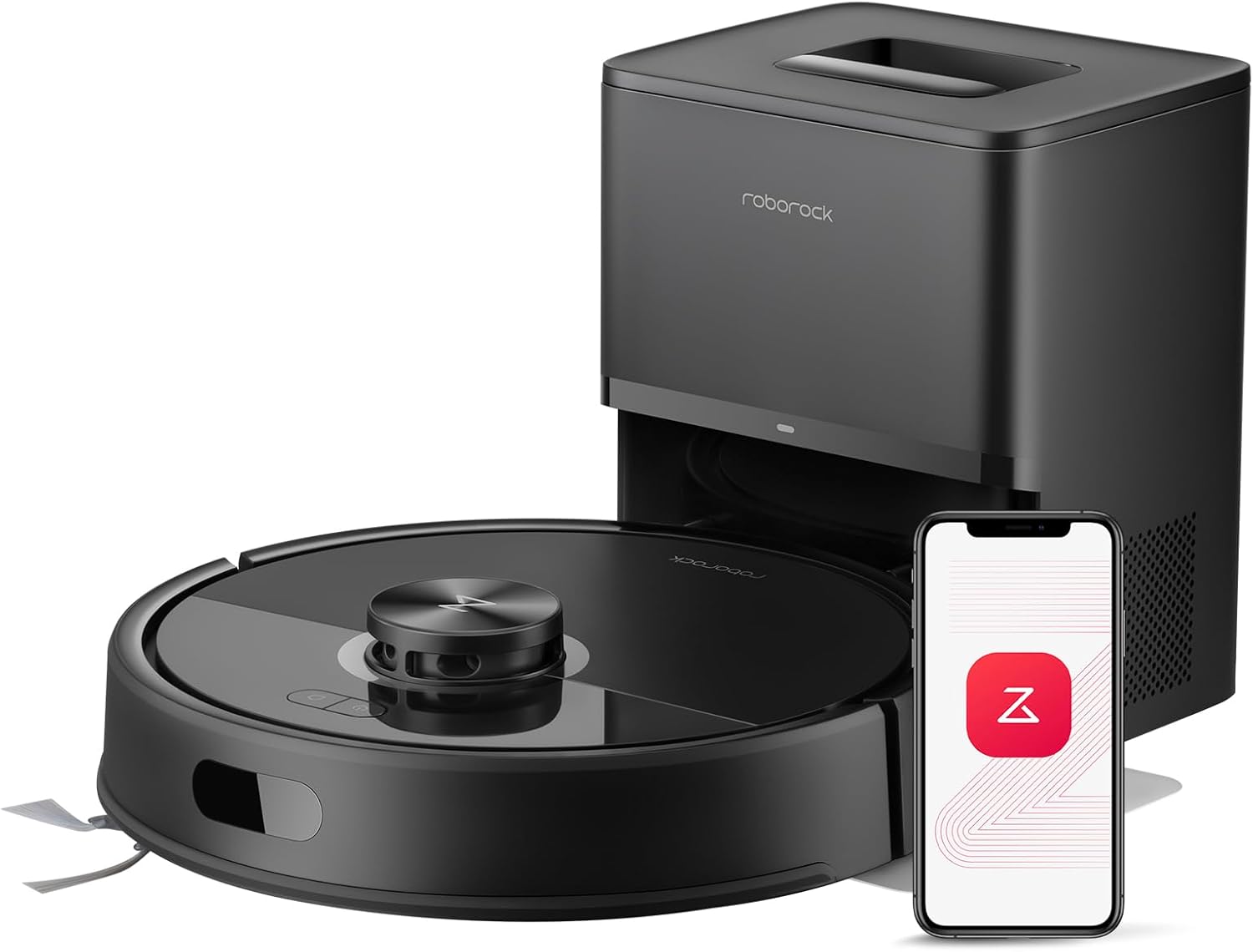
The roborock Q7 M5+ is a self-emptying robot vacuum and mop designed for regular household cleaning and homes with pets. It uses PreciSense LiDAR navigation for accurate mapping and multi-level memory, and the app lets you schedule cleanings, set no-go zones, and run spot cleans remotely. A 10000Pa HyperForce motor and a dual anti-tangle brush system focus on lifting pet hair and deep debris from carpets and hard floors, while the electronic mop and adjustable water flow let it handle light mopping tasks in the same run. The included RockDock Plus holds a sealed 2.7L dust bag that the vendor rates for about 7 to 9 weeks of hands-free emptying in typical use, which reduces how often you handle dust. Battery life claimed at 150 minutes supports larger apartments but runtime will vary by suction setting and map complexity. Noise is noticeable at higher power levels and the mop function is not intended to replace manual deep mopping, so very stubborn stains may need extra attention. For buyers who want reliable mapping, strong suction, and infrequent docking maintenance, this model makes a practical choice.
Best for: Buyers who prioritize low-maintenance cleaning with reliable navigation and strong suction, especially households with pets that need frequent vacuuming but want fewer dock visits.
Less Ideal for: Those who need a near-silent machine for noise-sensitive environments or who expect the robot to replace intensive manual mopping and stain removal.
- Powerful 10000Pa suction for deep cleaning on carpet and hard floors
- PreciSense LiDAR navigation with multi-level mapping and smart no-go zones
- RockDock Plus self-emptying dock with 2.7L sealed dust bag for long hands-free intervals
- Dual anti-tangle brush system reduces hair wrap from pets
- App and voice control allow scheduling, spot cleaning, and remote monitoring
- Mop system is for light mopping and not a substitute for thorough manual mopping
- Higher suction modes produce noticeable noise levels
- Actual 7-9 week emptying interval depends heavily on household dirt and pet shedding
Verdict: If you want a powerful, well-mapped robot vacuum that minimizes how often you empty debris, the roborock Q7 M5+ delivers strong suction and a large self-emptying dock for genuinely lower maintenance.
iRobot Roomba 105 Vac
| Battery Life | 200 minutes |
|---|---|
| Surface Recommendation | Carpet & Hard Floor |
| Other Special Features | Anti-Fall, Dirt Detection Sensor, Eco Mode, Edge Cleaning, LiDAR Navigation |
| Control Method | App, Push Button, Voice |
| Capacity | 0.1 gallons |
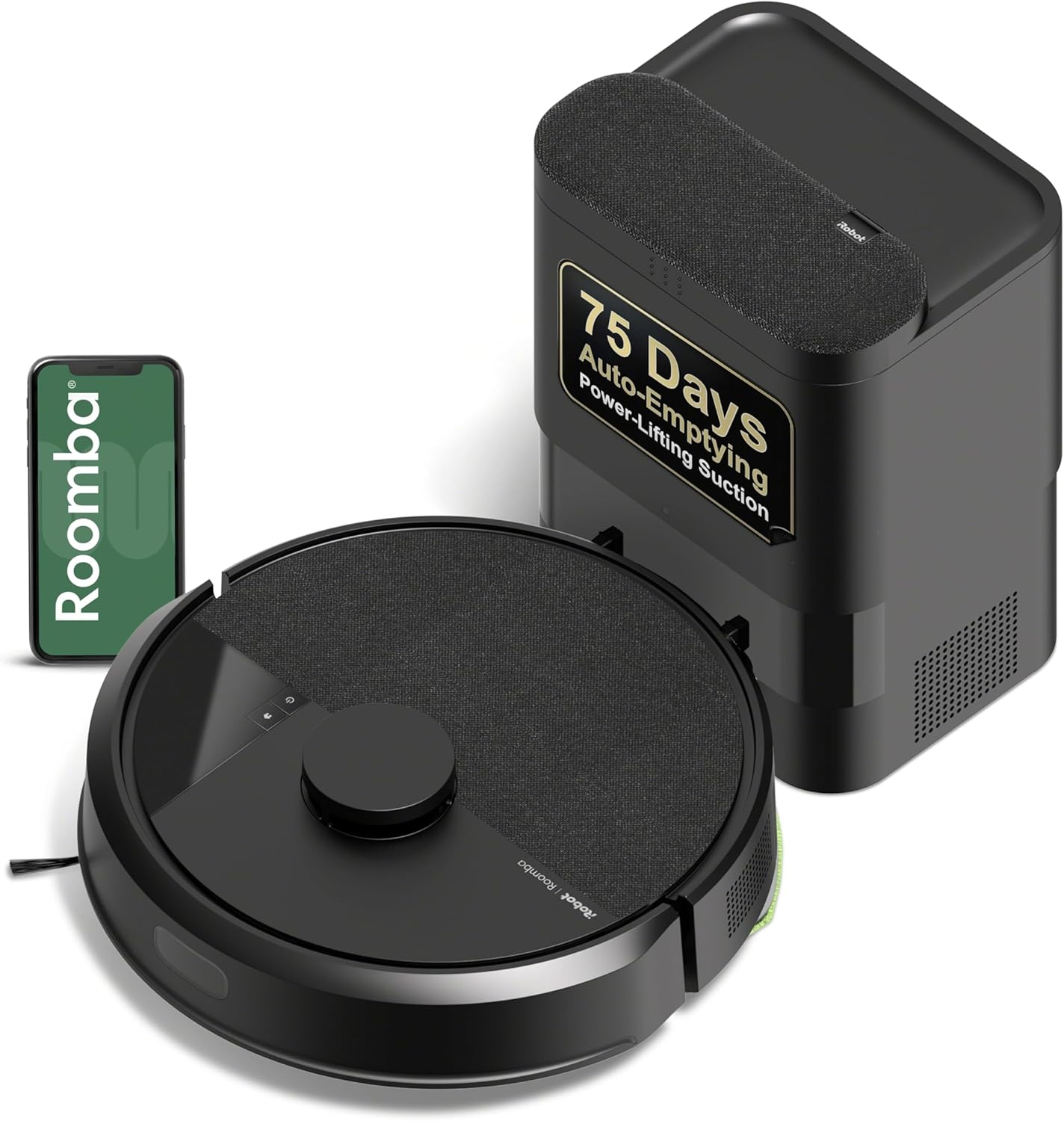
The Roomba 105 Vac with AutoEmpty dock is a hands-off robot vacuum built to keep floors clean for weeks between maintenance. It uses ClearView LiDAR mapping to navigate in neat rows, avoids drops and obstacles, and can be controlled via the iRobot Home app, buttons, or voice assistants. The 3-stage cleaning system pairs a multi-surface brush and edge-sweeping brush with intensified suction to lift dirt from carpets and hard floors, and the included AutoEmpty dock collects debris into a replaceable bag that holds up to 75 days of dirt. Practical features include spot cleaning, schedule customization, and three power levels so you can balance runtime and performance. Important limits to note are that it is a vacuum-only model (no mopping) and it requires a 2.4 GHz Wi-Fi setup for app features; occasional brush and filter maintenance are still needed. For buyers who want reliable, low-touch floor cleaning and proven navigation, this Roomba simplifies routine chores without complicated setup.
Best for: Buyers who prioritize low-maintenance, dependable floor cleaning and want a robot that reliably maps and empties itself so they can minimize hands-on vacuuming.
Less Ideal for: People who need a combined vacuum-and-mop solution or who cannot run a 2.4 GHz Wi-Fi network for setup and app control.
- AutoEmpty dock holds up to 75 days of debris for reduced manual emptying
- ClearView LiDAR mapping enables neat-row navigation and reliable coverage
- 70x more intense power-lifting suction and multi-surface brush for effective pickup
- Multiple control options including app, push button, and voice assistants
- Does not include a mopping function
- Requires 2.4 GHz Wi-Fi for setup and connected features
Verdict: If you want a proven, low-touch robot vacuum that reliably maps your home and empties itself for weeks, the Roomba 105 with AutoEmpty delivers consistent, hands-off cleaning.
Choosing the Right Robot Vacuum with Auto Empty: Key Factors to Consider
Suction Power and Brush Design
Suction and brush setup determine how well a robot picks up fine dust, hair, and larger debris. Higher suction ratings usually translate to better performance on carpets, while a wide brushroll and good edge brushes help collect debris near baseboards and in corners.
Brush design also affects hair management. A tangle-resistant roller or a combination of rubber and bristle elements reduces the frequency of hair wrap and makes maintenance easier. Consider how the robot performs on both hard floors and area rugs you own, since suction alone does not guarantee good pickup if the brushes are not matched to the surfaces.
Auto-Empty Base Capacity and Seal
The base or docking station capacity dictates how long you can go between emptying the main disposal container. Larger-capacity bases reduce visits but can be bulkier. Also check how well the base seals during transfer to minimize dust escape and keep allergens contained.
The shape of the disposable or reusable container affects ease of emptying and replacement. Some bases use sealed bags while others have reusable bins with a one-way valve. Think about bag availability and the effort required to replace or clean the base when evaluating long-term convenience.
Navigation Accuracy and Mapping Features
A robot that navigates accurately spends less time re-cleaning and less time stuck in tight spots. Look for consistent room mapping, reliable obstacle detection, and the ability to define no-go zones or schedule per-room cleaning. Good mapping saves battery and improves cleaning efficiency in multi-room homes.
Consider whether the robot supports multi-floor maps if you have more than one level. Reliable mapping also influences how often the robot docks for an auto-empty cycle and how it approaches the base for a clean transfer.
Maintenance Frequency and Consumable Costs
Auto-empty reduces bin emptying frequency but does not eliminate maintenance. You will still need to clean brushes, filters, and sensors periodically. Check how easy those tasks are and how often consumables like filters and bags need replacement.
Consumable costs add up over time. Machines that use generic or long-life filters and widely available disposal bags tend to be cheaper to maintain. Also assess whether the manufacturer provides clear replacement intervals and easy-to-access parts to simplify upkeep.
Battery Life, Runtime, and Noise
Battery life determines how much area a robot can cover per run. Longer runtime reduces the need for multiple sessions and increases the chance the robot will empty into the base before it runs out of charge, which is important for scheduling auto-empty cycles.
Noise matters if the robot runs while you are home. Some high-suction modes are significantly louder, and the base empty cycle can produce a brief spike in sound. Balance runtime and noise against cleaning needs to find a machine that fits your daily routine.
How Auto-Empty Systems Work
Auto-empty bases use a suction mechanism or mechanical transfer to pull debris from the robot's onboard bin into a larger container at the dock. The process is typically triggered when the robot returns to the base at the end of a run or when the bin is nearly full.
Most systems rely on a one-way transfer to keep dust contained, while some use disposable bags that seal when removed. Understanding the transfer method helps you anticipate maintenance steps and potential dust exposure when changing the base container.
- Suction-based transfer uses a vacuum in the base to draw debris out.
- Mechanical systems agitate or compress the robot bin to move debris.
- Disposable bags often provide better dust containment than open bins.
Placement and Setup Tips for the Base
Position the auto-empty base on a flat, unobstructed surface with a few feet of clearance on each side where possible. The robot needs clear access to dock straight-on for reliable transfer, and limited clearance can cause repeated missed transfers.
Avoid placing the base in direct sunlight or in very dusty locations. Keep it near power outlets and in an area with stable Wi-Fi if the robot uses cloud-based mapping or app updates.
- Leave at least 1 meter (3 feet) of open space in front of the base.
- Avoid placing the base under low furniture that impedes docking.
- Place the base on a hard surface rather than thick carpet for better stability.
Managing Pet Hair and High-Debris Zones
Homes with shedding pets produce more hair and dander, which can fill the robot bin and the base faster. Choose a system with strong suction and a brush design that resists hair wrap. You may still need more frequent brush maintenance even with an auto-empty base.
For mud-tracking areas like entryways, consider using scheduled runs and no-go zones to concentrate cleaning. An auto-empty base reduces daily handling of collected debris, but you will still want to empty or service the base more often in heavy-use zones.
- Run the robot more frequently in pet zones to prevent matting and hair buildup.
- Keep a handheld vacuum or spot-clean tool for thick debris the robot may struggle with.
- Install mats or rugs at entrances to trap dirt before it spreads across floors.
Keeping Dust and Allergens Contained
If allergies are a concern, examine how well the base seals during transfer and what level of filtration the robot and base use. HEPA-grade filters in the robot and a sealed disposal bag in the base reduce airborne particles released during emptying.
When changing bags or cleaning the base, do so outdoors or in a well-ventilated area if possible. Regular filter replacement and careful handling of the base container help maintain indoor air quality.
- Prefer bases with sealed disposable bags for the best containment.
- Replace filters at the manufacturer-specified intervals for optimal performance.
- Wipe sensors and sealing surfaces regularly to preserve transfer efficiency.
Scheduling and Smart Home Integration
Modern robots offer scheduling and integration with voice assistants and smart-home ecosystems. Scheduling lets you run cleans during low-traffic times so the robot can complete cycles and return to the base for emptying without interruption.
If you use voice control or routines, verify the robot supports the smart home platform you prefer. App features such as selective room cleaning and status alerts for base fullness improve daily usability and reduce surprise maintenance tasks.
- Use per-room schedules to prioritize high-traffic areas.
- Enable notifications for base-level alerts to avoid overfilling.
- Check that the app exposes mapping controls if you want room-level cleaning.
How We Chose the Best Robot Vacuum with Auto Empty
We selected robots that demonstrate reliable auto-empty performance and solid everyday cleaning across common home conditions. Primary evaluation criteria included suction and debris handling, base bin capacity and sealing, navigation and mapping accuracy, and long-term maintenance needs. We favored systems that clearly separate dust from the robot bin, minimize dust escape during transfer, and provide clear alerts or indicators for base-level maintenance. Other filters included compatibility with common floor types, user-friendly scheduling and app control, and reasonable noise levels during both cleaning and base-empty cycles. We excluded units without a documented auto-empty docking function, models with notably small base capacity, and vacuums that lack mapping or reliable navigation for multi-room cleaning. We also considered warranty terms and availability of replacement supplies such as filters and disposal bags when scoring durability and ongoing cost.
Our full evaluation process is outlined in our review methodology.
FAQ
How often will I need to empty the auto-empty base?
Frequency varies with home size, traffic, and whether you have pets. For many households, the base holds several weeks of debris. Heavy shedding or large homes may require more frequent bag or bin changes.
Are disposable bags necessary for auto-empty bases?
Some bases use disposable sealed bags for better dust containment, while others use reusable bins. Disposable bags typically reduce dust exposure but add recurring supply needs. Reusable bins are cheaper long term but require more frequent manual cleaning.
Will an auto-empty robot work on both hardwood and carpets?
Yes. Most auto-empty robots are designed for mixed floor plans. Performance depends on suction and brush design, so check that the system handles your specific rugs and hard floors effectively.
Does the emptying process create a lot of dust in the room?
Well-designed systems minimize dust escape through sealed transfer or bagging. However, lower-end or poorly sealed bases can release some dust during transfer. If allergies are a concern, choose a sealed-bag system and change bags carefully.
Can the robot still clean if the base is full?
Most robots will still operate with a full base because the base only stores debris transferred from the robot. The robot itself will stop cleaning if its onboard bin is full and cannot transfer to the base. Notification systems typically alert you when the base needs servicing.
How noisy is the auto-empty cycle compared with cleaning?
The empty cycle produces a brief spike in noise, often louder than the robot's normal cleaning mode. The duration is short, but if noise is a concern, schedule empties during times when the house is unoccupied or use lower-suction cleaning modes.
Final Verdict
When choosing a robot vacuum with auto empty, prioritize reliable transfer and base capacity if you want genuinely hands-off cleaning. Balance suction and brush design against runtime and noise so the machine can clean your high-traffic areas effectively without frequent intervention. Expect to perform routine brush and filter maintenance even with an auto-empty dock, and factor in consumable availability for long-term upkeep. Focus on the scoring criteria above to match a system to your floor types and household habits, and you can confidently reduce the time spent on everyday floor care.