
Note: This article contains affiliate links. If you click on these links and make a purchase, we may earn a small commission at no extra cost to you. This helps support our research and content. Read our full affiliate disclosure here.
If you want automatic, repeatable cleaning that needs minimal intervention, a robot vacuum with mapping and self empty capability can change how you manage floors. These machines learn room layouts, follow efficient paths, and return to a base that empties the dustbin so you spend less time handling debris. Choosing the right model matters because map accuracy and the effectiveness of the self-empty system determine how reliably the vacuum cleans and how often you must step in. This guide presents the top shortlisted robot vacuums with mapping and self-empty features. We explain the performance dimensions that matter, how we evaluated options, and what to prioritize for different homes and floorplans. Read on for the key tradeoffs and practical guidance before the product list.
Top Picks at a Glance
| Best Overall The best all-around choice for most situations | Shark AI Ultra AV2501S |  |
| Best Quality Built to a higher standard if you want something more solid | roborock Saros 10R |  |
| Best Value The sweet spot between price and what you get | ECOVACS DEEBOT T30e OMNI |  |
| Top Rated A top-rated pick with lots of positive feedback | iRobot Roomba 105 Combo |  |
| Most Popular A crowd favorite that many people choose with confidence | Shark RV1001AE IQ Robot |  |
| Best Seller A high-volume bestseller chosen again and again | roborock Qrevo S5V |  |
Shark AI Ultra AV2501S
| Battery Life | 120 minutes |
|---|---|
| Filter Type | Foam |
| Control Method | Voice |
| Compatible Devices | Amazon Alexa, Google Home |
| Surface Recommendation | Carpets & Hard Floors |
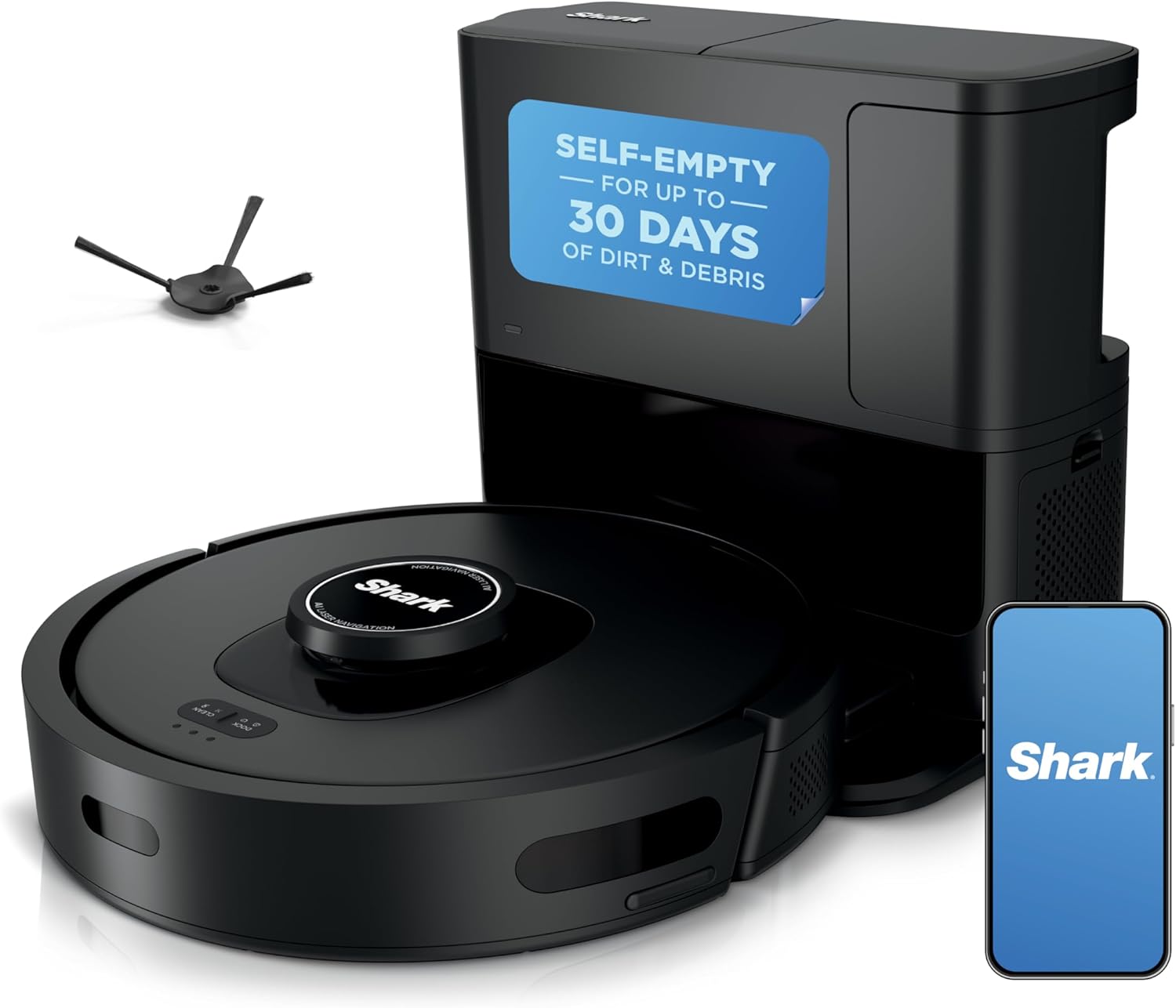
The Shark AI Ultra AV2501S is a mapping robot vacuum that combines 360° LiDAR navigation, Matrix Clean grid-pattern passes, and a 30-day-capacity bagless self-emptying base to reduce hands-on maintenance. In everyday use it maps your home, follows methodical cleaning lanes, and can take multiple passes over dirtier spots for deeper coverage; app scheduling, voice control, and recharge-and-resume make it convenient for regular whole-home cleaning. The unit is aimed at homes with mixed floors and pets, using a self-cleaning brushroll to limit hair wrap and HEPA filtration to trap fine dust and allergens. Runtime up to 120 minutes means it can cover larger areas between charges, and the self-emptying bin cuts down how often you touch dust. Limitations include a single speed setting and a relatively large footprint compared with some compact robot models, and while the base is bagless it still requires periodic emptying and filter upkeep to maintain performance.
Best for: Buyers who want a hands-off, mapped robot vacuum that reliably cleans whole homes and handles pet hair with minimal daily intervention.
Less Ideal for: People who need fine-grained manual suction control, ultra-compact robots for tight spaces, or a completely maintenance-free filtration system.
- 360° LiDAR mapping for accurate room mapping and low-light navigation
- Matrix Clean navigation that makes multiple passes over dirty areas for more thorough coverage
- Self-cleaning brushroll and pet-focused design reduce hair tangles
- 30-day-capacity bagless self-emptying base cuts down how often you need to empty the dock
- Up to 120 minutes runtime with recharge-and-resume for extended cleaning sessions
- Only one listed cleaning speed limits manual suction control
- Self-emptying base still needs periodic maintenance and filter replacement
- Larger overall footprint compared with compact robot models
Verdict: If you want a mapped, pet-ready robot that minimizes emptying with a 30-day self-empty base and delivers methodical, whole-home cleaning, the Shark AI Ultra is a strong choice.
roborock Saros 10R

| Suction | 22,000 Pa |
|---|---|
| Battery Life | 180 minutes |
| Filter Type | Washable |
| Noise Level | 65 db |
| Power Source | Battery Powered |
The roborock Saros 10R is a performance-focused robot vacuum and mop built to handle everyday dirt and pet hair on hard floors and low-pile carpets. It pairs powerful 22,000 Pa HyperForce suction with a Zero-Tangling DuoDivide brush and FlexiArm side brush to pick up hair without frequent brush cleaning, while the ultra-slim 3.14-inch body slips under low furniture to reach hidden dust. The multifunctional dock 4.0 automates maintenance with hot-water mop washing, hot-air drying, 60-day dust collection and auto refill features that greatly reduce hands-on upkeep. Navigation relies on the StarSight 2.0 system with 3D sensing and obstacle avoidance, which improves edge and cord handling and supports auto re-wash for high-traffic spots. For hardwood floors the mop functions and automatic mop lift when carpets are detected help avoid over-wetting. Trade-offs are the relatively loud 65 dB reported noise level during operation and a large, heavier docked system footprint, which may be more than needed for small homes.
Best for: Buyers who prioritize strong cleaning performance and low-maintenance operation on hard floors and have pets or long hair that require frequent deep pickup.
Less Ideal for: People living in very small apartments or who need a whisper-quiet machine for nighttime cleaning should consider smaller or quieter alternatives.
- Very strong 22,000 Pa suction for deep pickup on hardwood and low-pile carpets
- Zero-tangling main brush and omnidirectional wheels reduce hair maintenance
- Ultra-slim 3.14-inch profile reaches under low furniture and into tight spots
- Multifunctional dock automates mop washing, drying, and up to 60 days of dust collection
- 3D obstacle detection and advanced mapping improve edge cleaning and cord avoidance
- Noise level around 65 dB may be noticeable during cleaning
- Large multifunctional dock increases system footprint and setup complexity
Verdict: Choose the Saros 10R if you want top-tier suction and a hands-free docked system that keeps hardwood floors and pet hair under control with minimal daily effort.
ECOVACS DEEBOT T30e OMNI

| Battery Life | 200 minutes |
|---|---|
| Capacity | 3 liters |
| Filter Type | WASHABLE |
| Controller Type | App Control, Button Control, Voice Control |
The DEEBOT T30e OMNI is a high-end robot vacuum and mop designed for low-maintenance floor care in homes with mixed surfaces and pets. It combines a powerful suction system rated up to 25,000 Pa with an upgraded ZeroTangle 3.0 brush system to reduce hair wrap and keep performance consistent on carpets and hard floors. The OMNI station handles hands-free tasks including auto dust emptying, mop washing, hot air drying, and water refilling so the robot needs far less daily attention and can run longer between maintenance cycles. Smart features include app and voice control, smart mapping for room-level cleaning, carpet detection with automatic mop lift, and customizable no-go zones. In real use the strong suction and dual-spinning mops tackle embedded dirt and sticky stains effectively, while the self-cleaning station keeps the mop pads and dust bin from becoming a chore. The unit is relatively large and heavier than compact models, so it demands a bit more floor space and may be overkill for very small apartments, but for busy households seeking a mostly hands-off cleaning solution it delivers significant time savings.
Best for: Buyers who prioritize a mostly hands-off cleaning routine and want a single robot that maps rooms, handles pet hair, and performs both vacuuming and powered mopping with minimal daily upkeep.
Less Ideal for: People living in very small apartments, who have minimal cleaning needs, or who prefer a simple, compact robot without a large docking station.
- All-in-one OMNI station provides self-emptying, mop washing, hot air drying, and water refilling
- High suction performance (advertised 25,000 Pa) for deep cleaning carpets and picking up pet hair
- ZeroTangle 3.0 brush system reduces hair wrap for lower brush maintenance
- Smart mapping, app and voice control, and carpet-aware mop lift allow tailored, automated cleaning
- Physically large and heavier than compact robot vacuums, requiring more storage space
- OMNI station and premium features increase system complexity and may need occasional maintenance
Verdict: If you want a largely maintenance-free robot that maps your home, self-empties, and scrubs floors with powerful suction, the DEEBOT T30e OMNI is built to handle that with minimal hands-on upkeep.
iRobot Roomba 105 Combo
| Battery Life | 100 minutes |
|---|---|
| Filter Type | Cartridge |
| Control Method | App, Touch, Voice |
| Surface Recommendation | Carpet & Hard Floor |
| Other Special Features of the Product | LiDAR Navigation, Self-Emptying, Simultaneous Vacuuming & Mopping |
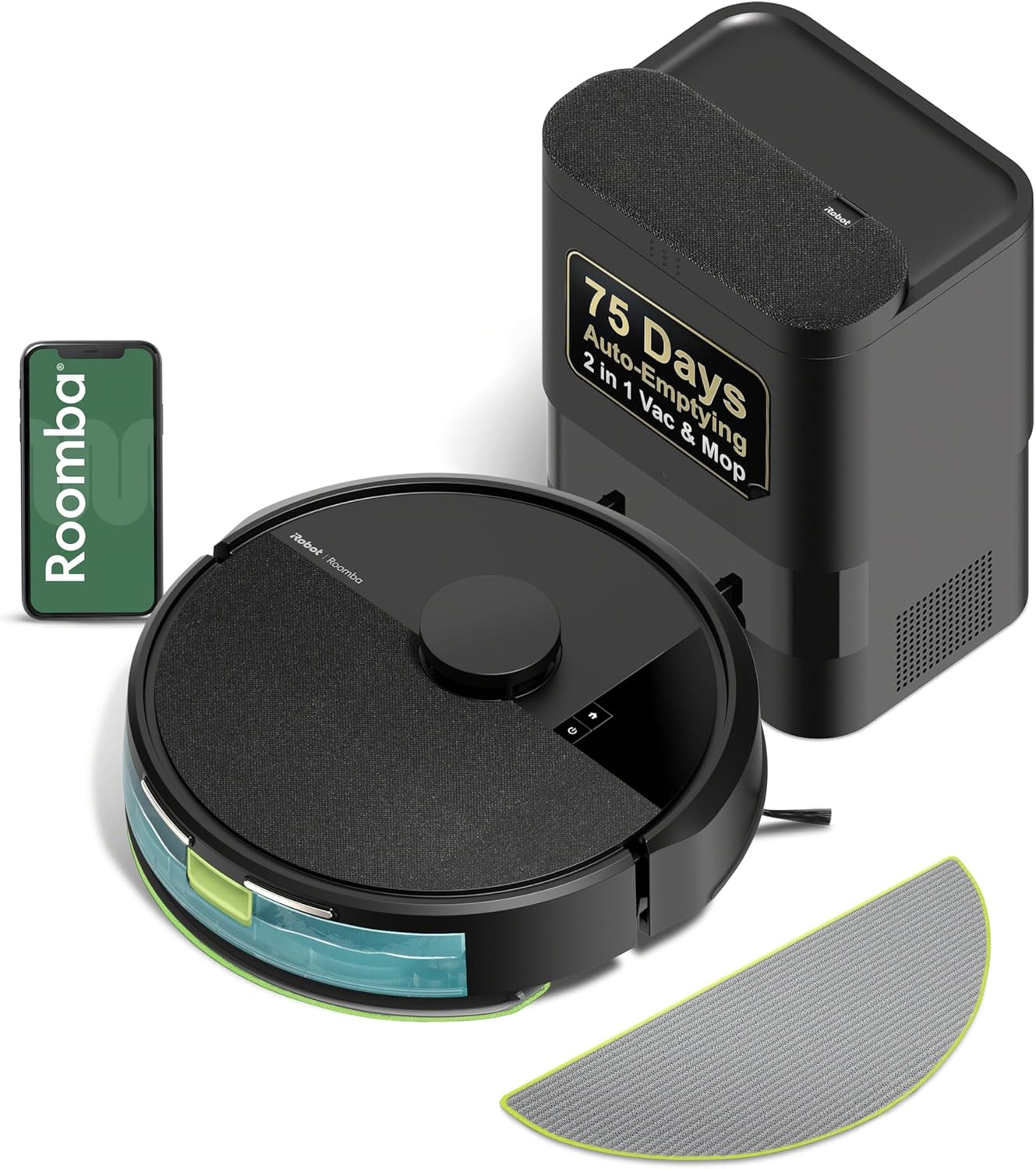
The Roomba 105 Combo combines vacuuming and mopping with ClearView LiDAR mapping and a self-empty AutoEmpty dock that stores up to 75 days of debris. It offers three cleaning modes—vacuum, mop, or vacuum-and-mop—so you can run targeted routines from the app, the robot buttons, or a voice assistant. Practical features include a 4-stage cleaning system with power-lifting suction, an edge-sweeping brush for better corner pickup, and a micro-pump that meters water for the reusable microfiber pad and enables SmartScrub for deeper scrubbing on high-traffic areas. LiDAR mapping creates room maps you can customize and the robot detects and avoids carpets while mopping. Battery life and maintenance are typical for this class: you will need to swap filters periodically and clean brushes, and the dock uses disposable bags for the 75-day capacity. For buyers who prioritize reliable mapping and low-touch emptying, this model delivers strong everyday performance, though users should expect routine upkeep like any robotic cleaner.
Best for: Homeowners who want dependable, low-interaction floor care with accurate mapping and an auto-empty solution to minimize daily maintenance.
Less Ideal for: People needing heavy-duty wet cleaning or commercial-grade mopping should consider a dedicated mop system instead.
- Self-emptying AutoEmpty dock holds up to 75 days of debris for low-touch maintenance
- ClearView LiDAR mapping creates accurate maps and supports customizable room-by-room cleaning
- Combined vacuum-and-mop operation with metered water flow and SmartScrub for deeper scrubbing
- Edge-sweeping and multi-surface brushes improve corner and carpet pickup
- Multiple control options: app, on-robot buttons, and voice assistants
- Uses disposable bags in the dock which require replacement
- Mopping is pad-based and not suitable for heavy wet cleaning or large liquid spills
Verdict: If you want reliable LiDAR mapping with hands-free emptying for weeks at a time, the Roomba 105 Combo is a practical, low-maintenance choice.
Shark RV1001AE IQ Robot

| Power Source | Battery Powered |
|---|---|
| Battery Type | Lithium Ion |
| Controller Type | Amazon Alexa, Google Assistant, vera |
| Surface Recommendation | Carpet, Floor, Hardwood |
The Shark RV1001AE IQ Robot pairs a large bagless self-empty base with Shark suction and IQ Navigation to deliver methodical, whole-home cleaning with minimal intervention. It maps your home and cleans row by row, so you can schedule full-house runs or target specific rooms from the app or with voice commands. The self-cleaning brushroll helps prevent hair wrap and the base holds up to 45 days of dirt, which reduces how often you handle debris. It also returns to the dock to recharge and resume cleaning when needed. Practical advantages include strong pickup on carpets and hard floors and compatibility with Alexa and Google Assistant, but the unit uses a non-washable filter and the system is best for indoor use only. Buyers should expect occasional boundary setup and app configuration during initial mapping, and while the base is bagless there is still periodic maintenance of the dust bin and filter.
Best for: Buyers who prioritize a mapped, self-emptying robot that reduces routine maintenance and delivers consistent whole-home cleans with remote or voice control.
Less Ideal for: People who need a washable filter option or want an outdoor-capable unit or a totally hands-off bagged disposal system.
- Self-emptying bagless base holds up to 45 days of debris for low-maintenance use
- IQ Navigation maps the home and performs row-by-row cleaning for consistent coverage
- Self-cleaning brushroll reduces hair wrap and improves pet hair pickup
- Wi-Fi and voice control let you start, schedule, or target rooms remotely
- Filter is non-washable and requires replacement or careful dusting
- Indoor-only design and app setup may require initial hands-on configuration
Verdict: Choose this Shark IQ Robot if you want a mapped, self-emptying vacuum that minimizes how often you empty and is tuned for pet hair and whole-home cleaning.
roborock Qrevo S5V

| Suction | 12,000 Pa |
|---|---|
| Battery Life | 180 minutes |
| Dust Capacity | 2.7 liters |
| Navigation | PreciSense LiDAR |
| Filter Type | Washable |
The roborock Qrevo S5V is a full-featured robot vacuum and mop designed for hands-off floor maintenance in medium to large homes. It navigates with PreciSense LiDAR to build multi-floor maps and supports targeted cleaning, no-go zones, and scheduled runs via the Roborock app and voice assistants. The unit combines a 12,000Pa HyperForce motor, a zero-tangle floating brush for pet hair, and a FlexiArm dual spinning mop that lifts automatically to avoid carpets while offering adjustable water flow across 30 levels. The multifunction dock handles self-emptying, auto-refilling, mop self-washing and warm air drying to cut maintenance time and reduce odors. Reactive obstacle sensors help it avoid cords and furniture legs, and a washable filter and long 180-minute run time keep it running between dock visits. Practical downsides are a stated noise level around 64 dB and a large dock footprint that requires dedicated floor space, and advanced features rely on the app and 2.4 GHz Wi-Fi which may limit users without stable home networks.
Best for: Buyers who prioritize reliable, low-maintenance cleaning with robust mapping and self-emptying features and who prefer a proven, risk-minimizing appliance that reduces daily chores.
Less Ideal for: People with very small homes or renters who cannot allocate permanent floor space for a large dock, or those without consistent 2.4 GHz Wi-Fi access.
- PreciSense LiDAR mapping with multi-floor support for efficient, repeatable cleaning
- All-in-one dock that self-empties dust, washes and dries mops, and auto-refills water for low maintenance
- 12,000Pa suction and zero-tangle brush combo effective on pet hair and embedded dirt
- Flexible mop system with automatic lift and 30-level water control for mixed floor types
- Long 180-minute battery life suitable for large homes and multi-room runs
- Dock and system are relatively loud at higher power levels
- Requires a dedicated floor area for the larger multifunction dock
- Advanced app features need stable 2.4 GHz Wi-Fi and smartphone setup
Verdict: If you want a hands-off robot that maps multiple floors and largely automates emptying and mop care, the Qrevo S5V delivers powerful cleaning with strong mapping and dock-based maintenance.
Choosing the Right Robot Vacuum with Mapping and Self Empty: Key Factors to Consider
Mapping Technology and Multi-Room Support
Accurate mapping matters because it determines whether the robot covers rooms methodically, avoids redundant passes, and follows no-go boundaries you set. Laser-based lidar mapping tends to create consistent floorplans and supports multi-floor maps when you need separate layouts for different levels.
If your home has many rooms, open-plan areas, or staircases, prioritize models that let you name rooms, set virtual barriers, and save multiple maps. Mapping capabilities also impact scheduling, targeted spot cleaning, and the vacuum's ability to recover after being moved.
Self-Empty System Design and Dust Containment
A robust self-empty system reduces how often you touch collected debris and lowers allergy exposure. Look at how the base transfers debris from the robot to the dock: a well-sealed, suction-assisted transfer minimizes dust clouds and ensures most pickup ends up in the base bag or bin.
Consider whether the base uses disposable bags or a reusable canister. Bagged bases can be more hygienic for allergy sufferers, while reusable systems save on consumables but may require more frequent manual cleaning. Also check how clearly the base indicates when the reservoir is full and how easy it is to replace or empty.
Suction Power and Brush System
Suction and the brush configuration determine how effectively the vacuum clears dirt from both hard floors and carpet fibers. High suction is helpful on rugs, but brush design and agitation matter for lifting pet hair and embedded debris.
If you have mixed flooring, choose a model that adapts suction or has a strong brush roll that resists tangling. Easy-access brush ports and detachable brush heads make maintenance faster, which matters when you have pets or long hair in the household.
Battery Life and Recharge Behavior
Battery runtime affects whether the robot can finish an entire cleaning cycle on a single charge, especially in larger homes. Look beyond advertised runtime and consider whether the vacuum supports automatic recharge and resume so it can return to the dock, recharge, and finish an interrupted job.
Also consider how the device performs across different suction modes. Higher-power modes drain the battery faster, which can require more frequent recharges. Efficient pathing thanks to mapping helps conserve battery by minimizing redundant coverage.
Maintenance Frequency and Filter Care
Maintenance burden influences long-term satisfaction. Check how often brushes, filters, and sensor lenses need cleaning and whether parts are easy to access without tools. HEPA or high-efficiency filters are preferable for allergy control but may need periodic replacement.
Also consider how often the self-empty base requires service. A larger base reservoir reduces how frequently you empty or replace bags. Easy-to-follow maintenance alerts and straightforward part replacements reduce the chance of skipped upkeep that can degrade performance.
Noise and Daily Use Considerations
Noise levels matter if you plan to run the robot while you are home, working, or during night cleaning windows. High-suction modes and the self-empty cycle can create noticeable noise, so check typical operating sound levels for both vacuuming and base-emptying operations.
Some robots allow scheduling of the empty cycle separately from cleaning to avoid loud activity while you sleep. Also consider app notifications and physical indicators so you know when human attention is needed.
How Mapping Improves Cleaning Efficiency
Mapping technology lets a robot vacuum build a spatial representation of your home so it can clean methodically rather than randomly. This reduces overlap, shortens overall runtime for a given area, and enables targeted cleaning of high-traffic zones.
With a saved map you can define rooms, set virtual boundaries, and schedule room-specific cleaning. That level of control makes daily upkeep easier and ensures the robot focuses its energy where it is needed most.
- Saves time by minimizing redundant passes
- Enables room-based schedules and selective cleaning
- Helps the robot return reliably to missed spots
What To Expect From Self-Empty Stations
Self-empty stations are designed to transfer debris from the robot to a larger reservoir, cutting down how often you manually empty the dustbin. Expect varying containment methods: some bases use sealed replaceable bags while others use reusable canisters.
Also expect a periodic maintenance cycle for the base itself. Clearing clogs, replacing bags, or wiping seals may be necessary every few weeks depending on usage and the amount of debris collected.
- Most bases hold several weeks worth of debris in typical households
- Bagged systems tend to be cleaner for allergies
- Reusable bases reduce consumable costs but require manual cleaning
Maintaining Performance With Pets and High Debris Loads
Homes with pets challenge both the robot and the self-empty station. Long hair and dander increase brush tangles and filter loading, which can reduce suction and mapping reliability if sensors get obscured.
To maintain performance, choose a model with tangle-resistant brush designs and accessible filter and brush ports. Incorporate a short maintenance routine after intensive cleans to clear hair from roller brushes and check the base reservoir more frequently.
- Inspect and clean brush rolls weekly in high-hair environments
- Replace or wash filters on the schedule recommended by the manufacturer
- Empty base reservoirs sooner when shedding is heavy
Setting Up Maps and No-Go Zones
Initial map setups typically require a full walkthrough so the robot can scan and build an accurate floorplan. During this process you can create no-go zones for delicate items, cables, or pet areas that should be avoided.
Refining maps after the robot has learned your space improves future runs. Use the app to merge or split rooms, label areas for scheduled cleaning, and test virtual boundaries to ensure the robot respects them.
- Do a clear run during setup with minimal obstacles
- Label rooms for targeted schedules
- Adjust no-go zones if the robot crosses boundaries during cleaning
Troubleshooting Common Mapping And Emptying Issues
If mapping seems inaccurate, ensure sensors and bumpers are clean and that the initial setup was done in consistent light conditions. Moving large pieces of furniture or changing room layouts can require a remap to restore accuracy.
When self-emptying fails or is incomplete, check the hose and seals between the robot and base for blockages and verify the base reservoir is not overfull. Regularly wiping sensors and clearing brush hairs reduces false stalling and improves both mapping and emptying cycles.
- Clean sensors and bumpers monthly to maintain mapping accuracy
- Verify docking contacts are free of debris for reliable empty cycles
- Remap after major layout changes or seasonal furniture shifts
How We Chose the Best Robot Vacuum with Mapping and Self Empty
We focused on robot vacuums that combine reliable mapping with an autonomous emptying station, since both features together deliver the low-maintenance cleaning workflow buyers expect. Our selection filters prioritized navigation accuracy, self-empty reliability, suction and pickup across common floor types, battery life for whole-home coverage, and the real-world upkeep of the emptying system. Concrete evaluation criteria included mapping precision and multi-floor support, effectiveness of the self-empty station at containing dust, suction performance on hard floors and carpets, battery runtime and recharge behavior for large-area cleaning, and the frequency and ease of maintenance for brushes and filters. We excluded units that lack room mapping or a dedicated self-empty base. We also excluded models with unclear documentation about dust containment or those that require frequent manual emptying despite having an emptying dock. The final shortlist emphasizes products that balance automated navigation with practical maintenance needs, favoring systems that reduce direct contact with dust and maintain consistent cleaning coverage across typical home layouts.
Our full evaluation process is outlined in our review methodology.
FAQ
How often will I need to empty the base reservoir?
Frequency depends on household debris levels and the base reservoir size. In an average home with minimal shedding, expect several weeks between bag changes or emptying; homes with heavy shedding will need more frequent attention.
Can the robot finish cleaning large homes on one charge?
Many models support automatic recharge and resume so they can finish across multiple charges. Actual single-charge coverage varies with suction mode and floorplan complexity, so mapping efficiency matters for large homes.
Are self-empty bases hygienic for allergy sufferers?
Bagged bases generally offer better containment and reduce direct contact with dust, which helps allergy control. Reusable bases can be hygienic if emptied and wiped regularly, but they may involve more manual handling.
Will mapping work on multi-level homes?
Models with multi-map support can save separate floor layouts, but mapping will not automatically translate between floors. You typically start a new map for each level and store them in the app for selective cleaning.
How noisy is the self-empty cycle compared with normal cleaning?
The self-empty cycle often runs louder than the cleaning cycle because it uses strong suction to transfer debris into the base. Many users schedule emptying at times when noise is less disruptive.
Final Verdict
Prioritize mapping accuracy and a well-designed self-empty system when selecting a robot vacuum to minimize hands-on maintenance and ensure consistent coverage. Balance suction and brush design with battery life so the vacuum can cover your floorplan without frequent recharge interruptions. Decide whether a bagged or reusable base better matches your tolerance for consumables and maintenance. Focus on models that make upkeep straightforward and that provide reliable mapping features for targeted, efficient cleaning—this combination delivers the lowest long-term effort and most dependable results.