
Note: This article contains affiliate links. If you click on these links and make a purchase, we may earn a small commission at no extra cost to you. This helps support our research and content. Read our full affiliate disclosure here.
If you need deeper, more reliable pickup from an automated floor cleaner, choosing a robot vacuum with strong suction makes a big difference for everyday home upkeep. Strong suction improves hair and carpet extraction, picks up heavier debris, and reduces the number of follow-up passes you need to make. It also matters for homes with pets, high-traffic entryways, or thicker rugs. This guide shortlists the seven best robot vacuums with strong suction across typical home setups. We evaluated options based on suction performance, navigation and mapping, battery runtime, filtration, and real-world usability. Read on to see which features matter most and which machine types are best suited to your rooms and cleaning habits.
Top Picks at a Glance
| Best Overall The best all-around choice for most situations | roborock Q7 M5+ |  |
| Best Quality Built to a higher standard if you want something more solid | ECOVACS DEEBOT X9 PRO OMNI |  |
| Best Value The sweet spot between price and what you get | ILIFE A30s Robot Vacuum |  |
| Best Budget The cheapest option that still gets the job done reliably | Lefant M210 Robot Vacuum |  |
| Top Rated A top-rated pick with lots of positive feedback | iRobot Roomba 105 Combo |  |
| Most Popular A crowd favorite that many people choose with confidence | iRobot Roomba 105 Vac |  |
| Best Seller A high-volume bestseller chosen again and again | roborock Q10 S5+ |  |
roborock Q7 M5+
| Suction | 10000Pa |
|---|---|
| Battery Life | 150 minutes |
| Capacity | 2.7 liters |
| Filter Type | Cartridge |
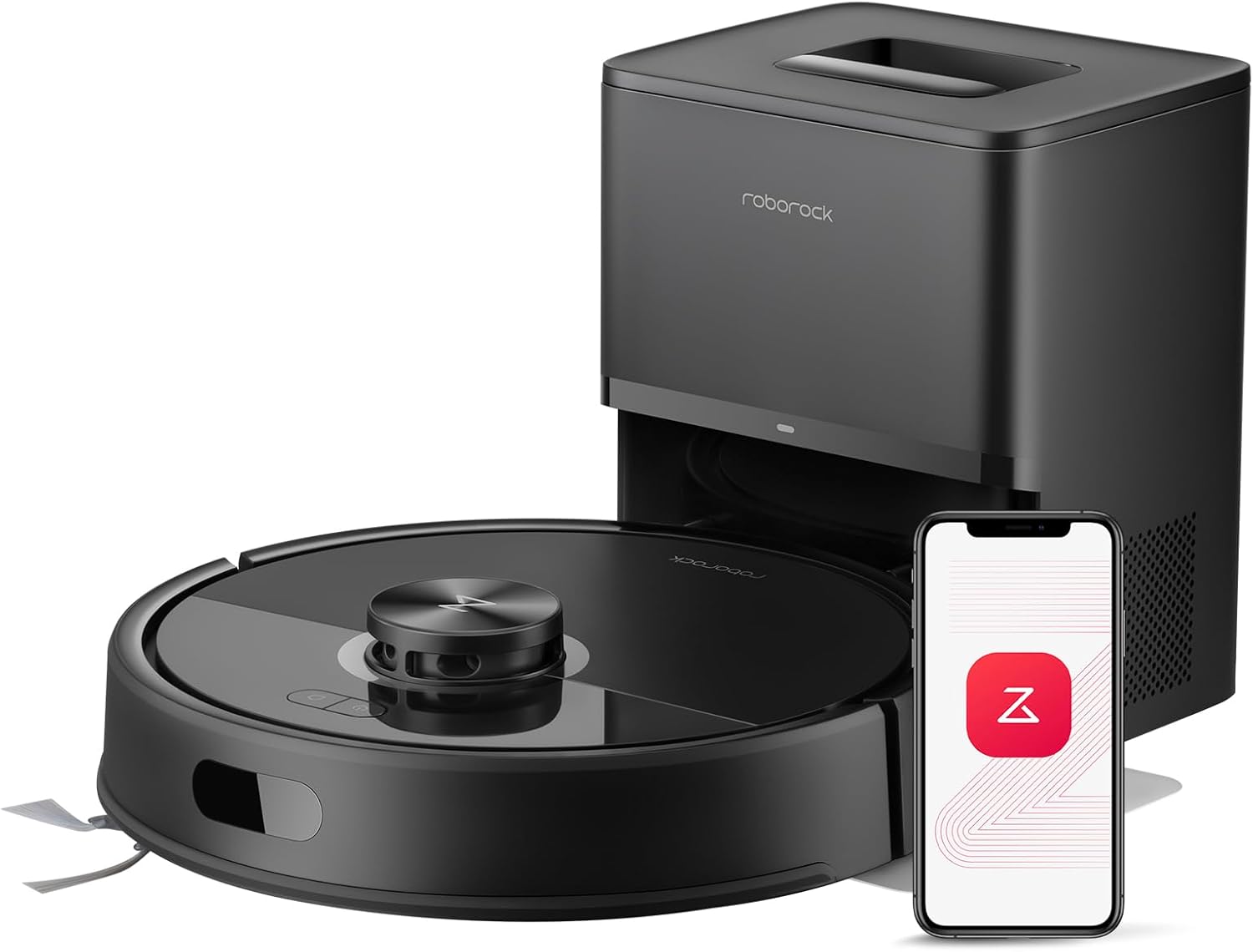
The roborock Q7 M5+ combines powerful 10000Pa suction with PreciSense LiDAR mapping and a hands-free auto-empty dock to reduce day-to-day maintenance. It vacuums and mops in one pass, offers three mop water flow settings and a VibraRise-compatible mop module for tailored floor care, and its dual anti-tangle brush design minimizes hair wrap from pets. The included RockDock Plus holds a 2.7L sealed dust bag so you can go weeks between emptying cycles, and the Roborock app provides scheduled cleanings, no-go zones, spot clean, and remote control via 2.4GHz Wi-Fi. Practical limits include a reported noise level around 65 dB and a 150-minute runtime that may require a mid-clean recharge in very large homes, and like many robot mops it is best for light mopping rather than heavy liquid spills. Navigation and suction make it effective on wood, tile, and carpet, while the anti-tangle system keeps routine upkeep manageable for pet households.
Best for: Buyers who want a balance of powerful suction, reliable navigation, and low-maintenance cleaning—especially households with pets that need regular vacuuming and occasional mopping.
Less Ideal for: Homes that need long continuous runtime for very large floorplans or users who need heavy wet-mopping capability should consider alternatives.
- Very strong 10000Pa HyperForce suction for deep pickup on carpets and edges
- Long hands-free intervals with a 2.7L sealed dust bag auto-empty dock
- PreciSense LiDAR navigation with multi-level mapping and smart no-go zones for efficient coverage
- Dual anti-tangle brush system reduces hair wrap from pets and long-haired debris
- 150-minute battery may be short for very large homes requiring continuous runtime
- Noise level around 65 dB is noticeable during high-suction operation
Verdict: Choose the Q7 M5+ when you want high suction plus hands-free self-emptying and dependable LiDAR navigation for low-maintenance, pet-ready cleaning.
ECOVACS DEEBOT X9 PRO OMNI

| Suction | 16,600Pa |
|---|---|
| Battery life | 200 minutes |
| Dust capacity | 4 liters |
| Filter type | Washable |
| Noise level | 65 db |
The DEEBOT X9 PRO OMNI is built around strong suction and autonomous maintenance to deliver deep, low-effort cleaning across mixed floors. Its 16,600Pa BLAST system pairs higher airflow with a V-shaped roller to pull dust and pet hair from carpets, while the Triple Lift system raises the mop, side brush, and main brush independently so carpets stay dry and transitions between rugs and hard floors are smooth. The OZMO ROLLER continuously self-washes the mop during use and the OMNI Station washes, dries, refills, and empties the robot for extended hands-free operation. Navigation uses LiDAR plus AI obstacle recognition to map rooms and avoid common household objects, and app plus voice control enables schedules and spot cleaning. Practical benefits include fewer repeat passes on carpet, reduced hair wrapping, and less regular maintenance thanks to the station. Trade-offs are the unit size and noise level, which are noticeable compared with compact or ultra-quiet models, and the system is best suited to households that need frequent, thorough cleaning rather than occasional light touch-ups.
Best for: Buyers who prioritize powerful suction and deep, automated cleaning for mixed-floor homes and want a largely hands-off maintenance experience.
Less Ideal for: People who need a very small, ultra-quiet robot for tight spaces or who prefer a minimal, budget-friendly device without an automated station.
- 16,600Pa BLAST suction with airflow optimization for deeper carpet extraction
- Triple Lift system keeps mops and brushes raised on carpets to prevent soaking
- OMNI Station provides automated washing, drying, refilling, and dust emptying for long hands-free intervals
- OZMO ROLLER continuously self-washes the mop to avoid streaking and dirty-water spread
- AI obstacle recognition plus LiDAR mapping reduces collisions and improves coverage
- Louder operation around 65 dB compared with quieter compact robots
- Relatively large and heavier than compact models, which may limit use under low furniture
Verdict: Choose the X9 PRO OMNI if you want one of the strongest suction systems and a full automated station for extended hands-off cleaning performance.
ILIFE A30s Robot Vacuum

| Max Suction | 10,000 Pa |
|---|---|
| Navigation | LiDAR (SLAM) |
| Runtime | 150 minutes |
| Dustbin Capacity | 450 ml |
| Battery Type | Lithium Ion |
The ILIFE A30s is a navigation-first robot vacuum built around LiDAR mapping and strong suction for homes with pets. It uses SLAM-based LiDAR to map rooms and plan efficient routes, supports multi-room scheduling and no-go zones via the ILIFE Clean app, and accepts voice commands through Alexa and Google Assistant. Push-button and included remote control give simple local operation for non-app users. The A30s emphasizes suction power—up to 10,000 Pa—with a dual anti-tangle brush that targets pet hair and carpet boost for deeper cleaning; runtime is up to 150 minutes between charges. Practical limits include vacuum-only functionality with no mopping option and a 450 ml dustbin that will need regular emptying in heavy-shedding homes. Setup requires a 2.4 GHz Wi‑Fi network for full app features, and noise is listed around 72 dB on higher power settings. For buyers prioritizing mapped navigation and suction over wet cleaning, the A30s delivers targeted, efficient floor cleaning at this price point.
Best for: Buyers who want a navigation-accurate robot that prioritizes suction and mapped scheduling to reduce hands-on vacuuming, especially in homes with pets and mixed floor types.
Less Ideal for: If you need a robot that also mops floors or want a very large dustbin for infrequent maintenance, choose a model with a mop module or larger capacity instead.
- LiDAR navigation with SLAM-based mapping for efficient, repeatable cleaning paths
- High claimed suction up to 10,000 Pa for lifting dirt and pet hair
- App control with no-go zones, room scheduling, and carpet boost for tailored cleaning
- Long runtime up to 150 minutes for larger cleaning sessions
- Dual anti-tangle brush designed to reduce hair wrap from pets
- Vacuum-only design without a mopping function
- 450 ml dustbin requires frequent emptying in homes with heavy pet hair
Verdict: Choose the ILIFE A30s when you want LiDAR-accurate mapping paired with very strong suction to keep pet hair and dirt under control.
Lefant M210 Robot Vacuum

| Battery Life | 120 minutes |
|---|---|
| Capacity | 500 cubic centimeters |
| Filter Type | Cartridge |
| Compatible Devices | Amazon Echo, Google Home, Smartphones |
| Other Special Features of the Product | Anti-Fall, Auto-Docking, Obstacle Avoidance, Pet Hair Pick Up, Scheduling |
The Lefant M210 is a small, app-controlled robot vacuum aimed at regular upkeep on hardwood and other hard floors. Its low 3-inch profile slips under furniture, and a brushless suction port helps pick up pet hair without brush tangles. You can run scheduled cleans, pick from six modes including edge and spot, and control the unit via the Lefant app or Alexa/Google voice commands. The listed 120-minute runtime (quiet mode) covers mid-size rooms on a single charge, and the 500ml dustbin reduces how often you empty it. Navigation relies on infrared anti-collision and anti-drop sensors rather than LIDAR, so it follows zigzag or randomized patterns rather than tightly mapped routes; that makes coverage fine for open hardwood areas but less precise in cluttered rooms. Noise is moderate at about 52 dB and suction is tuned for surface dirt rather than deep carpet extraction. For buyers wanting a straightforward, affordable hardwood-focused cleaner, the M210 delivers solid basic performance, but expect simpler navigation and fewer advanced mapping features than higher-end models.
Best for: Buyers on a tight budget who need a dependable, easy-to-use robot for regular hardwood and low-pile cleaning and value app/voice scheduling over advanced mapping.
Less Ideal for: Homes that require precise room mapping, systematic multi-room navigation, or deep-cleaning on high-pile carpets should consider more advanced models.
- Slim profile fits under low furniture for hidden-dirt pickup
- Brushless suction port reduces hair tangles for pet owners
- App scheduling plus Alexa and Google voice control for hands-free operation
- 500ml dustbin and up to 120 minutes runtime support longer cleaning cycles
- Navigation uses infrared sensors and randomized or zigzag patterns rather than LIDAR mapping, so room coverage can be less efficient in cluttered spaces
- Suction and cleaning are optimized for hard floors and low-pile carpet, not deep-cleaning thick carpet
Verdict: If you want an affordable, compact robot that handles daily hardwood and pet hair cleaning with app and voice scheduling, the Lefant M210 is a practical pick.
iRobot Roomba 105 Combo
| Battery Life | 100 minutes |
|---|---|
| Power Source | Battery Powered |
| Filter Type | Cartridge |
| Control Method | App, Touch, Voice |
| Surface Recommendation | Carpet & Hard Floor |
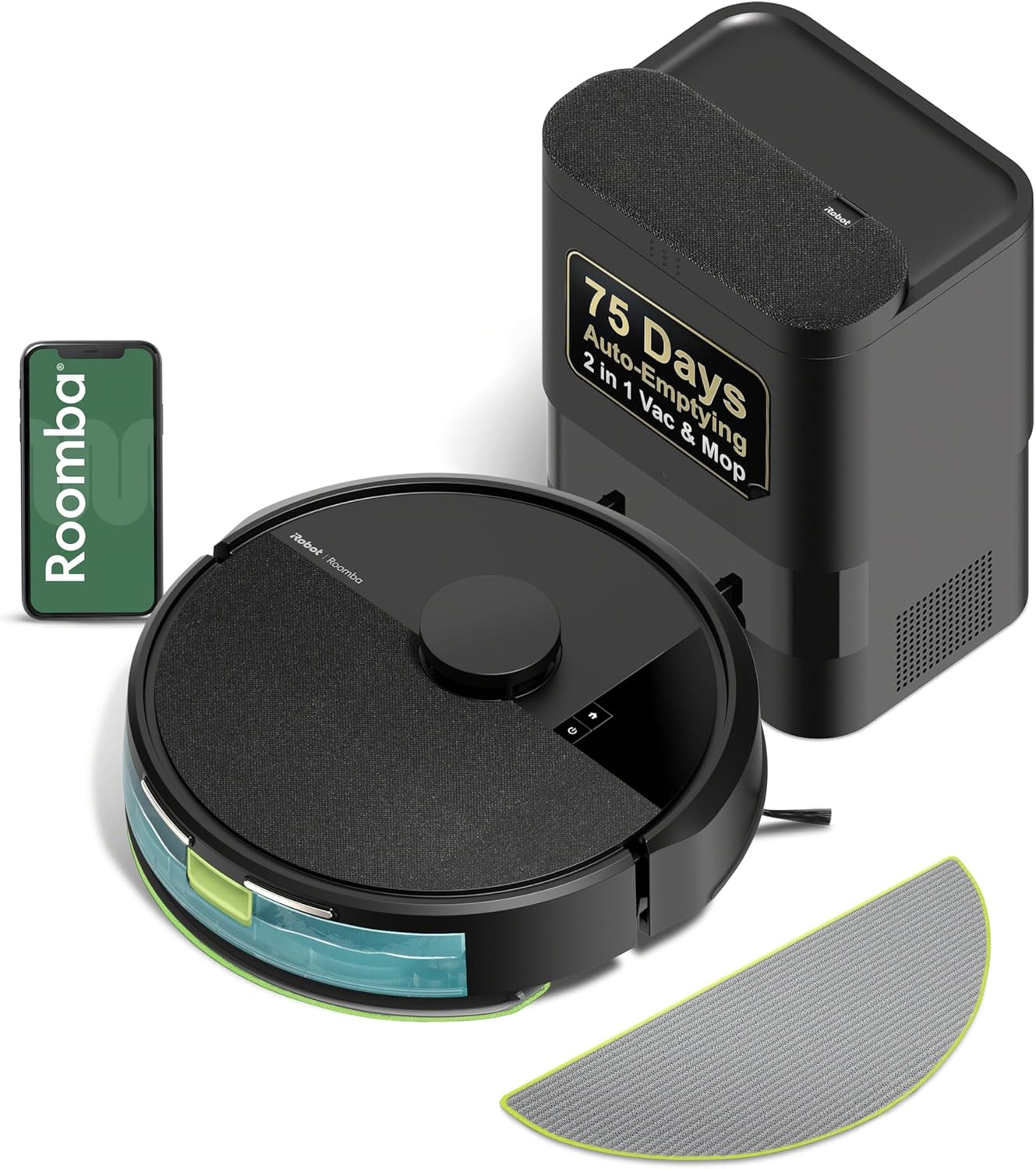
The Roomba 105 Combo pairs a robot vacuum-mop with an AutoEmpty dock to reduce maintenance and keep floors clean with minimal intervention. It maps rooms with ClearView LiDAR so it navigates methodically around furniture and avoids stairs and obstacles, and offers three cleaning modes: vacuum, mop, or vacuum-and-mop. The cleaning system combines high-suction power, a multi-surface brush, and an edge sweeper to pick up debris and hair, while a washable microfiber pad and micro-pump regulate mopping solution for even scrubbing. The AutoEmpty dock holds up to 75 days of dirt in a disposable bag, cutting down how often you handle dust. Control is flexible via the Roomba Home app, buttons, or voice assistants, and you can schedule targeted cleans and adjust suction or mop intensity. Expect routine upkeep like filter and brush cleaning and occasional mop washing, and note that mopping is designed for hard floors only because the robot detects and avoids carpets while mopping.
Best for: Buyers who prioritize a low-maintenance, dependable cleaning routine and want a robot that reliably maps and cleans floors with strong suction and long auto-empty intervals.
Less Ideal for: People who need heavy-duty wet cleaning on rugs or those who prefer entirely manual control without any app or smart-home integration.
- AutoEmpty dock holds up to 75 days of debris, reducing manual emptying
- ClearView LiDAR mapping for reliable room coverage and obstacle avoidance
- 70x power-lifting suction plus multi-surface brush and edge sweeper for strong pickup
- Combined vacuum-and-mop option with micro-pumped water flow and SmartScrub for deeper scrubbing
- Multiple control methods including app scheduling and voice commands
- Mopping is limited to hard floors and the mop requires regular washing
- Requires a 2.4 GHz Wi-Fi network for setup and operation
- Consumable parts like bags, filters, and mop pads need periodic replacement
Verdict: Choose this Roomba if you want a reliable, high-suction robot that minimizes hands-on maintenance with LiDAR mapping and a 75-day AutoEmpty dock.
iRobot Roomba 105 Vac

| Surface Recommendation | Carpet & Hard Floor |
|---|---|
| Battery Life | 200 minutes |
| Other Special Features of the Product | Anti-Fall, Bagless, Dirt Detection Sensor, Eco Mode, LiDAR Navigation |
| Controller Type | App Control, Button Control, Voice Control |
| Filter Type | Cartridge |
The Roomba 105 Vac is a user-friendly robot vacuum built for regular home cleaning across carpets and hard floors. It uses ClearView LiDAR to map rooms and navigate in neat rows while avoiding obstacles and stairs, and the Roomba Home App plus voice control let you start, schedule, and target rooms or zones. The three-stage cleaning system combines a multi-surface brush, edge-sweeping brush, and selectable suction levels for more intensive pickup on high-traffic areas, and the unit automatically returns to its dock to recharge and resume. Practical benefits include long runtime suitable for most apartments and many houses, simple app-based customization, and included docking station and spare filter. Important limitations are that advanced features like automatic bin emptying or mopping are not included and setup requires a 2.4 GHz Wi-Fi connection for app control; maintenance such as brush and filter cleaning is still needed every few months. For buyers prioritizing straightforward, strong-suction cleaning with reliable navigation, the Roomba 105 delivers consistent everyday performance.
Best for: Buyers who want a proven, easy-to-use robot that prioritizes reliable suction and neat-room navigation with simple app and voice control for everyday cleaning.
Less Ideal for: If you want hands-free bin emptying, integrated mopping, or advanced obstacle recognition features, consider higher-tier models with those capabilities instead.
- ClearView LiDAR mapping for efficient, obstacle-aware navigation
- Selectable suction levels and a 3-stage cleaning system for stronger pickup on carpets and edges
- App and voice control for scheduling, room targeting, and remote starts
- Long battery life with automatic return-to-dock and resume functionality
- Includes docking station and replacement filter out of the box
- No hands-free AutoEmpty dock or mopping capability
- Requires a 2.4 GHz Wi-Fi network for app setup and operation
Verdict: Choose the Roomba 105 if you want reliable, strong-suction cleaning with precise LiDAR navigation and simple app or voice control for everyday floor upkeep.
roborock Q10 S5+

| Maximum Suction | 10,000Pa |
|---|---|
| Capacity | 2.7 liters |
| Battery Life | 150 minutes |
| Filter Type | Washable |
| Control Method | App, Voice |
The roborock Q10 S5+ is a high-suction robot vacuum that combines vacuuming and sonic mopping with a large self-emptying dock for extended hands-free operation. It uses 10,000 Pa HyperForce suction and an anti-tangle brush system to lift embedded pet hair and debris from carpets and hard floors, while VibraRise 2.0 provides sonic scrubbing for tougher stains and an auto-lift feature keeps carpets dry. LiDAR mapping and ReactiveTech obstacle avoidance create accurate multi-level maps and smooth navigation around clutter, and app and voice control let you schedule jobs, set no-go zones, and adjust emptying modes. The washable filter and 2.7 L dust bag reduce maintenance frequency, and battery life supports long runs for larger homes. Limits to consider are moderate reported noise and only 2.4 GHz Wi-Fi support, which may restrict some modern network setups. For buyers prioritizing strong suction and low-touch upkeep, the Q10 S5+ delivers efficient, reliable cleaning across mixed floors.
Best for: Buyers who want powerful suction and long stretches of hands-free cleaning, especially households with pets or mixed floor types and a preference for reliable, mapped navigation.
Less Ideal for: People who need ultra-quiet cleaning for noise-sensitive environments or who require 5 GHz Wi-Fi compatibility for smart home integration.
- Very strong 10,000 Pa suction for lifting embedded dirt and pet hair
- 70-day capable 2.7 L self-emptying dock reduces user maintenance
- LiDAR navigation with multi-level mapping provides precise, repeatable cleaning
- VibraRise 2.0 sonic mopping and auto-lift keep carpets protected while scrubbing floors
- Dual anti-tangle brush design minimizes hair wrap and brush maintenance
- Reported noise level around 65 dB can be noticeable during operation
- Only supports 2.4 GHz Wi-Fi which may not work with some networks
Verdict: Choose the Q10 S5+ if you want a high-suction, low-maintenance robot that handles pet hair and mixed floors with precise LiDAR mapping.
Choosing the Right Robot Vacuum with Strong Suction: Key Factors to Consider
Suction Power and Modes
Raw suction power determines how effectively a robot vacuum removes embedded dirt and larger particles from carpets and rugs. Higher suction settings help with deeper pile and heavier debris but can shorten battery life and increase noise. Look for machines that offer multiple suction modes or an automatic boost that raises suction on carpets and lowers it on hard floors.
Also consider whether the vacuum maintains suction over time as the dustbin fills and brushes encounter hair. Consistent suction performance matters more than peak numbers alone because it affects day-to-day cleaning results.
Navigation, Mapping, and Obstacle Avoidance
Accurate navigation ensures the robot covers the intended area efficiently and returns to its dock when the job is done. Machines with reliable mapping can clean specific rooms on a schedule, avoid repeating the same spots, and find the optimal path for full-house coverage. Good obstacle avoidance reduces the chance of the unit getting stuck on cords, thresholds, or around furniture legs.
For homes with multiple rooms or open-plan layouts, mapping and multi-floor support make a tangible difference in convenience and cleaning thoroughness.
Battery Life and Effective Coverage
Battery runtime determines how much of your home a robot vacuum can clean in a single job before it must return to recharge. Longer runtime is essential for larger homes; shorter runtimes can be acceptable if the robot automatically resumes after recharging to finish the job. Consider the tradeoff between suction mode and runtime because higher suction reduces runtime.
Also check how much area the manufacturer rates for a full charge and whether the unit supports automatic recharge-and-resume. Real-world coverage depends on room layout, obstacles, and the amount of suction used.
Brush System and Hair Management
Brushes and rollers determine how hair and long fibers are collected and whether they tangle. A brush system designed to resist hair wrap reduces maintenance and keeps suction pathways clear. Some robots use rubberized multi-surface rollers that transfer debris directly into the suction path, while others rely on bristled brushes that can catch hair and require frequent cleaning.
If you have pets or long-haired occupants, prioritize systems optimized for hair pickup and easy removal from brushes and rollers.
Filtration and Dust Containment
High-quality filtration traps fine dust and allergens instead of releasing them back into the air. HEPA or HEPA-like filters are valuable if household members have allergies or asthma. Equally important is the dustbin and sealed pathway design to prevent dust escape during operation and when emptying.
Consider how easy it is to access and clean filters, and whether replacement filters are readily available. A well-sealed dust system improves indoor air quality and reduces dusting needs after vacuuming.
Maintenance, Parts Availability, and Ease of Use
Routine maintenance influences long-term performance. Check how simple it is to empty the dustbin, remove and clean brushes, and replace filters. Readily available replacement parts like filters and brush rolls extend useful life and lower ownership friction. Also consider app and scheduling features that simplify daily use, including voice and smart-home integration if those matter to you.
A robot that is easy to maintain and operate will deliver better cleaning over its lifespan even if initial setup takes a little time.
How Suction Affects Real-World Cleaning
Suction strength is more than a spec sheet number because it interacts with brush design, navigation, and floor type. On hard floors, excessive suction provides diminishing returns beyond a certain point because the brush system and airflow path determine pickup efficiency. On carpets, especially medium-to-high pile, stronger suction pulls debris out of fibers rather than leaving it lodged near the surface.
Practical consequences include fewer passes to achieve the same result and less need for manual spot-cleaning. Strong suction can also increase noise and reduce runtime, so look for machines that balance power with smart mode switching or automatic carpet boosts.
- Higher suction improves carpet cleaning but can shorten battery life
- Brush and roller design can amplify or limit suction effectiveness
- Automatic boost on carpet helps balance power and runtime
Mapping Features That Improve Coverage
Robots with multiroom mapping let you define no-go zones, name rooms, and set room-specific cleaning schedules. This is particularly useful for targeting high-traffic areas like entryways and kitchens that collect more debris. Mapping reduces redundant passes and ensures the robot prioritizes areas with more soiling.
Some mapping systems also support selective cleaning so you can send the robot to a spill or a single room from your phone. When strong suction is paired with targeted cleaning, you get efficient removal without running the robot at max power for the entire house.
- Room naming and zone cleaning for targeted pickup
- No-go zones to protect fragile areas or cables
- Resume-after-charge to complete larger jobs
Managing Noise and Scheduling High-Power Runs
Suction increases noise. If sound matters, schedule high-suction cleaning when the house is empty or at times when noise is less disruptive. Many robots let you set quiet or eco modes for daily maintenance and reserve boost modes for weekly deep cleans.
Using scheduling intelligently can reduce the perception of noise while still benefiting from strong suction when it is most needed, such as after heavy foot traffic or before guests arrive.
- Use quiet mode for daily maintenance
- Reserve boost mode for carpets and deep-clean sessions
- Schedule high-power runs at convenient times
Maintaining Peak Suction Performance
To keep suction strong over time, clear hair and debris from brushes and airways regularly and replace filters on the recommended schedule. A clogged filter or a hair-wrapped roller will dramatically reduce effective suction regardless of the motor power.
Inspect the dustbin seal and clean sensors and wheels periodically to ensure the robot navigates efficiently and maintains airflow. Routine maintenance is a small time investment that preserves performance and extends the life of the machine.
- Empty dustbin before it reaches the full line for consistent suction
- Clean brush rolls and remove hair weekly in high-hair environments
- Replace filters per manufacturer intervals to preserve airflow
Floor Types and When to Prioritize Suction
If your home has mostly low-pile or hard floors, brush design and airflow path can be more important than high suction numbers. Conversely, if you have medium to high-pile carpets or a lot of embedded dirt and pet hair, prioritize stronger suction and a brush system built for hair management.
Entryways and kitchen areas that accumulate heavier debris benefit from targeted high-suction runs. Consider hybrid approaches where daily cleaning uses moderate suction and scheduled deep cleans use maximum suction.
- Hard floors: moderate suction and good brush contact
- Low-to-mid pile carpets: balanced suction and brush action
- High-pile carpets and pet hair: prioritize higher suction and hair-resistant brushes
How We Chose the Best Robot Vacuum with Strong Suction
We focused on attributes that directly affect how well a robot vacuum with strong suction cleans in everyday home use. Core evaluation criteria included measured or manufacturer-stated suction capacity and real-world debris pickup, navigation and mapping accuracy in multiroom layouts, battery runtime and recharge behavior for realistic coverage, filtration effectiveness for allergens and fine dust, and brush/roller design for hair management. We also looked at ease of maintenance, including dustbin access and filter replacement, plus noise levels during high-suction modes. We excluded units that prioritize low profile or ultra-quiet operation at the expense of measurable suction performance, as well as models that lack basic mapping or obstacle avoidance for multiroom homes. The shortlist favors machines that balance strong suction with reliable navigation, practical runtime, and maintainability so buyers can expect consistent cleaning results in real use. Scoring emphasized suction and navigation but required acceptable scores in runtime and filtration to make the final list.
Our full evaluation process is outlined in our review methodology.
FAQ
How much suction do I really need for pet hair?
It depends on hair length and carpet pile. For short-haired pets on low-pile floors, moderate suction with a good brush system can be sufficient. For long hair or thicker carpets, higher suction plus a hair-resistant brush design reduces tangles and improves pickup.
Will stronger suction drain battery life too fast?
Higher suction modes consume more power and will reduce runtime compared with eco modes. Many robots compensate with automatic boost on carpets and resume-after-charge features so deep cleans can be completed without manual intervention.
Can high suction damage delicate rugs or decor?
Most robots include settings to reduce suction or avoid specific rooms. For fragile rugs, use a lower suction mode or set a no-go zone. Extremely high suction is unlikely to damage most floor coverings but may pull on tassels or small loose items, so secure those beforehand.
How often should I clean the brushes and filters?
In households with pets or heavy debris, clear hair from brushes weekly and check filters every 1 to 2 weeks. Replace filters according to the manufacturer's recommendations or sooner if you notice reduced suction or increased dust output.
Are self-emptying bases necessary for strong-suction robots?
Self-emptying bases are convenient because they maintain empty dustbins for consistent suction and reduce the frequency of manual emptying. They are not strictly necessary, but they help preserve performance in homes that run the robot frequently or generate a lot of debris.
Final Verdict
Prioritize the balance between suction strength and practical considerations like navigation, runtime, and maintenance when choosing a robot vacuum with strong suction. Strong suction improves deep-clean results on carpets and for pet hair but comes with tradeoffs in noise and battery life. Favor models that combine measurable suction with smart mapping, good filtration, and easy-to-maintain brush systems. Decide which tradeoffs matter most for your home layout and cleaning habits. If you need routine deep cleaning for carpets or pets, lean toward stronger suction and hair-management features; if coverage or quiet operation is more important, look for units that offer adaptive suction modes and robust navigation.