
Note: This article contains affiliate links. If you click on these links and make a purchase, we may earn a small commission at no extra cost to you. This helps support our research and content. Read our full affiliate disclosure here.
If you want a hands-off floor cleaner but do not need wet mopping, a robot vacuum without a mop saves upkeep and avoids streaking on sensitive floors. The right model will handle daily debris, transition between floor types, and return to its base reliably so you spend less time managing chores. This guide shortlists the top robot vacuums without mops and explains the practical differences that matter for home use. We evaluate options across suction capability, navigation and mapping accuracy, battery life, and maintenance demands so you can pick a straightforward cleaner that fits your routine and flooring.
Top Picks at a Glance
| Best Overall The best all-around choice for most situations | Shark IQ Robot RV1001 |  |
| Best Quality Built to a higher standard if you want something more solid | Shark AI Ultra AV2501S |  |
| Best Value The sweet spot between price and what you get | Lefant M210P Robot Vacuum |  |
| Best Budget The cheapest option that still gets the job done reliably | ILIFE V2 Robot Vacuum |  |
| Most Popular A crowd favorite that many people choose with confidence | iRobot Roomba 105 Vac |  |
| Best Seller A high-volume bestseller chosen again and again | eufy 11S Max Robot Vacuum |  |
Shark IQ Robot RV1001

| Battery Life | 90 minutes |
|---|---|
| Controller Type | Amazon Alexa, Google Assistant, vera |
| Filter Type | Disk |
| Power Source | Battery Powered |
The Shark IQ Robot RV1001 is a mapping robot vacuum that cleans row by row across multi-room layouts using IQ NAV and the Shark Clean app or voice commands. It is aimed at regular floor maintenance on hard floors and carpets, using a re-engineered self-cleaning brushroll to limit hair wrap and dual edge brushes to reach corners. The XL dust cup and high-efficiency filter let the robot run longer between emptying, and the unit will return to its dock to recharge and resume a job if needed. App-based room select and scheduling make it convenient to target specific rooms, and voice control with Alexa or Google Assistant adds hands-free operation. Important limitations are that this model does not include a self-empty base or mopping capability, and the filter is non-washable so replacements are required over time. For everyday pet hair and debris pickup across a mapped home, the RV1001 delivers strong practical performance with straightforward app and voice controls.
Best for: Buyers who want a capable, app-controlled robot that maps their home and handles daily pickup of pet hair and debris across multiple rooms without needing mop functionality.
Less Ideal for: People who want a robot that self-empties into a base or who need an integrated mopping function should consider other models.
- IQ NAV home mapping enables room-by-room cleaning and selective room scheduling
- Self-cleaning brushroll reduces hair wrap for easier maintenance in homes with pets
- XL dust cup and high-efficiency filter allow longer runtimes between emptying
- App and voice control make targeted cleaning and scheduling simple
- No self-emptying base included, so dirt must be emptied manually
- Filter is non-washable and will require replacement over time
Verdict: Choose the RV1001 if you want a mapped, voice- and app-controlled robot that reliably picks up pet hair and debris across multiple rooms without mopping features.
Shark AI Ultra AV2501S
| Battery Life | 120 minutes |
|---|---|
| Control Method | Voice |
| Controller Type | App Control |
| Filter Type | Foam |
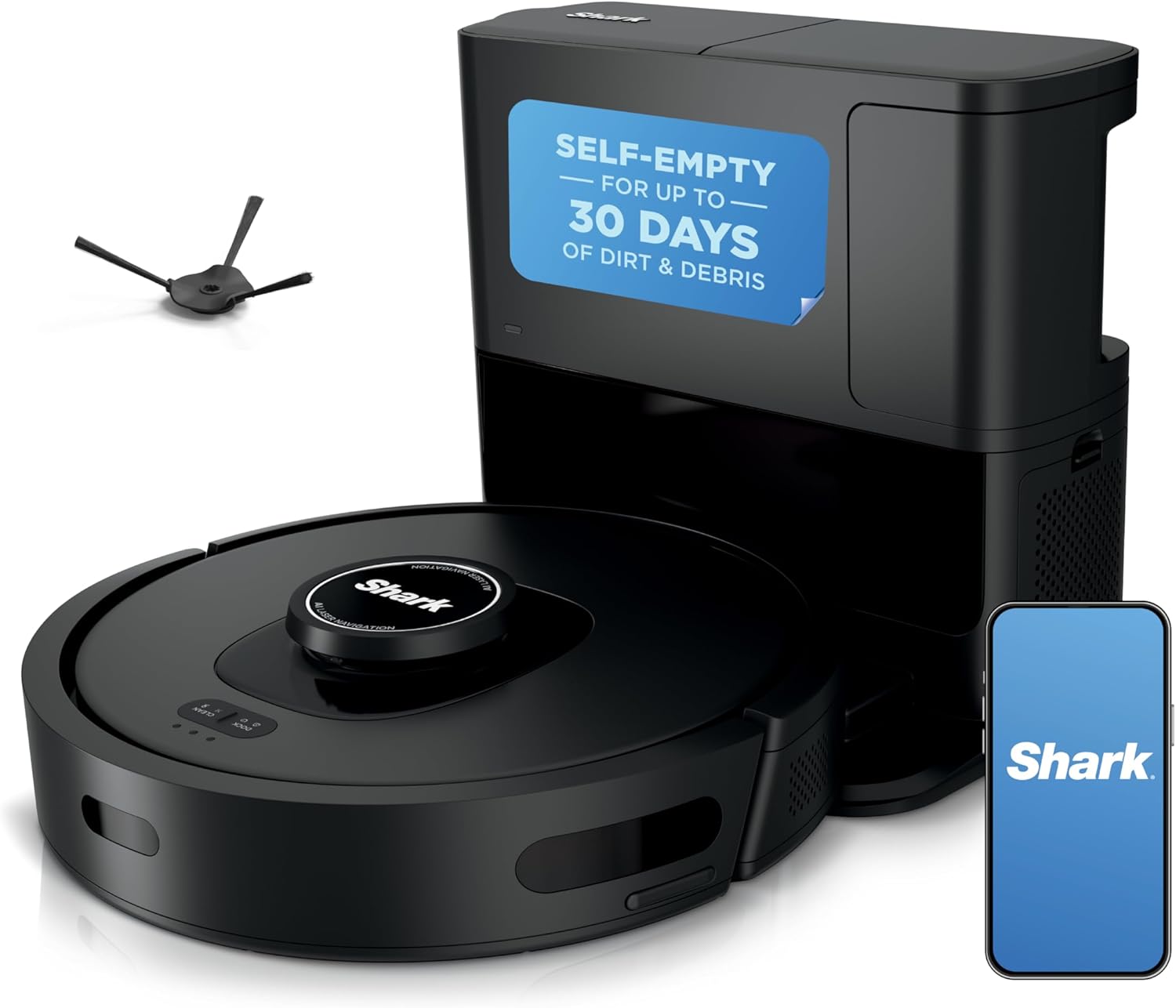
The Shark AI Ultra AV2501S is a performance-focused robot vacuum that uses 360° LiDAR mapping and Matrix Clean navigation to methodically cover carpets and hard floors. It runs up to 120 minutes per charge, returns to recharge and resume when needed, and transfers debris into a bagless self-empty base designed to hold up to 30 days of dirt. The self-cleaning brushroll reduces hair wrap, which helps maintain suction on pet hair and long hair, while the included HEPA filtration traps fine dust and allergens. App control plus Alexa and Google Assistant support lets you schedule targeted cleanings and set boundaries, and the grid-based navigation means the robot makes multiple passes over dirty areas for deeper pickup. Downsides to expect are the relatively large base footprint and that advanced mapping and app features require setup and periodic maintenance of filters and brushes, but for buyers who prioritize strong suction, reliable mapping, and low-touch emptying, this model delivers effective, repeatable cleaning across mixed floors.
Best for: Buyers who want a high-coverage, hands-off vacuuming solution that prioritizes suction, precise mapping, and low-frequency emptying for homes with pets and mixed flooring.
Less Ideal for: People who need a compact dock footprint or who prefer a combined vacuum-and-mop unit instead of a dry-only robot.
- 360° LiDAR and Matrix Clean navigation provide organized, repeat-pass coverage for thorough pickup
- Bagless self-empty base holds up to 30 days of debris to reduce hands-on emptying
- Self-cleaning brushroll is designed to minimize hair wrap for better performance on pet hair
- Up to 120 minutes runtime with recharge-and-resume for larger cleaning cycles
- HEPA filtration captures fine dust and allergens for improved indoor air quality
- Self-empty base and robot add bulk and require floor space for the dock
- Advanced mapping and app setup can take time and occasional maintenance to keep maps accurate
Verdict: Choose the Shark AI Ultra AV2501S when you want powerful, methodical vacuuming with long runtime and a self-emptying base for low-touch upkeep.
Lefant M210P Robot Vacuum

| Suction | 4000Pa |
|---|---|
| Runtime | 200 minutes |
| Dustbin Capacity | 500 ml |
| Control Method | App, Remote, Touch, Voice |
| Compatible Devices | Amazon Echo, Google Home, Smartphones |
The Lefant M210P is a slim robot vacuum built for daily floor maintenance without a mop function. It uses a tangle-resistant brush and brushless suction port with up to 4000Pa suction to lift pet hair and debris from hard floors and low-pile carpet, while automatic suction boost helps on rugs. Navigation relies on infrared anti-collision and anti-fall sensors with several cleaning modes including zigzag, spot, edge, scheduled, random, and manual control via the Lefant app or voice assistants. Practical benefits include a long 200-minute runtime and automatic return-to-charge, a 500 ml dustbin that reduces emptying frequency, and quiet operation at about 55 dB for use during the day or night. Limitations include basic obstacle sensing rather than lidar mapping, a rectangular form factor that may behave differently in tight clutter, and a 2.4 GHz Wi-Fi requirement for smart features. For buyers who want a straightforward, no-mop robot that manages pet hair and runs long between charges, the M210P is a sensible choice; power users wanting advanced mapping or multi-floor memory may prefer higher-end models.
Best for: Buyers who prioritize reliable, long-running automated vacuuming for pet hair and everyday debris and who want simple app and voice control rather than advanced mapping features.
Less Ideal for: Users who need precise lidar mapping, multi-floor mapping, or advanced navigation and room-by-room cleaning control should consider more expensive mapping-focused robots.
- High suction (4000Pa) and tangle-resistant brush for effective pet hair pickup
- Long 200-minute runtime with automatic recharge for large cleaning sessions
- 500 ml dustbin reduces how often you need to empty it
- App and voice control with scheduling for convenient hands-off cleaning
- Quiet operation (~55 dB) suitable for use around sleeping pets or family
- Uses infrared PSD sensors rather than lidar-based mapping, so room mapping and obstacle avoidance are more basic
- Requires 2.4 GHz Wi-Fi for smart features, which limits network setups
Verdict: A compact, pet-friendly robot vacuum with strong suction and a very long runtime that delivers reliable hands-off floor cleaning without a mop.
ILIFE V2 Robot Vacuum

| Battery Life | 120 minutes |
|---|---|
| Capacity | 300 ml |
| Filter Type | Sponge |
| Control Method | Remote |
| Noise Level | 69 db |
The ILIFE V2 is an entry-level robot vacuum built to keep hardwood and other hard floors tidy without a lot of fuss. Its 2.99-inch slim body fits under low furniture while a tangle-free suction port and sponge filter make it practical for homes with pet hair. You can run scheduled cleanings, switch between auto, spot and edge modes, or start jobs with the included remote control or the single-button on the unit. A 300 ml dustbin and up to 120 minutes of runtime let it cover medium rooms on one charge, and it will automatically return to the dock when the battery is low. Noise is noticeable at 69 dB and there is only one power level, so it lacks adjustable suction or app-based controls, but for straightforward floor maintenance on hardwood and low-pile carpet the V2 delivers solid value at an affordable price.
Best for: Buyers who want an affordable, no-frills robot to maintain hardwood and low-pile carpet cleanliness with simple controls and scheduled runs.
Less Ideal for: Those who need strong adjustable suction, smart app control, or advanced mapping for large or complex homes should consider higher-end models.
- Slim 2.99-inch profile cleans under low furniture
- Tangle-free suction port suited for pet hair
- 120 minutes runtime with automatic return-to-dock
- Multiple cleaning modes (auto, spot, edge) and simple remote control
- Single power level limits suction control for heavier debris
- No smartphone app or advanced navigation features
Verdict: A low-cost, slim robot vacuum that reliably maintains hardwood floors and handles pet hair for budget-focused buyers.
iRobot Roomba 105 Vac

| Battery Life | 200 minutes |
|---|---|
| Other Special Features of the Product | Anti-Fall, Bagless, Dirt Detection Sensor, Eco Mode, LiDAR Navigation |
| Controller Type | App Control, Button Control, Voice Control |
| Filter Type | Cartridge |
| Surface Recommendation | Carpet & Hard Floor |
The Roomba 105 Vac is a straightforward robot vacuum built to keep carpets and hard floors tidy without a mop option. It uses ClearView LiDAR to map rooms and navigate in neat rows while automatic cliff sensors prevent falls. The three-stage cleaning system combines a multi-surface brush, an edge-sweeping brush, and up to four suction power levels so you can boost cleaning on high-traffic areas or dial it back for quieter runs. Setup and daily use are simple through the Roomba Home App or voice assistants, where you can schedule cleans, target rooms, and set keep-out zones. The included dock lets the robot recharge and resume jobs when the battery runs low, and maintenance is typical for the class: emptying the bin, occasional brush cleaning, and periodic filter changes. Limitations to note are the lack of mopping functionality and a modest dust bin compared with higher-end models, so frequent emptying is likely in hairy or very dusty homes. For buyers prioritizing reliable vacuuming and easy controls, the Roomba 105 delivers pragmatic performance without extra frills.
Best for: Buyers who want a reliable, easy-to-use robot vacuum focused on routine vacuuming and appreciate mapping and app/voice controls to automate daily cleaning.
Less Ideal for: Those who need a combo vacuum-and-mop solution or households that prefer a larger dust capacity for very heavy shedding or dirt loads.
- ClearView LiDAR mapping for systematic navigation and obstacle avoidance
- Multiple suction levels allow customization for quiet or deeper cleans
- App and voice control make scheduling and targeted cleaning easy
- Long battery runtime with automatic recharge and resume
- No mopping capability for sealed hard-floor cleaning
- Smaller dust bin means more frequent emptying in high-debris homes
Verdict: Choose the Roomba 105 if you want a no-frills, LiDAR-mapped robot vacuum that reliably automates daily vacuuming with simple app and voice control.
eufy 11S Max Robot Vacuum
| Surface Recommendation | Hard Floor & Tile & Medium carpet |
|---|---|
| Battery Life | 100 minutes |
| Suction Power | 2000 Pa |
| Capacity | 600 ml |
| Noise Level | 55 db |
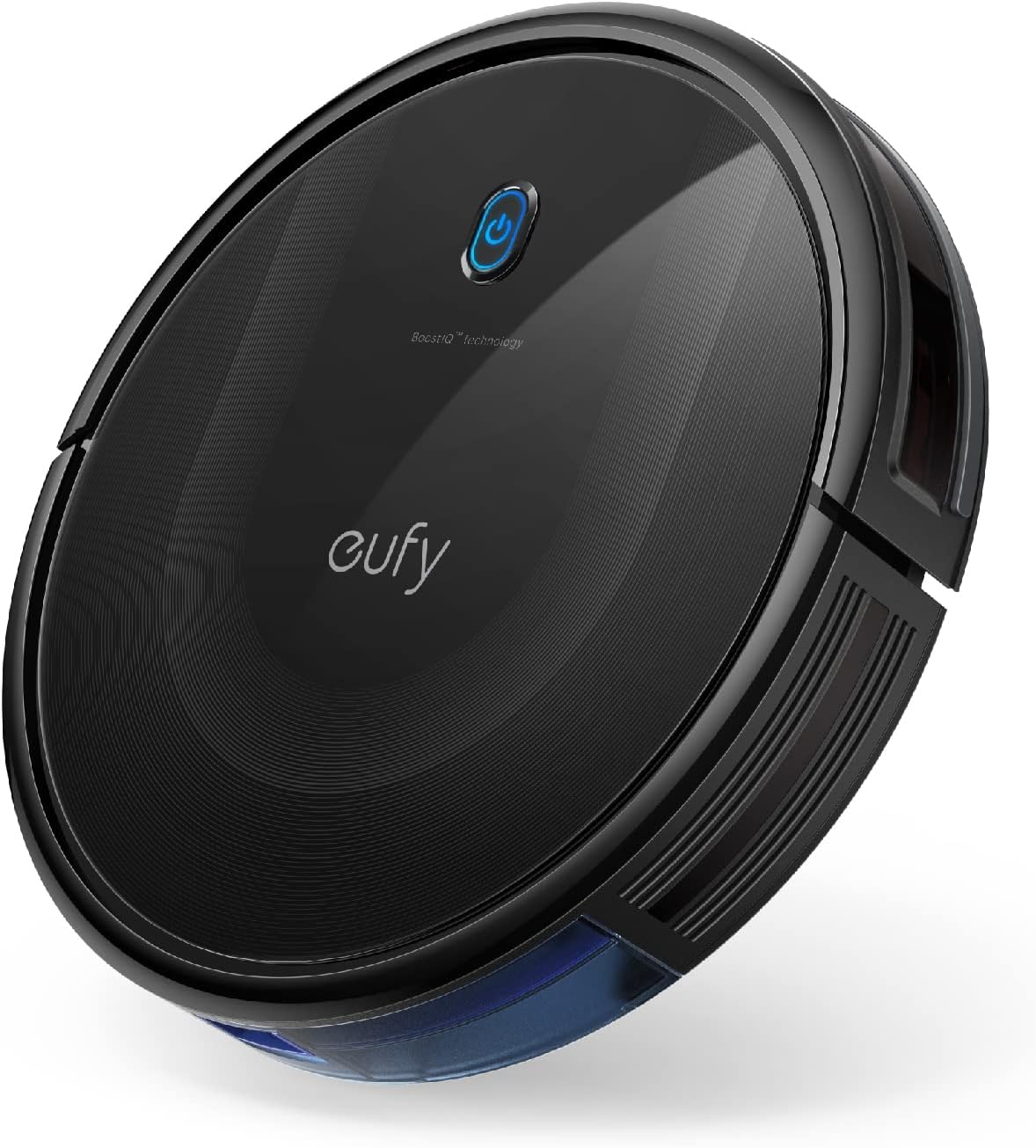
The eufy 11S Max is a low-profile robot vacuum built to clean hard floors and medium-pile carpets without drawing attention. Its 2.85-inch slim body lets it slide under low furniture while 2000Pa suction and a 12.8-inch cleaning path pick up dust, crumbs, and pet hair. It runs up to 100 minutes on hardwood at a reported low 55 dB, and automatic return-to-base means it tops off battery without user intervention. Controls are simple: the included remote and onboard buttons let you start, stop, and switch modes quickly, though there is no Wi-Fi or app control. Practical touches include washable filters, drop-sensing and anti-collision sensors, and a 600 ml dust capacity that reduces how often you empty the bin. The trade-offs are straightforward: navigation is basic rather than lidar or map-based, so room coverage is more random and may miss tight corners, and the single-side-brush design can be less thorough along edges compared with dual-brush models. For routine, quiet cleaning of hardwood, the 11S Max balances strong suction and a slim profile in a simple, reliable package.
Best for: Buyers who prioritize a quiet, no-frills robot that cleans hardwood reliably and fits under low furniture will appreciate this model for regular maintenance cleaning.
Less Ideal for: If you want mapped cleaning, smartphone scheduling, or the most thorough edge-cleaning for complex floorplans, choose a model with advanced navigation and app control instead.
- Slim 2.85" profile reaches under low furniture
- Up to 100 minutes runtime for extended cleaning sessions
- Powerful 2000Pa suction for effective pickup on hard floors
- Quiet operation at about 55 dB suitable for daytime or evening use
- Large 600 ml dust capacity and washable filter lower maintenance frequency
- Random navigation rather than mapping can lead to uneven coverage
- No Wi‑Fi or smartphone app means limited scheduling and remote control options
Verdict: A slim, quiet robot with strong suction made for routine hardwood maintenance when you want reliable, no-frills cleaning.
Choosing the Right Robot Vacuum Without a Mop: Key Factors to Consider
Suction Power and Cleaning Modes
Suction strength determines how effectively a robot vacuum lifts dust, pet hair, and embedded debris from both hard floors and carpets. Look for models that state different cleaning modes or adjustable suction so you can choose higher power for rugs and quieter modes for light daily cleanups.
Cleaning modes matter because they let the robot adapt runtime versus cleaning aggressiveness. High-suction modes shorten battery life but improve deep cleaning on high-traffic areas. Automated boost when the robot detects thicker carpet is a useful feature that balances performance and runtime.
Navigation Precision and Mapping
Accurate navigation reduces missed spots and prevents the robot from getting stuck. Robots that use lidar or structured light mapping tend to produce reliable coverage patterns and can remember floor plans for scheduled cleanings and no-go zones.
Good mapping also speeds up repeat cycles because the robot follows optimized routes. If you have complex furniture layouts, stairs, or many room transitions, prioritize navigation systems that advertise robust obstacle avoidance and saved maps.
Battery Life and Recharge Behavior
Battery capacity dictates how much of your home the robot can clean in a single run. For one-level apartments and small houses, a moderate runtime is usually sufficient. Larger homes benefit from longer runtimes and robots that can automatically return to the base, recharge, and resume until the job is finished.
Also consider charge time. Faster recharge cycles reduce downtime between cleanings and make scheduled daily runs more reliable. Models that report remaining runtime and have predictable return-to-dock behavior minimize interruptions.
Dustbin Capacity and Filter Accessibility
A larger dustbin means fewer emptying cycles, which is especially useful for homes with pets or lots of foot traffic. Filters that are easy to remove and clean extend the life of the unit and keep suction consistent over time.
Evaluate whether the dustbin is washable or whether it uses disposable bags. While washable bins are economical, bagged systems can reduce dust exposure when emptying. Also check filter type and replacement frequency to estimate ongoing maintenance.
Brush Design and Tangle Resistance
Brushroll design affects hair pickup and how often you need to clear tangles. Dual-brush or rubberized roller systems tend to resist hair wrap better than traditional bristles and reduce maintenance time.
Side brushes also influence edge cleaning performance. Look for robust side brushes that can be replaced easily and brush assemblies that are simple to detach for cleaning. Tangle-resistant designs are a real-time saver in homes with long-haired pets.
Noise Level and Scheduling Flexibility
Noise output is important in shared living spaces and for households who run the robot while at home. Quiet operation can allow daytime cleaning with minimal disruption, while very loud units are better reserved for times when you are away.
Scheduling flexibility in the companion app or onboard controls lets you program regular cleanings, adjust cleaning modes by time of day, and limit operation to specific rooms. Combined with lower noise, flexible scheduling makes the robot more convenient and less intrusive.
How Robot Vacuums Without a Mop Fit Different Homes
Robot vacuums without a mop focus entirely on dry pickup. That specialization simplifies the machine, reduces the number of parts that require wet cleaning, and avoids the risks of water damage or streaking on delicate floors. For owners of hardwood, laminate, tile, or largely carpeted homes, a dry-only robot is often a better fit.
If you do not need spot mopping or liquid spill cleanup, a dry-only robot minimizes maintenance. It is easier to empty a dustbin and clean filters than to manage water tanks and mopping pads. This can save time over the long term and reduce the chance of odors or mildew from damp components.
- Better for homes that primarily need hair and dust removal
- Lower routine maintenance than hybrid mop-vac machines
- Fewer components that can fail due to moisture exposure
Common Home Layout Challenges and Workarounds
Tight chair legs, low sofas, and clustered furniture can trap robot vacuums. Use virtual no-go zones in the app, temporary physical barriers, or raise furniture slightly to create smoother travel paths. Pre-clearing small obstacles like cords and clothing significantly improves coverage.
Thresholds between rooms can impede suction-only robots if they are too tall. Check the robot's specified maximum step-climbing height and plan routes that avoid problematic thresholds when possible. In multi-surface homes, a robot that automatically adjusts suction or has carpet-boost features will provide more consistent results.
- Mark off charging cords and fragile areas with no-go zones
- Clear small loose items before scheduled runs
- Confirm threshold height compatibility for seamless transitions
Maintenance Routine That Keeps Performance High
A quick, regular maintenance routine prolongs suction and keeps the robot reliable. Empty the dustbin after heavy runs, clean or tap filters weekly if you have pets, and remove hair from the brushroll as needed. Inspect wheels and sensors monthly to ensure smooth navigation.
Create a short checklist to follow after every few runs. Simple habits like wiping cliff sensors and checking for debris around the wheels prevent common failures and help the robot maintain consistent mapping and coverage.
- Empty dustbin after large cleanings
- Clean filters and brushroll weekly or as needed
- Wipe sensors and check wheels monthly
When a Mop Is Actually Useful
Even if you prefer a dry-only robot, there are situations where a mop feature helps. For sticky spills, surface stains, or homes with many tracked-in wet spots, a mop removes residues that a vacuum alone cannot. Consider keeping a separate mop tool or a handheld cleaner for these infrequent tasks.
If floors are prone to grit that embeds into grout lines or textured tiles, periodic manual mopping or a separate mopping device can complement your robot vacuum without adding mopping complexity to the robot itself.
- Reserve mopping for sticky spills and deep cleaning cycles
- Use manual methods for grout and textured surfaces
- Complement your vacuum with a separate mop if needed
How We Chose the Best Robot Vacuum Without a Mop
We selected entries that prioritize vacuuming performance and low maintenance rather than integrated mopping features. Primary filters included reliable suction performance on both hard floors and carpets, consistent navigation and mapping behavior, and manageable maintenance routines such as accessible dustbins and washable filters. Battery runtime and recharge behavior were weighed to ensure models can complete typical cleaning cycles in small to medium homes without frequent intervention. Noise output and brush system design were considered for families and apartment dwellers who need quiet operation and minimal tangles. We excluded hybrid vacuums that rely on water tanks or wet pads, units that require specialized cleaning accessories, and models that emphasize mopping as a primary function. Our selection focuses on vacuums that keep floors clean by dry pickup only, with practical design choices that lower daily upkeep and increase uptime.
Our full evaluation process is outlined in our review methodology.
FAQ
Will a robot vacuum without a mop clean sticky spills?
No. Dry-only robot vacuums excel at dust, hair, and loose debris but cannot remove liquid spills or sticky residues. Use a mop or spot-cleaning tool for wet messes.
How often should I empty the dustbin?
Emptying depends on home traffic and pets. For light use, empty every few runs; with pets or heavy debris expect to empty after each major cleaning. Regular emptying keeps suction consistent.
Are robot vacuums without mops better for hardwood floors?
They are often a good choice because they avoid introducing moisture that can damage some hardwood finishes. Ensure the brush system is gentle and consider softer side brushes to prevent scratches.
Can a dry-only robot handle long pet hair?
Many dry-only robots can pick up long pet hair, but performance varies by brush design. Look for tangle-resistant rollers and frequent maintenance to clear hair from the brush when needed.
How do I prevent the robot from getting stuck under furniture?
Measure furniture clearance and compare it to the robot's height, use virtual boundaries, and keep the area under low furniture tidy. Small blocks or temporary barriers can also help during scheduled runs.
Final Verdict
A robot vacuum without a mop is a strong choice if your main need is routine dust, pet hair, and dry debris removal with minimal upkeep. Prioritize suction, navigation, and easy maintenance when choosing a model, and accept the tradeoff that sticky spills will still need occasional manual cleaning. Focus on the cleaning performance and reliability features that match your home size and floor types. With the right balance of suction, mapping intelligence, and accessible upkeep, a dry-only robot can handle daily floor cleaning efficiently and with less hands-on work.