
Note: This article contains affiliate links. If you click on these links and make a purchase, we may earn a small commission at no extra cost to you. This helps support our research and content. Read our full affiliate disclosure here.
Choosing the right rod knife sharpener matters if you want consistent, safe edge maintenance at home or in the field. A quality rod sharpener reduces time spent stropping and prevents over-grinding, while letting you keep a predictable angle so blades last longer. This guide covers seven shortlisted rod knife sharpeners that represent the best mix of control, abrasive options, and build quality. We evaluate each pick for how well it restores an edge, how easy it is to use, and how it holds up to routine maintenance. Read on for focused guidance that helps you pick the right rod for regular sharpening and occasional edge repair.
Top Picks at a Glance
| Best Overall The best all-around choice for most situations | Henckels Fine Edge Sharpening Steel 9" |  |
| Best Quality Built to a higher standard if you want something more solid | ZWILLING Professional Oval Sharpening Steel |  |
| Best Value The sweet spot between price and what you get | FANERFUN 13-Inch Honing Rod |  |
| Best Budget The cheapest option that still gets the job done reliably | LUFFEXX 12-Inch Honing Rod |  |
| Top Rated A top-rated pick with lots of positive feedback | Victorinox Swiss Classic 10" Honing Steel |  |
| Most Popular A crowd favorite that many people choose with confidence | Utopia Kitchen 12" Honing Rod |  |
| Best Seller A high-volume bestseller chosen again and again | Kota Japan Diamond Sharpening Rod |  |
Henckels Fine Edge Sharpening Steel 9"

| Material Type | Stainless Steel |
|---|---|
| Grit Type | Fine |
| Included Components | Sharpening Steel |
| Item Type Name | Sharpening Steel |
The Henckels Fine Edge 9" sharpening steel is a straightforward honing rod built to restore a knife's edge for daily kitchen use. Made from stainless steel with a fine grit, the rod straightens rolled metal fibers on blades rather than removing large amounts of material, so it is best used regularly between professional sharpenings to keep knives performing. The curved, ergonomic polypropylene handle is weighted toward the center, which improves balance and hand control during passes, and the tool is easy to hold safely while working. It is suitable for chef knives, steak knives, and typical household cutlery, and cleaning is as simple as a quick wipe after use. The main limitation is that a honing steel does not replace a proper sharpening session with stones or a guided sharpener when edges are badly nicked or blunt; it maintains rather than regrinds the edge. Backed by Henckels long-standing reputation and a lifetime guarantee against defects, this rod is a durable, no-frills option for routine knife maintenance.
Best for: Buyers who want a reliable, easy-to-use tool for keeping everyday kitchen knives performing between full sharpenings and value balanced long-term durability.
Less Ideal for: People who need to repair chipped blades or restore very dull knives should choose a sharpening stone or guided sharpener instead.
- Fine-grit stainless steel construction straightens edges without removing excessive metal
- Ergonomic, weighted polypropylene handle for secure grip and balanced control
- Simple maintenance — wipe clean after use
- Suitable for a wide range of kitchen knives and BBQ tools
- Backed by a lifetime guarantee against manufacturer defects
- Does not sharpen by removing metal so it cannot fix severely dull or damaged blades
- Single grit option may be too fine for users who prefer coarse realignment before honing
Verdict: A durable, well-balanced honing rod that reliably maintains knife edges for everyday cooks who want simple, regular upkeep.
ZWILLING Professional Oval Sharpening Steel

| Material Type | Stainless Steel |
|---|---|
| Grit Type | Extra Fine |
| Included Components | Oval Sharpening Steel |
The ZWILLING Professional 12-inch oval sharpening steel is a high-carbon stainless steel honing rod intended to realign a knife's edge rather than remove significant metal. Its oval profile increases blade contact compared with a round rod, so you often need fewer strokes to restore a straight edge, and the 12-inch length is long enough for most chef and utility knives. The synthetic handle has a grooved, fist-friendly grip, a finger guard for safety and a hanging loop for convenient storage. In practice it is best used frequently—ideally before or after heavy cutting sessions—to keep blades performing well and delay the need for abrasive sharpening. The extra-fine grit and solid construction make it comfortable for everyday kitchen use, though it will not sharpen severely nicked or blunt knives the way a diamond steel or abrasive stone would. For cooks focused on maintaining peak cutting performance, this steel is a durable, easy-to-use tool that keeps edges true between professional or abrasive tune-ups.
Best for: Buyers who prioritize consistent cutting performance and want a durable honing tool to maintain factory-quality edges between sharpenings.
Less Ideal for: People who need to restore badly dull or chipped knives should choose an abrasive sharpener or diamond steel instead.
- Oval rod shape gives more blade contact for efficient honing with fewer strokes
- High-carbon stainless steel construction offers durable, corrosion-resistant performance
- 12-inch length accommodates most chef and utility knives
- Grooved synthetic handle with finger guard provides a secure, ergonomic grip
- Extra-fine honing surface does not remove metal, so it cannot repair severely dull or chipped blades
Verdict: A robust oval honing steel that keeps performance-focused cooks' knives true with fewer strokes between full sharpenings.
FANERFUN 13-Inch Honing Rod
| Material Type | Steel |
|---|---|
| Grit Type | Ultra Fine |
| Included Components | Knife Honing Rod |
| Item Weight | 3.2 ounces |
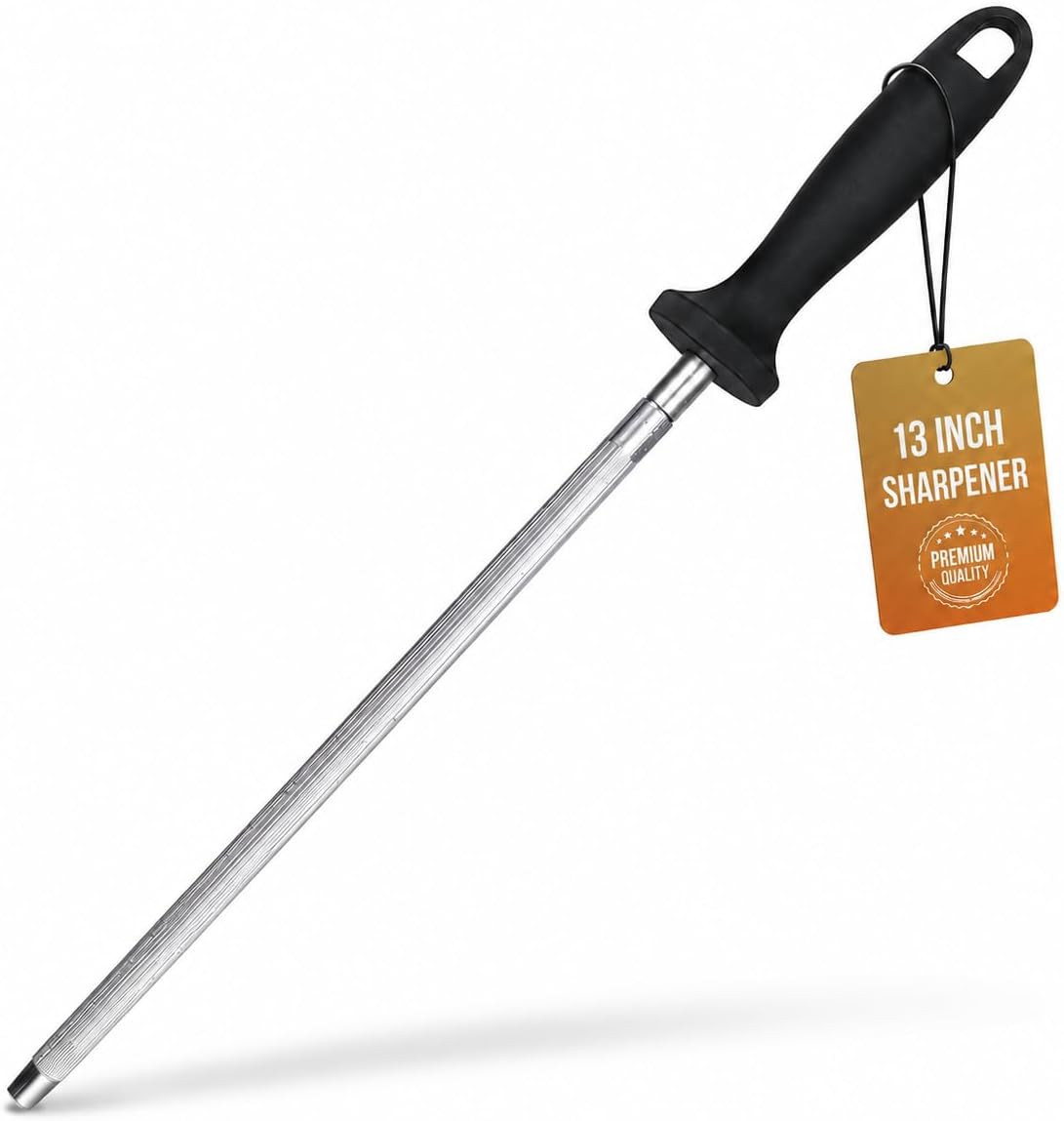
This FANERFUN honing rod is a simple, durable tool for keeping kitchen knives aligned between sharpening sessions. The carbon steel core with nickel-chrome plating resists corrosion and gives a firm, consistent surface for stroking blades, while the dense sawtooth finish realigns edges quickly with a few controlled passes. The rod is magnetized to collect metal filings during use, which helps keep the work area and food cleaner than non-magnetized steels. A textured, non-slip PP handle and hanging loop make it comfortable to hold and easy to store. At 13 inches overall, it provides enough length to handle chef and utility knives without feeling unwieldy, though it is not a substitute for abrasive sharpening when a blade needs material removed. This is a straightforward, budget-friendly rod for regular edge maintenance and fast touch-ups in a home or small professional kitchen.
Best for: Buyers who want a low-maintenance, effective tool to keep kitchen knives performing between sharpenings and value a hygienic, easy-to-use solution.
Less Ideal for: Those who need aggressive material removal or full re-profiling of very dull or damaged blades should choose an abrasive sharpener instead.
- Corrosion-resistant nickel-chrome plated carbon steel resists rust and wear
- Magnetized rod captures filings for cleaner sharpening
- Dense sawtooth surface realigns edges with few strokes
- Textured non-slip handle and hanging loop for secure grip and storage
- Honing rod realigns edges but does not remove metal for re-profiling or very dull knives
- Overall length may be short for very large blades or professional butchers
Verdict: A practical, magnetized carbon-steel honing rod that makes quick, clean edge maintenance easy for everyday cooks.
LUFFEXX 12-Inch Honing Rod

| Material Type | High Carbon Steel |
|---|---|
| Grit Type | Fine |
| Item Count | 1 |
| Length | 12 inches |
This 12-inch LUFFEXX honing rod is a straightforward sharpening tool that realigns knife edges and removes minimal metal, making it suitable for routine blade maintenance. Built from nickel-chrome plated high-carbon steel with a fine grit, it is used by drawing a knife across the rod at the correct angle several times to restore a keen edge. The rod includes an anti-roll base for stability, an integrated hanging hook for storage, and a magnetic surface that catches metal particles for easier cleanup. Its corrosion-resistant plating reduces the need for maintenance and helps it stay rust-free with simple wiping. As a basic, single-step rod it will not reprofile severely damaged or chipped blades the way abrasive stones or diamond systems will, but it excels at quick touch-ups and keeping knives safe for everyday cutting. For buyers on a budget who want a low-cost, no-frills way to maintain kitchen knives, this rod is practical and durable for regular home use.
Best for: Home cooks who want an inexpensive, easy-to-use tool to keep knives sharp between full sharpening sessions and who prioritize simple maintenance and quick touch-ups.
Less Ideal for: Professional sharpeners or users who need to reprofile damaged blades or remove significant nicks should choose more aggressive or multi-step sharpening systems instead.
- Long 12-inch length covers most chef and larger blades
- High-carbon steel with nickel-chrome plating offers a fine, durable sharpening surface
- Anti-roll base and hanging hook improve stability and storage
- Magnetic surface helps capture metal filings for cleaner sharpening
- Fine grit rod is not suitable for repairing chips or restoring very dull edges
Verdict: A budget-friendly, durable honing rod that reliably refreshes knife edges for everyday home kitchen use.
Victorinox Swiss Classic 10" Honing Steel

| Material Type | Stainless Steel |
|---|---|
| Grit Type | Fine / Medium |
| Item Type Name | Swiss Classic Steels 10" Continental Cut Black |
| Number of Items | 1 |
The Victorinox Swiss Classic 10" honing steel is a straightforward rod-style tool for keeping kitchen knives aligned between sharpenings. Made from chrome-plated stainless steel with a textured Swiss Classic handle, it is used by drawing the blade along the rod several times at a consistent angle to roll the bevel back into place, which preserves sharpness and reduces how often you need a full sharpening. The weighted, balanced feel and comfortable handle make it easy to control during quick touch-ups, and the fine/medium grit is aimed at routine maintenance rather than repairing damaged edges. Because it is a honing steel rather than an abrasive sharpener, it does not remove significant material and will not restore heavily dulled or chipped blades. For home cooks who value dependable, low-effort edge maintenance, this rod offers durable construction and simple, professional-style use, though those needing to re-profile or heavily sharpen knives should pair it with a true sharpening stone or guided sharpener.
Best for: Buyers who prioritize reliable, low-maintenance tools for keeping knives performing between professional or stone sharpenings and who prefer durable, factory-quality construction.
Less Ideal for: Those who need to re-profile, fix chips, or significantly sharpen very dull knives should choose a dedicated abrasive sharpener instead.
- Solid chrome-plated stainless steel construction resists staining and adds hardness to blades with regular use.
- Textured Swiss Classic handle provides a secure, comfortable grip for controlled honing strokes.
- Balanced weight and 10-inch length accommodate full blade strokes for most kitchen knives.
- Fine/medium grit suitable for routine edge maintenance to reduce frequency of full sharpening.
- Not an abrasive sharpener so it cannot repair chips or restore a badly rolled edge.
- Single grit limits versatility compared with multi-grit sharpening systems.
Verdict: A durable, easy-to-use 10-inch honing rod for reliable day-to-day edge maintenance that keeps knives performing longer between full sharpenings.
Utopia Kitchen 12" Honing Rod

| Material Type | Carbon Steel |
|---|---|
| Grit Type | Fine |
| Item Weight | 0.33 kg |
The Utopia Kitchen 12-inch honing rod is a simple, no-frills sharpening steel built from carbon steel with a nickel-chrome plating and a fine grit surface. It is used by drawing knife blades along the rod at a consistent angle to realign edges and remove small burrs, which makes it suitable for regular maintenance between full sharpening sessions. The comfortable, ergonomic handle and slip-resistant rubber base help keep the rod steady during use and the hanging loop makes storage convenient in a busy kitchen. Because it is carbon steel with a fine finish, it restores cutting performance without aggressive metal removal, so it is best for routine honing rather than re-profiling very dull blades. The rod works with most kitchen, sporting, and pocket knives, including some serrated edges, but it will not replace a whetstone or powered sharpener for major edge repair. Its plated finish helps resist corrosion but should be dried and oiled after cleaning to avoid rust and preserve the rod.
Best for: Buyers who prioritize proven performance and user feedback and want a straightforward, reliable honing rod for regular at-home blade maintenance.
Less Ideal for: Those needing aggressive sharpening or full edge re-profiling should choose a whetstone or powered sharpener instead.
- Durable carbon steel core with nickel-chrome plating for improved corrosion resistance.
- Fine grit surface that refreshes and realigns edges without heavy metal removal.
- Ergonomic handle and slip-resistant base for stable, one-handed use.
- Hanging loop for compact, easy storage.
- Fine grit construction is not suited for repairing very dull or damaged blades.
Verdict: A dependable, well-reviewed 12-inch carbon steel honing rod that keeps knives sharp between major sharpenings.
Kota Japan Diamond Sharpening Rod

| Material Type | Carbon Steel |
|---|---|
| Grit Type | Ultra Fine |
| Item Weight | 191 g |
The Kota Japan Diamond Sharpening Rod is an oval, diamond-electroplated carbon steel rod intended for regular sharpening and honing of kitchen and field knives. You use it by resting the plastic tip on a stable surface, holding the rod and drawing the blade from heel to tip across the diamond surface at about a 20 degree angle; the ultra-fine diamond grit removes material efficiently and requires light pressure. The oval profile improves contact with the blade edge compared with round steels, and the industrial diamond coating is rated to work on hard steels, carbide and many modern blade materials, so it will restore and maintain a keen edge without excessive stropping. Practical benefits include faster edge repair than plain steels, long-lasting abrasive surface and an easy technique for home cooks or hunters. Limitations are that the ultra-fine grit is aimed more at finishing and honing than rapid re-profiling of badly damaged edges, and the rod requires careful handling and cleaning to avoid wear to the diamond surface and to maintain safety while sharpening.
Best for: Buyers who want a low-maintenance, reliable sharpening tool that produces a polished edge with minimal effort and consistent results for kitchen and outdoor knives.
Less Ideal for: Users who regularly need to re-profile very dull or chipped blades and require coarse abrasives or stones for heavy material removal should look at more aggressive sharpening systems.
- Diamond electroplated surface provides durable, hard abrasive that works on hard steels and exotic materials.
- Oval rod profile increases edge contact for more consistent sharpening strokes.
- Ultra-fine grit produces a refined, polished edge and is gentle compared with coarse abrasives.
- Light pressure needed thanks to the diamond surface, making sharpening easier for inexperienced users.
- Ultra-fine grit is not ideal for fixing heavily chipped or very dull edges that need aggressive material removal.
- No handle ergonomics or slip-resistant features described, so users must take care during use.
Verdict: Choose this rod if you want a durable, diamond-coated sharpening rod that keeps knives polished and sharp with light, consistent strokes.
Choosing the Right Rod Knife Sharpener: Key Factors to Consider
Abrasive Type and Grit Range
The abrasive material on a rod determines how quickly it cuts and the kind of edge it leaves. Coarse abrasives remove metal quickly to repair chips or reprofile an edge, while finer abrasives polish and refine the bevel for better cutting performance.
Choose a rod or a set that covers at least two grit ranges so you can both repair and finish an edge. Ceramic rods are common for polishing and light reshaping, diamond-coated rods cut aggressively and last longer, and carbide rods handle very dull blades fast but may leave a rougher finish that needs a finer follow-up.
Angle Control and Consistency
Maintaining a consistent bevel angle is the single most important factor for predictable sharpening results. Rod sharpeners rely on your wrist and stance more than guided systems, so features that help you hold a repeatable angle matter.
Look for visual aids, angle guides, or simple hand placements that make it easier to reproduce the same angle across the blade. The ability to comfortably hold both the rod and the knife while maintaining control reduces the chance of over-steepening the bevel and shortens the learning curve for new users.
Handle Comfort and Safety
Sharpening involves applying pressure and keeping precise movement for several strokes, so handle shape and material affect both comfort and control. A long textured handle or a T-grip can provide leverage and reduce hand fatigue during repetitive use.
Non-slip materials and a pronounced guard between handle and rod protect fingers when applying downward pressure. Consider how the handle feels both when dry and when wet, since kitchen sharpening often happens near sinks and outdoor use can be in damp conditions.
Rod Length and Portability
Rod length influences how much of the blade you can engage in a single stroke and affects portability. Longer rods make it easier to sharpen longer blades and achieve straighter strokes, while shorter rods are easier to store and carry for field use.
If you maintain a variety of knives, choose a length that covers your longest blades without forcing awkward angles. For travel or occasional outdoor use, consider a compact rod or a segmented design that fits in a pack without sacrificing necessary abrasive surface area.
Maintenance and Longevity
Different rod materials require different upkeep. Diamond-coated rods tend to hold their abrasive quality longer but may accumulate metal filings that need occasional cleaning. Ceramic rods can chip if dropped, and certain finishes may wear unevenly with heavy use.
Inspect rods periodically for grooves or lost abrasive. Simple cleaning with a nylon brush and mild solvent can restore cutting action. Consider whether replacement rods or covers are available to extend the usable life of the tool.
Use Case and Skill Level
Your typical knife tasks should guide the rod you choose. Home cooks who sharpen frequently benefit from finer grits and comfortable ergonomics for quick touch-ups, while users who repair damaged edges need coarser abrasives and a rod that can handle more aggressive stock removal.
Novice sharpeners should favor rods with angle guides or beginner-friendly shapes. Experienced users may prefer a raw abrasive surface that they can control by hand. Match the rod to your comfort with freehand techniques and the types of blades you maintain.
Freehand Technique Basics
Freehand sharpening on a rod is about consistent motion and maintaining a steady angle. Start by finding a comfortable stance where you can stabilize the knife with your non-dominant hand and move the rod in a controlled, single-direction stroke along the bevel.
Use moderate, even pressure and make the same number of strokes on each side of the blade. Small, controlled motions produce a more predictable edge than long, fast swings. Finish with lighter strokes on a finer grit to remove burrs and refine the edge.
- Align the edge against the rod at the target bevel angle before starting
- Draw the rod from heel to tip in one motion when possible
- Keep stroke count equal on both sides to avoid creating an asymmetrical bevel
- Finish with lighter strokes and a finer abrasive to remove the burr
Maintaining Safety While Sharpening
Safety comes from stable positioning and protective handling. Always point the cutting edge away from your body and use a non-slip surface to steady the knife. If a rod has a guard, keep your hand behind it to prevent accidental slips.
Wear cut-resistant gloves if you are new to freehand sharpening or when you are working with unfamiliar blades. Take regular breaks to avoid hand fatigue, which increases the risk of accidents.
- Work on a flat, well-lit surface
- Use a clamp or bench vise for very small blades if necessary
- Avoid excessive downward pressure that can cause slips
When to Use Coarse Versus Fine Rods
Coarse rods are for repairing chips and re-profiling a dull edge. They remove material quickly but leave a rougher finish that needs finer follow-up. Fine rods are for routine maintenance and polishing an already sharp edge to improve cutting performance and longevity.
A practical setup often includes a coarse rod for occasional edge repair and a medium or fine rod for regular touch-ups. This combination lets you recover from damage without sacrificing the refined cutting feel achieved by finishing grits.
- Coarse grits for chip repair and major re-profiling
- Medium grits for routine sharpening of moderately dull blades
- Fine grits for polishing and daily maintenance
Cleaning and Storing Rod Sharpeners
Proper cleaning extends the life of your rod. After use, remove metal filings with a soft brush or cloth. For coated rods, avoid harsh abrasives that could strip the finish. If filings have built up, a dedicated rod cleaner or a mild degreaser can restore cutting action.
Store rods in a protective sleeve or a dedicated compartment to prevent chipping or accidental contact with other tools. Keep rods away from extreme humidity and temperature swings to avoid adhesion issues with coated surfaces.
- Brush filings off after each use
- Store in a sleeve or padded case
- Avoid dropping ceramic rods to prevent chipping
Integrating Rod Sharpening Into a Maintenance Routine
Make rod sharpening part of a regular knife care plan rather than waiting until blades are noticeably dull. Frequent light touch-ups with a fine rod keep an edge performing well and reduce the need for aggressive re-profiling.
Schedule quick maintenance after heavy use or every few cooking sessions for kitchen knives. For outdoor knives, sharpen more often if you encounter hard materials or abrasive conditions that accelerate dulling.
- Light touch-ups prolong edge life
- Use a coarse rod only when damage or heavy dulling occurs
- Document frequency to learn how often your specific blades need maintenance
How We Chose the Best Rod Knife Sharpener
We prioritized tools that deliver repeatable, safe results without requiring advanced skills. Our selection focused on rod sharpeners that offer clear angle control, a range of abrasive grits or surfaces suitable for common kitchen and outdoor knives, and a robust handle and shaft design that resists slipping during use. We evaluated materials and coatings that affect cutting action and longevity, including ceramic, carbide, and diamond finishes, and we considered whether the rod supports both light maintenance and more aggressive edge repair. Practical ergonomics and user safety were key filters: comfortable, non-slip handles and secure guards reduce the risk of accidents during sharpening. We also screened for portability and storage convenience for users who maintain knives away from a full bench setup. Exclusions included multi-step systems that function primarily as guided sharpening jigs, power sharpeners, and any tools lacking a continuous rod-style abrasive surface. Final choices balance sharpening speed, edge refinement, durability, and ease of learning for everyday users.
Our full evaluation process is outlined in our review methodology.
FAQ
How often should I use a rod to maintain a kitchen knife?
Often a few light strokes on a fine rod after heavy use or every few cooking sessions are enough for regular maintenance. Frequency depends on how much you cut and the cutting surfaces you use.
Can all knife steels be sharpened with a rod?
Most common stainless and carbon steels can be sharpened with a rod. Extremely hard or specialty powdered steels may require finer abrasives or different techniques to avoid glazing the abrasive surface.
Is a diamond-coated rod better than ceramic?
Diamond-coated rods cut faster and last longer under heavy use, while ceramic rods are excellent for polishing and regular touch-ups. The right choice depends on whether you need aggressive metal removal or fine edge finishing.
How do I know when the rod needs cleaning or replacement?
If the rod stops cutting consistently or leaves an uneven edge, check for metal buildup or visible wear. Cleaning often restores performance; persistent loss of abrasive action indicates it is time to replace the rod.
Can I use a rod on serrated knives?
Serrated knives usually require specialized sharpening tools sized for the serrations. A rod can touch up the teeth lightly in some cases, but full serration repair typically needs tools designed for serrated profiles.
Final Verdict
Selecting the right rod knife sharpener means balancing abrasive aggressiveness, control, and ergonomics for the knives you own. Prioritize a rod or set that provides the grits you need to repair and refine edges, plus a handle and length that make maintaining a consistent angle comfortable. Remember that routine light maintenance with a fine rod reduces the need for coarse re-profiling and preserves blade life. With the factors outlined here, you can pick a rod sharpener that fits your skill level and the typical wear patterns of your knives.