
Note: This article contains affiliate links. If you click on these links and make a purchase, we may earn a small commission at no extra cost to you. This helps support our research and content. Read our full affiliate disclosure here.
If you want a juicer that reduces cut-and-pinch risks and keeps cleanup fast, choosing a model designed around safety makes daily use more reliable. A safe juicer can mean covered blades, secure locking lids, low-speed operation to reduce splatter, or parts that separate quickly for washing. For households with kids or for anyone who prefers low-maintenance kitchen appliances, the right design reduces accidents and friction around juicing routines. This guide highlights our shortlisted top picks for safe juicers and explains the practical tradeoffs you should expect. We evaluated units on physical safety features, ease of cleaning, and how well they preserve juice while staying simple to operate. Read on for the criteria that mattered and the decision points to match a safe juicer to your kitchen habits.
Top Picks at a Glance
| Best Overall The best all-around choice for most situations | Bellemain Citrus Juicer | 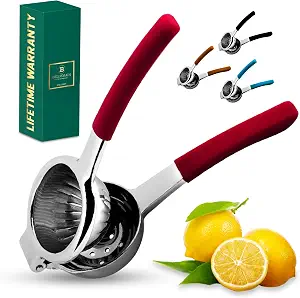 |
| Best Quality Built to a higher standard if you want something more solid | Hurom H400 Slow Juicer |  |
| Best Value The sweet spot between price and what you get | Hamilton Beach Big Mouth Juicer |  |
| Best Budget The cheapest option that still gets the job done reliably | Elite Gourmet ETS623 Citrus Juicer |  |
| Top Rated A top-rated pick with lots of positive feedback | Breville Juice Fountain Plus JE98XL |  |
| Most Popular A crowd favorite that many people choose with confidence | Zulay Metal 2-in-1 Lemon Squeezer | 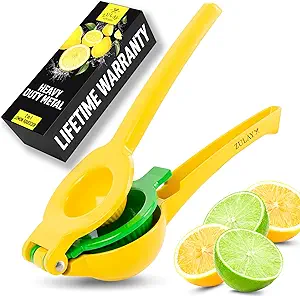 |
| Best Seller A high-volume bestseller chosen again and again | Ninja NeverClog Cold Press Juicer JC151 |  |
Bellemain Citrus Juicer

| Power Source | Manual |
|---|---|
| Material | Silicone, Stainless Steel |
| Product Care Instructions | Dishwasher Safe |
| Capacity | 0.5 liters |
The Bellemain Citrus Juicer is a simple hand press that makes extracting juice from lemons and limes quick and controlled. Its stainless steel body and pressing cup concentrate force so you get more juice with less hand strain, while silicone-coated handles improve grip during repeated use. It is most useful for single-fruit tasks like brightening dressings, finishing cocktails, or adding fresh juice to recipes; the compact form fits easily in a utensil drawer and cleans in the dishwasher. Because it is manual and built from stainless steel, there are no electrical parts or coatings to worry about, which supports safe food contact and long-term durability. The design does not replace larger reamers or electric juicers when you need to process many fruits at once, and the fixed pressing form limits use to small citrus rather than large oranges or specialty citrus varieties.
Best for: Buyers who want a durable, low-maintenance tool for occasional fresh lemon or lime juice for cooking and cocktails and prefer a simple, safe manual device over electric models.
Less Ideal for: Anyone who needs to juice large quantities or frequently process large oranges and grapefruits should choose a larger manual reamer or an electric juicer instead.
- Stainless steel construction resists rust and stands up to frequent use
- Silicone-coated handles provide a comfortable, non-slip grip
- Concentrated lever action yields good juice extraction with minimal effort
- Dishwasher-safe for easy cleanup
- Manual operation is slow for large batches of fruit
- Fixed press size best suited to lemons and limes, not large citrus
Verdict: A compact, durable stainless steel hand press that delivers safe, efficient lemon and lime juice for home cooking and cocktails.
Hurom H400 Slow Juicer

| Wattage | 150 watts |
|---|---|
| Capacity | 550 ml |
| Number of Speeds | 1 |
| Power Source | Corded Electric |
| Material | ABS, Tritan, Ultem |
The Hurom H400 is a single-auger cold-press juicer built for steady, high-yield juicing with minimal cleanup. It uses a low-speed auger (90 RPM) and a two-part Easy Clean chamber that meshes to strain pulp without a separate strainer, which reduces scrubbing and makes disassembly straightforward. The large self-feeding hopper accepts whole or large pieces of produce so you can feed ingredients continuously while the unit runs, and the quiet 150-watt motor keeps noise low during use. In practice the H400 delivers very little pulp and extracts a lot of juice from fruits and vegetables, and the front juice gauge helps you monitor fill level. The parts list of ABS, Tritan, and Ultem are dishwasher safe for convenience, though heavy users will still need to rinse residue after tougher produce. One practical limitation is the single speed design, which means you cannot adjust torque for very soft or very fibrous items, and the 550 ml capacity means frequent emptying for larger batches. For buyers focused on yield and easy cleaning, this model performs well and produces smooth, long-lasting juice.
Best for: Buyers who prioritize maximizing juice yield and minimal cleanup and want a reliable, quiet cold-press juicer for daily fruit and vegetable juicing.
Less Ideal for: People who need variable speed control for specialty ingredients or those who plan to make very large batches without stopping to empty the chamber.
- High juice yield with minimal pulp thanks to slow auger and strainer-free chamber
- Large self-feeding hopper lets you add whole or large produce while running
- Easy Clean two-part chamber reduces scrubbing and simplifies assembly
- Quiet operation from low RPM motor suitable for morning use
- Single fixed speed limits control for very soft or very fibrous ingredients
- 550 ml capacity requires frequent emptying for batch juicing
Verdict: Choose the Hurom H400 if you want a quiet, high-yield cold-press juicer that minimizes pulp and cleanup for regular home juicing.
Hamilton Beach Big Mouth Juicer

| Maximum Power | 800 watts |
|---|---|
| Number of Speeds | 1 |
| Material | Plastic |
| Blade Material | Stainless Steel |
| Capacity | 20 fluid ounces |
The Hamilton Beach Big Mouth Juicer is a straightforward centrifugal machine built for quick, everyday juicing. Its 3-inch feed chute accepts whole apples, bunches of celery, and other produce so you spend less time prepping, and the 800-watt motor extracts juice from both hard and soft fruits with good yield. The stainless steel micromesh filter separates pulp and seeds for smoother juice, and removable parts are dishwasher safe for faster cleanup; a cleaning brush is included for the strainer. Control is simple with a one-speed knob, making it easy for beginners to use but limiting if you want speed options for delicate greens. The unit is mostly plastic which keeps weight and cost down but feels less premium than all-metal rivals. Capacity is oriented to single-serve or small-batch juicing rather than bulk production. Backed by a three-year warranty, this model is a practical, no-frills choice for daily juice makers who value speed and easy cleaning over advanced controls.
Best for: Buyers who want a fast, low-effort juicer that minimizes prep and cleanup for daily single-serve or small-batch juicing.
Less Ideal for: Those who need multi-speed control, a heavy-duty metal build, or high-volume commercial-style juicing should consider other options.
- Extra-large 3-inch chute reduces prep time by fitting whole fruits and vegetables
- 800-watt motor delivers strong extraction for good juice yield from hard and soft produce
- Removable, dishwasher-safe parts and included cleaning brush make cleanup fast
- Stainless steel micromesh filter produces smoother, pulp-reduced juice
- Three-year warranty provides added ownership confidence
- Single-speed control limits fine tuning for leafy greens or foam reduction
- Plastic-heavy construction feels less durable than higher-end metal-bodied juicers
Verdict: A fast, easy-to-clean centrifugal juicer that saves prep time with a large feed chute and strong motor, ideal for practical daily juicing.
Elite Gourmet ETS623 Citrus Juicer

| Maximum Power | 40 watts |
|---|---|
| Power Source | Corded Electric |
| Voltage | 120 |
| Capacity | 24 oz (3 cups) |
The Elite Gourmet ETS623 is a small, straightforward electric citrus juicer aimed at making quick fresh juice for one to three servings. Its 40-watt motor and auto-reversing reamer help extract more juice with a simple push-down action, while the built-in pulp and seed filter produces smoother pours through the easy-pour spout. Detachable parts and top-rack dishwasher-safe components make cleanup simple, and the compact footprint fits small kitchens, dorms, or RV counters. Construction uses stainless steel elements and BPA-free materials and the unit is ETL listed for safety, which is reassuring for daily use. Expect basic manual control rather than variable speeds, and while the 24 oz container is fine for small batches, it is not designed for continuous heavy juicing or large families. Overall, this is a practical, safe, and affordable option for anyone who wants fresh citrus without a lot of fuss.
Best for: Buyers on a tight budget who want a safe, no-frills countertop citrus juicer for small daily batches and easy cleanup.
Less Ideal for: Those who need high-capacity or commercial-grade juicing, variable speed control, or frequent large-batch production should look for a larger motorized model.
- Stronger 40W motor and auto-reversing reamer for efficient juice extraction
- Compact footprint fits small kitchens, dorms, and RVs
- Built-in pulp and seed filter with easy-pour spout for neater serving
- Detachable parts are top-rack dishwasher safe for easy cleanup
- Made from BPA-free materials and ETL listed for safety
- Manual single-speed operation offers no speed control for different fruits
- 24 oz capacity is limited for larger batches or frequent heavy juicing
Verdict: A compact, safety-minded citrus juicer that delivers efficient fresh juice extraction at a budget-friendly price.
Breville Juice Fountain Plus JE98XL

| Power | 850 watts |
|---|---|
| Number of Speeds | 2 |
| Power Source | Corded Electric |
| Capacity | 1 liters |
The Breville Juice Fountain Plus JE98XL is a straightforward centrifugal juicer built for quick everyday juicing. It uses an 850-watt motor and a titanium-reinforced disc with a stainless steel micro-mesh filter to extract juice from whole fruits and vegetables, while the 3-inch feed chute reduces prep because many items fit without chopping. Two speed settings let you choose low for soft or leafy produce and high for denser items, and the included juice jug has an integrated froth separator to deliver smoother pours. Cleanup is simplified by a detachable pulp container and dishwasher-safe parts, and the cord stores under the base for tidier counters. Practical considerations: centrifugal machines are fast but typically produce slightly more foam and slightly less yield than slow masticating models, and the JE98XL is a bit bulky on smaller countertops. For buyers prioritizing reliable, fast daily juicing this model delivers consistent performance and easy maintenance.
Best for: Buyers who want a dependable, fast juicer for daily use and value quick prep, straightforward controls, and easy cleanup.
Less Ideal for: Anyone seeking maximum juice yield with minimal foam or a very compact unit for tiny kitchens should consider slow masticating juicers or more compact models instead.
- Powerful 850W motor for quick juicing of hard fruits and vegetables
- Extra-wide 3-inch chute reduces prep time by allowing larger pieces or whole produce
- Titanium-reinforced disc and stainless steel micro-mesh basket for effective extraction
- Built-in froth separator yields smoother juice pours
- Removable parts are dishwasher-safe for easier cleanup
- Centrifugal design can leave slightly more foam and extract slightly less juice than slow juicers
- Relatively large footprint may be bulky for small kitchens
Verdict: A reliable, fast centrifugal juicer that minimizes prep with a wide chute and delivers consistent home juice with easy cleanup.
Zulay Metal 2-in-1 Lemon Squeezer

| Power Source | Manual |
|---|---|
| Material | Aluminum |
| Blade Material | Stainless Steel |
| Capacity | 0.5 liters |
The Zulay Metal 2-in-1 Lemon Squeezer is a handheld aluminum juicer meant for quick single-serve citrus pressing. You place a half fruit in the bowl and squeeze the ergonomic handles together; the perforated bowl filters seeds and pulp while the heavy-duty cast design concentrates force for maximum extraction. Its manual operation means no electricity, no batteries, and a compact shape that stores easily in a drawer. The aluminum body and stainless steel blade parts give it durable feel, and the listed hand-wash care means cleaning is straightforward after use. Because it is mechanical and uses simple parts, there is little that can fail and it is suitable for occasional cocktail-making, squeezing lemons for recipes, or daily fresh juice for one or two people. Limitations are obvious: it only handles halves and small citrus, so it is not intended for large oranges or high-volume juicing, and the hand-wash recommendation means it may require a quick rinse rather than dishwasher-safe longevity despite marketing copy. For buyers who value a sturdy, low-risk tool that reliably extracts most juice without electronics, this is a practical choice.
Best for: Buyers who prioritize a reliable, low-fuss citrus press with proven customer approval and want a sturdy manual tool for occasional cocktails, cooking, or single-serve juice.
Less Ideal for: If you need a juicer for large fruits, frequent high-volume juicing, or prefer fully dishwasher-safe operation, this is not the best pick.
- Solid aluminum construction offers durability and concentrated leverage for good juice extraction
- Ergonomic handle reduces hand strain during squeezing
- Perforated bowl filters seeds and most pulp for smoother juice
- Compact, manual design needs no power and stores easily in a drawer
- Designed for halves and small citrus only, not suitable for large oranges or high-volume juicing
- Product care lists hand wash which may be less convenient than confirmed dishwasher-safe items
Verdict: A tough, no-frills manual citrus press that reliably extracts juice for single-serve and occasional use, backed by strong user approval.
Ninja NeverClog Cold Press Juicer JC151

| Maximum Power | 150 watts |
|---|---|
| Number of Speeds | 2 |
| Capacity | 24 fluid ounces |
| Included Components | 24 oz juice jug, 36 oz pulp container, 2 pulp filters |
| Product Care Instructions | Dishwasher Safe |
The Ninja NeverClog JC151 is a slow masticating juicer built to extract juice from fibrous fruits and vegetables using a 150-watt high-torque auger and NeverClog cold press design. It is typically used for green juices, fruit blends, and thicker vegetable juices, and includes two pulp filters so you can select less pulp or lots of pulp depending on texture preferences. The unit ships with a larger 24 oz. juice jug and a 36 oz. pulp container, which makes it better suited to preparing multiple servings or small batch meal prep without frequent emptying. One-touch controls with a reverse function help clear jams and improve yield, while the anti-drip lever and dishwasher-safe juice-contact parts simplify pouring and cleanup. Practical limitations are the single power level with only two program buttons rather than variable speed control, and the machine is moderately heavy compared with compact centrifugal models, so it is less portable. For cautious buyers focused on reliable, easy-to-clean cold-press juicing, the JC151 delivers consistent, low-foam results and simpler maintenance than many comparable slow juicers.
Best for: Buyers who prioritize a reliable, easy-to-clean cold-press juicer that handles fibrous produce and produces low-foam, nutrient-rich juice with minimal clogging.
Less Ideal for: People who need a lightweight, highly portable juicer or who want variable speed controls for very precise extraction tuning.
- NeverClog cold press auger designed to handle fibrous ingredients like celery and kale without frequent clogging
- Two interchangeable pulp filters let you choose smoother or thicker, fiber-rich juice
- Large 24 oz juice jug and 36 oz pulp container support batch juicing with fewer interruptions
- Dishwasher-safe juice-contact parts and easy assembly make cleanup straightforward
- One-touch start/stop and reverse program simplify operation and jam clearing
- Only two buttons and fixed motor speed limit fine-tuning of extraction
- Relatively heavy and takes more countertop space than ultra-compact juicers
Verdict: Choose the Ninja JC151 if you want a safe, low-foam cold-press juicer that reliably handles fibrous produce and is easy to clean and use.
Choosing the Right Safe Juicer: Key Factors to Consider
Physical Guards and Enclosed Blades
A key safety factor is how well cutting components are contained. Fully enclosed blades or shredding screens that sit completely inside a locked housing significantly reduce the chance of accidental contact during operation. Look for designs where the blade is never exposed while the motor is running and where the feeding mechanism physically separates hands from cutting parts.
This matters because many household accidents happen during loading and cleaning. A guard that is simple to latch and unlatch reduces the temptation to override safety features. Consider whether guards are made of sturdy, shatter-resistant materials and whether their alignment is obvious when reassembling.
Lid Locks and Interlocks
Effective lid locks and electrical interlocks prevent the juicer from starting unless everything is properly secured. Such mechanisms should be durable and intuitive so users do not bypass them. Electric cutouts that rely on multiple aligned pegs or a visible latch position help ensure the appliance cannot run with an open or misaligned lid.
Electrical interlocks also protect against accidental starts during cleaning. Confirm that switches are accessible for inspection and that replacement parts or catches are common hardware rather than one-off pieces that could fail without repair options.
Feed-Chute Size and Pusher Design
Feed-chute geometry influences both safety and convenience. Narrow chutes naturally require a pusher and keep fingers away from internal components, while wide chutes reduce prep time but increase the need for a well-designed pusher. A long, sturdy plastic pusher that pairs with a narrow chute minimizes the risk of users inserting their hands too far.
Consider whether the pusher locks in place and whether it can jam or trap produce. A pusher with a handle or stop prevents accidental over-insertion. Also note whether the feed path forces users to approach from a safe angle rather than reaching across spinning parts.
Ease of Disassembly and Cleaning
Safe appliances are easier to keep clean because users are less likely to attempt risky shortcuts. Parts that release quickly without tools and that have few crevices reduce the time spent manipulating components near blades or screens. Dishwasher-safe pieces can be helpful, but manual cleaning should still be straightforward because some safety parts are not dishwasher rated.
Check that components snap back together with clear alignment markers. Complex reassembly can lead to misaligned guards that defeat safety interlocks. Smooth surfaces and removable filters make it easier to remove pulp without scraping around sharp parts.
Motor Speed and Spatter Control
Lower-speed masticating designs tend to produce less splatter and foam, which reduces the chance of slips and messy surfaces that could create hazards. High-speed centrifugal juicers often process produce faster but can eject juice and pulp more aggressively, increasing cleanup and potential for contact with moving parts if the user reaches in.
Match motor speed expectations to your tolerance for cleanup and noise. If children are present, slower, quieter units may be safer because they discourage reaching or quick interactions while running.
Stability, Weight, and Anti-Slip Features
A stable base prevents tipping or movement during operation, which is a common contributor to accidents. Look for units with a low center of gravity, non-slip feet, and enough weight to stay put when feeding firmer produce. Suction feet or rubberized bases improve stability on wet countertops.
If you plan to process dense items like carrots, stability becomes more important. Lighter units can rock under force and may encourage users to hold the machine down with a free hand, increasing the risk of contact with moving parts.
Safe Operation Tips and Best Practices
Safe juicing starts with habits as much as hardware. Always assemble the juicer on a stable, level surface and confirm all locks are engaged before turning the unit on. Never remove the lid or reach into the feed path while the motor is running, and keep children and pets away during operation.
Use the provided pusher rather than utensils or fingers to move produce. Feed items in appropriate sizes for the chute to avoid forcing and jamming. If a jam occurs, switch the machine off, unplug it, and use the recommended reverse or jam-clearing procedure described in the manual.
- Never override safety interlocks
- Switch off and unplug before disassembly
- Use only the manufacturer-provided pusher
- Avoid metal utensils near internal components
Cleaning Without Risk
Plan cleaning around the juicer's safe-disassembly features. Remove the pulp container and juice catcher first, then unclip or twist out guards according to the instructions. Rinse large debris before handling finer screens to reduce the time spent near sharp or abrasive parts.
When using a brush for screens and strainers, hold the part away from your body and scrub in a direction that does not expose your fingers to the sharp edge. If components are dishwasher-safe, place them on the top rack to minimize exposure to intense heat cycles that could warp safety latches.
- Soak sticky parts to loosen pulp before brushing
- Use non-abrasive brushes to protect screens
- Inspect seals and gaskets for wear during cleaning
When to Choose Masticating Versus Fast Centrifugal
Masticating, low-speed designs tend to be safer in household contexts because they reduce splatter and usually have enclosed augers rather than exposed cutting discs. They also generate less heat, which can make cleanup less messy. If minimizing contact risk and countertop mess is a priority, a slow juicer is often the better choice.
High-speed centrifugal machines process quickly and can be convenient for rapid juice preparation, but they often require more attention to feeds and may create more pulp and foam. Choose a centrifugal unit only if the model includes robust safety guards and reliable interlocks to offset its faster, more aggressive action.
- Prefer masticating units for safety and lower splatter
- Consider centrifugal for speed if safety features are strong
- Factor in cleanup time when deciding motor type
Maintenance Checks That Preserve Safety
Regular inspection extends both safety and performance. Check locking tabs, catches, and gaskets for cracks or deformation that could allow the lid to wobble. Verify that the pusher and chute show no wear that could create pinch points or loosen alignment.
Keep the motor housing dry and free from sticky residues. If vibration or unusual noise develops, stop using the machine until the root cause is identified because excessive wobble can undermine safety interlocks and increase the risk of parts loosening during use.
- Replace worn gaskets and seals promptly
- Tighten or replace fasteners that loosen over time
- Run short test cycles after reassembly to confirm stability
Design Features That Reduce Risk for Families
If children are present, favor models with taller feed chutes and pushers that lock in place, making it physically difficult for a small hand to reach internal parts. Quiet motors also help because loud, startling machines may prompt curious movement near the unit.
Consider where you store the juicer and how accessible it is. A model that is simple to wipe down but requires two-step assembly can be safer because it discourages casual, unsupervised use by kids. Visible safety indicators and obvious latch positions help caregivers verify that the machine is secure.
- Look for childproof latch designs
- Prefer units with audible or visible lock confirmation
- Store pushers separately if needed to limit casual use
How We Chose the Best Safe Juicer
We focused on features that directly reduce user risk and simplify daily upkeep. First, physical safety measures were prioritized: fully enclosed cutting components, robust lid locking, and feed-chute designs that discourage hand contact. Next, maintenance factors were examined, including how easily guards and screens detach for hand washing or dishwasher-safe placement. Juice quality and yield were assessed only in relation to safety tradeoffs, such as lower-speed masticating designs that reduce splatter and foam while still producing acceptable juice volume. Durability and build quality were considered to ensure safety features remain effective over time. We also checked mechanical stability and vibration control because wobble or instability can create hazard conditions. Units with unusually complex disassembly or exposed fasteners were excluded. We did not include products lacking basic safety interlocks or those that require unusual tools for routine cleaning. The final shortlist balances safe engineering, practical cleaning, and consistent everyday operation.
Our full evaluation process is outlined in our review methodology.
FAQ
Are masticating juicers safer than centrifugal models?
Masticating juicers often expose fewer sharp edges and run at lower speeds, which reduces splatter and the chance of accidental contact. However, safety also depends on enclosure design and interlocks, so both types can be safe if engineered properly.
Can I clean the screen safely in the sink?
Yes, but rinse large debris away first and use a brush designed for juicer screens. Work with the screen held away from your body, and avoid using fingers to scrape near sharp or serrated edges.
What should I do if the safety latch breaks?
Stop using the juicer until you can replace the latch or have it professionally repaired. Using the appliance with a compromised latch increases the risk of accidental contact and should be avoided.
Is it safe to process hard produce like carrots or beets?
Processing hard produce is safe when you use the correct feed-chute technique and a sturdy pusher. Cut produce to recommended sizes and feed slowly to avoid jamming, and ensure the unit has sufficient stability and motor capacity for dense items.
How often should I inspect safety components?
Inspect latches, gaskets, and pushers every few weeks with regular use and replace parts showing wear. A quick visual check before each use helps catch problems early and maintain safe operation.
Final Verdict
Prioritize models that put mechanical safety first: reliable lid locks, enclosed cutting systems, and simple, tool-free disassembly are the best predictors of trouble-free use. Balance safety features with cleaning convenience and the motor style that fits your routine. Slow, enclosed designs typically minimize splatter and exposure risk, while faster machines can be acceptable if their guards and interlocks are robust. Ultimately, choose the safe juicer that matches how you plan to use it. If household safety and easy cleanup top your list, favor units with clear locking indicators, removable washable parts, and stable bases. Those tradeoffs will help you get the most consistent, low-risk juicing experience.