
Note: This article contains affiliate links. If you click on these links and make a purchase, we may earn a small commission at no extra cost to you. This helps support our research and content. Read our full affiliate disclosure here.
If you make juice from apples regularly, the right juicer can make a big difference in yield, flavor, and cleanup time. A juicer optimized for apples extracts more liquid from firm fruit while minimizing foam and oxidation so your batches taste fresher and last longer. This guide shortlists seven top juicers for apples, highlighting machines that balance extraction efficiency, cleaning time, and build durability. Below we summarize how each pick performs on the criteria that matter to apple juicing, then walk through decision factors so you can pick the machine that fits your routine.
Top Picks at a Glance
| Best Overall The best all-around choice for most situations | Breville Juice Fountain Compact BJE200XL |  |
| Best Quality Built to a higher standard if you want something more solid | NAMA J2 Cold Press Juicer |  |
| Best Value The sweet spot between price and what you get | QCen Centrifugal Juicer KS-501 | 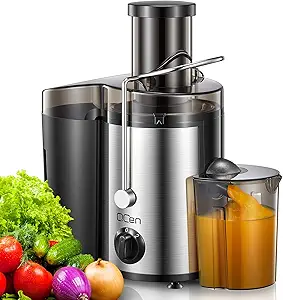 |
| Best Budget The cheapest option that still gets the job done reliably | Hamilton Beach HealthSmart Juicer 67502 |  |
| Top Rated A top-rated pick with lots of positive feedback | Breville Juice Fountain Plus JE98XL |  |
| Most Popular A crowd favorite that many people choose with confidence | Juilist Centrifugal Juicer AMR526 |  |
| Best Seller A high-volume bestseller chosen again and again | EanOruus 3-in-1 Masticating Juicer |  |
Breville Juice Fountain Compact BJE200XL

| Capacity | 25 fluid ounces |
|---|---|
| Wattage | 700 watts |
| Number of Speeds | 1 |
| Blade Material | Stainless Steel |
The Breville Juice Fountain Compact is a small, powerful centrifugal juicer built for fast everyday juicing. It uses a titanium-reinforced disc and stainless steel micro-mesh filter basket to extract juice, while a 3-inch wide chute accepts whole apples and many other common fruits to reduce prep time. Juice is collected into a 25 fl oz jug that includes a froth separator for smoother pours, and pulp is stored in an integrated container beneath the unit to save counter space. The unit runs on 700 watts and offers simple button controls for straightforward operation and cleanup; many removable parts are dishwasher-safe and a cleaning brush is included. Because it is a centrifugal design, it excels at speed and convenience but will produce a bit more foam and slightly less yield than slow masticating juicers when handling leafy greens or hard, fibrous produce. Its compact footprint and cord storage make it an easy fit for smaller kitchens, while the stainless-steel construction feels durable for regular use.
Best for: Buyers who want a fast, no-fuss juicer that handles whole apples and everyday fruits with minimal prep and fits a small kitchen.
Less Ideal for: People seeking the highest possible yield from leafy greens or those prioritizing the slow cold-press extraction style should consider a masticating juicer instead.
- 3-inch wide feed chute accepts whole apples and many other fruits to cut prep time
- Titanium-reinforced disc and stainless steel micro-mesh filter for effective juice extraction
- Built-in froth separator produces smoother pours with less foam
- Compact footprint with cord storage fits small kitchens and is easy to store
- Most removable parts are dishwasher-safe and a cleaning brush is included
- Centrifugal design can yield slightly less juice and more foam than masticating juicers for some produce
Verdict: A speedy, compact centrifugal juicer that makes quick work of apples and everyday fruits while saving countertop space.
NAMA J2 Cold Press Juicer

| Maximum Power | 200 watts |
|---|---|
| Power Source | Corded Electric |
| Voltage | 120 |
| Number of Speeds | 1 |
| Capacity | 30 fluid ounces |
The NAMA J2 is a compact cold-press juicer built for hands-free, high-yield juicing of fruits and vegetables; its wide-mouth self-feeding hopper lets you load a full recipe and walk away while the auger crushes and presses produce at low speed. With a 200 W motor running around 50 RPM it focuses on extracting maximum juice and minimizing pulp, which is particularly useful for dense fruit like apples and leafy greens. The unit ships with useful components — coarse strainer, juice and pulp containers, pusher, and a spinning brush — and its quick-release parts plus the included cleaning brush make rinsing and light scrubbing straightforward. Because it is a single-speed, low-RPM masticator it runs quietly and favors nutrient-preserving cold extraction over speed. The main limits are its moderate 30 fl oz capacity and single-speed motor, so it is best for daily household batches rather than heavy commercial runs, and some users will need to prep very large or hard produce into smaller pieces to fit the hopper.
Best for: Buyers who prioritize maximum juice yield and nutrient-preserving extraction for daily home use with minimal hands-on time, especially those who want a quiet, easy-to-clean cold-press juicer.
Less Ideal for: People who need large-volume or commercial juicing or who want variable speed control for processing very hard produce without pre-chopping should consider a larger or multi-speed model.
- Wide-mouth self-feeding hopper for hands-free loading
- Low-speed masticating action preserves nutrients and increases juice yield
- Includes necessary accessories (strain, juice and pulp containers, brush) for immediate use
- Quick-release parts and cleaning brush simplify cleanup
- Quiet operation thanks to 50 RPM slow extraction
- 30 fl oz capacity limits larger batch juicing
- Single-speed motor offers no speed control for different produce types
Verdict: Choose the NAMA J2 if you want a quiet, hands-free cold-press juicer that maximizes juice yield and preserves nutrients for everyday home use with apples and other produce.
QCen Centrifugal Juicer KS-501

| Maximum Power | 500 watts |
|---|---|
| Number of Speeds | 2 |
| Power Source | Corded Electric |
| Voltage | 120 volts |
| Capacity | 3 liters |
The QCen KS-501 is a compact centrifugal juicer aimed at everyday home use and works well for quick apple juice thanks to its 500W motor and 3-inch wide feed chute that accepts larger pieces. It offers two speed settings so you can run firmer produce like apples and carrots on the higher setting and softer fruit on low. The safety lock arm and overload protection make operation straightforward and reduce the chance of damage from overfilling. Removable, BPA-free parts and a detachable filter basket simplify cleanup, though the manufacturer recommends hand washing. Expect fast extraction and thin, clear juice typical of centrifugal designs rather than the thicker yield from slow masticating models, and small bits of foam or pulp are normal. Its compact footprint fits most counters, but very frequent juicers seeking maximum yield or quieter operation may prefer a slow masticating unit instead.
Best for: Buyers who want a fast, no-fuss juicer for daily apple and mixed fruit juice that minimizes prep time and is easy to operate.
Less Ideal for: People focused on maximum juice yield, very low-noise operation, or thick cold-pressed juice should consider a slow masticating juicer instead.
- 500W motor provides quick extraction suitable for apples and firm fruits
- 3-inch wide feed chute reduces prep time by handling larger pieces
- Two-speed control adapts to soft and hard produce
- Safety lock arm and overload protection improve user safety
- Centrifugal design yields thinner juice and more foam compared with slow juicers
- Parts require hand washing rather than dishwasher-safe cleaning
Verdict: A fast, practical centrifugal juicer that makes quick apple juice with minimal prep thanks to a wide feed chute and solid 500W motor.
Hamilton Beach HealthSmart Juicer 67502

| Maximum Power | 400 watts |
|---|---|
| Number of Speeds | 1 |
| Blade Material | Stainless Steel |
| Capacity | 1.5 liters |
The Hamilton Beach HealthSmart Compact centrifugal juicer is a straightforward countertop machine for making fresh juice from apples and other produce. It uses a 400 watt motor with a stainless steel strainer and a 2.4-inch feed chute that reduces precutting, so you can feed larger apple slices or whole small apples and get juice into a glass or pitcher through the built-in spout. Its single-button control keeps operation simple, and removable parts are dishwasher safe which makes cleanup quick after juice sessions. The compact footprint helps it tuck into smaller kitchens or cupboards when not in use, and the motor protection system helps prevent overload during tougher produce. This model is focused on basic performance rather than advanced features: there is just one speed and the construction is mostly plastic, so it is best for everyday juicing of fruits and softer vegetables rather than heavy commercial use. For someone who wants reliable, no-frills apple juice at home with easy cleanup, this delivers good value.
Best for: Buyers looking for a budget-friendly, easy-to-use juicer that makes regular batches of apple juice without complex controls or bulky size.
Less Ideal for: People who need commercial-grade throughput, variable-speed control, or heavy-duty metal construction for daily high-volume juicing.
- 2.4-inch feed chute reduces precutting for faster prep
- 400 watt motor with motor protection for steady extraction
- Removable, dishwasher-safe parts for easy cleaning
- Compact design that stores easily on counters or in cabinets
- Single speed limits control over extraction for different produce
- Mostly plastic construction may feel less durable than heavier models
Verdict: A compact, no-frills centrifugal juicer that delivers easy, cost-conscious apple juicing with minimal prep and simple cleanup.
Breville Juice Fountain Plus JE98XL

| Wattage | 850 watts |
|---|---|
| Number of Speeds | 2 |
| Power Source | Corded Electric |
| Blade Material | Stainless Steel |
| Capacity | 1 liters |
The Breville Juice Fountain Plus JE98XL is a straightforward centrifugal juicer built for fast, everyday juicing. It uses an 850W motor with two speed settings so you can run firm fruits like apples and carrots on high and softer produce on low, and the 3-inch feed chute significantly reduces prep because many apples can be juiced whole. A titanium-reinforced cutting disc and stainless steel micro-mesh filter are aimed at efficient extraction while the integrated froth separator helps deliver clearer juice to the glass. Cleanup is manageable: the pulp container detaches and many parts are dishwasher-safe, and cord wrap under the base keeps storage tidy. Expect typical centrifugal juicer characteristics: very quick throughput and easy prep but more foam and slightly less yield than slow masticating machines. For someone who wants reliable, fast apple juice with minimal chopping and sensible durability, this model delivers consistent results without complexity.
Best for: Buyers who prioritize dependable, fast juicing of apples and other everyday produce and want minimal prep and straightforward operation.
Less Ideal for: People seeking maximum juice yield, very quiet operation, or those who want the slow-extraction benefits of a masticating juicer.
- 3-inch extra-wide chute reduces prep by allowing many fruits to be juiced whole
- 850W motor and two speeds handle both hard and soft produce reliably
- Titanium-reinforced disc and stainless steel micro-mesh filter for efficient extraction
- Built-in froth separator produces clearer juice with less foam
- Detachable pulp container and dishwasher-safe parts simplify cleaning
- Centrifugal design typically yields slightly less juice and more foam than slow masticating juicers
- Noisy during operation compared with low-speed juicers
Verdict: Choose this juicer if you want a reliable, fast machine that handles whole apples with minimal prep for consistent everyday juice.
Juilist Centrifugal Juicer AMR526

| Maximum Power | 800 watts |
|---|---|
| Wattage | 400 watts |
| Feed Chute | 3" |
| Number of Speeds | 3 |
| Material | Stainless Steel |
The Juilist centrifugal juicer is a countertop centrifugal machine aimed at fast, everyday juicing. It accepts larger produce through a 3-inch wide feed chute so you can often juice apples with minimal chopping, and the motor is rated up to 800 watts peak with a 400-watt running power to spin the stainless steel cutting disc and micro-mesh filter. Three speed settings let you run softer fruits at low speed and harder items like apples and carrots at higher speeds, while a pulse-like P setting handles brief bursts. The unit is lightweight and compact, so it fits small kitchens and stores easily, and many removable parts are dishwasher-safe with a cleaning brush included. Practical safety features include a double safety lock and automatic overheat protection. Expect centrifugal-style juice with more foam and slightly less yield than slow masticating juicers, and avoid frozen produce or very fibrous low-juice greens for best results.
Best for: Buyers who want a fast, easy-to-use countertop juicer for regular fruit juicing and who prefer models with visible controls and simple maintenance supported by many user reviews.
Less Ideal for: People seeking maximum cold-pressed yield, minimal foam, or heavy-duty juicing of leafy greens should consider a slow masticating model instead.
- 3-inch wide feed chute reduces prep time for whole or halved apples
- Three speed settings plus pulse let you match speed to fruit hardness
- Stainless steel cutting disc and micro-mesh filter for durable, fine extraction
- Dishwasher-safe removable parts and included cleaning brush simplify cleanup
- Centrifugal design yields more foam and slightly lower juice yield than slow masticating juicers
- Not suitable for frozen produce or very high-fiber, low-juice vegetables
Verdict: A budget-friendly centrifugal juicer that makes quick apple and fruit juices with minimal prep and easy cleanup.
EanOruus 3-in-1 Masticating Juicer

| Maximum Power | 250 watts |
|---|---|
| Power Source | ac |
| Voltage | 110 volts |
| Capacity | 100 fluid ounces |
| Special Features | Auto-Reversing, Overheat Protection, Whole Fruit Processing |
The EanOruus 3-in-1 masticating juicer is designed for households that want a slow-press extractor that can also make nut milk and frozen fruit sorbet. It uses a single auger and a high-torque AC motor to process whole fruits through a 6.5-inch wide chute into a 100 oz hopper, which reduces prep and lets you feed whole apples and similar produce with minimal chopping. The unit includes interchangeable strainers for juice and sorbet, an auto-reversing function to clear jams, and a detachable pulp outlet to simplify cleaning. Practical benefits include quieter operation than many centrifugal models and steady, high-yield extraction that preserves nutrients and produces thicker juice or milk. Important limitations are the manual cleaning requirement for removable parts and the relatively large countertop footprint and weight compared with compact juicers. For buyers prioritizing gentle extraction and multi-function use in a family setting, this model delivers strong performance; those needing a tiny or ultra-light travel-friendly device should look elsewhere.
Best for: Buyers who want a reliable, family-ready masticating juicer that minimizes chopping and extracts juice gently for apples and other whole fruits while offering extra functions like nut milk and sorbet.
Less Ideal for: People who need a very small, lightweight juicer for occasional use or those who require fully dishwasher-safe components should consider alternatives.
- Extra-wide 6.5-inch chute accepts whole apples and large produce, reducing prep time
- Large 100 oz hopper for batching juice for families or meal prep
- High-torque AC motor provides steady, high-yield extraction and quieter operation
- Includes interchangeable strainers to make juice, nut milk, and sorbet
- Auto-reverse and detachable pulp outlet help clear clogs and simplify use
- Requires hand washing of removable parts rather than dishwasher-safe cleaning
- Heavier and bulkier than compact juicers, taking more counter space
- Plastic auger and components may wear faster than metal alternatives
Verdict: Choose this juicer if you want a quiet, high-yield masticating machine that handles whole apples with minimal prep and doubles as a nut milk and sorbet maker.
Choosing the Right Juicer for Apples: Key Factors to Consider
Extraction Efficiency
Extraction efficiency determines how much juice you get from each apple and therefore affects ongoing ingredient costs and effort. Machines that press or grind more completely leave drier pulp and extract more liquid per fruit. For apples, look for designs that are proven on firm produce rather than only on leafy greens.
Higher extraction efficiency often correlates with specific internal mechanisms and screen designs that squeeze or grind thoroughly. If you plan to juice apples frequently, a more efficient unit pays back in fewer apples used and less prep overall.
Pulp Control and Juice Texture
Apple juice can vary from clear and pulp-free to thick and pulpy depending on the juicer. Pulp control affects mouthfeel and storage life. If you prefer clear juice, choose a juicer with fine straining or a centrifuge that separates solids effectively. If you like more fiber, a slower masticating-style system with coarser filtration may be better.
Consider whether you will blend apple juice with other fruits or vegetables. Models that allow adjustable pulp settings give more flexibility for texture and recipe variety.
Ease of Cleaning and Maintenance
Ease of cleaning is crucial because frequent use means frequent disassembly. Juicers with fewer parts, dishwasher-safe components, and accessible filters reduce the time spent after each session. If cleaning is onerous, you are less likely to juice regularly.
Also check how easy it is to clear trapped apple skins or seeds from the mechanism. Some designs allow a quick rinse-through while others require scrubbing with small brushes. Consider whether replacement filters or brushes are readily available and how simple routine maintenance tasks are.
Feed Chute Size and Prep Time
Feed-chute size directly affects how much prep you must do. Larger chutes accept whole or halved apples and save prep time, while narrow chutes require coring and chopping. Prep time matters more if you juice daily or handle larger batches.
Think about your typical batch size. A small-chute unit might be fine for occasional single glasses, while larger chutes or continuous-feed models are better for batch juicing and entertaining.
Motor Power and Durability
Motor power influences both extraction performance and how well the machine handles repeated workloads. Stronger motors reduce the risk of stalling when processing firm apples or mixed loads. Durability is important if you plan frequent or heavy use; look for robust construction and thermal protection features that prevent overheating.
Consider whether the manufacturer describes duty cycles or recommended continuous run times. For regular apple juicing, select models rated for sustained use rather than occasional processing.
Noise, Vibration, and Placement
Noise and vibration affect where and when you can use the juicer. High-speed centrifugal machines tend to be louder and may vibrate more, which can be disruptive in small kitchens or early mornings. Masticating or low-speed models are usually quieter and produce less vibration.
If you value a quieter kitchen or plan to juice near living areas, prioritize units engineered for low noise and stable operation. Also check base design and anti-slip feet to prevent movement during use.
Best Prep Practices for Apple Juicing
Proper prep preserves flavor and reduces wear on the juicer. Remove large bruises, wash apples thoroughly to remove wax and residues, and core fruit to avoid bitter seeds. You can leave the skin on for additional nutrients, but remove stems and any tough calyx parts.
Cut larger apple varieties into pieces that match your chosen machine's feed chute. For wide-chute models you may only need to halve an apple. For narrow-chute units, quartering and coring is usually sufficient. Uniform piece size helps maintain steady feed and prevents clogging.
- Rinse apples under cold water and dry before feeding.
- Core to remove seeds which can add bitterness.
- Cut to match feed-chute size to minimize jams.
- Work in batches for consistent motor load and better yield.
How to Reduce Foam and Oxidation
Foam and oxidation affect both texture and storage life. To minimize foam, juice at a slower speed when possible and avoid overfeeding the machine. Using a pre-chill step for fruit or adding a small amount of lemon juice can slow oxidation for stored batches.
Pour fresh juice through a fine mesh or allow it to settle before bottling if you want clearer liquid. Refrigerate promptly and consume within recommended storage windows to retain flavor and nutrients.
- Choose low-speed extraction for less foam.
- Chill apples briefly to help reduce temperature-related foam.
- Strain juice if a smooth finish is preferred.
Batch Vs Single-Serve Juicing
Decide whether you will juice a single glass at a time or prepare larger batches. Single-serve juicing favors compact, easy-clean units with quick startup. Batch juicing benefits from larger feed chutes, stronger motors, and containers that can handle continuous extraction without frequent emptying.
If you plan to store juice, consider how the machine handles pulp separation and whether it yields a product suitable for bottling or immediate drinking. Balance your time investment in prep and cleanup against the amount of juice you intend to produce.
- Single-serve: prioritize speed and minimal cleanup.
- Batch: prioritize yield, motor endurance, and pulp handling.
- For both, factor in fridge space for storing finished juice.
Ideal Storage and Shelf Life for Apple Juice
Fresh apple juice is best consumed within a short window to enjoy peak flavor and nutrient levels. Refrigerated, freshly pressed juice typically keeps for a couple of days; minimal exposure to air and cold storage lengthen freshness. For longer storage, consider freezing in small portions.
Use airtight containers and fill bottles to minimize headspace. Label containers with dates and rotate stock so the oldest juice is used first. Avoid leaving juice at room temperature for extended periods to reduce spoilage risk.
- Store in airtight, opaque containers to limit light and air exposure.
- Refrigerate immediately and use within 48–72 hours for best flavor.
- Freeze extra juice in small portions for up to several months.
Maintenance Tips to Extend Lifespan
Regular maintenance keeps a juicer performing well over time. Clean filters and strainers after each use to prevent pulp buildup and bacterial growth. Inspect seals and gaskets for wear and replace them when they become brittle or misshapen.
Occasionally run the machine with a cleaning solution or a vinegar rinse if recommended by the manufacturer to clear lingering sugars and residues. Store components dry and assembled loosely to avoid warping and trapped moisture.
- Brush filters immediately after use to prevent clogging.
- Check and replace worn gaskets to maintain suction and seal.
- Follow recommended duty cycles to avoid motor strain.
How We Chose the Best Juicer for Apples
We evaluated machines specifically for how well they handle apples, focusing on real-world factors that affect juice output, quality, and ownership experience. Primary criteria included extraction efficiency on firm fruit, how much foam and oxidation form during pressing, and how easy the unit is to disassemble and clean. We also considered motor durability and feed-chute design for handling whole or sliced apples, plus noise and vibration for home use. We prioritized units that consistently produced higher liquid yield from whole apples without excessive pulp loss. Models that required long prep or frequent clogging were excluded. We also filtered out designs with difficult-to-clean filters or many small parts that trap pulp. Finally, we favored options with clear maintenance paths and robust motor specs suitable for regular apple juicing routines.
Our full evaluation process is outlined in our review methodology.
FAQ
Do I need to peel apples before juicing?
Peeling is generally unnecessary. Apple skins contain nutrients and help with structure during extraction. Remove wax or residue with a thorough wash, and always core to remove seeds which can impart bitterness.
Which juicer type produces clearer apple juice?
Centrifugal models and units with fine strainers typically yield clearer juice quickly. Slow masticating machines can also produce clear juice when paired with fine filtration, though they are often slower. Texture preferences will guide the best choice.
How long does fresh apple juice keep in the fridge?
Freshly pressed apple juice is best within 48 to 72 hours when refrigerated. Cold storage and minimal air exposure extend freshness. For longer-term storage, freezing in sealed containers is the safest option.
Can I juice unwashed apples?
You should always wash apples before juicing to remove dirt, pesticides, and wax coatings. A quick scrub under running water helps protect flavor and reduce contaminants in the final juice.
Will juicing apples damage my machine?
Juicing apples will not damage a properly rated juicer, but frequent heavy use demands a model with adequate motor power and duty-cycle ratings. Avoid overfeeding and follow manufacturer guidance on continuous run time to preserve motor life.
Final Verdict
Choose a juicer for apples by balancing extraction efficiency, cleanup effort, and intended batch size. If you prioritize maximum yield and dryer pulp, select designs built for firm fruit and stronger motors. If convenience and quiet operation matter more, opt for models with larger chutes and easier cleaning. Weigh the tradeoffs between texture, prep time, and maintenance to match the machine to your routine. Prioritize the factors that affect daily use and long-term durability to pick a juicer that keeps apple juice simple and satisfying.