
Note: This article contains affiliate links. If you click on these links and make a purchase, we may earn a small commission at no extra cost to you. This helps support our research and content. Read our full affiliate disclosure here.
Picking the right self-cleaning 5-gallon water dispenser matters because it affects water quality, sanitation workload, and how often you must perform manual maintenance. A dependable dispenser keeps water tasting fresh, reduces biofilm and bacterial growth inside reservoirs and taps, and saves time on routine cleaning. This guide covers seven shortlisted, top-rated 5-gallon water dispensers with self-cleaning features. We evaluated units on sanitation effectiveness, ease of upkeep, flow performance, and long-term reliability so you can focus on practical tradeoffs and pick the right model for your home or small office. Read on for the criteria we used and the features that matter most before the product listings.
Top Picks at a Glance
| Best Overall The best all-around choice for most situations | Primo Bottom Loading Pro 2-Temp |  |
| Best Quality Built to a higher standard if you want something more solid | Brio Moderna Bottom Load Water Cooler CLBL720SC |  |
| Best Value The sweet spot between price and what you get | EUHOMY Bottom-Loading Water Dispenser |  |
| Best Budget The cheapest option that still gets the job done reliably | Gleedelish Self-Cleaning Water Dispenser |  |
| Top Rated A top-rated pick with lots of positive feedback | SOOPYK Bottom Load Water Cooler |  |
| Most Popular A crowd favorite that many people choose with confidence | Brio Bottom Load Water Cooler CLBL520SC |  |
| Best Seller A high-volume bestseller chosen again and again | Avalon A3 Bottom-Loading Water Cooler |  |
Primo Bottom Loading Pro 2-Temp

| Water Temperature | Hot & Cold |
|---|---|
| Self-Sanitizing Technology | Yes |
| Loading Style | Bottom-Loading |
| Energy Certification | ENERGY STAR |
The Primo Bottom Loading Pro 2-Temp dispenser delivers hands-free convenience with a bottom-load design that avoids lifting heavy bottles and fast-flow electronic push-button dispensing for quick fills. Its built-in self-sanitizing cycle runs automatically every 24 hours after initial setup, which reduces the need for manual cleaning and helps keep water tasting fresh. The stainless steel reservoir and ENERGY STAR certification point to efficient temperature maintenance and lower power use, while the removable dishwasher-safe drip tray and LED night light add practical everyday touches. Setup requires no plumbing or tools and the unit offers two temperatures plus a two-step child safety lock for hot water. Limitations include the typical footprint and weight of a freestanding dispenser and reliance on Primo water refill/exchange infrastructure if you want to use the brand's service, but for routine home or small office hydration the unit emphasizes low maintenance and reliable hot/cold performance.
Best for: Buyers who want a low-maintenance, full-size home or small-office dispenser that prioritizes daily self-cleaning and easy bottle changes without plumbing.
Less Ideal for: People needing a compact countertop solution or those who prefer using tap-fed systems with direct plumbing connections.
- Automatic self-sanitizing cycle that runs every 24 hours to reduce manual cleaning
- Bottom-loading design eliminates lifting and spilling heavy 5-gallon bottles
- Stainless steel reservoir resists corrosion and maintains hot and cold temperatures
- Fast-flow electronic push-button dispensing and removable dishwasher-safe drip tray
- Bulky and relatively heavy compared with countertop dispensers
- Works most seamlessly with Primo’s refill/exchange network if you want brand-managed water supply
Verdict: Choose this model if you want a full-size bottom-loading dispenser that keeps itself sanitary every day with minimal user effort.
Brio Moderna Bottom Load Water Cooler CLBL720SC

| Installation Type | Freestanding |
|---|---|
| Access Location | Bottom |
| Upper Temperature Rating | 174 °F |
| Lower Temperature Rating | 39 °F |
| Power Source | Corded Electric |
The Brio Moderna CLBL720SC is a stainless-steel bottom-loading dispenser built for regular use in kitchens and small offices. It delivers both hot and cold water with adjustable temperature control (39°F cold to 174°F hot), a digital LED display, and touch-sensitive controls for straightforward operation. The unit's bottom-load design removes the need to lift heavy bottles and accepts 3- or 5-gallon jugs while an indicator warns when water is low. Notable is the ozone self-cleaning function that sanitizes the reservoir and lines at the touch of a button, which reduces maintenance and helps prevent biofilm buildup. Safety features include a two-step hot-water dispense and a child lock, and the stainless-steel reservoirs aim to preserve water quality. Trade-offs are its footprint and reliance on a power cord for heating and the fact it uses bottled jugs rather than a direct-plumbed bottleless configuration; some buyers may also find advanced service or parts less available than for basic models. For anyone prioritizing consistent temperature control and built-in sanitization, it performs well in everyday, high-use settings.
Best for: Buyers who want a durable, performance-focused dispenser that delivers precise temperatures and reduces maintenance with automatic sanitization for frequent household or small office use.
Less Ideal for: People who need an under-sink or plumbed bottleless system or those with extremely limited countertop or floor space should consider other options.
- Adjustable hot and cold temperature range for precise beverage needs
- Bottom-load design eliminates heavy lifting and fits 3- or 5-gallon bottles
- Ozone self-cleaning cycle simplifies sanitation and reduces manual maintenance
- Touch-sensitive controls with bright LED display and low-water indicator
- Child-safety lock and two-step hot dispense for safer hot water use
- Requires standard power for heating so it cannot operate completely off-grid
- Larger freestanding footprint may not suit very tight spaces
Verdict: Choose the Brio Moderna CLBL720SC if you want a bottom-load dispenser that pairs precise hot and cold temperature control with built-in ozone self-cleaning for low-maintenance, high-performance use.
EUHOMY Bottom-Loading Water Dispenser

| Capacity | 5 gallons |
|---|---|
| Upper Temperature Rating | 194 °F |
| Lower Temperature Rating | 39.2 °F |
| Installation Type | Freestanding |
This EUHOMY bottom-loading water dispenser is built around easy refill and regular automatic sanitation. It accepts 5-gallon bottles placed in a lower compartment so you do not have to lift heavy jugs, and it delivers three temperature options including near-boiling hot (194-203°F), chilled (about 39-50°F), and room temperature water. The unit runs a UV self-cleaning cycle every couple of hours and shows status with LED indicators to reduce maintenance and keep dispensed water tasting fresher. Practical touches include a child lock on the hot spout, a removable drip tray, an 8.3-inch spout clearance that fits tall bottles and mugs, and a night light for low-light use. Expect a freestanding footprint and a weighty cabinet, so place it on a stable surface; while UV cleaning helps reduce microbial growth, occasional manual cleaning of removable parts will still be needed. For someone who wants a low-lift refill system with automated sterilization and clear temperature control, this dispenser covers the basics reliably.
Best for: Buyers who prioritize ease of use and low-effort sanitation—especially households that want to avoid lifting heavy water jugs and prefer automated cleaning and clear temperature control.
Less Ideal for: People needing an ultra-compact or lightweight countertop dispenser or those wanting advanced filtration beyond basic dispensing and UV sterilization.
- Bottom-loading design eliminates lifting heavy 5-gallon bottles
- Automatic UV self-cleaning cycle runs regularly to reduce maintenance
- Three temperature outlets (hot, cold, room) with LED status indicators
- Child safety lock on hot water outlet and built-in night light
- Removable drip tray and 8.3-inch spout height accommodate tall containers
- Freestanding cabinet is relatively heavy and requires a stable placement
- UV self-cleaning reduces but does not fully replace occasional manual cleaning
Verdict: Choose this bottom-loading dispenser if you want a low-lift 5-gallon system with automated UV self-cleaning and straightforward hot, cold, and room temperature delivery.
Gleedelish Self-Cleaning Water Dispenser
| Wattage | 550 watts |
|---|---|
| Access Location | Bottom |
| Upper Temperature Rating | 203 °F |
| Lower Temperature Rating | 41 °F |
| Capacity | 5 gallons |
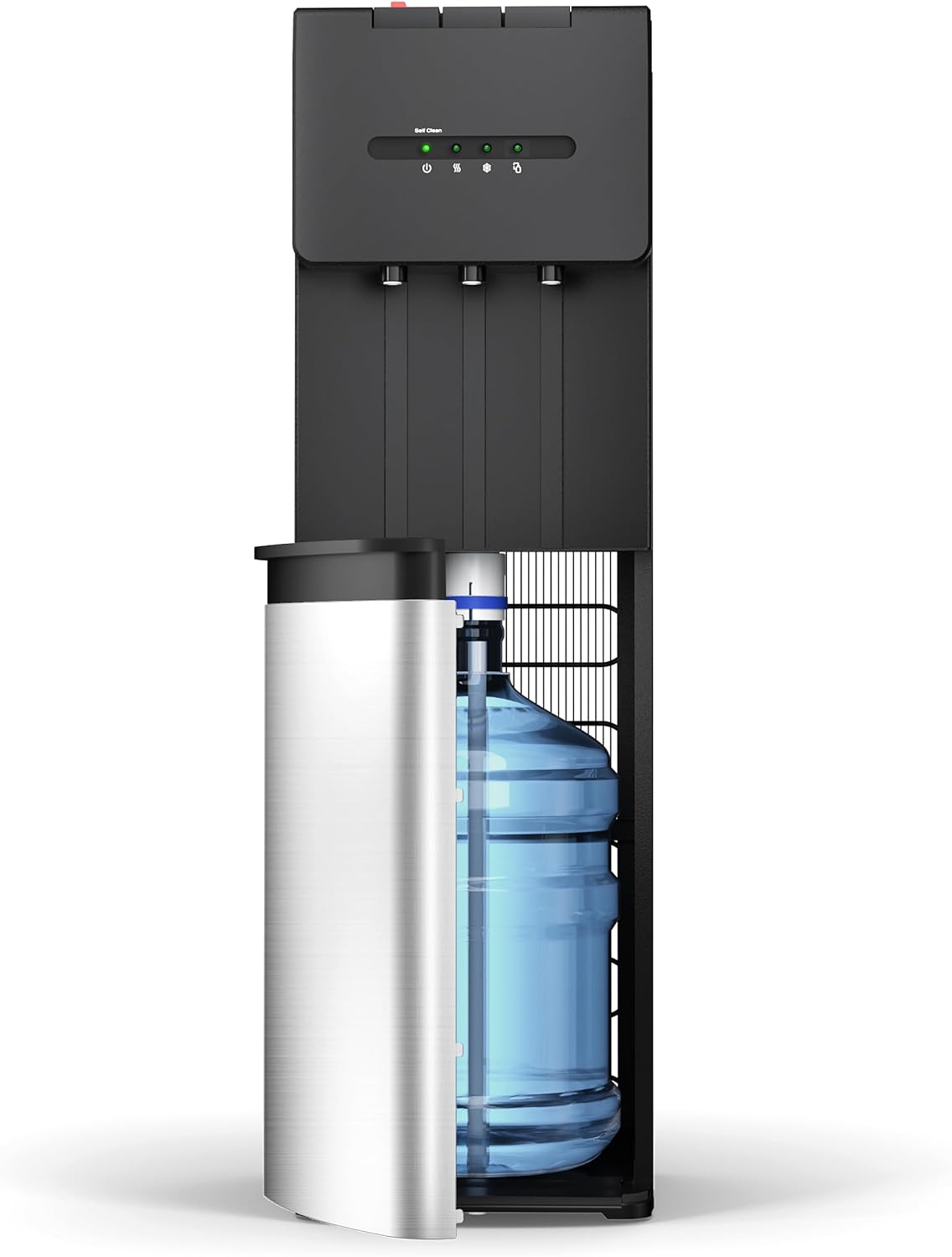
The Gleedelish self-cleaning bottom-loading dispenser is a freestanding cooler that hides standard 5-gallon bottles in a lower compartment and delivers instant hot, cold, and room-temperature water through three dedicated outlets. It includes an automatic UV self-cleaning cycle to reduce tank maintenance, an empty-bottle alert and LED indicators for status, and a child lock for the hot spout. The bottom-load layout makes bottle changes easier and keeps the counter area tidy, while the stainless steel intake tube and removable drip tray simplify cleaning. The unit claims up to 1.32 gallons per hour hot output and 0.7 GPH cold, which is adequate for home or small office use, and the motor is designed for quiet operation. Expect typical trade-offs of a compact dispenser: it requires a nearby power outlet, occupies vertical space, and the 1-year warranty is modest compared with longer coverage from some competitors. For buyers wanting lower maintenance and easy bottle handling in a value-oriented package, it hits the mark.
Best for: Buyers who want a low-maintenance, budget-friendly 5-gallon dispenser for home or small office use and value easy bottle changes and automatic tank cleaning.
Less Ideal for: Large households or busy commercial settings that need higher continuous hot or cold throughput or extended warranty coverage should consider more heavy-duty units.
- Bottom-loading design for easy 5-gallon bottle replacement and a cleaner look
- Built-in UV self-cleaning cycle reduces manual tank maintenance
- Provides hot, cold, and room-temperature water with child-safety lock on hot spout
- Empty bottle alert and LED indicators simplify monitoring and use
- Removable drip tray and stainless steel intake tube ease cleaning and durability
- 1-year manufacturer warranty is relatively short
- Cold and hot output rates are modest, limiting heavy commercial use
Verdict: Choose this model if you want an affordable bottom-loading 5-gallon dispenser with automatic UV self-cleaning and easy bottle swaps for home or small office use.
SOOPYK Bottom Load Water Cooler
| Installation Type | Freestanding |
|---|---|
| Upper Temperature Rating | 200 °F |
| Lower Temperature Rating | 45 °F |
| Power Source | Corded Electric |
| Capacity | 18.93 liters |
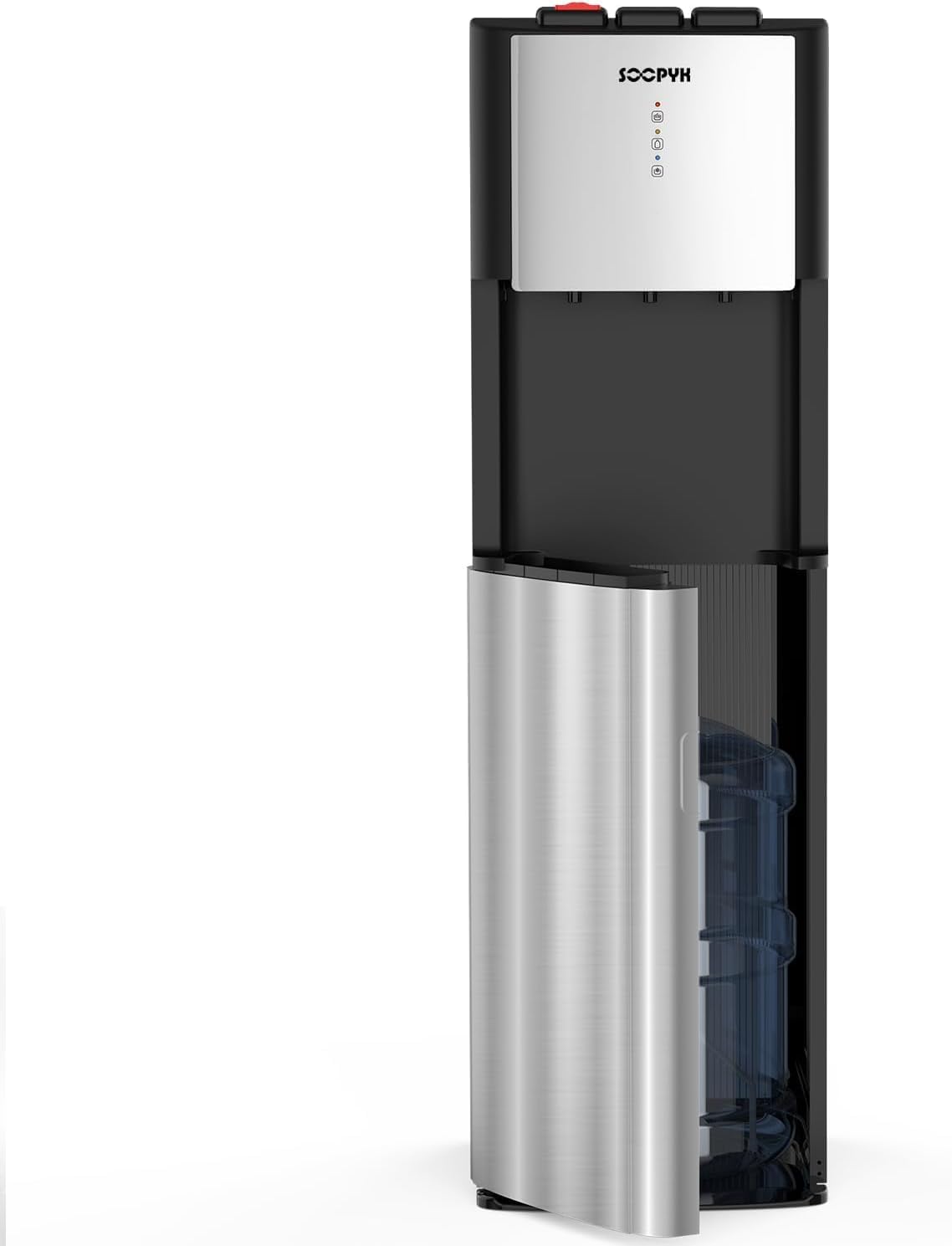
This bottom-load water cooler gives hot, cold, and room-temperature water from 5-gallon bottles and includes features aimed at keeping the system sanitary and safe. It uses a stainless steel welded hot tank for durability and built-in overheat protection, and it claims a self-cleaning process supported by a UV lamp in the cold reservoir to reduce bacterial growth. Operation is straightforward with three push-button spigots, a child-safety lock on the hot tap, and a removable drip tray for easy maintenance. Practical cues for reliability include an empty-bottle alert that detects low cold-tank levels before signaling and thermal shutoff to protect the heater. On the downside the product does not show a dedicated self-cleaning button or indicator and initial startup may have a plastic taste that requires flushing or a citric acid rinse. For buyers who prioritize dependable everyday service and simple maintenance, this unit delivers core reliability without complex controls.
Best for: Buyers who want a straightforward, low-maintenance dispenser that focuses on reliable daily performance and basic sanitation features for home or small office.
Less Ideal for: Users who need clear cycle controls, precise status indicators, or advanced filtration and monitoring features should consider other models.
- Stainless steel welded hot tank helps resist overheating and extends component life
- Three temperature settings (hot, cold, room) for versatile use
- UV lamp in cold reservoir and self-cleaning process intended to improve water hygiene
- Child-safety lock on the hot spigot and removable drip tray for safer, easier maintenance
- No dedicated self-cleaning button or indicator to verify cycle status
- May have initial plastic taste that requires flushing or cleaning before regular use
Verdict: A dependable, no-frills bottom-load dispenser that emphasizes durability and simple self-cleaning features for reliable everyday hot and cold water.
Brio Bottom Load Water Cooler CLBL520SC

| Wattage | 500 watts |
|---|---|
| Installation Type | Freestanding |
| Access Location | Bottom |
| Number of settings | 3 |
| Power Source | Corded Electric |
The Brio CLBL520SC is a bottom-loading water cooler designed to make bottle swaps easier while offering three temperature settings for hot, cold, and ambient water. It is typically used in kitchens, offices, nurseries, and small lounges where on-demand hot and cold water is useful for beverages and cooking. Notable features include a 5-gallon capacity, stainless steel reservoirs, an automatic UV self-cleaning cycle to reduce buildup, a child-safety lock for the hot spout, and a nightlight that helps with dispensing in low light. Practical benefits include no heavy lifting during bottle replacement thanks to the bottom-load cabinet, stainless steel contact surfaces for taste protection, and simple controls with an LED display that shows status. Limitations to consider are the unit weight and footprint that require a stable floor spot, reliance on corded power, and that self-cleaning uses UV rather than continuous filtration so periodic manual maintenance and filter/replacement parts may still be needed.
Best for: Buyers who value easy bottle changes and want a self-cleaning bottom-load cooler that provides hot and cold water on demand and looks finished in stainless steel.
Less Ideal for: Those who need a truly portable, cord-free dispenser or who expect continuous built-in filtration rather than periodic UV sanitizing.
- Bottom-load design eliminates heavy lifting and hides the bottle for a cleaner look
- UV self-cleaning cycle helps reduce contaminants and biofilm buildup in reservoirs
- Three temperature settings (hot, cold, room) cover common beverage needs
- Stainless steel reservoirs maintain water taste and resist corrosion
- Requires standard outlet power and is not portable without access to electricity
- Self-cleaning uses UV rather than continuous filtration, so filters or manual cleaning are still needed over time
Verdict: A practical bottom-load cooler with UV self-cleaning and three temperature settings for buyers who want easier bottle swaps and on-demand hot and cold water.
Avalon A3 Bottom-Loading Water Cooler

| Wattage | 150 watts |
|---|---|
| Access Location | Bottom |
| Number of settings | 3 |
| Upper Temperature Rating | 185 °F |
| Lower Temperature Rating | 47 °F |
The Avalon A3 is a bottom-loading, three-temperature water dispenser built for everyday office or home use. It pumps water from 3- or 5-gallon bottles into separate cold, hot, and room-temperature faucets and includes a child safety lock on the hot spout. The unit's stainless-steel cabinet and built-in ozone self-clean cycle are designed to reduce bacterial buildup and simplify maintenance, while a back-switchable nightlight and empty-bottle indicator make refill and night use straightforward. Cold water is produced by an efficient compressor to roughly 47°F and hot water reaches about 185°F, so the A3 can handle drinks and instant beverages without added appliances. The dispenser is freestanding and bottom-loading to avoid heavy lifting, but it is a full-size unit that needs floor space and occasional filter or bottle monitoring; the product listing notes a one-year limited warranty. For buyers who prioritize easier upkeep and family-safe hot water, this model balances convenience and sanitation in a standard bottom-load format.
Best for: Buyers who want a low-maintenance, family-safe water dispenser that emphasizes sanitation and easy bottle changes over compact size.
Less Ideal for: People seeking a compact countertop dispenser or those who need a model specifically with documented replaceable filter specs should consider other options.
- Self-cleaning ozone cycle helps reduce microbial buildup without manual scrubbing
- Bottom-loading design eliminates heavy lifting and reduces spill risk
- Three temperature settings (cold, hot, room) cover drinks and hot beverages
- Child safety lock on hot spout adds protection for households with children
- Empty-bottle indicator and nightlight improve usability and maintenance reminders
- Full-size freestanding footprint requires dedicated floor space
- No detailed filter specification included, so long-term filter needs are unclear
Verdict: Choose the Avalon A3 if you want a bottom-loading, self-cleaning dispenser that minimizes maintenance and keeps hot water child-safe.
Choosing the Right Self-Cleaning 5-Gallon Water Dispenser: Key Factors to Consider
Sanitation Method
Different self-cleaning systems use distinct approaches, such as UV-C light, ozone, or hot-water purging. Each method has tradeoffs: UV is chemical-free and fast but requires direct line-of-sight and periodic bulb checks. Ozone can neutralize a wide range of microbes but needs careful system design and proper venting. Heat-based purges rely on high temperatures to kill bacteria but may increase energy use.
Understanding the sanitation method matters because it determines how often manual intervention is needed, what consumables or parts require replacement, and whether the system can address biofilm in low-flow passages. Choose a method that matches your priorities for chemical-free treatment, operating cost, and reliability.
Reservoir and Internal Design
Reservoir construction and internal plumbing affect both water quality and how effectively a self-cleaning cycle can reach all surfaces. Sealed, food-grade reservoirs with smooth surfaces are less likely to harbor bacteria and are easier for automated systems to sanitize. Narrow passages, dead volumes, or hidden crevices reduce sanitation coverage and boost biofilm risk.
Inspect whether the design minimizes stagnation points and whether service access allows occasional manual cleaning. Removable drip trays, accessible spouts, and tool-free panel removal make upkeep less burdensome when automated cleaning is insufficient.
Dispensing Options and Controls
Dispensing features influence daily convenience and contamination risk. Touch-free or lever-free dispensing reduces cross-contamination from hands, while temperature controls and hot-water options enable thermal sanitation during cleaning cycles. Clear, intuitive controls with status lights for cleaning cycles make it simpler to confirm the system is operating correctly.
Consider whether the unit allows programmable cleaning intervals and how easy it is to initiate a manual sanitation cycle. Units with locks or child-safety features can also reduce accidental contamination or misuse in shared spaces.
Maintenance Intervals and Consumables
Self-cleaning does not eliminate the need for maintenance. Some systems require periodic replacement of UV lamps, ozone cartridges, or filters that protect internal components. Understand the recommended service intervals and the availability and cost of consumables in your area.
Longer maintenance intervals reduce total cost of ownership and downtime. Also look for visible indicators that notify when a cleaning cycle or replacement is due, which helps maintain sanitation without guesswork.
Energy and Operating Costs
Automated sanitation cycles can add to a dispenser's energy draw, especially if thermal purging is used. Evaluate how often cleaning cycles run, whether they occur on a schedule or on demand, and the incremental power use during those cycles. Energy-efficient designs balance effective sanitation with reasonable operating cost.
For settings where units run 24/7, modest differences in standby consumption add up over time. Consider models with low-power idle modes and efficient sanitation components to minimize ongoing expenses.
How Self-Cleaning Systems Work
Self-cleaning water dispensers integrate a sanitation routine into normal operation so microbial buildup is reduced without frequent manual scrubbing. Common approaches include ultraviolet light, which irradiates water or exposed surfaces; ozone, which oxidizes contaminants; and heated water cycles that flush internal lines at bactericidal temperatures.
Automated cycles are usually scheduled or user-triggered and are designed to reach the reservoir, dispensing nozzle, and connecting plumbing. Effective systems combine a physical design that minimizes dead zones with a sanitation method that can access exposed surfaces. Understanding the fundamentals helps you evaluate claims and anticipate maintenance needs.
- UV systems need clear access to flowing water and periodic lamp replacement
- Ozone systems require proper materials and venting to avoid residual odors
- Heat-purge cycles can be highly effective but increase energy use during cleaning
Installation and Placement Tips
Place the dispenser on a stable, level surface with enough clearance for ventilation and easy access to the back panel for servicing. Avoid locations with direct sunlight, which can degrade some components, and keep the unit away from heat sources that may interfere with temperature controls.
If the model uses an external power connection for sanitation functions, confirm outlet location and cord routing. Consider proximity to typical use areas so dispensing height and reach suit the people who will use it most often.
- Leave space for removing the water bottle or accessing internal components
- Avoid cramped cabinets or poorly ventilated closets for units with ozone or heat cycles
Routine Care Beyond Self-Cleaning
Even with automated sanitation, periodic manual checks and cleaning will prolong service life. Wipe external surfaces, drain and clean removable trays, and follow recommended schedule for replacing any filters or bulbs. Visual inspections for leaks, unusual odors, or decreased flow help catch issues early.
When performing manual cleaning, follow manufacturer guidance for safe handling of sanitation components. If the system uses replaceable consumables, keep spares on hand to avoid lapses in protection.
- Inspect spouts and drip trays weekly in high-use environments
- Replace consumables on the schedule recommended by the manufacturer
Sizing for Home and Small Offices
A 5-gallon dispenser is a common capacity that balances refill frequency with storage footprint. Consider daily water consumption and the number of users when choosing features beyond capacity. Higher-use settings benefit from faster dispense flow, larger hot-water capacity for beverages, and more robust sanitation cycles.
Also weigh whether multiple smaller units or a single centrally located dispenser makes sense for traffic patterns in the space. For occasional home use, prioritize quiet operation and low maintenance. For small offices, choose models with clear service indicators and durable components that handle frequent use.
- Estimate daily gallons consumed to determine acceptable refill intervals
- Match dispense speeds to typical use to avoid queues at shared stations
Common Misconceptions About Self-Cleaning
Self-cleaning does not mean zero maintenance. Automated cycles reduce but do not eliminate the need for periodic manual checks and consumable replacements. Treat self-cleaning as an enhancement that lowers routine labor rather than a complete replacement for care.
Another misconception is that all sanitation methods are equivalent. Each approach has limits and specific maintenance needs. Evaluate claims critically and prefer systems with transparent descriptions of how the sanitation cycle operates and what parts need service.
- Look for transparency about cleaning intervals and consumable lifespans
- Consider third-party testing or certifications when sanitation claims are critical
How We Chose the Best Self-Cleaning 5-Gallon Water Dispenser
We prioritized features that directly affect water safety, maintenance burden, and everyday usability. Our selection emphasized verified self-cleaning mechanisms such as UV sanitation, ozone flushing, or automated hot-water purge cycles. We also considered design elements that reduce contamination risk, including sealed reservoirs, touch-free dispensing options, and removable components that make manual cleaning easier when needed. Durability and ease of upkeep were key filters. We looked for models with accessible service parts, clear maintenance indicators, and built-in diagnostics where available. Flow rate and temperature control were evaluated because they influence user experience and the effectiveness of thermal sanitation cycles. Energy use during cleaning cycles and standby power were factored in to estimate operating costs tied directly to sanitation features. We excluded units without documented self-cleaning functionality or with sanitation features described only in marketing claims. Budget-only picks with no sanitation reliability were not included. Final selections balance sanitation performance, practical upkeep, and user-focused design rather than raw capacity alone.
Our full evaluation process is outlined in our review methodology.
FAQ
How often do self-cleaning cycles run?
It depends on the model. Some dispensers run short sanitation cycles daily or multiple times per day, while others rely on user-triggered cycles. Check the unit's settings to determine default intervals and whether you can adjust the schedule.
Do self-cleaning systems remove all contaminants?
Self-cleaning focuses on biological contamination like bacteria and biofilm. It does not replace filtration for chemical contaminants, heavy metals, or particulates. If you need broader water treatment, use a certified filter or separate treatment system in line with the dispenser.
Are UV lamps or ozone cartridges hard to replace?
Replacement difficulty varies by model. Many modern units offer tool-free access and user-replaceable modules, while others require a technician. Look for clear access panels and documented replacement intervals to minimize service complexity.
Will a self-cleaning dispenser increase my energy bill?
Self-cleaning cycles can add energy use, especially with heat-based sanitation. The impact is usually modest but depends on cycle frequency and the method used. Energy-efficient designs and scheduled cleaning during off-peak hours reduce the effect on operating costs.
Can I use a self-cleaning dispenser with softened or treated water?
Usually yes. Most self-cleaning dispensers work with standard treated or softened water. However, consult the unit's maintenance guidance since certain treatments can affect sanitation components or require adjusted maintenance intervals.
Final Verdict
When choosing a self-cleaning 5-gallon water dispenser, prioritize the sanitation method and the quality of the internal design. Select a unit whose cleaning approach reaches internal surfaces, offers clear maintenance indicators, and fits your usage pattern. Balance energy and consumable needs against sanitation effectiveness to find the option that minimizes hands-on upkeep while keeping water safe. Focus on practical durability, easy access for occasional manual cleaning, and transparent maintenance intervals. That approach helps you pick a low-maintenance dispenser that provides consistent, sanitary hydration for your home or small office.