
Note: This article contains affiliate links. If you click on these links and make a purchase, we may earn a small commission at no extra cost to you. This helps support our research and content. Read our full affiliate disclosure here.
If you sew regularly and tackle complex garments, quilts, or heavy fabrics, the right sewing machine makes the difference between frustration and professional results. Advanced sewers need reliable motors, precise stitch regulation, and features that support specialty techniques like free-motion quilting, multiple needle options, and consistent feed through tricky layers. This guide presents seven shortlisted sewing machines chosen for serious hobbyists and home professionals. Each pick is evaluated for the features that matter most to experienced users, including stitch versatility, motor strength, build durability, and fine adjustment controls. Read on to see which models match the workflow and projects you work on most.
Top Picks at a Glance
| Best Overall The best all-around choice for most situations | Juki HZL-F600 Sewing Machine |  |
| Best Quality Built to a higher standard if you want something more solid | JUKI TL-2000Qi |  |
| Best Value The sweet spot between price and what you get | Janome JW8100 Sewing Machine |  |
| Best Budget The cheapest option that still gets the job done reliably | SINGER Heavy Duty 4452 |  |
| Top Rated A top-rated pick with lots of positive feedback | Brother HC1850 Sewing Machine |  |
| Most Popular A crowd favorite that many people choose with confidence | SINGER Heavy Duty 4423 |  |
| Best Seller A high-volume bestseller chosen again and again | Brother XM2701 Sewing Machine |  |
Juki HZL-F600 Sewing Machine

| Built-in stitches | 255 |
|---|---|
| Power Source | AC |
| Material | Metal |
The Juki HZL-F600 is a full-featured computerized sewing and quilting machine aimed at sewists who want a reliable workhorse for garment and quilting projects. It offers 255 built-in stitches covering basic, stretch, decorative, alphabet, and buttonhole options, all chosen via a push-button stitch selector and shown on an LCD display for quick changes. The automatic needle threader and jam-resistant features make threading and routine use less fiddly, while the included accessories and accessory tray keep feet and tools organized. In practice the HZL-F600 handles everyday sewing and heavier quilt layers with a stable metal construction and AC power, and its variety of stitches supports both utility sewing and decorative work. The machine is relatively large and built from metal, so it is best used on a dedicated table rather than carried frequently. Advanced sewists will appreciate the breadth of built-in stitches and user-friendly controls, though users seeking computer connectivity, advanced automation, or a lighter portable unit should look elsewhere.
Best for: Experienced hobbyists and advanced home sewists who want a durable, feature-rich machine for quilting and diverse sewing projects and who value a broad stitch selection and reliable day-to-day performance.
Less Ideal for: Traveling sewers or those needing computerized pattern import and advanced automation should consider lighter portable models or machines with PC connectivity instead.
- Extensive stitch library with 255 built-in stitches for versatile sewing and quilting.
- LCD stitch selector simplifies choosing and confirming stitch settings.
- Automatic needle threader reduces eye strain and speeds setup.
- Sturdy metal construction suited to quilting and heavier fabrics.
- Accessory tray and included accessories keep tools organized for frequent use.
- No mention of computer/USB connectivity or PC editing for custom stitch importing.
- Relatively heavy and not ideal for frequent transport.
Verdict: Choose the Juki HZL-F600 if you want a sturdy, feature-rich computerized machine that delivers a vast stitch selection and reliable performance for advanced sewing and quilting.
JUKI TL-2000Qi
| Stitch Speed | 1500 SPM |
|---|---|
| Stitch Length | Max. 6mm |
| Power Source | Treadle Powered |
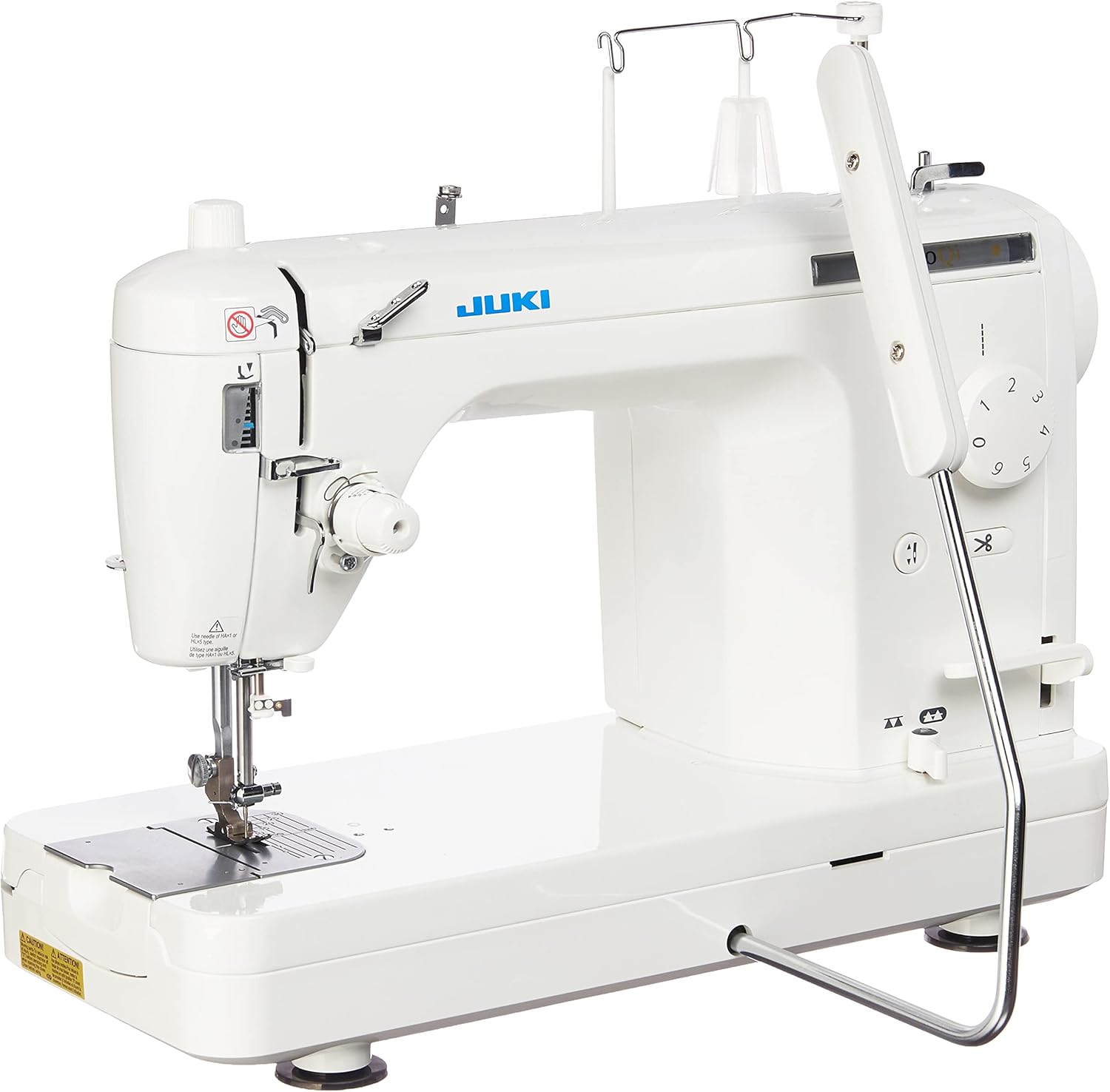
The JUKI TL-2000Qi is a workhorse straight-stitch machine built for high-volume sewing and quilting. It delivers 1500 stitches per minute and a maximum 6mm stitch length, letting experienced users power through long seams, topstitching, and quilting with factory-quality consistency. The aluminum die-cast arm and bed reduce vibration and, together with the automatic needle threader and LED lighting, make extended sessions easier on the hands and eyes. One-pedal operation and an included extension table expand the workspace for bulky projects. Because it is a single-needle straight-stitch machine, it focuses on precision and speed rather than decorative stitch variety, so you will need a separate machine or serger for zigzag, stretch, or decorative work. For performance-focused sewists who want reliable straight stitching and a stable platform for quilting and apparel construction, the TL-2000Qi is a practical, durable choice.
Best for: Experienced sewists and small-batch professionals who prioritize speed, stitch consistency, and a stable platform for quilting, garment construction, and long sewing sessions.
Less Ideal for: Hobbyists who need a multi-stitch machine with built-in decorative or stretch stitches or beginners seeking many automated stitch options.
- High top speed of 1500 stitches per minute for fast production
- Aluminum die-cast arm and bed minimize vibration for smooth sewing
- Automatic needle threader and LED lights improve usability during long sessions
- Included extension table provides a larger workspace for quilts and bulky fabric
- Straight-stitch only design lacks built-in zigzag or decorative stitches
Verdict: Buy this if you need a fast, low-vibration straight-stitch machine built for high-volume quilting and apparel sewing.
Janome JW8100 Sewing Machine

| Built-in stitches | 100 |
|---|---|
| Buttonholes | 7 one-step |
| Power source | Corded Electric |
| Maximum stitch length | 5mm |
The Janome JW8100 is a full-featured computerized sewing machine aimed at sewists who want reliable everyday performance plus quilting capability. It offers 100 built-in stitches and seven one-step buttonholes controlled from a backlit LCD and simple navigation buttons, with a start/stop button and speed slider for foot-free operation. Practical conveniences include a built-in needle threader, needle up/down control, jam-proof drop-in bobbin, and an auto-declutch bobbin winder that speed up setup and reduce fiddling. The machine also ships with an extra-wide extension table, even feed foot, quarter-inch quilting foot and a range of presser feet and accessories so you can tackle quilts, garments, and layered fabrics without buying extras. The 7-piece feed dog system helps feed fabric evenly for consistent stitches, though advanced users seeking heavy industrial power or specialty high-speed production may find its 7mm stitch width and home-grade motor limiting. For advanced hobbyists who value versatility and solid stitch quality, the JW8100 is a dependable choice that balances quilting features with everyday sewing conveniences.
Best for: A practical advanced hobbyist who wants one machine that handles garment sewing and quilt projects without constant add-ons, prioritizing reliability and useful conveniences.
Less Ideal for: Not ideal for industrial sewists or production environments that need high-torque motors, continuous high-speed stitching, or specialized commercial attachments.
- Large stitch library with 100 built-in stitches and 7 buttonhole styles for varied projects
- Backlit LCD and intuitive controls including start/stop and speed slider for precise operation
- Includes quilting-focused accessories: extra-wide extension table, even feed foot, and 1/4" quilting foot
- Convenience features like built-in needle threader, jam-proof drop-in bobbin, and auto-declutch bobbin winder
- Home-grade motor and max stitch width may limit very heavy-duty or high-speed factory-style sewing
Verdict: A versatile, well-equipped computerized machine that gives advanced home sewists reliable stitch quality and quilting-ready accessories in one package.
SINGER Heavy Duty 4452

| Built-in stitches | 32 |
|---|---|
| Stitch applications | 110 |
| Speed | 1100 stitches/min |
| Power source | Ac/Dc |
The SINGER Heavy Duty 4452 is a metal-framed mechanical machine built around a powerful motor and high sewing speed to tackle thick fabrics like denim and canvas while still handling lightweight materials when you adjust presser foot pressure. It offers 32 built-in stitches with 110 stitch applications and a one-step buttonhole, making it useful for a wide range of garment, upcycling, and home-decor projects. Practical features for everyday use include a top drop-in bobbin with a clear cover, stainless steel bed plate for smoother fabric feed, a built-in needle threader, and six included presser feet such as a walking foot and a non-stick foot for vinyl or leather. The robust motor and metal frame give confident performance on multiple layers, but as a mechanical, non-electronic machine it lacks automated stitch memory or digital stitch editing that advanced users might want for complex patterning. Overall it is a workhorse that prioritizes speed and durability for hands-on sewing work.
Best for: Experienced sewists who want a durable, high-speed mechanical machine for frequent heavy-duty work and projects that need reliable piercing power rather than computerized automation.
Less Ideal for: Users seeking a fully computerized machine with programmable stitches, built-in embroidery, or advanced on-screen editing should consider a digital model instead.
- Powerful motor and metal frame handle multiple layers and thick fabrics reliably
- High sewing speed for faster project completion
- Includes six useful presser feet including walking foot and non-stick foot
- Top drop-in bobbin with clear cover reduces jams and makes thread monitoring easy
- Mechanical controls lack digital stitch editing or memory features
- No advanced computerized functions for precision patterning
Verdict: Pick the 4452 if you need a fast, metal-framed, heavy-duty mechanical machine that reliably powers through thick fabrics for serious hands-on sewing.
Brother HC1850 Sewing Machine

| Power Source | Corded Electric |
|---|---|
| Input Voltage | 120 volts_of_alternating_current |
| Included Stitches | 185 built-in stitches |
| Included Feet | 8 presser feet |
The Brother HC1850 is a full-featured computerized sewing and quilting machine that handles everything from garment sewing to free-motion quilting. It offers 185 built-in stitches including alphanumeric characters and eight one-step auto-size buttonholes, a backlit LCD for quick stitch selection, automatic needle threading, and a jam-resistant top drop-in bobbin for consistent stitching. Quilters will appreciate the spring-action quilting foot, detachable wide extension table, and drop-feed capability for free-motion work, while the variable speed control and robust feed system make sewing multiple fabric weights manageable. The machine is lightweight and portable with an included set of eight presser feet and a useful accessory pack, so it is easy to take to classes or craft groups. Limitations include its 120V US-only design and modestly compact build compared with heavy-duty industrial machines, so it may not suit very high-volume professional production, but for reliable home-studio quilting and advanced hobby sewing it delivers dependable features and consistent stitch quality.
Best for: Experienced home sewists and quilters who prioritize a reliable, feature-rich machine for complex projects and free-motion quilting in a home or class setting.
Less Ideal for: People needing an industrial, continuous-production machine or users outside the US who require multi-voltage support.
- Wide selection of 185 built-in stitches including 55 alphanumeric stitches for basic monogramming
- Spring-action quilting foot plus detachable wide table for easier handling of large quilting projects
- Automatic needle threader and jam-resistant top drop-in bobbin for faster setup and reliable stitching
- Variable speed control and strong feed system that handles a range of fabrics from lightweight to denim
- Designed for 120V US power only, not suitable for international voltage without voiding warranty
- Lightweight, compact construction may not match durability or continuous-duty capability of heavy industrial machines
Verdict: Pick the HC1850 if you want a reliable, feature-packed computerized machine that supports advanced sewing and quilting projects in a home studio.
SINGER Heavy Duty 4423

| Built-in stitches | 23 |
|---|---|
| Stitch applications | 97 |
| Max sewing speed | 1,100 stitches/min |
| Power source | Corded Electric |
| Input voltage | 120 volts |
The SINGER Heavy Duty 4423 is a straightforward mechanical machine built for speed and durability rather than bells and whistles. It delivers up to 1,100 stitches per minute powered by a stronger motor and a metal interior frame, so it easily pierces denim, canvas, and multilayer seams while still handling lighter fabrics when you adjust presser foot pressure. The top drop-in bobbin and automatic needle threader simplify setup, and the stainless steel bed plate helps fabric feed smoothly. Included accessory feet and an LED light make common tasks and basic alterations convenient right out of the box. This machine supports 23 built-in stitch types mapped to 97 stitch applications, which covers utility, stretch, and decorative needs for garment construction and home decor. Limitations are its mechanical control layout and lack of advanced computerized features, so stitch programming and memory functions are not available for complex pattern work. For experienced sewists who want a fast, rugged machine for heavy fabrics and production-style sewing, the 4423 is practical and reliable.
Best for: Experienced sewists who prioritize speed and a rugged, production-capable machine for heavy fabrics and regular project work and who prefer a simple, serviceable mechanical tool over computerized extras.
Less Ideal for: Users who need advanced computerized stitch editing, large libraries of decorative stitches, or automated pattern functions should consider a computerized model instead.
- Powerful motor and heavy-duty metal interior frame for sewing thick fabrics and multiple layers
- High top speed (1,100 stitches per minute) speeds through long seams and production sewing
- Top drop-in bobbin and automatic needle threader make threading and bobbin checks quick
- Includes multiple presser feet and accessories useful for common sewing tasks
- Stainless steel bed plate improves fabric feeding and reduces drag
- Mechanical controls lack computerized stitch programming and memory features
- Fewer built-in stitch types than many computerized machines if you need complex decorative patterns
Verdict: Buy this if you need a fast, no-nonsense heavy-duty machine that handles thick fabrics reliably for serious sewing work.
Brother XM2701 Sewing Machine

| Power Source | Corded Electric |
|---|---|
| Input Voltage | 120 volts |
| Included Stitches | 27 built-in stitches |
| Included Feet | 6 quick-change presser feet |
The Brother XM2701 is a straightforward mechanical sewing machine designed for general home sewing, garment repairs, and small creative projects. It provides 27 built-in stitches including utility, decorative, blind hem, and a one-step auto-size buttonhole, plus six quick-change presser feet for common tasks like zippers and hemming. Practical touches such as an automatic needle threader, jam-resistant top drop-in bobbin, automatic bobbin winder, and built-in LED work light make setup and routine sewing easier. The free arm helps with cuffs, sleeves, and pant legs, and stitch selection, length, and width are adjusted with simple dials. Because it is a mechanical model, it is dependable, portable, and easy to maintain, but it lacks computerized features, extensive stitch customization, and the higher speeds or feed systems found on pro-grade machines. For advanced sewers who want a compact backup machine or a reliable workhorse for basic construction and alterations, the XM2701 covers core needs without a steep learning curve.
Best for: Sewers who prioritize a reliable, easy-to-use machine for everyday construction, mending, and small creative projects and who prefer simple mechanical controls over advanced computerized features.
Less Ideal for: If you need advanced stitch customization, automated stitch libraries, high-speed quilting, or factory-quality feed for heavy layers, choose a higher-end computerized or specialty machine instead.
- 27 built-in stitches including utility, decorative, and blind hem options
- Automatic needle threader and jam-resistant drop-in bobbin simplify threading and bobbin changes
- Includes six quick-change presser feet for common tasks like buttonholes, zippers, and blind hems
- Built-in LED light and free arm make detail work and cylindrical sewing easier
- Mechanical controls limit precise, repeatable stitch programming compared with computerized models
- Not optimized for heavy industrial sewing or very thick multi-layered fabrics
Verdict: Choose the XM2701 when you want a dependable, easy-to-use mechanical machine that handles everyday sewing and alterations with practical beginner-friendly features.
Choosing the Right Sewing Machine for Advanced Sewers: Key Factors to Consider
Stitch Variety and Customization
Advanced sewing projects often require more than basic straight and zigzag stitches. A broader stitch library lets you handle decorative topstitching, buttonholes, stretch seams, and reinforcement stitches without workarounds.
Equally important is how much you can customize each stitch. Adjustable stitch length, width, and needle position let you fine-tune tension and appearance for different fabrics and thread types. Memory or programmable stitch sequences are valuable for repeating complex decorative patterns or tailoring steps consistently across multiple pieces.
Motor Strength and Speed Control
Stronger motors maintain consistent stitch formation when sewing multiple fabric layers, heavy upholstery, or thick denim. Motor torque matters more than maximum speed when pushing through dense seams; higher torque reduces skipped stitches and uneven feeding.
Speed control options let you slow the machine for precise work like applique and speed up for long straight seams. A reliable foot pedal or electronic speed limiter improves control during tricky maneuvers and when switching between delicate and heavy work in a single project.
Feed Mechanism and Fabric Handling
Consistent fabric feeding prevents puckering, skipped stitches, and uneven seam allowances. Advanced machines use improved feed dog designs, walking feet, or dual feed systems to move multiple layers evenly.
Consider how the presser foot interacts with the feed system. Adjustable presser foot pressure and specialized feet for quilting, walking, and zipper insertion help maintain even fabric movement. Look for a machine that handles thin sheers and heavy canvas without excessive manual manipulation.
Needle and Bobbin System
A robust needle system that accepts a range of needle sizes and types is essential for advanced sewing. Needle stability affects stitch accuracy, especially when using topstitching threads or thick needles for heavy fabrics.
The bobbin design also matters. Horizontal rotary hooks or full rotary mechanisms typically run smoother and allow easier tension adjustment than simple vertical systems. Easy bobbin access and consistent bobbin tension reduce downtime and frustration during complex projects.
Accessories and Presser Foot Options
Advanced sewists benefit from a machine that supports a wide range of presser feet and attachments. Specialty feet for walking, edge-stitching, blind hems, and free-motion quilting expand what you can do without improvised hacks.
Check whether the machine includes or accommodates common optional feet and whether third-party accessories can be fitted. A clear, well-organized accessory kit and straightforward attachment mechanisms save time and help you experiment with new techniques.
Durability, Maintenance, and Serviceability
A machine that lasts for years of heavy use should have a sturdy chassis and accessible service points. Machines with metal internal components withstand repetitive stress better than those with mostly plastic internals.
Regular maintenance, including cleaning lint and periodic lubrication, is easier when the machine offers simple access to the bobbin case and feed area. Consider the availability of replacement parts and whether routine servicing can be performed by local technicians.
Why Advanced Sewers Need Different Features
Advanced sewing is less about basic stitch formation and more about control, repeatability, and the ability to handle varied materials without compromise. Professional-looking hems, precise topstitching, and complex quilt piecing demand machines that let you tailor stitch behavior to each material.
Features like adjustable presser foot pressure, fine tension control, and a stable feed system reduce the amount of manual correction you must do while sewing. Choosing a machine built with these priorities in mind directly improves workflow and finished results.
- Precise tension control prevents skipped stitches on heavy seams
- Stable feed minimizes shifting when sewing long seams or many layers
- Accessory support enables specialty techniques without improvisation
Motor Types and What They Mean for Your Projects
Sewing machines use a range of motor designs from compact high-speed units to more torque-focused motors. For heavy fabrics and consistent stitch formation through layers, torque and power delivery matter more than peak speed.
If you frequently work with denim, canvas, leather, or multiple quilt layers, prioritize a machine that emphasizes torque and has smooth, controllable speed settings. For precision work like heirloom sewing, look for motors that perform well at low speeds without vibration.
- Torque helps maintain stitch formation under load
- Electronic speed control gives consistent low-speed performance
- A stable motor reduces vibration that can affect stitch accuracy
Workspace and Ergonomics for Long Sessions
Experienced sewists often spend hours on a single project. A comfortable, well-lit workspace on the machine reduces fatigue and improves accuracy. Look for generous throat space for quilt blocks and roomy work surfaces for large garments.
Good lighting, intuitive controls, and easy-to-reach adjustments matter more over time than a single flashy feature. Consider the placement of thread guides, tension dials, and stitch selection controls when evaluating machines.
- Large throat space for quilting and bulky projects
- Bright, well-placed lighting for detailed stitching
- Ergonomic control layout for less hand movement
Maintenance Practices That Extend Machine Life
Routine cleaning and basic maintenance keep a sewing machine running smoothly. Remove lint from the bobbin area after sessions with fibrous materials and periodically check for loose screws and worn feed dogs.
Follow manufacturer lubrication recommendations if applicable, and replace needles regularly to prevent skipped stitches and fabric damage. Machines that make these routine actions easier help you avoid small issues that grow into costly repairs.
- Clean bobbin area and feed dogs after heavy use
- Replace needles frequently based on workload and material
- Keep an eye on presser foot pressure and feed dog wear
Upgrading From an Entry-Level Machine
Moving up from a basic machine means prioritizing specific functional improvements rather than more decorative stitches alone. Seek enhancements that solve problems you encounter now, such as uneven feeding, limited throat space, or poor handling of heavy materials.
Test for ease of tension adjustment, smoothness of the motor at low speeds, and secure needle positioning. These practical performance traits make the upgrade meaningful and noticeable in your daily sewing.
- Focus on functional upgrades that address current workflow bottlenecks
- Prioritize machines with better feed systems and more throat space
- Look for improved ergonomics and easier access for maintenance
How We Chose the Best Sewing Machine for Advanced Sewers
We focused on machines that meet the practical demands of experienced sewists rather than entry-level convenience features. Our selection process prioritized technical capabilities that affect project outcomes: stitch variety and customization, motor power and speed control, feed system consistency for layered fabrics, presser foot and accessory support for specialty techniques, and long-term serviceability including sturdy construction and parts availability. We excluded models aimed solely at beginners or those lacking at least moderate metal internal components, limited stitch width/depth adjustment, or no provision for heavy fabrics. Machines were also screened for reasonably accessible user controls that allow fine tuning of stitch length, tension, and needle position. We favored machines offering multiple presser feet options and clear support for quilting and garment construction techniques. Long-term reliability signals and repairability were part of the editorial filters, along with user-facing ergonomics like lighting, throat space, and bobbin access.
Our full evaluation process is outlined in our review methodology.
FAQ
Do advanced sewing machines require special needles?
Often you will use a wider range of needle types and sizes. Advanced projects call for heavy-duty, leather, or stretch needles depending on fabric. Changing needles regularly and matching needle type to material reduces skipped stitches and prevents fabric damage.
How important is presser foot pressure adjustment?
Very important. Adjustable presser foot pressure helps regulate how much the fabric is gripped by the foot, which affects feed and stitch consistency across delicate or bulky materials. It is essential when switching between thin sheers and multi-layer quilts.
Can I use an advanced machine for basic sewing needs?
Yes. Advanced machines usually include all basic stitch functions and can be dialed back to simple settings. They offer additional capabilities when you need them while still performing everyday tasks reliably.
What maintenance keeps a sewing machine reliable?
Regular lint removal from the bobbin area, periodic needle changes, and following lubrication guidance when applicable are the primary tasks. Also monitor feed dog condition and ensure screws and attachments remain secure to prevent misalignment.
Is throat space important for garment sewing or quilting?
Yes. Larger throat space makes it far easier to handle bulky quilts and sizable garment pieces without crowding the work area. For detailed garment construction you may not need the largest throat, but more space improves maneuverability for complex projects.
Final Verdict
When choosing a sewing machine for advanced projects, prioritize features that directly improve control and consistency: a capable motor with good speed modulation, a reliable feed system, and options for specialized presser feet. Durability and serviceability should also factor into your decision because heavy use exposes weaknesses over time. Tradeoffs are inevitable. If you need more throat space and heavy-duty handling, expect a larger, possibly heavier machine. If precision stitch control for fine garments is your focus, prioritize adjustable tension and fine speed control. Use the criteria in this guide to match a machine to the techniques and materials you use most, and you will find a tool that supports professional results at home.