
Note: This article contains affiliate links. If you click on these links and make a purchase, we may earn a small commission at no extra cost to you. This helps support our research and content. Read our full affiliate disclosure here.
If you have moved beyond beginner projects and want a machine that can handle garment sewing, quilting blocks, and heavier fabrics, the right sewing machine matters. Intermediate sewists need models that add stitch options, better feed control, and durable construction without overwhelming with pro-only features. This guide shortlists the top sewing machines for intermediate sewers and explains the practical tradeoffs between stitch versatility, stitch quality, and daily usability. Read on to find machines that fit expanding skills and specific project goals.
Top Picks at a Glance
| Best Overall The best all-around choice for most situations | Janome JW8100 Sewing Machine |  |
| Best Quality Built to a higher standard if you want something more solid | JUKI TL-2010Q Sewing Machine |  |
| Best Value The sweet spot between price and what you get | SINGER Heavy Duty 4411 |  |
| Best Budget The cheapest option that still gets the job done reliably | kidoom Twin Needle Sewing Machine FHSM-520A |  |
| Top Rated A top-rated pick with lots of positive feedback | Brother HC1850 Sewing Machine |  |
| Most Popular A crowd favorite that many people choose with confidence | SINGER Heavy Duty 4423 |  |
| Best Seller A high-volume bestseller chosen again and again | Brother XM2701 Sewing Machine |  |
Janome JW8100 Sewing Machine

| Power Source | Corded Electric |
|---|---|
| Included Accessories | Extension table, even feed foot, quarter inch foot, hard cover and standard sewing feet |
| Maximum Stitch Length | 5mm |
The Janome JW8100 is a midrange computerized sewing machine aimed at sewists who want more capability without a steep learning curve. It offers 100 built-in stitches, seven one-step buttonholes, and a backlit LCD with easy navigation for selecting stitch type and adjusting length and width. Practical conveniences include a built-in needle threader, start/stop button for foot-free sewing, needle up/down control, speed slider, and a jam-proof drop-in bobbin that speed up routine tasks. The machine ships with quilting-focused accessories such as an extra-wide extension table, even feed foot, and a quarter-inch foot which make handling layered quilts and precise piecing easier. Threading and bobbin winding are straightforward, and the 7-piece feed dog system helps feed a variety of fabrics evenly. Limitations to consider are that it is a home machine rather than a professional industrial model and its size and weight make it less portable for frequent transport, but for intermediate sewers wanting reliable stitch options and quilting support it balances features, ease of use, and durability.
Best for: Intermediate sewers who want a reliable, feature-rich home machine that handles garment sewing and quilting projects without a steep learning curve.
Less Ideal for: People needing a lightweight travel machine or a heavy-duty industrial model for continuous professional production should look elsewhere.
- 100 built-in stitches and 7 one-step buttonholes provide versatile stitch options for garments and quilting
- Backlit LCD and easy navigation buttons simplify stitch selection and adjustment
- Quilting accessories included (extra-wide extension table, even feed foot, 1/4" foot) ready the machine for larger projects
- Convenience features like built-in needle threader, start/stop button, and jam-proof drop-in bobbin speed up setup and sewing
- Designed as a home/computerized machine rather than a commercial-grade unit
- Relatively heavy and less convenient to carry frequently
Verdict: A versatile, beginner-friendly computerized machine that gives intermediate sewists the stitch variety and quilting accessories needed to tackle a wide range of home projects.
JUKI TL-2010Q Sewing Machine
| Power Source | Treadle Powered |
|---|---|
| Material | Aluminum |
| Model Number | MO-735 |
| Item Weight | 38 pounds |
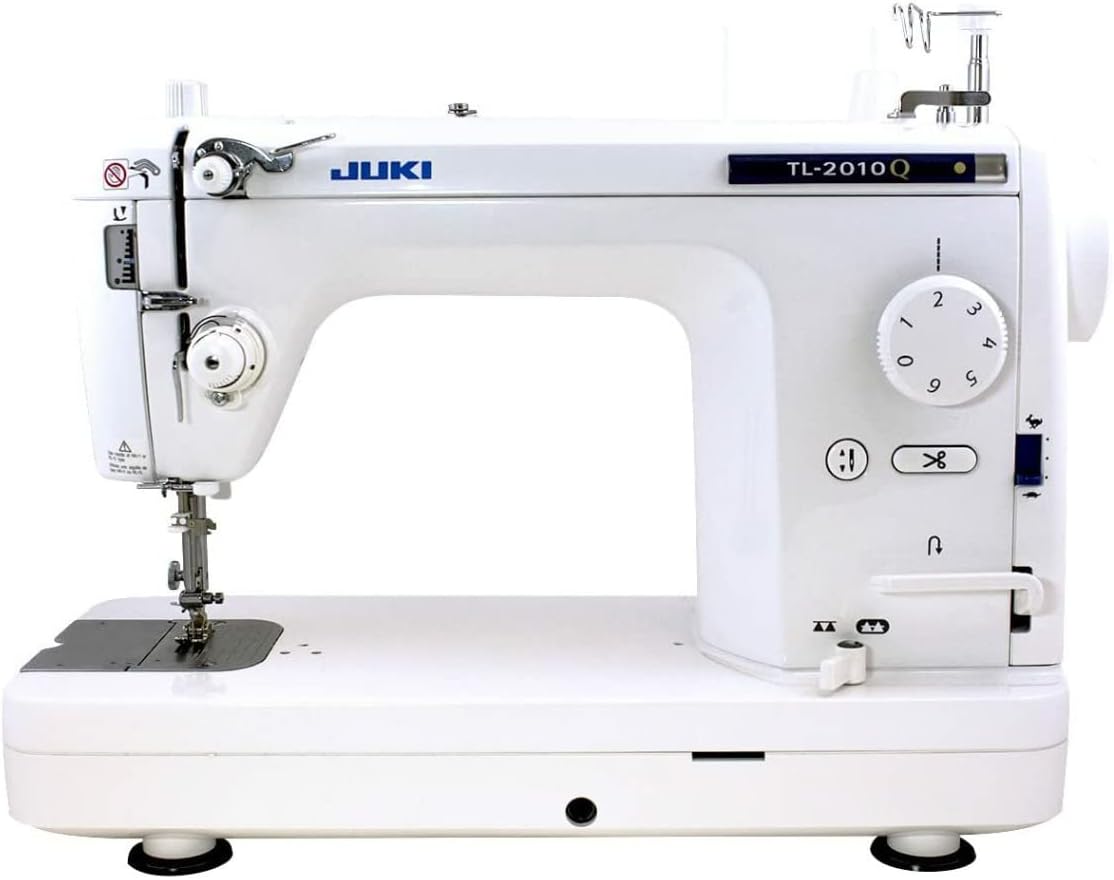
The JUKI TL-2010Q is built for steady, high-speed straight stitching and quilting work; it serves well as a tabletop machine or mounted in a cabinet and includes a carrying handle for portability. Notable features that support demanding sewing include an automatic thread trimmer that clips both needle and bobbin threads at the push of a button, a knee lifter that raises the presser foot up to 12 mm for easing heavy fabrics, and an automatic needle threader to speed setup. In practice the machine delivers consistent lockstitches and handles light to heavyweight materials with reliable feed and stitch quality, which is why intermediate sewists and small-batch makers favor it for garment sewing and quilting. Trade-offs are a single straight-stitch focus rather than decorative or wide stitch options, and the machine expects some familiarity with mechanical controls to get the most from its speed and features.
Best for: Intermediate sewists who prioritize stitch quality, high-speed straight stitching, and reliable handling of multiple fabric weights for quilting and garment construction.
Less Ideal for: Sewers who need built-in decorative stitches, zigzag capability, or a wide stitch selection should consider a different model with more stitch variety.
- Automatic thread trimmer trims needle and bobbin threads with one push
- Knee lifter raises presser foot up to 12 mm for easy handling of thick layers
- Automatic needle threader reduces setup time and eyestrain
- Portable tabletop design with carrying handle and included extension table
- Only a single-needle, straight lockstitch machine with no built-in decorative or zigzag stitches
- Treadle power listed may require clarification for users expecting electric motor-only operation
Verdict: Buy this machine if you want a performance-focused, reliable straight-stitch workhorse for quilting and tailoring that handles light to heavyweight fabrics with professional results.
SINGER Heavy Duty 4411

| Power Source | Corded Electric |
|---|---|
| Built-In Stitches | 11 (69 stitch applications) |
| Top Speed | 1,100 stitches per minute |
| Bobbin Type | Top drop-in transparent bobbin |
The SINGER Heavy Duty 4411 is a workhorse mechanical sewing machine that brings higher speed and extra motor power to everyday sewing and tougher projects. It offers up to 1,100 stitches per minute, 11 built-in stitches with 69 stitch applications, a 4-step buttonhole, and a top drop-in bobbin with a clear cover for easy thread monitoring. The heavy-duty interior metal frame and stainless steel bed plate help the machine feed denim, canvas, and multiple layers without skipping, while adjustable presser foot pressure makes it usable on lightweight fabrics too. Included accessories cover basic needs—several presser feet, needles, bobbins, and simple tools—so you can start mending, altering, or sewing home-decor and garment projects right away. Limitations are its mechanical controls and smaller stitch library compared with computerized models, so features like automatic tension or touchscreen stitch selection are not available, and advanced decorative stitching options are limited. For an intermediate sewer who values speed, durability, and straightforward reliable performance, the 4411 focuses on essentials rather than bells and whistles.
Best for: Intermediate sewers who want a durable, faster machine that reliably handles denim, canvas, and layered projects while keeping controls simple and predictable.
Less Ideal for: If you need an expansive built-in stitch library, automatic tension, or computerized stitch programming for complex decorative work, look at feature-rich electronic machines instead.
- Powerful motor and high top speed for faster seams and better handling of thick fabrics
- Heavy-duty metal frame and stainless steel bed plate for stable, skip-free stitching
- Top drop-in bobbin with transparent cover makes thread checks quick and simple
- Adjustable presser foot pressure allows sewing both lightweight and heavy fabrics
- Includes essential presser feet and accessories to begin common projects immediately
- Limited stitch selection and fewer decorative/automatic features than computerized models
- Mechanical controls require manual adjustment for some settings rather than automated presets
Verdict: Buy the 4411 if you want a fast, rugged mechanical machine that reliably sews heavy fabrics and everyday projects without unnecessary complexity.
kidoom Twin Needle Sewing Machine FHSM-520A
| Power Source | Electric |
|---|---|
| Included Components | AC/DC Adapter, Accessory Kit, Foot Pedal, Sewing Machine Body |
| Number of Stitches | 16 |
| Model Number | FHSM-520A |
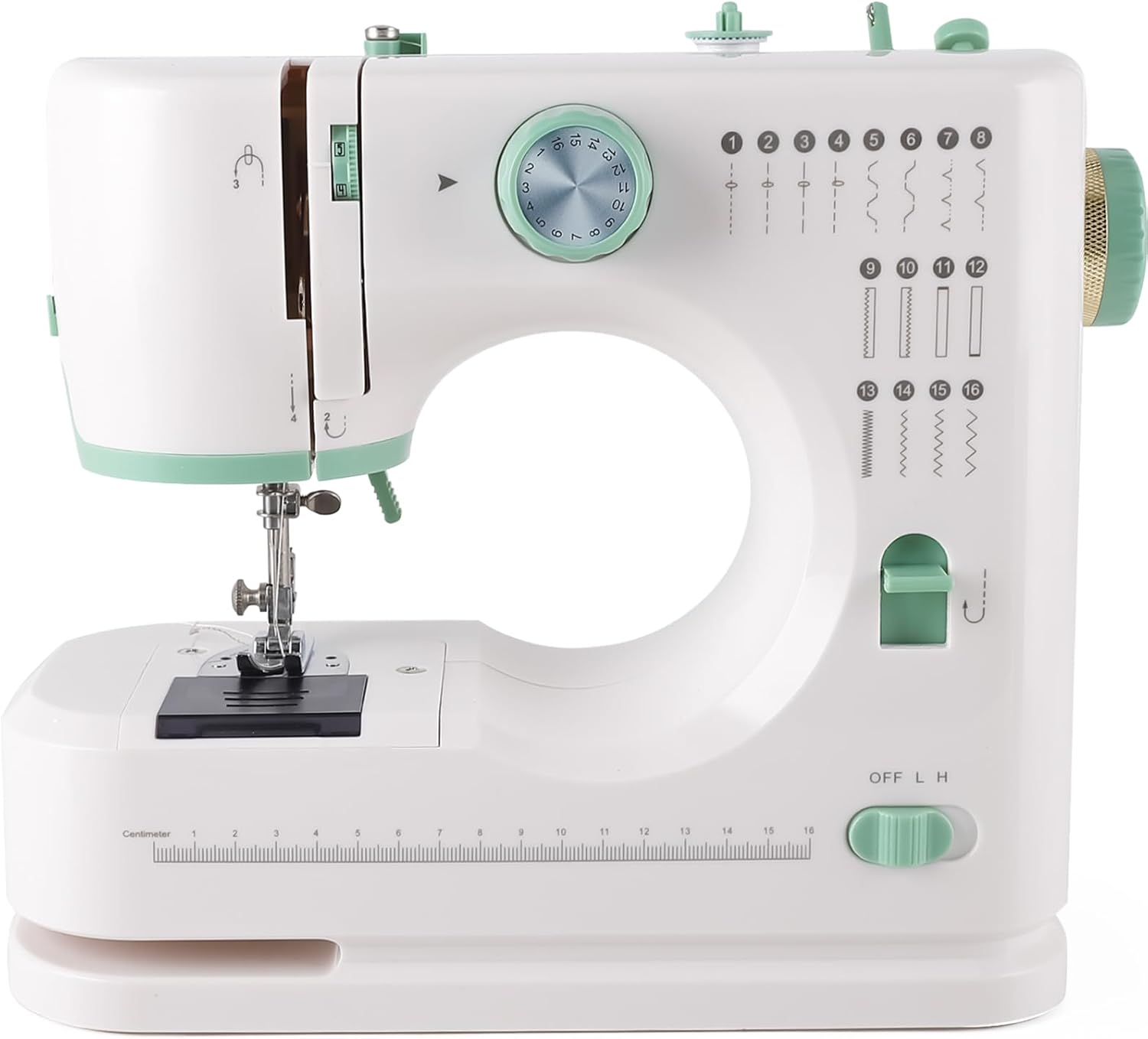
This compact kidoom machine is aimed at home sewers who want more capability than a basic starter model without stepping up to a heavy-duty or computerized unit. It offers 16 stitch choices, reverse stitching, adjustable thread tension and a three-step speed control that can be used with the included foot pedal or the manual dial. The unique double-needle and double-thread option lets you sew parallel seams and decorative twin-needle finishes without fitting separate attachments, and the built-in LED light and automatic bobbin winder make setup and detailed work easier. The machine includes a generous accessory kit and both AC adapter and foot pedal for flexible operation. Expect straightforward mechanical controls that are easy to learn but lack the touchscreen conveniences and ultra-precise stitch programming of higher-end models, and the lightweight plastic-heavy build means it is best for garment sewing, crafts, and medium-weight denim rather than heavy industrial use.
Best for: Intermediate sewers on a budget who want expanded stitch variety and twin-needle capability for garment and craft projects without paying for a fully computerized machine.
Less Ideal for: Users needing a heavy-duty factory-quality machine for regular thick-leather or industrial sewing, or those who want touchscreen programming and precise stitch memory.
- Double-needle and double-thread capability for twin seams and decorative effects
- 16 built-in stitch patterns including reverse sewing for secure seams
- Adjustable speed with both manual dial and foot pedal operation
- Large accessory kit and automatic bobbin winder included
- Lightweight, plastic-focused construction limits heavy-duty durability
- Mechanical controls lack advanced computerized stitch customization
Verdict: A budget-friendly, feature-packed mechanical machine that gives intermediate home sewers twin-needle functionality and useful stitch options without the cost of a computerized model.
Brother HC1850 Sewing Machine

| Built-in stitches | 185 |
|---|---|
| Alphanumeric stitches | 55 |
| Power source | Corded Electric |
| Input voltage | 120 volts AC |
The Brother HC1850 is a full-featured computerized sewing and quilting machine aimed at sewists who want reliable, versatile performance for garment sewing and quilting. It provides 185 built-in stitches, 55 alphanumeric characters, and eight one-step buttonhole styles that you select with the backlit LCD and push-button controls, while variable speed control and a spring-action quilting foot make it suitable for free-motion quilting and larger projects. Practical conveniences include an advanced automatic needle threader, a jam-resistant top-drop bobbin, a detachable wide extension table for stability, and eight included presser feet so you can start sewing right away. The machine handles a broad range of fabrics from lightweight apparel to medium-weight denim when using appropriate needles and settings. It is lightweight and portable for classes or moving between workspaces, and Brother support and a long warranty help reinforce its dependability. It is not designed for industrial continuous heavy production, so users with very high-volume, commercial needs should consider a heavy-duty model instead.
Best for: Intermediate sewists who want a reliable, feature-rich machine that supports quilting, garment construction, and decorative stitching while offering easy setup and dependable everyday performance.
Less Ideal for: Users who need a commercial-grade, heavy-duty machine for nonstop production or industrial sewing tasks should look at specialty heavy-duty models instead.
- Wide selection of 185 built-in stitches including alphanumeric characters for monogramming
- Automatic needle threader and jam-resistant top-drop bobbin for easier setup and fewer interruptions
- Detachable wide extension table and spring-action quilting foot that support quilting and large projects
- Variable speed control and intuitive LCD/button stitch selection for precise, consistent stitching
- Not intended for heavy industrial or continuous commercial production
Verdict: A dependable, midlevel computerized sewing and quilting machine that gives intermediate sewists the stitch variety and quilting features they need with user-friendly reliability.
SINGER Heavy Duty 4423

| Built-in stitches | 23 |
|---|---|
| Stitch applications | 97 |
| Maximum sewing speed | 1,100 stitches per minute |
| Power source | Corded Electric |
| Input voltage | 120 volts |
The SINGER Heavy Duty 4423 is built around a strong motor and metal interior frame to give reliable performance on denim, canvas, and layered projects while still handling lightweight fabrics with adjustable presser-foot pressure. It offers 23 built-in stitches that the manual maps to 97 stitch applications, a top drop-in bobbin for easier thread monitoring, an automatic needle threader, and LED lighting that helps visibility when working detailed seams. Typical use cases include garment sewing, mending heavy workwear, and home-decor projects where speed and piercing power matter; the machine's 1,100 stitches-per-minute top speed noticeably reduces project time. The package includes four presser feet and common accessories so you can start sewing right away, and the stainless-steel bed plate smooths fabric feed. Limitations are its mechanical control layout if you prefer computerized stitch memory or touchscreen selection, and its heavier, more utilitarian body means it is less travel-friendly than compact models.
Best for: Intermediate sewists who value speed and durability for garment making, mending, and home-decor projects and who prefer a straightforward mechanical machine with solid build quality.
Less Ideal for: Sewers who want a compact, highly portable machine or those who prioritize computerized stitch selection and memory features should consider alternatives.
- Powerful motor and heavy-duty interior frame for consistent sewing through thick fabrics
- High top sewing speed (1,100 spm) speeds up larger projects
- 23 built-in stitches mapped to 97 stitch applications for versatile use
- Includes essential presser feet and accessories to start sewing immediately
- Top drop-in bobbin and LED light improve ease of use and visibility
- Mechanical controls lack the stitch programmability and conveniences of computerized machines
- Relatively heavy and bulky for frequent transport
Verdict: Choose the Singer 4423 when you need a fast, factory-quality mechanical machine that powers through heavy fabrics and gets projects done quickly.
Brother XM2701 Sewing Machine

| Built-in stitches | 27 |
|---|---|
| Included presser feet | 6 |
| Buttonholer | One-step auto-size |
| Power source | Corded Electric |
| Input voltage | 120 volts |
The Brother XM2701 is a straightforward, reliable mechanical sewing machine that covers the needs of intermediate and beginner sewists alike. It provides 27 built-in stitches including utility, decorative, and quilting options plus a one-step auto-size buttonholer, which makes finishing garments and home projects easier. Practical features such as an automatic needle threader, jam-resistant top drop-in bobbin, automatic bobbin winder, and a bright LED work light keep setup and day-to-day sewing simple and fuss-free. The machine includes six quick-change presser feet and a free arm for sewing cuffs, sleeves, and pant legs. Because it uses dial controls for stitch selection, length, and width, it is easy to understand and repair compared with computerized models, but there is no touchscreen or program memory for advanced stitch customization. Its corded 120 V power and compact, lightweight design make it portable for classes or craft space storage, though very heavy-duty industrial fabrics may require a more powerful model. For intermediate sewers wanting a dependable, low-maintenance machine that covers common garment and quilting tasks, the XM2701 is a sensible choice.
Best for: Sewers who want a dependable, easy-to-use machine that handles everyday garment construction, alterations, and moderate quilting without the complexity of computerized models.
Less Ideal for: Users who need computerized features, stitch programming, or a very high-torque motor for heavy industrial fabrics should consider a different machine.
- 27 built-in stitches including utility, decorative, and quilting options
- Automatic needle threader and jam-resistant drop-in top bobbin for easier threading and fewer jams
- Includes six quick-change presser feet and a one-step auto-size buttonholer for common sewing tasks
- Bright LED work light and free arm make small or cylindrical sewing easier
- Mechanical dial controls lack advanced programmability and stitch memory
- Not designed for heavy industrial or very thick multi-layer leather projects
Verdict: A reliable, low-maintenance mechanical machine that gives intermediate sewists the core stitches and practical features they use most without unnecessary complexity.
Choosing the Right Sewing Machine for Intermediate Sewers: Key Factors to Consider
Stitch Variety and Customization
Intermediate sewists benefit from a broader selection of utility, decorative, and stretch stitches. A machine with multiple stitch options lets you switch between precise straight stitching for seams, reinforced stitches for stress points, and decorative stitches for finishing. Customization features such as adjustable stitch length and width, memory functions for stitch sequences, or a stitch-edit mode allow you to tailor settings to fabric and design, improving fit and finish.
Having both essential stitches and a few advanced options reduces the need to manually change techniques or perform finishing by hand. Look for clear labeling and quick access to common stitches so you do not waste time searching through menus during a project.
Fabric Feeding and Tension Control
Consistent fabric feed is crucial when you move to thicker seams, layered quilts, or slippery synthetics. A machine with a reliable feed dog design and adjustable presser foot pressure helps maintain even stitch length across variable fabric stacks. Built-in tension adjustment that is intuitive and responsive prevents puckering on lightweight fabrics and loose stitches on thicker materials.
Some machines include a drop feed for free-motion quilting or a walking foot option for difficult fabrics. Consider whether you will need features that help manage stretch knits or multiple layers, since poor feeding is a common source of frustration for intermediate projects.
Build Durability and Frame Strength
As project complexity rises, the machine will see longer sewing sessions and tougher materials. A robust chassis and quality internal components improve longevity and reduce vibration, which supports cleaner stitch formation. Metal parts where wear is highest, such as the needle bar, hook assembly, and feed dog mechanisms, extend the usable life of the machine.
Durability also affects resale and upgrade paths. A sturdier machine is less likely to require early repairs and often provides more stable stitch quality over years of use. Consider machines with a reputation for replaceable parts and straightforward mechanical servicing.
Ease of Use and Ergonomics
Intermediate sewists often spend longer uninterrupted time at the machine, so intuitive controls, a comfortable working height, and sensible stitch selection matter. Features like a clearly labeled dial or touchscreen, an accessible presser foot lever, and an automatic needle threader can speed setup and reduce interruptions. Good lighting over the needle area and an ergonomic handwheel reduce strain during detailed work.
An approachable interface helps when learning more advanced techniques like decorative stitching or using specialty feet. If you plan to teach others or sew collaboratively, straightforward controls make the machine more flexible.
Maintenance, Accessories, and Upgradeability
Regular maintenance keeps a sewing machine running smoothly, so easy access to service points and clear maintenance guidance are important. Look for machines with removable throat plates, accessible bobbin areas, and straightforward lubrication points. Compatibility with a range of presser feet, bobbins, and optional attachments increases the machine's utility as your projects evolve.
Consider whether the machine supports optional feet for zippers, buttonholes, walking feet, or free-motion quilting. Availability of replacement parts and clear user-serviceable elements reduce downtime and long-term ownership costs.
Which Features Advance Sewing Skill Without Overcomplicating
Not every advanced feature is useful for every intermediate sewer. Prioritize features that directly improve stitch quality or expand the types of projects you can complete, such as reliable buttonhole systems, adjustable presser foot pressure, and a good range of utility stitches. Avoid machines that add many niche decorative stitches if they complicate the interface or hide essential controls.
Look for practical enhancements: a dependable buttonhole foot that makes consistent buttonholes, a straight stitch plate for precision seams, and a strong motor that handles denim and canvas without stalling. These features help you tackle new project types while keeping daily use straightforward.
- Adjustable presser foot pressure helps with thin and thick fabrics
- A dedicated straight stitch plate improves seam accuracy
- Automatic buttonhole systems save time and produce consistent results
Preparing Your Workspace for Intermediate Projects
Your sewing space influences how effectively you can use an intermediate machine. Ensure stable table support to reduce vibration and allow better control for long seams. Adequate lighting above the needle and an organized area for feet, bobbins, and needles reduce setup time and interruptions.
Think about storage for larger patterns, an extension table for quilts, and a comfortable chair at the correct height. These non-machine investments often improve stitch quality more than marginal feature upgrades.
- Use a flat, stable surface and an extension table for large fabric pieces
- Install task lighting focused on the needle and presser foot
- Keep a small tray or organizer for frequently used feet and bobbins
Common Upgrades and Optional Feet to Consider
As your skills grow, a few accessories extend a machine's capability. A walking foot or even a dual-feed system helps control multi-layer quilts and slippery fabrics. A walking foot reduces shifting between layers and improves stitch consistency on bulky projects. A free-motion foot combined with a drop feed enables quilting and creative stitching.
Specialty feet for invisible zippers, overcasting, and narrow hems make finishing faster and more professional. Check that optional feet are available and compatible with the machine you choose.
- Walking foot for quilting and layered fabrics
- Free-motion foot plus drop feed for quilting
- Zipper and overcasting feet for garment finishing
Balancing Motor Power and Noise
Motor strength matters when you sew heavier materials or want consistent stitching at varied speeds. A stronger motor handles thicker seams without bogging down. However, more powerful motors can be noisier and heavier. For home use, aim for a motor that provides sufficient torque rather than maximum horsepower.
If you frequently sew denim, canvas, or leather, prioritize torque and smooth power delivery. If noise is a concern in shared living spaces, look for machines described as quiet or with vibration-minimizing frames.
- Torque is more important than top speed for thick fabrics
- Look for vibration-damping construction for quieter operation
- Consider motor characteristics if you sew long seams or heavy materials frequently
Threading, Bobbin Systems, and Needle Options
A reliable needle system and easy bobbin access reduce interruptions. Top-loading bobbins are often easier to monitor, while front-loading drop-in bobbins can be simpler to change quickly. An automatic needle threader reduces eye strain and speeds setup, especially when switching colors or needles often.
Use the correct needle size and type for the fabric you are sewing. Machines that accept a wide range of needle types and sizes give you flexibility across woven, knit, and specialty materials.
- Top-loading bobbins for easy thread monitoring
- Automatic needle threaders save time and reduce frustration
- Support for multiple needle types increases fabric compatibility
How We Chose the Best Sewing Machine for Intermediate Sewers
We narrowed the field by focusing on features that materially affect an intermediate sewer's experience. Key evaluation criteria included stitch variety and customization, how consistently the machine feeds different fabrics, the robustness of the mechanical build and materials, intuitive controls and ergonomics for longer sessions, and serviceability including accessory compatibility and ease of common maintenance. We prioritized machines that add genuinely useful capabilities over gimmicks, such as adjustable presser foot pressure, reliable automatic tensioning, and straightforward stitch editing. We excluded machines that are strictly entry-level with very limited stitch choices or those that require professional-level skills to operate. We also filtered out models that sacrifice durability or essential usability for minor savings in weight or size. The resulting shortlist emphasizes tools that help intermediate sewists complete more ambitious projects with consistent results while remaining approachable to use and maintain.
Our full evaluation process is outlined in our review methodology.
FAQ
Do intermediate sewing machines require special maintenance compared with beginner machines?
Maintenance is similar in kind but may be more frequent because intermediate users sew more and tackle heavier fabrics. Regular cleaning of lint from the bobbin area, periodic lubrication where specified, and timely needle changes keep stitch quality consistent.
Can an intermediate machine handle quilting and garment sewing equally well?
Many intermediate machines are versatile enough for both, but check for features like adjustable presser foot pressure, an optional walking foot, and a strong feed system. For heavy or multi-layer quilting, an accessory extension table and walking foot make a big difference.
Are computerized controls worth it for intermediate sewists?
Computerized controls can simplify stitch selection and memory functions, which is helpful when working on complex patterns. They are worth it if you value convenience, but ensure the interface is intuitive and does not hide essential manual adjustments you might need.
What needle and thread choices should intermediate sewists prioritize?
Use high-quality threads matched to fabric weight and appropriate needles for the material. Keep a set of universal needles, stretch needles for knits, and heavier denim or leather needles if you plan to sew thick materials. Changing needles frequently prevents skipped stitches and fabric damage.
How important is accessory availability when choosing a machine?
Accessory availability matters because optional feet and attachments expand what you can sew. Machines with a wide range of compatible feet and easily sourced replacement parts give more flexibility and reduce downtime when projects require specialized tools.
Final Verdict
For intermediate sewists, focus on machines that deliver reliable stitch quality, consistent fabric handling, and a set of practical features that expand project capability without adding undue complexity. Prioritize stitch variety that you will actually use, a feeding system that handles layered or slippery fabrics, and a durable frame that stands up to more frequent use. Weigh tradeoffs between motor power and noise, and consider maintainability and accessory support to keep the machine useful as your skills progress. Choosing with these priorities in mind helps you move confidently from hobby projects to more ambitious sewing work.