
Note: This article contains affiliate links. If you click on these links and make a purchase, we may earn a small commission at no extra cost to you. This helps support our research and content. Read our full affiliate disclosure here.
Picking the right sewing machine for beginners makes the difference between a satisfying first project and frustration that ends the hobby early. You want something with straightforward controls, consistent stitch quality, and features that make learning easier without overwhelming you. This guide covers seven shortlisted sewing machines for beginners that prioritize usability, dependable stitching, and practical accessories for common home sewing tasks. We evaluated each option on factors like how easy it is to learn, the range of useful stitches, and build reliability to help you start sewing with confidence. Read on for concise evaluations and the decision-making criteria that matter most when choosing your first machine.
Top Picks at a Glance
| Best Overall The best all-around choice for most situations | Brother CS5055 Sewing Machine |  |
| Best Quality Built to a higher standard if you want something more solid | Janome JW8100 Computerized Sewing Machine |  |
| Best Value The sweet spot between price and what you get | SINGER MX60 Sewing Machine |  |
| Best Budget The cheapest option that still gets the job done reliably | KPCB Tech FHSM-201 Sewing Machine |  |
| Top Rated A top-rated pick with lots of positive feedback | Brother XM2701 Sewing Machine |  |
| Most Popular A crowd favorite that many people choose with confidence | Magicfly Mini Sewing Machine MF600 |  |
| Best Seller A high-volume bestseller chosen again and again | SINGER Heavy Duty 4423 |  |
Brother CS5055 Sewing Machine
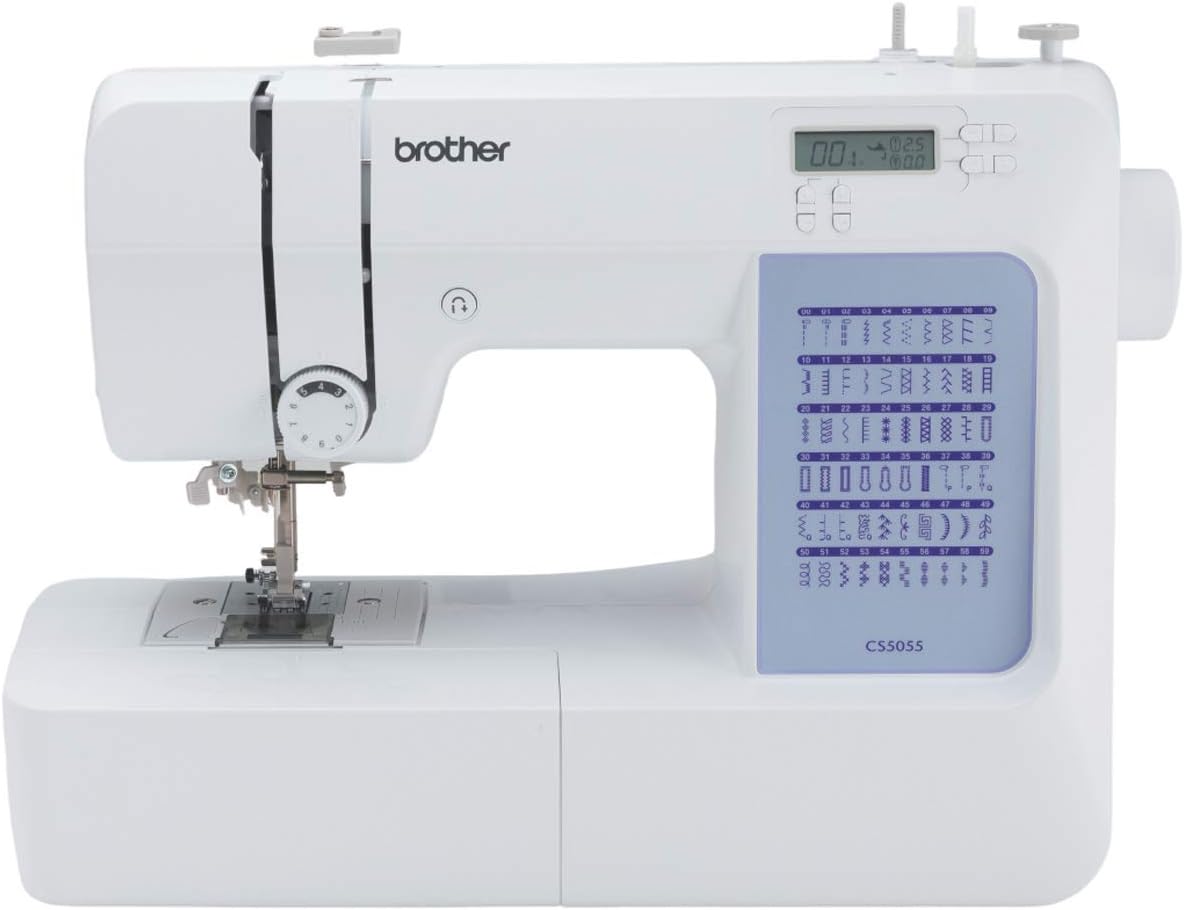
| Built-in stitches | 60 |
|---|---|
| Buttonhole styles | 7 one-step auto-size |
| Power source | Corded Electric |
| Input voltage | 120 volts |
The Brother CS5055 is a beginner-friendly computerized sewing machine that covers common household and garment sewing needs while offering features that let you grow skills. Use the LCD and push-button controls to pick from 60 built-in stitches and seven one-step auto-size buttonholes for garment construction and decorative work, and the machine includes seven presser feet for common tasks like zippers, blind hems, and overcasting. Practical touches such as the automatic needle threader, jam-resistant top drop-in bobbin, fast bobbin winding, and bright LED work light reduce setup fuss and make longer sessions easier. The metal-frame construction and fixed needle bar support steadier stitching on medium-weight fabrics, and the free arm lets you handle sleeves and cuffs. Limitations are typical for this class: it is designed for light to medium fabrics rather than heavy industrial work, and advanced quilters may want a wider throat or dedicated quilting features. For everyday sewing, mending, and beginner projects the CS5055 balances ease of use and useful capability without overwhelming new users.
Best for: Buyers who want a dependable, easy-to-learn machine that handles everyday garment sewing, mending, and decorative stitches with minimal setup and helpful automation.
Less Ideal for: If you need a machine for heavy-duty upholstery, industrial volume sewing, or advanced long-arm quilting, choose a more heavy-duty or specialized model instead.
- Large selection of 60 built-in stitches and 7 one-step auto-size buttonholes.
- Automatic needle threader and top drop-in bobbin for quick setup and fewer jams.
- Seven included presser feet cover common tasks out of the box.
- Metal frame and fixed needle bar for more consistent stitch quality.
- Bright LED work area and easy-to-read LCD make stitch selection and visibility simple.
- Not intended for heavy industrial sewing or very thick multiple-layer projects.
- Throat/working space is more limited than specialized quilting machines.
Verdict: The CS5055 is a well-rounded, user-friendly computerized machine that gives beginners a broad stitch selection and time-saving features to learn and complete everyday sewing projects.
Janome JW8100 Computerized Sewing Machine

| Built-in stitches | 100 |
|---|---|
| Buttonholes | 7 one-step |
| Power source | Corded Electric |
| Maximum stitch length | 5mm |
The Janome JW8100 is a mid-range computerized sewing machine that brings a lot of capability to a beginner-friendly package. It offers 100 built-in stitches, seven one-step buttonholes, and a backlit LCD for easy stitch selection, plus convenient controls like a start/stop button, needle up/down, and a speed control slider for more precise sewing. Practical extras such as a built-in needle threader, jam-proof drop-in bobbin, auto-declutch bobbin winder, and a 7-piece feed dog system help produce consistent stitches across cottons, knits, and multi-layer projects. The included extra-wide extension table, even feed foot, and quarter-inch foot make quilting and large projects far easier to manage, and the hard cover and broad accessory set add value out of the box. Trade-offs to consider are the machine weight and bulk compared with lightweight portable models and the learning curve for using advanced features if you only want basic straight stitching. For a beginning sewist who plans to grow skills, it balances power and convenience well.
Best for: Buyers who want a beginner-friendly machine with room to grow and who plan to tackle quilting, garment sewing, and varied fabrics as they improve.
Less Ideal for: If you need a very lightweight, highly portable machine for occasional mending or travel, a smaller, simpler model would be a better fit.
- 100 built-in stitches and 7 one-step buttonholes provide wide design flexibility
- Backlit LCD, start/stop button, and speed control simplify stitch selection and operation
- 7-piece feed dog system and even feed foot deliver consistent fabric feeding for layered work
- Includes quilting-friendly accessories like an extra-wide extension table and 1/4" quilting foot
- Relatively heavy and bulkier than compact portable machines
- Advanced features may be more than some absolute beginners need
Verdict: A capable, beginner-friendly computerized machine that pairs easy-to-use controls with quilting-ready accessories so you can learn and progress without upgrading quickly.
SINGER MX60 Sewing Machine

| Model Number | MX60 |
|---|---|
| Included Components | All purpose foot, Zipper foot, Buttonhole foot, Darning plate, Needles, Bobbins |
| Power Source | Corded Electric |
| Built-In Stitches | 6 (57 stitch applications) |
The SINGER MX60 is a compact, beginner-friendly mechanical sewing machine designed for mending, simple garments, quilting pieces, and craft projects. It offers six built-in stitch types enabling 57 stitch applications through preset length and width, which keeps setup simple for new sewers. The machine is corded electric, has a heavy-duty metal frame for stable stitching across light to moderate fabrics, and includes common presser feet and beginner accessories like a zipper foot, buttonhole foot, bobbins, needles, and a seam ripper. Practical features such as a top-drop bobbin, 4-step buttonhole, and LED light make routine tasks easier and reduce fiddly adjustments. The MX60 is lightweight and portable so it is easy to store or bring to classes, and its simplicity reduces the learning curve. Limitations include a small selection of built-in stitches compared with computerized models and no advanced automated features like automatic needle threaders or touchscreen stitch selection, so users who want a wide stitch library or automation may outgrow it.
Best for: Buyers who want a straightforward, no-frills machine to learn sewing fundamentals and handle mending, basic garments, and craft projects with reliable mechanical controls.
Less Ideal for: Users who plan to do heavy industrial sewing, need an extensive programmable stitch library, or expect advanced automated conveniences.
- Lightweight and portable for easy storage and transport
- Heavy-duty metal frame provides stable, skip-free stitching
- Includes essential presser feet and accessories to start sewing right away
- Preset stitch length and width simplify setup for beginners
- Top-drop bobbin and LED light improve everyday usability
- Limited built-in stitch types compared with computerized machines
- No automatic needle threader or advanced automation features
Verdict: A simple, portable mechanical machine that gives beginners reliable, stable stitching and the essential accessories to start sewing confidently.
KPCB Tech FHSM-201 Sewing Machine

| Power Source | AC adapter |
|---|---|
| Included Components | Extension Table |
| Material | Plastic |
This small, portable sewing machine is aimed at first-time sewers and hobby crafters who want an inexpensive all-in-one starter kit. It includes 20 fabric squares, a full set of basic tools, and access to tutorial videos to help you learn setup, threading, and simple projects. The machine runs from an AC adapter, offers two stitching speeds including a slower option for controlled practice, and features a finger guard for added safety. It uses a double-thread design and claims it can handle up to about five layers of fabric, which makes it suitable for light home sewing tasks, mending, and craft projects rather than heavy-duty garment construction. The included extension table and beginner-focused accessories make setup and small projects easier, but the plastic construction and mini size limit durability and long-term heavy use. Expect straightforward operation and enough capability to teach fundamentals without the power or features of a full-size machine.
Best for: Buyers seeking an affordable, entry-level machine to learn basics, practice small projects, and complete light mending or craft work with guided tutorials.
Less Ideal for: People who need a durable, high-power machine for frequent garment sewing, upholstery, or heavy fabrics should consider a full-size model instead.
- Comes with fabric bundles and a comprehensive beginner tool kit to start sewing immediately
- Two stitching speeds and a finger guard improve safety and make learning easier
- Portable, lightweight design with an included extension table for small projects
- Tutorial videos provided to guide setup, threading, and common tasks
- Mini plastic construction is not suited for heavy or continuous professional use
- Limited power and features compared with full-size sewing machines
Verdict: A budget-friendly starter kit that gives new sewers the tools, safety features, and learning resources to practice basic sewing skills.
Brother XM2701 Sewing Machine

| Built-in stitches | 27 |
|---|---|
| Included feet | 6 quick-change feet |
| Power source | Corded Electric |
| Input voltage | 120 volts |
The Brother XM2701 is a straightforward, reliable mechanical sewing machine aimed at beginners and home sewers. It provides 27 built-in stitches, a one-step auto-size buttonhole, and six quick-change presser feet that handle tasks from hemming and zigzag stitching to zippers and buttons. Practical features like an automatic needle threader, jam-resistant drop-in top bobbin, and automatic bobbin winder simplify setup and reduce interruptions while working. The free arm makes sewing sleeves and cuffs easier, and a bright LED light helps with detailed work. Controls are dial-based for stitch selection, length, and width, which keeps the machine simple to use and maintain compared with computerized models. Limitations include a mechanical interface with fewer advanced conveniences than higher-end computerized machines and modest stitch count for users who want extensive decorative options, but for routine sewing, alterations, and learning fundamentals the XM2701 is durable and easy to service or troubleshoot.
Best for: Buyers who prioritize a dependable, easy-to-use machine for learning sewing, household repairs, and routine garment work and who value straightforward, serviceable equipment.
Less Ideal for: People who need advanced computerized features, large stitch libraries, or a machine built for heavy commercial production should look at higher-end models.
- Automatic needle threader simplifies threading and reduces eye strain
- Jam-resistant top drop-in bobbin and automatic bobbin winder for smoother operation
- Includes 27 built-in stitches plus one-step auto-size buttonholer for common sewing tasks
- Six quick-change presser feet and free arm increase versatility for hems, zippers, and buttons
- Bright LED work light improves visibility for detailed work
- Mechanical controls limit advanced, programmable stitch options found on computerized machines
- Not intended for heavy industrial or continuous high-volume sewing
Verdict: A dependable, user-friendly mechanical sewing machine that gives beginners the essential features and reliability needed to learn and tackle everyday sewing projects.
Magicfly Mini Sewing Machine MF600

| Power Source | Battery Powered |
|---|---|
| Model Number | MF600 |
| Item Type Name | Mini Portable Sewing Machine |
The Magicfly MF600 is a small, portable sewing machine designed for light household repairs and beginner projects. It runs on battery power or AC/DC and can be operated by button or the included foot pedal, which makes it usable in tight spaces or away from an outlet. The machine offers two speed settings, a built-in light for working on darker fabrics, a finger guard for safety, and an extension table plus a kit of accessories including bobbins, needles, scissors, and a seam ripper. Those features make it convenient for hemming, quick fixes, and simple craft work, and the factory test stitch means it arrives ready to try. Limitations include a single fixed stitch type with no backstitch or adjustable stitch width, and its plastic construction and mini size mean it is not suited for heavy fabrics or high-volume sewing. For casual users who need an inexpensive, portable way to learn basic stitching and handle small repairs, it performs well; experienced sewists or those needing more stitch options and power should look at larger machines.
Best for: Buyers who want an affordable, portable machine to learn basic sewing and handle occasional mending or small craft projects and who value convenience and a ready-to-use kit.
Less Ideal for: People who plan frequent sewing, work with denim or heavy materials, or need multiple stitch types and advanced controls.
- Dual power operation: runs on batteries or AC/DC for flexible placement
- Two speed settings and foot pedal for basic speed control
- Includes extension table and a comprehensive beginner sewing kit
- Built-in light and finger guard improve usability and safety
- Only a single fixed stitch type with no backstitch or stitch width adjustment
- Plastic mini-frame limits durability and performance on heavy fabrics
Verdict: A compact, battery-capable beginner machine that makes learning basic sewing and doing quick household repairs easy and portable.
SINGER Heavy Duty 4423

| Power Source | Corded Electric |
|---|---|
| Input Voltage | 120 volts |
| Built-in stitches | 23 |
| Max sewing speed | 1,100 stitches/min |
The SINGER Heavy Duty 4423 is a mechanical sewing machine built around a strong motor and a metal interior frame to tackle both everyday sewing and heavier materials like denim and canvas. It offers 23 built-in stitch types that translate into 97 stitch applications, a top drop-in bobbin for easy thread monitoring, an automatic needle threader to simplify setup, and bright LED lighting over the workspace. Typical use cases include garment repairs, home decor projects, and beginner to intermediate garment sewing where durability and speed matter. The machine reaches up to 1,100 stitches per minute, which speeds through long seams, while the adjustable presser foot pressure helps with lighter fabrics. The included presser feet and accessory kit make it ready to use out of the box. Limitations are that it is a mechanically controlled, non-digital unit with a plastic exterior, so users wanting computerized stitch selection, touchscreen controls, or a lighter travel-friendly machine should look elsewhere.
Best for: Buyers who want a reliable, no-nonsense machine that handles everyday sewing and heavier fabrics without a steep learning curve or advanced digital features.
Less Ideal for: If you want touchscreen menus, extensive programmed stitch patterns, or a very lightweight portable machine for travel, this is not the best fit.
- Powerful motor and metal interior frame for sewing thick fabrics and multiple layers
- High maximum speed (1,100 stitches per minute) shortens project time
- Automatic needle threader and top drop-in bobbin simplify setup and reduce frustration
- Includes several presser feet and accessories so you can start sewing right away
- Mechanical controls lack the precision and convenience of computerized models
- Plastic outer casing may feel less premium compared with all-metal machines
Verdict: A sturdy, fast, and practical mechanical machine that gives beginners a durable platform to learn sewing and handle heavy fabrics confidently.
Choosing the Right Sewing Machine for Beginners: Key Factors to Consider
Ease of Setup and Threading
How quickly you can get the machine ready to sew matters a lot for beginners. A machine with a clearly marked threading path, a top-loading or easy-access bobbin, and a straightforward tension setup reduces early frustration and speeds learning. Look for machines with printed or embossed threading guides near the spool pin and standardized bobbin types that are simple to insert and remove.
If the machine offers an automatic needle threader, it can save time and lower the barrier for someone new to sewing. Also consider whether the manual and included quick-start guides are clear, or if helpful tutorial videos are available. The less time you spend wrestling with setup, the more time you have to practice basic stitching and build confidence.
Controls and Interface Clarity
Beginners benefit from intuitive dials, buttons, or a minimal display that clearly indicate stitch selection, stitch length, and stitch width. Avoid machines that require navigating deep menus or interpreting ambiguous icons. Physical controls with tactile feedback and visible markings make it easier to learn how changes affect stitch appearance.
Color coding, labeled presser feet, and simple indicators for settings like reverse stitch or automatic thread cutter help reduce mistakes. Consider whether the control layout lets you make quick adjustments while sewing and whether replacement feet are labeled so you can swap them without confusion.
Stitch Selection and Practicality
While a beginner does not need dozens of decorative stitches, having a sensible set of basic stitches is important. Essential stitches typically include straight, zigzag, a few stretch stitches for knits, a blind hem, and a buttonhole function. Machines that provide a reliable buttonhole option and adjustable stitch length and width give beginners practical versatility for garments and home projects.
The quality of those stitches matters more than sheer quantity. Look for machines that produce even, balanced stitches across common fabric types and that allow simple adjustments to tension and stitch dimensions to correct issues as you learn.
Presser Feet and Accessories
A small kit of useful presser feet extends what you can do without buying extras. Basic accessory feet to look for include an all-purpose presser foot, a zipper foot, a buttonhole foot, and a rolled-hem or blind-hem foot. Clear labeling and simple attachment methods make switching feet less intimidating.
Consider whether the machine includes essential extras like spare needles, a seam ripper, bobbins, and a soft cover or carrying case. These items help a beginner set up a small, functional sewing station and handle routine maintenance and troubleshooting without delay.
Build Quality and Maintenance Needs
Sturdiness affects how the machine behaves as you learn. Heavier needle plates and a stable sewing bed reduce vibration and make it easier to control fabric. Machines with metal internal components where they matter tend to last longer and maintain consistent stitch quality under normal home use.
Also consider maintenance requirements such as how easy it is to access the bobbin area for cleaning, whether the manual includes simple oiling points, and if basic parts like needles and bobbins are standard sizes. Lower maintenance overhead keeps the machine usable and reliable for a new sewist.
Motor and Noise Characteristics
A responsive motor that delivers steady power at low and moderate speeds makes beginner sewing more predictable. If the motor bogs down on thicker fabric or emits high noise, it can be unsettling for a new user. Seek machines described as having smooth acceleration and consistent stitching across speed ranges.
Noise and vibration also affect concentration. A quieter machine can make it easier to hear shuttle issues, threading mistakes, or fabric bunching. Consider whether the machine offers speed control or a start/stop button for sewing without a foot pedal, which can be helpful when mastering different stitches.
First Projects That Build Confidence
Start with small, low-risk projects that teach essential skills such as straight seams, seam finishing, and simple hems. Useful beginner projects include pillow covers, tote bags, elastic-waist skirts, and basic alterations. These projects expose you to techniques like pivoting at corners, easing fabric, and sewing over bulk without requiring pattern-fitting knowledge.
As you progress, pick projects that reuse the same stitches so you can practice consistency. Using scrap fabric for practice pieces lets you test tension, stitch length, and presser foot choices before working on good material.
- Practice straight seams on a fabric scrap with a seam allowance guide.
- Make a simple tote bag to learn topstitching and box corners.
- Create a pillow cover to practice inserting zippers or finishing seams.
Setting Up a Comfortable Sewing Station
A stable table at the right height, good lighting, and a comfortable chair make learning easier. Position the machine so your elbows rest naturally at your sides and your forearms can guide fabric without strain. Adjustable task lighting aimed at the needle area reduces eye fatigue and helps you see stitch formation.
Keep essential tools within reach: scissors, seam ripper, pins, measuring tape, and extra needles. A small bin for thread scraps and a magnetic pin dish speed cleanup and make practice sessions more efficient.
- Use an anti-slip mat under the machine if it shifts while sewing.
- Place a flat surface extension for larger projects to prevent fabric droop.
Basic Troubleshooting Tips for Beginners
Common early issues include skipped stitches, thread bunching, and uneven seams. Start troubleshooting by checking needle condition and type, confirming correct threading top to bottom, and ensuring the bobbin is wound evenly and inserted correctly. Small tension adjustments and rethreading the machine often resolve many problems.
Keep a simple maintenance checklist: clean the bobbin area of lint, change needles regularly, and refer to the manual for recommended oils. Developing these habits prevents many frustrating interruptions and keeps your machine sewing smoothly.
- Replace bent or dull needles immediately to avoid fabric damage.
- Rewind the bobbin if you notice inconsistent tension or thread slippage.
When to Move Beyond a Beginner Machine
You may outgrow an entry-level machine once you start needing more stitch variety, higher sewing speeds, or advanced features like automatic buttonholers and free-arm embroidery. Also consider upgrading when you begin working regularly with heavy fabrics or multiple layers where a more powerful motor and stronger feed system are beneficial.
Before upgrading, ensure you have mastered basic techniques and can identify which specific limitations are blocking your projects. That clarity helps you choose a next-step machine with the right features instead of paying for unnecessary complexity.
- If you sew thick upholstery or leather regularly, consider a machine with a stronger motor.
- Look for walking foot compatibility if you start working extensively with knits or slippery fabrics.
Maintenance and Care for Longevity
Regular maintenance keeps a beginner sewing machine reliable. Remove lint from the bobbin area after several hours of use, change needles after 6 to 8 hours of sewing or when they show wear, and follow the manual for oiling points if specified. Store the machine covered to prevent dust accumulation when not in use.
Keep a small kit of spare needles, bobbins, and basic cleaning brushes. If a mechanical issue exceeds simple fixes, consult a local technician for service rather than attempting complex repairs that could void coverage or cause damage.
- Document the machine model and keep the manual accessible for troubleshooting.
- Use only recommended needle types and sizes for the fabrics you sew.
How We Chose the Best Sewing Machine for Beginners
We focused on practical, beginner-oriented features that reduce the learning curve while still producing reliable results. Our editorial filters prioritized machines with clear, easy-to-read controls, a sensible selection of built-in stitches suited to common starter projects, and straightforward threading and bobbin systems. We also assessed user-oriented features such as adjustable presser foot pressure, visible stitch length and width adjustments, and the availability of basic accessory feet. Durability and serviceability were considered by looking at construction materials and user-replaceable parts rather than marketing claims. Noise level and motor responsiveness were evaluated in terms of how they affect confidence while learning. Excluded from consideration were advanced industrial machines, highly specialized embroidery-only units, and machines whose control complexity is clearly aimed at experienced sewists. The final list emphasizes machines that balance ease of use with enough capability to handle garments, home repairs, and simple crafts. Our selection criteria align with the scoring metrics below to help you compare practical tradeoffs at a glance.
Our full evaluation process is outlined in our review methodology.
FAQ
What stitches should a beginner sewing machine include?
A practical beginner machine should include a straight stitch, zigzag, a few stretch stitches for knits, an automatic or one-step buttonhole, and adjustable stitch length and width. These cover most basic garment and home-sewing tasks without overwhelming complexity.
Is a metal or plastic frame better for a beginner machine?
Metal components in key areas like the needle bar and shuttle improve stability and longevity, while lighter plastic exteriors make machines easier to move. For beginners, a balance of sturdy internal parts with a lightweight, portable case is typically ideal.
How often should I change the needle?
Needles should be changed after about 6 to 8 hours of sewing or sooner if they become bent or dull. Fresh needles reduce skipped stitches and prevent fabric damage, which is important while you are still learning technique.
Can I learn sewing on a basic mechanical machine instead of a computerized one?
Yes. Mechanical machines with straightforward dials teach fundamentals like tension and stitch selection without menu navigation. Computerized machines add convenience but can obscure basic settings, so starting on a simple mechanical model can be helpful for building foundational skills.
Do beginner machines handle denim and multiple layers?
Many beginner machines can handle light to medium-weight denim or a few fabric layers, but heavy or very thick multi-layer work may require a stronger motor and specialized presser feet. Check a machine's recommended fabric capabilities before attempting thick materials.
Final Verdict
Prioritize ease of use and consistent stitch quality when choosing a sewing machine for beginners. Look for clear setup and threading, intuitive controls, and a practical set of stitches and accessory feet that match the projects you plan to tackle. Balance portability and build quality so the machine feels stable while remaining manageable for storage and transport. Choose a machine that reduces early frustration and supports gradual skill growth. By focusing on the decision factors above, you can pick a reliable starter machine that helps you build confidence and move on to more advanced projects when you are ready.