
Note: This article contains affiliate links. If you click on these links and make a purchase, we may earn a small commission at no extra cost to you. This helps support our research and content. Read our full affiliate disclosure here.
Finding the right sewing machine for quilting on a budget matters because quilting demands consistent stitch formation, feed control, and the ability to handle multiple layers without breaking the bank. If you plan to piece blocks, baste layers, or stitch detailed patterns, a machine that balances power, stitch control, and a generous throat space can make the process faster and less frustrating. This guide looks at five shortlisted sewing machines that target quilters working within a modest budget. We evaluate each option for stitch quality, handling of bulky seams, user friendliness, and durability so you can choose the best fit for your quilting workflow. Read on to see which features matter most and which machines earned our attention.
Top Picks at a Glance
| Best Value The sweet spot between price and what you get | Janome 2212 Sewing Machine |  |
| Best Budget The cheapest option that still gets the job done reliably | kidoom FHSM-520A Sewing Machine |  |
| Top Rated A top-rated pick with lots of positive feedback | Brother HC1850 Sewing & Quilting Machine |  |
| Most Popular A crowd favorite that many people choose with confidence | Brother XM2701 Sewing Machine |  |
| Best Seller A high-volume bestseller chosen again and again | SINGER Heavy Duty 4423 |  |
Janome 2212 Sewing Machine
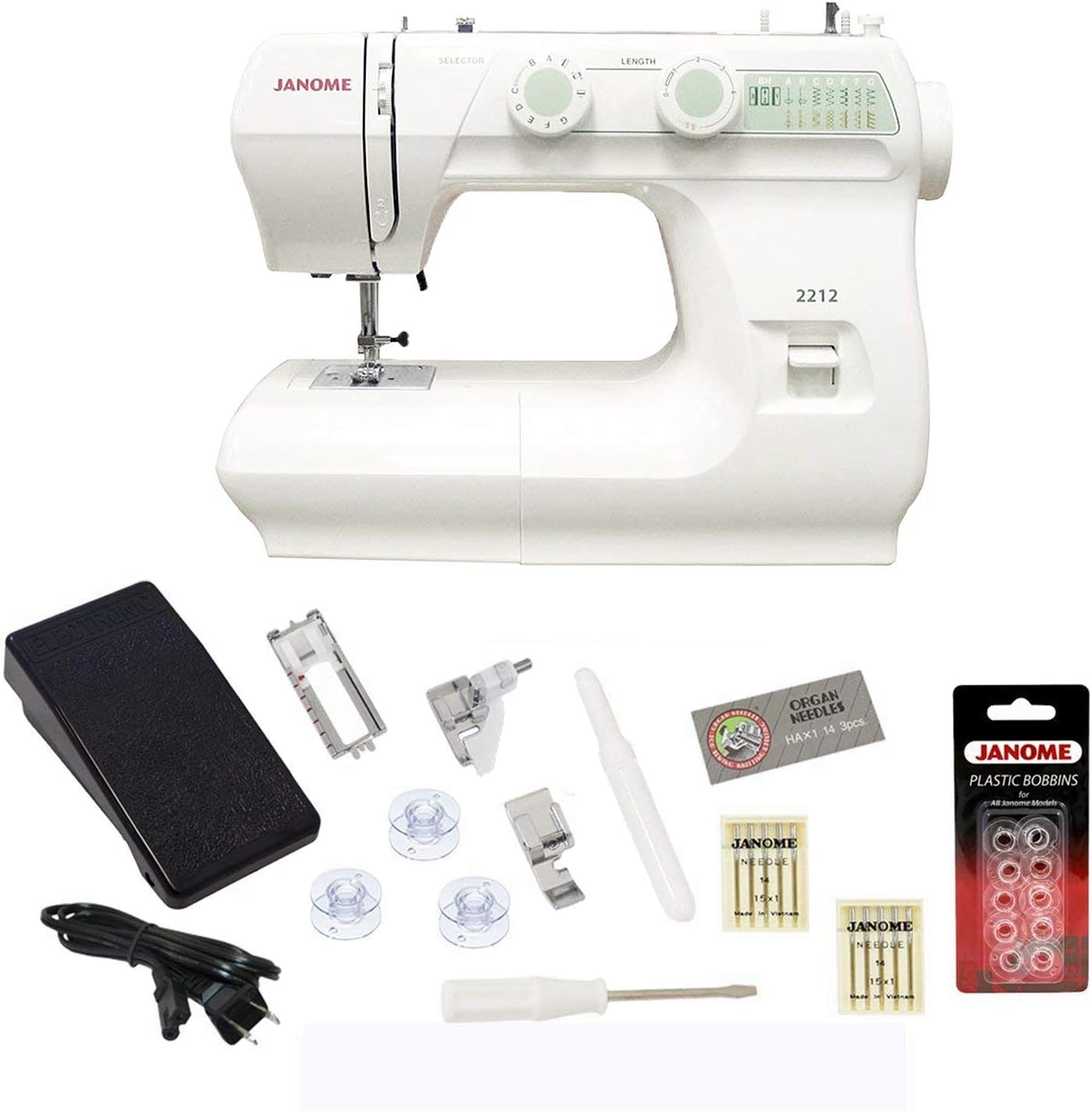
| Power Source | AC |
|---|---|
| Number of Stitches | 12 built-in stitches |
| Buttonhole | 1 four-step buttonhole |
| Maximum Stitch Length | 4 mm |
| Maximum Stitch Width | 5 mm |
The Janome 2212 is a simple, entry-level mechanical sewing machine that covers basic stitching needs and small projects. It uses a dial stitch selector with 12 built-in stitches and a four-step buttonhole, and offers stitch length and width adjustment for straightforward customization. Practical features such as a free arm, drop feed, extra-high presser foot lift, and a five-piece feed dog help when sewing sleeves, hemming, and working with light to medium fabrics. The machine is lightweight and portable, and it includes common accessories like multiple presser feet, bobbins, needles, and a seam ripper so you can start right away. Limitations for quilters include the modest stitch selection and lack of advanced quilting functions such as a wide throat space, walking foot, or built-in needle threader, so larger quilt projects will feel cramped and require more manual setup. For hobbyists who want a reliable, no-frills machine for practice, mending, and small quilt blocks, this model is a practical, budget-friendly choice.
Best for: Buyers looking to learn the basics, practice piecing small quilt blocks, or do mending on a budget and who prioritize ease of use and portability over advanced quilting functions.
Less Ideal for: Experienced quilters or those planning to do large bed-sized quilts frequently should consider machines with a larger throat, dedicated quilting feet, and more stitch options.
- Simple mechanical controls make it easy for beginners to learn and maintain
- Free arm and drop feed expand versatility for sleeves, hems, and small circular sewing
- Includes essential accessories (presser feet, bobbins, needles) so it is ready to use
- Extra-high presser foot lift and five-piece feed dog help handle multiple fabric layers
- Small throat space and limited stitch options restrict efficiency for large quilt projects
- No built-in needle threader or advanced quilting features like a walking foot
Verdict: A compact, no-frills machine that lets budget-conscious beginners practice piecing and small quilt work without a steep learning curve.
kidoom FHSM-520A Sewing Machine
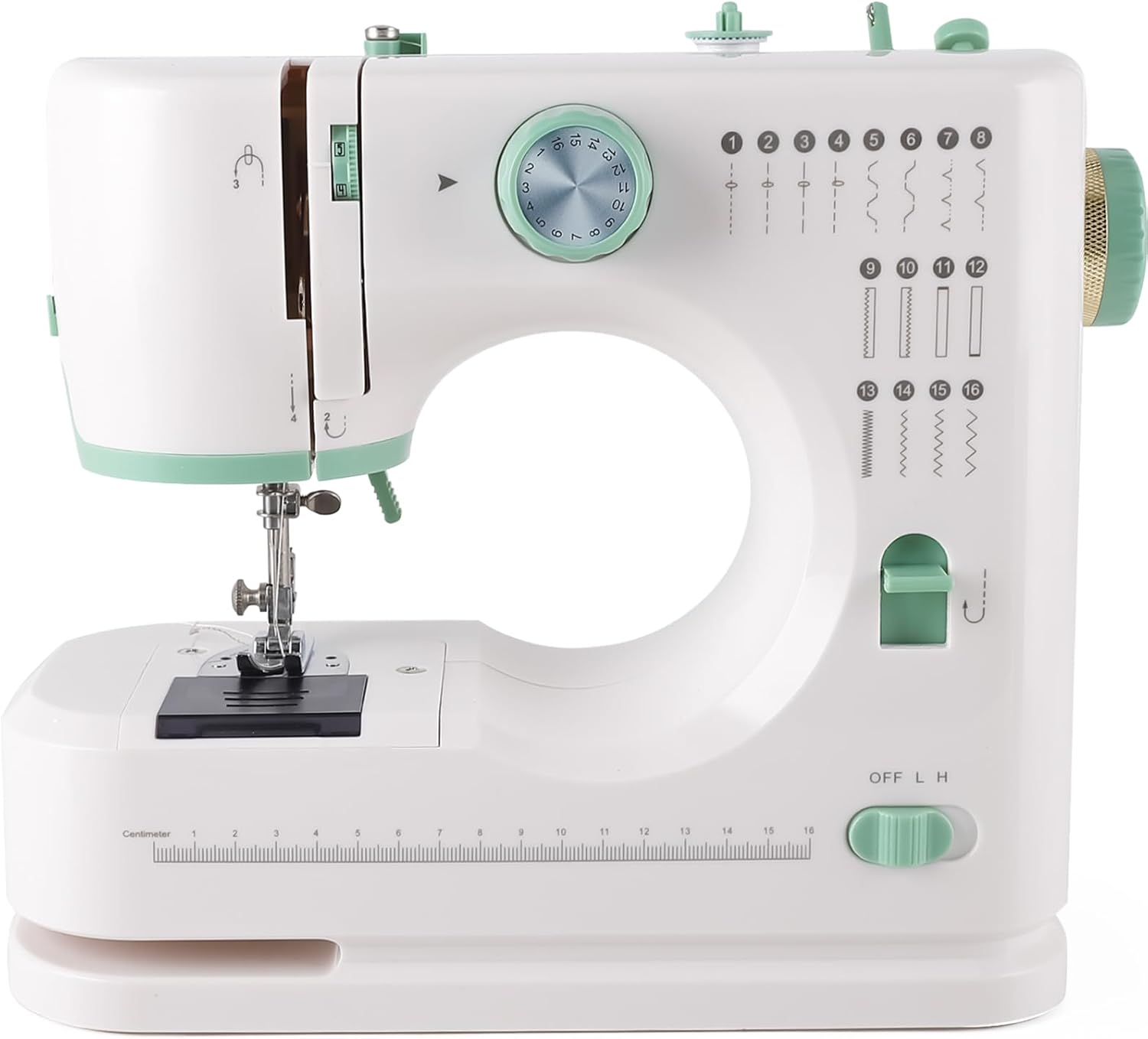
| Power Source | Electric |
|---|---|
| Included Components | AC/DC Adapter, Accessory Kit, Foot Pedal, Sewing Machine Body |
| Number of Stitches | 16 |
| Special Feature | Double needle/double thread |
The kidoom FHSM-520A is a lightweight tabletop sewing machine aimed at home sewers and beginners who need a versatile, budget-friendly unit. It offers 16 stitch patterns, reverse stitching, adjustable thread tension and a three-speed control that can be used with the included foot pedal or the manual speed dial. The machine also supports double-needle/double-thread sewing for decorative or reinforced seams, and a bright built-in LED light and automatic bobbin winder make routine tasks easier. The package includes a wide accessory kit and both AC adapter and foot pedal, so you can start basic projects right away. On the downside the compact plastic body and consumer motor limit heavy-duty continuous sewing and professional quilting throughput, so expect best results on small to medium projects, patchwork blocks and piecing rather than long runs through dense batting. For beginners and budget-minded quilters who need a functional starter machine, it strikes a practical balance of features and value.
Best for: Quilters on a tight budget or beginners who want an affordable, ready-to-use machine for piecing, small quilt blocks and practice projects.
Less Ideal for: Experienced quilters who need a heavy-duty machine for long continuous stitching, frequent quilting through multiple layers of batting, or professional production work.
- 16 built-in stitch patterns plus reverse stitch for basic quilting and decorative seams
- Double-needle and double-thread capability for twin-needle stitching
- Includes foot pedal, AC adapter and a comprehensive accessory kit to start sewing immediately
- Adjustable thread tension and speed control for better stitch quality on varied fabrics
- Built-in LED light and automatic bobbin winder improve usability during setup and sewing
- Compact plastic construction and consumer motor are not ideal for heavy continuous quilting or very thick layers
- Limited to small-to-medium projects rather than professional long-run quilting
Verdict: A feature-packed, budget-friendly starter machine that covers piecing and small quilting tasks without extra purchases.
Brother HC1850 Sewing & Quilting Machine

| Built-in stitches | 185 |
|---|---|
| Included presser feet | 8 |
| Power source | Corded Electric |
| Input voltage | 120 volts AC |
The Brother HC1850 is a mid-range computerized sewing and quilting machine aimed at hobbyists who want quilting features without a steep price. It offers 185 built-in stitches including alphanumeric characters and eight one-step auto-size buttonholes, selectable via a backlit LCD and push-button controls. Practical conveniences such as an advanced automatic needle threader, jam-resistant drop-in top bobbin, variable speed control, and a wide detachable extension table make it straightforward to handle larger quilt pieces and multilayer fabrics. The package includes eight presser feet, a spring-action quilting foot, quilt guide, and multiple bobbins and needles so you can start projects right away. The HC1850 is lightweight and portable for classes or moving around a sewing room. It is not a heavy industrial machine, so very high-volume production or thick specialty materials beyond denim and canvas may demand a sturdier, purpose-built model. For quilters who prioritize reliable, easy-to-use features and practical quilting aids, the HC1850 balances capability and value.
Best for: Quilters on a budget who want a reliable, easy-to-use machine with practical quilting features and accessories that let them tackle full quilt projects at home.
Less Ideal for: Users who need an industrial-strength machine for continuous heavy production or specialized heavy-duty materials should choose a more robust commercial model.
- Large selection of 185 built-in stitches including 55 alphanumeric stitches for basic monogramming
- Backlit LCD and push-button stitch selection for intuitive operation
- Automatic needle threader and drop-in top bobbin reduce setup time and bobbin jams
- Includes quilting-specific accessories: wide extension table, spring-action quilting foot, and quilt guide
- Variable speed control and smooth feed system help manage layered quilt seams
- Designed for home use rather than industrial heavy-duty sewing
- Limited to 120V operation so not suited for non-US voltages without proper provisions
Verdict: A dependable, feature-packed home sewing and quilting machine that delivers quilting-focused tools and ease of use at a budget-friendly level.
Brother XM2701 Sewing Machine

| Built-in stitches | 27 |
|---|---|
| Included feet | 6 |
| Power source | Corded Electric |
| Input voltage | 120 volts |
The Brother XM2701 is a straightforward, budget-friendly mechanical sewing machine aimed at beginners and home sewers who need reliable everyday performance. It offers 27 built-in stitches including utility, decorative, and quilting options plus a one-step auto-size buttonholer, making it useful for simple quilting tasks and patchwork. Practical features such as an automatic needle threader, jam-resistant drop-in top bobbin, automatic bobbin winder, and a bright LED work light make setup and small projects quicker and less fiddly. The free arm and six quick-change presser feet (including zipper and blind hem feet) add versatility for hemming, garment alterations, and basic quilt piecing. Because it is a mechanical machine with dial controls, it is durable and easy to repair, though it lacks computerized precision stitch programming and high-speed quilting functions found on more expensive models. For quilters on a budget the XM2701 handles lightweight to midweight fabrics well, but heavy multiple-layer quilting or frequent large quilt projects may expose its limits in power and stitch automation.
Best for: Quilters on a tight budget who want a dependable, easy-to-use machine for piecing, small quilt projects, and everyday sewing without needing advanced computerized features.
Less Ideal for: Experienced quilters who plan large, frequent multi-layer quilting or need high-speed automated stitch control should consider a more powerful or computerized quilting machine.
- 27 built-in stitches including decorative and quilting stitches plus one-step buttonholer
- Automatic needle threader and jam-resistant drop-in top bobbin for easy setup
- Includes six quick-change presser feet useful for common quilting and sewing tasks
- Lightweight, mechanical design that is easy to learn and maintain
- Mechanical dial controls lack the precision programming and advanced features of computerized machines
- May struggle with frequent heavy multi-layer quilting or very thick batting
Verdict: A budget-friendly, beginner-friendly sewing machine that offers useful quilting and utility stitches plus user-friendly threading and bobbin features for reliable small-to-medium quilting projects.
SINGER Heavy Duty 4423

| Built-in stitches | 23 |
|---|---|
| Stitch applications | 97 |
| Max sewing speed | 1,100 stitches/min |
| Power source | Corded Electric |
| Input voltage | 120 volts |
The SINGER Heavy Duty 4423 is a straightforward mechanical sewing machine designed for fast, durable stitching on both lightweight and heavy fabrics. It offers 23 built-in stitches that translate to 97 stitch applications, a top drop-in bobbin for easy monitoring of thread, an automatic needle threader, and a one-step buttonhole, which makes setup and common tasks quicker. The strong motor and heavy-duty interior metal frame give it extra piercing power for layers of denim or canvas, while the stainless steel bed plate helps fabric feed smoothly—useful when quilting through multiple layers. Included presser feet and accessories cover basic quilting and mending needs. Trade-offs to consider: it is a mechanical machine without computerized stitch adjustments, so advanced stitch customization is limited, and the unit is relatively heavy compared with travel or compact models. For stitch variety, experienced quilters may miss more stitch choices and automated features found on higher-end machines.
Best for: Buyers who want a dependable, no-frills sewing machine that can handle quilting layers and everyday garment or home-decor sewing without needing advanced computerized features.
Less Ideal for: Quilters who need extensive built-in stitch patterns, automated quilting functions, or a lightweight portable machine should consider more feature-rich or specialized models.
- Powerful motor and heavy-duty metal frame for sewing through thick layers
- High maximum speed for faster project completion
- Top drop-in bobbin and automatic needle threader simplify setup and reduce frustration
- Includes essential presser feet and accessories for common sewing tasks
- Mechanical design lacks computerized stitch customization
- Relatively heavy for frequent repositioning or small workspaces
Verdict: Choose the SINGER 4423 when you want a robust, fast, and reliable machine that can power through quilting layers on a budget.
Choosing the Right Sewing Machine for Quilting on a Budget: Key Factors to Consider
Stitch Formation and Tension Control
Consistent stitch formation is central to quilting because uneven stitches can distort block alignment and cause puckering. Look for machines that allow clear manual adjustment of thread tension and that produce even stitches across cotton quilt layers. If tension controls are intuitive, you will spend less time rethreading and testing and more time sewing.
A machine that maintains stitch quality when moving from a single-layer backing to multi-layer seams reduces the need for frequent adjustments. Pay attention to how the machine behaves when using common quilting threads and batting; some budget models handle light quilting better than dense batting stacks.
Feed System and Ability to Manage Multiple Layers
Quilting routinely involves sewing through stacked fabric, batting, and seams. A reliable feed system—surface feed dogs or compatibility with a walking foot—helps move all layers evenly and prevents fabric shifting. Machines with a stronger feed or optional walking-foot accessories will produce straighter lines and more consistent quilting stitches.
Also consider presser foot pressure adjustment. Being able to increase pressure slightly for thin fabrics and decrease it for bulky seams gives you control when transitioning across quilt sections. This adaptability reduces skipped stitches and fabric drag.
Workspace and Throat Clearance
Throat space is the distance between the needle and the machine body and directly affects how comfortably you can manage quilt tops and blocks. More clearance allows you to maneuver larger pieces and handle free-motion work without constantly repositioning the quilt. Even on a budget, prioritize machines with a reasonably wide throat or a detachable free-arm conversion that expands working area.
A well-lit workspace and accessible needle position controls also improve accuracy when aligning seams and stitching precise quilting lines. Consider how you will mount or support your quilt while sewing; a larger workspace reduces the need for external table modifications.
Needle Access, Speed Control, and Ergonomics
Quilters benefit from good needle visibility and simple speed control to manage detailed work. Machines with adjustable maximum speed, a knee lifter, or an easily reachable reverse lever help maintain control when stitching intricate patterns or pivoting at block corners. Clear markings for stitch length and an easy-to-reach needle plate release speed up routine tasks like changing needles or clearing lint.
Comfort during long sewing sessions matters; consider the layout of controls, the quality of the presser foot lever, and how easy it is to change feet. Ergonomic features reduce fatigue and improve the consistency of hand-guided quilting.
Accessories and Foot Options
A good starter quilting setup often includes a quarter-inch piecing foot, a walking foot or capability to add one, and a darning or free-motion foot for quilting designs. Budget machines that ship with a basic accessory set or that accept common aftermarket feet give you more quilting versatility without extra expense.
Also check the bobbin type and whether the machine uses a top-loading or front-loading bobbin. Top-loading clear-bobbin systems make monitoring thread levels easier during long projects, while front-loading bobbins can be more traditional but may take longer to change.
Long-Term Reliability and Serviceability
Even on a budget, plan for a machine that can be maintained. Machines with metal internal components in critical areas tend to last longer than all-plastic drives. Consider how simple it is to access the bobbin area for cleaning and whether the machine requires special tools for routine maintenance.
Availability of replacement parts and clear user manuals matter for fixes that you can perform at home. A repair-friendly design and straightforward lubrication points will extend the useful life of a budget sewing machine used for quilting.
Which Stitch Types Matter for Quilting
Straight stitch quality is the baseline for piecing and quilting; a reliable straight stitch at variable lengths produces even seams and clean block construction. Many quilting techniques also use a narrow zigzag or decorative stitches for applique and embellishment, but these should not compromise the straight-stitch performance.
Free-motion quilting requires lowering or covering the feed dogs and using a darning foot. If you plan to do free-motion work, ensure the machine allows easy feed-dog drop and provides sufficient vertical space under the presser foot for fabric and batting movement.
- Straight stitching for piecing and assembly
- Zigzag or decorative stitches for applique
- Free-motion capability for custom quilting designs
- Adjustable stitch length for seam allowances and quilting tacks
Setting Up a Budget Machine for Quilting Success
Start by using a quality quilting needle and appropriate thread weight. Proper needles reduce skipped stitches and prevent thread breakage when sewing through batting and thick seams. Use a walking foot or even feed foot when tackling multiple layers to maintain even feed.
Basting techniques matter. Whether you use pins, spray adhesive, or large basting stitches, securing the quilt sandwich before detailed quilting prevents shifting. Test stitch width and tension on a scrap sandwich made from your actual materials before starting the real project.
- Install a fresh, sharp quilting needle
- Use a walking foot for even feeding
- Test tension and stitch length on a sample sandwich
- Support the quilt with a flat surface to avoid drag
Common Limitations to Expect With Budget Machines
Budget models may have smaller throat spaces, lighter-duty motors, and fewer built-in stitch customization options. These limits do not make quilting impossible but do shape which projects are practical. Large bed quilts and heavy continual quilting may be slower or require more frequent breaks.
Noise and vibration levels can be higher on inexpensive machines, and internal parts are sometimes more plastic. Expect to perform more regular cleaning and basic maintenance, and accept that very dense free-motion quilting will push a budget machine toward its limits.
- Smaller working area for bulky quilts
- Lower maximum continuous stitching speeds
- More frequent maintenance and cleaning
- Limited accessory inclusion compared with prosumer models
Thread, Needle, and Batting Choices for Best Results
Select thread and needles that match your fabric and batting. All-purpose cotton threads are a common choice for piecing cotton quilt tops, while polyester or blended threads can offer extra strength for lengthy quilting runs. Use needles rated for quilting or heavy-duty work when your sandwich includes dense batting.
The type and loft of batting affect how easily a machine feeds and stitches. Lower-loft batting is easier for budget machines to sew through, while thicker lofts require more careful feed management and potentially a walking foot to avoid bunching.
- Cotton threads for traditional piecing
- Stronger polyester threads for durable quilting
- Low to mid-loft batting for easier feeding
- Use new needles regularly to prevent skip stitches
Practical Tips to Extend a Budget Machine's Lifespan
Regular dusting and lint removal around the bobbin area prevents buildup that leads to skipped stitches and tension issues. Use a small brush and compressed air sparingly if needed, and follow the machine manual for lubrication points.
Rotate tasks to avoid continuous heavy-duty sewing for long stretches. Allow the motor to cool on long sessions, and keep the machine covered when not in use to prevent dust accumulation. Periodic professional servicing can address wear before it affects stitch quality.
- Clean bobbin area after each major project
- Change needles after 6 to 8 hours of sewing
- Perform light lubrication following the manual
- Store covered and in a dry place between projects
How We Chose the Best Sewing Machine for Quilting on a Budget
We focused on machines that deliver the specific capabilities quilters need while keeping overall costs low. Our selection filters prioritized machines with consistent stitch formation across fabric weights, sufficient presser foot pressure range, and a throat space that supports quilting projects. We also looked for models with reliable feed systems or walking-foot compatibility, accessible stitch length and width controls, and straightforward bobbin systems that reduce downtime during long quilting sessions. Durability and ease of maintenance were key selection factors because budget machines vary widely in long-term reliability. We favored units with metal internal components where possible, simple threading paths, and serviceable parts. User ergonomics such as needle access, clear tension adjustment, and basic quilting-friendly accessories were also weighed. We excluded specialty craft machines that lack straight-stitch reliability, and machines without enough throat space to comfortably handle typical quilting sizes. The final list balances measurable sewing specs with real-world usability for quilters on a budget.
Our full evaluation process is outlined in our review methodology.
FAQ
Can a budget sewing machine handle a full-size quilt?
Often a budget machine can manage a full-size quilt, especially with careful handling and use of a walking foot. However, smaller throat space and lighter motors may make large quilts more cumbersome and slower to sew. Basting in sections and using a supportive table can help.
Do I need a walking foot to quilt on a budget machine?
A walking foot is highly recommended for even feeding of multiple layers, but not strictly required for all quilting. For lightweight quilts and careful technique, you can get acceptable results without one. For dense batting or heavy fabrics, a walking foot reduces shifting and improves stitch consistency.
How often should I change the needle when quilting?
You should change the needle frequently; a good rule is to swap it after about 6 to 8 hours of active sewing or at the first sign of skipped stitches. Fresh needles preserve stitch quality and reduce the chance of fabric snags when sewing through multiple layers.
What stitch length should I use for piecing and quilting?
For piecing quilt blocks, a shorter stitch length around 2.0 to 2.5 mm gives strong seams. For quilting, longer stitches between 2.5 and 3.5 mm are common depending on the design and batting loft. Always test on a sample sandwich to confirm appearance and tension.
Is free-motion quilting realistic on an entry-level machine?
Free-motion quilting is possible on many entry-level machines if they allow the feed dogs to drop and accept a darning foot. Expect to work at moderate speeds and to make smaller passes. Heavy, continuous free-motion quilting may strain a budget machine more than occasional decorative work.
Final Verdict
When choosing a sewing machine for quilting on a budget, prioritize stitch consistency, a feed system that can handle layered sandwiches, and enough throat space to maneuver quilt sections. Expect to trade some power and features for affordability, but you can still achieve professional-looking piecing and moderate quilting with the right setup. Focus on ergonomics, easy maintenance, and accessory compatibility so the machine grows with your skills. With careful selection and sensible project planning, a budget quilting machine can be a reliable studio workhorse for many quilting projects.