
Note: This article contains affiliate links. If you click on these links and make a purchase, we may earn a small commission at no extra cost to you. This helps support our research and content. Read our full affiliate disclosure here.
If you plan to make large patchwork quilts or detailed art quilts, picking the right sewing machine matters more than ever. A good quilting-capable machine delivers even stitches across multiple layers, a roomy throat space for bulky projects, and controls that let you manage speed and stitch length without fumbling. This guide shortlists the top sewing machines for quilting under $1,000, selected for their stitch consistency, quilting-friendly features, and durability. Below you will find concise product summaries and ratings, followed by a deeper look at what to consider and practical tips for quilting with these machines.
Top Picks at a Glance
| Best Overall The best all-around choice for most situations | SINGER Quantum Stylist 9960 |  |
| Best Quality Built to a higher standard if you want something more solid | Juki HZL-G120 Sewing Machine |  |
| Best Value The sweet spot between price and what you get | Janome 3160QDC-G Sewing Machine |  |
| Best Budget The cheapest option that still gets the job done reliably | Brother XM2701 Sewing Machine |  |
| Top Rated A top-rated pick with lots of positive feedback | Brother HC1850 Sewing & Quilting Machine |  |
| Most Popular A crowd favorite that many people choose with confidence | SINGER Heavy Duty 4423 |  |
| Best Seller A high-volume bestseller chosen again and again | VEVOR Industrial Lockstitch JK9808 |  |
SINGER Quantum Stylist 9960

| Power Source | Corded Electric |
|---|---|
| Included Components | Extension Table, 13 Presser Feet, Bobbins, Needles |
| Warranty Description | Limited 25-year warranty (5-year electronic, 1-year labor) |
| Material | Metal, Plastic |
The SINGER Quantum Stylist 9960 is a feature-packed computerized sewing and quilting machine aimed at hobbyists and home sewers who want versatility without stepping up to commercial equipment. It offers 600 built-in stitches and 1,172 stitch applications plus mirror imaging and stitch elongation for decorative and quilting work, and includes 13 presser feet and an extra-wide extension table to handle large quilt projects. Time-saving touches like the automatic needle threader, top drop-in transparent bobbin, and 13 one-step buttonhole styles make setup and finishing faster and more consistent. You can sew with the foot pedal or use the start/stop button for long quilting seams, and the metal frame gives the machine more stability when sewing multiple layers. The large accessory kit and hard cover make it ready for a variety of projects out of the box. The machine is not aimed at industrial throughput or heavy commercial use, and its size and learning curve for all the features may be more than a casual beginner needs, but it balances power and convenience for serious home quilters and sewists.
Best for: Home sewists and quilters who want a capable all-purpose machine with advanced stitch options and accessories for a wide range of projects.
Less Ideal for: People who need an industrial or production-speed machine or those who want a very basic, entry-level model with minimal features.
- Extensive stitch library with 600 built-in stitches and 1,172 stitch applications for decorative and quilting options
- Metal frame and extra-wide extension table provide stability and workspace for quilting
- Automatic needle threader and top drop-in transparent bobbin simplify setup and reduce interruptions
- Includes 13 presser feet and a comprehensive accessory kit so you can start quilting and garment sewing immediately
- Designed for home use and not for continuous commercial production
- Feature set and controls can be overwhelming for users seeking a very simple machine
Verdict: A versatile, feature-rich home sewing and quilting machine that balances advanced stitch options and useful accessories for serious hobbyists under $1,000.
Juki HZL-G120 Sewing Machine
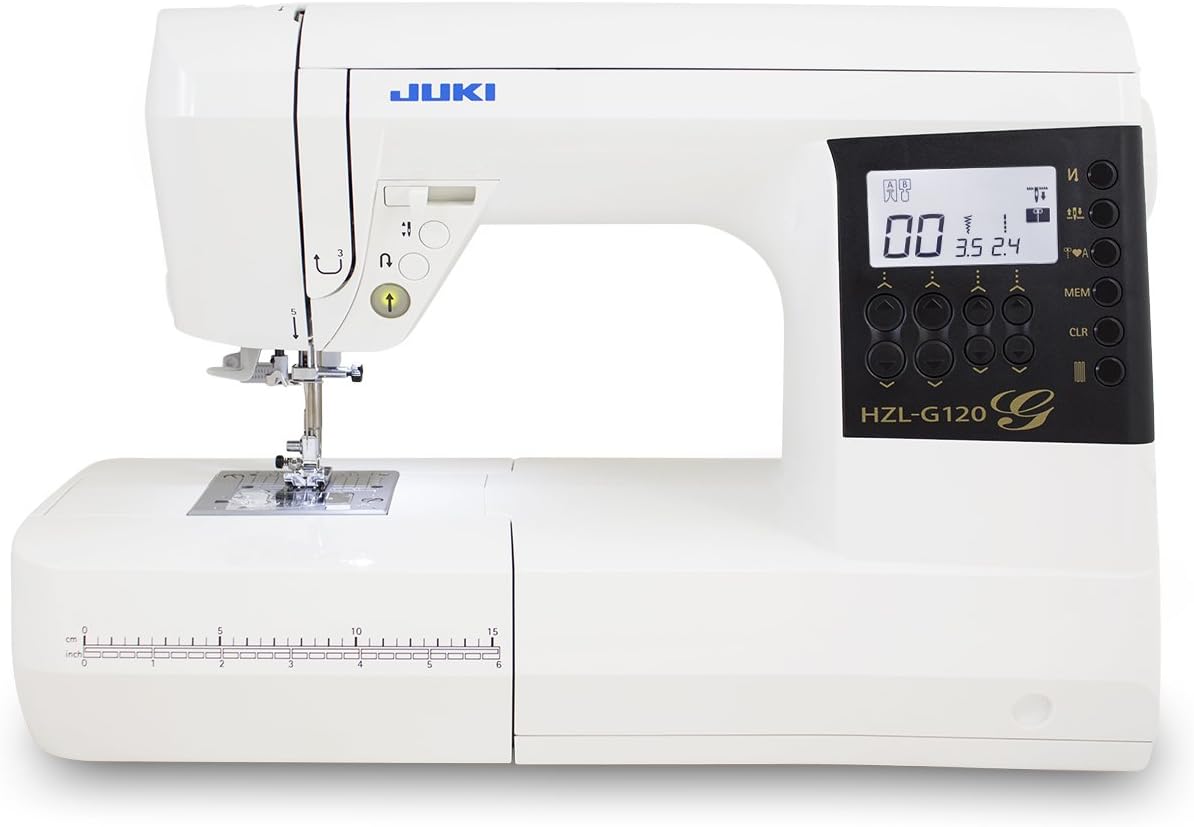
| Power Source | Corded Electric |
|---|---|
| Included Components | Machine, feet, bobbins, needles |
| Model Number | HZL-G120 |
The Juki HZL-G120 is a compact computerized sewing machine built for reliable stitch quality and quilting work. Its box feed system moves the feed dog in a box motion to reduce fabric shifting, which results in smooth, consistent seams across multiple layers and heavier materials. You get 180 stitch patterns and one alphabet font, plus an automatic needle threader and eight buttonhole styles for everyday garment and craft sewing. Drop-in feed dogs make it easy to switch to free-motion quilting, and improved presser foot construction gives stronger feeding for denim and thicker fabrics. Practical conveniences include a free arm, hard cover, and the standard accessories such as feet, bobbins, and needles. Limitations are modest memory and automation compared with higher-end machines and the plastic-heavy construction that keeps weight down but reduces the premium feel. For quilters focused on stitch performance and dependable fabric feeding under a budget, this machine delivers solid real-world results.
Best for: Quilters and serious hobbyists who prioritize stitch quality and reliable multi-layer feeding when sewing and quilting on a budget.
Less Ideal for: Buyers who want extensive computerized automation, metal industrial construction, or advanced built-in embroidery functions should consider higher-end alternatives.
- Box feed system minimizes fabric shifting for consistent seams
- 180 stitch patterns plus one font and 8 buttonhole styles for design flexibility
- Drop feed dogs enable free-motion quilting and decorative stitching
- Strong presser foot and feeding handle heavier fabrics like denim
- Plastic-heavy build feels less premium than metal-bodied machines
- Limited on-board memory and advanced automation compared with top-tier models
Verdict: Choose the Juki HZL-G120 if you want a quilting-capable, performance-focused machine that delivers consistent stitching and strong fabric feeding without exceeding a sub-$1,000 budget.
Janome 3160QDC-G Sewing Machine

| Built-in stitches | 60 |
|---|---|
| Power Source | Corded Electric |
The Janome 3160QDC-G is a midrange computerized sewing and quilting machine built for everyday projects and layered quilts. It offers 60 built-in stitches, a one-step buttonhole, and a 7 mm stitch width for decorative and utility stitching, plus twin-needle support for topstitching. Practical controls like a one-hand needle threader, automatic thread cutter, speed control slider, and start/stop button speed routine work and reduce setup fuss. The Superior Plus Feed System with a 7-piece feed dog and adjustable presser foot pressure helps prevent fabric shifting when piecing or quilting multiple layers, and the included extension table gives extra support for larger projects. The machine ships with a generous set of snap-on feet and accessories, and the hard cover and relatively light weight make it portable for classes or retreats. Limitations include the absence of advanced commercial features such as a large quilting throat or industrial motor power, so very heavy duty quilting or long production runs may feel constrained. For hobbyists and small-batch quilters this model balances useful quilting features and ease of use within a practical budget.
Best for: Buyers who want a practical, feature-rich machine for home quilting and general sewing that minimizes setup time and fabric handling headaches.
Less Ideal for: Quilters who need a dedicated longarm machine or high-production industrial power for extensive heavy-duty quilting should look elsewhere.
- 60 built-in stitches and one-step buttonhole for versatile stitch options
- Superior Plus Feed System and 7-piece feed dog for smoother fabric feeding and reduced shifting
- Convenience features like one-hand needle threader, automatic thread cutter, and speed control to save time
- Includes extension table, multiple snap-on feet, and hard cover for quilting support and portability
- Not designed for heavy industrial use or very large longarm-style quilts due to throat space and motor power limitations
Verdict: A user-friendly, well-equipped sewing machine that delivers reliable fabric feeding and time-saving conveniences for home quilters under $1,000.
Brother XM2701 Sewing Machine

| Built-in stitches | 27 |
|---|---|
| Power source | Corded Electric |
| Input voltage | 120 volts |
| Included feet | 6 quick-change presser feet |
The Brother XM2701 is a straightforward, budget-friendly mechanical sewing machine that covers common home sewing and light quilting tasks. It offers 27 built-in stitches including stretch, blind hem, and decorative options plus a one-step auto-size buttonhole, which makes basic garment work, hemming, and small quilting projects simple. Practical conveniences include an automatic needle threader, jam-resistant drop-in bobbin, automatic bobbin winder, built-in LED light, and six quick-change presser feet for zippers, button sewing, and narrow hems. The free arm helps with cuffs and sleeves, and stitch selection is done with easy dials for a low learning curve. Because it is a mechanical machine, you get reliable, predictable performance without a steep tech learning curve, but it lacks computerized stitch programming, a larger throat for big quilt projects, and advanced speed control found on higher-end quilting machines. For everyday mending, garment sewing, and small quilt blocks, the XM2701 is a dependable, no-frills choice that keeps setup and use simple.
Best for: Buyers looking for an affordable, easy-to-use machine for learning to sew, doing alterations, and tackling small quilting blocks who prioritize simplicity and reliable basic features over advanced quilting capabilities.
Less Ideal for: Quilters who plan to work on large quilts, dense quilting, or who need computerized stitch programming and extended throat space should consider more specialized quilting machines.
- 27 built-in stitches including decorative, blind hem, and stretch stitches for versatile home sewing
- Automatic needle threader and jam-resistant drop-in bobbin simplify setup and reduce thread jams
- Includes six quick-change presser feet and a one-step auto-size buttonholer for common tasks
- Lightweight and portable design with built-in LED light for better visibility
- Mechanical design lacks computerized stitch customization and advanced quilting features
- Smaller throat space limits handling of large quilt tops and bulky projects
Verdict: A practical, budget-friendly sewing machine that delivers reliable basic stitching and user-friendly features for beginners and home sewists focusing on small quilting projects.
Brother HC1850 Sewing & Quilting Machine

| Built-in stitches | 185 |
|---|---|
| Included feet | 8 |
| Power source | Corded Electric |
| Input voltage | 120 volts AC |
The Brother HC1850 is a full-featured computerized sewing and quilting machine that aims to cover beginner to intermediate quilting needs. It offers 185 built-in stitches including 55 alphanumeric stitches and eight auto-size buttonholes, selected via push buttons and shown on a backlit LCD for straightforward operation. Practical quilting tools include a spring-action quilting foot, a wide detachable extension table for larger projects, a drop feed for free-motion quilting, and eight included presser feet so you can start quilting, garment work, or decorative sewing right away. The machine also has an advanced needle threader and a jam-resistant top-drop bobbin that speed setup and reduce fiddly threading issues. It is lightweight with a carrying handle, making it easy to move to classes or sewing groups, and the feed system helps maintain even stitches across a range of fabrics from lightweight to medium-weight denim. Limitations include its 120V US-only configuration and the fact it is designed for home and hobby use rather than industrial workloads, so very heavy or continuous production sewing may call for a heavier-duty machine.
Best for: Buyers who prioritize a reliable, feature-rich machine for quilting and home sewing projects and want something that performs consistently as skills grow.
Less Ideal for: Users who need an industrial or commercial-grade machine for heavy continuous production should consider a more heavy-duty model instead.
- Large selection of built-in stitches including alphanumeric characters for monogramming
- Useful quilting features: spring-action quilting foot, wide extension table, and drop feed for free-motion work
- Automatic needle threader and top-drop bobbin reduce setup time and jams
- Includes eight presser feet and accessories needed to start quilting
- Backlit LCD and push-button stitch selection simplify learning and operation
- Intended for home/hobby use rather than continuous industrial sewing
- Limited to 120V operation for US use only
Verdict: A dependable, feature-packed home sewing and quilting machine that delivers consistent performance for hobbyists and serious quilters under $1,000.
SINGER Heavy Duty 4423

| Built-in stitches | 23 (97 applications) |
|---|---|
| Max sewing speed | 1,100 stitches per minute |
| Power source | Corded Electric |
| Input voltage | 120 volts |
The SINGER Heavy Duty 4423 is a straightforward mechanical machine built around a powerful motor and a metal interior frame to handle heavy fabrics and multi-layer projects. It offers 23 built-in stitches that translate to 97 stitch applications, a top drop-in bobbin for easy monitoring, an automatic needle threader, and LED lighting to keep projects visible. Typical use cases are garment sewing, denim mending, home decor, and basic quilting tasks where a strong motor and steady feed matter more than computerized stitch selection. The included accessories cover everyday needs — zipper, buttonhole and all-purpose feet, extra bobbins and needles — so you can start sewing right away. At 1,100 stitches per minute the machine is noticeably fast, which speeds project completion but can feel a bit loud and less refined than a computerized model for decorative quilting stitches. The machine is best when you need reliable power and simple controls rather than advanced stitch customization or embroidery features.
Best for: Buyers who prioritize a strong, reliable machine for heavy fabrics and faster sewing and who value proven performance and user reviews when choosing a safe, low-risk purchase.
Less Ideal for: Quilters who need advanced programmable stitches, built-in quilting-specific features, or quieter operation for frequent long sessions should consider computerized or dedicated quilting machines instead.
- Powerful motor that handles thick fabrics and multiple layers
- Heavy-duty metal interior frame for stable, skip-free stitching
- High top speed (1,100 spm) for faster project completion
- Includes essential presser feet and accessories to get started
- Top drop-in bobbin and automatic needle threader for easier setup
- Mechanical controls limit precise stitch customization compared with computerized machines
- Can be louder at high speeds, which may be noticeable during long quilting sessions
Verdict: Choose the Singer 4423 when you want a fast, durable machine that reliably sews through heavy fabrics and layered quilting projects.
VEVOR Industrial Lockstitch JK9808

| Power Source | ac |
|---|---|
| Material | Aluminum |
This VEVOR industrial lockstitch machine is built for heavy use and reaches up to 5000 stitches per minute thanks to its servo motor, making it suitable for fast production work or long sewing sessions. It handles thick materials—advertised up to 10 layers of denim—and the metal frame with automatic lubrication supports continuous operation. The LCD panel gives direct control over speed and needle position, while soft-start, one-touch reverse, knee lifter and presser-foot lift improve handling of bulky seams. A widened table, adjustable table height, LED light, storage drawer and oil window make setup and maintenance straightforward. Noise is claimed at 80 dB or less, which keeps a busy workspace tolerable. For quilting specifically, its power and through-feed capability make it easy to move multilayered quilts, but the industrial speed and heavy-duty setup may be more than most home quilters need and it lacks some quilting-specific conveniences like a walking foot or large free-arm for delicate piecing. Assembly and leaning curve for settings are additional considerations for careful buyers.
Best for: Quilters who prioritize durable, production-capable equipment and want a powerful, factory-style machine that can handle multiple thick layers and long sewing sessions.
Less Ideal for: Hobbyist quilters seeking a lightweight, easy-to-move machine with dedicated quilting features or those who prefer a gentler learning curve and simpler home-focused controls.
- High top speed (5000 SPM) for fast production sewing
- Servo motor with LCD controls for precise speed and needle positioning
- Sturdy metal frame with automatic lubrication for long-term use
- Widened table, adjustable height, LED light and storage drawer for practical workspace setup
- Industrial size and power may be excessive for typical home quilting projects
- Does not list quilting-specific attachments such as a walking foot or large free-arm
Verdict: Choose this VEVOR if you need a rugged, high-speed industrial lockstitch machine that can handle heavy multilayer sewing with precise electronic controls.
Choosing the Right Sewing Machine: Key Factors to Consider
Stitch Quality & Tension Control
Consistent stitch formation and stable tension are essential for quilting because quilts combine multiple layers that change resistance as they pass under the needle. Uneven tension leads to puckering, skipped stitches, or thread breakage that shows up across a large quilt surface.
Look for machines with reliable tension adjustment and a history of even stitches at both slow and moderate speeds. Good stitch quality reduces time spent ripping seams and redoing sections, which is especially important on larger projects.
Throat Space and Workspace
Throat space is the distance to the right of the needle and directly affects how easily you can maneuver a quilt. A larger workspace makes it simpler to support the quilt bulk, see your stitching line, and manage large blocks without constantly rearranging the fabric.
Consider both the horizontal throat measurement and any included support features like extension tables. If you plan to work on queen- or king-size quilts, prioritize machines with more clearance to reduce physical strain and improve control.
Feeding System and Layer Handling
Feeding performance determines how smoothly multiple fabric layers, batting, and backing move through the machine. Walking feet, dual feed, or a strong feed dog system help prevent layers from shifting and reduce the need for basting pins or glue.
A machine that maintains even feed across dense seams will save time and produce neater raw edges and quilting lines. Also evaluate presser foot lift height and foot pressure adjustability to handle thick seams and multiple layers without jamming.
Accessory Compatibility and Presser Feet
Quilting often requires specialized presser feet: walking feet, 1/4-inch piecing feet, free-motion darning feet, and edge guides. Easy attachment and reliable performance from these accessories make piecing and quilting faster and more accurate.
Confirm that common quilting accessories are supported and that changing feet is straightforward. Machines that include basic quilting feet or have a strong accessory ecosystem provide better out-of-the-box value and flexibility for different quilting techniques.
Controls, Stitch Selection, and Speed Management
Quilters need both precise stitch-length control for piecing and the ability to slow down comfortably for detailed work like appliqué or free-motion quilting. Simple, logically laid-out controls and a responsive speed control enable more accurate sewing.
Look for machines with clear stitch-length markers, a variable speed slider or foot pedal feel you can modulate, and intuitive stitch selection so you can switch between piecing and quilting modes quickly without interrupting your workflow.
Durability, Motor Strength, and Maintenance
Quilting can be demanding on a machine because of frequent thick seams and long sessions. A robust motor and quality internal components reduce the risk of overheating, skipped stitches, or premature wear. Durable machines also tend to hold timing and tension better over time.
Easy access for routine maintenance, straightforward bobbin systems, and availability of replacement parts or service options are practical considerations that affect the machine's lifetime usability for serious quilters.
Why Budget Matters for Quilting Machines
A budget cap like one thousand dollars forces practical tradeoffs between features and build quality. In this price band you can often get machines with good stitch quality and some quilting-focused features without moving into professional territory that costs much more.
Spending within this range typically yields machines with adequate throat space, useful accessory support, and stronger motors than basic hobby models. Understanding which features are most important helps you prioritize one thousand dollars on the attributes that directly improve your quilting experience.
- Expect solid stitch consistency and basic quilting feet support.
- Large-throat machines are increasingly common in this price range.
- Higher-tier industrial features like heavy-duty metal frames may be less common.
Free-Motion Quilting: What to Look For
If you plan to free-motion quilt, prioritize a low-profile free-motion foot that allows good visibility and needle clearance. Stable stitch formation at slow speeds is critical because free-motion work depends on hand movement more than machine feed.
Also check for easy bobbin access and drop-feed capability for darning or free-motion work. Machines with consistent drop-stitch performance and responsive speed control make it easier to maintain even density across motifs.
- Prefer machines with adjustable speed control for detailed work.
- Look for a free-motion foot and an easily lowered feed dog.
- Good lighting and needle visibility enhance free-motion accuracy.
Piecing Accuracy and 1/4-Inch Seams
Accurate piecing depends on a stable 1/4-inch seam guide and a presser foot that holds fabric edges steady. Built-in or easily attachable quarter-inch feet and clear markings on the throat plate reduce reliance on measuring tools and speed assembly.
For precise quilting blocks, consistent stitch length and a reliable feed mechanism help you maintain seam allowance across many repeated seams.
- Check for a dedicated 1/4-inch piecing foot or good alignment markings.
- A narrow toe on the presser foot improves visibility at seams.
- Consistent stitch length prevents accumulated piecing errors.
Using an Extension Table and Quilting Accessories
An extension table supports the weight of larger quilts and reduces drag as you maneuver. Many machines in this budget range either include or accept aftermarket extension tables that significantly improve control while quilting.
Other accessories to consider are a walking foot for even feed, spool nets for specialty threads, and specialized bobbins for long quilting runs. Planning which accessories you will use most helps you pick a machine that integrates them easily.
- Extension tables distribute quilt weight and reduce shoulder strain.
- A walking foot helps prevent layer shifting during machine quilting.
- Accessory storage on the machine keeps commonly used items handy.
Maintenance Tips to Keep Your Machine Quilting-Ready
Regular cleaning of lint from the bobbin area and feed dogs prevents buildup that can affect stitch consistency. Oil points and maintenance schedules vary by machine, so follow the recommended routine to maintain reliable performance.
Replace needles frequently when quilting thick seams, and use thread suited to your fabric and batting. Proper tension checks before starting a large project will save time and preserve the machine's longevity.
- Clean the bobbin case and feed dogs after every few quilting sessions.
- Use a fresh needle when switching thread types or after completing heavy seams.
- Keep a basic maintenance kit: small brush, screwdrivers, and spare needles.
How We Chose the Best Sewing Machine
We evaluated machines using practical, quilting-focused criteria to make sure each pick works well for layered, large-format sewing projects. Key factors included stitch quality and consistency, which determines how well the machine handles dense seams and multiple fabric layers. Throat space and feeding capability were judged to assess how comfortably a machine accommodates quilts and bulky batting. We also considered presser foot and accessory support for quilting feet and walking feet, plus adjustable presser pressure and needle clearance for free-motion work. Feature usability such as stitch selection, speed control, and intuitive controls mattered because quilters often switch settings mid-project. Finally, build quality and ease of maintenance were used to estimate real-world reliability over heavy or frequent use. We excluded lightweight or purely decorative hobby machines that lack the throat space, power, or accessory compatibility needed for quilt construction. Machines that could not demonstrate consistent feeding, adequate throat clearance, or support for quilting feet were not considered.
Our full evaluation process is outlined in our review methodology.
FAQ
Can a machine under $1,000 handle queen- or king-size quilts?
Often yes. Many machines in this price range have generous throat space and sufficient power to handle large quilts, but you should verify throat clearance and consider an extension table to support the bulk.
Do I need a walking foot for machine quilting?
A walking foot is very helpful for piecing and some machine quilting because it moves the top fabric in sync with the feed dogs, reducing layer shifting. It is not strictly required for all techniques, but it solves common feeding problems.
How important is motor strength for quilting?
Motor strength matters when sewing through multiple layers and dense seams. A stronger motor maintains consistent speed and needle penetration. Machines with underpowered motors may struggle or slow down on heavy seams.
What stitch length should I use for piecing versus quilting?
For piecing, a standard 1.8 to 2.5 mm stitch length works well for most cotton quilting seams. For machine quilting, many quilters use slightly longer stitches or adjust based on batting and fabric; practice on a scrap sandwich to dial in the best length.
Can I free-motion quilt with a standard domestic machine?
Yes. Many domestic machines support free-motion work if they have a drop-feed or accessible feed-dog cover and a compatible free-motion foot. Success depends on speed control and stitches remaining consistent at slow speeds.
Final Verdict
When choosing a sewing machine for quilting under $1,000, focus on the features that directly affect large, layered projects: stitch consistency, throat space, feeding ability, and accessory support. Prioritize a machine that offers a roomy work area and reliable feeding over cosmetic extras that do not improve quilt construction. Balance the need for a stable motor and durable build with controls you find intuitive. By emphasizing the criteria discussed here, you can confidently pick a machine in this price bracket that will handle piecing, free-motion work, and full quilt assemblies with fewer headaches.