
Note: This article contains affiliate links. If you click on these links and make a purchase, we may earn a small commission at no extra cost to you. This helps support our research and content. Read our full affiliate disclosure here.
If you are helping a teen start sewing, the right machine makes learning faster and less frustrating. A good beginner machine for teens should be intuitive to operate, safe to use, and sturdy enough for basic garments and craft projects. This guide covers seven shortlisted sewing machines for teens that excel at ease of use, stitch consistency, and safety features. Each pick is chosen for attributes that matter to new sewists and caregivers, and the article explains how we evaluated things like stitch options, user controls, and accessories. Read on for practical guidance to match a teen's interests and learning pace.
Top Picks at a Glance
| Best Overall The best all-around choice for most situations | Janome Cat Fancy 001FANCY |  |
| Best Quality Built to a higher standard if you want something more solid | Janome Arctic Crystal 001crystal |  |
| Best Value The sweet spot between price and what you get | SINGER MX60 Sewing Machine |  |
| Best Budget The cheapest option that still gets the job done reliably | KPCB Tech FHSM-201 Mini Sewing Machine |  |
| Top Rated A top-rated pick with lots of positive feedback | Brother XM2701 Sewing Machine |  |
| Most Popular A crowd favorite that many people choose with confidence | SINGER Heavy Duty 4423 |  |
| Best Seller A high-volume bestseller chosen again and again | Brother XR3774 Sewing Machine |  |
Janome Cat Fancy 001FANCY
| Built-in stitches | 15 |
|---|---|
| Buttonhole | 4-step |
| Maximum sewing speed | 800 stitches per minute |
| Power source | Electric |
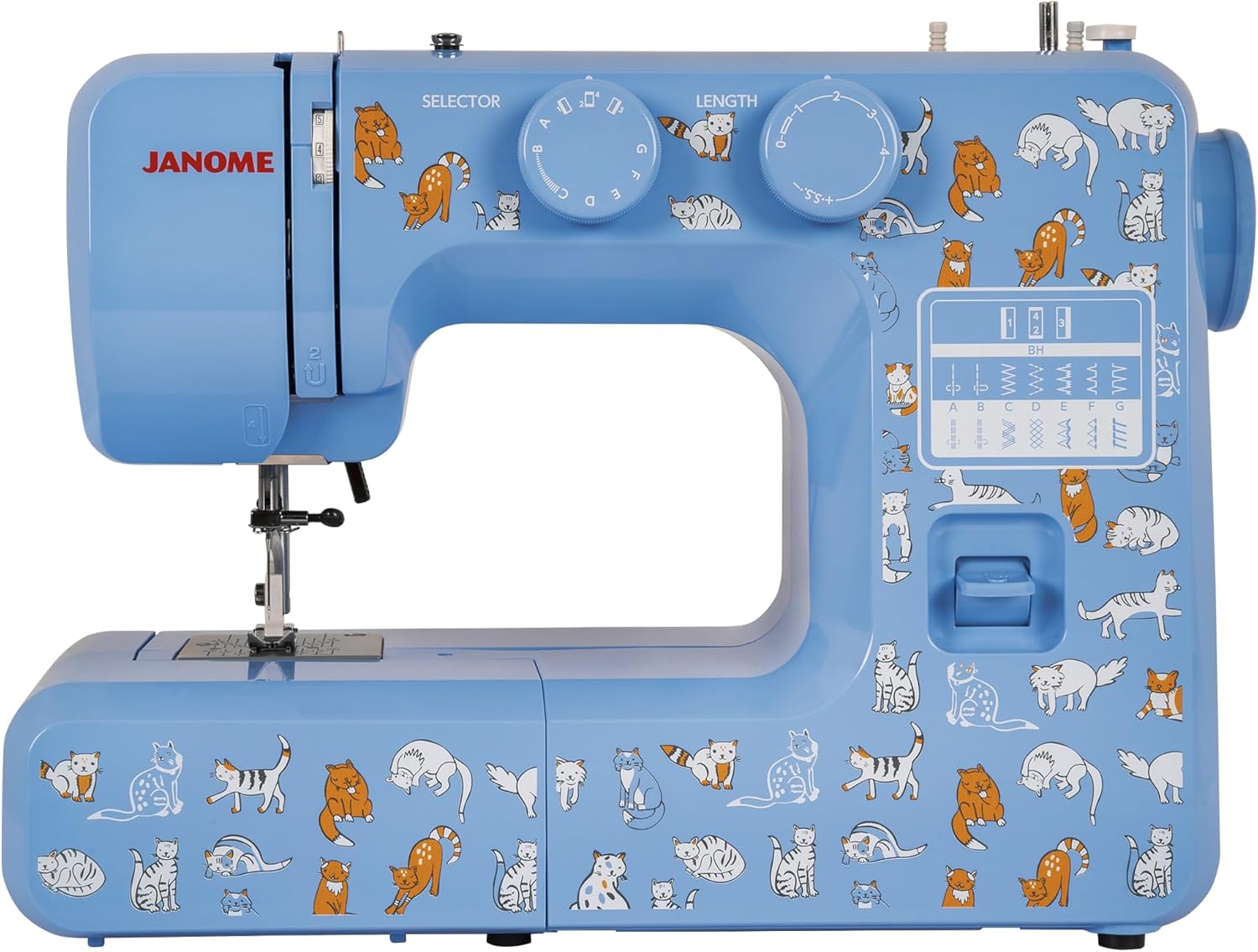
The Janome Cat Fancy is a compact, easy-to-use mechanical sewing machine built with beginners in mind. It offers 15 commonly used stitches plus a four-step buttonhole, adjustable stitch length and width, and a front-loading bobbin with visible threading guidance that simplifies setup and troubleshooting. The interior metal frame and three-piece feed dog deliver steady fabric feeding for light quilting, garment repairs, and home-decor projects, while snap-on presser feet and a removable free arm make tasks like hemming sleeves and installing zippers straightforward. The machine runs up to 800 stitches per minute and includes a bright LED work light, darning plate for free-motion sewing, and dual retractable spool pins for different threads. Practical limits include its mechanical controls, which lack computerized stitch memory or automatic needle threading, and it is aimed at lighter-duty projects rather than heavy industrial fabrics. For teens learning to sew, the Cat Fancy balances simplicity and enough features to grow skills without overwhelming them.
Best for: Teens and beginner sewists who want a straightforward, dependable machine to learn garment sewing, craft projects, and light quilting without a steep learning curve.
Less Ideal for: Users who need computerized automation, advanced embroidery features, or a machine built for heavy-duty industrial fabrics should consider a different model.
- Beginner-friendly layout with visible bobbin guide and quick start resources
- Interior metal frame and 3-piece feed dog for steady fabric handling
- Includes 15 built-in stitches and a 4-step buttonhole for versatile projects
- Removable free arm and multiple presser feet for hemming, zippers, and quilting tasks
- Mechanical controls lack advanced computerized features like automatic needle threading or stitch memory
- Designed for light to medium-weight fabrics rather than heavy industrial materials
Verdict: A user-friendly, well-built beginner machine that gives teens the essential stitches and stability to learn sewing and tackle a variety of projects.
Janome Arctic Crystal 001crystal

| Power Source | Corded Electric |
|---|---|
| Included Components | Four Presser Feet, Bobbins, Needles, Seam Ripper, Darning Plate, Manuals |
| Material | Metal, Plastic |
| Number of Built-in Stitches | 15 |
The Janome Arctic Crystal is a straightforward mechanical sewing machine aimed at new sewists and hobbyists who want reliable, no-frills performance. It offers 15 built-in stitches plus a 4-step buttonhole, adjustable stitch length and width, and a three-piece feed dog that keeps fabric moving smoothly for hems, garment repairs, patchwork, and light quilting. The interior metal frame gives the machine steadiness while sewing, and snap-on presser feet and an extra-high foot lift make swapping feet and handling thicker seams easier. Setup is simple and the unit is compact enough to store or take to classes. Practical limits include its mechanical controls and lack of advanced automation, so it does not offer computerized stitch customization, automatic thread cutting, or very heavy-duty capability for intensive upholstery or thick leather. For teens wanting a dependable machine that teaches foundational skills and consistently delivers clean stitches, the Arctic Crystal is a capable choice.
Best for: A teen or beginner who prioritizes dependable, learnable performance and wants a compact machine to practice garment sewing, patchwork, and light quilting.
Less Ideal for: Users who need computerized stitch programming, automated features, or a machine built for heavy industrial fabrics should consider a more advanced model.
- Sturdy interior metal frame for stable sewing
- Three-piece feed dog for consistent fabric feeding
- 15 built-in stitches plus a 4-step buttonhole for common projects
- Compact and portable design that is easy to store or transport
- Includes multiple presser feet and basic accessories to start sewing immediately
- Mechanical controls lack computerized features and advanced automation
- Not designed for very heavy-duty fabrics or industrial use
Verdict: A reliable, beginner-friendly mechanical machine that gives teens steady, no-nonsense stitching performance for everyday sewing and light quilting.
SINGER MX60 Sewing Machine

| Model Number | MX60 |
|---|---|
| Power Source | Corded Electric |
| Stitch Applications | 57 |
| Included Components | All purpose foot, Zipper foot, Buttonhole foot, Darning plate, Needles, Bobbins |
The SINGER MX60 is a compact, beginner-friendly mechanical sewing machine designed for light to medium home sewing. It provides six built-in stitches that translate into 57 stitch applications via preset stitch length and width, so teens can tackle hems, repairs, simple garments, and decorative stitches without wrestling with complicated settings. The machine ships with a basic accessory kit including three presser feet, bobbins, needles, a seam ripper, and a screwdriver, which is enough to get started on classes or craft projects. A heavy-duty metal frame adds stability and helps prevent skipped stitches when sewing multiple layers, while the top-drop bobbin and LED work light make setup and stitching easier in small spaces. Limitations include a small selection of built-in stitch patterns compared with computerized models and modest power intended for lightweight fabrics rather than heavy upholstery or thick leather. For a student or hobbyist who wants a reliable, portable machine for lessons and everyday projects, the MX60 covers the essentials cleanly and simply.
Best for: Teens learning to sew who want a simple, portable machine for classes, craft projects, and everyday mending that is easy to set up and use.
Less Ideal for: Sewers who need many programmable stitches, advanced embroidery features, or the power to handle heavy upholstery and leather should look at higher-end computerized or heavy-duty machines.
- Lightweight and portable for classroom or dorm use
- Includes essential accessory kit (presser feet, bobbins, needles) to start sewing
- Preset stitch settings and 57 stitch applications simplify learning
- Heavy-duty metal frame for stable, skip-free stitching
- Top-drop bobbin and LED light improve visibility and setup
- Limited built-in stitches compared with computerized machines
- Not intended for heavy-duty fabrics or industrial use
Verdict: A straightforward, portable sewing machine that gives teens the core tools and stability they need to learn and complete everyday sewing projects.
KPCB Tech FHSM-201 Mini Sewing Machine

| Brand Name | KPCB Tech |
|---|---|
| Model Number | FHSM-201 |
| Power Source | AC adapter |
This mini sewing machine is aimed at beginners and teens learning basic sewing. It ships as a full starter kit with 20 fabric squares, multiple accessories, and tutorial videos so learners can jump into small projects and practice patchwork. The unit offers dual stitching speeds and a finger guard for safer use, and its double-thread design claims to handle up to five layers of fabric without manual knotting. Power is via an AC adapter and the machine is small and portable for dorm rooms or craft tables. Expect simple straight and basic stitches rather than advanced patterning, and the plastic construction limits heavy-duty use and long-term durability. The included extension table and abundant tools make setup and initial projects easier, while the tutorial videos help teen learners who prefer visual instruction. If you need a lightweight, low-cost way to teach sewing basics and do small craft projects, this kit covers the essentials, but serious hobbyists or heavy fabric work will want a larger, more robust machine.
Best for: Teens or budget-conscious learners who want an affordable, ready-to-use starter kit to learn basic sewing and complete small craft projects.
Less Ideal for: Experienced sewists, those who plan frequent garment construction, or users who need robust stitch variety and heavy-fabric capability should choose a larger, feature-rich machine.
- Comes with fabric bundles and a wide set of starter tools to begin projects immediately
- Dual speed control and tutorial videos help novices learn at a comfortable pace
- Finger guard and small size make it safer and convenient for teens and beginners
- Double-thread design can sew multiple fabric layers without frequent knotting
- Plastic construction and mini size are not suited for heavy or long-term use
- Limited stitch selection and basic functionality compared with full-size machines
Verdict: A low-cost, beginner-focused sewing kit that gets teens sewing quickly with safety features and plenty of starter supplies.
Brother XM2701 Sewing Machine

| Built-in stitches | 27 |
|---|---|
| Power source | Corded Electric |
| Input voltage | 120 volts |
| Included sewing feet | 6 |
The Brother XM2701 is a lightweight, user-friendly mechanical sewing machine aimed at beginners and steady hobbyists. It offers 27 built-in stitches including utility, decorative, and quilting options plus a one-step auto-size buttonhole, making it useful for basic garment construction, mending, and simple craft projects. Practical features include an automatic needle threader, jam-resistant drop-in top bobbin, automatic bobbin winder, built-in LED light, and six quick-change presser feet, which speed setup and reduce frustration for new sewers. The free arm makes hemming sleeves and pant legs straightforward, and stitch selection and tension adjustments are handled with rotary dials that are easy to understand. Limitations are its mechanical dial controls rather than a digital interface and absence of heavy-duty commercial power, so very thick industrial fabrics or intensive daily production work are not ideal. For teens learning to sew, the XM2701 balances approachable controls with enough stitch variety to practice many techniques.
Best for: A teen learning to sew who values a reliable, easy-to-use machine that helps build skills without a steep learning curve or complicated electronics.
Less Ideal for: Sewers who need a heavy-duty or computerized machine for high-volume, professional, or thick-fabric work should consider a more powerful model.
- 27 built-in stitches including decorative and quilting options for practice and small projects
- Automatic needle threader and drop-in bobbin reduce setup frustration
- Six included presser feet and one-step buttonholer broaden what you can sew
- Free arm and built-in LED light make hemming and detailed work easier
- Mechanical dial controls lack the precision and presets of computerized models
- Not designed for heavy industrial fabrics or constant professional use
Verdict: A dependable, beginner-friendly sewing machine that helps teens learn core sewing skills with reliable, frustration-reducing features.
SINGER Heavy Duty 4423

| Built-in stitches | 23 (97 applications) |
|---|---|
| Max sewing speed | 1,100 stitches per minute |
| Power source | Corded Electric |
| Input voltage | 120 volts |
The SINGER Heavy Duty 4423 is a mechanically simple, fast sewing machine built around a metal interior frame and a strong motor to tackle heavier fabrics like denim and canvas as well as lightweight materials. It offers 23 built-in stitch patterns that translate into 97 stitch applications, a top drop-in bobbin for easy monitoring of thread, and a one-step buttonhole for basic garment work. Practical touches include an automatic needle threader, stainless steel bed plate for smoother fabric feed, bright LED work light, and several included presser feet and accessories stored in the tray. The 1,100 stitches-per-minute top speed and beefier motor mean quicker project completion and more reliable stitching through layered seams, though the machine is mechanical rather than computerized so stitch selection and fine adjustments are manual. Its size and corded power make it best suited to a dedicated sewing area rather than frequent travel. For teens learning serious sewing or tackling denim and home-decor projects, it delivers durable, straightforward performance without advanced electronic features.
Best for: A teen who wants a durable, no-nonsense machine to learn on and handle tougher projects like jeans, backpacks, and home-decor sewing while valuing reliable, proven performance.
Less Ideal for: If a teen needs touchscreen programming, automated stitch customization, or a compact travel machine, a computerized or portable model would be a better fit.
- Robust metal interior frame for stable, skip-free sewing
- Powerful motor and high speed (1,100 SPM) to sew through thick fabrics and layers
- Top drop-in bobbin and automatic needle threader simplify setup and reduce interruptions
- Includes essential presser feet and accessories to start common projects
- Stainless steel bed plate and LED light improve fabric feed and visibility
- Mechanical controls lack the precision and convenience of computerized machines
- Not designed for portability or battery/cordless use
Verdict: Pick the Singer 4423 if you want a rugged, high-speed machine that helps a teen learn durable, real-world sewing on heavy fabrics.
Brother XR3774 Sewing Machine

| Number of built-in stitches | 37 |
|---|---|
| Power source | Corded Electric |
| Input voltage | 120 volts |
| Bobbin type | Top loading |
| Buttonhole | 1 One-step auto-size |
The Brother XR3774 is a straightforward mechanical sewing and quilting machine aimed at hobbyists and beginners who want room to grow. It offers 37 built-in stitches including utility, decorative, and quilting options plus a one-step auto-size buttonhole for typical garment and home-decor projects. Practical touches such as the automatic needle threader and jam-resistant drop-in top bobbin make setup and thread changes fast, and the included wide extension table and walking foot help when working on quilts or multiple fabric layers. The machine ships with eight presser feet and basic accessories to get started right away. Because it is a corded 120V mechanical model, the XR3774 is simple to maintain and intuitive to operate, but it lacks an LCD screen or advanced computerized stitch editing found on higher-end models. Its metal and plastic construction keeps weight reasonable for moving between rooms but also signals this is a midrange consumer machine rather than a heavy-duty industrial unit. For teens learning to sew, it balances useful quilting features with easy-to-use controls and low upkeep.
Best for: A cautious buyer seeking a reliable, easy-to-learn machine for teens or beginners who want to practice garment sewing and quilting with minimal setup hassle.
Less Ideal for: Users who need advanced computerized stitch editing, embroidery features, or an industrial-strength machine for commercial production should consider other options.
- 37 built-in stitches cover utility, decorative, and quilting needs.
- Automatic needle threader and drop-in bobbin speed setup and reduce frustration.
- Wide extension table and walking foot assist with quilting and multi-layer sewing.
- Comes with eight presser feet and starter accessories to begin projects immediately.
- Mechanical model lacks a digital interface for stitch customization.
- Not designed for heavy industrial use or continual high-volume sewing.
Verdict: A dependable, easy-to-use sewing and quilting machine that gives teens practical features and low-friction operation for learning and hobby projects.
Choosing the Right Sewing Machine for Teens: Key Factors to Consider
Ease of Setup and Threading
A quick, clear setup process helps teens stay engaged and reduces adult intervention. Machines with numbered threading guides, top-loading bobbins, and color-coded paths make the initial experience less intimidating.
If a machine requires complicated threading or frequent manual adjustments, a new sewist can become discouraged. Look for devices with visual aids and simple tension adjustment so a teen can learn fundamentals without being distracted by mechanical hurdles.
Control Simplicity and Interface
Controls should be straightforward and forgiving. Large, clearly labeled dials or a minimal electronic interface let a teen choose stitch length and type without memorizing technical terms.
Physical controls are often easier for beginners to understand than complex digital menus. Consider whether the machine offers both foot-pedal and start/stop button options; having both lets a teen learn pedal coordination gradually.
Stitch Options and Versatility
For a teen learner, a moderate range of stitch types is ideal. Basic straight and zigzag stitches plus a few decorative or stretch stitches let them handle garments, mending, and crafts while practicing technique.
Too many advanced stitches can overwhelm a beginner, but too few limit project variety. A good teen machine balances essential utility stitches with a small selection of extras for creative exploration.
Safety Features
Safety matters when younger users are still developing fine motor skills. Look for features such as finger guards, snap-on presser feet, and an accessible power switch or speed control to prevent accidental fast stitching.
A built-in light over the needle area and a stable base reduce mishaps by improving visibility and keeping small projects steady. Machines that allow slower maximum speeds are particularly helpful for novices.
Durability and Maintenance
A reliable machine withstands repeated beginner mistakes and frequent practice sessions. Sturdy construction and easy access to the bobbin area for cleaning prolong a machine's useful life.
Routine maintenance should be simple. Machines with removable needle plates, clear oiling points, and a straightforward instruction manual are easier for teens and caregivers to keep running well.
Included Accessories and Learning Resources
Accessories like extra presser feet, multiple bobbins, and a basic seam ripper give a teen more options and reduce the need to buy extras immediately. Clear printed manuals or online tutorials tailored to beginners accelerate skill development.
Kits that include practice fabric, templates, or project guides help a teen progress from simple seams to making a finished item, building confidence and competence faster.
Setting Up a Sewing Space for a Teen
Designating a small, well-lit workspace helps a teen focus and keeps sewing supplies organized. A table at a comfortable height, a chair that supports good posture, and a small storage bin for thread and scissors make sessions more productive.
Keep frequently used tools within easy reach and store sharp items safely. A dedicated cutting mat and ruler speed project layout and reduce the chance of accidental snips that can interrupt learning.
- Use LED task lighting directed at the needle area
- Keep a magnetic pincushion to prevent lost pins
- Provide labeled storage for threads and notions
Basic Maintenance Teens Should Learn
Teaching a teen simple upkeep builds responsibility and prevents many common problems. Basic tasks include cleaning lint from the bobbin area, changing needles regularly, and oiling as recommended by the manual.
Show how to change the needle and rethread the machine. Explain signs that indicate maintenance is needed, such as skipped stitches, unusual noises, or thread breakage, and how to troubleshoot those issues safely.
- Clean lint after every few hours of use
- Replace needles after several projects or when bent
- Store the machine covered to keep dust out
Safe Techniques and Best Practices for Beginners
Teach safe hand placement, slow stitching on corners, and how to use a presser foot to guide fabric. Emphasize that the feed dogs move fabric automatically and hands should guide, not force, the material.
Encourage practicing on scrap fabric to build coordination before attempting a final project. Demonstrate how to backstitch at the start and end of seams to secure stitching and how to trim threads neatly.
- Never raise the presser foot while the machine is running
- Turn the handwheel toward you when adjusting the needle
- Use small fabric clamps or pins rather than holding edges with fingers
Project Ideas to Build Confidence
Start with quick wins that teach useful skills. Simple projects like pillow covers, tote bags, and elastic-waist skirts teach straight seams, edge finishing, and gathering without overwhelming construction steps.
Incrementally increase complexity by introducing zippers, buttonholes, and simple hemming tasks. Project-based learning keeps motivation high and provides tangible results that reinforce technique.
- Begin with fabric scraps to practice stitch length and tension
- Move to small accessories before tackling garments
- Use templates and printed patterns for guided practice
When to Upgrade Beyond a Beginner Machine
Monitor skill progression and project needs. If a teen regularly makes garments, works with heavy fabrics, or needs advanced features like automatic buttonholes or walking feet, consider a more capable machine.
An upgrade is worthwhile when the current machine limits project types or requires frequent manual adjustments that hinder learning. Until then, a simple, reliable machine can support several years of skill building.
- Track the types of projects and fabrics they use
- Look for signs like frequent skipped stitches on heavier materials
- Prioritize features needed for the next set of projects
How We Chose the Best Sewing Machine for Teens
We focused on attributes that make a sewing machine suitable for teen beginners and early hobbyists. Key evaluation criteria included intuitive controls and setup, which reduce the learning curve and help teens start projects without frustration; stitch quality and consistency across basic stitch types, which determine whether finished projects look neat and hold together; durability and build quality for safe, repeatable use in a home or classroom setting; safety features such as finger guards, easy-to-reach power switches, and clear tension controls to reduce mishaps; and included accessories and documentation, since extra feet, bobbins, and a user manual with simple tutorials speed skill development. We prioritized machines with straightforward threading paths, clear stitch selection, and the option for both hand-operated and foot-pedal control when available. We excluded heavy industrial units and machines designed only for advanced tailoring, as those add complexity that is unnecessary for teen learning. We also filtered out models lacking basic safety features or with consistently poor user feedback on durability. The shortlist therefore reflects practical, teachable machines that balance beginner friendliness with enough capability to grow with a teen's skills.
Our full evaluation process is outlined in our review methodology.
FAQ
What features make a sewing machine good for a teen beginner?
Look for clear controls, easy threading, and safety features like finger guards and speed control. Machines with a few essential stitch options and a helpful manual or tutorial are ideal for learning.
Can a teenager learn to sew without prior experience?
Yes. With a beginner-friendly machine, basic instruction, and practice projects, most teens pick up core skills like straight seams and hemming within a few sessions.
How important is machine weight for a teen?
Moderate weight provides stability while sewing, but very heavy machines can be hard to move. Choose a machine that balances portability with a stable base for steady stitching.
How often should a teen change the needle?
Needles should be changed after several projects or when they become bent or dull. Regular replacement prevents skipped stitches and fabric damage.
Are electronic controls better than manual dials for teens?
Both can work. Manual dials are often more intuitive for beginners, while simple electronic interfaces with clear buttons can offer useful presets. Avoid machines with complex multi-level menus.
Final Verdict
Focus on ease of use, stitch reliability, and safety when choosing a sewing machine for a teen. Prioritize machines that offer clear threading, simple controls, and a modest set of stitches so a learner can complete a variety of projects without frustration. Balance durability and maintenance ease with portability and included learning resources. With the right starter machine and a few practice projects, a teen can build skills quickly and confidently before moving to a more advanced model if needed.