
Note: This article contains affiliate links. If you click on these links and make a purchase, we may earn a small commission at no extra cost to you. This helps support our research and content. Read our full affiliate disclosure here.
Getting clean, even hems quickly makes any sewing project look professional. Whether you shorten pants, finish a curtain, or tidy up a dress, the right sewing machine for hemming saves time and reduces frustration. This guide covers the top shortlisted machines built for hemming tasks and focuses on the features that matter most for consistent results. You will find picks that emphasize stitch quality, ease of threading and setup, and handling of different fabric weights. Read on to see which machines met our evaluation criteria and why they can make hemming neater and faster in day-to-day use.
Top Picks at a Glance
| Best Overall The best all-around choice for most situations | Brother XR3774 Sewing & Quilting Machine |  |
| Best Quality Built to a higher standard if you want something more solid | SINGER Heavy Duty 4452 |  |
| Best Value The sweet spot between price and what you get | American Home AH100 Serger |  |
| Best Budget The cheapest option that still gets the job done reliably | Rxmeili Portable Sewing Machine RXM001 |  |
| Top Rated A top-rated pick with lots of positive feedback | Janome Arctic Crystal 001crystal |  |
| Most Popular A crowd favorite that many people choose with confidence | SINGER Heavy Duty 4423 |  |
| Best Seller A high-volume bestseller chosen again and again | Brother XM2701 Sewing Machine |  |
Brother XR3774 Sewing & Quilting Machine

| Number of built-in stitches | 37 |
|---|---|
| Power source | Corded Electric |
| Voltage | 120 volts |
| Bobbin type | Top loading |
| Included sewing feet | 8 |
The Brother XR3774 is a straightforward mechanical sewing and quilting machine geared to everyday use and hobbyists who need reliable hemming and quilting capability. It offers 37 built-in stitches including utility and decorative options plus a one-step buttonhole, which covers common hemming tasks for garments and home projects. The automatic needle threader and drop-in top bobbin simplify setup and reduce frustration when changing threads, and the included wide table and free arm make it easier to maneuver hems on sleeves, pants, and larger quilts. The package also includes eight presser feet and useful accessories so you can start hemming right away. Because it is a mechanical, corded unit with simple dial controls, it is easy to learn but lacks advanced computerized stitch customization. The machine is sold for use at 120 volts in the US and is reasonably portable for a full-featured home sewing machine. If you want a dependable, no-nonsense machine for regular hemming, mending, and quilting without a steep learning curve, the XR3774 is a solid option.
Best for: Buyers who want a reliable, easy-to-use machine that handles everyday hemming, mending, and quilting without complicated computerized features.
Less Ideal for: Users who need advanced stitch programming, touchscreens, or multi-voltage international use should consider a computerized or travel-friendly alternative.
- 37 built-in stitches including utility, decorative, and quilting stitches for versatile hemming and repairs
- Automatic needle threader and jam-resistant top drop bobbin simplify setup and reduce thread jams
- Wide table and free arm make hemming sleeves, pants, and quilts easier to handle
- Includes 8 presser feet and a range of accessories so you can begin common hemming tasks immediately
- Mechanical dial controls limit fine stitch customization compared with computerized machines
- Designed for 120V US use only
Verdict: A user-friendly, feature-complete mechanical machine that reliably handles hemming and general sewing projects for balanced home sewers.
SINGER Heavy Duty 4452

| Built-in stitches | 32 |
|---|---|
| Stitch applications | 110 |
| Included presser feet | 6 |
| Power source | Ac/Dc |
The SINGER Heavy Duty 4452 is built around an enhanced motor and a metal frame to tackle thick fabrics and multi-layer projects while still handling lightweight materials by adjusting presser foot pressure. It offers 32 built-in stitches that expand to 110 stitch applications for hemming, basic garment construction, decorative stitching, and a one-step buttonhole. Practical conveniences include a top drop-in bobbin with a clear cover, a stainless steel bed plate for smoother fabric feed, and a built-in needle threader that speeds setup. Singer bundles six useful presser feet including a walking foot and non-stick foot, plus heavy-duty needles and quilting accessories so you can hem denim, canvas, and coated fabrics without hunting for extras. The machine sews at high speed and feels stable under heavy workloads, but its mechanical controls mean you trade some digital conveniences for raw power and simplicity. Expect a learning curve if you are used to computerized machines, but for performance-focused hemming on heavy materials this model delivers consistent, factory-quality stitching.
Best for: Buyers who prioritize raw sewing power and reliable performance for hemming heavy fabrics like denim, canvas, or layered home-dec projects and want a machine ready with useful feet and accessories.
Less Ideal for: If you need a lightweight travel machine, extensive touchscreen controls, or automated stitch programming, choose a different, more feature-rich computerized model.
- Powerful motor and full metal frame designed for sewing multiple layers and heavy fabrics.
- High sewing speed and broad stitch selection (32 built-in stitches, 110 applications) for hemming and decorative work.
- Includes six presser feet (walking foot, non-stick, buttonhole, zipper, etc.) and heavy-duty needles for immediate heavy-fabric use.
- Top drop-in bobbin with clear cover and stainless steel bed plate for easier thread monitoring and smoother fabric feeding.
- Mechanical design lacks computerized stitch memory and some modern automation features.
- Relatively heavy and less portable compared with compact or lightweight machines.
Verdict: If you need a no-nonsense, high‑speed machine that reliably hems heavy and layered fabrics, the Singer 4452 is a performance-focused workhorse.
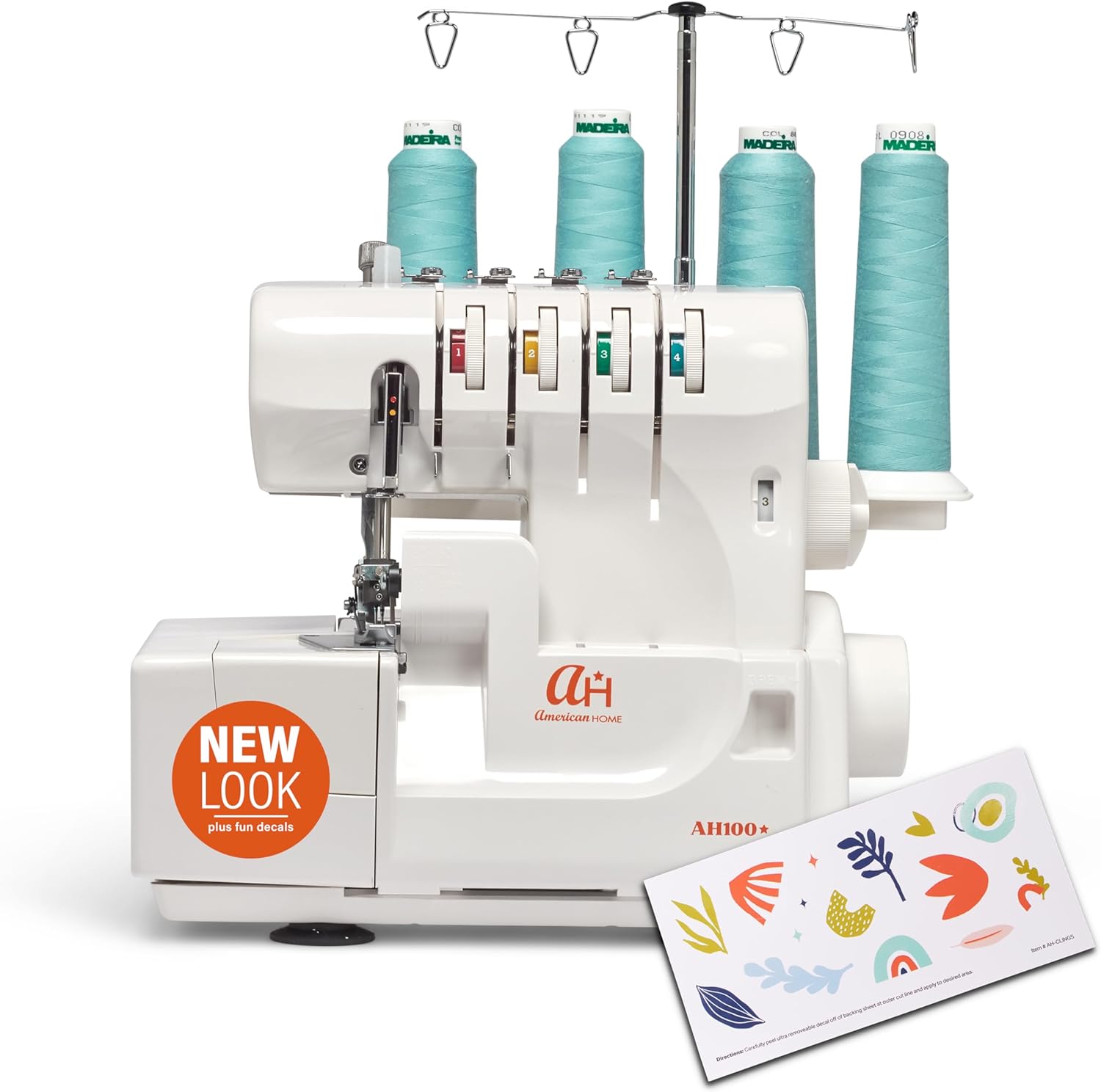
American Home AH100 Serger
| Power Source | AC |
|---|---|
| Included Components | Foot pedal, accessory case, multiple presser feet, rolled hem plate, extra blade |
| Material | Metal |
The American Home AH100 is a portable serger aimed at hobbyists and small sewing studios that need professional-looking hems and seams. It supports 4-, 3-, and 2-thread overlocking plus rolled hems, and the color-coded threading makes switching thread configurations much less intimidating for beginners. The differential feed and adjustable stitch length let you control fabric fullness for neat hems on knits and lightweight wovens, while the free-arm feature helps with cuffs and pant legs. It ships with a useful accessory kit including multiple presser feet, a rolled hem plate, extra blade, and basic tools, and the unit is light enough to move between workspaces. The trade-offs are predictable: it is a consumer-grade metal-bodied unit rather than an industrial machine, so very heavy-duty continuous production or thick multi-layer leather work are beyond its intent, and setup still requires some learning despite the color coding. For hemming projects and general garment finishing, it delivers clear functional benefits at a practical level.
Best for: Buyers who want a compact, versatile serger to produce professional-looking hems and seam finishes at home and who prioritize practical, easy-to-follow setup and accessories.
Less Ideal for: People who need an industrial or high-capacity serger for continuous heavy-duty production or very thick specialty materials should look at professional machines instead.
- Supports 4/3/2-thread serging and rolled hems for versatile finishing
- Color-coded threading reduces setup complexity for beginners
- Differential feed and adjustable stitch length improve hem quality on stretchy fabrics
- Includes a comprehensive accessory kit (multiple feet, rolled hem plate, extra blade, tools)
- Designed for home use so not suited for heavy industrial production
- Still requires practice to master threading and tension for perfect stitches
Verdict: A practical, beginner-friendly serger that makes hemming and overlock finishes easier for home sewing projects.
Rxmeili Portable Sewing Machine RXM001

| Power Source | Battery Powered,Electric |
|---|---|
| Number of Stitches | 12 |
| Item Weight | 2.4 kg |
The Rxmeili portable sewing machine is a small, lightweight unit designed for basic home sewing, repairs, and simple hemming. It runs on either an AC adapter or four AA batteries, accepts foot-pedal or button control, and offers 12 stitch patterns including straight, pattern, lock, and decorative curve stitches plus a reverse stitch function for secure seams. The machine includes a 42-piece beginner kit and a built-in light and storage drawer, which makes setup and simple projects convenient. Its threading guides and straightforward stitch dial keep operation approachable for first-time users, and battery power makes it usable away from an outlet for quick fixes. Limitations include modest build durability typical of ABS-bodied compact units and likely reduced power for very thick fabrics or heavy-duty hemming, and the unit may require patience while learning to avoid skipped stitches or jams. For light hemming, mending, and hobby sewing, it covers the essentials without extra complexity.
Best for: Buyers who want an affordable, easy-to-use machine for occasional hemming, mending, and beginner sewing projects and who value portability and simplicity.
Less Ideal for: People who need a heavy-duty or professional machine for frequent thick-fabric hemming or industrial-level sewing should look at sturdier, higher-power models.
- Dual power: AC adapter or 4 AA batteries for portable use.
- Foot pedal and button controls suit different user preferences.
- 12 stitch selections including reverse stitch let you handle common hems and decorative edges.
- Includes a 42-piece beginner kit and onboard storage for basic supplies.
- Not built for heavy fabrics or prolonged heavy use due to lightweight ABS construction.
- Smaller motor power may struggle with multiple fabric layers or thick hems.
Verdict: A budget-friendly, portable entry-level machine that handles everyday hemming and repairs without complexity.
Janome Arctic Crystal 001crystal

| Power Source | Corded Electric |
|---|---|
| Included Components | Four Presser Feet, Bobbins, Needles, Seam Ripper, Darning Plate |
| Material | Metal, Plastic |
| Number of Built-in Stitches | 15 |
| Buttonhole | 4-step |
The Janome Arctic Crystal is a straightforward mechanical sewing machine built for home sewing tasks like hemming, repairs, and light quilting. It uses a corded electric power source and a 3-piece feed dog system that helps fabric feed smoothly under the presser foot, which makes consistent hems and straight stitching easier to achieve. The machine offers 15 built-in stitches, adjustable stitch width and length, and a 4-step buttonhole, giving enough stitch variety for common garment and home-decor work. Practical extras include snap-on presser feet, a free-arm for cuffs and trouser hems, and a sturdy interior metal frame that keeps the machine stable while you work. It is compact and portable so it tucks away or travels to classes, and Janome includes basic accessories like bobbins, needles, and a seam ripper to get started. Limitations are that it is a mechanical rather than computerized model, so it lacks advanced programmable stitches, an automatic buttonhole system, and some convenience features found on higher-end machines. For straightforward hemming and daily sewing tasks it is a reliable, easy-to-use choice.
Best for: Buyers who prioritize a dependable, no-frills machine for regular hemming, garment repairs, and light quilting and who value simple, long-lasting mechanics over advanced electronics.
Less Ideal for: If you need computerized stitch programming, automatic buttonholes, or a machine made for heavy industrial fabrics, choose a more feature-rich or heavy-duty model instead.
- Sturdy interior metal frame for stable stitching
- 3-piece feed dog and free-arm design for smooth fabric handling and easier hems
- 15 built-in stitches plus adjustable width/length for common hemming and repair tasks
- Includes essential accessories and multiple presser feet to start sewing right away
- Mechanical controls lack automated or programmable stitch features
- Not suited for heavy industrial fabrics or very thick multi-layered seams
Verdict: A reliable, compact mechanical sewing machine that delivers steady, user-friendly hemming and basic sewing performance without the complexity of computerized models.
SINGER Heavy Duty 4423

| Built-in stitches | 23 |
|---|---|
| Stitch applications | 97 |
| Max stitches per minute | 1,100 |
| Power source | ac_dc |
| Included components | All-Purpose Foot, Zipper Foot, Buttonhole Foot, Button Sewing Foot, Needles, Bobbins |
The SINGER Heavy Duty 4423 is a mechanically driven sewing machine built around a reinforced metal frame and a stainless-steel bed plate to deliver steady, skip-free stitching when working with thick materials. It offers 23 built-in stitches mapped to 97 stitch applications, a one-step buttonhole, adjustable presser foot pressure, extra-high presser foot lift, and a top drop-in bobbin that is easy to monitor. The powerful motor runs up to 1,100 stitches per minute, making hemming and long seams faster, and the included feet and accessories get common tasks started right away. Practical perks like an automatic needle threader, LED work light, and manual tension control help when switching between lightweight hems and heavy denim or canvas. Trade-offs are that it is a straightforward mechanical machine without computerized stitch programming or touchscreen controls, and its heavier build makes it less portable than compact models.
Best for: Buyers who want a proven, durable machine that consistently handles hems on heavy fabrics and value reliable, high-speed mechanical performance backed by strong user ratings.
Less Ideal for: If you need a lightweight, highly portable machine or want advanced computerized stitch customization, consider a different model with digital controls and memory functions.
- Robust metal frame and stainless steel bed plate for stable, skip-free stitching
- Powerful motor reaching 1,100 stitches per minute for fast hemming and heavy fabrics
- Adjustable presser foot pressure and extra-high lift for handling multiple layers
- Top drop-in bobbin with transparent cover for easy thread monitoring
- Includes essential presser feet and accessories to start common hemming jobs
- Mechanical controls only, no computerized stitch programming or memory
- Relatively heavy construction makes it less convenient to move or store
Verdict: Choose the SINGER 4423 when you need a sturdy, high-speed machine that reliably hems and sews through heavy fabrics.
Brother XM2701 Sewing Machine

| Built-in stitches | 27 |
|---|---|
| Power source | Corded Electric |
| Input voltage | 120 volts |
| Included feet | 6 quick-change feet |
The Brother XM2701 is a straightforward, portable mechanical sewing machine designed for everyday sewing, mending, and hemming tasks. It offers 27 built-in stitches including blind hem and stretch stitches, a one-step auto-size buttonholer, and a free arm that makes hemming cuffs, sleeves, and pant legs easier. Practical features like an automatic needle threader, jam-resistant drop-in top bobbin, and automatic bobbin winder reduce setup time and common frustrations for new sewers. Stitch selection and adjustments are done via dials, which keeps operation simple and durable compared with touchscreen models. The machine includes six quick-change presser feet (zipper, buttonhole, zigzag, narrow hemmer, blind stitch, and button sewing feet) so you have the right tool for hemming and common alterations. Limitations are typical of mechanical machines: no computerized stitch memory or advanced speed controls, and heavier industrial tasks may require a more powerful model. For hemming and household sewing this model balances ease of use with practical features that prevent beginner errors.
Best for: Buyers who want a dependable, easy-to-use machine for home hemming and basic garment alterations that reduces common setup frustrations and grows with beginner skills.
Less Ideal for: People who need advanced computerized features, stitch memory, or a heavy-duty industrial machine for frequent thick-fabric work should look elsewhere.
- 27 built-in stitches including blind hem and stretch options useful for hemming
- Automatic needle threader and jam-resistant drop-in bobbin for easier setup
- Free arm and included narrow hemmer and blind stitch feet simplify hemming cuffs and pant legs
- Six quick-change presser feet cover common hemming and alteration tasks
- Bright built-in LED light improves visibility on small hems and detailed work
- Mechanical dial controls lack the precision and convenience of computerized interfaces
- Not intended for heavy industrial fabrics without the appropriate needle and slower pace
Verdict: A user-friendly, lightweight machine that reliably handles hemming and everyday alterations while minimizing setup hassles for risk-averse buyers.
Choosing the Right Sewing Machine for Hemming: Key Factors to Consider
Stitch Type and Quality
Different hemming techniques require different stitch types. A straight stitch can secure a folded hem, but blind hems and rolled hems need specialized stitch patterns and precise tension control. High stitch quality reduces puckering and visible thread on the garment face, producing a cleaner finish.
When evaluating machines for hemming, check how consistently stitch length and tension are maintained across fabric layers. Even small fluctuations can cause visible irregularities in a hem, so reliable tension control and well-calibrated feed dogs are essential for predictable results.
Presser Feet and Accessories
The right presser feet make hemming faster and more accurate. A blind-hem foot, rolled-hem foot, or edge-stitching foot guides fabric and positions stitches precisely. Some machines include adjustable feet or accessory packs that cover common hemming scenarios.
Consider what accessories are included and how easy they are to change. Machines that accept a broad range of presser feet let you tackle delicate narrow hems, decorative topstitching, and heavier turned hems without improvising.
Feed System and Fabric Control
A consistent feed system keeps fabric layers aligned during hemming. Feed dogs, differential feed, and pressure adjustment let you control how fabric progresses under the needle. This is particularly important when hemming stretchy knits, slippery synthetics, or multiple layers like curtain hems.
Good fabric control minimizes shifting and distortion. Look for machines with adjustable presser foot pressure and a dependable feed mechanism so that thin and heavy materials both move smoothly without stretching or bunching.
Ease of Threading and Setup
Speed matters when you are hemming many garments or making frequent adjustments. Top-loading bobbins, clear threading paths, and easy tension dials cut setup time and reduce user errors. A machine that is simple to thread and that has accessible bobbin systems will save time and frustration.
Also consider quick-change functions for presser feet and needle replacement. If a machine requires fiddly steps to switch between hemming techniques, you will spend more time on setup than on sewing, which reduces productivity for hemming tasks.
Motor Power and Durability
Hemming multiple layers or thicker fabrics demands a motor that can maintain consistent speed and torque. A robust motor prevents stalls and skipped stitches when sewing through hems on heavier garments. Durability is also important because hemming can be repetitive work that puts steady strain on components.
Assess whether the machine is rated for light home use or more frequent, heavier applications. Durable internal parts and good build quality translate to a longer-lasting hemming tool with fewer maintenance interruptions.
Maintenance and Accessibility
Regular cleaning and occasional lubrication keep hemming machines running smoothly. A design that provides easy access to the bobbin area, feed dogs, and tension assembly simplifies routine maintenance, which helps preserve stitch quality over time.
Consider whether the manufacturer supplies clear maintenance guidance and whether parts that require cleaning or replacement are easy to reach without special tools. Machines that minimize disassembly for routine care reduce the chance of user error and prolong effective hemming performance.
Types of Hems and Which Machines Handle Them Best
Different hems demand different capabilities. A narrow rolled hem for lightweight fabrics needs a steady, fine stitch and often a specialized rolled-hem foot. A blind hem requires precise alignment and tension to hide the stitches on the garment face. Heavier turned hems, such as those on jeans or draperies, require power and a feed system that can manage multiple layers without slipping.
When choosing a machine, match the hemming techniques you use most to the machine features. If you sew garments with varied fabrics, prioritize versatility in feed adjustments and accessory compatibility so the same machine can handle both delicate and heavy hems.
- Rolled hems: look for a rolled-hem foot and consistent stitch length control
- Blind hems: require precise needle placement and easy tension adjustment
- Double-fold hems: need strong feed and motor torque for multiple layers
- Decorative topstitching: benefit from adjustable presser pressure and stitch length
Thread, Needle, and Tension Choices for Clean Hems
Thread weight and needle size affect how a hem sits and how visible the stitches are. Fine needles and lightweight thread suit delicate fabrics and narrow hems, while heavier needles and stronger thread are necessary for denim and thick hems. Matching needle type and thread to the fabric reduces skipped stitches and minimizes puckering.
Tension settings are critical. Too-tight tension can draw fabric in; too-loose tension produces loops and weak seams. A machine with clear tension markings and easy incremental adjustments helps you dial in the right balance quickly when switching fabric types.
- Use a finer needle for lightweight fabrics to avoid holes and runs
- Choose polyester or cotton-wrapped polyester thread for general hemming durability
- Test tension on scrap fabric before sewing the final hem
Speed Controls and Stitch Length for Neat Results
Control over sewing speed and stitch length impacts the neatness of a hem. Shorter stitch lengths provide stronger seams on lightweight fabrics and reduce visible gaps, while longer stitches can be acceptable on heavier fabrics. Machines with variable speed control or a speed limiter let you sew slowly for precision or faster for long, straight hems.
Being able to set and maintain a consistent stitch length helps keep hems even over long runs, such as curtain hems or long pant legs. Check if a machine offers both manual stitch length control and a memory or preset option for repeatable results.
- Slower speeds improve accuracy on corners and curves
- Preset stitch lengths help with repeat hemming tasks
- Consistent stitch length avoids visible irregularities on finished hems
Working with Stretch and Knits
Hemming stretch fabrics and knits poses unique challenges because the fabric can stretch or roll while you sew. A machine with stretch or zigzag stitch options and a walking foot or differential feed can prevent stretching and maintain an even hem. Lightweight stretch fabrics often need a narrow zigzag or twin-needle setup to preserve elasticity.
Consider machines that make it easy to adjust presser foot pressure and that accept stretch-compatible needles. These features reduce the need for stabilizers and give a smoother finish for garments intended to retain stretch.
- Use a walking foot or differential feed to reduce fabric distortion
- Narrow zigzag or twin-needle options keep hems flexible on knits
- Stabilizers can help with very thin or highly elastic materials
Quick Tips for Achieving Professional-Looking Hems
Prepare hems carefully by pressing before sewing and using appropriate pins or clips. Pressing sets a crisp fold and reduces shifting while sewing. Use a hem guide or magnetic seam guide for long straight hems to maintain a uniform distance from the edge.
Always test on a fabric scrap that mirrors the garment layers and finish. That test run lets you confirm stitch length, tension, and presser foot choice. Small adjustments on the test piece save time and prevent costly mistakes on the final garment.
- Press hems thoroughly before stitching to reduce fabric movement
- Use a scrap piece to fine-tune tension and stitch length
- Consider hand-basting or clips for very slippery fabrics
How We Chose the Best Sewing Machine for Hemming
Our selection focused on tools that make hemming predictable, fast, and repeatable. We evaluated machines mainly on stitch quality for edge finishes and blind hems, ease of setup for common hemming tasks, and their ability to handle fabrics from lightweight silks to medium-weight denim. We also prioritized intuitive controls, reliable feed systems that prevent fabric shifting, and accessory support such as presser feet for rolled hems or blind-hem feet. Concrete evaluation criteria included stitch consistency on hems, accessory compatibility for hemming techniques, user ergonomics for quick adjustments, motor and feed reliability under repeated hemming, and overall maintenance and cleaning accessibility. We excluded specialty industrial machines and novelty models that lack the specific features hem-focused sewists need. Machines that required extensive aftermarket modification to perform basic hemming were not considered. The remaining machines were assessed with these practical hemming-focused dimensions in mind to reflect everyday user needs.
Our full evaluation process is outlined in our review methodology.
FAQ
Can a basic home sewing machine handle rolled hems?
Often yes. Many home machines can produce rolled hems if they accept a rolled-hem presser foot and allow fine stitch length and tension adjustments. Check that the machine feeds the fabric smoothly and that you can change to the appropriate foot easily.
What stitch should I use for hemming stretch fabrics?
Stretch fabrics generally need a narrow zigzag or a stretch stitch to preserve elasticity. Twin-needle setups can create a professional-looking finish while allowing the hem to stretch. Adjust tension and presser foot pressure to avoid puckering.
How do I avoid puckering when hemming lightweight fabrics?
Use a fine needle and lightweight thread, reduce presser foot pressure if adjustable, and shorten stitch length. Testing on scrap fabric and using a rolled-hem foot or fine hem guide helps minimize puckering.
Is a walking foot necessary for hemming multiple layers?
A walking foot or differential feed is helpful when hemming thick or layered fabrics because it provides even fabric movement through the machine. It is not strictly necessary for simple single-layer hems but makes multi-layer work more reliable.
How often should I clean and service a hemming machine?
Clean the bobbin area and remove lint after several sewing sessions, especially when working with bulky fabrics. Periodic oiling and a yearly professional service are advisable for machines used frequently for hemming to maintain stitch consistency and motor health.
Final Verdict
Focus on the hemming tasks you perform most and prioritize machines that excel at those techniques. If you frequently work with lightweight fabrics and narrow hems, emphasize fine stitch control, appropriate presser feet, and easy tension adjustments. If you hem heavier garments or multiple layers, look for robust feed systems and sufficient motor torque. Weigh ease of setup, accessory availability, and maintenance access against the types of hems you sew. That approach will help you choose a sewing machine that consistently produces tidy, durable hems and stays reliable across many projects.