
Note: This article contains affiliate links. If you click on these links and make a purchase, we may earn a small commission at no extra cost to you. This helps support our research and content. Read our full affiliate disclosure here.
If you sew occasionally or are building skills on a budget, a capable machine under $250 can be a great investment. You want a unit that consistently delivers clean stitches, handles common fabrics, and is simple to set up and maintain. This guide highlights seven shortlisted sewing machines that meet those needs and focuses on practical features that matter for home sewing projects. We evaluated each pick for stitch quality, ease of use, build durability, and maintenance requirements so you can pick the best fit for garment repairs, quilting practice, or everyday mending. Read on for the factors we considered and the concise buying guidance that follows the product list.
Top Picks at a Glance
| Best Overall The best all-around choice for most situations | Janome Arctic Crystal 001crystal |  |
| Best Quality Built to a higher standard if you want something more solid | Janome 1522DG Sewing Machine | 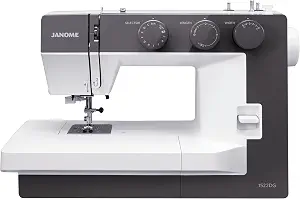 |
| Best Value The sweet spot between price and what you get | SINGER M3330 Sewing Machine |  |
| Best Budget The cheapest option that still gets the job done reliably | Buvnatep Mini Sewing Machine SM-505A |  |
| Top Rated A top-rated pick with lots of positive feedback | Brother CS5055 Sewing Machine |  |
| Most Popular A crowd favorite that many people choose with confidence | SINGER Heavy Duty 4423 |  |
| Best Seller A high-volume bestseller chosen again and again | Brother XM2701 Sewing Machine |  |
Janome Arctic Crystal 001crystal

| Power Source | Corded Electric |
|---|
The Janome Arctic Crystal is a straightforward, user-friendly mechanical sewing machine aimed at beginners and hobby sewists. It offers 15 built-in stitches, adjustable stitch width and length, and a 4-step buttonhole, which makes it useful for garments, home decor, and light quilting. The 3-piece feed dog and free-arm design help fabric feed evenly, so hemming, patchwork, and layered fabrics are easier to manage. A sturdy interior metal frame keeps the unit stable during sewing while the compact, portable footprint and included presser feet and accessories let you jump into projects right away. Setup and threading are simple and supported by tutorial videos and a quick-start guide, which lowers the learning curve. Limitations include its mechanical controls and 4-step buttonhole rather than an automated one, so advanced users wanting auto buttonholes, many specialty stitches, or high-speed industrial performance may find it basic. For routine home sewing tasks under casual to moderate use it delivers reliable, predictable results.
Best for: Buyers who want a reliable, easy-to-learn sewing machine for mending, craft projects, and occasional quilting and value simplicity and durability over advanced automation.
Less Ideal for: People who need industrial speeds, many specialty stitches, or fully automatic buttonholes for heavy daily production use should consider a more advanced machine.
- Beginner-friendly setup with clear controls and tutorial support
- 15 built-in stitches plus adjustable stitch settings for everyday projects
- 3-piece feed dog and free-arm design for smoother fabric handling
- Interior metal frame provides stability during sewing
- Compact and portable for small studios or classes
- Buttonhole is a manual 4-step process rather than an automatic one
- Mechanical feature set may be too basic for advanced or heavy-duty sewing
Verdict: A compact, no-nonsense beginner machine that delivers stable, reliable results for everyday sewing projects under $250.
Janome 1522DG Sewing Machine

| Built‑in stitches | 22 |
|---|---|
| Buttonhole | 1‑step |
| Max sewing speed | 800 stitches per minute |
| Power source | ac_dc |
The Janome 1522DG is a straightforward, performance‑focused mechanical sewing machine aimed at hobbyists who want reliable stitching without a steep learning curve. It offers 22 built‑in stitches including a one‑step buttonhole and an auto‑declutch bobbin winder, making it suitable for garment sewing, quilting, and basic decorative work. The heavy duty interior metal frame and three‑setting foot pressure dial help maintain consistent stitch quality across thin fabrics and multi‑layer quilting, while the vertical oscillating hook bobbin and patented needle plate markings support precise stitch placement. Practical conveniences like a built‑in needle threader, extra‑wide extension table with a removable free arm, six presser feet, snap‑on feet, and an LED work light keep setup and everyday use simple. At roughly 14 pounds it is portable but still feels solid on the table. The machine is mechanical rather than computerized, so you trade advanced stitch programming and automated features for durability, tactile controls, and straightforward maintenance.
Best for: Buyers who prioritize reliable stitch quality and durable construction for regular home sewing and quilting projects and who prefer simple, tactile controls over computerized automation.
Less Ideal for: If you want touchscreen programming, large decorative stitch libraries, or automated embroidery features, a computerized model would be a better fit.
- Sturdy interior metal frame for consistent stitching and durability
- Foot pressure adjustment and vertical hook bobbin support sewing across a wide range of fabric weights
- 22 built‑in stitches plus one‑step buttonhole cover common garment and quilting needs
- Convenience features like built‑in needle threader, auto‑declutch bobbin winder, and LED work light
- Extra‑wide extension table and removable free arm make quilting and sleeve work easier
- Mechanical controls lack computerized stitch customization and memory
- Heavier than very compact portable machines, which may be less convenient for frequent travel
Verdict: A durable, no‑nonsense mechanical sewing machine that delivers dependable stitch performance and practical features for home sewists seeking value under $250.
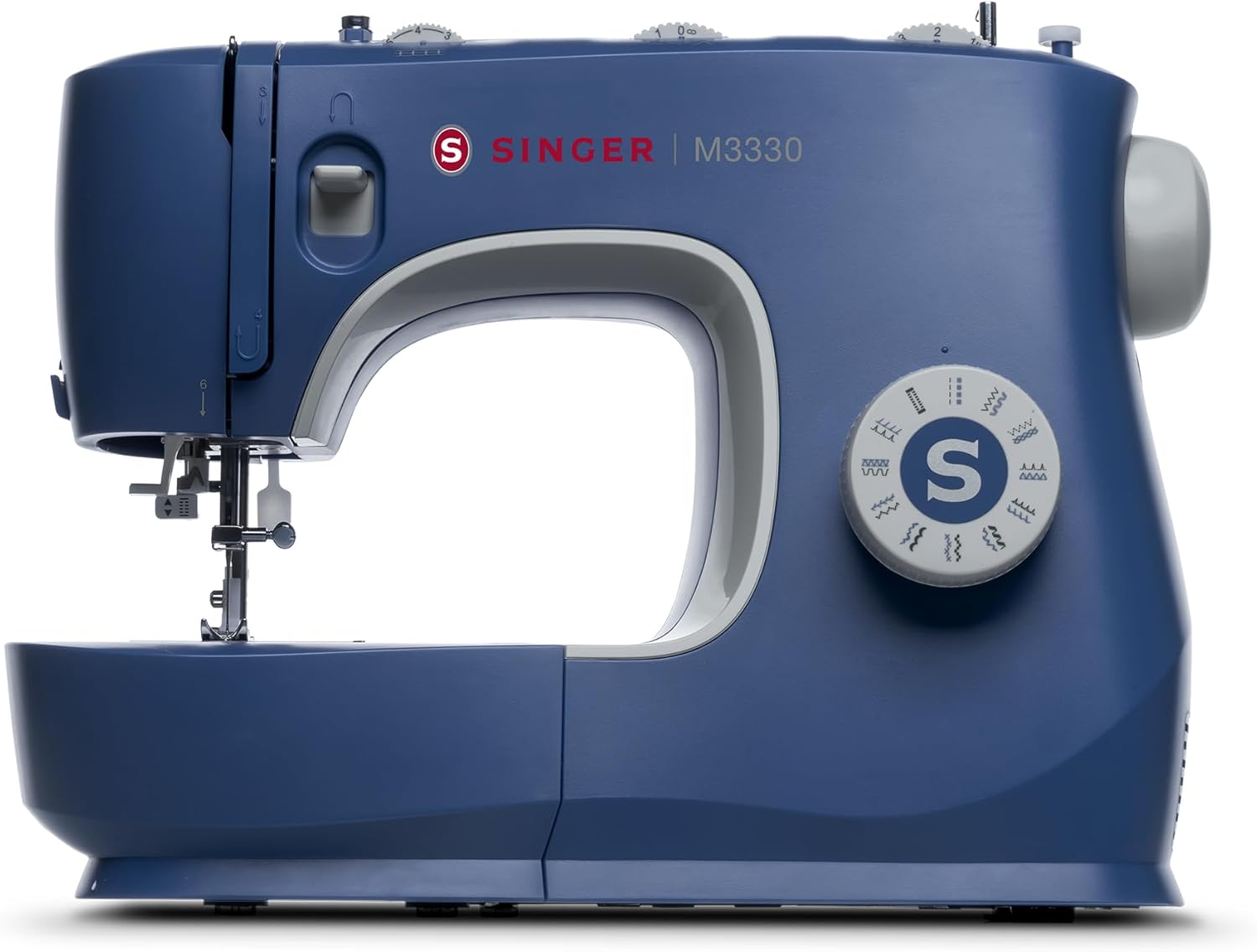
SINGER M3330 Sewing Machine
| Stitch Applications | 97 |
|---|---|
| Built-in Stitches | 23 |
| Power Source | Corded Electric |
| Included Components | Accessory Kit, 4 Presser Feet |
The SINGER M3330 is a corded mechanical sewing machine built for everyday sewing, repairs, and hobby projects. It offers 23 built-in stitches that combine into 97 stitch applications, a one-step buttonhole, a front-loading bobbin, and snap-on presser feet, which makes switching tasks and feet straightforward. The metal frame and bright LED light give the machine stability and good visibility while sewing, and the free arm plus 5.7-inch workspace handle cuffs, sleeves, and medium-sized projects. Included accessory kit adds value with extra presser feet, bobbins, needles, a seam ripper, and other startup tools. Controls are mechanical dials and straightforward threading aids, so it is reliable and simple to maintain but lacks computerized stitch programming and advanced automation. The machine is focused on practical performance rather than specialty features, so users who want touchscreen menus, automated tension adjustments, or embroidery functions will need a different model. For everyday mending, garment construction, and DIY home projects the M3330 balances durability and useful stitch variety at a modest price point.
Best for: A practical buyer who wants a dependable, no-frills machine for regular home sewing, mending, and craft projects that is easy to use and maintain.
Less Ideal for: Those seeking computerized features, built-in embroidery, or industrial-level heavy-fabric sewing should consider other machines.
- Wide stitch selection with 23 built-in stitches enabling 97 stitch applications
- One-step buttonhole and built-in needle threader for faster setup
- Heavy-duty metal frame for stable sewing and longer durability
- Includes a substantial accessory kit with multiple presser feet and starter tools
- Mechanical controls lack computerized stitch memory or automated tension
- Not designed for advanced embroidery or heavy industrial sewing tasks
Verdict: A sturdy, easy-to-use mechanical machine that delivers broad stitch versatility and useful accessories for practical home sewing under $250.
Buvnatep Mini Sewing Machine SM-505A

| Number of Items | 1 |
|---|---|
| Included Components | Foot pedal |
| Power Source | ac_dc |
This compact Buvnatep mini sewing machine is aimed at beginners and casual home use, offering 12 stitch patterns, forward/reverse stitching, bobbin winding and a metal hook mechanism for steady stitching. It runs from an AC adapter or four AA batteries and can be operated via a foot pedal or a start/stop button, which makes it convenient for quick repairs, hems, and simple craft projects away from a main sewing table. Notable practical touches include interchangeable presser feet, a built-in thread cutter and an LED work light plus onboard storage for small accessories. The machine is pre-threaded and pre-tested at the factory, which simplifies first-time setup, and the clear threading guides help new users learn faster. Trade-offs are its plastic construction and compact size, which limit heavy fabrics and long sewing sessions, and fewer advanced features compared with larger machines, so it is best for light-duty tasks rather than sustained garment making.
Best for: Buyers seeking an inexpensive, easy-to-learn sewing machine for basic repairs, hems and small craft projects that can be used around the house or taken to different work areas.
Less Ideal for: People who need a machine for frequent garment construction, heavy fabrics, or professional home sewing where a full-size metal-frame machine is required.
- 12 built-in stitch options for common mending and craft tasks
- Two-speed control plus foot pedal and button operation for flexible use
- Runs on AC adapter or 4 AA batteries for portable use
- LED work light and built-in storage improve usability for beginners
- Plastic, compact build not suited for heavy fabrics or extended sewing sessions
- Limited to basic features—no advanced stitches or heavy-duty motor
Verdict: A compact, budget-friendly starter machine that handles basic mending and small craft projects with simple controls and portable power options.
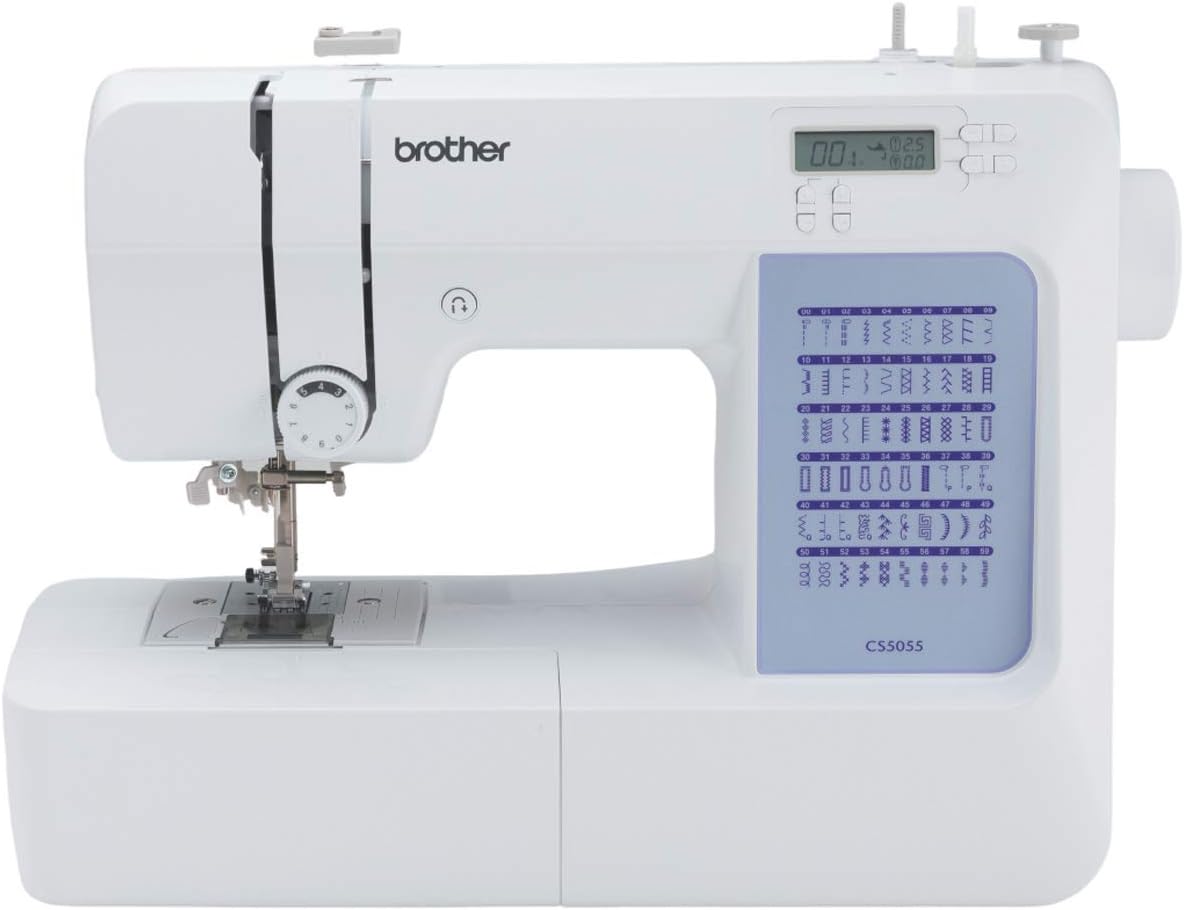
Brother CS5055 Sewing Machine
| Built-in stitches | 60 |
|---|---|
| Buttonhole styles | 7 one-step auto-size |
| Power source | Corded Electric |
| Input voltage | 120 volts |
The Brother CS5055 is a compact computerized sewing machine aimed at home sewers who want straightforward, reliable performance. It offers 60 built-in stitches, seven one-step auto-size buttonholes, an LCD that displays stitch settings, and an automatic needle threader that speeds setup. The machine includes seven presser feet and a jam-resistant drop-in top bobbin for easier threading and fewer interruptions during sewing. A metal frame and fixed needle bar improve stitch consistency and help the unit handle medium-weight fabrics like denim and tweed when paired with the correct needle. Practical conveniences such as a fast bobbin winder, bright LED work light, and a removable accessory tray/free arm make garment work and small projects easier. Trade-offs are typical for a machine in this price range: it is not designed for heavy industrial use or very thick leather, and advanced quilting or embroidery features are limited compared with higher-end models. For everyday mending, garment sewing, and craft projects it delivers dependable, easy-to-use functionality.
Best for: Buyers who prioritize a dependable, easy-to-use machine for everyday sewing, mending, and hobby projects and want features that simplify setup and keep stitching consistent.
Less Ideal for: Those who need a machine for heavy production, professional tailoring, or extensive embroidery and advanced quilting should look at more powerful or specialized models.
- 60 built-in stitches plus 7 one-step auto-size buttonholes for varied projects
- Automatic needle threader and LCD stitch display simplify setup and selection
- Jam-resistant drop-in top bobbin and fast bobbin winder reduce downtime
- Metal frame and fixed needle bar improve stitch stability and durability
- Includes seven presser feet and a free arm for common sewing tasks
- Not intended for heavy industrial workloads or very thick leathers
- Limited advanced quilting and embroidery capabilities compared with higher-end machines
Verdict: A solid, user-friendly computerized sewing machine that delivers reliable, consistent stitching and practical features for home sewers under $250.
SINGER Heavy Duty 4423

| Built-in stitches | 23 (97 applications) |
|---|---|
| Maximum speed | 1,100 stitches per minute |
| Power source | Corded Electric |
| Top drop-in bobbin | Yes |
| Included accessories | All-purpose foot, zipper foot, buttonhole foot, button sewing foot, needles, bobbins, quilting guide |
The SINGER Heavy Duty 4423 is a workhorse mechanical sewing machine built for everyday sewing and heavier projects. It pairs a stronger motor and an extra-high top speed (up to 1,100 stitches per minute) with a heavy-duty metal interior frame and stainless steel bed plate, so it pierces denim, canvas and multiple fabric layers more reliably than basic home models. The machine includes 23 built-in stitches that yield 97 stitch applications, a one-step buttonhole, top drop-in bobbin and an automatic needle threader for faster setup. LED lighting and a selection of presser feet and accessories stored in the tray make it practical for mending, home decor, and beginner-to-intermediate garment work. Trade-offs are that it is a mechanical rather than computerized machine, so stitch selection and fine adjustments rely on dials, and the machine is relatively heavy and less portable than lightweight models. For buyers wanting a durable, fast machine under $250, the 4423 balances power and simplicity well.
Best for: Buyers who want a durable, no-frills machine that can handle heavy fabrics and frequent use while prioritizing reliability and proven performance.
Less Ideal for: If you need touchscreen menus, automated stitch programming, or a very lightweight portable machine, look at computerized or travel-focused alternatives.
- Powerful motor with high top speed for sewing through thick fabrics
- Heavy-duty metal interior frame and stainless steel bed plate for stability and skip-free stitching
- Wide range of stitch applications from 23 built-in stitches (97 applications)
- Top drop-in bobbin and automatic needle threader simplify common tasks
- Includes multiple presser feet and useful accessories in the storage tray
- Mechanical controls mean fewer automated stitch adjustments compared with computerized machines
- Heavier weight makes it less convenient to move or travel with
Verdict: A rugged, fast mechanical machine that delivers factory-quality stitching and heavy-fabric performance for buyers seeking dependable value under $250.
Brother XM2701 Sewing Machine

| Power Source | Corded Electric |
|---|---|
| Input Voltage | 120 volts |
| Included Stitches | 27 |
| Included Feet | 6 |
The Brother XM2701 is a straightforward, reliable mechanical sewing machine aimed at beginners and home sewers who want a durable, easy-to-use machine for mending, garment construction, and basic creative projects. It offers 27 built-in stitches including utility, decorative, and blind hem options plus a one-step auto-size buttonhole, so you can handle hems, zippers, buttonholes, and light quilting without needing extra software or complicated setup. Practical touches like an automatic needle threader, jam-resistant drop-in top bobbin, automatic bobbin winding, built-in LED light, and six quick-change presser feet make setup and daily use less frustrating. Controls are dial-based for stitch selection, length, and width, which keeps operation intuitive though less precise than computerized models. The unit is lightweight and portable, making it easy to move or store, but it is a mechanical design so power users who need high stitch-per-minute speeds, advanced decorative libraries, or heavy industrial capability will find it limiting. For a risk-averse buyer seeking a dependable, no-frills machine under $250, the XM2701 balances useful features with simple operation.
Best for: Buyers seeking a reliable, easy-to-learn machine for everyday sewing projects and home repairs who prefer simple, proven features over advanced electronics.
Less Ideal for: Those wanting a computerized machine with extensive stitch libraries, very high speeds, or a unit built for heavy industrial fabrics should look elsewhere.
- 27 built-in stitches including utility, decorative, and blind hem options
- Automatic needle threader and jam-resistant drop-in top bobbin simplify setup
- Includes six quick-change presser feet and automatic one-step buttonholer
- Built-in LED light and automatic bobbin winding improve everyday usability
- Mechanical dial controls offer less precision than computerized models
- Not designed for high-speed industrial sewing or very heavy fabrics
Verdict: A dependable, beginner-friendly mechanical sewing machine that delivers essential stitches and easy threading for reliable everyday sewing under $250.
Choosing the Right Sewing Machine: Key Factors to Consider
Stitch Options And Quality
The number and type of stitches affect what projects you can complete. Straight and zigzag stitches are essential, while a few decorative or stretch stitches broaden capability for simple alterations and knits. Equally important is how consistently the machine forms stitches across different fabric weights. Uneven tension or skipped stitches will require extra manual adjustments and can ruin work.
Look for machines with adjustable stitch length and width so you can fine-tune settings for hems, topstitching, and basting. A clearly marked stitch selection makes it easier to repeat settings for similar projects, saving time and frustration.
Threading And Bobbin System
A straightforward threading path and an easy-to-load bobbin significantly reduce setup time and user error. Front or top-loading bobbins are common; top-loading designs often allow faster visual checks of remaining thread and simpler tension adjustments.
Pay attention to whether the machine has a built-in thread cutter, automatic needle threader, or clear diagrams on the machine body. Those small conveniences speed up repeated tasks and lower the learning curve for new sewers.
Fabric Handling And Feed Mechanism
Good fabric handling reduces puckering, shifting, and inconsistent seams. A reliable feed dog system and adjustable presser foot pressure let you manage everything from lightweight cotton to medium-weight denim more predictably. Some machines include a drop-feed option for free-motion sewing or quilting, which is useful if you intend to practice quilting without specialized equipment.
Consider whether the presser feet included cover common tasks like zipper insertion, buttonholes, and blind hems. The ability to adjust presser foot pressure matters when switching between thin and thick materials to keep stitch quality consistent.
Ease Of Use And Controls
Simple, intuitive controls matter when you want to move quickly from setup to sewing. Machines with clear dials or labeled buttons for stitch selection, length, and tension reduce trial-and-error. A smooth start/stop function and a responsive foot pedal help maintain a steady stitch rhythm.
User-friendly features like a clear work lamp, removable extension table or free arm, and accessible maintenance points for cleaning and oiling make regular use less of a chore. Instruction manuals and visible markings on the machine also improve the first-time setup experience.
Accessories And Foot Compatibility
Included accessories determine how many tasks you can tackle immediately. Basic accessory packs usually include several presser feet, bobbins, needles, and a seam ripper. Confirm whether the machine accepts common low-shank presser feet if you plan to upgrade or buy specialty feet later.
Availability of compatible feet and replacement parts keeps long-term ownership manageable. Machines that work with standard accessories are usually easier to customize for specific projects without buying proprietary add-ons.
Build Quality And Serviceability
Even budget machines require a minimum of build quality to stay useful over time. Metal internal frames or reinforced needle bars reduce wobble and preserve stitch alignment. Pay attention to the materials used for frequently handled components, like knobs, levers, and the handwheel.
Ease of access for routine maintenance, like cleaning lint from the bobbin area and lubricating moving parts, extends a machine's usable life. Consider how straightforward it is to find replacement parts and whether the design allows simple adjustments without professional service.
Best Machine Setup Practices
Spend time setting up the machine before starting a project. Use the appropriate needle and thread for the fabric, set a sensible stitch length, and test on a fabric scrap that matches your project. Confirm bobbin tension and top tension on a test piece to avoid surprises once you sew the final seam.
Keep a small kit with spare needles, bobbins, and a seam ripper near your machine. Changing needles regularly prevents skipped stitches, and fresh needles reduce fabric pulling and skipped stitches on knits and tightly woven fabrics.
- Always wind the bobbin fully and evenly.
- Match thread weight to fabric and needle size.
- Use a new needle after every large project or when stitching thicker materials.
When To Use Adjustable Presser Foot Pressure
Adjusting presser foot pressure helps manage different fabric thicknesses. Lower pressure prevents lightweight fabrics from stretching or puckering, while higher pressure keeps bulkier materials moving smoothly through the machine.
If your machine lacks a pressure adjustment, try using a stabilizer or tissue paper under delicate fabrics to minimize distortion. For heavier fabrics, taking slower, shorter stitches and ensuring the feed dogs are fully engaged will improve control.
- Reduce pressure for fine silks and chiffons.
- Increase pressure for denim and canvas.
- Use a walking foot or even-feed foot for slippery or multi-layered fabrics.
Maintaining The Machine For Longevity
Regular cleaning and basic maintenance preserve stitch consistency and reduce service needs. Remove lint from the bobbin area and the feed dogs after every few projects, and follow the manual's lubrication points. Keep the exterior dust-free to prevent debris from entering the mechanism.
Store the machine covered or in a case when not in use to protect it from dust and accidental damage. If a mechanical issue appears, consult the manual for troubleshooting steps before attempting repairs to avoid voiding any coverage.
- Clean lint and dust from the bobbin area weekly with light use.
- Replace needles periodically and after hitting pins or zippers.
- Use only recommended lubricants and follow the manual's schedule.
Choosing Needles And Thread For Common Projects
Needle type and thread choice have a large effect on seam strength and appearance. Universal needles work for many woven fabrics, but stretch needles are better for knits and ballpoint tips prevent fabric damage. Use heavier thread for decorative topstitching and lighter thread for seams in delicate fabrics.
Always test stitches on a scrap before sewing the final seam. Tension adjustments are often needed when switching between thread weights or fabric types, and testing prevents time-consuming mistakes on the main piece.
- Use polyester thread for general sewing and cotton-wrapped polyester for natural fibers.
- Switch to topstitching thread for visible decorative seams.
- Label scraps with needle and tension settings that worked for future reference.
How We Chose the Best Sewing Machine
We focused on machines that deliver dependable stitching, straightforward operation, and reasonable longevity while keeping the total cost under $250. To build the shortlist we required each model to include a basic set of stitch options (straight and zigzag at minimum), a user-friendly threading path, and accessible presser foot compatibility for common tasks like hemming and topstitching. We prioritized machines with clear control layouts and steady feed systems because those traits have the most measurable impact on results for everyday sewers. Our evaluation emphasized stitch consistency across a range of fabric weights, the ease and clarity of the threading and bobbin systems, the physical durability of frequently handled parts, and the availability of replacement parts and basic accessories. We excluded specialty or industrial machines and any units that lacked basic safety features or clear user documentation. The final list balances entry-level accessibility with practical performance so new and returning sewers can get useful results without upgrades right away.
Our full evaluation process is outlined in our review methodology.
FAQ
Can a machine under $250 handle light quilting?
Often yes. Many budget machines can handle piecing and light quilting with the right presser foot and walking foot. For heavy, multi-layer quilting you may need a sturdier machine or to stitch more slowly to maintain even feed.
How important is an automatic needle threader?
An automatic needle threader is a convenience that speeds setup and reduces eye strain. It is not essential, but it is helpful for beginners or anyone who changes thread frequently.
What maintenance does a home sewing machine require?
Routine maintenance includes removing lint from the bobbin area, occasional light oiling as the manual directs, and replacing needles regularly. Periodic professional tune-ups can help if the machine develops mechanical issues.
Will a budget machine sew through denim and canvas?
Many budget machines will handle a few layers of denim or canvas using the right needle and slower stitching speed. For repeated heavy-duty use a machine with a stronger internal frame and higher torque is preferable.
Do I need special feet for zippers and buttonholes?
Most machines under $250 include or support standard zipper and buttonhole feet. These feet make tasks faster and neater, so verify accessory compatibility if those functions are important to you.
Final Verdict
A good sewing machine under $250 can handle most home sewing needs if you prioritize solid stitch formation, reliable fabric feeding, and accessible maintenance. Focus on machines that give clear control over stitch settings, offer straightforward threading and bobbin systems, and include or support useful presser feet. Balance the tradeoffs between feature count and build quality. If you plan to sew heavier materials or quilt frequently, emphasize feed quality and presser foot options. For casual garment repairs and learning, prioritize ease of use and clear setup features so you can start sewing confidently.