
Note: This article contains affiliate links. If you click on these links and make a purchase, we may earn a small commission at no extra cost to you. This helps support our research and content. Read our full affiliate disclosure here.
Picking the right sewing machine matters more once you move beyond basic hobby work. At this price range you can expect robust construction, a wider stitch library, and features that support heavier fabrics and frequent use. Whether you sew garments, home goods, or detailed decorative work, a properly chosen sewing machine reduces frustration and saves time. This guide covers our top seven sewing machines under $3,000 that fit a range of advanced home and small-studio needs. We shortlisted machines that balance stitch quality, build durability, and practical features. Below you will find what we evaluated and the main tradeoffs to consider before choosing your next machine.
Top Picks at a Glance
| Best Overall The best all-around choice for most situations | Juki HZL-F600 Sewing Machine |  |
| Best Quality Built to a higher standard if you want something more solid | JUKI TL-2010Q Sewing Machine |  |
| Best Value The sweet spot between price and what you get | Janome JW8100 Sewing Machine |  |
| Best Budget The cheapest option that still gets the job done reliably | Brother FB1757X Sewing Machine |  |
| Top Rated A top-rated pick with lots of positive feedback | Brother HC1850 Sewing & Quilting Machine |  |
| Most Popular A crowd favorite that many people choose with confidence | SINGER Heavy Duty 4423 |  |
| Best Seller A high-volume bestseller chosen again and again | SINGER Heavy Duty 4452 |  |
Juki HZL-F600 Sewing Machine

| Power Source | AC |
|---|---|
| Material | Metal |
The Juki HZL-F600 is a versatile computerized sewing and quilting machine geared toward home sewers who want a broad stitch palette and reliable mechanics. It offers 255 built-in stitches including basic, stretch, decorative, lettering and buttonhole stitches, and uses an LCD stitch selector that makes choosing and previewing stitches straightforward. The automatic needle threader and jam-resistant features reduce fiddly setup and keep threading simple, while the included accessory tray and dust cover help organize feet and notions. In practice the HZL-F600 handles everyday sewing and quilting tasks well, from garment construction to decorative topstitching, and its metal construction suggests durable performance under frequent use. Limitations include a lack of explicit advanced quilting attachments in the listing and no mention of built-in embroidery capabilities, so users wanting integrated embroidery or specialty long-arm quilting features should look elsewhere. For sewing projects that rely on stitch variety, straightforward controls, and sturdy build quality, this Juki is a strong midrange choice.
Best for: Buyers who want a reliable, feature-rich sewing and quilting machine for a wide range of home projects and who value stitch variety and straightforward electronic controls.
Less Ideal for: Specialists seeking integrated embroidery, industrial production speeds, or dedicated long-arm quilting capabilities should consider machines engineered for those tasks instead.
- Large selection of 255 built-in stitches covering basic, stretch, decorative, lettering and buttonholes
- Clear LCD stitch selector simplifies choosing and previewing stitches
- Automatic needle threader reduces eye strain and speeds setup
- Metal construction for stable, durable operation during frequent use
- Accessory tray and dust cover included for organization and protection
- No built-in embroidery functions are listed
- Listing does not specify advanced quilting attachments or long-arm features
Verdict: Choose the Juki HZL-F600 if you want a sturdy, computerized home sewing machine with extensive stitch options and easy-to-use controls.
JUKI TL-2010Q Sewing Machine
| Power Source | Treadle Powered |
|---|
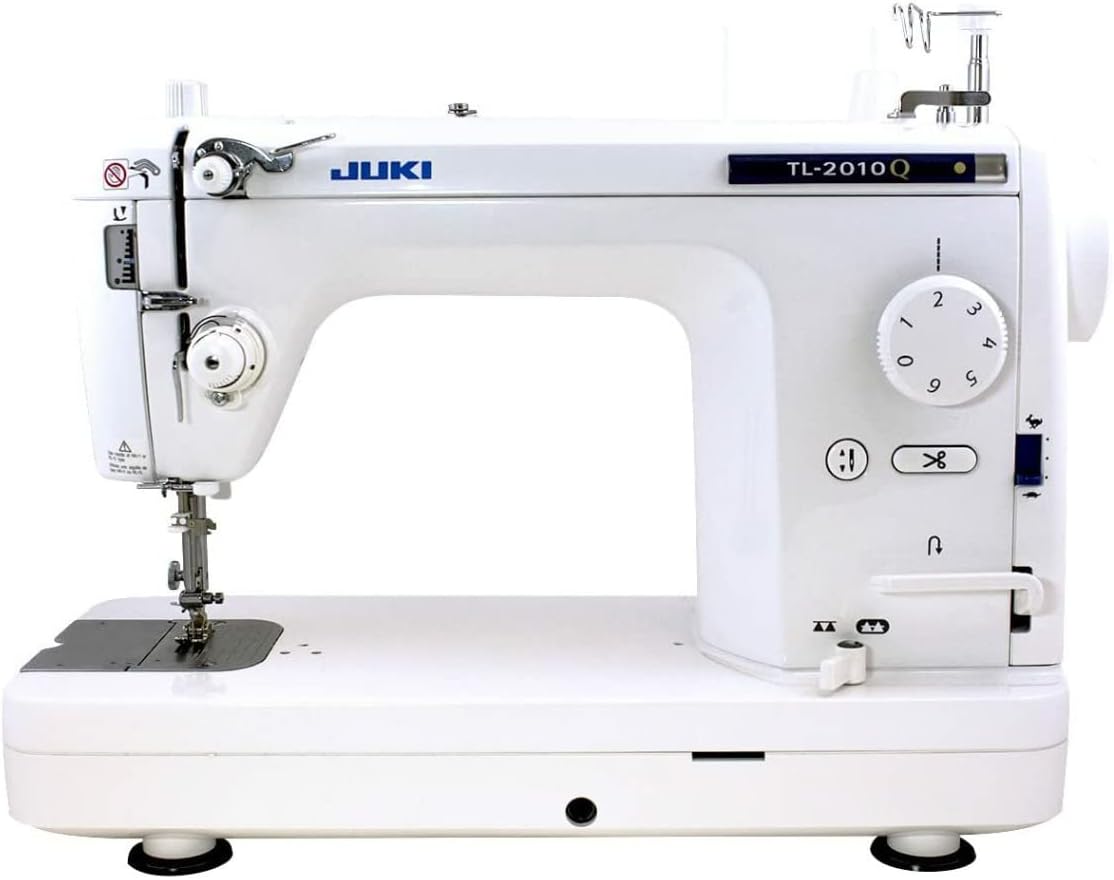
The JUKI TL-2010Q is built for speed and consistent straight stitching, making it a good fit for quilting, tailoring, and heavy-duty home sewing projects. It functions as a portable tabletop machine and can be mounted into a cabinet or used on quilting frames, and the included extension table enlarges the work area for quilts and bulky fabrics. Notable features that affect real-world use include a fast, powerful motor for long runs of stitching, an automatic thread trimmer that trims both needle and bobbin threads with a button press, a knee lifter to raise the presser foot hands-free, and an automatic needle threader to reduce setup time. Practical benefits are reliable straight stitch performance, easier handling of thicker materials, and faster workflow for production-style sewing. Trade-offs are its single-stitch (lockstitch) limitation if you need built-in decorative stitches, and the machine is focused on straight-line performance rather than multifunction domestic convenience.
Best for: Buyers who prioritize consistent high-speed straight stitching for quilting, tailoring, or production-style home sewing and want a durable, no-nonsense machine focused on performance.
Less Ideal for: Sewers who need a wide selection of decorative stitches, automatic buttonholes, or a multi-function domestic machine for casual hobby sewing should consider a different model.
- High-performance motor for sustained straight stitching and quilting
- Automatic thread trimmer trims needle and bobbin threads with one button press
- Knee lifter lets you raise/lower the presser foot without using hands for better control
- Automatic needle threader reduces setup time and eye strain
- Portable tabletop design with included extension table for larger projects
- Limited to single-needle lockstitch so it lacks built-in decorative stitch options
- No mention of built-in stitch variety or automatic buttonholes
Verdict: Choose the JUKI TL-2010Q if you want a durable, performance-focused straight-stitch machine that speeds up quilting and tailoring work.
Janome JW8100 Sewing Machine

| Built-in stitches | 100 |
|---|---|
| Buttonholes | 7 one-step |
| Power source | Corded Electric |
| Feed dog system | 7-piece |
The Janome JW8100 is a feature-packed computerized sewing machine aimed at hobbyists who want reliable stitching for garments and quilting. It offers 100 built-in stitches, seven one-step buttonholes, a backlit LCD for selecting stitches, and convenient controls like start/stop, needle up/down, and a speed control slider. Practical touches include a jam-proof drop-in bobbin, built-in needle threader, auto-declutch bobbin winder, and a 7-piece feed dog system that helps feed light and layered fabrics smoothly. Janome bundles useful accessories — an extra-wide extension table, even feed foot, quarter-inch foot, multiple presser feet, and a hard cover — so you can start quilting and piecing without buying extras. The machine is corded and intended for regular home use; while it handles heavier layers better than basic models, its feature set is geared more toward versatile home projects than heavy industrial work. Expect a learning curve to use all 100 stitches and settings, but the LCD and labeled controls keep operation approachable for determined sewists.
Best for: Buyers who prioritize a versatile, reliable home sewing machine that can handle garment sewing and quilting projects while providing thoughtful convenience features.
Less Ideal for: Users who need a heavy-duty commercial machine for continuous industrial production or who prefer an ultra-simple machine with only basic stitches.
- 100 built-in stitches and seven one-step buttonholes for versatile sewing and decorative work
- Backlit LCD and easy-access controls (start/stop, speed slider, needle up/down) simplify operation
- 7-piece feed dog and even feed foot improve fabric handling for quilts and layered materials
- Bonus accessories included such as extra-wide extension table and multiple presser feet let you start quilting immediately
- Designed for home and hobby use rather than heavy industrial or commercial sewing
- Many stitch options can be overwhelming for beginners who want a minimal set of functions
Verdict: A well-rounded computerized home sewing and quilting machine that bundles useful accessories and practical controls for hobbyists who want capability without stepping up to industrial equipment.
Brother FB1757X Sewing Machine

| Built-in stitches | 17 |
|---|---|
| Buttonhole styles | 4 one-step |
| Power source | AC |
| Frame material | Metal |
The Brother FB1757X is a straightforward mechanical sewing machine aimed at general home sewing tasks. It offers 17 built-in stitches and four one-step buttonhole styles, a free arm for sleeves and pant legs, and an LED-lit work area that helps with detail work. The drop-in jam-resistant bobbin and included accessories such as multiple presser feet and an extension table make setup and basic projects easy for beginners and hobbyists. It is built on a metal frame and includes tension control so it can handle heavier fabrics like denim and some leather with care. The machine uses dial stitch selection and manual controls rather than a touchscreen, which keeps operation simple but limits advanced customization. There is no computerized automation, so tasks like stitch memory or decorative stitch editing are not available. For someone wanting a reliable, no-frills machine for mending, garments, home decor, and small quilting projects, the FB1757X covers the essentials without unnecessary complexity.
Best for: Buyers seeking an affordable, reliable machine for everyday sewing, mending, and basic garment or home-decor projects who prefer simple mechanical controls over digital complexity.
Less Ideal for: If you need advanced computerized features, many decorative stitches, or stitch editing for professional-level embroidery or complex quilting, this mechanical model is not the best choice.
- 17 built-in utility and decorative stitches plus 4 buttonhole styles for common sewing needs
- Jam-resistant drop-in bobbin with clear cover for easier thread monitoring
- Free arm and included wide extension table for sewing sleeves and larger projects
- LED work light improves visibility for detailed or low-light tasks
- Durable metal frame and manual tension control for handling heavier fabrics
- Mechanical dial controls limit advanced stitch programming and automation
- Fewer stitch options compared with computerized models
Verdict: A dependable, budget-friendly mechanical machine that covers core home sewing tasks without unnecessary digital complexity.
Brother HC1850 Sewing & Quilting Machine

| Built-in stitches | 185 |
|---|---|
| Included feet | 8 |
| Power source | Corded Electric |
| Input voltage | 120 volts_of_alternating_current |
The Brother HC1850 is a full-featured computerized sewing and quilting machine aimed at hobbyists and small-project makers. It provides 185 built-in stitches, an LCD with push-button stitch selection, an automatic needle threader, and a jam-resistant drop-in top bobbin that make setup and stitch changes quick. The package includes a wide extension table and eight presser feet including a spring-action quilting foot and zipper, blind hem, and buttonhole feet, so you can move from garment sewing to free-motion quilting without buying extras. Variable speed control and a reliable feed system help the machine handle lightweight to medium-weight fabrics and even denim when paired with appropriate needles. The HC1850 is lightweight and portable for classes and storage, and Brother's support and a 25-year limited warranty back its durability. Limitations: it is designed for 120V use only and is not intended for heavy industrial workloads, so power users sewing full-time or very heavy materials may prefer a commercial model.
Best for: Buyers who prioritize a dependable, feature-rich home machine for quilting, garment sewing, and crafts and want something that grows with their skills.
Less Ideal for: If you sew full-time, work with very heavy industrial fabrics, or need multi-voltage support for international use, consider a commercial-grade or purpose-built industrial machine instead.
- Wide range of 185 built-in stitches including 55 alphanumeric options for basic monogramming
- Automatic needle threader and top-drop bobbin for faster setup and fewer jams
- Includes extension table and eight presser feet tailored for quilting and general sewing
- Backlit LCD and push-button stitch selection for easy operation and stitch adjustments
- Lightweight and portable design with variable speed control for classroom or home use
- Intended for 120V US power only and not suited for international voltage without proper support
- Not built for heavy industrial or continuous commercial sewing workloads
Verdict: A reliable, well-supported computerized sewing and quilting machine that packs quilting features and many stitches into an affordable, home-friendly package.
SINGER Heavy Duty 4423

| Built-in stitches | 23 |
|---|---|
| Stitch applications | 97 |
| Max sewing speed | 1,100 stitches/min |
| Power source | Corded Electric |
| Input voltage | 120 volts |
The SINGER Heavy Duty 4423 is a mechanical sewing machine built for fast, reliable home sewing and tougher materials like denim and canvas. It offers 23 built-in stitches that provide 97 stitch applications, a powerful motor rated for high-speed sewing up to 1,100 stitches per minute, and a heavy-duty metal interior frame with a stainless steel bed plate for smoother fabric feed. Practical touches include a top drop-in bobbin, one-step buttonhole, LED work light, and an automatic needle threader to speed setup. The machine ships with several presser feet and accessories that cover common tasks such as zippers and button sewing, which helps new sewers start without extra purchases. Expect strong straight-stitch performance and good piercing power for multiple layers; however the machine is manual rather than computerized, so stitch selection and adjustments are mechanical rather than on a digital display, and advanced decorative or programmable stitches are limited. Noise and vibration are typical at its higher speeds, and users wanting computerized features or embroidery will need a different model.
Best for: Buyers who want a robust, no-frills machine that reliably handles heavy fabrics and frequent home projects and who place value on proven performance and wide user adoption.
Less Ideal for: People seeking computerized sewing features, built-in embroidery, or advanced programmable stitch options should consider a different, feature-rich model.
- Powerful motor with high sewing speed for faster project completion
- Heavy-duty metal interior frame and stainless steel bed plate for stability and smoother fabric feed
- Top drop-in bobbin and automatic needle threader simplify setup and reduce interruptions
- Includes multiple presser feet and accessories for common sewing tasks
- One-step buttonhole and LED light improve usability for garment and home-decor projects
- Mechanical controls limit stitch customization compared with computerized machines
- Can be louder and produce more vibration at maximum speed
Verdict: Choose the SINGER 4423 when you need a fast, rugged, factory-quality mechanical machine that handles heavy fabrics reliably.
SINGER Heavy Duty 4452

| Built-in stitches | 32 |
|---|---|
| Stitch applications | 110 |
| Top speed | 1100 stitches/min |
| Power source | Ac/Dc |
The SINGER Heavy Duty 4452 is a straightforward, metal-framed mechanical sewing machine designed for hobbyists who need extra power for tough materials. It delivers a high sewing speed (up to 1100 stitches per minute) and a stronger motor for piercing denim, canvas, and layered projects, while adjustable presser foot pressure lets you switch to lightweight fabrics without fuss. Built-in conveniences include a top drop-in bobbin with a clear cover, a stainless steel bed plate for smooth fabric travel, and a built-in needle threader that speeds setup. Singer bundles six useful presser feet including a walking foot and a non-stick foot for tricky surfaces, plus heavy-duty needles and extra bobbins, so you can start projects right away. The machine is mechanically simple rather than computerized, so it lacks automated stitch programming and digital controls, and its heavier metal body makes it less portable. For buyers who favor reliability and power over touchscreen bells and whistles, the 4452 is a practical, no-nonsense choice that covers mending, garment making, and home-decor tasks effectively.
Best for: Buyers who want a dependable, no-frills machine that reliably sews heavy fabrics and multiple layers and who prefer simple mechanical controls over computerized features.
Less Ideal for: Users seeking a lightweight travel machine or those who want touchscreen menus, automatic stitch selection, or extensive computerized embroidery features.
- Powerful motor and metal frame handle multiple fabric layers and heavy materials
- High top speed for faster sewing and quicker project completion
- Includes six presser feet and accessories to start sewing a variety of projects
- Top drop-in bobbin with clear cover reduces jams and makes thread monitoring easy
- Mechanical controls only, so no digital stitch programming or advanced automation
- Relatively heavy due to metal construction, reducing portability
Verdict: Choose the 4452 if you need a rugged, high-speed mechanical machine that handles heavy fabrics reliably without unnecessary digital features.
Choosing the Right Sewing Machine: Key Factors to Consider
Stitch Quality and Consistency
Stitch quality directly affects finished results. Consistent stitch formation, even tension, and clean stitch lines matter for everything from seams to topstitching.
Poor stitch consistency shows as skipped stitches, uneven tension, or puckering, especially when sewing multiple fabric layers. At this price point you should expect machines that hold tension more reliably and produce uniform stitches across different fabric weights.
Build Material and Frame Stability
The machine's chassis and internal frame determine how well it resists vibration and maintains alignment over time. Metal-reinforced frames reduce flex under load, which preserves stitch accuracy and extends service life.
If you plan to sew heavier fabrics or run long sessions, a sturdier frame also improves user comfort by reducing noise and shaking. Lightweight plastics are fine for occasional use but will show limitations under frequent, heavy-duty sewing.
Motor Power, Speed, and Control
Motor torque affects the machine's ability to penetrate thick fabrics and multiple layers without bogging down. High top speed matters less than controllable speed and steady power delivery when working on precision tasks.
Look for machines with adjustable speed controls, variable foot control response, and motors designed to sustain torque at lower speeds. These features make it easier to sew fine details at a safe pace while still having the capability for faster straight runs.
Needle, Threading, and Bobbin System
Efficient threading paths, clear threading guides, and a robust bobbin system reduce downtime and improve stitch reliability. Bobbin capacity and ease of access determine how often you stop to change thread.
Top-loading and front-loading bobbin designs each have tradeoffs, but the important part is predictable performance: bobbins that stay tensioned, minimal tangles, and straightforward threading procedures.
Presser Feet, Feed System, and Accessories
A machine's ability to accept multiple presser feet and to adjust presser foot pressure expands what you can sew. Feed mechanisms, such as adjustable feed dogs or specialized feet, control fabric movement and prevent slipping on delicate surfaces.
Accessory availability matters because it influences how many techniques you can perform without improvisation. Practical attachments and feet are essential for hemming, quilting, zipper insertion, and decorative work.
Serviceability and Maintenance
Regular maintenance keeps machines running smoothly. Easy access to the bobbin area, simple oiling points, and replaceable needles and belts reduce service complexity.
Consider how straightforward routine tasks are, and whether the machine design allows quick cleaning of lint and thread. Machines with accessible maintenance points will require less downtime and fewer professional interventions.
Who Should Consider a Machine at This Price
A sewing machine priced under $3,000 is aimed at experienced hobbyists, serious sewists, or small-scale makers who need reliability, expanded stitch capability, and the ability to handle heavier materials. If you sew multiple times per week, produce wearable garments for sale, or work with upholstery and denim, this tier offers meaningful upgrades over entry-level machines.
If your sewing is occasional or you're just learning, many lower-priced machines will serve well. But if you expect frequent use, finishing quality matters and paying more for better components and serviceability can be worthwhile.
- Suitable for frequent sewing, small-batch production, and heavier materials
- Provides better longevity and consistent results with less tuning
- Offers advanced features that speed up complex tasks
Common Features Worth Prioritizing
Prioritize machines with a solid straight-stitch performance, adjustable presser-foot pressure, and a reliable feed system. A wide stitch selection is useful, but the quality of fundamental stitches matters most for everyday sewing.
Useful convenience features include automatic needle threaders, adjustable light, and stitch memory or customization. These do not replace core performance but can substantially speed up workflows and reduce frustration.
- Adjustable stitch length and width
- Multiple presser-foot compatibility
- Clear, durable threading guides and good illumination
Working with Heavy Fabrics and Multiple Layers
When sewing heavy fabrics, motor torque, needle choice, and feed stability determine success. Use heavier needles, appropriate thread, and slow, steady speed control to maintain stitch quality through bulk.
Some machines include a walking foot or specialized feet to help feed multiple layers evenly. If you plan to work with upholstery, canvas, or many denim layers, confirm the machine's stated fabric-handling capabilities and available accessories.
- Select appropriate needle size and type
- Use consistent presser-foot pressure and slower speeds
- Consider feet designed for multi-layer feeding
Maintenance Routines to Extend Lifespan
Regularly clean lint and dust from the bobbin area and feed dogs. Change needles frequently when sewing high-density seams or abrasive materials to prevent skipped stitches and fabric damage.
Schedule periodic inspections for belt wear and motor noise if you sew often. Proper storage, avoiding excessive humidity, and using recommended lubricants where applicable will keep machines running smoothly for years.
- Clean lint from bobbin and feed dog areas after heavy projects
- Replace needles often to protect fabric and machine timing
- Follow manufacturer guidance for lubrication points
Accessories That Make Big Differences
Some accessories have outsized impact on workflow. A quality walking foot, free-motion quilting foot, adjustable hem guide, and a range of presser feet expand capability without modifying the core machine.
Invest in a good set of needles and threads matched to the fabrics you sew. These consumables influence outcome more than many optional gadget features.
- Walking foot for layered fabrics
- Free-motion quilting foot for decorative stitching
- Wide range of needle types and sizes
How We Chose the Best Sewing Machine
We prioritized machines that deliver dependable stitch quality, durable build, and a practical feature set for serious home sewers and small studios. Our selection filters favored metal-frame or reinforced chassis designs that resist vibration and maintain needle-to-bobbin alignment over heavy use. We looked for models with a broad and well-implemented stitch library, including utility, stretch, and decorative stitches, plus reliable straight and zigzag performance. Speed control and motor torque were considered to ensure consistent stitching through thicker fabrics. Thread handling, bobbin capacity, and feed-dog design were assessed because smooth feeding reduces skipped stitches and puckering. We also evaluated user-facing convenience: accessible maintenance, presser-foot options, attachment compatibility, and intuitive controls. Excluded were lightweight, purely entry-level machines and industrial-only equipment not intended for home or small-studio environments. We did not consider optional add-ons as sole reasons for inclusion; core machine capability and real-world reliability were the main deciding factors.
Our full evaluation process is outlined in our review methodology.
FAQ
Are machines under $3,000 worth it for home sewists?
Often yes for committed hobbyists and small business makers. Machines in this range offer better longevity, more reliable stitch quality, and features that save time on complex projects. For occasional sewing, lower-priced options may suffice.
How important is motor torque versus top speed?
Torque is usually more important because it determines the machine's ability to sew through thick layers without stalling. Top speed matters for long straight seams but controlled, steady power produces better results for detailed work.
Can I use specialty feet with machines in this range?
Yes, machines at this level typically accept a wide variety of presser feet and attachments. Check compatibility for specific techniques you plan to use, such as quilting or zipper insertion.
How often should I change needles?
Change needles after roughly 8 to 16 hours of sewing or sooner when working with heavy or abrasive materials. Dull or bent needles cause skipped stitches and can damage fabric and the machine.
Is professional servicing necessary?
Periodic professional servicing is advisable for machines used frequently. Regular home maintenance reduces service intervals, but a yearly or biannual check can catch timing and motor issues before they affect work.
Final Verdict
For sewists moving beyond basic projects, prioritize machines that deliver consistent stitch quality, a rigid frame, and practical feeding controls. Focus on motor torque and threading reliability when you expect to work with heavier fabrics or run frequent sewing sessions. Balance your needs for specialized feet and accessories against core machine capability. Choose the machine that best matches the fabrics, project types, and frequency of use you anticipate to get the most value and the fewest interruptions in your workflow.