
Note: This article contains affiliate links. If you click on these links and make a purchase, we may earn a small commission at no extra cost to you. This helps support our research and content. Read our full affiliate disclosure here.
If you sew at home, choosing the right sewing machine affects how quickly you finish projects and how pleasant the process feels. A capable machine under $400 should handle common fabrics, offer useful stitch choices, and be durable enough for regular use. This guide shortlists the top options in that price range so you can focus on features that matter in everyday sewing. We evaluated machines for stitch quality, ease of setup and use, and the robustness of bobbin and feeding systems. Read on to see which models made the cut and why those categories were important for hobbyists and occasional menders alike.
Top Picks at a Glance
| Best Overall The best all-around choice for most situations | Bernette B33 Sewing Machine |  |
| Best Quality Built to a higher standard if you want something more solid | Janome JW8100 Sewing Machine |  |
| Best Value The sweet spot between price and what you get | SINGER M3330 Sewing Machine |  |
| Best Budget The cheapest option that still gets the job done reliably | Zeuboary 505 Sewing Machine |  |
| Top Rated A top-rated pick with lots of positive feedback | Brother HC1850 Sewing & Quilting Machine |  |
| Most Popular A crowd favorite that many people choose with confidence | Brother XM2701 Sewing Machine |  |
| Best Seller A high-volume bestseller chosen again and again | SINGER Heavy Duty 4423 |  |
Bernette B33 Sewing Machine
| Power Source | Corded Electric |
|---|---|
| Number of Stitches | 15 built-in stitches |
| Bobbin System | Front-loading bobbin |
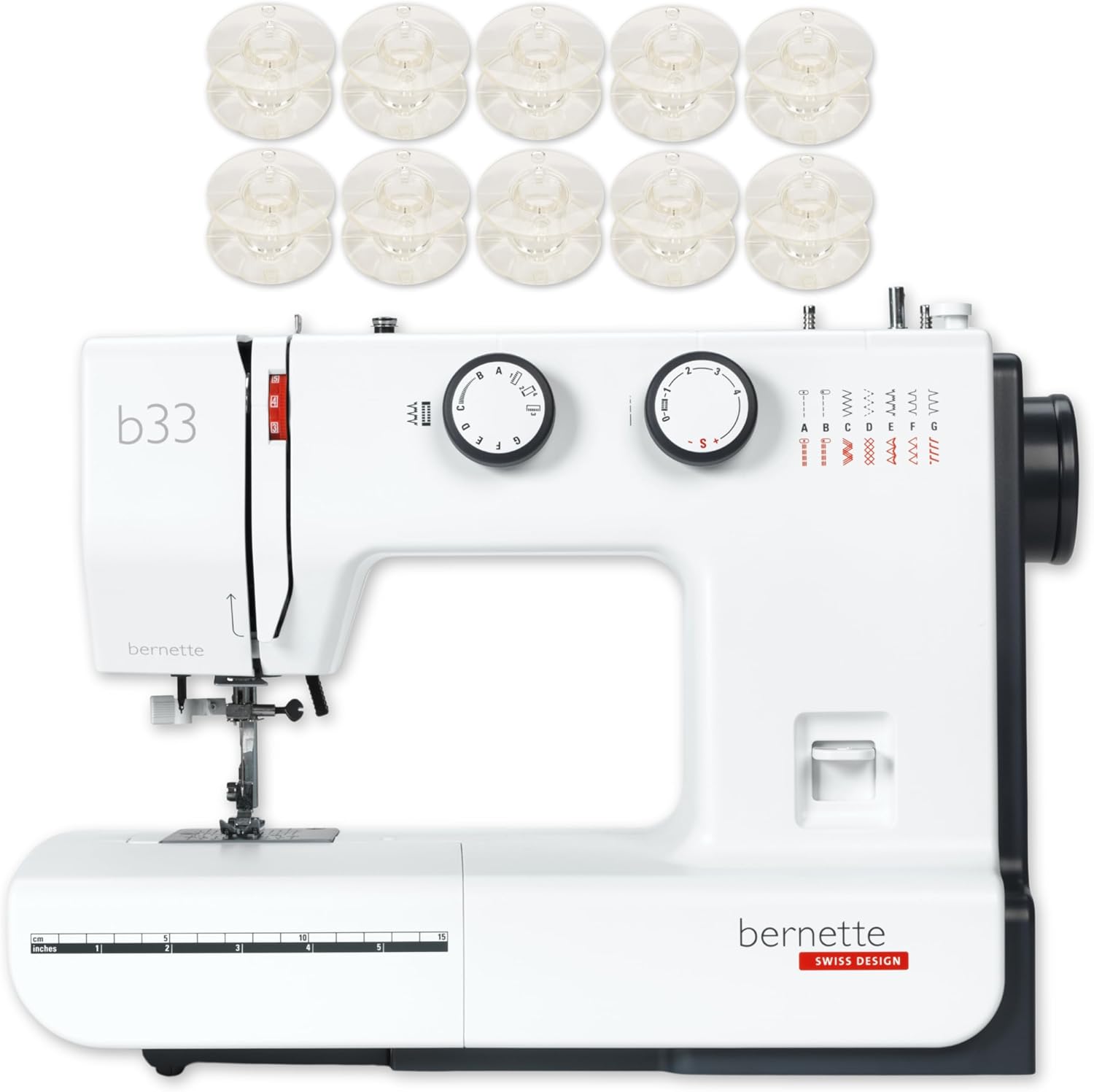
The Bernette B33 is a straightforward, mechanically driven sewing machine aimed at home sewers and hobbyists. It provides 15 built-in stitches, manual stitch width and length dials, a semi-automatic threader, and a front-loading bobbin system; those features make it suitable for garment repairs, simple home decor, and basic quilting. Built-in storage and a manual thread cutter keep small accessories handy, while the reverse lever reinforces seams for durable stitching. The machine's construction is described as heavy-duty for its class, so it handles medium-weight fabrics like denim and cotton reliably, though very heavy industrial materials may push its limits. Its corded electric power and compact footprint make it portable between sewing classes or workspaces, but fully mechanical controls mean it lacks programmable stitch sequences or a digital display. For buyers who want a dependable, no-frills machine that covers most everyday sewing tasks, the B33 offers practical performance without digital complexity.
Best for: Buyers who want a reliable, easy-to-use mechanical machine for home sewing, hobby projects, and occasional heavier fabrics without the complication of digital menus.
Less Ideal for: People who need computerized features, programmable stitch patterns, or a machine built for continuous commercial production should look at higher-end or industrial models.
- 15 built-in stitches and adjustable stitch width/length for common sewing tasks
- Front-loading bobbin and semi-automatic threader for quicker setup and bobbin changes
- Sturdy feel for a consumer machine that handles medium-weight fabrics
- Built-in storage keeps presser feet and bobbins organized
- Includes a 10-pack of bobbins so you can start sewing right away
- Fully mechanical controls lack digital stitch selection or memory
- Not intended for very heavy industrial fabrics or high-volume production
Verdict: A dependable, no-frills mechanical sewing machine that delivers practical performance for home sewists and hobbyists under $400.
Janome JW8100 Sewing Machine

| Power Source | Corded Electric |
|---|---|
| Number of Stitches | 100 built-in stitches |
| Buttonholes | 7 one-step buttonholes |
| Stitch Width | 7mm maximum |
The Janome JW8100 is a feature-rich computerized sewing machine aimed at serious home sewists who want reliable stitch quality and quilting capability without stepping up to pro equipment. It offers 100 built-in stitches and seven one-step buttonholes selectable via a backlit LCD and simple navigation buttons, while convenience controls like a start/stop button, speed slider, needle up/down and a built-in threader make repetitive work faster. The machine feeds fabric consistently with a 7-piece feed dog system and includes an auto-declutch bobbin winder and 7mm stitch width for bolder decorative stitches. Janome bundles useful quilting accessories — an extra-wide extension table, even feed foot and 1/4 inch quilting foot — which help manage large projects and layered fabrics. Practical limitations: it is a home-class machine rather than an industrial head, so very heavy continuous production or extremely thick upholstery work may push its limits, and the weight and size reflect a solid metal build that is less portable. For the price bracket it delivers a strong mix of power, stitch variety, and quilting-ready extras.
Best for: Home sewists who prioritize stitch quality, quilting capability, and built-in convenience features for hobbyist to advanced projects.
Less Ideal for: Users needing an industrial or commercial machine for continuous high-volume production or those who require an ultra-light portable model.
- 100 built-in stitches and 7 one-step buttonholes for versatile decorative and utility sewing
- Backlit LCD with easy navigation plus start/stop and speed control for precise operation
- 7-piece feed dog system and even feed foot provide consistent fabric feeding and reduced puckering
- Includes quilting-focused accessories: extra-wide extension table and 1/4 inch quilting foot
- Designed as a home machine so it may struggle with continuous heavy industrial use
- Relatively heavy metal construction reduces portability for travel or classes
Verdict: A well-equipped computerized home sewing and quilting machine that delivers strong stitch performance and useful quilting accessories under $400.
SINGER M3330 Sewing Machine
| Stitch applications | 97 |
|---|---|
| Built-in stitches | 23 |
| Buttonhole | 1-step |
| Power Source | Corded Electric |
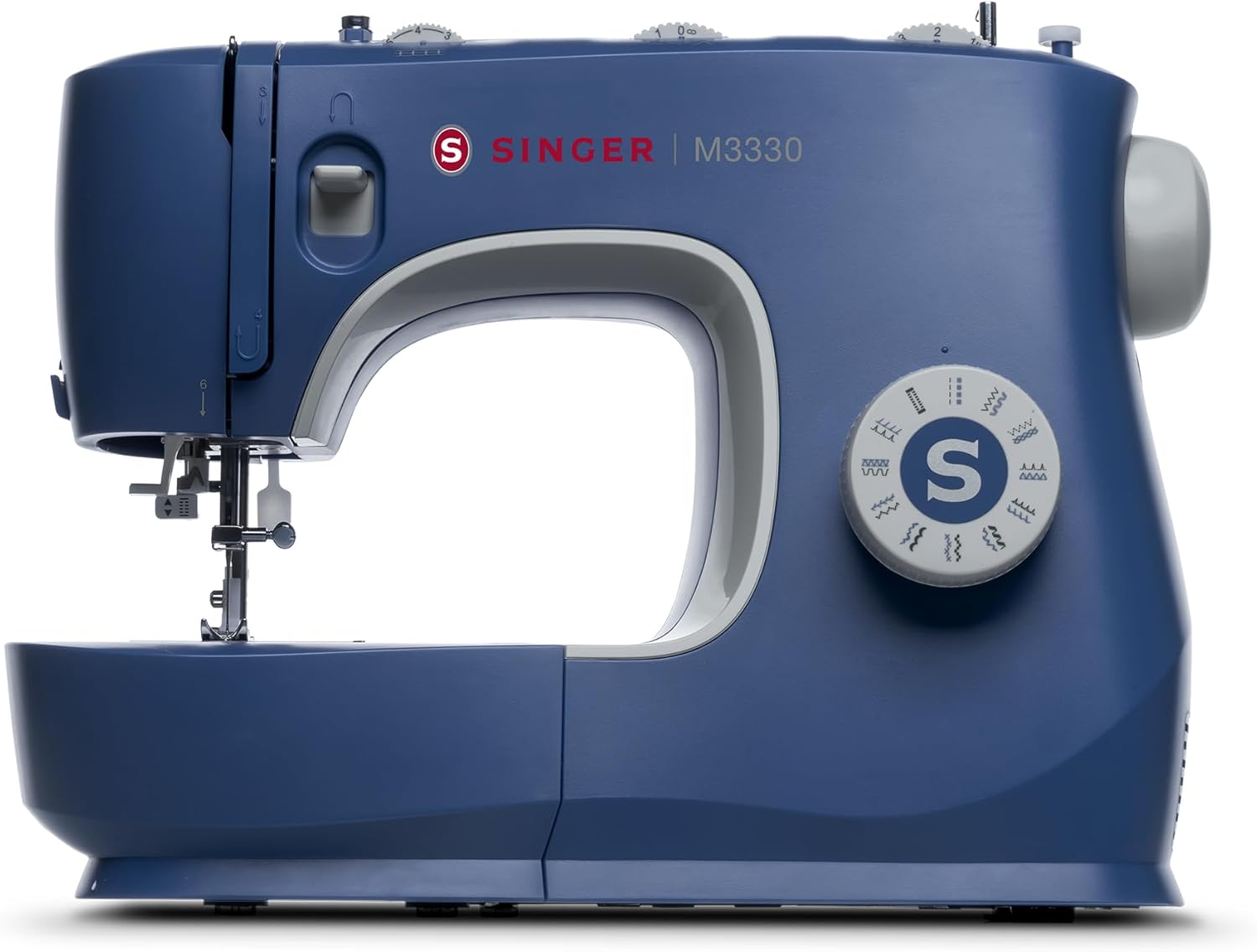
The SINGER M3330 is a straightforward mechanical sewing machine aimed at general home use and beginners. It offers 23 built-in stitches that translate into 97 stitch applications, a one-step buttonhole, a front-loading bobbin, and snap-on presser feet, which make switching tasks and feet quick and simple. Practical touches like a built-in needle threader, bright LED lighting, a free arm for cuffs and sleeves, and a heavy-duty metal frame help it handle everyday repairs, garments, and basic decorative projects with steady reliability. The included accessory kit and four presser feet provide good out-of-box value for common sewing tasks. Because it is a mechanical machine, controls are manual dials rather than digital menus, which keeps operation intuitive but limits automated convenience found on computerized models. It also lacks specialized high-end features like automatic fabric sensors or quilting-specific attachments, so sewists tackling advanced quilting or heavy industrial fabrics may find it short of their needs. For typical household sewing and hobbyists who prefer simple, dependable controls, the M3330 covers the essentials well.
Best for: Buyers who want a no-nonsense, reliable machine for everyday sewing and small projects and who prefer simple manual controls and good out-of-box value.
Less Ideal for: Sewists who need advanced computerized features, quilting-specific capabilities, or heavy industrial fabric handling should consider other specialized machines.
- Wide stitch range with 23 built-in stitches yielding 97 stitch applications for basic, stretch, and decorative work
- One-step buttonhole and built-in needle threader speed up common tasks for beginners
- Heavy-duty metal frame and bright LED light improve stability and visibility during sewing
- Front-loading bobbin and snap-on presser feet make threading and foot changes quick and user-friendly
- Includes an accessory kit and four presser feet to get started immediately
- Mechanical dial controls lack the precision and automated features of computerized machines
- Not equipped with specialized quilting or heavy-industrial features for advanced projects
Verdict: A dependable, beginner-friendly mechanical machine that delivers versatile everyday sewing performance and strong value for home sewists.
Zeuboary 505 Sewing Machine

| Number of Stitches | 12 built-in stitches |
|---|---|
| Power Source | AC adapter or 4 AA batteries |
| Included Components | Sewing Machine, extension table, presser feet, thread kit |
| Weight | 5.7 pounds |
The Zeuboary 505 is a compact, beginner-focused sewing machine intended for basic mending, simple garment construction, and small craft projects. It arrives pre-threaded and includes a short factory test stitch so new users can start quickly, and the package adds an extension table, interchangeable presser feet, an automatic bobbin winder, and a 32-color thread kit to cover common starter needs. Practical touches like an LED work light, thread cutter, storage drawer, and both foot-pedal and push-button operation make it easy to learn and switch between hands-free and manual control. The unit runs on the included AC adapter or four AA batteries, which adds portability for small spaces but requires separate batteries. The 12 stitch patterns and reverse stitching handle hems, seams, and simple decorative work, though this machine is best for lightweight fabrics and beginner projects rather than heavy-duty tailoring or thick layers. For buyers prioritizing an affordable, ready-to-use machine for home practice and small repairs, it delivers a lot of convenience in a small footprint.
Best for: Buyers looking for an inexpensive, easy-to-use machine to learn sewing, do mending, and complete small home craft projects in tight spaces.
Less Ideal for: People who need a machine for heavy fabrics, professional garment construction, or sustained high-volume sewing should consider a more robust model.
- Pre-threaded out of the box and includes video/tutorial guidance for quick setup
- Compact and lightweight for easy storage and portability
- Includes useful accessories: extension table, multiple presser feet, bobbin winder, and 32-color thread kit
- Dual power options (AC adapter or 4 AA batteries) and both foot-pedal and push-button control
- Built-in LED light and storage drawer keep workspace organized and visible
- Designed for lightweight fabrics and beginner tasks, not heavy or industrial sewing
- Some accessories and batteries may be lower durability compared with higher-end machines
Verdict: A budget-friendly, beginner-oriented sewing machine that bundles practical accessories and simple controls to get new sewers stitching right away.
Brother HC1850 Sewing & Quilting Machine

| Built-in stitches | 185 |
|---|---|
| Included feet | 8 |
| Power source | Corded Electric |
| Input voltage | 120 volts_of_alternating_current |
The Brother HC1850 is a feature-packed computerized sewing and quilting machine aimed at home sewists who want versatility without complexity. It offers 185 built-in stitches including 55 alphanumeric options and eight one-step auto-size buttonholes, selectable via a backlit LCD and push-button controls. Practical features like an advanced automatic needle threader, jam-resistant drop-in top bobbin, variable speed control, and an exceptional feed system make everyday sewing, garment work, and quilting smoother and faster. The included wide extension table, spring-action quilting foot, and quilting guide help manage larger projects and free-motion quilting. Brother bundles eight presser feet and starter accessories so you can begin sewing right away. The machine is lightweight and portable for classes or club meetings, and its 120V design is matched to U.S. household power. Limitations to note are that it is a domestic machine rather than an industrial workhorse, so users tackling continuous heavy production or very thick industrial materials may find it less suitable, and the warranty and support are region-specific to U.S. sales at 120V.
Best for: Buyers who prioritize a dependable, full-featured home sewing machine that will handle quilting, garment sewing, and hobby projects with minimal fuss and long-term reliability.
Less Ideal for: People who need an industrial or commercial machine for nonstop heavy production or who require a model rated for non-U.S. voltages.
- Wide range of built-in stitches including alphanumeric options for basic monogramming
- Automatic needle threader and top drop-in bobbin for easier setup and fewer jams
- Included wide extension table and quilting foot make handling large quilting projects simpler
- Variable speed control and intuitive LCD/buttons suit both beginners and more experienced users
- Designed for home use so not intended for continuous industrial-grade heavy-duty sewing
- Limited to 120V operation and U.S. warranty conditions
Verdict: A reliable, full-featured computerized sewing and quilting machine that delivers versatile stitch options and practical quilting features for home sewers under $400.
Brother XM2701 Sewing Machine

| Built-in stitches | 27 |
|---|---|
| Power source | Corded Electric |
| Input voltage | 120 volts |
| Included feet | 6 quick-change presser feet |
The Brother XM2701 is a practical, easy-to-use mechanical sewing machine aimed at beginners and home sewists who need reliable basic functionality. It offers 27 built-in stitches including utility, decorative, and quilting options plus a one-step auto-size buttonholer, and it ships with six quick-change presser feet that cover common tasks like zippers, button sewing, and narrow hems. Threading is simplified by an automatic needle threader and a jam-resistant drop-in top bobbin, while the free arm and built-in LED light make hemming sleeves and working in tight spots straightforward. Controls are dial-based for stitch selection, length, and width, which keeps operation intuitive without a steep learning curve. The machine is corded and designed for 120V US use and includes useful accessories such as extra bobbins and a screwdriver. Trade-offs are its mechanical (not computerized) controls and modest stitch count compared with higher-end models, and its lightweight build means it is not the best choice for heavy industrial workloads. For everyday alterations, garment sewing, and hobby projects it delivers solid value and dependable performance under $400.
Best for: Buyers who want a dependable, beginner-friendly machine with enough versatility for home sewing projects and value the reassurance of strong user feedback and proven reliability.
Less Ideal for: People who need advanced computerized features, large stitch libraries, or a heavy-duty industrial machine for continuous professional production.
- 27 built-in stitches including decorative and quilting options
- Automatic needle threader and jam-resistant drop-in bobbin for easier setup
- Includes six quick-change presser feet and useful accessories out of the box
- Free arm and LED work light simplify hems and small or dark sewing areas
- Mechanical dial controls lack the precision and features of computerized machines
- Not engineered for sustained heavy industrial use
Verdict: A reliable, easy-to-use sewing machine that gives beginners and home sewers practical versatility and proven performance under $400.
SINGER Heavy Duty 4423

| Built-in stitches | 23 (97 applications) |
|---|---|
| Max sewing speed | 1,100 stitches per minute |
| Power source | Corded Electric |
| Input voltage | 120 volts |
The SINGER Heavy Duty 4423 is a mechanically simple, no-frills sewing machine built around a metal interior frame and a stronger motor to handle thicker fabrics and multi-layer seams. It offers 23 built-in stitches that translate into 97 stitch applications, a top drop-in bobbin, one-step buttonhole, and an automatic needle threader that speeds setup. The high maximum speed (1,100 stitches per minute) makes short work of long seams and the stainless steel bed plate helps fabric glide smoothly. The machine ships with several presser feet and accessories stored in the tray, plus an LED light to illuminate the work area. Practical limitations are its mechanical controls rather than computerized stitch selection, and while the power and speed favor heavier fabrics, beginners may need time to learn tension and presser-foot pressure adjustments for delicate materials. The durable frame and included accessories make it a solid everyday machine for mending, garment sewing, and home-decor projects.
Best for: Buyers who want a durable, no-nonsense machine that can reliably sew denim, canvas, and everyday home-sewing projects without relying on computerized features.
Less Ideal for: Sewers seeking touchscreen or computerized stitch previews and beginners who want an ultra-forgiving, low-learning-curve machine focused solely on lightweight fabrics should consider other models.
- Robust metal interior frame for stable, skip-free sewing
- Powerful motor and high top speed for sewing thick fabrics and multiple layers
- Top drop-in bobbin and LED light for easier monitoring and visibility
- Includes essential presser feet and accessories for common sewing tasks
- Mechanical controls lack the convenience of computerized stitch programming
- Higher speed and power can require practice to fine-tune tension for delicate fabrics
Verdict: Choose the Singer 4423 when you need a rugged, high-speed machine that reliably handles heavy fabrics and frequent home sewing.
Choosing the Right Sewing Machine: Key Factors to Consider
Stitch Options and Adjustability
The variety of stitch patterns and the ability to adjust stitch length and width directly affect what projects you can complete. A basic set of straight, zigzag, blind hem, and stretch stitches covers most garment and repair needs. Adjustable stitch length and width let you fine-tune results for different fabrics and decorative work.
Tension control and a reliable reverse-stitch function are part of this factor because even with many stitch choices, poor tension or a weak backstitch can ruin seam strength. Look for clear controls and accessible dials or presets that make adjustments quick while you work.
Feed System and Bobbin Access
How fabric is moved under the needle determines seam consistency, especially on slippery or thick materials. A good feed-dog system with multiple teeth and stable presser foot pressure helps produce even stitches and reduces puckering. Some machines offer adjustable presser foot pressure to handle delicate fabrics or multiple layers more effectively.
Bobbin design and how easily you can change or thread the bobbin matter for workflow. A top-load bobbin with a clear cover is usually easier for beginners, while front-load systems may offer heavier-duty performance. Quick, dependable bobbin placement reduces thread jams and saves time.
Motor Power and Speed Control
Motor strength affects how well the machine handles multiple layers and heavier fabrics. While high power is less critical for lightweight sewing, you will want enough torque to sew denim, canvas, or layered seams without the machine stalling. Variable speed control gives you better control during delicate work and helps beginners avoid mistakes when sewing corners or curves.
A responsive foot pedal and electronic speed limiting are useful features for maintaining consistent stitching. Machines with stable speed control tend to produce neater results and are more forgiving as you build skill.
Presser Feet and Included Accessories
The presser feet included with a machine determine how ready it is to perform common tasks. A good baseline set includes an all-purpose foot, zipper foot, buttonhole foot, and a blind hem foot. Specialty feet such as walking feet, quilting feet, or non-stick feet expand capability without additional purchases and are particularly beneficial if you plan to sew heavier fabrics or layered quilts.
Also consider accessory storage and how easy it is to swap feet. Machines that include a screwdriver, extra needles, and bobbins reduce initial setup friction and help you get sewing right away.
Ease of Threading and Maintenance
Simple, well-documented threading paths and an automatic or assisted needle threader save time and frustration. Machines that expose the bobbin area and have removable plates make cleaning lint and performing routine oiling straightforward. Clear labeling and accessible parts reduce service calls and keep the machine functioning smoothly over time.
Maintenance friendliness is especially important for periodic sewing; if routine tasks feel fiddly, users are less likely to perform them, which can shorten the machine's usable life.
Weight, Portability, and Workspace Fit
How heavy the machine is and how much table space it occupies affects where you can sew. A lighter, more portable machine is easier to store or carry between rooms, while a heavier machine often provides greater stability during stitching. Consider the size of the working throat and whether a detachable extension table is available for larger projects.
Workspace fit also includes how well the machine integrates with your sewing table and whether it allows comfortable handling of bulky projects. Buyers should balance portability with the stability needs of their typical projects.
Beginner-Friendly Features to Prioritize
If you are new to sewing, focus on machines that simplify common tasks. Look for smooth, labeled threading paths, an automatic needle threader, and easy bobbin insertion. These features reduce setup friction and let you spend more time practicing stitches.
Other helpful beginner features include one-step buttonholes, clear stitch selection dials or buttons, and a visible presser foot lifter. Machines that offer adjustable speed control and a straightforward manual will make the learning curve less steep.
- Top-load bobbin with clear cover for easier monitoring
- Automatic or assisted needle threader
- One-step buttonhole function
- Variable speed control for safer learning
Handling Different Fabric Types
Not all machines sew all fabrics equally. Lighter fabrics need gentler feeding and finer needles, while heavier fabrics need stronger motors and solid presser feet. Check that the machine you choose can accept appropriate needle sizes and presser foot adjustments for the materials you plan to sew.
If you expect to sew knits or stretchy materials, look for stretch or zigzag stitch options and a presser foot that maintains even pressure. For denim or canvas, a machine with higher torque and a walking foot option will help feed multiple layers smoothly.
- Adjustable presser foot pressure for delicate versus heavy fabrics
- Capability to accept heavier needles for denim and canvas
- Stitch types suited for stretch fabrics such as narrow zigzag
Maintenance Tips to Extend Machine Life
Routine cleaning and occasional lubrication keep a machine running well. Clear out lint from the bobbin area after long sewing sessions and change needles frequently to avoid skipped stitches and fabric damage. Follow the manufacturer maintenance schedule for oiling, if applicable.
Store the machine covered when not in use to reduce dust buildup, and periodically test tension and feed performance. If the machine begins to skip or produce uneven stitches despite basic maintenance, seek service rather than forcing continued use.
- Clean bobbin area and feed dogs after big projects
- Replace needles every 6 to 8 hours of active sewing
- Use the correct thread weight to avoid tension issues
Why Accessory Variety Matters
A broader accessory set increases what you can accomplish without additional purchases. Basic feet are sufficient for many repairs and garments, but specialized feet unlock quilting, zipper insertion, and binding tasks. Accessories that attach easily and store onboard improve workflow.
Also consider whether the machine accepts common aftermarket accessories. If you plan to expand into quilting or heavier sewing, having an available walking foot or a wider presser foot option adds versatility without replacing the machine.
- Included zipper and buttonhole feet expand project capability
- Storage compartments reduce lost small parts
- Compatibility with common aftermarket feet adds future flexibility
Workspace Setup and Ergonomics
Set up a dedicated space with a stable table at the right height. The sewing machine should sit securely and allow you to guide fabric without hunching. Consider a detachable extension table if you work on large quilts or long garments.
Good lighting and a comfortable chair reduce fatigue. A well-planned workspace speeds projects and improves stitch accuracy, particularly on long or detailed tasks.
- Use an extension table for large projects
- Position a task lamp above the needle area
- Choose a chair that supports upright posture
How We Chose the Best Sewing Machine
Our selection focused on machines that balance real-world utility with reliability at the under $400 price point. We screened models for consistent stitch formation and configurable stitch choices so users can tackle garment repairs, quilting blocks, and simple home-decor projects without frequent rework. Ease of use was a high priority, covering intuitive controls, clear threading paths, and responsive tension systems that reduce the learning curve for newer sewists. Durability and build quality were evaluated by examining feed-dog design, bobbin system access, and the presence of metal rather than all-plastic moving parts where it matters most. We also considered accessory inclusion and serviceability, such as presser feet variety and how straightforward routine maintenance is. Noise and vibration levels were assessed for comfortable prolonged use. We excluded specialty industrial or heavy-duty machines and models that require extensive aftermarket modification to be useful at home. The final list emphasizes machines that deliver reliable stitch performance, approachable controls, robust feeding and bobbin mechanics, and useful accessory sets.
Our full evaluation process is outlined in our review methodology.
FAQ
Can a machine under $400 handle denim or heavy fabrics?
Often, yes. Many machines in this price range can sew multiple layers of denim, but success depends on motor torque, needle choice, and feed system. Use heavier needles, reduce stitch speed, and consider a walking foot for consistent feeding.
How often should I change the needle?
Usually after 6 to 8 hours of active sewing or when you notice skipped stitches or fabric pulling. Frequent needle changes keep seams neat and reduce fabric damage.
Is an automatic needle threader worth having?
For many home sewists, yes. It saves time and reduces eye strain, especially when switching threads often. Manual threaders work fine but can be slower and trickier for beginners.
Do cheaper machines require more maintenance?
It depends. Machines under $400 vary widely; those with simpler, accessible mechanisms are easier to maintain. Regardless of price, regular cleaning and proper threading prevent most common issues.
What accessories should come with a new machine?
Look for a basic set including an all-purpose foot, zipper foot, buttonhole foot, extra bobbins, and a screwdriver. Additional useful items are a seam ripper, dust cover, and a variety of needle sizes.
Final Verdict
When choosing a sewing machine under $400, prioritize consistent stitch formation, a dependable feed and bobbin system, and features that match the fabrics you plan to sew. Ease of use and maintenance reduce frustration and keep you sewing more often. Balance accessory variety and motor strength against portability and workspace needs. Focusing on these tradeoffs will help you pick a machine that reliably handles everyday sewing tasks and grows with your skills.