
Note: This article contains affiliate links. If you click on these links and make a purchase, we may earn a small commission at no extra cost to you. This helps support our research and content. Read our full affiliate disclosure here.
Working with leather demands a sewing machine that feeds multiple layers evenly, resists skipped stitches, and handles heavy thread without stalling. A walking foot sewing machine for leather uses synchronized feed dogs that move the top and bottom layers together, which reduces fabric slippage and improves stitch quality on dense materials. In this guide we shortlist the top options built for stitching leather and similar heavy goods, focusing on machines that offer reliable feed, strong motors, and serviceable stitch control. Below you will find the best picks and a clear explanation of the practical features and tradeoffs to weigh when choosing a machine for leatherwork.
Top Picks at a Glance
| Best Overall The best all-around choice for most situations | YEQIN YQ-516 Walking Foot Sewing Machine |  |
| Best Quality Built to a higher standard if you want something more solid | JUKI DNU-1541S Walking-Foot |  |
| Best Value The sweet spot between price and what you get | Yamata FY335A Cylinder Arm Sewing Machine |  |
| Top Rated A top-rated pick with lots of positive feedback | Consew 206RB-5 Walking Foot |  |
| Most Popular A crowd favorite that many people choose with confidence | SINGER Heavy Duty 4452 |  |
YEQIN YQ-516 Walking Foot Sewing Machine

| Power Source | Corded Electric |
|---|---|
| Material | Metal |
The YEQIN YQ-516 is a heavy-duty, portable walking foot machine built for sewing and repairing thick materials such as leather, canvas, and jeans. It uses a corded electric power source and a metal construction that gives it the rigidity needed when feeding multiple layers; the walking foot helps move heavy fabrics evenly to reduce slippage and puckering. The machine supports both manual and electric use, which makes it adaptable for workshop tasks or on-the-go repairs. Practical benefits include a robust build that stands up to repeated thick-material stitching and a pre-tested unit aimed at reliable out-of-the-box operation. Limitations are its weight and size compared with lightweight domestic machines, and the listing does not include detailed stitch settings or accessory lists, so buyers should plan for external feet, needles, and a suitable motor if needed. For leatherwork and canvas repairs it delivers the core capability buyers look for, but expect a basic, purpose-focused feature set rather than a full suite of home-sewing conveniences.
Best for: Buyers who need a straightforward, durable sewing machine focused on leather, canvas, and heavy repairs and who prioritize reliable feeding and construction over domestic convenience features.
Less Ideal for: Those seeking a lightweight, feature-rich home sewing machine with many stitch patterns, or buyers who need a compact machine for occasional, light fabric sewing.
- Walking foot mechanism for even feeding of thick materials
- Metal construction for durability and stability during heavy stitching
- Pre-tested unit for immediate use out of the box
- Supports both manual and electric operation for flexible workshop use
- Listing lacks detailed stitch options and accessory information
- Relatively heavy and bulky compared with consumer tabletop machines
Verdict: Choose the YEQIN YQ-516 when you want a simple, sturdy walking foot machine built to handle leather and other heavy fabrics reliably.
JUKI DNU-1541S Walking-Foot
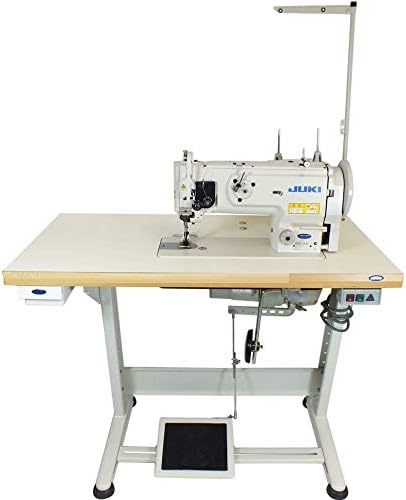
| Power Source | Corded Electric |
|---|---|
| Input Voltage | 110 volts_of_alternating_current |
| Speed, Max (S.P.M.) | 2500 |
| Stitch Length, Max. | 9mm |
The JUKI DNU-1541S is a professional unison-feed walking-foot lockstitch machine designed to handle materials from light fabrics to heavy leather and vinyl. It runs on a corded 110V servo motor and arrives with a large double-capacity hook, bobbin winder, knee lifter and a table, so it is ready for upholstery and leatherwork setups after basic assembly. With a maximum speed around 2500 S.P.M., a 36mm needle bar stroke and up to 9mm stitch length, the machine gives the strong stitch formation and fabric feed needed for thick or coated materials. The included servo motor provides quiet, energy-saving operation and adjustable speed control that helps when sewing multiple layers or starting long seams. Practical limits are its industrial footprint and weight, which make it a stationary workshop machine, and professional assembly or setup may be required to tune tension and feed for specific materials. For users focused on throughput and reliable heavy-material feeding, this JUKI is a straightforward, workhorse choice.
Best for: Serious leatherworkers and upholstery professionals who prioritize consistent heavy-material feeding and production-capable stitch performance in a stationary workshop machine.
Less Ideal for: Hobbyists who need a portable or lightweight machine or casual sewers who prefer plug-and-play consumer machines with simple setup.
- Unison-feed walking foot provides consistent fabric feed for multi-layer and heavy materials
- Double-capacity hook reduces bobbin changes for long production runs
- Included servo motor offers quiet, energy-saving, and adjustable-speed operation
- Comes with table and essential accessories such as bobbin winder and knee lifter
- Heavy, workshop-only machine that is not portable
- May require professional assembly and setup for optimal tension and feed
Verdict: Choose the JUKI DNU-1541S when you need a reliable, production-capable walking-foot machine that handles leather and heavy fabrics with consistent feed and high stitch performance.
Yamata FY335A Cylinder Arm Sewing Machine

| Model Number | Yamata FY335A |
|---|---|
| Power Source | Electric |
| Material | Metal |
| Included Components | Table, servo motor, LED light, drawer, belt, hardware |
The Yamata FY335A is a purpose-built cylinder arm walking-foot sewing machine intended for heavy materials like leather, canvas, and upholstery. It ships as a knockdown industrial table kit that includes the machine head, servo motor, LED light, tabletop, drawer, belt and hardware, and requires professional assembly. The walking foot feed and cylinder arm make it straightforward to stitch tubular and bulky items while the quiet, energy-efficient servo motor gives precise speed control for thick seams. Buyers will appreciate the included table and accessories that make the unit shop-ready once installed, and the metal construction suits high-use, professional environments. Important trade-offs are the need for professional assembly and the machine's large, heavy kit format, which means it is not plug-and-play for hobbyists or light occasional use. For leatherwork and bag production the FY335A offers industrial feeding and power in a complete package when you have space and installer access.
Best for: Small-batch leatherworkers, bag makers, and upholstery shops that need a factory-quality walking-foot machine and a complete table setup for production work.
Less Ideal for: Hobby sewers, beginners, or anyone needing a compact, ready-to-run tabletop machine without professional installation.
- Cylinder arm and walking foot feed handle tubular and thick materials like leather and canvas
- Includes servo motor for quiet, energy-efficient, and controllable stitching speed
- Complete table kit (tabletop, light, drawer, hardware) arrives ready for professional installation
- Robust metal construction designed for heavy-duty, high-use environments
- Ships as a knockdown kit and requires professional assembly and setup
- Large and heavy unit not suitable for casual or portable use
Verdict: A shop-oriented, heavy-duty walking-foot cylinder-arm machine packaged with a full table kit for professional leather and bag sewing.
Consew 206RB-5 Walking Foot

| Model Number | 206RB-5 |
|---|---|
| Power Source | Corded Electric |
The Consew 206RB-5 is a robust industrial walking-foot machine built for heavy materials like leather, canvas, and upholstery. It uses a compound feed (walking foot) to move thick or multi-layered materials evenly and includes a locking stitch-length regulator and a high presser-foot lift for working bulky seams. The package ships with the machine head, a servo motor, tabletop and stand so you get a ready-to-use workstation after assembly. Practical benefits include a large bobbin for longer runs, adjustable walking-motion height for different material thicknesses, and a long maximum stitch length useful for coarse seams. Trade-offs are the machine's industrial size and weight that require dedicated floor space and some mechanical familiarity for setup and maintenance, and it lacks consumer-style conveniences like compact portability or built-in electronics beyond the motor. For leatherworkers and upholstery pros the 206RB-5 delivers solid, dependable feeding and stitch control suited to daily heavy use.
Best for: Buyers who prioritize a reliable, workhorse machine for regular leather and upholstery projects and need consistent feeding and stitch control for professional results.
Less Ideal for: Hobbyists who sew only occasionally or need a portable, compact home machine should consider lighter consumer models instead.
- Compound walking-foot feed gives consistent material transport on leather and multiple layers
- Includes servo motor and tabletop so it arrives as a ready workstation after assembly
- High presser-foot lift and adjustable walking-motion accommodate thick seams and bulky work
- Large bobbin and long stitch-length capability reduce frequent bobbin changes for long seams
- Industrial size and weight require dedicated workspace and two-person handling for installation
- Not designed for light home sewing tasks or users seeking a compact machine
Verdict: A durable, workshop-ready walking-foot machine built to deliver consistent, professional stitching on leather and heavy upholstery materials.
SINGER Heavy Duty 4452

| Built-in stitches | 32 |
|---|---|
| Stitch applications | 110 applications |
| Included presser feet | 6 (includes walking foot, non-stick foot, even-feed foot) |
| Top bobbin | Top drop-in bobbin with clear cover |
| Power source | Ac/Dc |
The SINGER Heavy Duty 4452 is built to tackle thick materials while remaining usable for everyday sewing. Its stronger motor and high stitching speed make it easier to pierce layers like denim, canvas, and leather when paired with the included walking foot and heavy-duty needles. The machine offers 32 built-in stitches that expand into about 110 stitch applications and a one-step buttonhole for practical garment and home-decor work. Helpful user-facing features include a top drop-in bobbin with a clear cover, stainless steel bed plate for smoother fabric feed, and a built-in needle threader that speeds setup. The metal chassis gives stability under the stress of heavy fabrics, and the accessory kit includes a non-stick foot for slippery materials and an even-feed/walking foot to reduce slippage and puckering on leather. Expect a mechanical machine with essential heavy-duty capability rather than computerized stitch programming, so adjustments are manual and some finesse is required for delicate fabrics and very fine decorative work.
Best for: Buyers who want a sturdy home machine that can handle upholstery, denim, and light-to-moderate leather projects and who value proven performance backed by many user reviews.
Less Ideal for: If you need a fully industrial leather machine for thick saddlery or heavy upholstery production, or want computerized stitch customization, choose a specialized commercial model instead.
- Powerful motor and high sewing speed for piercing thick fabrics
- Metal frame and stainless steel bed plate for stability and smoother fabric feed
- Includes walking foot and heavy-duty needles suited for leather and multi-layer seams
- Top drop-in bobbin with clear cover for easy monitoring and jam resistance
- Built-in needle threader and comprehensive accessory kit speed setup and broaden use cases
- Mechanical controls require manual adjustments rather than automated stitch selection
- Not specialized for fine decorative stitching or high-end leatherwork where dedicated industrial features may be needed
Verdict: A reliable heavy-duty home sewing machine that includes a walking foot and accessories to confidently handle leather and multi-layer projects.
Choosing the Right Walking Foot Sewing Machine for Leather: Key Factors to Consider
Feeding System and Walking Foot Design
The whole point of a walking foot machine for leather is consistent, synchronized feeding of material. A true walking foot lifts and moves the top fabric in sync with the feed dogs so the layers do not shift relative to each other. When stitching hides or thick skived seams, this prevents one layer from advancing faster than the other and avoids puckering, irregular stitch length, or skipped stitches.
Look for designs where the walking action is robust and not just cosmetic. Some machines offer adjustable walking stroke or additional feed mechanisms like a compound feed for even better control on irregular materials. The quality of the feed directly affects seam appearance and seam strength on leather projects.
Motor Torque and Continuous Duty Capability
Leather requires more force to penetrate and move through than woven or knits. A motor with high torque at low speeds is more important than a very high top RPM because you need steady power to drive a heavy-duty needle and heavier thread through multiple layers.
Assess whether the machine is rated for continuous or commercial duty if you expect long sewing sessions or thick multi-layer work. Machines designed for light household use may overheat or stall when faced with leather. Higher torque reduces the chance of the needle bending or breaking and helps maintain stitch consistency under load.
Presser Foot Clearance and Adjustable Pressure
Leather projects often require feeding several layers, folded edges, or bulky seams. Sufficient presser foot clearance and an easily adjustable presser pressure let you accommodate thick stacks without crushing material or losing feed control.
Some machines provide high-lift presser feet or specialty feet for leather that increase clearance and improve visibility. The ability to fine-tune pressure ensures even feeding without compressing or marking the leather surface, which is especially important with thinner or finished hides.
Needle, Bobbin, and Thread Compatibility
Using the correct heavy-duty needle size and compatible bobbin system is essential for secure seams in leather. The machine must accept larger leather needles and heavier threads without compromising tension or causing frequent breaks.
Check whether the bobbin case and shuttle design handle heavy thread smoothly and whether the machine allows easy tension adjustments for thick thread. Some machines require specific bobbin types or modifications when switching to heavy threads, so serviceability and parts availability matter.
Frame Construction and Long-Term Durability
Sewing leather places more stress on machine components than lighter fabrics. A rigid metal frame and sturdy construction reduce vibration, maintain alignment of the feed and needle mechanisms, and prolong accurate stitching over time.
Consider machines with accessible metal gear trains, replaceable feed dogs, and a reputation for durable parts. A heavier machine often reduces deflection during thick seam stitching and gives more consistent stitch length under load.
Common Attachments and Feet for Leatherwork
Specialized presser feet and attachments expand a walking foot machine's usefulness for leather. Typical options include high-lift feet for bulky seams, roller or teflon feet for sticky or finished hides, edge guides for consistent seam allowances, and binder feet for attaching piping or binding to thick edges.
Choosing the right foot for the task reduces marking, improves material control, and can speed production. Roller feet minimize friction on finished surfaces, while high-lift feet let you accommodate stacked layers without additional tooling.
- High-lift presser foot: increases clearance for thick stacks
- Roller or walking roller foot: reduces surface drag on finished hides
- Edge guide or seam guide: maintains consistent seam allowance
- Binder or piping feet: streamlines edge finishing on thick materials
Needles and Thread Choices for Leather
Leather needles are specially ground to pierce hide cleanly instead of cutting threads like universal needles. Choose needle sizes rated for leatherwork and match the needle to your thread weight and material thickness. Using the correct needle reduces tearing, prevents excessive hole enlargement, and produces neater stitches.
Heavy bonded polyester or nylon threads are common for leather because they resist abrasion and have good tensile strength. Avoid very thin filament threads on thick leather projects. Also consider hand-sewing or saddle-stitching for decorative or structural seams that need higher tensile strength than a machine stitch can provide.
- Use leather-specific needle points and appropriate sizes
- Select heavy bonded thread with good abrasion resistance
- Match needle size to thread to reduce skipped stitches
Tension Setup and Troubleshooting
Setting correct upper and lower tension is crucial when using heavier threads and thicker materials. Start with a balanced tension baseline and test on scrap layered leather that matches your project. Adjust in small increments and re-test until stitches sit evenly in the middle of the hide rather than pulling to one side.
Common issues like skipped stitches, thread breakage, or pulled seams often trace back to incorrect tension, dull needles, or insufficient motor torque. Regularly inspect the needle and replace it when there are burrs or blunt points, and confirm the bobbin is wound evenly when using heavier thread types.
- Test on scrap leather to set tension before starting the main piece
- Replace needles frequently when working with abrasive materials
- Ensure bobbins are wound evenly for heavy threads
Maintenance and Shop Setup for Leather Sewing
Leatherwork creates more dust and tiny debris from skiving and stitching, so plan for frequent cleaning and periodic lubrication according to the machine's service schedule. Removing dust from the feed and shuttle area and keeping moving parts lubricated prevents premature wear and keeps feeding accurate.
If you plan on extended runs, set up a stable work surface and consider a knee lifter or foot control that supports longer stitches without fatigue. Also keep common spare parts on hand such as extra needles, bobbins, and a supply of heavier thread suited to your projects.
- Clean feed and shuttle areas frequently to prevent buildup
- Keep spare needles and bobbins accessible
- Use a sturdy table and comfortable controls for long sessions
Adjusting Stitch Length and Seam Finishes
Stitch length affects seam flexibility and appearance on leather. Longer stitches are often preferred for thick leather to avoid excessive perforation that weakens the hide, while shorter stitches give a neater look on thin or decorative seams. Adjust stitch length thoughtfully depending on thickness and function.
Consider seam reinforcement techniques such as backstitching at stress points, topstitching with heavy thread for decorative strength, and skiving edges to reduce bulk before joining. The right stitch length combined with appropriate finishing creates a strong, professional-looking seam.
- Use longer stitch lengths for thick hides to prevent perforation
- Reinforce stress points with extra backstitching or topstitching
- Skive edges to reduce bulk before joining
How We Chose the Best Walking Foot Sewing Machine for Leather
We prioritized features that matter when sewing leather and other heavy materials. Key evaluation criteria included feeding system reliability, motor torque and stitch consistency, presser foot options and clearance, build durability and frame rigidity, and maintenance/serviceability for prolonged shop use. Each candidate had to demonstrate a dedicated or convertible walking foot mechanism that ensures synchronized top and bottom material movement to reduce pull and skipped stitches. We also assessed stitch control and tension range so the machine can handle heavy threads and thick seams without puckering. Motor capability was judged on torque and duty suitability for leatherwork rather than peak RPM alone. Durability factors included metal frame construction, heavy-duty bobbin systems, and accessible parts for routine maintenance. Machines that lacked a true walking feed system, had inadequate presser foot clearance for multiple hides, or showed poor tension adjustability were excluded. The final list reflects these filters to help you find a dependable leather-capable walking foot sewing machine.
Our full evaluation process is outlined in our review methodology.
FAQ
Can a walking foot sewing machine handle multi-layer leather projects?
Often yes. A true walking foot that synchronizes top and bottom feed improves handling of multiple leather layers. Success depends on motor torque, presser foot clearance, and correct needle and thread choices.
What needle and thread combination is best for leather?
Use a leather-point or heavy-duty needle sized to the thickness of the hide and a bonded polyester or nylon thread with good abrasion resistance. Match the needle eye to the thread diameter to avoid shredding.
Do I need a commercial machine to sew leather well?
Not always. Many robust home or light-industrial machines with a proper walking feed and sufficient torque can handle leather. Choose equipment rated for heavier duty if you expect long production runs or very thick materials.
How often should I change needles when sewing leather?
Needles dull faster with leather because of abrasion and skiving. Change needles after several hours of heavy use or sooner if you notice skipped stitches, rough holes, or visible burrs on the needle.
Will heavy threads cause bobbin issues?
They can if the bobbin system is not compatible. Ensure the bobbin and shuttle accept the heavier thread without bulk problems and verify tension settings. Even winding and correct bobbin type reduce jams and uneven tension.
Final Verdict
For leatherwork prioritize a genuine walking feed, strong low-speed torque, and ample presser foot clearance. These features keep layers aligned, reduce skipped stitches, and let you use heavier threads without stalling. Balance build durability and serviceability with the level of production you expect, and prepare to invest in the correct needles, threads, and feet for the tasks you plan to tackle. Focus on the machine that matches your typical project thickness and working tempo. That approach will deliver consistent, long-lasting seams and make leather sewing more predictable and productive.