
Note: This article contains affiliate links. If you click on these links and make a purchase, we may earn a small commission at no extra cost to you. This helps support our research and content. Read our full affiliate disclosure here.
If you regularly work on quilts, upholstery, or multi-layer garments, a sewing machine with a large throat can make complex projects far more manageable. A wider throat gives you more space to maneuver bulky fabrics and large finished pieces without fighting for clearance, and it reduces fabric drag that can distort seams. This guide shortlists the top machines with generous throat space and evaluates them across stitch consistency, power for thick materials, and handling of large projects. Read on for a concise overview of what matters and quick buying guidance before the product list.
Top Picks at a Glance
| Best Overall The best all-around choice for most situations | Janome Memory Craft 6650 |  |
| Best Quality Built to a higher standard if you want something more solid | JUKI TL-2010Q Portable Sewing Machine |  |
| Best Value The sweet spot between price and what you get | Janome JW8100 Sewing Machine |  |
| Best Budget The cheapest option that still gets the job done reliably | Brother XR3774 Sewing Machine |  |
| Top Rated A top-rated pick with lots of positive feedback | Elna Elnita ef72 |  |
| Most Popular A crowd favorite that many people choose with confidence | Brother XR9550 Sewing Machine |  |
Janome Memory Craft 6650

| Power Source | ac |
|---|---|
| Built‑in Stitches | 172 |
| Buttonholes | 9 one‑step |
| Throat Space | 10" |
The Janome Memory Craft 6650 is a heavy‑duty home sewing and quilting machine built around a 10" all‑metal flatbed and an aluminum frame, which gives it stable performance when handling large quilts and layered projects. It delivers up to 1000 stitches per minute and includes 172 built‑in stitches, 9 one‑step buttonholes, two alphabets, and memory banks for storing favorite stitch settings, so it covers tailoring, decorative sewing, and quilting needs. Setup and routine tasks are simplified by a top‑loading rotary hook bobbin, independent bobbin winder, built‑in needle threader, one‑push needle plate conversion, and convenient control buttons like start/stop and automatic thread cutter. Adjustable presser foot pressure, a 7‑piece feed dog system, and an extra‑high presser foot lift let you work with varied fabrics from lightweight cotton to heavier layered quilting and light upholstery when paired with suitable accessories. The bright LCD and multiple LEDs make stitching and stitch selection straightforward. It is a larger, feature‑rich machine aimed at sewists who want speed and room to maneuver; it may be more capability than casual crafters need and its weight and size reduce portability.
Best for: Sewists who want a roomy throat and a durable, feature‑rich machine for quilting, garment sewing, and larger projects and who value speed and professional controls.
Less Ideal for: If you only do occasional mending or need a lightweight portable machine for travel, this full‑size, heavier unit is likely more machine than you need.
- 10" all‑metal flatbed and aluminum frame for stable handling of large quilts
- Up to 1000 stitches per minute and 172 built‑in stitches for versatile sewing
- Convenience features like built‑in needle threader, automatic thread cutter, and one‑push needle plate conversion
- Adjustable presser foot pressure, 7‑piece feed dogs, and extra‑high presser foot lift for varied fabrics
- Large and heavy design reduces portability for offsite projects
- Feature set may be more than needed for occasional or very simple sewing tasks
Verdict: Choose the MC6650 if you need a roomy 10" throat and a fast, durable machine that handles quilting and large projects with professional features.
JUKI TL-2010Q Portable Sewing Machine
| Power Source | Treadle Powered |
|---|---|
| Material | Aluminum |
| Color | red |
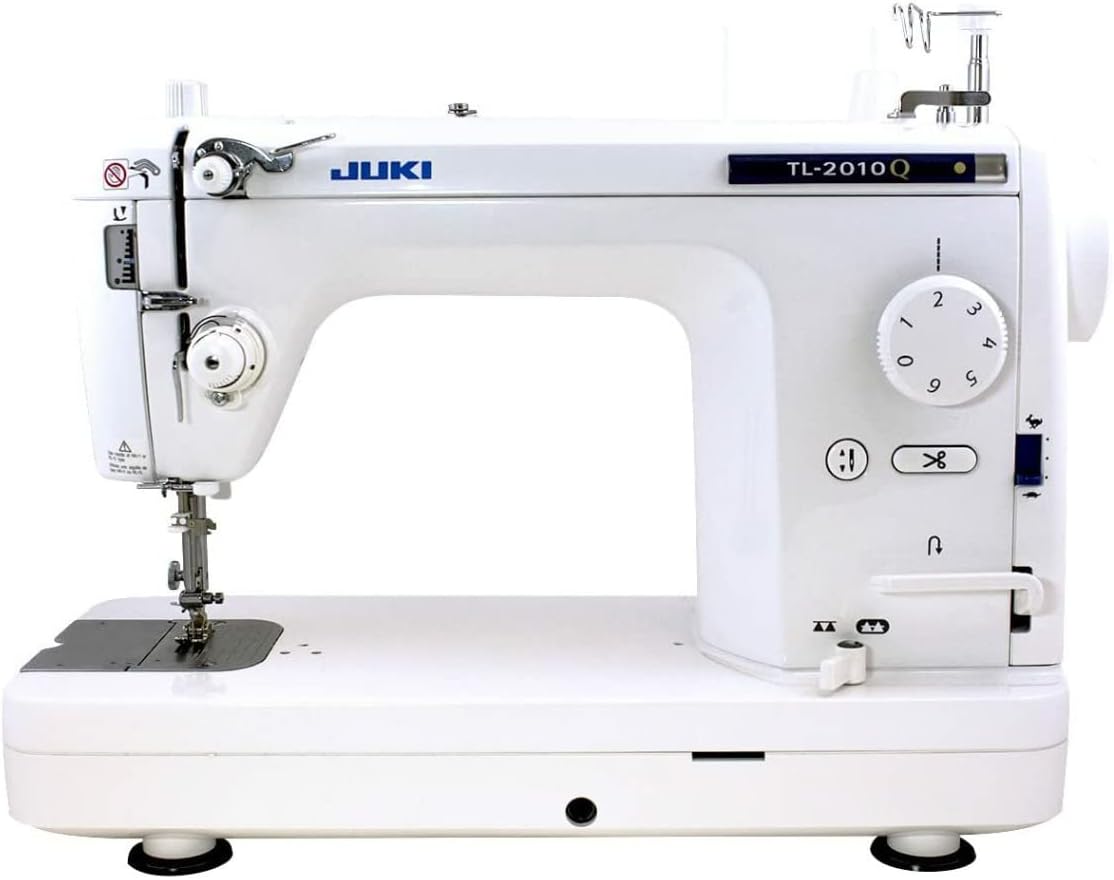
The JUKI TL-2010Q is a workhorse single-needle lockstitch machine designed for quilting, tailoring, and home-decor sewing where stitch quality and speed matter. It is typically used as a tabletop machine or mounted into a cabinet or quilting frame, and its portable body with a built-in handle makes it easy to move between workspaces. Notable features include an automatic thread trimmer that trims both needle and bobbin threads at the end of a seam, a knee lifter that raises the presser foot up to 12 mm for feeding thick layers, and an automatic needle threader to speed setup. The strong, industrial-inspired motor and durable aluminum construction let it power through multiple layers and heavier fabrics with steady straight stitching. Size and weight make it less convenient for casual carry-around use, and it lacks the multi-stitch decorative patterns of hobby machines, so it is focused on straight stitching and quilting performance rather than decorative versatility.
Best for: Sewists who prioritize sewing speed, reliable straight-stitch performance, and the ability to handle multiple thick layers when quilting or tailoring.
Less Ideal for: Casual sewists who want a lightweight, highly portable machine or users seeking a wide range of decorative stitches and built-in sewing patterns.
- Automatic thread trimmer trims needle and bobbin threads for faster seam finishes
- Knee lifter lifts presser foot up to 12 mm to handle thick quilts and layered fabrics
- Automatic needle threader reduces setup time and eye strain
- Sturdy aluminum build and high-performance motor for consistent straight stitching
- Focused on straight lockstitch; lacks decorative stitch options
- Relatively heavy and bulky compared with lightweight domestic machines
Verdict: Choose the JUKI TL-2010Q for dependable, high-performance straight stitching and robust handling of thick quilting and tailoring projects.
Janome JW8100 Sewing Machine

| Stitch count | 100 built-in stitches |
|---|---|
| Buttonholes | 7 one-step buttonholes |
| Power source | Corded Electric |
| Feed system | 7-piece feed dog system |
| Included accessories | Extension table, even feed foot, quarter-inch foot, hard cover |
The Janome JW8100 is a feature-rich computerized sewing machine aimed at hobbyists and quilters who need versatility without a steep learning curve. It offers 100 stitches, seven one-step buttonholes, and a backlit LCD for easy stitch selection, plus convenience controls such as start/stop, needle up/down, and a speed control slider. Practical quilting aids include an extra-wide extension table, an even-feed foot, and a quarter-inch quilting foot that help manage large pieces and keep seams consistent. The machine uses a jam-proof drop-in bobbin, built-in threader, and an auto-declutch bobbin winder to reduce setup fuss. Feeding performance benefits from a 7-piece feed dog system that handles layered fabrics more reliably. Limitations are typical for home models: it is corded only and not designed for continuous heavy industrial use, and the 7mm stitch width may be more than enough for most projects but is not exceptional for specialty tasks. For at-home quilting and garment sewing this machine balances useful features and ease of use effectively.
Best for: Buyers who want a practical, no-nonsense sewing machine that handles quilting and varied home sewing projects with helpful automation and accessories to speed work and reduce fiddly setup.
Less Ideal for: People who need an industrial or commercial production machine or require continuous heavy-duty stitching for upholstery and leatherwork at scale.
- Large stitch library with 100 built-in stitches and 7 one-step buttonholes for design flexibility
- Included extra-wide extension table and quilting feet simplify handling large projects
- User-friendly controls including backlit LCD, start/stop button, speed slider, and built-in needle threader
- Reliable fabric feeding via a 7-piece feed dog system and jam-proof drop-in bobbin
- Corded only and not intended for industrial continuous heavy-duty production
- Not specialized for commercial-scale quilting or heavyweight industrial materials
Verdict: A versatile, user-friendly sewing machine that makes large home quilting and general sewing projects easier thanks to its quilting accessories and automated convenience features.
Brother XR3774 Sewing Machine

| Number of built-in stitches | 37 |
|---|---|
| Buttonhole | 1 one-step auto-size |
| Power source | Corded Electric |
| Input voltage | 120 volts |
The Brother XR3774 is a practical mechanical sewing and quilting machine aimed at hobbyists and budget-minded makers who need a larger work area. It offers 37 built-in utility and decorative stitches plus a one-step auto-size buttonhole, and the included wide table helps when handling quilts, curtains, or bulky fabrics. Threading is simplified with an automatic needle threader and a top-loading, jam-resistant drop-in bobbin keeps bobbin changes straightforward. The package ships with eight presser feet and accessories like a darning plate and extra bobbins so you can start basic garment work, mending, and quilting without buying many extras. As a mechanical model it is lightweight and portable, but it lacks the advanced computerized stitch editing, touchscreen controls, and expanded stitch libraries found on higher-end machines. Expect solid everyday performance for garment construction and quilting but limited fancy customization for advanced decorative stitching.
Best for: Buyers who want a reliable, no-frills sewing and quilting machine with a larger throat for tackling quilts and home sewing projects without spending on computerized features.
Less Ideal for: Users seeking touchscreen controls, extensive programmable stitches, or built-in embroidery capability should consider higher-end computerized models instead.
- Oversized wide extension table aids handling large quilts and bulky projects
- Automatic needle threader and top drop-in bobbin make setup and threading easier
- 37 built-in stitches plus a one-step buttonhole cover common sewing and quilting needs
- Comes with eight presser feet and multiple accessories so you can start sewing right away
- Mechanical controls limit advanced stitch customization compared with computerized machines
- Not designed for embroidery or large-format computerized stitch libraries
Verdict: Choose the XR3774 if you want a dependable, budget-friendly sewing machine with a wide table that makes quilting and large projects much easier.
Elna Elnita ef72

| Flatbed workspace | 10 inches |
|---|---|
| Built-in stitches | 170 |
| Maximum speed | 1,000 stitches per minute |
| Power source | AC |
The Elna Elnita ef72 is a purpose-built sewing and quilting machine that emphasizes a roomy 10-inch seamless flatbed and durable performance for larger projects. It offers up to 1,000 stitches per minute powered by an industrial-style motor, a vertical thread delivery system, an independent bobbin winder, and an automatic programmable thread trimmer to speed common tasks. The machine includes 170 built-in stitches with seven buttonhole styles, a bright LED screen with speed control and stitch adjustments, and a one-step needle plate conversion that simplifies swapping plates for different fabrics. Practical benefits include a generous workspace that makes sewing quilts and bulky garments much easier, programmable shortcuts like a favorite stitch function, and built-in threading and thread cutting that reduce setup time. Limitations to consider are its weight and size, which reflect its robust construction and make it less portable, and the learning curve for users new to advanced, feature-rich machines.
Best for: Buyers who prioritize a dependable, roomy machine for regular quilting and heavy sewing projects and who value durable construction and practical automation to speed production.
Less Ideal for: If you need a lightweight, highly portable machine for occasional mending or travel, this heavier, workshop-oriented model is not the best choice.
- 10-inch seamless flatbed provides a large, unobstructed workspace for quilting and bulky projects
- Industrial-style motor with up to 1,000 stitches per minute for fast, consistent sewing
- 170 built-in stitches including seven buttonhole styles and programmable favorite stitch function
- Automatic programmable thread trimmer and built-in superior needle threader speed up setup and finishing
- One-step needle plate conversion and multiple included feet and accessories for versatile fabric handling
- Heavier, bulkier build makes it less convenient to move or store
- Feature-rich controls and settings may require time to learn for beginners
Verdict: Choose the Elna Elnita ef72 if you want a reliable, heavy-duty sewing machine with a large throat and features that speed quilting and large-project work.
Brother XR9550 Sewing Machine

| Built-in stitches | 165 |
|---|---|
| Alphanumeric stitches | 55 |
| Buttonhole styles | 8 one-step auto-size |
| Power source | Corded Electric |
| Input voltage | 120 volts |
The Brother XR9550 is a full-featured computerized sewing and quilting machine aimed at hobbyists who want versatility for garments and quilts. It offers 165 built-in stitches including 55 alphanumeric stitches and eight one-step auto-size buttonholes, selectable via an easy-to-read LCD and push-button controls. Practical touches such as an automatic needle threader, jam-resistant drop-in top bobbin, variable speed control, start/stop button to run without the foot pedal, and an included wide extension table make it comfortable to use on larger pieces and when free-motion quilting. The machine ships with eight presser feet and useful accessories including extra bobbins, a seam ripper, and a hard cover. Its metal frame and quilting features like a spring-action quilting foot and quilting guide improve stitch consistency on medium-weight fabrics, though very heavy-duty multiple-batting quilts may benefit from an optional walking foot accessory. For buyers concerned about reliability, Brother backs the machine with long-term technical support and a limited 25-year warranty, and the top-loading bobbin and auto-threader help reduce everyday jams and setup frustration.
Best for: Buyers who want a dependable, feature-rich machine for quilting and garment sewing that handles larger projects comfortably and values long-term support and social proof from other users.
Less Ideal for: People who need an industrial or heavy-duty production machine for continuous commercial sewing should look at purpose-built commercial models instead.
- Large built-in stitch library including utility, decorative, and alphanumeric stitches
- Wide extension table and free arm support quilting and sewing larger pieces
- Automatic needle threader and drop-in top bobbin reduce setup time and jams
- Includes eight presser feet and a useful accessory set for common projects
- Computerized controls with LCD and variable speed provide easy stitch selection and control
- Not supplied with a walking foot which can help with very thick or multi-layer quilting projects
- Designed for household 120V use so not intended for commercial heavy-duty sewing
Verdict: Choose the XR9550 if you want a reliable, feature-packed computerized machine with a wide table that makes larger quilting and sewing projects easier and less fiddly.
Choosing the Right Sewing Machine with a Large Throat: Key Factors to Consider
Throat Clearance (Work Area Width)
Throat clearance determines how much flat fabric you can keep on the machine to the right of the needle. A wider throat lets you support and rotate bulky items like quilts or curtains without constantly repositioning the work, which reduces puckering and keeps seams aligned.
When evaluating throat size, think about the largest project you will handle regularly. A few extra inches of clearance make a meaningful difference in comfort and control for multi-layer sewing and for mounting or turning large pieces while maintaining accurate stitch lines.
Motor Power and Torque
Motor power matters when you sew through multiple fabric layers, batting, or heavy upholstery materials. Torque is the practical measure of how well a machine feeds thick stacks without stalling or slowing excessively, especially at low stitching speeds.
Look for machines designed to maintain steady needle penetration and consistent feeding under load. A motor with good torque reduces skipped stitches and minimizes the need to hand-crank through thick sections, which speeds up work and protects the machine from strain.
Feed System and Presser-Foot Options
The feed system controls how fabric is advanced under the needle. For bulky sewing, a strong, even feed prevents layers from shifting and creates more consistent stitch length across varying thicknesses.
A versatile presser-foot setup and adjustable presser-foot pressure let you switch between thin fabrics and heavy materials quickly. Look for feet that support walking or even-feed action, and for the ability to raise the presser foot higher than standard to accommodate thicker seams and bulks.
Needle Access and Workspace Lighting
Good access to the needle area makes threading, changing needles, and cleaning easier, which is important when you frequently switch between fabric types or needle sizes. A clear, well-lit throat area reduces eye strain and helps you monitor stitch formation along large seams.
Integrated task lighting positioned to illuminate the needle area and the flatbed surface improves accuracy when working with dark fabrics or detailed topstitching. Also consider how easy it is to remove the free arm or attach add-on extensions for extra support.
Durability and Serviceability
Machines that will regularly handle heavy fabrics need robust construction and easy maintenance. Metal internal components and a reliable gearbox extend service life when dealing with higher loads.
Consider how simple routine maintenance tasks are, such as oiling or cleaning the bobbin area, and whether commonly worn parts are accessible. Machines that are easy to service will stay accurate longer and can handle demanding projects without frequent downtime.
Control Versatility and Speed Management
Precise speed control and accessible stitch settings are valuable when sewing bulky seams where you may want to slow down for hand-guiding through corners or thick intersections. Variable speed control and a low-speed start option let you guide dense areas carefully without losing stitch quality.
Also evaluate stitch selection and length adjustment ease. Being able to set a longer stitch for thick layers or reinforce at stress points simplifies construction and leads to stronger, neater results.
Why a Larger Throat Changes the Sewing Experience
A larger throat transforms how you handle wide or bulky projects. Instead of bunching fabric or constantly reorienting the workpiece, you can support more of the material on the machine bed, which reduces drag and keeps layers registered under the needle.
This extra space also makes tasks such as free-motion quilting and topstitching on finished garments easier because you have room to see and control the fabric. For home sewers who do occasional upholstery, costume armor, or heavy quilting, the ergonomic benefit alone justifies choosing a machine with a larger work area.
- Less fabric drag and fewer distorted seams
- Easier rotation of quilts and curtains
- Improved accuracy for long straight seams
Matching Throat Size to Project Types
Not every project requires the same throat width. If you mostly sew garments, a modest increase in throat space can help with bulky sleeves and collars. If your main focus is quilting, larger throat measurements provide a clear advantage for handling full-size quilt tops.
Consider typical project dimensions and storage space. Larger-throat machines are often physically larger overall, so confirm you have a suitable workspace and a flat surface that supports the extended bed or included extension table.
- Garments and small home projects: moderate throat increase
- Quilting and large home-decor: prioritize the widest throat you can accommodate
- Upholstery: combine large throat with strong motor and walking foot
Accessories That Complement a Large Throat
Certain accessories enhance the benefits of a roomy work area. Extension tables, large cutting mats that fit the bed, and a range of presser feet for thick seams help you make the most of the available space. Magnetic pin cushions and a good-quality walking foot are useful additions for multi-layer work.
Keep an eye out for feet that offer higher clearance for bulky seams and presser-foot pressure adjustments. A sturdy, removable extension table stabilizes large projects and reduces sag at the edge of the bed.
- Extension table for flat support
- Walking or even-feed foot for multiple layers
- High-clearance presser feet for bulky seams
Setup Tips for Working With Bulky Fabrics
Support the bulk externally whenever possible. Use a large extension table or place a support board behind the work to prevent the fabric from pulling down on the machine bed. Pin large layers carefully and baste seams before final stitching to reduce shifting.
Lower the feed dogs and use the walking foot or a layer-specific foot when needed. Adjust presser-foot pressure to a setting that allows smooth feeding without compressing the material. Slow stitching speed and manual guidance through intersections of layers will produce cleaner results.
- Support large panels to reduce strain on the machine
- Test stitch settings on scraps of the actual materials
- Use basting to keep layers registered for final sewing
Space and Ergonomics Considerations
A larger throat often means a bigger machine footprint and a taller free arm height. Ensure your work area offers enough room to rotate and support large pieces. A comfortable chair and the correct table height reduce fatigue during long sessions with heavy materials.
Also plan for storage or mounting of extension tables and presser-foot sets. Machines with modular accessories that can be snapped on and off quickly reduce setup time and keep your workspace organized.
- Measure workspace and passage clearance before purchasing
- Choose a stable, level table to mount the machine
- Arrange lighting and tool storage within arm's reach
How We Chose the Best Sewing Machine with a Large Throat
We prioritized machines that clearly improve handling of large or bulky sewing projects. Primary evaluation criteria focused on throat clearance, motor torque and power delivery for thick fabrics, and stitch consistency at low and high speeds. We also weighed feed system design and presser-foot options because these determine how evenly multiple layers move through the machine. Ease of access for routine tasks such as bobbin changes and threading was included, since a roomy throat is only useful if the machine remains practical to operate. We excluded compact home machines whose throat space is explicitly limited or those designed only for lightweight fabrics. We did not consider specialty industrial heads outside the home-sewing category. The final shortlist favors balanced combinations of a large work area, reliable stitch formation on thick materials, and operator-friendly controls and accessories.
Our full evaluation process is outlined in our review methodology.
FAQ
How much extra throat clearance do I really need for quilting?
It depends on the size of the quilt tops you handle. Many home quilters find an extra two to four inches noticeably helpful, while those working on bed-size quilts often prefer the largest throat available for easier rotation and support.
Can a large-throat machine sew thick upholstery and leather?
A larger throat helps with space, but success also depends on motor torque, appropriate needles, and the right presser foot. Choose a machine with strong drive power and compatible high-clearance feet for best results.
Does a bigger throat make threading or bobbin access harder?
Not usually. A well-designed machine pairs a roomy throat with accessible bobbin systems and clear threading paths. Check for easily reachable bobbin cases and good needle-area lighting when evaluating usability.
Are large-throat machines more expensive to maintain?
Maintenance needs are similar; however, machines that handle heavier workloads may need more frequent servicing. Regular cleaning, timely lubrication where specified, and using appropriate needles will keep the machine performing reliably.
Will a large throat affect stitch quality on lightweight fabrics?
A larger throat does not inherently harm stitch quality. Feed system design and the ability to adjust presser-foot pressure and stitch length are the bigger determinants for handling both light and heavy fabrics well.
Final Verdict
Prioritize throat clearance in proportion to the largest projects you plan to handle, but do not ignore motor torque, feed stability, and practical accessories. A roomy throat improves ergonomics and makes large panels easier to control, yet the machine must also offer the power and feed systems to form consistent stitches through thick layers. Balance throat size with ease of use and serviceability. Focus on the specific combination of throat clearance, feeding mechanism, and presser-foot versatility that matches your regular workload to choose the best machine confidently.