
Note: This article contains affiliate links. If you click on these links and make a purchase, we may earn a small commission at no extra cost to you. This helps support our research and content. Read our full affiliate disclosure here.
If you sew regularly or are learning the craft, picking the right mechanical sewing machine makes everyday projects faster and less frustrating. A dependable mechanical machine gives straightforward controls, predictable maintenance, and the tactile feedback many sewers prefer over electronic models. This guide outlines our shortlist of top mechanical sewing machines designed for home sewing, covering stitch options, build durability, and ease of threading and bobbin handling. Read on to see the key tradeoffs and the evaluation criteria we used to select these reliable picks.
Top Picks at a Glance
| Best Overall The best all-around choice for most situations | Janome 2212 Sewing Machine |  |
| Best Quality Built to a higher standard if you want something more solid | Janome HD3000 Heavy-Duty |  |
| Best Value The sweet spot between price and what you get | Brother XR3774 Sewing Machine |  |
| Best Budget The cheapest option that still gets the job done reliably | SINGER M1000 Sewing Machine |  |
| Top Rated A top-rated pick with lots of positive feedback | Brother XM2701 Sewing Machine |  |
| Most Popular A crowd favorite that many people choose with confidence | SINGER Heavy Duty 4423 |  |
Janome 2212 Sewing Machine
| Power Source | AC |
|---|---|
| Stitches | 12 built-in |
| Buttonhole | 1 four-step |
| Maximum stitch length | 4 mm |
| Maximum stitch width | 5 mm |
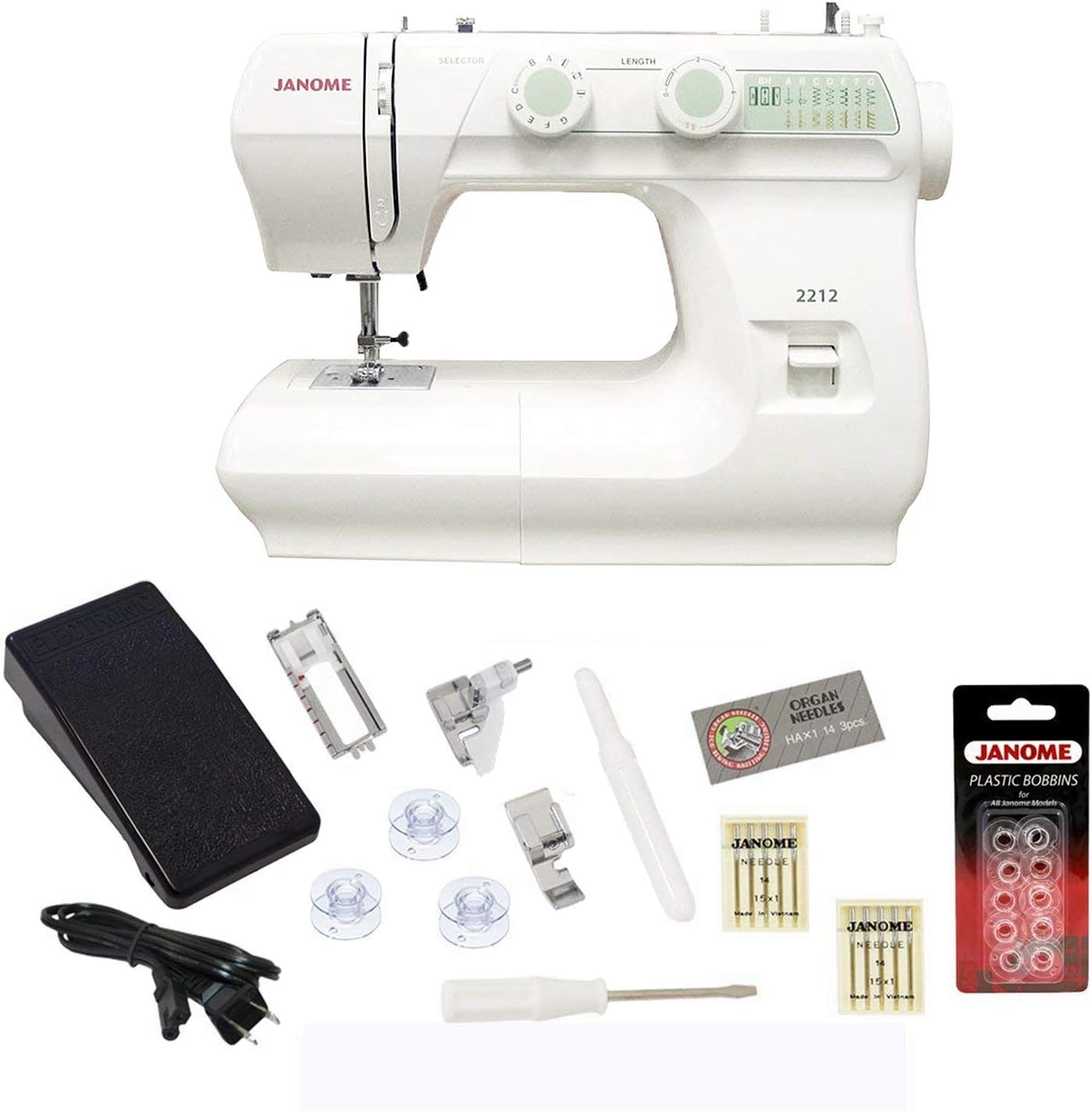
The Janome 2212 is a straightforward mechanical sewing machine aimed at new sewists and hobbyists. It offers 12 built-in stitches plus a four-step buttonhole, selected with a clear dial, and allows stitch length and width adjustments for basic garment and craft tasks. Useful practical features include a free arm for sleeves and cuffs, drop feed for quilting or darning, an extra high presser foot lift for thicker fabrics, and a front-loading bobbin with a 5-piece feed dog for steady fabric feeding. The machine is lightweight and portable, and the snap-on presser feet plus included accessories (zipper foot, blind hem foot, buttonhole foot, bobbins, needles, seam ripper, screwdriver) make it ready to use out of the box. Limitations are its mechanical controls and 12-stitch range, which keep it focused on straightforward sewing rather than decorative or advanced techniques, and it lacks a built-in needle threader. For people who want a durable, easy-to-learn machine that handles everyday mending, clothing alterations, and simple sewing projects, the 2212 is a practical choice.
Best for: Buyers seeking a simple, reliable mechanical machine to learn sewing fundamentals and handle everyday mending, basic garments, and beginner projects.
Less Ideal for: Sewers who need a wide decorative stitch library, automated features, or advanced embroidery capabilities should look at computerized models instead.
- Clear mechanical controls with dial stitch selector make it easy for beginners to learn
- Includes essential accessories and snap-on presser feet for common sewing tasks
- Free arm and drop feed expand capability for sleeves, cuffs, and quilting/darning
- Extra high presser foot lift helps when feeding thicker fabrics
- Limited to 12 built-in stitches and a four-step buttonhole so decorative options are minimal
- No built-in needle threader which can slow setup for some users
Verdict: A sturdy, no-frills mechanical machine that gives beginners a dependable, easy-to-use platform for everyday sewing and learning core skills.
Janome HD3000 Heavy-Duty
| Model Number | HD3000 |
|---|---|
| Included Components | Foot Control, Power Cord, Standard Accessories |
| Power Source | Corded Electric |
| Material | Aluminum, Plastic |
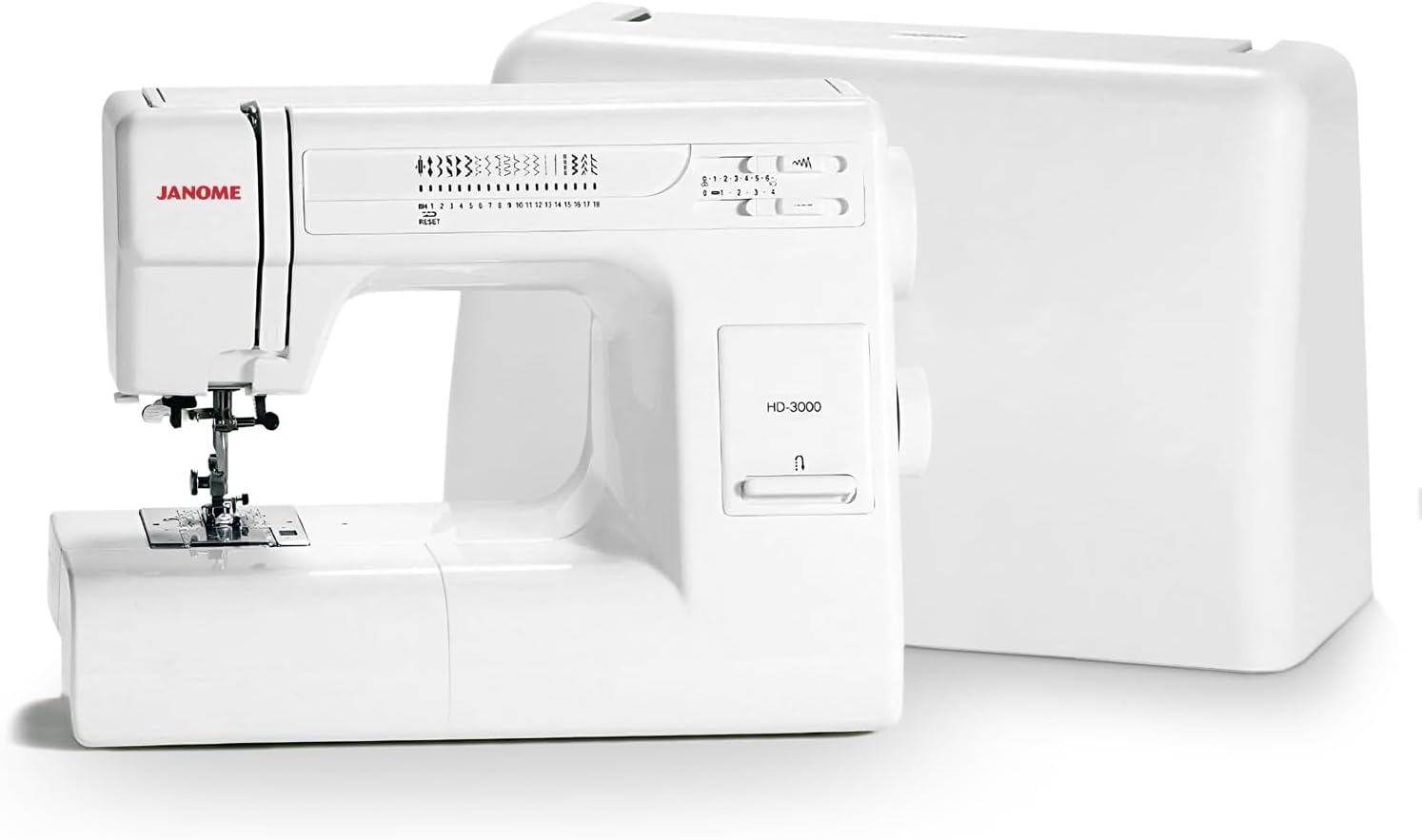
The Janome HD3000 is a mechanically driven, heavy-duty sewing machine built for regular home and small-project use. It offers 18 built-in stitches including a one-step buttonhole, a built-in needle threader, snap-on presser feet and a push-pull bobbin winder, which make setup and common sewing tasks quick and reliable. The machine's robust aluminum components and adjustable foot pressure give it enough stability to handle medium-weight fabrics and repeated use, while the manual tension and reverse-stitch lever provide precise control for finishing seams. Its included hard carrying case and free arm add portability and convenience for seam repairs and garment work. Downsides are that it is a mechanical unit so lacks electronic stitch programming and automatic feature expansions, and users comfortable with digital controls may miss stitch memory or speed presets. The HD3000 is practical for sewers who want a straightforward, dependable machine that focuses on core performance rather than bells and whistles.
Best for: Buyers who prioritize durable, performance-oriented mechanical machines for regular home sewing and small-business garment work, and who prefer hands-on control over automated features.
Less Ideal for: If you want touchscreen controls, stitch memory, or advanced automatic functions for quilting or embroidery, choose an electronic or computerized machine instead.
- Sturdy aluminum construction designed for heavy use
- 18 built-in stitches plus one-step buttonhole for common sewing tasks
- Built-in needle threader and snap-on presser feet speed setup
- Adjustable foot pressure and manual tension control for precise stitching
- Comes with a hard carrying case and free arm for portability and garment work
- No electronic stitch programming or digital controls
- Not suited for extremely heavy industrial fabrics without specialty needles or feet
Verdict: Choose the Janome HD3000 if you want a reliable, heavy-duty mechanical sewing machine focused on solid performance and hands-on control.
Brother XR3774 Sewing Machine

| Power Source | Corded Electric |
|---|---|
| Input Voltage | 120 volts |
| Built-in Stitches | 37 |
| Bobbin Type | Top loading |
The Brother XR3774 is a straightforward mechanical sewing and quilting machine aimed at users who want reliable, everyday stitching without a steep learning curve. It offers 37 built-in stitches including utility, decorative, and quilting options plus a one-step buttonhole, so it handles garment construction, home décor, and basic quilting tasks. Practical features include an automatic needle threader and a top-loading, jam-resistant drop-in bobbin that make setup and thread changes quick, and the included wide table and walking/spring-action quilting foot help when working with larger pieces. The machine ships with eight presser feet and basic accessories like extra bobbins and a darning plate so you can start projects right away. Because it is a mechanical model, stitch selection is dial-based rather than touchscreen-driven, which keeps operation simple but limits advanced customization and stitch memory. It is designed for 120V U.S. use and emphasizes usability and portability rather than high-end computerized features, making it a solid pick for budget-conscious sewers who want dependable performance for everyday and quilting projects.
Best for: Buyers who want a dependable, no-frills sewing machine that covers garment sewing and quilting needs while prioritizing ease of use and practical accessories.
Less Ideal for: Users who need advanced computerized features, large stitch libraries, or multi-voltage compatibility should consider a more feature-rich or international model.
- 37 built-in stitches including utility, decorative, and quilting options plus one-step buttonhole
- Automatic needle threader and top-loading jam-resistant drop-in bobbin for easier setup
- Includes wide extension table and multiple presser feet useful for quilting and larger projects
- Comes with basic accessories (bobbins, darning plate, twin needle) to begin sewing immediately
- Mechanical dial controls limit advanced customization compared with computerized machines
- Intended for 120V U.S. use only, so not suited for other voltage regions
Verdict: A reliable, easy-to-use mechanical sewing and quilting machine that delivers essential stitches and practical accessories for everyday sewing and beginner-to-intermediate quilting.
SINGER M1000 Sewing Machine

| Power Source | Corded Electric |
|---|---|
| Included Components | All-Purpose Foot, Extra Needle, Finger Guard, Bobbins, Manual Needle Threader |
| Bobbins | Class 15 (transparent) |
The SINGER M1000 is a straightforward, portable mechanical sewing machine aimed at basic sewing tasks and repairs. It provides 32 stitch applications accessed via a simple dial, a top drop-in transparent bobbin for easy monitoring, and a reverse stitch lever to reinforce seams. The unit is light and compact, making it easy to store or carry for small projects, and the built-in free arm helps with cuffs and sleeves. The package includes useful starter accessories such as an all-purpose foot, extra needle, manual needle threader, and Class 15 bobbins so you can begin sewing right away. As a mechanical machine it keeps controls simple and durable, but it lacks advanced automation, an extensive presser foot set, and features aimed at heavy fabrics or professional sewing. Expect best results on light to medium-weight fabrics and for mending, garment repair, and hobby sewing rather than heavy-duty or high-volume production.
Best for: Buyers wanting an affordable, no-frills machine for mending, beginner projects, and light to medium home sewing who value portability and simple controls.
Less Ideal for: People who need industrial power, advanced automation, or frequent heavy fabric and quilting work should consider more capable models.
- Compact and lightweight design makes it easy to store and transport
- 32 stitch applications cover common needs like straight, zigzag, and blind hem
- Top drop-in transparent bobbin simplifies thread monitoring and setup
- Includes starter accessories (all-purpose foot, extra needle, bobbins, needle threader)
- Not designed for heavy fabrics or high-volume professional use
- Limited accessory and presser-foot selection included out of box
Verdict: A budget-friendly, portable mechanical machine that reliably handles mending and everyday light-to-medium sewing tasks.
Brother XM2701 Sewing Machine

| Built-in stitches | 27 |
|---|---|
| Power source | Corded Electric |
| Input voltage | 120 volts |
| Included presser feet | 6 |
The Brother XM2701 is a straightforward mechanical sewing machine aimed at beginners and home sewers who want a reliable everyday machine. It offers 27 built-in stitches, a one-step auto-size buttonholer, and six quick-change presser feet that cover common tasks like zippers, hems, and decorative stitching. Practical conveniences include an automatic needle threader, a jam-resistant drop-in top bobbin, automatic bobbin winding, and a bright LED work light that makes small tasks easier. The free arm lets you handle cuffs, sleeves, and pant legs with less fuss, and stitch selection and adjustments are handled via simple dials so there is little learning curve. Because it is a mechanical design with durable metal components and a simple control layout, the XM2701 is easy to maintain and dependable for routine mending, garment construction, and craft projects. Limitations are typical of basic mechanical models: no touchscreen or computerized stitch memory, and advanced specialty quilting or heavy industrial work will quickly outgrow its capabilities. For dependable, no-frills home sewing, it performs well.
Best for: Buyers who prioritize a dependable, easy-to-use machine for everyday sewing, mending, and beginner projects and who value straightforward mechanical controls over bells and whistles.
Less Ideal for: Sewers who need advanced computerized features, extensive stitch customization, or heavy-duty industrial sewing should consider more specialized machines.
- 27 built-in stitches including blind hem and decorative options for versatile home use
- One-step auto-size buttonholer and six included presser feet for common sewing tasks
- Automatic needle threader and jam-resistant drop-in bobbin simplify setup and reduce thread jams
- Lightweight, mechanical construction that is easy to maintain and transport
- Not computerized so it lacks stitch memory, advanced automation, and some precision controls
Verdict: A sturdy, user-friendly mechanical machine that reliably handles everyday home sewing with minimal fuss.
SINGER Heavy Duty 4423

| Built-in stitches | 23 |
|---|---|
| Stitch applications | 97 |
| Max sewing speed | 1,100 stitches/min |
| Power source | Corded Electric |
| Input voltage | 120 volts |
The SINGER Heavy Duty 4423 is a mechanical sewing machine designed for everyday sewing and heavier home projects. It offers 23 built-in stitches that translate to 97 stitch applications, a stainless steel bed plate and a heavy-duty metal interior frame for stable, skip-free sewing, and a top drop-in bobbin for easy thread monitoring. The 60% stronger motor runs up to 1,100 stitches per minute, making it noticeably faster at long seams and better at piercing denim or canvas than typical entry-level machines. Practical conveniences include an automatic needle threader, LED work light, and a selection of presser feet stored in the accessory tray. The machine is best used for garment construction, mending, and home decor where speed and ability to handle multiple fabric weights matter. It is a straightforward mechanical model without advanced computerized stitch programming, so stitch selection and adjustments are manual, which keeps setup simple but limits custom stitch editing. The included accessories and robust build make it a reliable choice for sewists who value durability and proven performance.
Best for: Buyers who want a proven, durable mechanical machine that runs fast and handles heavy fabrics for frequent home sewing projects and who value real-world performance backed by many user reviews.
Less Ideal for: If you need computerized stitch editing, touchscreen selection, or the lightest portable machine for travel, this mechanical heavy-duty model is not the best fit.
- Powerful motor and high top speed (1,100 stitches/min) for fast sewing and piercing heavy fabrics
- Heavy-duty metal interior frame and stainless steel bed plate for stable, skip-free stitching
- Wide stitch versatility with 23 built-in stitches providing 97 stitch applications
- Automatic needle threader and top drop-in bobbin for easier setup and visible thread monitoring
- Includes essential presser feet and accessories stored in the machine’s tray
- Mechanical controls only, so it lacks computerized stitch customization and memory
- Relatively heavy and bulkier than lightweight beginner machines
Verdict: Choose the SINGER 4423 if you want a fast, rugged mechanical sewing machine that reliably tackles heavy fabrics and everyday projects.
Choosing the Right Mechanical Sewing Machine: Key Factors to Consider
Stitch Quality
Stitch quality affects how garments and household items hold up after wear and washing. Look for machines that produce even tension across a range of fabrics so seams do not pucker or unravel.
Poor stitch formation can come from inconsistent tension, a worn feed dog, or misaligned needle timing. For home sewing, prioritize machines with long-standing mechanical timing and accessible tension adjustments so you can troubleshoot stitch issues without specialized tools.
Ease of Threading and Bobbin Handling
Mechanical machines vary widely in how intuitive their threading paths and bobbin systems are. A clear, accessible top-loading or front-loading bobbin and an uncomplicated threading diagram save time and reduce frustration, especially for beginners.
Consider how easy it is to change the bobbin, hook the thread, and re-thread after a jam. Machines with removable plates and straightforward drop-in bobbins usually speed routine tasks like changing thread color or fixing a broken needle.
Build Durability and Materials
The construction of a mechanical sewing machine determines its lifespan and how well it stands up to regular use. Metal chassis or metal-reinforced components typically offer better stability and less vibration than all-plastic housings, which matters when sewing precise seams.
Also consider how accessible internal parts are for cleaning and lubrication. A machine designed for basic user maintenance reduces the need for frequent service visits and helps preserve stitch quality across years of use.
Feature Set and Versatility
Even within mechanical machines, features vary from a handful of essential stitches to dozens of practical options. Prioritize stitches and functions you will actually use, such as a reliable straight stitch, zigzag, buttonhole capability, and a drop feed for free-motion or quilting.
Additional practical features include adjustable presser foot pressure, variable stitch length, and presser feet compatibility. Too many seldom-used features add complexity without much benefit, so balance versatility with simplicity based on your typical projects.
User Friendliness and Controls
Controls on mechanical machines are typically dials and levers. Ergonomic placement, clear markings, and tactile detents contribute to a more pleasant sewing experience. For learners, a machine with numbered stitch-length and width dials helps reproduce settings when returning to a project.
Check how easily you can access common adjustments while sewing, such as stitch length and reverse stitch. Intuitive control layout reduces setup time and helps keep projects moving smoothly.
Maintenance and Repairability
Routine maintenance keeps a mechanical sewing machine running smoothly. Machines with simple access to the bobbin area, removable plates, and clearly labeled lubrication points make it easier to clean lint and apply oil where needed.
Repairability also matters. Machines with replaceable needles, feet, and common parts that are easy to source extend the functional life of the machine. For home use, prioritize units that a local technician can service without extensive disassembly.
What Makes Mechanical Machines Different
Mechanical sewing machines use physical dials, levers, and mechanical linkages to control stitches and feed. That direct control gives users immediate tactile feedback and predictable adjustments without relying on electronic menus or software.
Because they have fewer electronic components, mechanical machines can be easier to maintain and repair. This simplicity makes them attractive for sewers who prefer straightforward operation or who work in environments where durability and long-term serviceability matter.
- Direct manual control of stitch length and width
- Fewer electronic parts to malfunction
- Often simpler to service and maintain
Best Fabrics and Projects for Mechanical Machines
Mechanical sewing machines are versatile for everyday home sewing. They handle medium-weight fabrics like cotton, linen, and light denim well and can manage basic upholstery or denim when fitted with the correct needle and presser foot.
For delicate fabrics, pay attention to presser foot pressure adjustment and needle selection. For heavier fabrics, use a heavy-duty needle and slower sewing speed to avoid skipped stitches or motor strain.
- Ideal: apparel, home decor, light upholstery
- Use the right needle and foot for specialty fabrics
- Adjust stitch length and presser pressure for clean results
Maintenance Tips to Keep a Mechanical Machine Running
Regular cleaning prevents lint build-up in the bobbin area and feed dog channels. Remove the throat plate periodically, brush out lint, and apply a drop of sewing-machine oil to designated points following the owner manual.
Replace needles frequently to avoid skipped stitches and fabric damage. Store the machine covered to minimize dust accumulation and keep it in a dry area to prevent corrosion.
- Brush lint from bobbin case and feed dogs after several projects
- Oil only where the manual specifies
- Change needles every 6-8 hours of sewing or when they begin to blunt
Accessories and Feet That Expand Capability
A few well-chosen presser feet expand what a mechanical machine can do. A walking foot helps with layered or slippery fabrics, while a zipper foot, buttonhole foot, and edge-stitching foot add everyday versatility.
Consider accessory compatibility when evaluating a machine. Standard snap-on feet are easier to replace and upgrade than proprietary systems, and many useful add-ons are inexpensive and simple to install.
- Walking foot for quilting and multiple layers
- Zipper and buttonhole feet for garment sewing
- Edge-stitching and blind-hem feet for finishing
When to Choose Mechanical Over Electronic
Choose a mechanical machine if you want simplicity, straightforward repairs, and a tactile sewing experience. They are often preferred by sewers who value durable construction and predictable performance without software updates or digital menus.
Electronic machines can offer conveniences like automatic thread cutters or programmable stitches, but mechanical machines keep the focus on fundamental sewing mechanics and long-term reliability.
- Prefer mechanical for durability and simple operation
- Choose electronic only if you need advanced automation features
- Mechanical machines are often better for beginners who want a hands-on learning experience
How We Chose the Best Mechanical Sewing Machine
We focused on attributes that matter for home sewers using mechanical sewing machines and applied systematic filters to narrow the field. Primary evaluation metrics were stitch quality and consistency, which indicate how reliably a machine forms even, durable stitches across different fabrics. We also assessed ease of use, including threading, bobbin access, and control layout so beginners and repeat users can operate the machine with minimal friction. Durability and build quality were judged by the materials and serviceability aspects that affect long-term ownership. Feature set and versatility considered the number and usefulness of built-in stitches, presser foot compatibility, and whether the machine handles common household fabrics. Finally, maintenance and support factors covered ease of replacing consumables and availability of clear user documentation. We excluded machines that rely primarily on computerized controls or touchscreen interfaces, focusing only on mechanically operated units. We did not consider specialty industrial machines outside typical home use. The resulting picks prioritize machines that balance reliable stitch formation, simple everyday operation, repairability, and appropriate feature sets for most home sewing tasks.
Our full evaluation process is outlined in our review methodology.
FAQ
Can a mechanical sewing machine handle quilting?
Often yes. Mechanical machines can handle quilting, especially small to medium quilts, when fitted with a walking foot and using the correct needle and thread. For large or heavy quilts, consider a machine with a longer throat space or a model designed for quilting.
How often should I oil a mechanical sewing machine?
It depends on use, but generally every few months for occasional sewers and more frequently for heavy users. Follow the machine's manual for oil points and use only recommended sewing-machine oil to avoid damage.
Are mechanical machines harder to learn on than electronic ones?
Not necessarily. Mechanical machines offer straightforward controls that many beginners find easier to understand. The lack of menus can simplify learning basic stitching, though electronic machines may automate some tasks that speed up repeat projects.
What maintenance is required after a thread jam?
First, turn off and unplug the machine, then remove the needle and presser foot and clean the bobbin area and feed dogs. Re-thread carefully following the diagram and check the needle for damage before resuming sewing.
Can I replace parts myself on a mechanical machine?
Usually yes for common items like needles, presser feet, and drive belts on many home mechanical machines. More complex repairs should be handled by a technician, but accessible designs make routine part replacement straightforward.
Final Verdict
When choosing a mechanical sewing machine, prioritize consistent stitch formation, ease of threading and bobbin handling, and a durable build that allows basic user servicing. Balance the number of built-in stitches with straightforward controls so you get the features you will actually use. Think about the fabrics and projects you plan to tackle and choose a machine that matches those needs while offering clear maintenance access. With that approach, you can select a mechanical sewing machine that stays reliable and adaptable for years of home sewing.