
Note: This article contains affiliate links. If you click on these links and make a purchase, we may earn a small commission at no extra cost to you. This helps support our research and content. Read our full affiliate disclosure here.
If you want smoother, higher-yield juice from spinach, kale, wheatgrass, and other leafy greens, the right slow juicer makes a big difference. Slow, low-heat extraction separates liquid from fiber more efficiently than high-speed machines, producing clearer juice, better nutrient retention, and less foam. For people who prioritize green juices for daily nutrition or for blending into smoothies, choosing the right model affects yield, cleanup time, and how often you will actually use it. This guide shortlists the top slow juicers for leafy greens and outlines the criteria we used to assess yield, cleaning, durability, and fit for regular home use. Read on to compare the options and find the unit that best matches your routine and kitchen space.
Top Picks at a Glance
| Best Overall The best all-around choice for most situations | Ninja NeverClog Cold Press Juicer JC151 |  |
| Best Quality Built to a higher standard if you want something more solid | Tribest Greenstar GS-1000 |  |
| Best Value The sweet spot between price and what you get | ACOQOOS AMJ-90 Masticating Juicer |  |
| Best Budget The cheapest option that still gets the job done reliably | NEWBULIG Cold Press Juicer |  |
| Top Rated A top-rated pick with lots of positive feedback | ECOSELF Cold Press Juicer |  |
| Most Popular A crowd favorite that many people choose with confidence | Jocuu Slow Masticating Juicer |  |
| Best Seller A high-volume bestseller chosen again and again | EanOruus 3-in-1 Masticating Juicer E-18 |  |
Ninja NeverClog Cold Press Juicer JC151

| Maximum Power | 150 watts |
|---|---|
| Wattage | 150 watts |
| Power Source | Corded Electric |
| Number of Speeds | 2 |
| Capacity | 24 fluid ounces |
The Ninja NeverClog JC151 is a slow masticating juicer designed to handle fibrous produce with a 150-watt high-torque auger and NeverClog cold press technology. It is used for making green juices, fruit blends, and nutrient-rich shots and includes two pulp filters so you can dial in smoother juice or leave more fiber. The unit ships with a 24 oz juice jug and a 36 oz pulp container, which makes it convenient for larger batches and meal prep. Operation is simple with two one-touch programs including a reverse function to clear jams and improve extraction, and the anti-drip lever reduces spills when you pause to pour. Most juice-contact parts are dishwasher safe and the design emphasizes easier cleaning than many centrifugal machines. Expect slower throughput than high-speed juicers, and while it is compact for countertop use the motor is not as powerful as commercial models, so very large volumes will take time. For everyday home use focused on leafy greens and fibrous vegetables, it offers strong extraction and practical convenience.
Best for: Buyers who want a balanced, easy-to-use slow juicer that handles leafy greens and fibrous vegetables well for daily fresh juice and occasional batch prep.
Less Ideal for: People who need very fast high-volume commercial juicing or a heavy-duty machine for constant large-batch use should consider larger-capacity commercial models.
- High-torque 150W auger designed to extract juice from leafy greens and fibrous vegetables
- Two interchangeable pulp filters let you choose smoother juice or higher fiber
- Large 24 oz juice jug and 36 oz pulp container support batch juicing and meal prep
- Reverse program and NeverClog design reduce jams and improve continuous operation
- Dishwasher-safe juice-contact parts for easier cleanup
- Lower throughput than centrifugal or commercial juicers, so large volumes take longer
- Motor power is modest compared with heavy-duty masticating machines
Verdict: A user-friendly slow juicer that reliably extracts juice from leafy greens and fibrous produce while offering easy cleanup and customizable pulp control.
Tribest Greenstar GS-1000

| Wattage | 190 watts |
|---|---|
| Power Source | Corded Electric |
| Voltage | 110 |
| Capacity | 1 liters |
| Material | Stainless Steel |
The Tribest Greenstar GS-1000 is a twin-gear cold-press juicer built for high-extraction performance, especially with tougher produce and leafy greens. Its heavy-duty stainless steel twin gears with pocket recesses and cutting points chew and press produce at about 110 RPM, which reduces heat and oxidation and helps preserve nutrients and color. Magnetic and bioceramic elements and a pressure-adjusting knob help prevent jams and maintain steady extraction when feeding fibrous greens or root vegetables. The unit is relatively portable and comes with a fine screen, homogenizing blank, glass pitcher, plungers, and a cleaning brush, and many parts are dishwasher safe for cleanup. At 190 watts and a beefy build, it is quieter and gentler than high-speed centrifugal juicers but larger and heavier to handle continuous heavy use. It can also handle non-juice tasks like nut butter or baby food, though those uses require additional cleanup and setup. For someone focused on thorough nutrient extraction from leafy greens and hard vegetables, the GS-1000 delivers reliable, juice-rich results with a long service life backed by a five-year warranty.
Best for: Buyers who prioritize maximum nutrient and juice yield from leafy greens and tough vegetables and want a durable, performance-focused cold-press machine for regular juicing.
Less Ideal for: Casual users who need a compact, lightweight or travel-friendly juicer or those with very limited countertop space should consider smaller vertical or single-gear models instead.
- Twin stainless-steel gears engineered for high extraction yield from greens and hard vegetables
- Low 110 RPM cold-press operation that minimizes heat and oxidation
- Pressure-adjusting knob and nylon safety buffer reduce jamming and protect the motor
- Includes fine screen, homogenizing blank and glass pitcher for versatile juice textures
- Dishwasher-safe components and included cleaning brush simplify maintenance
- Physically heavy and takes substantial counter space and storage
- Higher upfront size and weight compared with single-auger or compact vertical slow juicers
Verdict: If you want top-tier nutrient-rich extraction from leafy greens and hard vegetables, the Greenstar GS-1000 is a durable, performance-driven twin-gear cold-press juicer.
ACOQOOS AMJ-90 Masticating Juicer

| Maximum Power | 350 watts |
|---|---|
| Number of Speeds | 60 |
| Special Features | 6.5-inch Extra-wide Feed Chute; 100 OZ Hopper; Juice, Sorbet & Nut Milk 3-in-1 |
| Material | ABS, BPA-Free |
The ACOQOOS AMJ-90 is a single-auger cold-press juicer designed for low-speed extraction of juice, nut milk, and fruit sorbet. It runs at 60 RPM to limit heat and oxidation, which helps preserve nutrients when juicing leafy greens and other vegetables, and claims high yield with dry pulp. The 6.5-inch extra-wide feed chute and 100 oz gravity-fed hopper let you add larger pieces or batch loads so you can refill less often during prep. Practical touches include dishwasher-safe detachable parts, a self pre-cut system to reduce chopping, and overheat protection for longer runs. With 350 watts and a 60-speed control listing, it handles a variety of textures but the motor and auger are optimized for slow, continuous extraction rather than high-throughput commercial use. Buyers should note the recommendation to remove hard pits and seeds and that very fibrous items may need some feeding help. In everyday use it is best for home kitchens that want higher juice yield from greens and nuts without complex maintenance, while offering versatile output for frozen sorbet and plant-based milks.
Best for: Home cooks who prioritize efficient, nutrient-preserving cold-press extraction for leafy greens and want a low-maintenance machine that can also make nut milk and sorbet.
Less Ideal for: Large households or small commercial operations that need continuous high-volume throughput or industrial-grade motors should consider higher-capacity machines.
- Low 60 RPM cold-press extraction preserves nutrients and reduces oxidation for leafy greens
- 6.5-inch extra-wide feed chute and 100 oz gravity-fed hopper let you process larger pieces and larger batches
- Dishwasher-safe detachable parts and included brush simplify cleaning
- Versatile 3-in-1 design produces juice, nut milk, and fruit sorbet
- Overheat protection helps prevent motor damage during extended use
- Not intended for commercial heavy-duty use; performance suited to home kitchens
- Manufacturer advises removing hard pits and seeds which adds a small prep step
Verdict: Choose the AMJ-90 if you want a home-focused slow juicer that maximizes yield and nutrient retention from leafy greens while also making nut milks and sorbets.
NEWBULIG Cold Press Juicer
| Wattage | 200 watts |
|---|---|
| Voltage | 120 volts |
| Special Features | Easy to Clean, Masticating, Quiet Motor, Safety Lock |
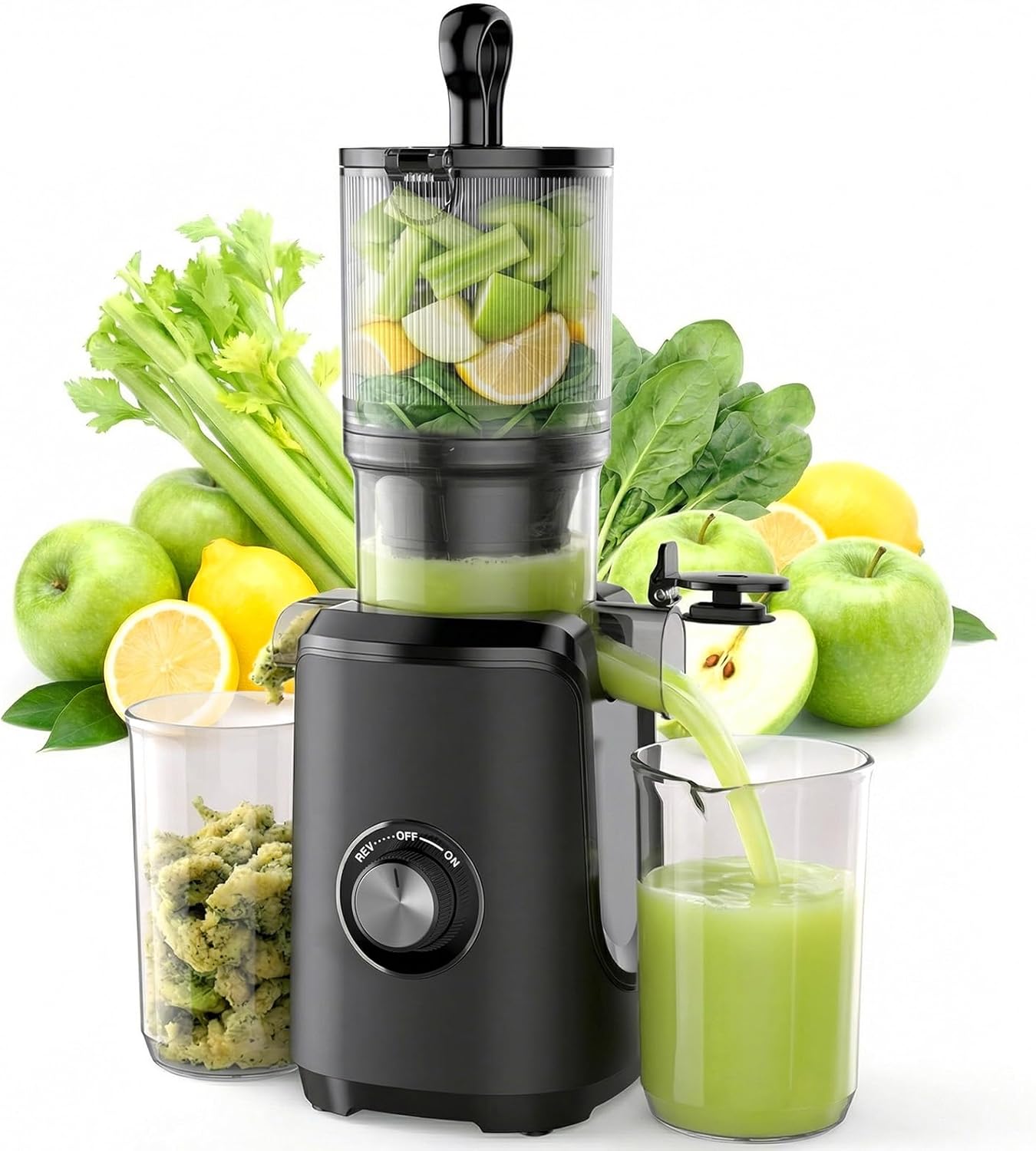
The NEWBULIG Cold Press Juicer is a single-auger masticating machine designed to extract juice gently from fruits, vegetables, and leafy greens. Its low-speed motor reduces heat and oxidation, which helps preserve nutrients and flavor when juicing kale, spinach, and other greens. The 4.25-inch feed chute accepts whole or lightly trimmed produce to cut prep time, and the reverse function clears clogs quickly without taking the unit apart. Parts detach for hand-washing and the package includes a cleaning brush to make pulp removal easier. Practical benefits include a quiet motor suited to morning routines and a safety lock that stops operation if opened. Limitations are that it is hand-wash only and the 200-watt motor means slower throughput than high-powered centrifugal models, so large batches require more time. For buyers focused on extracting nutrient-rich juice from leafy greens on a budget, it delivers strong value with features that support regular use.
Best for: Buyers who want an affordable slow juicer that prioritizes nutrient retention for leafy greens and who value quieter, low-speed extraction for daily use.
Less Ideal for: People who need very fast throughput for large batches or want dishwasher-safe parts for minimal cleanup should consider other options.
- Slow masticating action preserves nutrients and reduces oxidation for leafy greens
- Wide 4.25" feed chute reduces prep by fitting larger pieces
- Reverse function quickly clears clogs without disassembly
- Quiet 200W motor is suitable for early-morning use
- Tool-free parts and included cleaning brush simplify cleanup
- Hand wash only; not dishwasher-safe
- Lower power means slower juicing for large volumes
Verdict: A budget-friendly masticating juicer that keeps nutrient-rich leafy-green juice tasting fresh while staying quiet and easy to maintain.
ECOSELF Cold Press Juicer

| Brand | ECOSELF |
|---|---|
| Special Features | Easy to Clean, High Juice Yield, Reverse Function, Low Noise Motor, Self Feeding |
| Material | Acrylonitrile Butadiene Styrene (ABS) |
The ECOSELF Cold Press Juicer is a slow masticating, single-auger juicer designed for easy, hands-free juicing of whole fruits, vegetables, and leafy greens. Its wide feed chute and self-feeding hopper let you drop in produce without much prep, while the low-speed extraction reduces heat and oxidation to preserve nutrients and deliver smoother, less pulpy juice. The unit includes a reverse function to clear clogs and a one-touch rotary control for simple operation, and ECOSELF claims high juice yield and low noise from the motor. Assembly and cleaning are straightforward thanks to an integrated hopper and included brush, making it practical for regular use. Important practical limits are that this is a single-auger, countertop machine so it is slower than centrifugal models and best suited to someone willing to trade speed for higher nutrient retention; heavy daily commercial use could push its consumer-grade ABS construction and motor beyond intended home use. For leafy-green focused juicing it performs well, but expect longer processing times and occasional need to run the reverse to keep fibrous greens moving.
Best for: Buyers who prioritize reliable nutrient-preserving performance and easy, low-effort leafy-green juicing for home use and who accept slower extraction in exchange for higher juice quality.
Less Ideal for: Users who need very fast throughput for large batches or commercial settings should look for higher-capacity or commercial-grade juicers instead.
- Wide feed chute and auto-feeding design reduce prep time by allowing larger pieces or whole produce
- Slow masticating extraction preserves enzymes and reduces oxidation for smoother, nutrient-rich juice
- Reverse function and one-touch rotary control simplify operation and help clear clogs
- Included cleaning brush and simple assembly make daily cleaning quick and manageable
- Slower processing speed compared with centrifugal juicers, so leafy greens take longer to juice
- ABS construction indicates consumer-grade durability, which may limit heavy commercial use
Verdict: Choose this juicer if you want a user-friendly, slow cold-press machine that extracts nutrient-rich juice from leafy greens with minimal prep and straightforward cleaning.
Jocuu Slow Masticating Juicer

| Wattage | 150 watts |
|---|---|
| Number of Speeds | 2 |
| Power Source | Corded Electric |
| Special Features | Auto-Reversing, Portable |
| Blade Material | Stainless Steel |
The Jocuu Slow Masticating Juicer is a single-auger cold-press machine built to extract juice from soft and hard produce using two speed settings. It separates juice and pulp at low speed to reduce oxidation and preserve nutrients, and the soft/hard modes let you switch between leafy greens or firmer roots and apples. The unit includes an auto-reverse feature to clear clogs and a small feed chute for safer operation, and parts are dishwasher safe for straightforward cleanup. A motor protection chip limits continuous run time and the motor carries a two-year coverage for added reassurance. On the practical side, the compact design and quiet 150 W motor make it suitable for small kitchens and daily use, but the smaller feed chute means more prep cutting and slightly slower throughput compared with wide-chute machines. For frequent leafy-green juicing you will get good yield and less heat-related nutrient loss, though heavy-duty commercial use will reveal its limits in speed and continuous runtime.
Best for: Buyers who prioritize nutrient retention and quiet, daily home juicing—especially those focused on extracting leafy greens and a variety of fruits and vegetables and who value manufacturer support and safety features.
Less Ideal for: If you need a high-capacity, fast juicer for commercial or heavy continuous use or prefer a wide feed chute to avoid prep, consider a larger horizontal or centrifugal model instead.
- Two-speed spiral system for soft and hard produce improves extraction versatility
- Low-speed masticating action reduces oxidation to preserve nutrients
- Reverse function and auto-reverse help prevent and clear clogs
- Dishwasher-safe detachable parts and included brush simplify cleaning
- Quiet 150 W motor suitable for home use
- Smaller feed chute requires more chopping and slows throughput
- Not designed for heavy continuous commercial use due to 20-minute automatic shutoff
Verdict: A quiet, nutrient-focused slow juicer that delivers strong leafy-green extraction for home users who want gentle cold-press juice with easy cleaning and reliable motor protection.
EanOruus 3-in-1 Masticating Juicer E-18

| Capacity | 100 fluid ounces |
|---|---|
| Maximum Power | 250 watts |
| Power Source | ac |
| Voltage | 110 volts |
The EanOruus E-18 is a single-auger masticating juicer designed for heavy home use and multi-function prep. It accepts whole fruits and vegetables through a 6.5-inch wide chute into a 100 oz hopper, which reduces cutting and lets you load larger batches for family-sized juicing sessions. The brushless AC motor runs quietly and is torque-focused, so it handles fibrous produce and leafy greens with steady, low-speed extraction that preserves nutrients. Two strainers let you switch between juice and sorbet or prepare nut milk, and the unit has an auto-reverse and overheat protection to clear jams and protect the motor during tougher loads. Removable parts and a detachable pulp outlet simplify cleanup, but most parts are hand-wash only. At 250 watts the juicer is powerful for a slow extractor yet still requires careful feeding of leafy bundles to avoid clogging. Its weight and size make it more of a countertop appliance than a portable one. For risk-averse buyers the built-in protections and easy-to-follow instructions make operation straightforward, though expect some manual cleaning and occasional use of the reverse feature for dense greens.
Best for: Buyers who want a reliable, low-speed juicer that can handle leafy greens and whole produce with minimal prep and built-in protections for everyday family use.
Less Ideal for: People who need a lightweight, compact juicer for occasional use or who want fully dishwasher-safe parts for faster cleanup.
- Extra-wide 6.5-inch chute reduces prep and fits whole fruits
- Large 100 oz hopper for batch juicing and fewer refills
- Quiet, high-torque AC motor suited for fibrous and leafy produce
- Auto-reverse and overheat protection reduce jams and protect the motor
- Interchangeable strainers allow juice, nut milk, and sorbet preparation
- Most removable parts require hand washing rather than dishwasher-safe cleaning
- Relatively heavy and large footprint limits easy storage or transport
Verdict: A sturdy, low-speed masticating juicer built to handle leafy greens and whole fruits with large-batch capacity and protective features for worry-free daily use.
Choosing the Right Slow Juicer for Leafy Greens: Key Factors to Consider
Extraction Method and Yield
How the machine extracts liquid from leafy greens determines how much usable juice you get per batch. Slow, low-rpm auger systems compress and shear plant fiber in stages to release more liquid with less heat, which helps preserve delicate nutrients and enzymes. For buyers focused on greens, prioritize units known for continuous, high-yield extraction rather than those optimized for citrus or hard roots.
Extraction efficiency also affects how much produce you need to buy and store. A higher-yield machine reduces waste and recurring grocery costs. Consider whether the unit has multi-stage pressing or additional screens that improve separation between liquid and pulp.
Feeding Mechanism and Chute Geometry
Leafy greens can be floppy, long, and awkward to feed. The design of the chute, pusher, and auger throat matters for preventing jams and minimizing pre-cutting. A generous feed throat or a dedicated chute for long items makes prep faster and reduces frustration during frequent use.
Also note whether the feed system supports continuous feeding versus batch processing. Continuous-feed designs are convenient for large batches but must be engineered to avoid slipping and clogging with soft greens.
Ease of Cleaning and Maintenance
Leaf fibers and chlorophyll cling to screens and nooks, so fast, tool-free disassembly cuts the time needed between juicing sessions. Look for removable screens that rinse clean, dishwasher-safe parts if you need that convenience, and few tight crevices where pulp can accumulate.
Consider maintenance needs like replacing worn seals or brushes for screens. A model that requires frequent soaking or scraping will discourage regular use, so balance cleaning convenience against extraction performance.
Build Materials and Long-Term Durability
Materials and construction influence how well a juicer handles repeated leafy loads. Heavy-duty augers, reinforced housings, and corrosion-resistant screens stand up better to fibrous green matter over time. Metal or high-grade polymer components resist warping and staining from chlorophyll.
Durability also ties to motor cooling and thermal protection. Continuous leafy juicing can tax a motor, so look for units with effective heat dissipation and overload protection to avoid premature failure.
Pulp Management and Waste Texture
The texture and dryness of the leftover pulp indicate how thoroughly the juicer extracted liquid. Drier pulp means better yield. For leafy greens, finely compressed pulp reduces waste volume and makes composting easier.
Also consider the pulp outlet design. Some models expel a continuous ribbon of pulp, while others collect it in a bin. Ease of emptying and the ability to see pulp dryness at a glance affect daily usability.
Countertop Footprint and Noise
Where you plan to use and store the juicer affects which size and noise level work best. Smaller footprints and vertical designs fit compact kitchens, while larger horizontal models may offer better feeding but require more counter space.
Noise matters if you juice early in the morning. Slow juicers are generally quieter than high-speed alternatives, but some designs still generate noticeable vibration. Choose based on where and when you will typically operate the machine.
Why Slow Extraction Is Better for Greens
Slow extraction minimizes heat and oxidation, which helps preserve volatile nutrients and yields a smoother mouthfeel with less foam. Because leafy greens have high fiber and low liquid content, the gentle compression of a slow auger separates juice without pulverizing cell walls excessively, producing clearer liquid and a finer pulp.
Slow juicers also tend to be more efficient at squeezing tightly packed fiber. That efficiency means you will often use less produce to get the same glass of green juice, which matters for regular juicing routines and pantry management.
- Lower RPMs reduce heat-related nutrient loss
- Less foam gives cleaner-tasting juice
- Finer pulp indicates better liquid extraction
Preparing Leafy Greens for Best Results
Trim tough stems and rinse leaves thoroughly to remove grit and pesticides. For long stalks, roll or fold them so they feed smoothly into the chute. Tender leafy items like baby spinach can usually be fed whole, while firmer greens benefit from a rough chop.
Blanching or wilting greens is not necessary and can reduce nutrient value. Instead, remove large stems only if they are woody or overly thick. For maximum yield, pack leaves loosely rather than stuffing the chute, and feed at a steady pace to avoid clogs.
- Rinse and dry leaves to prevent dilution
- Remove woody stems to avoid jamming
- Feed evenly rather than overstuffing the chute
Troubleshooting Common Clogging Issues
Clogs in slow juicers usually happen when wet, flexible greens bunch up and wrap around the auger. If the machine stalls frequently, try alternating leafy material with a small amount of firmer produce to push pulp through, or use a reverse function if available to clear buildup.
Regularly inspect the throat and screen for long strands that can tangle. Some users find cutting long leaves into shorter lengths and feeding in batches reduces the chance of tangles and keeps throughput steady.
- Alternate soft greens with firmer items to maintain flow
- Use reverse mode to clear wrapped fibers
- Cut very long leaves before feeding if the chute is narrow
Pulp Uses and Composting Tips
Leftover pulp from leafy greens is nutrient-rich and compost-friendly. Because slow juicers often produce drier pulp, it composts faster and takes up less bin space. Mix green pulp with brown materials like shredded paper or dried leaves to balance moisture in your compost pile.
You can also repurpose green pulp into savory dishes, vegetable broths, or as an addition to veggie patties. Drying and powdering pulp for smoothies or baking is another way to reduce waste and retain fiber.
- Mix pulp into compost with carbon-rich materials
- Use pulp in broths, soups, or veggie burgers
- Dry and store pulp for later use in baking or smoothies
Kitchen Setup and Maintenance Routine
Set up a dedicated area near the sink for juicing to simplify rinsing and cleanup. Keep a small brush handy for screens and store disassembled parts on a towel to dry between uses. Regularly check seals and brushes for wear, and replace consumable parts as needed to maintain performance.
Establish a quick rinse-and-wipe routine right after juicing; letting chlorophyll sit on parts for long periods makes cleaning harder. Periodic deep cleaning with mild detergent prevents odors and buildup.
- Prep near sink and keep cleaning tools accessible
- Rinse parts immediately after use to prevent staining
- Schedule periodic deep cleans to avoid odors
How We Chose the Best Slow Juicer for Leafy Greens
We focused on features that specifically matter when extracting juice from leafy greens rather than citrus or hard produce. First, extraction efficiency was a priority because greens produce relatively little liquid; we looked for mechanisms and feed systems that squeeze fiber thoroughly to maximize yield. Second, ease of cleaning and assembly mattered since leafy pulp can cling to screens and augers and frequent use demands fast teardown. Third, material durability and motor cooling were considered to ensure the machine holds up under regular leafy-juice loads without overheating. Fourth, versatility and feeding options were evaluated so the juicer can handle very soft greens, long stalks, and occasional harder items without frequent clogging. Finally, noise and countertop footprint were reviewed for practical daily use in home kitchens. We excluded high-speed centrifugal machines and models intended only for commercial kitchens because their extraction style and build are not suitable for home leafy-green juicing. The shortlist emphasizes slow extraction models that balance yield, cleaning time, and durability for everyday green-juice preparation.
Our full evaluation process is outlined in our review methodology.
FAQ
Can a slow juicer handle only leafy greens or do I need other produce to help?
Many slow juicers can process leafy greens alone, but occasionally alternating with a firmer item like cucumber or apple helps push wet pulp through and maintain steady flow. Some models also offer reverse functions to clear wrapped fibers if needed.
How dry should the pulp be to know I am getting good yield?
Drier, compact pulp generally indicates efficient extraction when juicing leafy greens. If the pulp feels wet and spongy, you may get better yield by slowing down the feed rate or running the same pulp through a second pass.
Is it safe to juice raw leafy greens every day?
Juicing raw greens daily is common and safe for most people, but because juices concentrate nutrients and compounds like oxalates, vary your greens and consult a healthcare professional if you have specific medical concerns. Rotating produce helps widen nutrient intake and reduces potential overexposure to any single compound.
How often do screens and seals need replacing?
Replacement frequency depends on use intensity and cleaning habits. With regular daily use, expect to inspect screens and seals periodically and replace them when you notice wear, warping, or persistent odors. Proper cleaning extends the life of consumable parts.
Will juicing leafy greens stain the machine permanently?
Chlorophyll can stain plastic and some finishes if parts sit damp for long periods. Rinsing parts immediately after juicing and avoiding prolonged exposure reduces the chance of permanent staining. Choosing corrosion-resistant materials also minimizes long-term discoloration.
Final Verdict
For regular leafy-green juicing, prioritize extraction efficiency, ease of cleaning, and a feeding design that handles long, floppy leaves without frequent jams. Expect tradeoffs between throughput and countertop footprint, and weigh how often you will juice against how much cleanup you will tolerate. Focus on models that deliver dry pulp and steady yields, and set up a simple post-juice cleaning routine to keep the machine performing consistently. With those priorities in mind, you can choose a slow juicer that fits your daily routine and delivers better green juice with less waste.