
Note: This article contains affiliate links. If you click on these links and make a purchase, we may earn a small commission at no extra cost to you. This helps support our research and content. Read our full affiliate disclosure here.
If you drink fresh vegetable juice regularly, the right slow masticating juicer can make the difference between a nutrient-rich morning routine and a wasteful, time-consuming chore. A machine designed specifically for vegetables focuses on continuous feeding, efficient fiber separation, and steady low-speed extraction to preserve enzymes and maximize liquid yield. This guide covers the seven top slow masticating juicers for vegetables we shortlisted based on extraction performance, build durability, and cleaning ease. We explain the key factors that influence real-world use, so you can choose a model that fits your kitchen habits and juice preferences. Read on to see how we evaluated yield, maintenance, and other practical concerns before the product list.
Top Picks at a Glance
| Best Overall The best all-around choice for most situations | Ninja NeverClog Cold Press Juicer JC151 |  |
| Best Quality Built to a higher standard if you want something more solid | Hurom H400 Slow Juicer |  |
| Best Value The sweet spot between price and what you get | ACOQOOS AMJ-90 Masticating Juicer |  |
| Best Budget The cheapest option that still gets the job done reliably | GlowWise Slow Masticating Juicer |  |
| Top Rated A top-rated pick with lots of positive feedback | AAOBOSI Cold Press Juicer |  |
| Most Popular A crowd favorite that many people choose with confidence | EanOruus E-18 Masticating Juicer |  |
| Best Seller A high-volume bestseller chosen again and again | YPONE Cold Press Juicer SJ-057 |  |
Ninja NeverClog Cold Press Juicer JC151

| Maximum Power | 150 watts |
|---|---|
| Number of Speeds | 2 |
| Capacity | 24 fluid ounces |
| Included Components | 24 oz juice jug, 36 oz pulp container, 2 pulp filters, auger |
The Ninja NeverClog JC151 is a slow masticating juicer designed to handle fibrous vegetables and fruits with a high-torque 150W auger that minimizes clogging and foam. It is typically used for green juices, vegetable blends, and wellness shots where nutrient preservation and smooth texture matter. Notable features include two interchangeable pulp filters for Less Pulp or Lots of Pulp, one-touch Start/Stop plus a Reverse program to clear jams, an anti-drip lever for cleaner pouring, and enlarged 24 oz juice and 36 oz pulp containers for preparing larger batches. Dishwasher-safe juice-contact parts and a straightforward assembly make cleanup and day-to-day use easier than many centrifugal designs. Practical benefits are strong extraction from tough greens and long ingredients like celery, plus simple pulp control for personal texture preference. Important limitations are its modest 150W power compared with some commercial masticating machines and a relatively compact capacity that still requires periodic emptying during heavy use. It is a good fit for home users who want reliable vegetable juicing without a complex appliance.
Best for: Home cooks who want a balanced masticating juicer that reliably extracts juice from leafy greens and fibrous vegetables while offering easy cleanup and simple pulp control.
Less Ideal for: Those who need a commercial-grade machine for continuous heavy juicing or who want the highest possible throughput for large-scale batch production.
- NeverClog cold press auger handles fibrous vegetables with reduced clogging
- Two interchangeable pulp filters let you choose juice texture
- 24 oz juice jug and 36 oz pulp container support larger batches
- Dishwasher-safe juice-contact parts simplify cleanup
- Reverse function helps clear jams and improve extraction
- 150W motor is less powerful than some higher-end masticating models
- Compact footprint and capacity may require emptying for extended juicing sessions
Verdict: A practical, easy-to-clean masticating juicer that balances good vegetable extraction with simple operation and pulp control for everyday home use.
Hurom H400 Slow Juicer

| Special Features | Masticating |
|---|---|
| Wattage | 240 watts |
| Power Source | Corded Electric |
| Voltage | 120 |
| Capacity | 2 liters |
The Hurom H400 is a performance-focused slow masticating juicer built to extract high yields from vegetables and fruits while keeping pulp minimal. It uses a two-part auger and Hurom's Slow Squeeze technology to press produce at low speed, which reduces oxidation and helps juice stay fresher for longer. The wide self-feeding hopper accepts larger pieces and reduces prep time, and the strainer-free chamber simplifies cleaning by avoiding the clogged mesh typical of other models. The motor runs quietly, so it is convenient for early-morning juicing, and the construction uses BPA-free plastics with a hand-wash cleaning routine. Key limitations are that it is single-speed so you cannot fine-tune torque for very fibrous greens, and heavier cleaning still requires disassembly and rinsing despite the strainer-free claim. At its wattage and build, it is best suited to buyers who prioritize juice quality and yield from vegetables rather than fast multi-speed convenience.
Best for: Buyers focused on maximum juice yield and nutrient preservation from vegetables who value quiet, low-oxidation extraction and minimal prep time.
Less Ideal for: People who need adjustable speed/torque for varied produce textures or who want a dishwasher-safe, no-disassembly cleaning routine.
- High yield extraction using Slow Squeeze technology and two-part auger
- Self-feeding wide hopper reduces prep and fits larger produce
- Strainer-free chamber designed to cut down scrubbing and clogging
- Quiet motor suitable for early-morning use
- Single speed limits control for extremely fibrous greens or custom textures
- Requires hand washing and disassembly for full cleaning
Verdict: Choose the Hurom H400 if you want a quiet, high-yield slow juicer that maximizes vegetable juice quality and minimizes pulp.
ACOQOOS AMJ-90 Masticating Juicer

| Maximum Power | 350 watts |
|---|---|
| Number of Speeds | 60 |
| Material | ABS, BPA-Free |
| Capacity | 100 OZ hopper |
The ACOQOOS AMJ-90 is a single-auger, cold-press juicer built for low-speed extraction and batch work. It uses a 6.5-inch extra-wide feed chute and a 100 oz gravity-fed hopper so you can load whole fruit and walk away, which is handy when processing leafy greens and harder vegetables for high-yield batches. Running at 60 RPM with a 350 W motor, the machine prioritizes nutrient retention and claims a high extraction rate with dry pulp. Detachable parts are BPA-free and mostly dishwasher-safe, and the package includes a cleaning brush to speed cleanup. The unit also offers basic versatility beyond juicing — a sorbet and nut milk function expands what you can make without extra appliances. Practical limits: it requires removal of hard pits, and users should expect slower throughput than centrifugal models; the 1-year warranty is modest compared with some premium brands. For vegetable-heavy juicing, the AMJ-90 focuses on yield and low oxidation while keeping daily use and cleanup straightforward.
Best for: Buyers who prioritize maximum juice yield and nutrient retention from vegetables and want a low-oxidation, low-prep workflow that reduces hands-on chopping and cleanup.
Less Ideal for: People who need very fast single-serving juice on demand or who want a long factory-backed warranty and premium service support.
- 6.5-inch extra-wide feed chute and 100 oz hopper let you load large produce and reduce prep time
- Slow 60 RPM cold-press extraction preserves nutrients and produces drier pulp for better yield
- Dishwasher-safe BPA-free components and included cleaning brush make cleanup quick
- Includes sorbet and nut milk functions so one machine handles multiple tasks
- Requires removal of hard pits and seeds to protect the auger
- Slower processing speed than centrifugal juicers, which can increase run time for large batches
Verdict: Choose the AMJ-90 if you want a practical, high-yield slow juicer that handles whole produce and also makes sorbet and nut milk with minimal prep.
GlowWise Slow Masticating Juicer

| Maximum Power | 200 watts |
|---|---|
| Number of Speeds | 2 |
| Power Source | Corded Electric |
| Voltage | 120 volts |
| Capacity | 2.5 pounds |
The GlowWise Slow Masticating Juicer is a budget-friendly cold-press machine built to extract juice from whole fruits and softer vegetables using a single auger at 40–60 RPM. It handles prep-light juicing through a wide 4.35-inch feed chute and a 40 oz collection capacity, and offers two speeds plus a reverse function to clear clogs. The stainless steel auger and triple-layer 0.25 mm filter aim to produce smooth juice with minimal pulp and higher yield, and the manufacturer claims over 99% juice extraction. Cleanup is straightforward because the unit disassembles into six snap-fit parts made from SUS304 stainless and food-grade PP, though the parts are hand-wash only. The juicer runs quietly under 40 dB and includes overheating protection, but it is not suited for hard roots or heavy stems and has a modest 200 W motor, so expect slower processing on tougher produce. For buyers watching their budget, it delivers strong basic cold-press performance and easy maintenance, with the usual limits of entry-level masticating machines when it comes to hard, fibrous vegetables.
Best for: Buyers looking for an affordable, easy-to-use cold-press juicer that handles whole fruits and softer vegetables with minimal prep and straightforward cleaning.
Less Ideal for: Those who plan to regularly juice hard roots, fibrous stems, or large volumes of tough vegetables should choose a more powerful or commercial-grade machine.
- Wide 4.35-inch feed chute reduces prep time by fitting larger pieces or whole softer fruits
- Multi-stage stainless steel auger and fine 0.25 mm filter for smooth juice and reduced pulp
- Compact footprint and quiet operation under 40 dB suitable for small kitchens
- Simple 6-piece snap-fit design makes assembly and rinsing fast
- Not suitable for hard roots and heavy stems, limiting use with some vegetables
- 200 W motor may be slow with tougher produce compared with higher-powered masticating models
Verdict: A cost-conscious cold-press juicer that delivers smooth, low-pulp juice from whole fruits and soft vegetables with easy cleaning and quiet operation.
AAOBOSI Cold Press Juicer
| Special Features | Whole Fruit Processing |
|---|---|
| Maximum Power | 200 watts |
| Wattage | 200 watts |
| Blade Material | Stainless Steel |
| Product Care Instructions | Hand Wash Only |
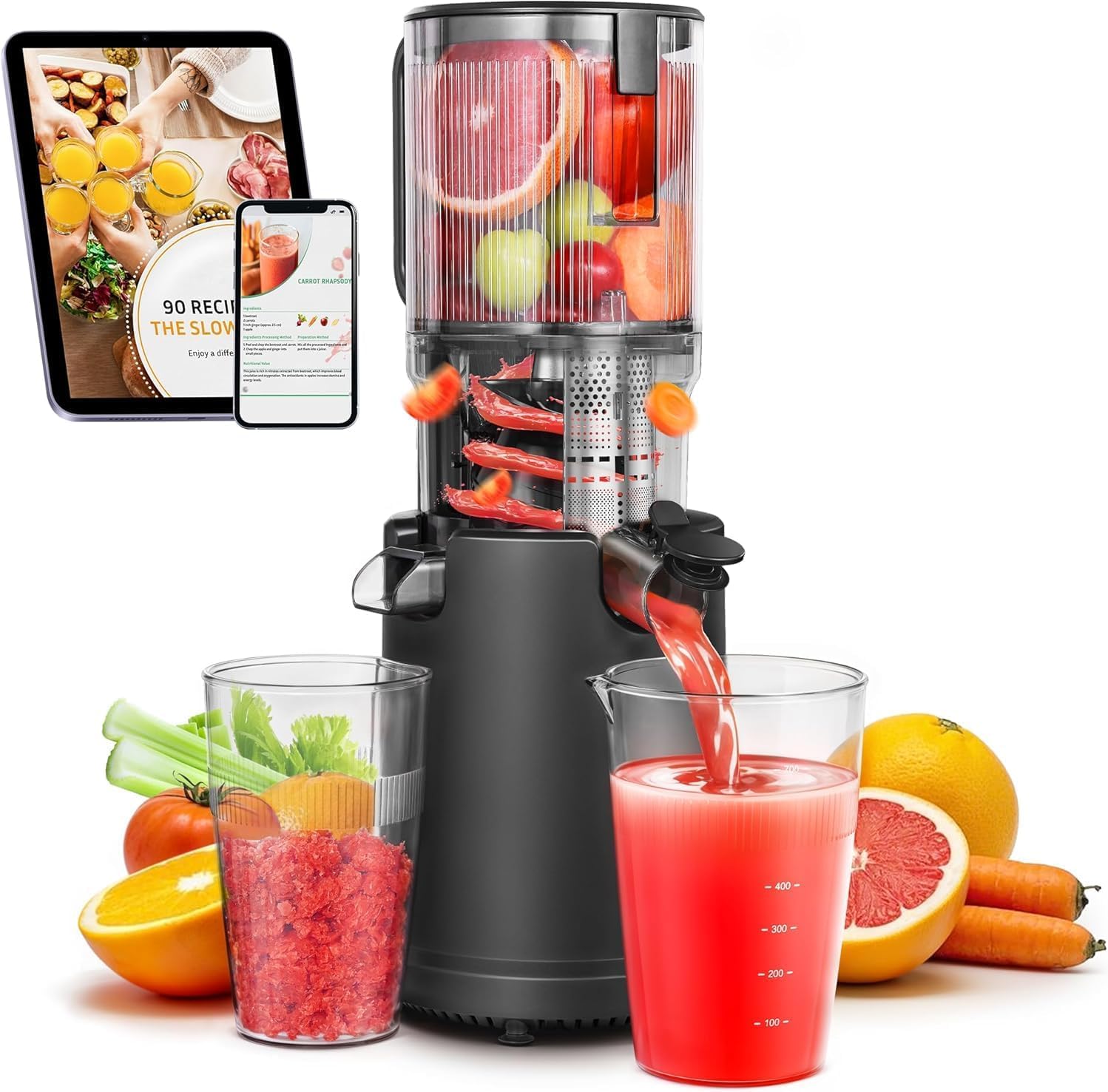
This AAOBOSI cold press juicer is a single-auger masticating machine built for daily vegetable and fruit juicing. It uses a low-speed 60 RPM motor with a 180W (200W peak) rating to gently press produce, which helps maximize yield and preserve nutrients while producing very little noise. The 5.4-inch wide chute fits many whole fruits and some vegetables so you can skip lengthy prep, and the double mesh filtration and triple filtration claims target smooth, low-foam results suitable for celery, kale, and wheatgrass. Assembly and cleaning are straightforward since parts are removable and a cleaning brush is included, though the unit is hand-wash only. The motor and stainless steel blade design aim for durability and heat resistance during repeated use, making it a practical choice for vegetable-forward juicing routines. Expect modest throughput compared with centrifugal models, and users who need higher speed or dishwasher-safe parts should consider alternatives.
Best for: Buyers who prioritize a reliable, low-speed masticating juicer for daily vegetable and green juices and want consistent, nutrient-preserving extraction with minimal noise.
Less Ideal for: People who need rapid high-volume juicing, want dishwasher-safe components, or prefer a high-speed centrifugal extractor for quick single servings.
- Low 60 RPM speed preserves nutrients and yields smoother juice with less foam
- 5.4-inch wide chute accepts many whole fruits and reduces prep time
- Quiet operation around 58–60 dB suitable for early-morning juicing
- Stainless steel blade and motor design aimed at heat resistance and longevity
- Double mesh and triple filtration produce pulp-free, drinkable juices
- Key parts are hand-wash only, which increases cleaning time versus dishwasher-safe models
- Lower throughput means longer run times for large batches compared with centrifugal juicers
Verdict: A quiet, low-speed masticating juicer built for reliable, nutrient-focused vegetable and green juice extraction.
EanOruus E-18 Masticating Juicer

| Maximum Power | 250 watts |
|---|---|
| Power Source | ac |
| Voltage | 110 volts |
| Capacity | 100 fluid ounces |
The EanOruus E-18 is a 3-in-1 slow masticating juicer aimed at families and meal preppers who want high yield and low prep time. It uses a single auger and a high-torque AC motor with auto-reverse to extract juice from whole fruits and vegetables, and it includes separate strainers for juice, nut milk, and sorbet. The standout practical features are the 6.5-inch extra-wide chute that accepts large produce with minimal chopping and a 100 oz hopper that reduces refilling during batch runs. Detachable parts and a removable pulp outlet make cleaning straightforward for a masticating design, and overheat protection adds durability for heavier use. Expect quiet operation compared with centrifugal machines, and steady nutrient retention from the slow extraction. Limitations to note are the hand-wash requirement for parts and plastic components rather than metal, which may matter if you prefer dishwasher-safe or stainless construction, and the unit is fairly heavy and sized for counter space rather than tight kitchens.
Best for: Buyers who prioritize reliable, high-yield vegetable and whole-fruit juicing for families or regular meal prep and who want social-proofed performance without noisy centrifugal operation.
Less Ideal for: People with very limited countertop space or those who need dishwasher-safe stainless components should consider other models.
- Extra-wide 6.5-inch chute reduces prep and fits whole fruits and vegetables
- Large 100 oz hopper supports batch juicing for families or meal prep
- Quiet, high-torque AC motor with auto-reverse for consistent extraction and less clogging
- Includes interchangeable strainers for juice, nut milk, and sorbet to expand use cases
- Detachable pulp outlet and removable parts simplify cleaning compared with fixed designs
- Main components are plastic and require hand washing rather than dishwasher-safe parts
- Relatively heavy and tall profile requires ample counter space
Verdict: Choose the EanOruus E-18 if you want a quiet, high-capacity masticating juicer that handles whole produce and delivers versatile extraction for juice, nut milk, and sorbet.
YPONE Cold Press Juicer SJ-057

| Maximum Power | 400 watts |
|---|---|
| Power Source | Corded Electric |
| Voltage | 120 volts_of_alternating_current |
| Number of Speeds | 1 |
| Material | PVC |
The YPONE SJ-057 is a slow masticating cold-press juicer built for extracting juice from whole fruits, vegetables, and nuts with minimal prep. It uses a 55 RPM single-auger design and a 400W motor to squeeze ingredients slowly, which reduces heat and oxidation for clearer, foam-free juice and higher nutrient retention. The extra-large 5.8" feed chute handles many whole fruits and larger pieces so you spend less time chopping, and a safety lock stops the unit when the lid is opened. The unit ships with dual 0.3mm mesh strainers to improve yield and reduce clogging, plus a brush and simple three-part disassembly that makes rinsing straightforward. Practical benefits include the ability to make nut and soy milk in addition to vegetable juices and a quieter operation than high-speed juicers. Limitations to note are the single speed, so there is no soft/firm produce tuning, and several plastic components and a plastic blade that may feel less premium than all-metal alternatives.
Best for: Buyers who prioritize reliable, low-oxidation vegetable and nut juicing with minimal prep and straightforward cleaning, and who prefer a quieter, safety-minded appliance for everyday use.
Less Ideal for: Users who want multiple speed settings for delicate control, those seeking fully metal construction, or users planning heavy continuous commercial use.
- Large 5.8" feed chute accepts many whole fruits and reduces chopping time
- Slow 55 RPM masticating action preserves nutrients and produces low-foam juice
- Dual 0.3mm mesh strainers increase juice yield and reduce clogging
- Includes cleaning brush and simple three-part disassembly for quick cleaning
- Quiet operation and safety lock for steady, family-friendly use
- Single speed limits control when juicing very soft or very hard produce
- Extensive use of plastic parts and a plastic blade may feel less durable than metal alternatives
- Some users may prefer a larger-capacity container for continuous heavy use
Verdict: Choose this juicer if you want a quiet, slow cold-press machine that handles whole vegetables and nuts with high juice yield and easy cleanup.
Choosing the Right Slow Masticating Juicer for Vegetables: Key Factors to Consider
Extraction Yield for Fibrous Vegetables
Vegetables like kale, spinach, celery, and beets have high fiber content and varying moisture levels, so yield is a primary buying concern. Higher extraction yield means you get more juice from the same amount of produce, lowering per-glass cost and reducing waste.
Look for juicers whose design compresses and tears fiber efficiently rather than just cutting. A slow, high-torque auger typically extracts more liquid from leafy greens and tough roots. Expect different yields across vegetable types; the best machines minimize those gaps so you consistently get fuller glasses.
Pulp Dryness and Consistency
Dryer pulp indicates the machine is extracting the maximum liquid and separating fiber effectively. Dense, wet pulp means more leftover juice trapped in fiber and lower overall yield.
Consistent pulp texture also affects downstream cleanup and whether you can repurpose pulp for cooking. If you plan to make recipes with pulp afterward, look for machines that produce uniform, relatively dry fiber. Uneven pulp consistency can signal inefficient cutting or squeezing mechanics.
Ease of Cleaning and Maintenance
Vegetable juicing creates sticky, fibrous residues that can cling to screens and augers. Models with fewer parts, wide openings, and dishwasher-safe components save time and encourage daily use.
Consider how easily you can access the screen for brushing and whether the design traps pulp in crevices. Tools included for cleaning and clear reassembly guides can substantially reduce the perceived chore of maintenance, which is a major factor in whether you use the machine regularly.
Motor Strength and Heat Management
Juicing dense roots and leafy bunches places sustained torque demands on the motor. A motor that stalls, overheats, or throttles back under load will slow your routine and risk damage.
Look for machines designed for continuous vegetable juicing with robust cooling, overload protection, and steady low-RPM torque. Higher torque at low speed preserves nutrients while handling tough produce without frequent jams or pauses.
Feeding Design and Throughput
A wide chute or efficient feed system reduces prep work by allowing larger pieces or continuous bundles of greens. For vegetable-heavy juicing, reduced chopping and a smoothing feeding action make the process quicker and less fussy.
Throughput matters if you make multiple servings. A juicer that can accept longer stems or larger chunks without frequent stops speeds up prep and makes morning routines more consistent.
Build Quality and Parts Longevity
Materials that resist staining and warping reduce long-term maintenance. Metal or high-grade polymer components in wear-prone areas extend life, and replaceable screens or augers mean a machine can be refreshed without full replacement.
Check for clear spare parts availability and straightforward part replacement. A machine that is easy to service keeps repair downtime low and supports years of vegetable juicing.
Why Slow Masticating Juicers Are Better for Vegetables
Slow masticating juicers extract juice by crushing and pressing produce at low speeds rather than high-speed spinning. That low-RPM approach reduces heat and oxidation, which helps preserve heat-sensitive nutrients commonly found in leafy greens and some root vegetables.
For vegetables, the masticating action also separates fiber more thoroughly, often resulting in drier pulp and higher overall yield. That means smaller quantities of produce are required per glass, which is valuable if you regularly juice expensive leafy greens.
- Lower RPMs preserve enzymes and reduce foam
- Better extraction of leafy greens and fibrous roots
- Typically quieter operation during use
Common Vegetable Juicing Challenges and How to Avoid Them
Vegetable juicing presents two main challenges: clogging from stringy fibers and inconsistent yield across different produce. Thin stems, long leaves, and tough root fibers can wrap around augers or mesh screens, causing jams that interrupt workflow.
To avoid these issues, prioritize feed design and motor torque. Feed chutes that accept longer pieces reduce prep, and augers designed to cut and press rather than shear help prevent stringy fibers from tangling. Regularly trimming very long stems and alternating soft and hard vegetables during feeding can also reduce the chance of clogs.
- Alternate soft and hard vegetables while juicing to reduce packing
- Trim excessively long stems or fibers before feeding
- Empty the pulp container periodically during large batches
Cleaning Tips to Keep Your Juicer Performing Well
Immediate rinsing after use reduces dried-on residue and makes cleaning far easier. If your machine includes a reverse function or pre-rinse cycle, use it to expel trapped pulp before disassembly. Soak stubborn mesh screens briefly in warm water to loosen fibers before brushing.
Use the brushes supplied by the manufacturer or a soft brush to clear screen holes without damaging the mesh. For deep cleaning, disassemble all removable parts and air-dry them fully before reassembly to prevent odor buildup. Periodic inspection of wearing parts will help you schedule replacements before performance declines.
- Rinse components right after juicing
- Soak and brush screens to remove trapped fibers
- Air-dry parts completely to avoid mold and odors
How Vegetable Type Affects Performance and Prep
Different vegetables behave differently in a masticating juicer. Leafy greens usually yield well but can create long, stringy pulp that benefits from steady, low-speed squeezing. Hard roots such as carrots and beets require good torque and a feeding pattern that avoids overloading the auger.
Adjust your prep based on the produce. Cut very hard roots into manageable pieces, remove thick outer peels if they are waxed or dirty, and keep leafy bundles loose so the auger can process them evenly. Combining vegetables with small amounts of softer produce or a chunk of apple can help the flow without changing the vegetable-forward profile of the juice.
- Cut dense roots into chunks for steady feeding
- Keep leafy greens loose and avoid compacting bunches
- Use a small amount of softer fruit if the auger needs a binding boost
Storage and Freshness for Vegetable Juice
Vegetable juices oxidize faster than fruit juices because of lower sugar content. To preserve flavor and nutrients, store juice in airtight, opaque containers and refrigerate immediately. Fill containers close to the top to minimize air contact and consume within 24 to 72 hours depending on acidity and refrigeration.
If you plan to make larger batches, portion juice into single-serve containers for quicker consumption. Label containers with the date and contents so you can track freshness and avoid keeping juice past its prime.
- Use airtight, opaque bottles to limit light and oxygen exposure
- Consume green vegetable juices sooner than sweeter fruit blends
- Label and date batches to track freshness
How We Chose the Best Slow Masticating Juicer for Vegetables
We prioritized machines engineered for vegetable-focused extraction and real-world usability. Our selection criteria centered on metrics that matter to daily vegetable juicing: extraction yield for fibrous greens and root vegetables, pulp dryness and separation efficiency, motor reliability under sustained loads, and how easily components disassemble and clean. We also considered feeding design and chute capacity because continuous, hands-off processing matters when you work through bunches of leafy greens or hard roots. Materials and build quality were assessed to ensure long lifespans under regular use, and warranty/parts access was factored as an indicator of expected durability. We excluded centrifugal or high-speed juicers and models primarily marketed for citrus or soft fruits since those machines use different extraction mechanics and produce different yields with vegetables. Units with unclear parts materials or poor service coverage were also filtered out. The shortlist reflects juicers that balance consistent vegetable yield, manageable cleanup, and robust construction.
Our full evaluation process is outlined in our review methodology.
FAQ
How much vegetable juice can I expect per pound of produce?
Yield varies by vegetable, but slow masticating machines commonly extract significantly more liquid than high-speed juicers. Expect different yields across leafy greens versus hard roots; dense roots produce less volume by weight but often more concentrated juice. Averaging yields is useful for planning, but exact output depends on produce freshness and juicing technique.
Will a slow masticating juicer handle beet greens and other stringy greens?
Often yes, but stringy greens can wrap if fed in long, compact bundles. Loosening bunches and alternating with sturdier vegetables reduces the risk of tangling. Models with reverse or continuous-feed designs also help clear any wrapped fibers without disassembly.
How often should I replace screens or augers?
Replacement schedules depend on usage frequency and materials. With regular daily vegetable juicing, inspect screens and augers every few months for wear, clogging, or warping. Replace parts that show damage to maintain extraction efficiency and to avoid further strain on the motor.
Can I juice cooked vegetables with a slow masticating juicer?
Usually you can, but cooked vegetables may be softer and produce different textures and yields. Purees or very soft cooked vegetables can clog screens or pass through as a thicker slurry, so adjust expectations for clarity and separation when using cooked produce.
Is there a difference in nutrient retention between slow masticating and centrifugal juicers?
Slow masticating juicers operate at lower speeds and generate less heat and oxidation, which generally helps preserve heat-sensitive nutrients and reduce foam. The practical difference depends on the produce and how quickly you store and consume the juice.
Final Verdict
Choose a slow masticating juicer for vegetables by prioritizing extraction yield, pulp dryness, and ease of cleaning. If you juice leafy greens and roots frequently, favor machines with strong low-speed torque, user-friendly feeding, and straightforward disassembly. Expect to trade off slightly longer juicing time for higher nutrient retention and superior yield. Ultimately, pick a model that matches how much prep and cleanup you are willing to do and that offers replaceable parts for long-term reliability. That approach will keep daily vegetable juicing practical and rewarding over time.