
Note: This article contains affiliate links. If you click on these links and make a purchase, we may earn a small commission at no extra cost to you. This helps support our research and content. Read our full affiliate disclosure here.
If you want higher yields from leafy greens and firm root vegetables, choosing the right slow juicer for vegetables matters. A dedicated vegetable juicer squeezes more liquid from fibrous produce, preserves delicate enzymes with low-heat extraction, and minimizes foam that traps nutrients. In this guide we shortlisted the top slow juicers for vegetables across a range of designs and user needs. Each pick was evaluated for extraction efficiency, cleaning effort, and durability so you can find a machine that matches daily use, kitchen space, and the types of vegetables you juice most. Read on for the core considerations and practical tips to help you pick the right slow juicer for vegetables.
Top Picks at a Glance
| Best Overall The best all-around choice for most situations | TUUMIIST Cold Press Juicer TM880SJ |  |
| Best Quality Built to a higher standard if you want something more solid | Hurom H70 Slow Juicer |  |
| Best Value The sweet spot between price and what you get | EUHOMY Cold Press Juicer MJ-01H |  |
| Best Budget The cheapest option that still gets the job done reliably | NEWBULIG Cold Press Juicer |  |
| Top Rated A top-rated pick with lots of positive feedback | Anybear Cold Press Juicer SJ054C |  |
| Most Popular A crowd favorite that many people choose with confidence | Ninja NeverClog Cold Press Juicer JC151 |  |
| Best Seller A high-volume bestseller chosen again and again | EanOruus 3-in-1 Masticating Juicer E-18 |  |
TUUMIIST Cold Press Juicer TM880SJ

| Capacity | 3 liters |
|---|---|
| Maximum Power | 350 watts |
| Wattage | 300 |
| Voltage | 120 volts |
| Number of Speeds | 60 |
This TUUMIIST cold press juicer is a single-auger masticating machine designed to handle whole fruits and vegetables with minimal prep thanks to its extra-wide 6.5-inch chute and large 100 oz hopper. It runs at low speed to preserve enzymes and maximize yield, and the metal-free filter mesh plus auto-reverse help reduce clogging when processing fibrous vegetables like kale or celery. The smart touch panel and multiple modes make it easy to switch between juice, nut milk, and sorbet, and the unit is advertised as whisper-quiet and equipped with overheat protection for longer runs. Cleanup is simplified by a three-part design and dishwasher-safe components, although the machine is relatively heavy and takes counter space. For vegetable-focused juicing it promises high extraction and drier pulp, but dense or woody produce may still require occasional trimming to fit and avoid stress on the motor.
Best for: Buyers who want a versatile slow juicer that prioritizes high yield and easy whole-fruit or vegetable feeding for daily home juicing and occasional batch prep.
Less Ideal for: People who need an ultra-compact or lightweight countertop appliance or who plan to juice only small amounts infrequently and prefer a simpler centrifugal model.
- 6.5-inch wide chute accepts whole fruits and many vegetables with less pre-cutting
- Cold press masticating action yields high juice extraction and drier pulp from leafy and soft vegetables
- Smart touch controls with multiple modes for juice, nut milk, and sorbet
- Auto-reverse and overheat protection reduce jams and protect the motor during heavy vegetable use
- Dishwasher-safe parts and a simplified three-piece assembly for faster cleaning
- Relatively heavy and wide footprint that can occupy significant counter space
- May still need trimming for very hard or long produce despite the large chute
- Multiple speed count listed is high but practical control is primarily mode-based rather than finely graduated speeds
Verdict: A high-yield, whole-fruit friendly cold press juicer that balances versatile functions and easy cleaning for regular vegetable juicing.
Hurom H70 Slow Juicer

| Wattage | 150 watts |
|---|---|
| Power Source | Corded Electric |
| Material | Plastic |
| Special Features | Easy to Clean |
The Hurom H70 is a single-auger masticating juicer built for steady, high-yield vegetable juicing. It uses a slow-squeeze auger system and a strainer-free Easy Clean chamber that separates pulp without a mesh filter, which reduces clogging and makes disassembly and rinsing fast. A large self-feeding hopper and wider inlet let you add longer produce with less chopping, and the front juice gauge helps monitor output while you work. Because it operates at low speed, the H70 runs quietly and preserves more nutrients and color in leafy greens and hard vegetables. Practical benefits include high juice yield with minimal pulp and very simple cleanup that encourages daily use. Limitations to consider are its plastic construction and hand-wash-only care, and while compact, it still requires countertop space and gentle handling of tougher fibrous items to avoid long runs or jams. For vegetable-focused users who prioritize yield and easy maintenance, the H70 delivers a strong, user-friendly performance.
Best for: Vegetable-focused home juicers who want maximum yield and a machine that is quick to clean so they will use it regularly.
Less Ideal for: Buyers who prefer metal-bodied, dishwasher-safe appliances or who need heavy commercial throughput for frequent large batches.
- Strainer-free Easy Clean chamber reduces clogging and rinses clean quickly
- Large self-feeding hopper minimizes prep by accepting larger produce pieces
- Slow masticating auger yields more juice with less pulp from vegetables
- Quiet operation suitable for morning or shared-space use
- Major components are plastic and require hand washing
- May need occasional attention with very fibrous or stringy vegetables to avoid jams
Verdict: Choose the H70 if you want a compact, high-yield slow juicer that makes vegetable juicing easier with a strainer-free design and very fast cleanup.
EUHOMY Cold Press Juicer MJ-01H

| Maximum Power | 400 watts |
|---|---|
| Wattage | 200 watts |
| Voltage | 120 volts |
| Number of Speeds | 3 |
| Capacity | 2 liters |
The EUHOMY MJ-01H is a single-auger slow masticating juicer built for steady vegetable and fruit juicing at home. It uses cold press technology and a high-power 400W motor to extract juice with reduced oxidation and froth, and the 5.8" wide feed chute accepts many whole pieces so you can skip extensive chopping. The unit includes dual-layer filters and a reverse function to reduce clogging and aims for high juice yield while separating pulp effectively. Detachable parts and an included brush make rinse-and-wipe cleanup straightforward, and the one-button control keeps operation simple. Practical limitations are that it is hand-wash only and constructed from ABS plastic, so it is not as premium-feeling as metal-bodied models, and some users may prefer a larger-capacity or heavier-duty commercial-style machine for very frequent heavy vegetable juicing. For home cooks who want nutrient-preserving, low-foam vegetable juice without fiddly assembly, this offers a strong value proposition.
Best for: Buyers who want efficient, nutrient-preserving vegetable and mixed-fruit juices at home and value a wide feed chute to cut prep time and easy cleanup.
Less Ideal for: Commercial users or those who juice very large volumes daily should consider heavier duty, metal-bodied machines with dishwasher-safe parts.
- Large 5.8-inch feed chute reduces prep time by allowing many fruits and vegetables to be juiced whole
- Cold press masticating action with a 400W motor minimizes oxidation and preserves nutrients
- Dual-layer filter and reverse function help reduce clogging and improve juice clarity
- Simple one-button operation and detachable parts make assembly and cleaning easier than many slow juicers
- Mainly ABS plastic construction so it lacks metal durability and a premium finish
- Recommended hand wash only for removable parts rather than dishwasher safe
Verdict: A practical, wide-chute cold press juicer that maximizes vegetable juice yield and minimizes prep and cleanup for home use.
NEWBULIG Cold Press Juicer
| Feed chute | 4.25 inches |
|---|---|
| Wattage | 200 watts |
| Voltage | 120 volts |
| Special features | Reverse function, Safety lock, Quiet motor |
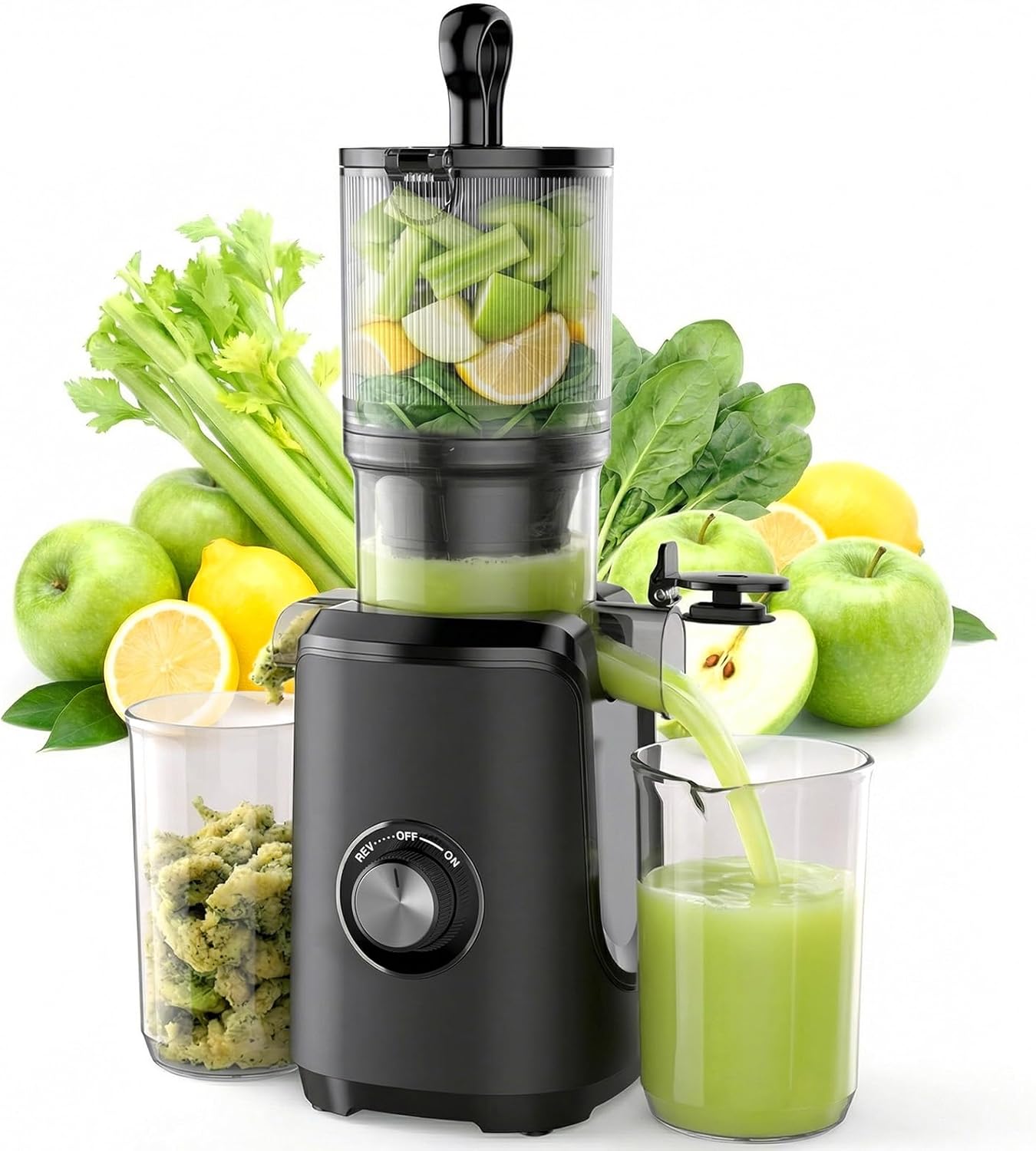
The NEWBULIG Cold Press Juicer is a single-auger masticating machine built for making nutrient-rich vegetable and fruit juices with minimal prep. It uses a quiet, low-speed motor to gently press produce and reduce heat and oxidation, which helps preserve enzymes and flavor. The 4.25-inch feed chute accepts large pieces and whole vegetables like carrots, cutting down chopping time, and the reverse function clears clogs quickly without disassembly. Parts detach for hand washing and a cleaning brush is included to remove pulp from the mesh. Safety features include a blade-free design and an automatic safety lock that stops operation if opened. Practical limits are that it is hand-wash only and runs at 200 watts, so extraction will be slower than high-power centrifugal models and the smaller motor may struggle with very hard produce when juicing frequently for large batches. For everyday vegetable juicing in a budget kitchen it balances yield, convenience, and easy maintenance.
Best for: Buyers looking for an affordable slow juicer that prioritizes nutrient retention and easy prep for regular vegetable and fruit juices.
Less Ideal for: People who need very fast, high-volume juicing or want dishwasher-safe components should consider a different model.
- Wide 4.25" feed chute reduces prep by fitting large pieces and some whole produce
- Low-speed masticating motor minimizes oxidation to preserve nutrients and flavor
- Reverse function clears jams quickly without needing to disassemble
- Detachable parts and included cleaning brush make rinsing and maintenance straightforward
- Hand-wash only parts may require more effort than dishwasher-safe alternatives
- 200-watt motor yields slower extraction and can be slower on very hard produce
Verdict: A budget-friendly slow juicer that delivers higher-quality vegetable and fruit juice with minimal prep thanks to its wide chute and masticating extraction.
Anybear Cold Press Juicer SJ054C
| Maximum Power | 200 watts |
|---|---|
| Wattage | 200 watts |
| Voltage | 110 volts |
| Special Features | Easy to Clean |
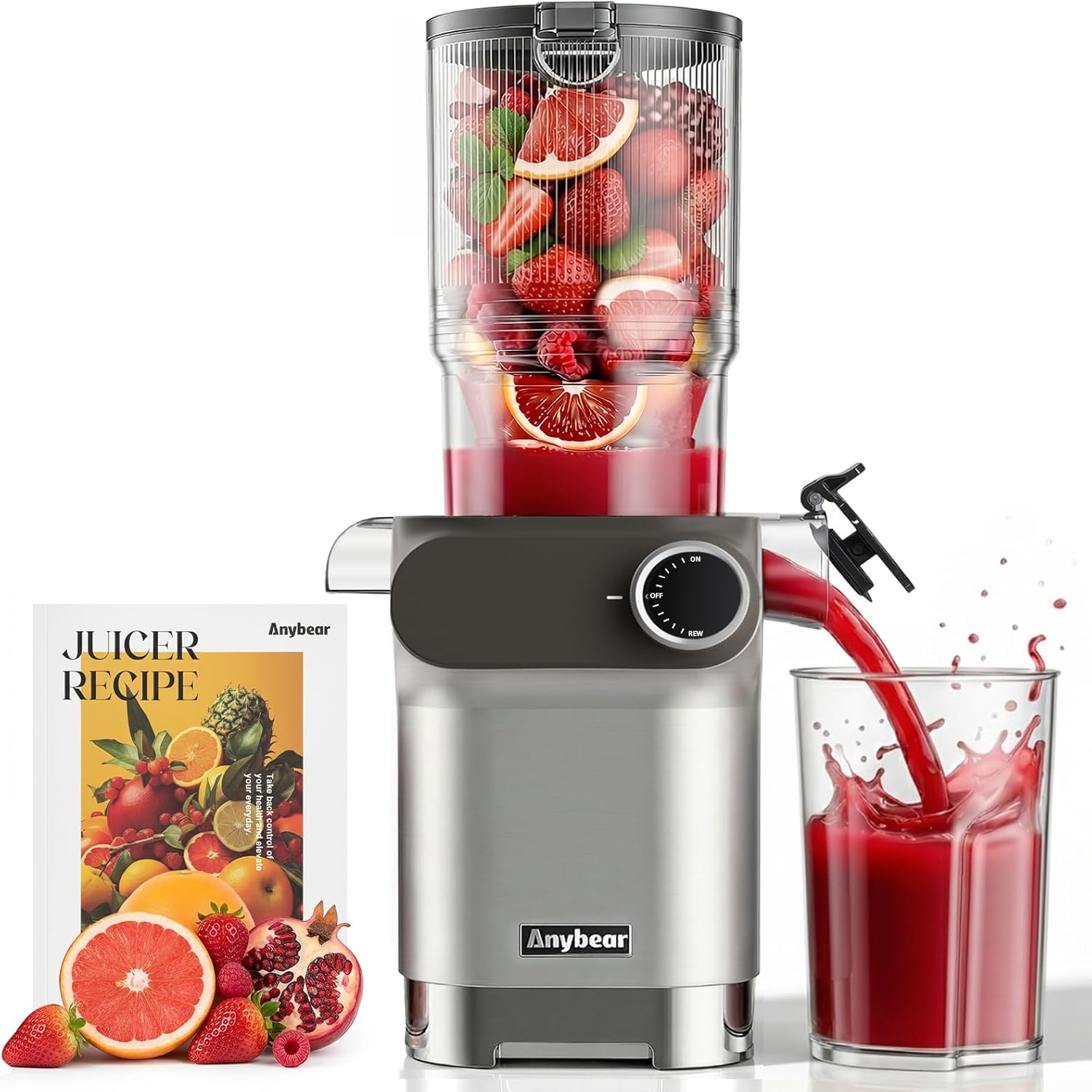
The Anybear Cold Press Juicer SJ054C is a slow, single-auger masticating juicer built to extract juice from whole fruits and vegetables with minimal oxidation. It runs at about 65 RPM using a 200W motor and a high-torque auger to squeeze juice from produce gently, which helps preserve flavor and nutrients and yields more liquid from leafy greens and fibrous vegetables. The 4.3-inch feed chute accepts larger pieces so you can spend less time pre-cutting, and key parts use Tritan and stainless steel where food contacts are critical. Cleaning is simplified by a one-piece stainless steel filter and an included brush, and the unit is intended for hand wash only. Practical limits include a moderate footprint and the need for manual disassembly for cleaning, and while the motor is powerful for its class, it is a single-speed design so you do not get variable extraction settings. For vegetable-focused juicing where reliability and steady low-speed extraction matter, this model offers solid performance and built-in materials aimed at durability.
Best for: Buyers who prioritize steady, reliable cold-press extraction for vegetable-heavy juice routines and want a durable, low-oxidation machine that minimizes prep time.
Less Ideal for: People who need multi-speed control, dishwasher-safe components, or a compact travel-friendly juicer should look at different options.
- High-torque 200W motor optimized for steady low-speed extraction
- Large 4.3-inch feed chute reduces prep time for whole fruits and vegetables
- Tritan and stainless steel food-contact parts for durability and taste preservation
- One-piece filter design and included brush make rinsing and basic cleaning faster
- Single-speed operation lacks adjustable settings for different produce types
- Requires hand washing and manual disassembly for full cleaning
Verdict: Choose this masticating juicer if you want a durable, high-torque slow juicer that reliably extracts fresh vegetable juice with minimal oxidation.
Ninja NeverClog Cold Press Juicer JC151

| Maximum Power | 150 watts |
|---|---|
| Number of Speeds | 2 |
| Capacity | 24 fluid ounces |
| Included Components | 24 oz juice jug, 36 oz pulp container, 2 pulp filters, auger |
The Ninja NeverClog JC151 is a slow masticating juicer built to handle fibrous vegetables and leafy greens using a 150-watt high-torque auger and a NeverClog cold press system. It is used for making green juices, vegetable blends, and nutrient-rich shots and includes two interchangeable pulp filters so you can dial in smoother juice or a thicker, fiber-forward result. Practical touches include a 24 oz juice jug and 36 oz pulp container for batch juicing, an anti-drip lever to reduce spills, and dishwasher-safe juice-contact parts for easier cleanup. The unit runs two one-touch programs including a reverse mode to clear jams and improve extraction consistency. On the downside, a 150W motor means it is not the fastest option for very large-volume commercial use, and the plastic parts add some assembly and drying time compared with single-piece systems. For home users focused on vegetable-heavy juicing this model balances yield, easy pulp control, and manageable cleanup.
Best for: Buyers looking for a reliable home slow juicer that handles tough vegetables and leafy greens well and offers adjustable pulp control and straightforward cleaning.
Less Ideal for: People who need a commercial-grade, high-throughput juicer or who want an ultra-compact single-piece machine with minimal post-use drying.
- High-torque 150W auger designed to extract juice from fibrous vegetables and leafy greens
- Two interchangeable pulp filters let you choose less or more pulp for texture control
- Larger 24 oz juice jug and 36 oz pulp container support batch juicing
- Dishwasher-safe juice-contact parts and simple assembly make cleaning easier
- Reverse function and NeverClog design reduce jams and improve continuous juicing
- 150W motor is not ideal for very high-volume or commercial juicing
- Multiple plastic parts require disassembly and drying after cleaning
Verdict: A practical, home-focused slow juicer that reliably extracts vegetable and green juices while giving clear control over pulp and easy cleanup.
EanOruus 3-in-1 Masticating Juicer E-18

| Capacity | 100 fluid ounces |
|---|---|
| Maximum Power | 250 watts |
| Power Source | ac |
| Voltage | 110 volts |
The EanOruus E-18 is a slow, single-auger masticating juicer designed for heavy home use and batch prep. It accepts large whole fruits and vegetables through a 6.5-inch chute into a 100 oz hopper, which cuts prep time and lets you process multiple servings without frequent refills. The 250W AC brushless motor provides steady torque for fibrous vegetables and the unit includes juice and sorbet strainers plus a nut-milk option, so you can switch between clear juice, frozen fruit sorbet and nut milks. Practical touches include auto-reverse and an easy-clean design with detachable parts and a removable pulp outlet, while overheat protection helps protect the motor during long runs. Expect hand-wash care for plastic components and a fairly large footprint and weight, so it is better suited to a permanent counter setup than tiny kitchens. For buyers focused on reliable vegetable extraction and batch juicing, this model balances power, capacity and safety features, though it is bulkier than compact cold-press units and requires routine cleaning after use.
Best for: Home cooks who want a reliable, high-capacity slow juicer for frequent vegetable and batch juicing and who prioritize low-stress operation and safety features.
Less Ideal for: Buyers who need a compact, travel-friendly juicer or who want fully dishwasher-safe components should look elsewhere.
- Extra-large 100 oz hopper reduces refills for batch juicing
- 6.5-inch wide chute fits whole fruits and many vegetables to cut prep time
- 250W AC brushless motor delivers steady torque for fibrous produce
- Includes interchangeable strainers for juice, nut milk and sorbet
- Safety features like auto-reverse and overheat protection help prevent jams and motor damage
- Relatively large and heavy, so it needs dedicated counter space
- Detachable plastic parts require hand washing rather than dishwasher cleaning
Verdict: Choose the EanOruus E-18 if you want a powerful, high-capacity slow juicer built for reliable vegetable extraction and batch prep.
Choosing the Right Slow Juicer for Vegetables: Key Factors to Consider
Extraction Yield and Fiber Handling
Yield matters more for vegetables than for soft fruits because leafy greens and roots contain a lot of bound water in a fibrous matrix. Higher extraction yield reduces waste and lowers the volume of produce you must buy and prep. Look for slow juicers with a gentle, high-torque auger and a well-matched screen that separates juice from pulp without forcing too much air into the mix.
Also consider how the machine handles wet, pulpy fiber. Some units produce drier pulp and clearer juice, which indicates efficient separation. If you frequently juice kale, spinach, or wheatgrass, prioritize designs tested on leafy greens rather than those built mainly for apples or oranges.
Ease of Cleaning and Maintenance
Cleaning frequency is a major usability factor because vegetable juicing tends to be messier than fruit juicing. A model with fewer removable parts, a simple screen, and wide openings will save time and reduce friction for daily use. Dishwasher-safe parts are convenient but check whether small crevices still require manual brushing.
Maintenance also includes occasional deep cleaning to remove buildup from fibrous residues. Consider whether the manufacturer supplies a cleaning brush sized for the screen and how easy it is to reassemble parts after washing. Machines that require special tools for disassembly will slow down routine upkeep.
Pulp Management and Capacity
Vegetable pulp is bulky, especially when you juice root vegetables or a mix of leafy greens and celery. A roomy pulp container reduces how often you need to stop and empty it during a session and is useful when making larger batches. Conversely, compact designs are better for single-serve use but may need frequent emptying.
Also evaluate how easy it is to remove and reattach the pulp bin and whether the system compacts pulp or leaves it loose. Drier, well-compressed pulp indicates efficient extraction and makes disposal or composting simpler.
Feed-Chute Design and Prep Needs
Feed-chute size determines how much chopping you must do before juicing. A larger feed chute saves prep time for thick carrots and beets, while a smaller feed chute can be acceptable if the machine excels at extracting juice from fine-chopped vegetables. Consider whether the auger requires a pusher and whether you will frequently need to pre-cut stems, cores, or thick roots.
Also think about safety and ergonomics. A feed chute that lets you add long leafy stems without jamming reduces frustration, and a design that guides produce toward the auger helps maintain consistent output.
Motor Strength and Thermal Protection
Vegetables, especially dense roots, require sustained torque more than raw RPM. A slow juicer with a high-torque motor is less likely to stall or overheat when processing carrots, beets, or ginger. Thermal protection and automatic shutdown features protect the motor during extended sessions or if a jam occurs.
Check whether the unit is rated for continuous runs long enough for your typical batch size and whether it has a duty cycle that matches household use. A well-cooled motor and robust internal gearing increase longevity under heavy vegetable workloads.
Noise Level and Kitchen Use
Noise is an often-overlooked factor because many buyers run juicers in the morning when others are sleeping. Slow juicers are generally quieter than centrifugal models, but noise and vibration still vary by design. Consider how the unit's sound profile will fit into your household routines.
Also evaluate stability and anti-slip feet, since vibration can scatter small pieces of pulp or cause the machine to shift on counters when processing tough vegetables.
Preparing Vegetables for Best Results
Proper preparation improves yield and reduces strain on the juicer. Remove large stems and woody cores, wash produce thoroughly to avoid grit, and cut dense roots into pieces that match the feed chute. Softer leafy greens can often be bundled and fed with firmer vegetables to help the auger grip and process them more effectively.
Rotate textures within the feed sequence. Alternate leafy greens with firmer items like cucumber or apple to help push leafy material through the screen and prevent clumping. For very fibrous items such as celery, cut into shorter lengths and feed steadily rather than forcing large sections at once.
- Trim tough stems and remove thick cores
- Cut roots into pieces that fit the chute
- Feed leafy greens alternated with firmer produce
Daily Maintenance to Prevent Clogs
Quick rinsing immediately after juicing prevents dried pulp from sticking to screens and crevices. Use the included brush to clear the mesh or screen while parts are still moist. For frequent users, a short soak in warm soapy water dissolves stubborn fibers.
Inspect seals and gaskets periodically. Vegetable fibers can work into small joints and accelerate wear. Replace worn seals to maintain suction and separation efficiency.
- Rinse parts within minutes of use
- Soak and brush screens for thorough cleaning
- Check gaskets and seals regularly
Maximizing Nutrition and Minimizing Oxidation
Slow juicing reduces heat and the amount of air incorporated into the juice, which helps preserve enzymes and certain heat-sensitive vitamins. To further reduce oxidation, collect juice in a sealed container and minimize exposure to air between extraction and consumption.
Drink juice shortly after making it for the best nutrient profile. If you need to store juice, refrigerate it in an airtight container and consume within 24 to 48 hours depending on the vegetables used.
- Use low-speed extraction to limit heat
- Store juice airtight and chilled if not consumed immediately
- Consume fresh for peak nutrient retention
Space, Footprint, and Countertop Considerations
Slow juicers vary widely in footprint. Vertical models tend to take less counter space and are easier to tuck away, while horizontal units typically offer better pulp ejection performance but occupy more room. Measure your available counter or cabinet space before choosing a unit.
Also consider storage and assembly time. If you have limited space, prioritize compact components that disassemble quickly and nest for storage. A lightweight unit is easier to move but may sacrifice some stability compared with heavier, more robust designs.
- Measure counter depth and height for vertical vs horizontal models
- Choose compact, nestable parts if storage is limited
- Balance weight for stability versus portability
Common Mistakes to Avoid
Overloading the chute or forcing large pieces is the most common cause of jams and motor strain. Feed produce steadily and cut oversized items into manageable pieces. Ignoring manufacturer guidance on duty cycles can lead to premature motor wear.
Another frequent error is skipping routine cleaning. Dried vegetable residue reduces efficiency and can cause odors or mold if left unattended. Finally, assume that all slow juicers perform equally with leafy greens. Check that the design specifically handles fibrous vegetables before relying on it for heavy green juicing.
- Do not overload the chute
- Follow duty cycle recommendations
- Clean thoroughly after each use
How We Chose the Best Slow Juicer for Vegetables
Our selection process prioritized practical performance and real-world usability for vegetable juicing. We focused on machines that are specifically designed for fibrous and leafy produce and evaluated each candidate across multiple measurable dimensions. Key evaluation criteria included extraction efficiency, measured by juice yield from both leafy greens and dense roots; ease of cleaning, including how many parts require scrubbing and whether tools are needed; build quality and motor longevity for daily use with tough vegetables; feed-chute design and preparation required, which affects how much chopping is needed; and noise and vibration levels for comfortable operation in a household setting. We excluded products that are optimized only for citrus or soft fruits, as those do not represent reliable performance with fibrous vegetables. Units with unclear maintenance requirements or plastic parts that are likely to clog were also removed. The final list highlights machines that balance high vegetable yield with manageable upkeep and durable construction. These criteria align with the scoring labels used in the product cards and reflect what buyers who primarily juice vegetables care about most.
Our full evaluation process is outlined in our review methodology.
FAQ
Can I juice only vegetables, or do I need to mix fruits too?
You can juice only vegetables. Mixing in firmer fruits or cucumber can help push leafy greens through the auger and improve extraction, but it is not required. Choose a unit with good torque and screen design if you plan to juice mostly vegetables.
How often should I clean the juicer after vegetable sessions?
Rinse parts immediately after use and perform a more thorough cleaning with a brush and warm soapy water at least after every session. Deep cleaning of screens and seals every few weeks prevents buildup from fibrous residues.
Will juicing destroy nutrients in vegetables?
Slow juicing minimizes heat and air exposure compared with high-speed models, which helps retain many heat-sensitive vitamins and enzymes. Some nutrients oxidize quickly, so drinking juice soon after extraction gives the best nutritional value.
Do slow juicers handle hard roots like beets and carrots well?
Many slow juicers designed for vegetables handle hard roots well because they use high-torque augers. Cut roots into pieces that fit the feed chute and feed steadily to avoid stalling. Check the unit's duty cycle and motor protection features for repeated heavy use.
What should I do with the leftover vegetable pulp?
Vegetable pulp is useful for composting, baking, or adding to soups and veggie burgers. Drier pulp indicates efficient extraction and is easier to compost or store temporarily before disposal.
Final Verdict
Prioritize extraction yield, ease of cleaning, and motor durability when choosing a slow juicer for vegetables. Your ideal unit balances high torque for fibrous produce with a screen and pulp system that keeps maintenance manageable. Consider feed-chute size and pulp capacity relative to how often you juice and whether you make single servings or larger batches. If you need daily vegetable juice, choose a model with straightforward cleaning and strong thermal protection. For occasional use, a compact unit with decent yield and easy storage may be preferable. Use the factors outlined here to match features to how you juice and you will end up with a machine that fits both your kitchen and juicing habits.