
Note: This article contains affiliate links. If you click on these links and make a purchase, we may earn a small commission at no extra cost to you. This helps support our research and content. Read our full affiliate disclosure here.
If you store both red and white wine at home, a small dual-zone wine cooler gives you dedicated temperature control in a compact footprint. The right unit preserves bottle integrity, minimizes temperature fluctuations, and fits into tight kitchens, apartments, or entertainment areas. This guide shortlists the top small dual-zone wine coolers for home use and explains the practical tradeoffs buyers face. We evaluated noise, temperature accuracy, usable bottle layout, and installation flexibility to assemble these top picks. Read on to find which compact cooler suits your storage needs and living space.
Top Picks at a Glance
| Best Overall The best all-around choice for most situations | Koolatron WC12-DZ 12-Bottle Wine Cooler | 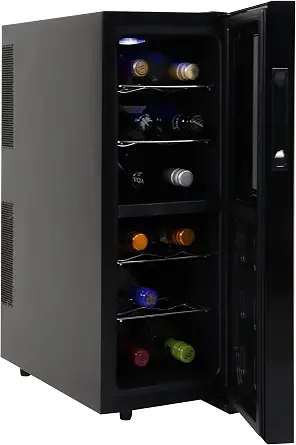 |
| Best Quality Built to a higher standard if you want something more solid | Ca'Lefort 24-Inch Wine & Beverage Refrigerator |  |
| Best Value The sweet spot between price and what you get | NutriChef Dual-Zone Wine Cooler PKCWCDS275 |  |
| Best Budget The cheapest option that still gets the job done reliably | NutriChef 24-Bottle Wine Fridge |  |
| Top Rated A top-rated pick with lots of positive feedback | ICEVIVAL 15-Inch Dual Zone Wine Fridge |  |
| Most Popular A crowd favorite that many people choose with confidence | Ivation 33-Bottle Dual Zone Wine Cooler |  |
| Best Seller A high-volume bestseller chosen again and again | Tylza 24" Dual Zone Wine Refrigerator |  |
Koolatron WC12-DZ 12-Bottle Wine Cooler

| Capacity | 12 Bottle |
|---|---|
| Cooling Method | Thermoelectric |
| Temperature Range | 42-66°F (6-18°C) |
| Number of Sections | 2 |
| Shelf Type | 4 Removable Shelves |
The Koolatron WC12-DZ is a small dual-zone wine cooler designed to keep a dozen standard Bordeaux bottles at separate temperatures for red and white wines. It uses quiet thermoelectric cooling to minimize vibration and features external touch controls with a digital display so you can change temperatures or toggle the LED interior light without opening the door. The mirrored, double-pane glass provides UV protection and the four removable wire racks let you rearrange storage for different bottle shapes. Because it is freestanding and compact it fits on a countertop, in an apartment, or in an RV where space is limited. Expect efficient, low-noise operation but be aware thermoelectric units are best for maintaining chilled bottles rather than rapid cooling from room temperature, and performance can be affected by hot ambient conditions. The unit includes a keyed lock and ETL certification, but warranty coverage is limited. For a buyer prioritizing an affordable, space-saving dual-zone cooler that looks tidy and handles short- to medium-term storage, this model is a practical choice.
Best for: Buyers on a budget who need a compact dual-zone cooler for short- to medium-term wine storage in small spaces and who prioritize quiet operation and simple digital controls.
Less Ideal for: Collectors who need long-term cellar-grade temperature stability, large capacity, or rapid cooling under warm ambient conditions should consider compressor-based, higher-capacity units instead.
- Dual-zone temperature control lets you store reds and whites at different setpoints
- Thermoelectric cooling runs quietly and with minimal vibration to protect sediment
- Compact freestanding design fits on countertops and in small spaces
- External touchscreen and digital display make temperature changes easy without opening the door
- Mirrored double-pane glass offers UV protection and built-in LED interior lighting
- Thermoelectric cooling is less effective for rapid chilling or in very warm rooms
- Limited warranty duration compared with higher-end models
Verdict: A budget-friendly, compact dual-zone cooler that provides quiet, separated storage for reds and whites in small spaces.
Ca'Lefort 24-Inch Wine & Beverage Refrigerator

| Capacity | 4.1 cubic feet |
|---|---|
| Temperature range | 36-72°F |
| Installation Type | Built-in & Freestanding |
| Cooling Method | Compressor |
| Number Of Shelves | 3 |
This Ca'Lefort 24-inch wine and beverage refrigerator is a compact undercounter-capable cooler aimed at storing both cans and bottles while keeping temperatures stable. It uses an R600a compressor and internal air circulation to reach and hold temperatures from about 36 to 72°F, with a digital touch panel that lets you set temperature to the degree. The unit's French double-glazed doors, three-color LED lighting, and removable wire shelves make organizing a mixed collection straightforward, and front ventilation means you can install it under a counter without blocking airflow. Practical touches include power-outage memory and reversible door orientation. Expect good cooling speed and steady temperatures for everyday serving and short-term aging, but capacity is modest at 4.1 cu ft so it is best for smaller collections or combined can-and-bottle use rather than large cellars. The stainless-steel trim and wood-accent shelves give it a more finished look than basic budget models, though true cellar-grade long-term aging requires larger, more temperature-stable systems.
Best for: Buyers who need a budget-friendly undercounter cooler that prioritizes reliable, compressor-driven temperature performance for mixed can and bottle storage in a kitchen, bar, or small entertaining space.
Less Ideal for: Collectors who need high-capacity long-term aging storage or precise multi-zone cellar control should look at larger or true dual-zone cellar units.
- Compressor cooling with internal air circulation for faster, steadier temperature control
- Digital touch panel allowing 1°F adjustments for precise setpoints
- Front ventilation and built-in/freestanding installation flexibility
- Removable shelves and reversible doors for flexible organization and placement
- Relatively small 4.1 cu ft capacity not suited for large collections
- Wire shelves may allow bottles to roll compared with slatted or cradled racks
Verdict: A compact undercounter cooler that gives budget-conscious buyers compressor-level temperature control and precise digital setpoint control for reliably chilling mixed cans and bottles.
NutriChef Dual-Zone Wine Cooler PKCWCDS275

| Capacity | 27 Bottle |
|---|---|
| Temperature Range | 41°F to 64°F |
| Cooling Method | Compressor |
| Voltage | 120 |
| Installation Type | Freestanding |
The NutriChef PKCWCDS275 is a compact dual-zone wine cooler designed to store and chill up to 27 standard bottles while offering separate temperature control and quiet compressor cooling. Its digital touch panel and LED display make selecting and monitoring temperatures simple, and the internal circulation fan helps maintain consistent conditions across the two zones. Polished chrome racks and an interior LED light give a tidy presentation, and the recessed handle and glass door suit countertop or freestanding placement in kitchens or offices. Practical buyers will appreciate the narrow footprint that fits in tight spaces and the manual defrost design that keeps electronics straightforward. Expect modest energy use and a basic feature set: there is no advanced humidity control or high-efficiency rating, and the unit uses a manual defrost and a one-key lock rather than premium security features. For someone after a straightforward, space-saving dual-zone cooler that looks clean and keeps bottles at serving or storage temperatures, this model performs well within its class.
Best for: Buyers who want a practical, space-conscious dual-zone cooler to store a modest collection and reliably keep reds and whites at separate serving temperatures.
Less Ideal for: Collectors seeking long-term cellar conditions, precision humidity control, or the highest energy efficiency should consider larger or more advanced cellar units instead.
- True dual-zone control with adjustable 41°F–64°F range for different wine types
- Compact freestanding design fits in narrow spaces and on countertops
- Digital touch controls and LED display for easy temperature management
- Quiet compressor operation with internal circulation fan for even cooling
- Manual defrost system requires occasional user maintenance
- No advanced humidity control or high energy-efficiency certification listed
Verdict: A compact, no-frills dual-zone cooler that reliably stores about two dozen bottles and keeps reds and whites at separate serving temperatures.
NutriChef 24-Bottle Wine Fridge
| Capacity | 75.4 liters |
|---|---|
| Temperature range | 41°F to 64°F |
| Cooling method | Compressor |
| Number of shelves | 9 |
| Voltage | 120 volts |
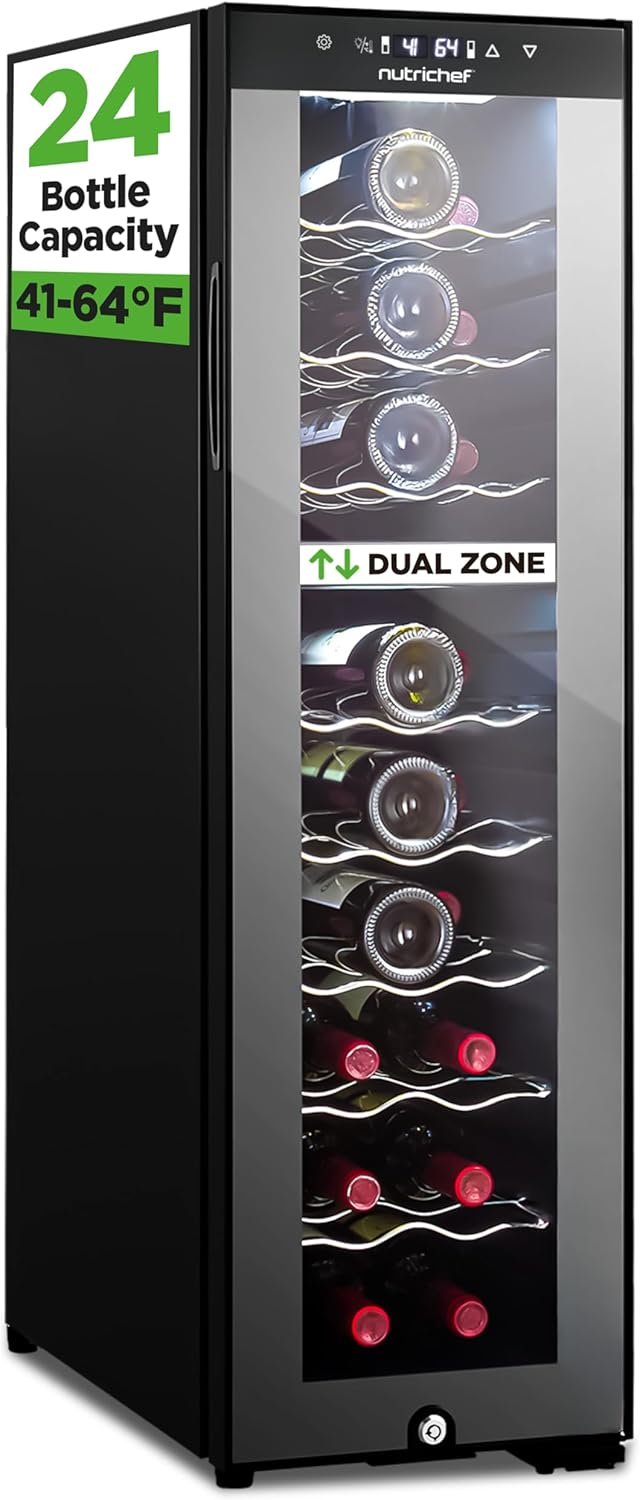
The NutriChef 24-bottle dual-zone wine fridge is a compact freestanding cooler aimed at home collectors who need simple, reliable temperature control. It cools by compressor and lets you set temperatures between 41°F and 64°F via a glass-door digital touch panel, with the option to view in Celsius or Fahrenheit. Polished chrome shelving, interior LED lighting, and an airtight glass door make bottle access and visibility straightforward, while the built-in circulation fan and ventilation grill help maintain stable conditions for delicate varietals like Pinot Noir. The unit is designed for quiet operation and can sit on the floor or countertop thanks to its narrow footprint. Limitations include a modest capacity that fits about 24 bottles and a manual defrost system, so it is not intended for large collections or heavy-duty cellar use; energy efficiency is average. For buyers focused on a budget-friendly, space-saving cooler that protects wine at serving temperatures, this model covers the essentials without extra complexity.
Best for: Home or apartment wine drinkers seeking an affordable, space-saving dual-zone cooler to store and serve Pinot Noir at recommended temperatures.
Less Ideal for: Collectors needing long-term storage for many cases or a high-efficiency, commercial-grade cellar should consider larger or more advanced units instead.
- Dual-zone temperature range from 41°F to 64°F for storing different styles of wine
- Digital touch display with Celsius or Fahrenheit readout for easy adjustments
- Compact freestanding footprint that fits on floors, counters, or tables
- Quiet compressor operation with internal circulation fan to maintain stable conditions
- Manual defrost system requires occasional user maintenance
- Limited capacity for larger collections at about 24 bottles
Verdict: A budget-friendly, compact dual-zone cooler that gives Pinot Noir collectors precise serving temperatures without taking up much space.
ICEVIVAL 15-Inch Dual Zone Wine Fridge

| Capacity | 3.6 cubic feet |
|---|---|
| Size | 15 Inch-Dual Zone 29 Bottles |
| Number Of Shelves | 6 |
| Cooling Method | Compressor |
| Installation Type | Undercounter |
This ICEVIVAL 15-inch dual-zone wine fridge is a compact undercounter-capable cooler built to store red and white wines at separate temperatures. It uses a quiet compressor cooling system with a claimed 40–65°F range and independent controls for each zone, so you can set serving temperatures for different bottles without moving them. The cabinet includes six wooden sliding shelves that reduce vibration and make loading and organizing bottles straightforward, and a double-pane UV-resistant glass door helps protect labels and liquid from light exposure. The digital touch panel and LED display simplify temperature adjustments and monitoring. Because it is described as ETL certified and designed for built-in or freestanding installation, it fits a range of kitchen or bar layouts. Expect typical compressor noise and the energy draw associated with compressor units, and the 29-bottle capacity and 3.6 cu ft interior mean it is best for smaller collections rather than large cellars. This model balances useful features and reliable cooling in a compact package for budget undercounter wine storage.
Best for: Buyers who prioritize reliable, consistent cooling in a compact undercounter unit and want a budget-minded wine fridge that keeps separate zones for reds and whites.
Less Ideal for: Collectors who need high-capacity storage or those seeking the absolute lowest energy use should consider larger or different technology models instead.
- Independent dual temperature zones for storing reds and whites together
- Compressor cooling delivers stable temperatures with low fluctuation
- UV-resistant double-pane glass door protects wine from light exposure
- Removable wooden sliding shelves reduce vibration and simplify bottle access
- Digital touch controls and LED display for precise temperature adjustment
- 29-bottle capacity and 3.6 cu ft interior limit suitability for larger collections
- Annual energy consumption is relatively high compared with thermoelectric models
Verdict: A compact, budget-friendly undercounter wine fridge that delivers dependable compressor cooling and true dual-zone storage for small collections.
Ivation 33-Bottle Dual Zone Wine Cooler

| Capacity | 3.2 cubic feet |
|---|---|
| Bottle Capacity | 33 bottles |
| Temperature Range (Upper) | 54 – 64°F |
| Temperature Range (Lower) | 41 – 57°F |
| Power | 115V, 65W |
The Ivation 33-Bottle Dual Zone Wine Cooler is a compact freestanding cellar designed to store both red and white wines at their ideal serving or short-term aging temperatures. Its compressor cooling system and inverter help maintain stable temperatures across two independently controlled zones (upper 54–64°F, lower 41–57°F), and a digital touch display makes adjustments straightforward. Wire shelves are removable to fit larger bottles and the double-paned UV-resistant glass door with airtight gasket protects wines from light and helps insulation. The unit runs quietly with low vibration to avoid disturbing sediment and includes an internal LED light and a keyed door lock for security. Practical downsides are the limited 3.2 cu ft capacity if you plan a large collection and the wired shelving rather than wooden shelves preferred by many collectors, but for the price it delivers solid temperature stability and useful features for mixed collections.
Best for: Buyers who prioritize temperature performance and stability for mixed red and white collections and want a reliable compressor unit that fits in a kitchen or apartment.
Less Ideal for: Those needing a high-capacity wine cellar or a premium display unit with wooden shelving and built-in custom racking should consider larger or higher-end models.
- Dual independent temperature zones for storing reds and whites at different temps
- Compressor cooling with inverter for stable, low-vibration operation
- UV-resistant double-paned glass door and airtight gasket to protect wine from light and maintain internal conditions
- Touch control digital display with LED interior light and a keyed door lock for convenience and security
- 3.2 cubic foot capacity may be small for larger collections
- Wire shelves instead of wooden or beech-style shelving preferred by some collectors
Verdict: If you want dependable compressor cooling and independent temperature control for a mixed red and white collection under $500, this Ivation cooler delivers strong performance in a compact freestanding package.
Tylza 24" Dual Zone Wine Refrigerator

| Capacity | 4.2 cubic feet |
|---|---|
| Temperature range left zone | 35-50°F |
| Temperature range right zone | 41-64°F |
| Annual energy consumption | 163 kilowatt hours per year |
| Installation type | Under-Counter/Freestanding/Built-In |
This Tylza 24" dual-zone fridge is a focused beverage chiller for households or small bars that need separate temperature control for wine and drinks. It provides two independently controlled cooling zones with adjustable ranges (left 35–50°F, right 41–64°F) and a touch control panel with temperature memory to restore settings after power interruptions. The unit fits under counters or works freestanding and offers a mix of metal and wood shelving that can be rearranged to fit bottles or stacks of 12‑oz cans, with the manufacturer listing capacity for about 20 Bordeaux bottles and 88 cans. A rotary scroll inverter compressor and fan circulation aim for even cooling while running quietly under 38 dB, and the double-layered glass door plus a keyed lock help protect stored bottles. Practical limits include a moderate 4.2 cu ft capacity that will not suit large collections and a 24" footprint that requires planning for built-in installation; buyers should also expect typical compressor vibration and longer pull-down times compared with commercial blast chillers. For a performance-focused mini fridge that balances low noise, dual zones, and flexible shelving, this is a sensible option.
Best for: Buyers who prioritize precise temperature control and low-noise operation for mixed wine and beverage storage in a home bar or under-counter setup.
Less Ideal for: Those needing large-capacity cellars or professional rapid-cooling performance for high-volume commercial use should look elsewhere.
- Independent dual cooling zones with specific temperature ranges for wine and beverages
- Quiet inverter compressor design operating under 38 dB for low noise environments
- Touch control with temperature memory restores settings after power outages
- Flexible metal and wood shelving that can be removed or rearranged to fit bottles and cans
- Built-in or freestanding installation options for versatile placement
- 4.2 cubic foot capacity limits the number of bottles for serious collectors
- Not a rapid commercial-style cooler so pull-down times may be slower than specialty units
Verdict: Choose this fridge when you want a quiet, dual-zone under-counter cooler that keeps wine and cans at independently controlled serving temperatures.
Choosing the Right Small Dual-Zone Wine Cooler for Home Use: Key Factors to Consider
Temperature Stability and Range
Dual-zone designs must maintain separate stable temperatures without bleed between compartments. Look for units that let you set and hold distinct temperatures for the upper and lower zones, with minimal fluctuation over time. Accurate thermostats, good insulation, and reliable compressors contribute to steady control.
For home use, small coolers often have narrower ranges than full-size cellars. Confirm that the lower zone reaches typical red-wine serving temperatures and the upper zone accommodates chilled whites and sparkling wines. Temperature stability protects wine quality and ensures bottles are ready to drink when you want them.
Usable Bottle Capacity and Rack Design
Advertised capacity can be optimistic, especially for compact dual-zone coolers that must allocate space to compressors and insulation. Pay attention to usable capacity—the number of standard Bordeaux- or Burgundy-shaped bottles you can actually store without awkward stacking.
Rack design affects access and air circulation. Pull-out or sliding shelves make it easier to remove bottles from deeper racks, while fixed racks can maximize capacity for a given footprint. Consider whether you need space for larger-format bottles or irregular shapes before choosing a unit.
Noise Level and Vibration Control
Small compressors and fans can generate noise that is noticeable in kitchens, open-plan living rooms, or bedrooms. Check rated decibel levels where available and read reports on how a unit performs in everyday environments. Lower noise is important if the cooler will sit near seating areas or in a home office.
Vibration control matters for wines with sediment or bottles that will be aged. Excessive vibration disturbs sediment and accelerates chemical reactions. Units with vibration-dampening mounting and balanced fans are better choices for long-term storage.
Installation Footprint and Venting
Compact dual-zone wine coolers come in freestanding, built-in, or integrated-ready designs. For home use, understanding clearance needs and venting direction is critical. Built-in models are designed for under-counter installation and vent heat out the front; freestanding units usually require clearance at the back or sides for airflow.
Measure the intended space carefully and account for door swing, ventilation gaps, and any surrounding cabinetry. If the cooler will be positioned under a countertop, confirm that the unit supports that installation type to avoid overheating or reduced performance.
Control Type and Usability
Controls can be mechanical dials, external touch panels, or digital displays. For daily convenience, look for intuitive controls that allow precise temperature setting for each zone and provide clear readouts without opening the door. External displays reduce the need to open the cooler, which helps maintain stable internal temperatures.
Consider whether the control placement and visibility match your usage patterns. Some homeowners prefer recessed controls to prevent accidental changes; others like simple, quick-access panels.
Finish, Lighting, and Interior Features
The exterior finish should match your home decor, whether stainless-like, black, or integrated panel-ready. Interior lighting helps you identify bottles without keeping the door open; adjustable LED lighting is preferred because it emits less heat than incandescent bulbs.
Other useful interior features include adjustable shelving, partial shelves for mixed sizes, and spill-proof surfaces. These details improve usability and protect wine labels and closures over time.
Where Small Dual-Zone Coolers Work Best
Small dual-zone wine coolers are ideal when you want separate temperature control for reds and whites but do not have space for a larger cellar. They fit well in kitchen nooks, wet bars, or beneath countertops in small homes and apartments.
Because of their limited capacity, these units are best for casual collectors, entertaining households, or people who keep a rotating selection of everyday bottles rather than large long-term cellars.
- Under-counter placement in compact kitchens
- Supplementary storage next to a beverage fridge or bar area
- Apartment living where floor space and height are limited
Built-In Vs Freestanding: Which to Choose
Built-in models are designed to slide under counters and vent from the front, making them a good choice for tight kitchens where rear clearance is limited. Freestanding units offer more placement flexibility but usually need space behind or around them for airflow.
Consider whether the cooler will be moved frequently. Freestanding units are easier to reposition for cleaning or reconfiguration, while built-in designs integrate more seamlessly with cabinetry.
- Built-in: better fit for under-counter installations, front ventilation
- Freestanding: more flexible placement, requires rear/side clearance
Maintaining Temperature and Minimizing Door Openings
Every time the door opens, warm air enters and the cooler must work harder to re-establish target temperatures. To minimize this effect, choose a unit with good insulation, a tight door seal, and an external temperature display so you can check temperatures without opening the door.
If you frequently entertain, think about placement where the cooler can be accessed easily but not repeatedly opened during a single event. Spacing and shelf layout that keep frequently used bottles near the front help reduce how often you open the door.
- Use external displays to check temperatures
- Store commonly used bottles at the front for quick access
- Avoid placing the cooler in direct sunlight or beside heat sources
Energy Use and Long-Term Ownership
Small coolers consume less energy than full-size cellars, but dual-zone systems typically use more power than single-zone units because they maintain two separate temperatures. Look for efficient compressors and attention to insulation to lower operating costs over time.
Consider how often the cooler will run and whether ambient home temperatures will force heavier compressor cycles. Proper placement away from heat sources and good door-sealing reduce runtime and electricity use.
- Better insulation reduces compressor duty cycle
- Ambient room temperature affects energy consumption
- Regular maintenance like cleaning condenser fins helps efficiency
Caring for Bottles and Interior Layout
Store bottles on their sides to keep corks moist and prevent oxidation. Ensure racks support bottles evenly and prevent rolling. For those who keep a mix of red and white, allocate zones by intended consumption timeframe rather than strictly by type when space is tight.
Consider labeling shelves or using simple inventory methods to avoid leaving bottles forgotten at the back of a small cooler. Periodic rotation and inspection prevent long-term neglect and help you use space strategically.
- Store bottles horizontally to keep corks moist
- Use partial shelves for odd-shaped or larger bottles
- Label shelves to track older bottles and rotation
How We Chose the Best Small Dual-Zone Wine Cooler for Home Use
We focused on selection criteria that matter specifically for small dual-zone wine coolers used in homes. Temperature stability and accuracy were primary factors because dual-zone performance is the main point of buying this class of cooler. We also prioritized usable storage capacity and rack layout since small units often advertise bottle counts that are hard to realize in practice. Noise level and vibration control were included because compact compressors can be louder and vibration can disturb sediment in older wines. Build quality and finish were assessed for durability in home settings and to ensure the unit integrates with furniture and cabinetry. Installation flexibility and footprint constraints were considered to make sure units work in kitchens, under counters, or freestanding in living areas. We excluded large cellar-grade units and single-zone models that do not provide separate temperature control. Units with unclear temperature reporting, inconsistent cooling across zones, or visibly poor shelving design were removed from consideration. The resulting picks meet a balance of compact size, reliable dual-zone control, sensible bottle layout, and acceptable noise for home environments.
Our full evaluation process is outlined in our review methodology.
FAQ
Can a small dual-zone wine cooler handle both red and white wines?
Yes. Dual-zone coolers are designed to maintain separate temperatures in two compartments so you can store reds and whites at their preferred ranges. Confirm the unit's documented temperature ranges to match the styles you keep.
How much clearance do I need for built-in installation?
Clearance depends on the unit, but built-in coolers commonly vent from the front and require minimal rear space. Still, you should measure available height and width and follow the manufacturer guidelines for ventilation gaps to avoid overheating.
Are small dual-zone coolers noisy?
Noise varies by model and compressor type. Many modern compact units are reasonably quiet for kitchen placement, but some can be noticeable in quiet living spaces. Check reported decibel ratings and look for units with vibration-dampening designs if noise is a concern.
Do LED lights affect stored wine?
LED lighting produces little heat and minimal UV output compared with older bulbs, so it is generally safe for wine storage. However, keeping the door closed when not accessing bottles is still important to maintain stable temperatures.
Can I store champagne or larger-format bottles in a small unit?
Some small coolers offer adjustable or partial shelves that can accommodate larger bottles, but capacity will be reduced. Check rack spacing and whether shelves remove or slide to make room for tall or wide bottles.
Final Verdict
For home use, prioritize temperature stability, usable capacity, and low noise when choosing a small dual-zone wine cooler. Decide whether built-in or freestanding installation suits your space and measure carefully to avoid fit issues. Balance how many bottles you need to store against the unit's real-world usable layout and controls. Ultimately, choose the unit that delivers reliable dual-zone control with a rack layout you can actually use. That focus will give you the best day-to-day experience storing both reds and whites in a compact home environment.