
Note: This article contains affiliate links. If you click on these links and make a purchase, we may earn a small commission at no extra cost to you. This helps support our research and content. Read our full affiliate disclosure here.
A small wine cooler for garages must do more than chill bottles. Garages see bigger temperature swings and variable humidity, so choosing a unit that maintains steady conditions is essential to protect wine quality and avoid wasted bottles. This guide covers our top shortlisted small wine coolers for garages and explains the practical criteria that matter for garage installation, from insulation and cooling range to footprint and power needs. Use the shortlist and evaluation notes below to match a cooler to your garage layout and how you store wine. Below are the recommended small wine coolers and the key factors we considered when evaluating them.
Top Picks at a Glance
| Best Overall The best all-around choice for most situations | EUHOMY Wine Cooler BR001-110 |  |
| Best Value The sweet spot between price and what you get | Manastin 3.2 Cu Ft Beverage Refrigerator |  |
| Best Budget The cheapest option that still gets the job done reliably | YDOOLNG 23L Wine Cooler JC-23 |  |
| Top Rated A top-rated pick with lots of positive feedback | hOmeLabs Beverage Refrigerator HME030065N | 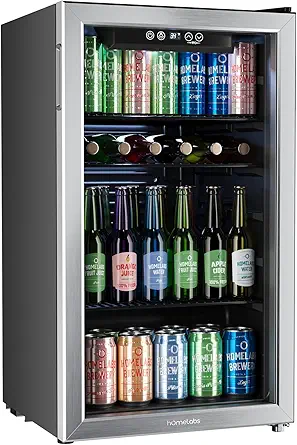 |
| Most Popular A crowd favorite that many people choose with confidence | Electactic Beverage Refrigerator JC-90 |  |
| Best Seller A high-volume bestseller chosen again and again | EUHOMY 18L Wine Fridge |  |
EUHOMY Wine Cooler BR001-110

| Capacity | 3.2 cubic feet |
|---|---|
| Bottle capacity | Up to 25 standard 750ml bottles |
| Temperature range | 41°F to 64°F |
| Cooling method | Compressor |
| Door orientation | Reversible |
This EUHOMY wine cooler is a compact freestanding unit aimed at steady, long-term beverage storage. It uses a compressor cooling system with a 41 to 64°F temperature range controlled by a digital touchscreen, so you can keep reds, whites, and sparkling bottles at appropriate serving temperatures. The interior offers four chrome full-width racks, a flat shelf and a bottom compartment to fit up to 25 standard 750ml bottles and to reconfigure storage as needed. The double-layer thermopane glass door reduces temperature swings and blocks UV light, and soft LED lighting helps with visibility without harsh heat. Practical touches include adjustable leveling legs, a built-in handle and a reversible door for flexible placement under counters or freestanding in a bar or office. Expect manual defrosting and typical small-fridge energy use; for buyers prioritizing quiet, vibration-free operation the compressor is described as high-performance and low-vibration but compressor units can still be noisier than thermoelectric models. The unit is supported by a one-year warranty and arrives with a user manual for setup and operation.
Best for: Buyers who want a compact, reliable freestanding cooler for steady storage of a small to medium wine collection and value precise temperature control and flexible placement.
Less Ideal for: Those seeking a zero-maintenance built-in cellar replacement, ultra-low energy operation, or very large bottle capacity should consider larger or different-style units.
- Compressor cooling with a wide 41–64°F range for storing different wine styles
- Double-pane glass door that insulates and blocks UV to protect wine quality
- Adjustable shelves and mix of racks allow flexible storage up to 25 standard bottles
- Digital touchscreen control and internal LED lighting simplify temperature monitoring and viewing
- Reversible door and leveling legs make placement under counters or freestanding easier
- Manual defrost requires occasional user maintenance
- Annual energy consumption is relatively high compared with the smallest thermoelectric units
Verdict: A compact, compressor-cooled freestanding wine cooler that delivers precise temperature control and flexible storage for a small commercial or bar setting.
Manastin 3.2 Cu Ft Beverage Refrigerator

| Capacity | 3.2 cubic feet |
|---|---|
| Temperature Range | 35–65°F |
| Cooling Method | Compressor |
| Number of Shelves | 3 |
| Defrost System Type | Frost Free |
This Manastin beverage refrigerator is a compact, freestanding cooler designed to chill and display drinks in a small footprint. It uses a compressor and an internal fan for even, relatively fast cooling across a 35–65°F range shown on a digital temperature display that can switch between Fahrenheit and Celsius. Inside there are three removable wire shelves with multiple height positions so you can store cans flat or bottles upright, and a soft blue LED strip and glass door make the contents easy to see. The unit is frost free and operates quietly with minimal vibration, and a keyed lock plus adjustable feet add convenience for varied placements. Trade-offs are typical for a small-capacity cooler: it won't replace a full-size refrigerator for food storage and the compressor system may cycle more often under heavy loading, which can affect energy use. For a basement bar, office, dorm, or small kitchen where you want a presentable drink display, this model delivers a straightforward, practical solution.
Best for: Buyers who want a compact, display-ready drink cooler that keeps beverages at precise temperatures and fits tight spaces while prioritizing reliable cooling and simple controls.
Less Ideal for: People who need large-capacity refrigeration for family food storage or who require smart connectivity and advanced preservation features.
- Digital thermostat with 35–65°F range for precise temperature control
- Compressor plus fan circulation for even, faster cooling
- Adjustable removable shelves accommodate cans and bottles in different orientations
- Glass door with soft blue LED lighting improves visibility and presentation
- Frost-free operation and keyed lock add convenience and security
- 3.2 cu ft capacity is limited for larger households or full food storage
- No listed smart/Wi-Fi controls or advanced preservation features
Verdict: A compact, glass-door beverage cooler that balances precise digital temperature control and even compressor cooling with a small footprint for attractive drink display.
YDOOLNG 23L Wine Cooler JC-23

| Capacity | 23 liters |
|---|---|
| Cooling Method | Compressor |
| Power | 55W |
| Voltage | 110 volts |
| Defrost System Type | Automatic |
This compact wine cooler is built as a budget-friendly freestanding unit that uses a compressor cooling system and a digital LED display for temperature control. It is sized for small collections and typically sits on a countertop or cabinet; buyers set a target temperature using the touch panel and the cooler circulates air with an internal fan for more even cooling. Notable features include double-layer tempered glass with interior blue LED lighting, five removable shelves/racks that match bottle shapes, and an automatic defrost system. The unit is relatively quick to cool thanks to its 55W compressor and is intended for ambient indoor use only rather than built-in installation. Expect simple, straightforward operation and modest energy use, but also a very small total capacity and a basic 3-month warranty, so long-term reliability and advanced vibration or humidity controls are limited compared with higher-end models.
Best for: Buyers prioritizing the lowest-cost way to keep a few bottles at serving temperature who need a small freestanding cooler for an apartment, office, or secondary spot.
Less Ideal for: Collectors who need long-term storage, strict humidity control, or room for dozens of bottles should choose a larger, feature-rich cellar instead.
- Compact 23L capacity fits small collections and tight spaces
- Compressor cooling with internal fan provides faster, more consistent cooling than passive units
- Digital LED display and touch controls allow precise temperature selection
- Double-layer tempered glass door with interior LED light lets you check bottles without opening the door
- Five removable shelves/racks accommodate common bottle shapes
- Very limited overall capacity for larger collections
- Short 3-month warranty and basic feature set compared with premium coolers
Verdict: If you want an inexpensive, countertop-friendly compressor cooler to chill a handful of bottles reliably, this 23L unit is a practical budget pick.
hOmeLabs Beverage Refrigerator HME030065N

| Capacity | 3.2 cubic feet |
|---|---|
| Storage Capacity | Up to 120 cans |
| Temperature Range | 34°F-50°F |
| Cooling Method | Compressor |
| Defrost System Type | Automatic |
This hOmeLabs beverage refrigerator is a compact, performance-focused cooler for home bars, offices, or dorms. It uses a compressor-based cooling system with a whisper-quiet compressor and an adjustable digital thermostat that reaches as low as 34°F, so it reliably maintains cold, ready-to-drink beverages. The reinforced double-glazed glass door and bright internal LED let you see contents without opening the unit, and three removable chrome wire shelves give flexible storage for cans or bottles. Setup is simple: it is freestanding, has reversible door hinges, and adjustable feet to level on uneven floors. Practical benefits include steady cooling for long periods and quiet operation suitable for living spaces. Limitations are its compact 3.2 cubic foot capacity if you need larger chilled storage and moderately high annual energy consumption compared with some small fridge alternatives. If you plan to store a mixture of taller bottles and cans you will need to rearrange or remove shelves to fit larger items.
Best for: Buyers prioritizing reliable, low-noise cooling and precise temperature control who need a compact dedicated beverage fridge for a home bar, office, or dorm.
Less Ideal for: Those seeking a high-capacity refrigerator for entertaining large groups or users who need the most energy-efficient mini fridge available.
- Compressor cooling with whisper-quiet compressor for consistent, low-noise performance
- Digital touch temperature control down to 34°F for precise beverage chilling
- Reinforced glass door with bright interior LED for clear display without opening
- Three removable adjustable shelves for flexible can and bottle organization
- Reversible door and adjustable feet for flexible placement and installation
- 3.2 cubic foot capacity may be small for larger households or party use
- Annual energy consumption listed as 288 kWh per year, higher than some compact models
Verdict: Choose this unit when you want a compact, quiet beverage fridge that maintains precise, cold temperatures for ready-to-drink cans and bottles.
Electactic Beverage Refrigerator JC-90

| Capacity | 3.2 cubic feet |
|---|---|
| Cooling method | Compressor |
| Temperature range | 32°F to 61°F |
| Shelves | 4 removable wire shelves |
| Annual energy consumption | 180 kilowatt hours per year |
This Electactic 3.2 cu ft beverage refrigerator is built to keep cans, bottles, and a few wine bottles chilled and accessible in a kitchen or bar area. It uses a compressor cooling system with a digital touch control and LED display so you can set temperatures from 32°F to 61°F for drinks that need precise chilling. Four removable wire shelves let you mix cans and bottles and rearrange storage for taller items, and the airtight glass door and rotary scroll compressor help maintain consistent temperatures. The unit is designed to fit under a counter or stand alone and offers low-noise operation suitable for open kitchens. Expect manual defrosting and a basic feature set rather than high-end wine-cellar controls, and note the listed annual energy consumption is 180 kWh. For someone looking to add a practical, compact drink fridge to a kitchen, this model balances capacity and usable features without unnecessary complexity.
Best for: Buyers who want a practical undercounter or freestanding drink fridge to keep a large selection of beverages chilled and easily accessible in a kitchen without paying for advanced wine-cellar features.
Less Ideal for: If you need a true wine cellar, dual-zone temperature control, or a no-maintenance frost-free system, look at specialty wine fridges or larger refrigerators instead.
- 3.2 cu ft capacity holds up to 130 standard cans for good kitchen storage
- Digital touch control with display for precise temperature setting between 32°F and 61°F
- Four removable adjustable wire shelves allow flexible stacking of cans and bottles
- Reversible airtight glass door and compressor cooling provide consistent, even temperatures
- Manual defrost requires occasional maintenance
- No dedicated wine-rack or dual-zone cooling for different beverage types
Verdict: A practical undercounter-capable beverage fridge that maximizes usable storage and precise temperature control for kitchen use.
EUHOMY 18L Wine Fridge
| Capacity | 18 liters |
|---|---|
| Cooling Method | Compressor |
| Temperature Range | 40°F to 61°F |
| Number Of Shelves | 1 |
| Installation Type | Countertop |
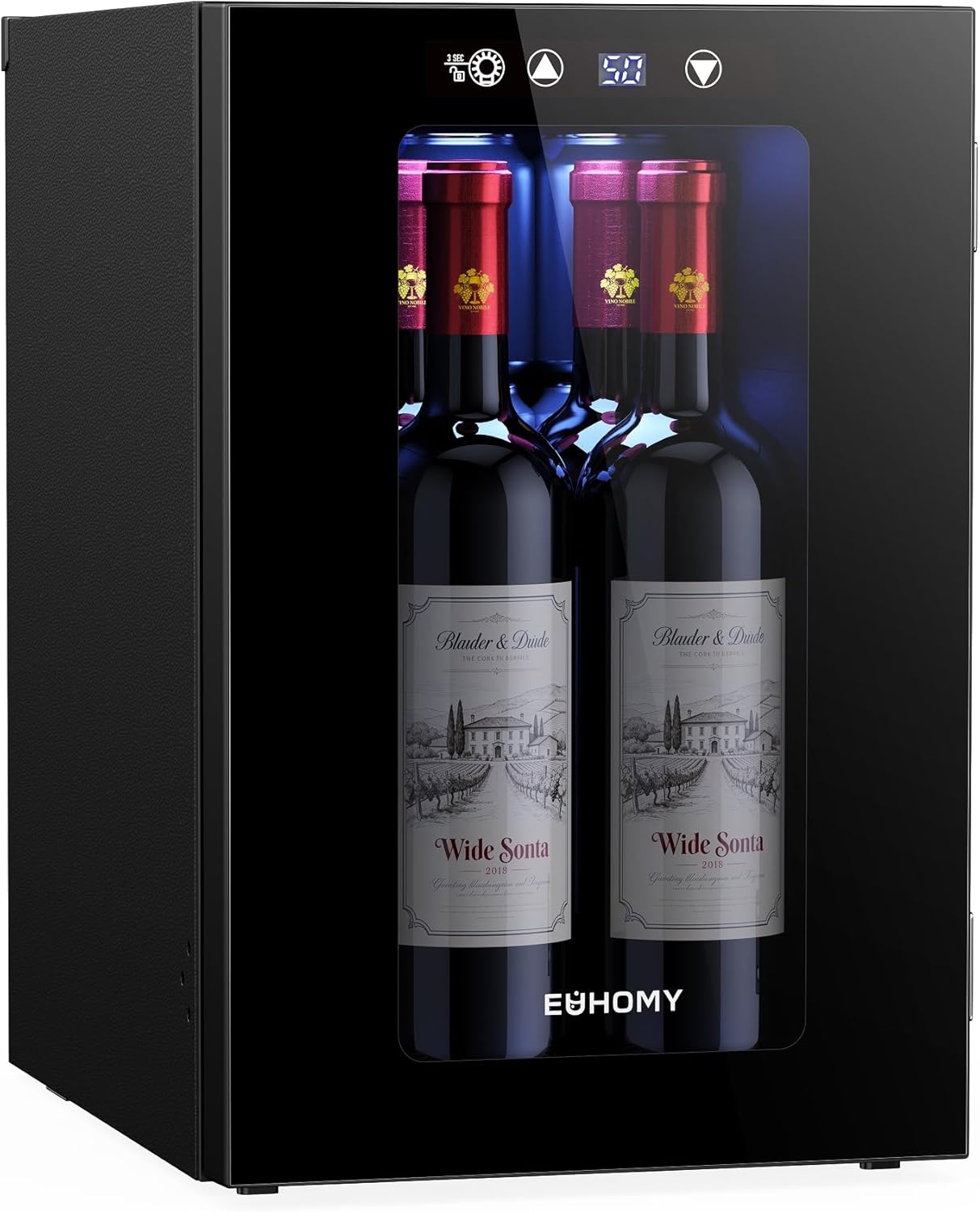
The EUHOMY 18L Wine Fridge is a small compressor-cooled cooler designed for countertop or freestanding use to store a handful of bottles and cans. It offers a digital touchscreen that sets temperatures between 40°F and 61°F, a double-pane glass door with LED interior lighting, and one removable shelf so you can fit bottles or stacks of cans. The compressor system provides steady cooling and the manufacturer states quiet operation around 38 dB, which helps the unit sit beside a bar, office, or kitchen without creating a constant noise nuisance. Practical benefits include the ability to keep red, white, sparkling wine, or beer at ready-to-serve temperatures and the compact footprint that fits tight spaces. Limitations to expect are the very small 18 L capacity that only holds about four 750 ml bottles or up to two dozen cans when arranged differently, manual defrosting, and a single door orientation without reversible mounting, so placement options are somewhat constrained.
Best for: Buyers who want a reliable, compact cooler to keep a small selection of wines or beverages at controlled serving temperatures without complicated setup or large space requirements.
Less Ideal for: Those who need to store larger collections, organize many bottle sizes, or require a built-in undercounter installation should look at larger-capacity or different-format coolers.
- Digital touchscreen with adjustable 40°F–61°F temperature range for precise control
- Compressor cooling for consistent, dependable chilling compared with thermoelectric units
- Compact countertop form that fits small kitchens, dorms, or home bars
- Double-pane glass door with LED lighting showcases contents while blocking UV rays
- Very limited 18 L capacity suitable for only a few bottles or a small can stash
- Manual defrost requires occasional maintenance and can be inconvenient
Verdict: A compact, compressor-cooled countertop wine fridge that delivers quiet, accurate temperature control for buyers who need dependable short-term storage for a few bottles.
Choosing the Right Small Wine Cooler for Garages: Key Factors to Consider
Operating Temperature Range
A cooler's rated operating and setpoint range matters because garages can experience wider ambient temperatures than living spaces. Choose a model whose cooling range covers both the ideal storage zone for the wines you keep and the expected extremes in your garage. If the unit cannot reach or hold the correct setpoints when the garage is unusually warm or cold, bottle quality can degrade.
Also check whether the thermostat is electronic and how precise it is. Fine-grain control helps avoid repeated cycling, which reduces compressor wear and yields more stable internal temperatures.
Insulation and Door Sealing
Good cabinet insulation and a tight door seal reduce the workload on the cooling system and help maintain internal temperatures during ambient swings. Thicker insulation and a fully gasketed door keep cold air in and warm or humid air out, which is especially important in garages that may be subject to drafts or temperature spikes.
Glass doors can be convenient for visibility but verify that the glass is double-pane or thermally treated and that a low-emissivity coating is present if possible. For garage installation, consider models with solid doors if your priority is thermal performance over display.
Cooling Method and Compressor Strength
Single-zone compressors vary in power and duty cycle. In a garage, the compressor must be robust enough to maintain set temperatures without overheating from frequent starts and stops. Look for units with proven compressor designs, adequate BTU capacity for the cabinet size, and features like variable-speed fans or adaptive defrost if available.
Some thermoelectric coolers are quieter and simpler but often struggle in high ambient temperatures. For most garage scenarios, a compressor-based unit with sufficient cooling headroom is the safer choice for long-term stability.
Footprint, Capacity, and Layout
Small wine coolers come in different form factors: under-counter, freestanding narrow towers, or countertop units. Measure your intended garage space and account for ventilation clearance. Choose a capacity that fits how many bottles you actively store now, with a small buffer for future additions. Shelf configuration and the ability to accommodate larger-format bottles can impact how efficiently you use the cooler's internal volume.
Consider access and placement. If the unit will sit near garage doors or in a corner, check hinge direction and door swing options, or choose a model with reversible doors.
Electrical Requirements and Energy Efficiency
Verify the electrical needs and expected energy consumption. Garages sometimes have older wiring or limited circuits, so ensure the cooler's plug and current draw match what your garage can supply. Energy-efficient units with good insulation and responsive thermostats will run less often and reduce total runtime in variable conditions.
Also consider whether the unit is rated for continuous operation in warmer ambients. Units with higher efficiency will put less strain on the compressor during heat waves and will typically have longer service life.
Where to Place a Small Wine Cooler in a Garage
Placement affects performance. Avoid sites with direct sun exposure, next to heat-producing equipment, or where water from vehicles might contact the cabinet. Position the cooler on a level surface with the recommended clearance for ventilation.
If your garage is uninsulated or subject to very wide temperature swings, place the cooler in the most temperature-stable corner available, away from exterior walls and doors. Consider adding a simple insulated enclosure or cabinet to reduce the range of ambient temperatures the unit sees.
- Keep at least the manufacturer-specified clearance behind and on the sides for airflow
- Avoid placing the unit on unprotected concrete that may draw heat; a thin platform or mat can help
- Ensure door swing is not obstructed and that you can fully extend shelves to remove bottles
Ventilation and Clearance Tips
Proper ventilation prevents heat buildup and extends compressor life. Freestanding models need rear or top clearance for exhaust; built-in rated units can operate in tighter fits but still require airflow pathways. In a garage, dust and debris can clog vents, so plan for periodic cleaning.
If space constraints force a tight placement, choose a model explicitly rated for built-in or shallow clearance operation. Always follow installation instructions regarding minimum clearances to avoid overheating.
- Leave the suggested clearance to avoid compressor overheating
- Clean vents and condenser coils every few months if the garage is dusty
- Use a simple dust screen or move the unit slightly away from high-dust sources
Protecting Your Wine From Garage Humidity and Odors
Garages can be humid or contain strong odors from chemicals or automotive fluids. While coolers control temperature, they do not always control humidity to cellar ideals. Avoid storing wine near solvents or fuels and select a location with lower odor exposure.
If humidity control is a concern, consider storing bottles in their boxes or using a tight-sealing cooler with decent insulation to reduce moisture ingress. For long-term aging, a dedicated climate-controlled space is preferable, but a good small cooler can provide acceptable short- to medium-term protection.
- Keep the cooler door closed to limit odor and moisture exchange
- Avoid storing open chemicals or fuels near the cooler
- Use sealed bins for accessories and non-wine items stored nearby
Maintenance and Seasonal Care
Regular maintenance keeps a garage cooler reliable. Clean door gaskets, vacuum condenser coils, and check that the thermostat responds consistently. In humid seasons, watch for condensation around seals and address gaps promptly.
If your garage reaches freezing temperatures in winter, check whether the cooler has a minimum ambient operation rating. Some units require draining and winterizing or relocation when ambient temps fall below their safe range.
- Inspect door seals for cracks and replace if compressed
- Schedule coil cleaning at least twice a year in dusty garages
- Monitor temperature with an independent probe during seasonal extremes
Noise and Vibration Considerations
Compressors and fans produce noise and vibration. In a garage used as a workspace or with adjacent living areas, vibration-transmitting mounts or rubber feet can reduce transferred noise. Choose a unit with balanced fan operation and minimal vibration for the quietest garage experience.
Also check shelf and bottle supports for secure seating to prevent clinking during compressor cycles. If noise is a priority, look for units with softer fan profiles or variable-speed fans that adjust output based on demand.
- Place on anti-vibration pads if noise transmission is an issue
- Level the cooler to minimize compressor-induced movement
- Inspect shelving fasteners to keep bottles stable during cycles
How We Chose the Best Small Wine Cooler for Garages
We selected small wine coolers for garages using criteria focused on real-world garage conditions and typical buyer needs. First, temperature stability was a primary filter: units had to demonstrate consistent temperature control across the cellar range so bottles do not experience wide fluctuations during daily or seasonal shifts. Second, insulation and cabinet sealing were weighed to ensure performance when ambient garage temperatures vary. Third, cooling method and capacity were assessed to determine whether a unit can maintain setpoints without excessive cycling in a garage environment. Fourth, footprint and installation flexibility were considered so the cooler fits common garage spaces and mounting situations. Fifth, energy efficiency and compressor duty cycle were reviewed to estimate running cost and long-term reliability when operating in less-controlled spaces. We excluded oversized units and models intended exclusively for indoor climate-controlled rooms. We also excluded coolers without clear sealed-cabinet designs or with manufacturer-restricted operating ranges that do not encompass typical garage temperatures. The resulting shortlist prioritizes durable cooling systems, strong insulation, accurate thermostatic control, and installation flexibility appropriate for garages.
Our full evaluation process is outlined in our review methodology.
FAQ
Can I run a small wine cooler in an uninsulated garage?
Often, but it depends on the cooler's operating range. Many small compressor-based units will work if ambient temperatures stay within the unit's rated limits. For large seasonal swings, choose a model rated for wider ambient ranges or consider insulating the placement area.
Is a thermoelectric cooler adequate for garage use?
Thermoelectric coolers are quieter and simpler but usually struggle in high ambient temperatures. For garages that get hot in summer, a compressor-based cooler is generally more reliable at maintaining set temperatures.
How much clearance does a cooler need in a garage?
Clearance depends on the model and whether it is freestanding or built-in rated. Follow manufacturer recommendations, but plan for at least a few inches behind and above freestanding units to allow proper airflow and prevent overheating.
What maintenance does a garage wine cooler need?
Routine tasks include cleaning condenser coils, wiping door gaskets, checking for condensation, and keeping vents clear of dust. In dusty garages, increase the frequency of coil cleaning to maintain efficient operation.
Will temperature swings in the garage damage my wine?
Frequent and wide temperature swings accelerate aging and can harm wine integrity. A stable cooler mitigates this risk by keeping bottle temperatures steady. If your garage experiences extreme swings, additional insulation or a higher-capacity cooler may be necessary.
Final Verdict
Choosing a small wine cooler for garages comes down to matching the unit's operating capabilities to your garage environment. Prioritize models with robust temperature control, strong insulation, and a cooling system rated for occasional high ambient loads. Also consider footprint, ventilation needs, and maintenance requirements so the unit stays reliable over seasons. Balance the tradeoffs between noise, power draw, and thermal headroom. When you pick a cooler that aligns with your garage's temperature profile and space constraints, you protect your bottles and reduce long-term hassle.