
Note: This article contains affiliate links. If you click on these links and make a purchase, we may earn a small commission at no extra cost to you. This helps support our research and content. Read our full affiliate disclosure here.
If you use a heat pump as your primary heating and cooling source, the right smart thermostat can smooth out temperature swings, reduce unnecessary runtime, and improve comfort control across seasons. You want a device that understands heat pump-specific modes, supports proper staging, and keeps defrost cycles and emergency heat in check. This guide shortlists the top smart thermostats suited for heat pump systems and explains the practical differences that matter for installation, daily operation, and energy management. We evaluate each pick on compatibility, control features, and ease of setup to help you pick a model that works reliably with your heat pump. Read on for the top choices and what to consider before you replace your thermostat.
Top Picks at a Glance
| Best Overall The best all-around choice for most situations | ecobee Smart Thermostat Enhanced |  |
| Best Quality Built to a higher standard if you want something more solid | Google Nest Learning Thermostat 4th Gen |  |
| Best Value The sweet spot between price and what you get | Sensi Smart Thermostat ST55 |  |
| Best Budget The cheapest option that still gets the job done reliably | Honeywell Home X2S Smart Thermostat |  |
| Top Rated A top-rated pick with lots of positive feedback | ecobee Smart Thermostat Premium |  |
| Most Popular A crowd favorite that many people choose with confidence | Amazon Smart Thermostat |  |
| Best Seller A high-volume bestseller chosen again and again | Google Nest Thermostat |  |
ecobee Smart Thermostat Enhanced

| Connectivity Technology | Wi-Fi |
|---|---|
| Controller Type | Amazon Alexa, Android, Apple HomeKit, Google Assistant, iOS |
| Power Source | Corded Electric |
| Voltage | 24 volts |
| Display Type | LCD |
The ecobee Smart Thermostat Enhanced is a wall-mounted, hardwired thermostat designed to automate comfort and reduce heating and cooling costs. It connects to your home network via dual-band Wi‑Fi and integrates with Apple HomeKit, Siri, Alexa, Google Assistant, and SmartThings so you can control temperature from the ecobee app, voice, or Apple Watch. Built-in radar occupancy sensing and included SmartSensor support let the thermostat detect occupied rooms and preheat or precool living spaces, while eco+ software suggests schedule changes and can lower energy use when you are away or asleep. The unit is intended for typical 24 VAC HVAC setups and ships with a power extender kit for systems without a C‑wire to simplify DIY installation. Practical benefits include centralized remote control, automatic adjustments based on occupancy, and Energy Star certification for efficiency. Important limitations are that it is not compatible with line voltage systems or millivolt setups, and buyers should confirm system compatibility before installing. The display is a 4-inch LCD and the package includes mounting hardware and wiring labels for installation.
Best for: Buyers who want a balanced smart thermostat that combines remote app and voice control with occupancy-based temperature adjustments to save energy and improve day-to-day comfort in a typical 24 VAC HVAC home.
Less Ideal for: Homes that use line voltage, millivolt, or 0–10V control systems or owners who need a battery‑powered or completely wireless thermostat solution.
- Dual-band Wi‑Fi with app and major voice assistant integrations for remote and voice control
- Built-in radar occupancy sensing plus support for SmartSensors to target conditioned rooms
- Includes Power Extender Kit and mounting hardware to simplify DIY installs without a C‑wire
- Energy Star certified and software features aimed at reducing heating and cooling costs
- Not compatible with line voltage, millivolt, or 0–10VDC systems
- Requires confirming HVAC compatibility for some older or uncommon systems
Verdict: A well-rounded, hardwired smart thermostat that pairs occupancy sensing and broad smart home integration to cut energy use and keep heat pump homes comfortable.
Google Nest Learning Thermostat 4th Gen

| Connectivity Technology | Wi-Fi |
|---|---|
| Power Source | Battery Powered |
| Voltage | 24 volts |
| Display Type | Touchscreen |
| Included Components | Thermostat Display, Thermostat base, Trim plate, Steal plate, Mounting screws and wiring labels, Nest Temperature Sensor (2nd gen) |
The Nest Learning Thermostat (4th gen) is a high-end smart thermostat designed to learn your schedule and autonomously optimize heating and cooling. It installs on standard 24V systems and includes a Nest Temperature Sensor to better manage hot and cold spots, while the system health monitoring notifies you if the HVAC needs attention. You control it with the Google Home app, voice assistants, or the large touchscreen and Dynamic Farsight display, and it supports Wi‑Fi and Matter for broader smart home integration. Notable energy-focused features include Adaptive Eco, Smart Schedule suggestions, and the ability to shift energy use with Nest Renew when supported. For homes with heat pumps the thermostat's compatibility with common 24V configurations and predictive scheduling helps maintain stable comfort while avoiding unnecessary cycling. The main compromises are that advanced features depend on the Google Home ecosystem and cloud connectivity, and some installers may prefer professional setup for complex heat pump systems, but for a performance-minded buyer this thermostat offers sophisticated automation and diagnostics that can improve comfort and efficiency.
Best for: Buyers who prioritize automated, performance-oriented climate control and want a smart thermostat that learns patterns, provides system diagnostics, and integrates with a Google-centered smart home.
Less Ideal for: People who need an offline-only thermostat or who prefer a minimal, local-control unit without cloud dependencies should consider simpler or noncloud alternatives.
- Learns schedule and suggests energy-saving adjustments automatically
- Includes a Nest Temperature Sensor to manage hot and cold spots
- Large Dynamic Farsight display and intuitive touchscreen controls
- Wi‑Fi and Matter compatibility for remote control and smart home integration
- System Health Monitor provides alerts when HVAC issues arise
- Many advanced features rely on Google Home/cloud services to function
- Complex heat pump wiring or multi-stage systems may require professional installation
Verdict: For heat pump owners who want a learning, performance-focused thermostat that optimizes comfort and energy use through smart scheduling and diagnostics, the Nest Learning Thermostat 4th Gen is a top choice.
Sensi Smart Thermostat ST55

| Connectivity Technology | Wi-Fi |
|---|---|
| Controller Type | Amazon Alexa, Apple HomeKit, Google Assistant, SmartThings, Vera |
| Power Source | Corded Electric |
| Temperature Control Type | Programmable, Smart/Remote |
| Number of Batteries | 2 AA batteries required. (included) |
The Sensi ST55 is a wall‑mounted smart thermostat designed to replace a traditional programmable stat while adding remote control, scheduling, and energy reports. It connects via 2.4 GHz Wi‑Fi and integrates with Alexa, Google Assistant, Apple HomeKit and other smart hubs so you can change temperature with the app or voice. The unit offers simple DIY installation with included mounting hardware, built‑in level and wire labels, and it can run on batteries or a 24 V common wire where required. Notable features include Energy Star certification, usage reports and system alerts that help spot maintenance needs like filter changes, plus a clear LED display and button controls for in‑home use. For homes with heat pumps this model supports the common system types listed and provides remote scheduling and smart alerts to improve efficiency. Limitations to note are the basic button control interface versus larger color touchscreens and the requirement to confirm compatibility with some HVAC systems before purchase.
Best for: Buyers who want a straightforward, energy‑focused smart thermostat they can install themselves and control remotely via popular smart assistants and a mobile app.
Less Ideal for: Shoppers who want a large touchscreen interface, highly customizable on‑device controls, or an all‑in‑one home hub should consider alternatives with richer displays and advanced local controls.
- Works with Alexa, Google Assistant and Apple HomeKit for voice and remote control
- Energy Star certified with usage reports to help reduce HVAC energy use
- Easy DIY install with mounting hardware, built‑in level and wire stickers
- Includes batteries and supports battery‑only or 24V common wire power
- Provides smart alerts and maintenance reminders like filter indicators
- Simple button control and LED display rather than a larger color touchscreen
- Requires checking HVAC compatibility for some systems before purchase
Verdict: A practical, Energy Star‑rated smart thermostat that delivers easy DIY installation and reliable remote control for heat pump households focused on efficiency.
Honeywell Home X2S Smart Thermostat

| Connectivity Technology | Wi-Fi |
|---|---|
| Energy Star | Yes |
| Compatibility | Up to 2H/2C conventional or Up to 2H/1C heat pump |
| Control Method | App, Push Button, Voice |
| Power | C-wire required (24 VAC) |
The Honeywell Home X2S is a straightforward smart thermostat for homes with conventional or heat pump HVAC setups that need basic scheduling and remote control. It connects to 2.4 or 5 GHz Wi‑Fi and works with Matter, Amazon Alexa, Google Assistant, and Apple HomeKit so you can control temperature from the First Alert app, voice, or other smart home hubs. The unit offers flexible scheduling options (7, 5-1-1, 5-2, or single-week), auto-away to reduce wasted heating or cooling, and filter reminders and humidity monitoring to help maintain system health and comfort. It requires a C‑wire for power, so homes without one may need an adapter or a pro install. The simple LCD display and interchangeable accent pieces keep setup and appearance low-friction, and ENERGY STAR certification means it can participate in energy programs and rebates. For buyers prioritizing basic smart integration, energy savings, and heat‑pump compatibility, the X2S delivers sensible functionality without advanced learning algorithms or premium UI polish.
Best for: Buyers on a budget who want reliable smart control and heat pump compatibility with broad smart home platform support and energy program eligibility.
Less Ideal for: People who want a self-learning thermostat with a high-end touchscreen interface or a completely wireless install without a C-wire.
- ENERGY STAR certified for energy program eligibility and rebates
- Matter certified and compatible with Alexa, Google Assistant, and Apple HomeKit
- Flexible scheduling and auto-away to reduce energy use
- Supports conventional and heat pump systems up to 2H/2C or 2H/1C
- Requires a C-wire for proper operation, which may require extra installation work
- Interface is a basic LCD and lacks advanced learning or premium touchscreen features
Verdict: A budget-friendly, ENERGY STAR smart thermostat that gives reliable heat pump support and broad smart home integration without premium frills.
ecobee Smart Thermostat Premium

| Controller Type | Amazon Alexa, Android, Apple HomeKit, Google Assistant, iOS |
|---|---|
| Connectivity Protocol | Wi-Fi |
| Power Source | Battery Powered |
| Voltage | 24 volts |
| Included Components | Smart Thermostat Premium, SmartSensor, Backplate, PEK, trim plate |
The ecobee Smart Thermostat Premium is a full-featured wall thermostat designed to control heating and cooling while reducing energy use. It pairs with the ecobee app and supports Siri, Alexa, Google Assistant, and HomeKit for voice and remote control, and includes a SmartSensor to reduce hot and cold spots. Notable hardware and software features include built-in air quality monitoring and radar occupancy sensing, a vibrant metal-faced display with speaker for streaming and voice, and a Power Extender Kit for homes without a C-wire. For heat pump systems the thermostat lists broad 24VAC compatibility including heat pumps with auxiliary stages and supports multi-stage equipment found in many homes. Practical benefits are stronger room-level comfort from the SmartSensor, automatic savings through scheduling and occupancy-aware adjustments, and convenient voice control and integrations. Limitations to check before buying are system compatibility—line-voltage and millivolt systems are not supported—and the need to run through the ecobee compatibility checker for certain older or unusual setups; advanced features like smoke alarm detection and smart security may require additional subscriptions or accessories.
Best for: Buyers who prioritize a reliable, feature-rich thermostat for consistent comfort and energy savings on modern HVAC systems, especially homes with heat pumps and multi-stage equipment.
Less Ideal for: Homes that use line-voltage, millivolt, or non-24VAC HVAC systems or buyers who want a minimal, subscription-free thermostat experience.
- Built-in air quality monitor provides alerts and filter reminders.
- Includes SmartSensor to address hot and cold spots and improve zone comfort.
- Broad 24VAC compatibility including heat pumps and multi-stage systems.
- Built-in voice assistants and speaker enable hands-free control and media playback.
- Power Extender Kit and trim plate included for easier DIY installs without a C-wire.
- Not compatible with line-voltage, millivolt, or 0-10VDC systems.
- Some advanced security and monitoring features may require subscription services.
Verdict: A dependable, heat-pump-capable smart thermostat that pairs room-level sensing and air-quality monitoring with built-in voice assistants for reliable comfort and energy savings.
Amazon Smart Thermostat
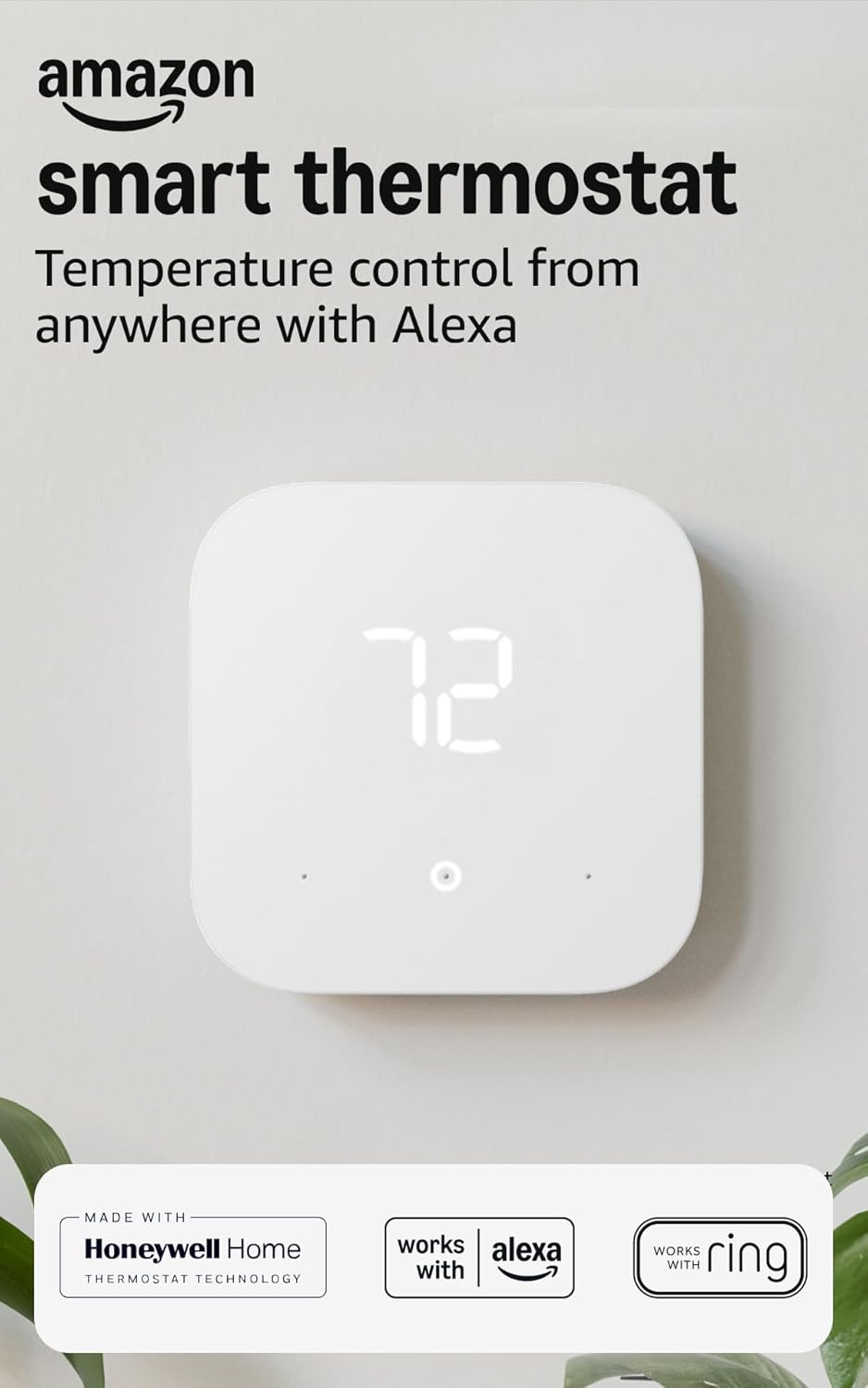
| C‑wire required | Yes |
|---|---|
| Works with | Alexa and Ring |
| Installation | DIY guided via Alexa app |
The Amazon Smart Thermostat is a simple Wi‑Fi thermostat built to replace a conventional wall thermostat and integrate with Alexa for voice and app control. It guides DIY installation through the Alexa app and supports scheduling, home/away modes and Alexa+ features for automated temperature adjustments based on presence or compatible Alexa devices. The unit leverages Honeywell Home thermostat technology for core temperature sensing and control, and Amazon highlights potential energy savings and local rebate information after purchase. In practice it is easy to set up and useful for remote temperature control, creating basic schedules, and tying into Alexa routines, but it relies on a C‑wire and does not list advanced heat pump diagnostics or multi-stage controls in the main description, so complex HVAC setups may need professional verification. For typical single‑family homes with single‑stage heat pump systems it provides straightforward smart control and energy tracking through the Alexa ecosystem.
Best for: Homeowners who want an affordable, Alexa‑centric smart thermostat that is easy to install and integrates with voice routines and presence-based automation.
Less Ideal for: Homes that need advanced heat pump diagnostics, multi‑stage control, or professional HVAC tuning should consider thermostats with explicit heat‑pump feature support.
- Works with Alexa for voice control, routines, and remote app control
- Guided DIY installation through the Alexa app simplifies setup
- Built on Honeywell Home thermostat technology for reliable temperature control
- Supports scheduling and automated home/away adjustments to reduce energy use
- Requires a C‑wire which may complicate installs in older homes
- Product description does not detail advanced heat pump or multi‑stage HVAC features
Verdict: Choose this thermostat if you want a straightforward, Alexa‑integrated replacement that delivers basic smart scheduling and energy savings for typical heat pump homes.
Google Nest Thermostat
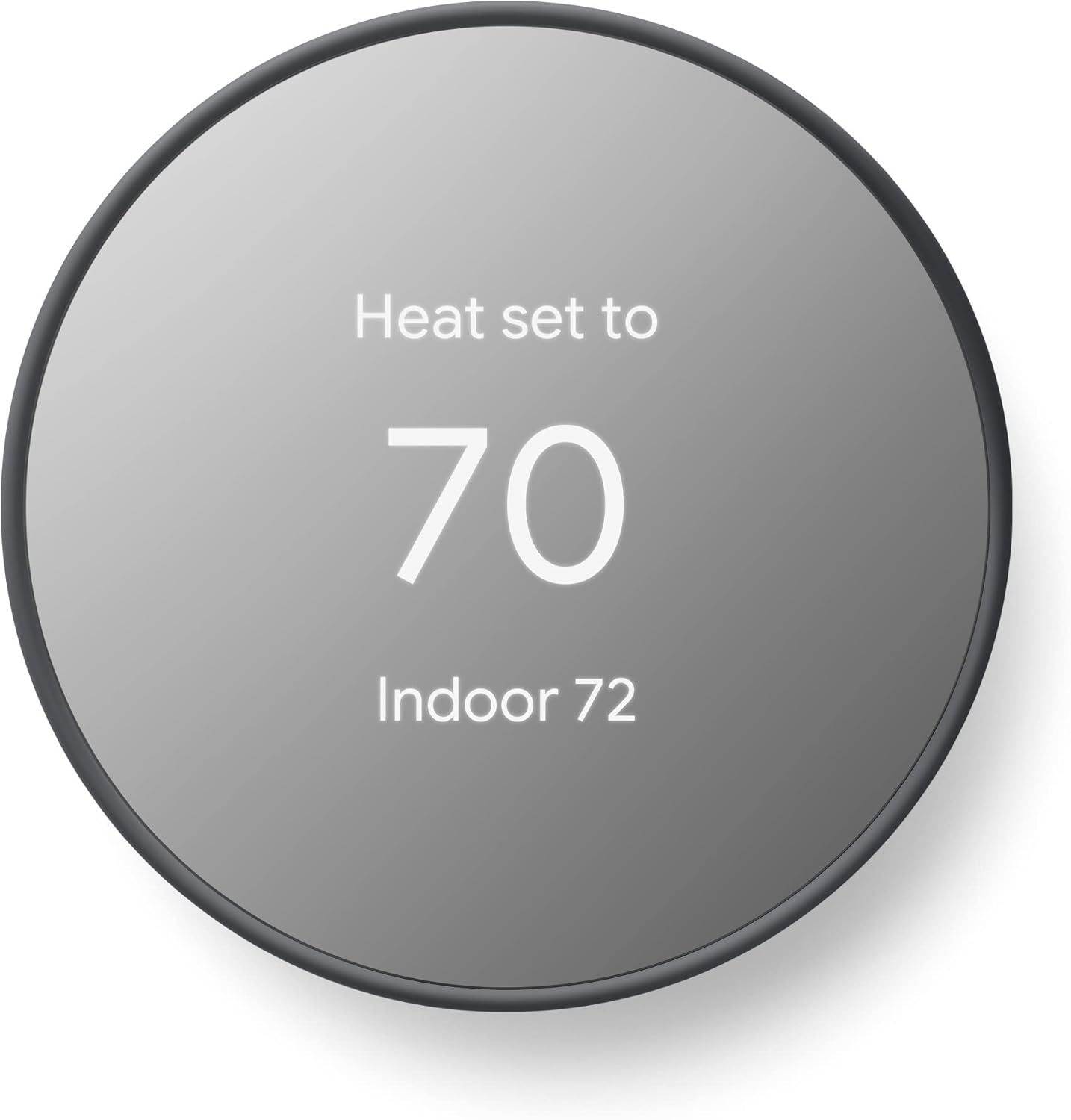
| Connectivity Technology | Bluetooth, Wi-Fi |
|---|---|
| Power Source | Battery Powered |
| Display Type | LCD |
| Number of Batteries | 2 A batteries required. (included) |
The Google Nest Thermostat is a compact smart thermostat for managing home heating and cooling that pairs with the Google Home app and voice assistants. It installs on a wall plate and is designed for homeowner self-installation in about 30 minutes, and it can operate without a C wire in many systems. You control temperature with a touch bar on the device, the mobile app, or compatible voice assistants, and the thermostat offers automated features such as Eco Temperatures when the house is empty, Savings Finder schedule suggestions, and HVAC monitoring alerts to flag potential issues. It supports 2.4 and 5 GHz Wi‑Fi and Bluetooth Low Energy for connectivity, runs on two included A batteries, and is Energy Star certified. Limits to note are compatibility edge cases—some heating-only, cooling-only, zone-controlled, or certain heat pump systems may require a C wire or power accessory—and advanced energy programs like Nest Renew are region and account dependent. The unit is best when you want straightforward smart control and basic energy-saving automation rather than advanced learning features.
Best for: Homeowners who want an easy-to-install, app-controlled smart thermostat that reduces wasted heating and cooling and integrates with Google Home and voice assistants.
Less Ideal for: People who need a thermostat with advanced autonomous learning or who have complex HVAC setups that frequently require professional wiring and diagnostics.
- Works with Google Home and common voice assistants for hands-free control
- App-based scheduling and remote control from anywhere with Wi‑Fi
- Energy-saving features like Eco Temperatures and Savings Finder
- Compact, easy self-installation with included mounting hardware
- May require a C wire or power accessory for some HVAC configurations
- Some advanced grid-based features and alerts depend on region, utility, or account setup
Verdict: A straightforward, Energy Star certified smart thermostat that gives reliable remote and voice control plus simple energy-saving automation for heat pump homes.
Choosing the Right Smart Thermostat for Heat Pumps: Key Factors to Consider
Compatibility With Heat Pump Wiring and Modes
Heat pumps use different control signals and modes than conventional furnaces, including reversing valve control, auxiliary/emergency heat, and multi-stage compressors. Confirming that a thermostat supports reversing valve (O/B), auxiliary heat, and the correct number of compressor stages prevents improper wiring that could lead to inefficient operation or system faults.
Some thermostats include automatic detection for heat pump wiring, while others require manual configuration. For retrofit installations, verify terminal labels and whether a common wire is required. Compatibility affects whether the thermostat can run the system in the correct mode and manage defrost and auxiliary cycles properly.
Staging and Auxiliary Heat Management
Proper staging allows the thermostat to call for the correct number of compressor stages or switch to auxiliary heat only when necessary. Good thermostats let you set temperature differentials and lockout timers to prevent unnecessary use of emergency heat, which is typically less efficient and more expensive to run.
Thermostats that support configurable staging and clear monitoring of auxiliary heat runtime reduce wear on the heat pump and avoid comfort issues caused by frequent switching between compressor and electric backup. Look for devices that provide separate logs or indicators for auxiliary usage so you can diagnose and tune performance.
Installation Requirements and Wiring
Many smart thermostats need a common 24V C wire to power advanced features. Some vendors offer workarounds such as power adapters or battery operation, but those can limit functionality. Check whether your existing thermostat wiring meets the new device's needs and whether the installer or a pro service will be required.
Ease of installation also includes clear terminal labeling, in-app wiring guides, and the ability to handle multiple zones or multistage systems if applicable. A thermostat that is difficult to wire or configure can add cost and delay benefits of smarter control.
Connectivity, App Control, and Integrations
Stable Wi-Fi or Zigbee/Z-Wave connectivity enables reliable remote control, scheduling, and integration with third-party automation. For heat pump owners, remote access is useful for monitoring runtime trends and adjusting setpoints during seasonal transitions. Assess whether the thermostat supports the smart home platforms you use, such as voice assistants or home automation hubs.
Also consider how the app exposes heat pump-specific controls, such as setting emergency heat lockouts, defrost mode visibility, and staging parameters. A well-designed app makes it easier to fine-tune behavior without returning to the thermostat.
Energy Reporting and Adaptive Control
Energy reports and adaptive learning algorithms can reduce runtime and avoid frequent on/off cycles that stress compressors. For heat pumps, adaptive control should prioritize holding temperature efficiently and minimizing short cycles while responding to occupant schedules.
Reports that separate compressor and auxiliary heat usage help you understand when backup heat is engaging and whether further tuning is needed. Look for thermostats that offer clear runtime breakdowns and the ability to set energy-saving schedules without compromising comfort.
Heat Pump Modes Explained
Heat pump systems operate differently from single-fuel furnaces. A thermostat designed for heat pumps must handle reversing valve commands to switch between heating and cooling, manage auxiliary or emergency heat sources, and coordinate staging when multiple compressor steps or supplemental heat are present.
Understanding the common modes and what the thermostat controls helps you configure settings correctly. For example, emergency heat should only be used when the heat pump cannot provide heat, and some thermostats offer lockouts or thresholds to prevent unnecessary activation.
- Reversing valve control determines heating versus cooling operation
- Auxiliary heat should be limited to prolonged low-temperature conditions or system faults
- Staging settings control when additional compressor capacity or backup heat engages
Common Installation Scenarios
Installation complexity ranges from a simple wire swap to rewiring for a dedicated C wire. Typical homeowner scenarios include having a conventional thermostat wiring bundle, needing a common wire, or installing in a multi-zone system that uses multiple thermostats or a zone controller.
If you have limited wiring, prioritize thermostats that support your current bundle or provide a power accessory. For multi-stage or multi-zone setups, make sure the thermostat exposes the necessary terminals and configuration steps for each stage.
- Verify existing terminal labels and photograph the wiring before removal
- Consider professional installation when working with line-voltage components or complex zoning
- Power modules can eliminate the need to run a new C wire in some cases
Tuning Thermostat Settings for Better Performance
Once installed, proper configuration matters more than raw features. Set sensible temperature differentials and minimum run times to prevent short cycling. Enable any heat pump-specific options such as compressor lockout or emergency heat control to ensure the system behaves as intended.
Use runtime reports and temporary schedule adjustments to observe how the heat pump responds. Small changes to cycle length or staging thresholds often yield noticeable comfort and efficiency improvements without sacrificing responsiveness.
- Set minimum compressor run time to reduce short cycling
- Configure differential and staging thresholds to match system capacity
- Monitor auxiliary heat engagement and adjust lockout timers where available
Using Smart Features to Reduce Runtime
Adaptive scheduling, geofencing, and setback periods can reduce compressor runtime if applied carefully. For heat pumps, avoid aggressive setbacks that require frequent recovery because rapid temperature recovery can trigger auxiliary heat and negate savings.
Prefer gradual setback schedules and enable features that learn how your home heats and cools. Look for energy reports that separate compressor and backup heat so you can see the real impact of schedule or setpoint changes.
- Use gradual setbacks rather than large temperature swings
- Enable learning features if they expose useful diagnostics
- Watch for increased auxiliary heat after aggressive setbacks
Troubleshooting Common Heat Pump Thermostat Issues
If the thermostat is calling for auxiliary heat too often, check staging and differential settings and confirm sensor placement. Misconfigured reversing valve settings can cause the system to run the wrong mode, so verify that O/B terminals are set correctly for your system.
Connectivity issues often manifest as missed schedules or delayed commands. Ensure strong Wi-Fi at the thermostat location or use a wired smart home hub when available. When in doubt, consult wiring diagrams and manufacturer documentation to confirm correct terminal mapping.
- Excessive auxiliary heat often indicates improper staging or setpoint thresholds
- Wrong reversing valve polarity can cause incorrect heating or cooling behavior
- Weak Wi-Fi or intermittent connections will affect remote control and reporting
How We Chose the Best Smart Thermostat for Heat Pumps
We focused on features and real-world performance factors that matter for heat pump owners. Primary evaluation criteria included verified heat pump compatibility and support for reverse-cycle operation, accuracy and adaptability of temperature control including staging and auxiliary heat handling, and integration with smart home platforms for convenient scheduling and remote control. We also weighed connectivity stability and security, as a thermostat that loses connection can disrupt HVAC behavior, and ease of installation and setup because many owners install the device themselves. Energy management features such as adaptive learning, geofencing, and clear runtime reporting were considered for their ability to reduce compressor short-cycling without sacrificing comfort. Excluded items included standard non-smart thermostats, units lacking explicit heat pump mode support, and devices that require proprietary gateways unavailable to typical homeowners. We prioritized thermostats with manufacturer documentation or widely reported compatibility for heat pump systems and looked for models that expose necessary settings for staging and emergency heat. The final list balances installer-friendly setup with smarter control features that reduce strain on heat pump systems and improve seasonal comfort.
Our full evaluation process is outlined in our review methodology.
FAQ
Do smart thermostats work with all heat pumps?
Often they do, but compatibility depends on the thermostat supporting heat pump-specific controls such as reversing valve, auxiliary heat, and the correct number of compressor stages. Check wiring terminals and supported modes to confirm compatibility for your system.
Is a C wire required for a smart thermostat on a heat pump?
Usually a C wire is recommended to power advanced features reliably. Some models offer power-extender kits or battery operation, but those options can limit functionality or stability, so a dedicated C wire is preferable for continuous operation.
How can I avoid frequent auxiliary heat use?
Configure staging thresholds, minimum run times, and auxiliary lockout settings in the thermostat. Use gradual setpoint changes instead of large setbacks and monitor runtime reports to identify when the backup heat is engaging unnecessarily.
Will smart features save energy on a heat pump?
Smart scheduling and adaptive control can reduce energy use if they minimize compressor short cycling and avoid triggering auxiliary heat. The savings depend on how the features are configured and how often aggressive setbacks force recovery with backup heat.
Can I install a smart thermostat myself on a heat pump?
Many homeowners can complete the installation if the wiring is standard and the thermostat supports the system. However, complex setups, multistage systems, or uncertain wiring may require a professional to ensure correct configuration and to avoid damage to the heat pump.
Final Verdict
Choosing the right smart thermostat for a heat pump comes down to confirmed compatibility, sensible staging control, and reliable connectivity. Prioritize units that support reversing valve and auxiliary heat configuration, expose staging and lockout settings, and offer clear runtime reporting so you can tune behavior. Tradeoffs typically involve installation complexity versus advanced features. If you need simple remote control and scheduling, a basic model with heat pump support may suffice. If you want the most efficient operation, choose a thermostat that provides detailed controls for staging and auxiliary management and that integrates with your home network reliably.