
Note: This article contains affiliate links. If you click on these links and make a purchase, we may earn a small commission at no extra cost to you. This helps support our research and content. Read our full affiliate disclosure here.
If you manage more than one heating and cooling zone, the right smart thermostat can make a noticeable difference in comfort, HVAC runtime, and monthly energy use. A multi-zone-capable thermostat coordinates temperature schedules, manages zone dampers or multiple HVAC stages, and brings remote control so you can adjust settings for each area from one app. This guide covers seven shortlisted smart thermostats built for multi-zone control. We evaluated their zoning features, control and integration options, and practical installation considerations to help you pick the best fit for your home. Read on for the criteria we used and the main tradeoffs to weigh before you install.
Top Picks at a Glance
| Best Overall The best all-around choice for most situations | Google Nest Learning Thermostat (4th Gen) |  |
| Best Quality Built to a higher standard if you want something more solid | ecobee Smart Thermostat Enhanced |  |
| Best Value The sweet spot between price and what you get | Honeywell Home T5 Smart Thermostat |  |
| Best Budget The cheapest option that still gets the job done reliably | Amazon Smart Thermostat |  |
| Top Rated A top-rated pick with lots of positive feedback | ecobee Smart Thermostat Premium |  |
| Most Popular A crowd favorite that many people choose with confidence | Google Nest Thermostat |  |
| Best Seller A high-volume bestseller chosen again and again | Sensi Smart Thermostat ST55 |  |
Google Nest Learning Thermostat (4th Gen)

| Connectivity Technology | Wi-Fi |
|---|---|
| Control Method | App |
| Display Type | Touchscreen |
| Power Source | Corded Electric |
| Number of Batteries | 1 CR2 (included) |
The Nest Learning Thermostat (4th gen) is a premium smart thermostat designed to learn your routines and help reduce heating and cooling energy use while giving centralized control via the Google Home app. It pairs with the included Nest Temperature Sensor so you can target specific rooms, and Dynamic Farsight plus a larger touchscreen make status and adjustments easy to see from across the room. The thermostat connects over Wi‑Fi, supports common 24V HVAC systems, and works with Alexa, Siri (via HomeKit), and Google Assistant for voice control; Matter compatibility simplifies smart home integration. Practical benefits include adaptive Eco settings that pause systems based on outdoor conditions, system health alerts to spot HVAC issues early, and suggested schedule tweaks you can accept or decline. Expect straightforward DIY installation in many homes, though advanced setups or older systems may still require pro help. The device is focused on smart energy management and convenience rather than DIY tinkering, and advanced features are most useful when paired with the app and sensors for multiroom setups.
Best for: Buyers who want a polished, energy-focused smart thermostat that adapts schedules automatically and can manage separate rooms using sensors for balanced comfort across multiple zones.
Less Ideal for: People who need an ultra-basic manual thermostat, those who avoid cloud‑connected devices entirely, or users whose HVAC systems are unsupported by standard 24V smart thermostats.
- Learns schedule and suggests energy-saving adjustments automatically
- Includes Nest Temperature Sensor to manage remote room temperatures
- Large, clear touchscreen with Dynamic Farsight for distant visibility
- Works with major voice assistants and supports Matter for smart home integration
- System Health Monitor sends alerts if heating or cooling needs attention
- Full feature set relies on the companion app and cloud services
- May require professional help for uncommon HVAC wiring or older systems
Verdict: A feature-rich, app-driven thermostat that learns your habits and pairs with remote sensors to deliver smarter temperature control across multiple zones.
ecobee Smart Thermostat Enhanced

| Controller Type | Amazon Alexa, Android, Apple HomeKit, Google Assistant, iOS |
|---|---|
| Connectivity Technology | Wi-Fi |
| Power Source | Corded Electric |
| Voltage | 24 volts |
| Display Type | LCD |
The ecobee Smart Thermostat Enhanced is a hardwired Wi‑Fi thermostat designed to save energy and adapt to how you live by using radar occupancy sensing, learning schedules, and remote control through the ecobee app. It is typically installed on a wall and paired with the HVAC system and optional SmartSensors to manage temperature per room or zone, and the included Power Extender Kit simplifies installs where a C wire is missing. Notable features include dual‑band Wi‑Fi, built‑in air quality monitoring, a 4‑inch LCD display, and compatibility with Apple HomeKit, Google Assistant, and Alexa for voice control. In practice the thermostat will automatically adjust when you are away or asleep, suggest schedule changes to optimize savings, and preheat or precool when occupancy is detected. The major benefits are easier DIY installation with the included hardware, strong smart home integration, and occupancy-aware zoning when paired with sensors. Limitations are that it targets compatible 24 VAC HVAC systems only, requires wiring for power or the PEK, and full multiroom zoning requires purchasing additional SmartSensors separately.
Best for: Buyers who want a performance-focused smart thermostat that actively manages comfort and energy across rooms and integrates tightly with major smart home platforms.
Less Ideal for: Homes with nonstandard HVAC power (line voltage or millivolt systems) or users who need built-in multiroom sensors without buying extras should consider other options.
- Radar occupancy sensing improves room-level detection for preheating and presence-based adjustments
- Works with HomeKit, Alexa, and Google Assistant for voice and smart home automation
- Includes Power Extender Kit and trim kit to simplify DIY installation without a C wire
- Built-in air quality monitoring and dual-band Wi‑Fi for reliable remote control
- Requires a compatible 24 VAC HVAC system and will not work with line-voltage or millivolt systems
- SmartSensors for full multiroom zoning are sold separately
Verdict: A performance-minded smart thermostat that uses occupancy sensing and wide smart‑home support to deliver targeted comfort and energy savings across multiple zones when paired with sensors.
Honeywell Home T5 Smart Thermostat

| Connectivity Technology | Wi-Fi |
|---|---|
| Temperature Control Type | Heating and Cooling |
| Power Source | Corded Electric |
| Display Type | LCD |
| Number of Batteries | 1 AAA batteries required. |
The Honeywell Home T5 is a straightforward smart thermostat that brings remote control, schedule automation, and geofencing to a typical low‑voltage HVAC system. It connects via Wi‑Fi and pairs with voice assistants and HomeKit so you can change setpoints from a phone or by voice, or let the unit adapt using its Auto Home/Away geofence. The 7‑day flexible scheduling, Smart Response learning, and ENERGY STAR reporting make it useful for reducing runtime and tracking energy use, and the touchscreen interface keeps local adjustments simple. Installation is intended for DIYers who have a C‑wire or will add the required adapter, and it includes a UWP mounting system and clear setup guidance. Limitations include the need for a C‑wire on many systems and that it is designed for single‑zone control per thermostat, so you will need multiple units or a zoning controller for multi‑zone HVAC setups.
Best for: Buyers who want a practical, energy‑focused smart thermostat that is easy to schedule and control remotely and who plan to install a thermostat in each zone rather than use a centralized zoning controller.
Less Ideal for: Homes without a C‑wire and owners who need a single device to manage multiple HVAC zones without installing additional thermostats or a dedicated zoning panel.
- Wi‑Fi connectivity with voice assistant and HomeKit compatibility for remote and voice control.
- Geofencing and Auto Away features that automatically adjust temperature based on smartphone location.
- 7‑day flexible scheduling and Smart Response learning to optimize comfort and runtime.
- ENERGY STAR certification with monthly energy reports and potential utility rebate eligibility.
- Requires a C‑wire or adapter for many home installations.
- Controls a single zone per unit, so multi‑zone homes need multiple thermostats or a zoning system.
Verdict: A practical, ENERGY STAR certified smart thermostat that delivers remote control, geofencing, and schedule automation for buyers planning to outfit each zone with its own thermostat.
Amazon Smart Thermostat
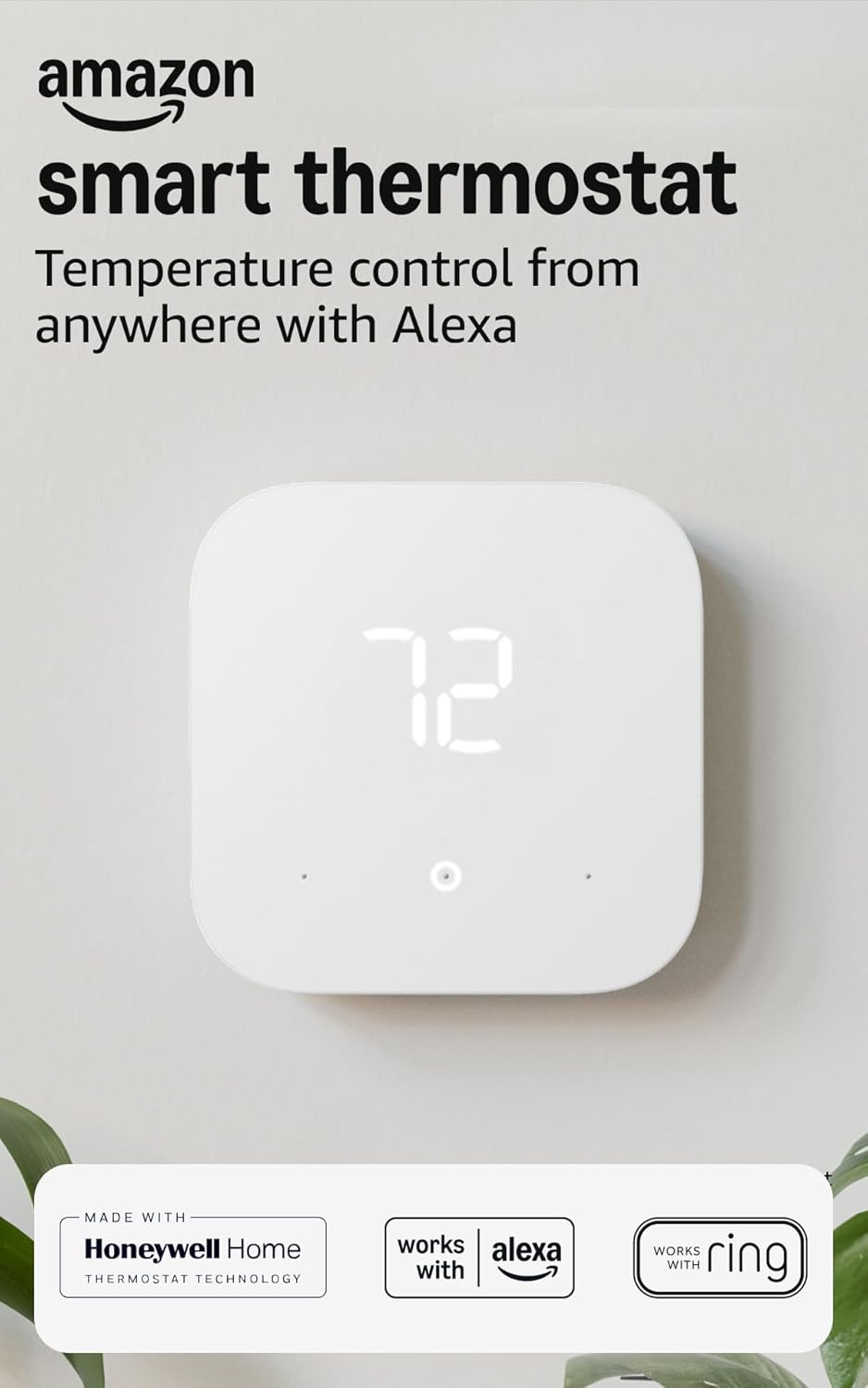
| ASIN | B08J4C8871 |
|---|---|
| Requires | C-wire |
| Works with | Alexa and Ring |
| Price | 79.99 USD |
The Amazon Smart Thermostat is a straightforward smart thermostat that brings Alexa integration and programmable schedules to homes without a big upfront cost. It installs with a common C-wire requirement and pairs with the Alexa app for remote temperature control, creating home/away/sleep schedules and using Alexa routines to coordinate multiple devices. The unit advertises energy-saving features and compatibility with Alexa presence detection to adjust temperature automatically, which helps simplify multi-zone routines when combined with other Alexa devices. Backed by Honeywell Home thermostat technology, it is intended for DIY installation with guided setup in the app. Limitations to consider are that advanced zoning setups will still require a thermostat per zone and any HVAC wiring constraints could complicate installation, and the feature set is focused on Alexa ecosystems rather than broader smart-home platforms.
Best for: Buyers seeking an affordable, Alexa-first smart thermostat to add smart control and scheduling to individual zones while minimizing upfront cost and complexity.
Less Ideal for: Homes that need a centralized multi-zone control panel or users who require broad platform compatibility beyond the Alexa ecosystem should look elsewhere.
- Works with Alexa for voice control and routines
- App-based remote control and scheduling for basic automation
- Energy-saving features and eligibility information for local rebates
- Built on Honeywell Home thermostat technology for reliable temperature control
- Requires a C-wire which may need extra wiring work in some homes
- Not a multi-zone controller by itself; each zone needs its own thermostat
Verdict: If you want a low-cost, Alexa-centric thermostat to add smart scheduling and remote control to individual zones, this delivers reliable basic functionality with minimal fuss.
ecobee Smart Thermostat Premium

| Connectivity Protocol | Wi‑Fi |
|---|---|
| Power Source | Battery Powered |
| Voltage | 24 volts |
| Included Components | SmartSensor, Backplate, PEK, trim plate |
The ecobee Smart Thermostat Premium is a feature‑rich smart thermostat designed to manage heating and cooling while adding home‑health and occupancy sensing. It installs on standard 24VAC HVAC systems and ships with a SmartSensor and Power Extender Kit to help fit homes without a C‑wire. In daily use the large display and cinematic interface make local control straightforward, while the ecobee app and integrations with Siri, Alexa, Google Assistant, and HomeKit let you set schedules, use geofencing, and adjust zones remotely. Built‑in air quality monitoring and radar occupancy sensing add notifications and automatic adjustments to prioritize rooms that matter, and the SmartSensor helps reduce hot and cold spots in multi‑zone setups. The unit includes a speaker and voice assistant for hands‑free control and supports live view with an ecobee doorbell camera. Tradeoffs are that it requires a compatible 24VAC system (check compatibility) and its advanced feature set is more than some users need, which can increase setup complexity for simple homes.
Best for: Buyers who prioritize reliable, centralized temperature control across multiple zones and want factory‑quality sensors and voice assistants built into the thermostat to reduce hot or cold rooms.
Less Ideal for: People with non 24VAC systems such as line‑voltage or millivolt heating, or buyers who want a very simple, no‑friction thermostat with only basic scheduling features.
- Includes SmartSensor to balance temperatures and address hot/cold spots
- Built‑in air quality monitor with alerts and filter reminders
- Supports Siri, Alexa, Google Assistant, HomeKit and app control for remote scheduling
- Power Extender Kit and trim plate included for easier DIY installation without a C‑wire
- Radar occupancy sensing for improved presence detection and zone control
- Requires compatibility with 24VAC HVAC systems so not suitable for line‑voltage or millivolt systems
- Advanced features and integrations add setup complexity for basic users
Verdict: Choose the ecobee Smart Thermostat Premium when you need a dependable, sensor‑driven smart thermostat that balances comfort across multiple zones while adding air quality monitoring and built‑in voice control.
Google Nest Thermostat
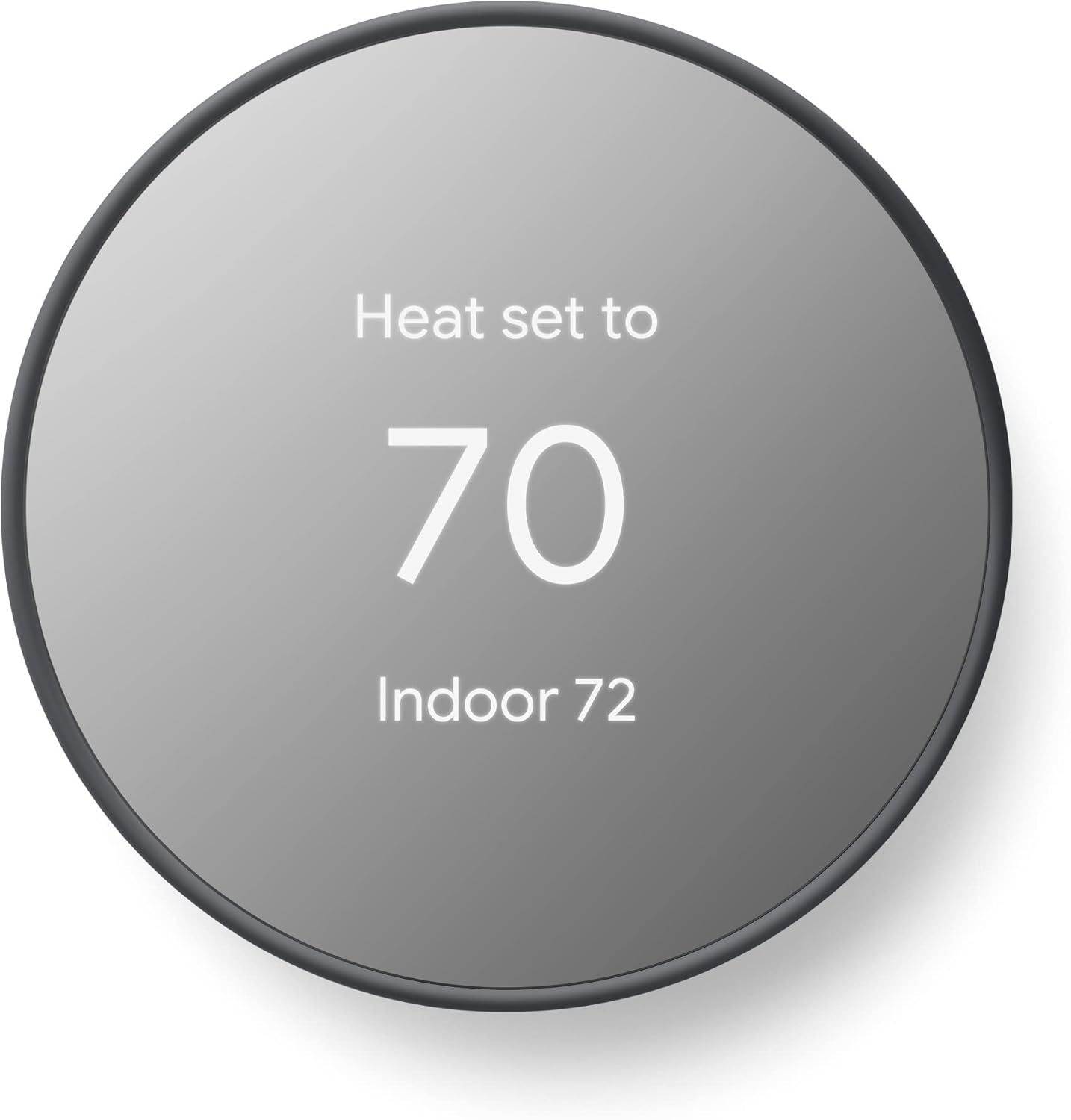
| Connectivity Technology | Bluetooth, Wi-Fi |
|---|---|
| Power Source | Battery Powered |
| Display Type | LCD |
| Control Type | Remote Control, Voice Control |
| Specific Uses For Product | Heat Pump |
The Google Nest Thermostat is a compact smart thermostat designed to make temperature control and energy savings simple for everyday homes. It connects to your Wi‑Fi and Bluetooth devices and lets you set schedules, change temperatures from the Google Home app, or use voice commands through compatible assistants. Notable features include Savings Finder suggestions to trim energy use, Eco Temperatures that automatically engage when the home is empty, and HVAC monitoring that can alert you to potential system issues. Installation is intended to be homeowner-friendly and the device can work without a C wire in many systems, though some HVAC setups still require a C wire or power accessory. The thermostat runs on two AA batteries and has a clear 2‑inch LCD screen with a side touch bar for local control. It integrates with Nest and other Google smart home products, which simplifies multi-zone management when used with additional Nest units, but advanced zoning features and full utility-driven services like Nest Renew may be limited by local availability and your utility plan.
Best for: Buyers who value an easy-to-use smart thermostat with app and voice control and want straightforward energy-saving features they can manage themselves across multiple zones.
Less Ideal for: People seeking advanced contractor-grade HVAC diagnostics or those who need a thermostat that guarantees operation without any additional wiring in all older or unusual systems.
- App and voice control for remote temperature adjustments
- Savings Finder and Eco features that help reduce energy use
- Easy DIY installation designed for most homes
- Integration with Google Nest ecosystem for coordinated multi-zone setups
- May require a C wire or power accessory on some HVAC systems
- Does not provide full HVAC diagnostics or professional-level troubleshooting
Verdict: A user-friendly smart thermostat that delivers convenient app and voice control plus energy-saving features ideal for managing multiple zones with other Nest devices.
Sensi Smart Thermostat ST55

| Connectivity Technology | Wi-Fi |
|---|---|
| Controller Type | Amazon Alexa, Apple HomeKit, Google Assistant, SmartThings, Vera |
| Power Source | Corded Electric |
| Display Type | LED |
| Number of Batteries | 2 AA batteries required. (included) |
The Sensi Smart Thermostat ST55 is a wall‑mounted Wi‑Fi thermostat designed to replace a conventional programmable thermostat and give you remote control, scheduling, and energy reports. It connects to 2.4 GHz Wi‑Fi and works with Alexa, Google Assistant, Apple HomeKit, SmartThings, and Vera so you can control temperature by app, touchscreen, or voice. Installation is aimed at DIYers with a built‑in level, wire stickers, and step‑by‑step app guidance, and it supports common HVAC equipment including furnaces, heat pumps, boilers and air conditioners. Notable features include Energy Star certification and usage reports that can highlight savings and maintenance alerts like filter reminders. The interface is a simple LED display with button control rather than a large color touchscreen, and most installs prefer or require a C‑wire or the included batteries depending on system wiring. For buyers who prioritize privacy and straightforward setup, Sensi emphasizes data protection and a factory-backed manufacturer and support team. If you need advanced multi‑zone routing or an elaborate color touchscreen experience, this unit is more focused on reliable core smart thermostat functions than luxury interface features.
Best for: Buyers who want a reliable, privacy‑focused smart thermostat that is easy to install themselves and integrates with mainstream smart home platforms for centralized control and energy tracking.
Less Ideal for: Homes that need built‑in multi‑zone control or users seeking a premium touchscreen interface and on‑device advanced configuration should look elsewhere.
- Works with major smart home platforms including Alexa, Google Assistant, Apple HomeKit and SmartThings
- Energy Star certified with usage reports and remote scheduling to help reduce HVAC energy use
- Designed for DIY installation with included mounting hardware, wire stickers and step‑by‑step app guidance
- Simple, familiar button and LED interface that fits the same footprint as most legacy thermostats
- Includes basic smart maintenance features such as filter reminders and system alerts
- No large color touchscreen; interface is LED with button controls
- Advanced multi‑zone control requires external zoning hardware or a compatible multi‑zone setup
- Some installations may require a C‑wire for full functionality
Verdict: Choose the Sensi ST55 when you want a straightforward, Energy Star‑certified smart thermostat that prioritizes easy DIY installation, privacy, and broad smart home compatibility.
Choosing the Right Smart Thermostat for Multiple Zones: Key Factors to Consider
Zoning Architecture
Zoning architecture determines how a thermostat communicates with dampers, zone panels, or separate HVAC units. Some systems use a central zone controller that accepts inputs from multiple thermostats or sensors, while others require thermostats that can manage multiple sensors directly.
Understanding your home's existing zoning approach matters because it affects whether you need additional hardware such as zone panels or compatible smart dampers. Choosing a thermostat designed for your zoning architecture reduces installation risk and prevents conflicts where two controllers try to operate the same damper or stage.
Sensor Placement and Types
Sensors are the basis for accurate zone control. Wall-mounted sensors read room air temperature but can be influenced by drafts or direct sunlight. Remote or wireless sensors offer flexibility to place measurement points in the center of living spaces, hallways, or bedrooms.
Consider how many sensors each thermostat supports and whether they report individually or produce averaged readings. The sensor type also affects response behavior; for example, occupancy-aware sensors can prevent conditioning of unoccupied zones, while simple temperature-only sensors cannot. Plan placements so sensors represent typical room conditions, not transient hotspots.
Control Logic and Priority Rules
How a thermostat or system resolves competing demands between zones is critical. Some systems use strict priority rules where heating overrides cooling calls, or where a specific zone can preempt others. Others use load-shedding or time-based coordination to balance comfort and equipment stress.
Review the available control logic: does the thermostat allow you to set zone priorities, minimum on/off times, or deadband settings to avoid short cycling? Good control logic reduces wear on equipment and prevents rooms from fighting each other for conditioned air.
Integration With Existing HVAC
Multi-zone installations often involve interfacing with zone panels, variable-speed furnaces, or dedicated compressors. Compatibility with your existing control voltages, relay types, and multi-stage equipment matters.
Confirm whether the thermostat supports the number of stages your system uses and whether it can communicate correctly with zone dampers or panels. Some thermostats offer dedicated wiring terminals or add-on modules to simplify integration; others assume a simpler single-stage setup and may require extra hardware or professional configuration.
Installation and Professional Support
Multi-zone setups are more complex than single-zone replacements. Wiring runs, additional sensors, and potential modifications to your zone panel increase the installation burden.
Check whether the thermostat vendor provides clear multi-zone wiring diagrams and whether professional installation is recommended or required. Availability of technical support and compatibility documentation can save time and avoid costly mistakes. Also consider whether the thermostat allows configuration changes through the app or requires on-unit programming, which affects installer time and future adjustments.
Energy Management and Scheduling Options
Effective multi-zone thermostats let you create schedules for each zone and provide tools to reduce energy use without sacrificing comfort. Features such as adaptive recovery, setback schedules, and per-zone energy reports let you see where savings occur.
Look for systems that support zone-level setbacks, vacation modes, and automated rules based on occupancy or outdoor temperature. The granularity of scheduling and the clarity of usage reporting influence how easily you can optimize comfort and cost across multiple zones.
How Multi-Zone Thermostats Work
Multi-zone thermostats coordinate multiple temperature sensors or separate thermostat units with zone dampers or independent HVAC circuits. In one common configuration, individual thermostats send calls to a central zone controller that opens or closes dampers to route air to the requesting zone. In other setups, a single advanced thermostat reads multiple sensors and makes local decisions about fan or stage control.
- Central zone controller vs. multi-sensor thermostat
- Role of dampers and zone panels
- How stage calls are aggregated and prioritized
Planning a Multi-Zone Installation
Before purchasing, map your zones, note existing wiring, and identify the location of your zone panel or HVAC control board. Measure distances for sensor wiring or check Wi-Fi coverage for wireless sensors. This planning helps determine whether a thermostat will need extra modules or whether a professional installer is advisable.
- Label existing thermostat and damper wires
- Confirm transformer capacity and control voltages
- Decide between wired sensors and wireless remotes
Common Zoning Pitfalls and How to Avoid Them
Conflicts between controllers, inadequate sensor placement, and undersized control transformers are frequent causes of poor multi-zone performance. Avoid these pitfalls by choosing thermostats designed for zoning, following manufacturer wiring diagrams, and ensuring your transformer can handle the combined load of additional sensors and relays.
- Prevent controller conflicts by designating a single zone coordinator
- Place sensors away from direct sunlight and vents
- Verify transformer amperage for accessory loads
When to Hire a Pro Vs. DIY
If your home already has a zone panel and simple thermostat replacements are required, a confident DIYer with wiring experience may handle the swap. However, if you need new damper wiring, new zone panels, or changes to multi-stage control logic, professional installation is often worth the investment to ensure reliable operation. Professionals can also validate control sequencing, test for short cycling across zones, and configure minimum on/off times to protect equipment. Factor in the complexity of your system and your comfort with electrical and control wiring when deciding.
- Simple replacements and sensor installs: DIY possible
- Zone panel, new dampers, or control logic changes: hire a pro
- Ask an installer to verify transformer capacity and sequencing
App Features That Matter for Zones
Not all thermostat apps are designed for multi-zone management. Look for interfaces that let you view each zone independently, set per-zone schedules, and group zones for common behavior. Push notifications for holds, sensor issues, or low battery states help you maintain system health across multiple points. Also consider how firmware updates and cloud connectivity are handled. Systems that allow local control or clear fallback behavior during outages reduce the chance of losing zone control when connectivity issues occur.
- Per-zone dashboards and schedules
- Alerts for sensor faults and low batteries
- Local control options and robust fallback behavior
How We Chose the Best Smart Thermostat for Multiple Zones
Our selection process focused on features and real-world compatibility that matter to multi-zone systems. We prioritized thermostats that offer explicit multi-zone or multi-sensor support, clear control logic for zone dampers or separate HVAC circuits, and flexible scheduling per zone. Connectivity and app/interface quality were assessed for how intuitively they let you manage multiple zones and set group schedules. Integration with common HVAC control methods was a key filter, including zone panels, smart dampers, and multi-stage systems. We also considered installation complexity and the clarity of wiring diagrams and support resources for multi-zone setups, since many homeowners use professional installers. Excluded items include single-zone-only thermostats, products that require extensive custom integration work to support zoning, and devices without documented multi-sensor or multi-zone configuration. Our evaluation emphasized interoperability, ease of setup in a zoned environment, control features that reduce conflicting commands between zones, and ongoing remote management capabilities.
Our full evaluation process is outlined in our review methodology.
FAQ
Can a single smart thermostat control multiple zones?
Sometimes. Some advanced thermostats can read multiple sensors and average or prioritize readings, which works for temperature measurement across zones. However, controlling airflow to separate zones usually requires a zone panel or smart dampers. Check whether the thermostat explicitly supports multi-sensor inputs and how it integrates with your existing zone controller.
Do multi-zone thermostats save energy?
They often can by conditioning only the occupied areas instead of the whole house, but actual savings depend on how zones are used and configured. Proper sensor placement, sensible scheduling, and avoiding frequent mode switching are important to realize energy benefits.
Will installing a multi-zone thermostat require rewiring?
It depends on your current system. Replacing a single thermostat with a like-for-like multi-zone-capable unit might be straightforward. Adding zoned dampers or a new zone panel typically requires additional wiring and may be best handled by a professional.
How many sensors should I use per zone?
One sensor per reasonably uniform space is common, but larger or irregular rooms may need two sensors to avoid hot or cold spots. The number depends on room layout and how representatively a single point measures the typical occupied area.
What if zones keep fighting each other?
Zone conflicts usually stem from poor control logic or misconfigured priorities. Look for thermostats that let you set minimum runtimes, deadbands, and explicit zone priority rules, or consult an installer to adjust the zone controller sequencing.
Final Verdict
Choose a smart thermostat that matches your home's zoning architecture, supports the number and type of sensors you need, and offers control logic suited to how you want zones to behave. Prioritize clear installation guidance and app features that let you manage each zone independently and spot issues quickly. Balance the desire for fine-grained control against installation complexity; if your system needs new dampers or a zone panel, plan for professional help to ensure reliable operation.